We unleash your business potential by maximize the business innovation.
Send EmailTrisodium Nitrilotriacetate, Trisodium NTA, NTA-3Na, 5064-31-3
Trisodium Nitrilotriacetate (NTA.Na₃)
CAS Number: 5064-31-3
EC Number: 225-768-6
Chemical Formula: C₆H₆NNa₃O₆
Molecular Weight: 257.09 g/mol
Synonyms: NTA Trisodium Salt, Trisodium NTA, Nitrilotriacetic Acid Trisodium Salt, Trisodium Aminotriacetate, Hampshire NTA, Sodium Nitrilotriacetate, Syntron A, Versene NTA 150, Versene NTA 335, Chemcolox 365 Powder, Masquol NP 140
1. CHEMICAL IDENTITY
| Parameter | Information |
|---|---|
| Product Name | Trisodium Nitrilotriacetate |
| IUPAC Name | Trisodium 2,2',2''-nitrilotriacetate |
| CAS Number | 5064-31-3 |
| EC Number | 225-768-6 |
| Molecular Formula | C₆H₆NNa₃O₆ |
| Molecular Weight | 257.09 g/mol |
| Chemical Class | Aminopolycarboxylic Acid Salt, Chelating Agent |
| Common Names | NTA Na₃, Trisodium NTA, NTA Trisodium Salt |
2. PHYSICAL PROPERTIES
| Parameter | Value |
|---|---|
| Physical State | Solid |
| Color | White to off-white |
| Appearance | Crystalline powder |
| Odor | Odorless |
| Melting Point | >200°C (decomposes) |
| Density (20°C) | ~0.85 g/cm³ (bulk density) |
| pH (1% solution, 20°C) | 10.5 - 11.5 (strongly basic) |
| Hygroscopicity | Slightly hygroscopic |
| Crystal Form | White crystalline powder as monohydrate |
3. SOLUBILITY PROPERTIES
| Solvent | Solubility (20°C) |
|---|---|
| Water | Soluble (high solubility) |
| Ethanol | Slightly soluble to sparingly soluble |
| Acetone | Sparingly soluble |
| Organic Solvents | Practically insoluble |
4. CHEMICAL STRUCTURE AND PROPERTIES
| Parameter | Description |
|---|---|
| Chelating Agent Type | Aminopolycarboxylate, Hexadentate ligand |
| Active Component | Trisodium Nitrilotriacetate (typically monohydrate) |
| Active Content | ≥90% |
| pKa Values | pKa1 ~1.9, pKa2 ~2.5, pKa3 ~9.7 (free acid) |
| Stability pH Range | 4 - 14 (wide pH range) |
| Thermal Stability | High (stable up to >200°C) |
| Metal Binding Capacity | Binds divalent and trivalent metal ions (Ca²⁺, Mg²⁺, Fe³⁺, Cu²⁺, Zn²⁺) in 1:1 ratio |
Chemical Structure Note: NTA.Na₃ is an aminopolycarboxylic acid salt. Its structure contains three acetate groups (-CH₂COONa) attached to a single nitrogen atom. This structure allows it to form stable, water-soluble complexes with many metal ions. Its lower molecular weight compared to EDTA makes it more readily biodegradable.
5. COMPOSITION AND SPECIFICATIONS
| Parameter | Specification | Method |
|---|---|---|
| Purity (NTA.Na₃, dry basis) | ≥99.0% | Titration |
| Active Content (as NTA) | ≥90% | Titration |
| Moisture Content | ≤1.0% | Karl Fischer |
| Chloride (Cl) | ≤0.05% | Titration |
| Sulfate (SO₄) | ≤0.05% | Gravimetric |
| Iron (Fe) | ≤0.001% | AAS/ICP |
| Heavy Metals (as Pb) | ≤0.001% | AAS/ICP |
| pH (1% solution, 20°C) | 10.5 - 11.5 | Potentiometric |
| Appearance | White crystalline powder | Visual |
| Free Acid | ≤0.5% | Titration |
6. FUNCTIONAL PROPERTIES
| Function | Description |
|---|---|
| Chelating Agent (Sequestrant) | Binds hardness ions (Ca²⁺, Mg²⁺); effectively chelates transition metals (Fe³⁺, Cu²⁺, Zn²⁺) |
| Water Softener | Neutralizes water hardness in detergent formulations |
| Scale and Rust Remover | Removes scale, rust, and salt deposits from metal surfaces |
| Metal Ion Controller | Prevents deterioration, discoloration, precipitation, rancidity, and turbidity caused by metal ions |
| Formulation Stabilizer | Remains stable across wide pH range (4-14) and at high temperatures |
| Solubility Enhancer | Increases solubility of sparingly soluble metal salts |
7. APPLICATIONS - DETERGENT AND CLEANING INDUSTRY
| Application | Function |
|---|---|
| Household Detergents (Powder and Liquid) | Water softener, phosphate substitute chelating agent |
| Industrial Detergents | Chelation, metal ion control |
| Automatic Dishwasher Detergents | Scale and deposit prevention |
| Industrial Cleaners | Metal surface cleaning, grease and soil removal |
| Car Shampoos | Neutralizes hard water effects |
| Hard Surface Cleaners | Soap scum and mineral deposit removal |
| Low-Phosphate and Phosphate-Free Detergents | Alternative to STPP (sodium tripolyphosphate) |
8. APPLICATIONS - INDUSTRIAL PROCESSES
| Industry | Application |
|---|---|
| Boiler Water Treatment | Prevents and removes scale and salt deposits in heat exchangers and boilers |
| Pulp and Paper | Metal ion control in process water; bleaching aid |
| Textile | Dyeing auxiliary; fiber processing agent; prevents metal ion interference in dyeing and bleaching processes |
| Metal Processing | Metal extraction, refining, and processing |
| Photographic Processing | Metal ion control |
| Construction Materials | Stabilizer as additive |
| Oil and Gas | Metal ion control in process waters |
9. APPLICATIONS - OTHER INDUSTRIES
| Industry | Application |
|---|---|
| Agriculture | Fertilizer additive (micronutrient stabilization) |
| Cosmetics and Personal Care | Chelating agent, preservative auxiliary |
| Pharmaceutical | Excipient in pharmaceutical formulations |
| Synthetic Rubber | Metal control in polymerization processes |
| Tanning (Leather) | Process water treatment and metal control |
| Bleaching Processes | Chelating agent and sequestering builder |
10. METAL BINDING CAPACITY AND SELECTIVITY
| Metal Ion | Stability Constant (log K) | Effectiveness Level |
|---|---|---|
| Fe³⁺ (Iron III) | ~15.9 | Very High |
| Cu²⁺ (Copper II) | ~12.7 | High |
| Zn²⁺ (Zinc) | ~10.7 | High |
| Ni²⁺ (Nickel) | ~11.5 | High |
| Co²⁺ (Cobalt) | ~10.8 | High |
| Ca²⁺ (Calcium) | ~6.4 | Moderate |
| Mg²⁺ (Magnesium) | ~5.5 | Moderate |
Note: NTA.Na₃ is more readily biodegradable than EDTA, while EDTA has higher stability constants. Selection should be based on application requirements.
11. COMPARISON WITH OTHER CHELATING AGENTS
| Property | NTA.Na₃ | EDTA.Na₄ | STPP | Citrate |
|---|---|---|---|---|
| Ca²⁺ Binding Capacity (mg/g) | ~140 | ~215 | ~100 | ~70 |
| Biodegradability | Ready (OECD: Rapid) | Poor | Moderate | Complete |
| Phosphorus Content | None | None | High | None |
| pH Stability | 4-14 | 4-12 | 7-10 | 4-8 |
| Relative Cost | Low | Medium | Low | High |
| Carcinogenic Concern | Yes (Cat. 2B/3) | None | None | None |
| Environmental Persistence | Low | High | Moderate | Low |
12. REGULATORY STATUS
| Region/Agency | Status | Restrictions/Notes |
|---|---|---|
| EU (EC) | Restricted Use | Limited use in detergents as phosphate alternative; suspected carcinogen (Category 2) |
| USA (EPA) | Restricted | Use in detergents limited; possible human carcinogen (Group C) |
| Canada | Restricted | Use regulated; environmental monitoring required |
| Türkiye | Restricted | Used in compliance with EU regulations |
| Japan | Still Used | Use in detergents still common |
| JECFA | Not Evaluated | Not approved as food additive |
Note: NTA and its salts are subject to increasing regulatory restrictions worldwide. Check local regulations before use.
13. SAFETY AND TOXICOLOGICAL PROFILE
| Parameter | Value |
|---|---|
| Acute oral toxicity (rat, LD₅₀) | 1,100 - 1,600 mg/kg (moderate toxicity) |
| Acute dermal toxicity (rabbit, LD₅₀) | >2,000 mg/kg |
| Acute inhalation (rat, LC₅₀) | >5 mg/L (4 hours) |
| Skin irritation | Mild to moderately irritating |
| Eye irritation | Moderate to severely irritating (corrosive) |
| Skin sensitization | Not a sensitizer |
| Carcinogenicity | IARC: Group 2B (possibly carcinogenic to humans), NTP: Category 3 |
| Reproductive Toxicity | Adverse effects observed at high doses |
| Mutagenicity | Positive in some tests |
| Target Organs | Kidney, bladder |
14. POTENTIAL HEALTH AND ENVIRONMENTAL CONCERNS
| Concern | Finding |
|---|---|
| Carcinogenicity Suspect | NTA and its salts have been associated with kidney and bladder tumors in animal studies at high doses; classified as IARC Group 2B "possibly carcinogenic to humans" |
| Kidney Toxicity | Kidney damage observed at high doses |
| Metal Mobilization | Can mobilize accumulated heavy metals in sediments |
| Biodegradability Note | Although more readily biodegradable than EDTA, complete degradation requires specific conditions |
| Regulatory Trend | Use is increasingly restricted worldwide; shift toward alternative chelating agents (GLDA, MGDA) |
Safety Note: NTA.Na₃ is a corrosive substance. Can cause injury to skin, eyes, and respiratory tract. Proper PPE is required when handling.
15. PERSONAL PROTECTIVE EQUIPMENT (PPE)
| Protection Type | Requirement |
|---|---|
| Respiratory Protection | Dust mask (N95/P2); organic vapor cartridge for high concentrations |
| Hand Protection | Nitrile or neoprene gloves |
| Eye Protection | Chemical splash goggles + face shield (against dust) |
| Skin Protection | Protective work clothing, dust-proof apron |
| Engineering Controls | Local exhaust ventilation (for dust control) |
| Hygiene Measures | Wash hands after handling; remove contaminated clothing |
16. STORAGE CONDITIONS
| Parameter | Requirement |
|---|---|
| Storage Temperature | 15-25°C (room temperature) |
| Humidity | Low humidity (<60% RH) - hygroscopic |
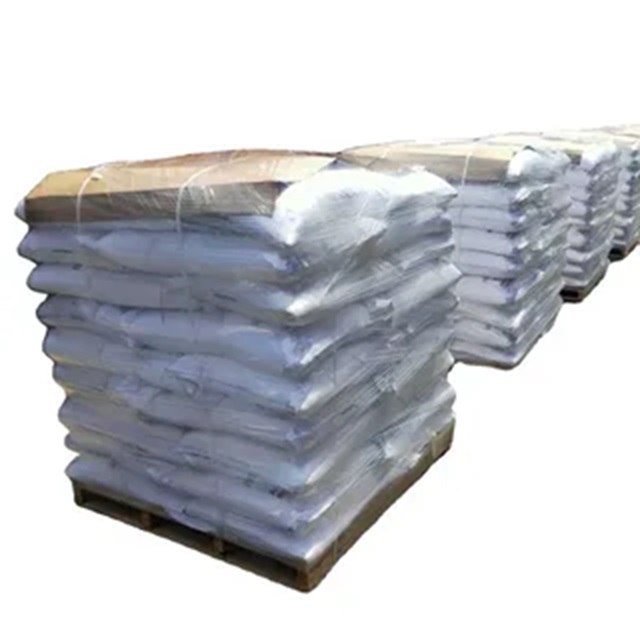
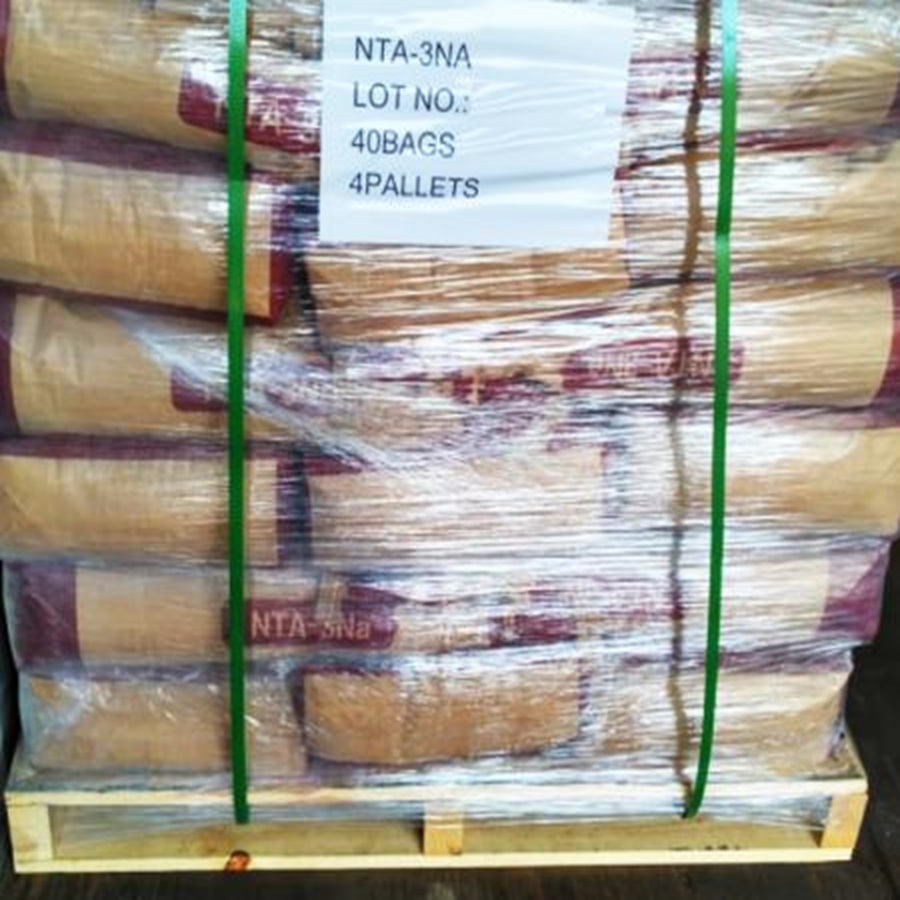
| Container | Tightly closed (plastic-lined paper bag) |
| Light Protection | Not required |
| Shelf Life (proper storage) | 24 months |
| Special Precautions | Protect from excess moisture and heat; keep away from strong oxidizing agents |
| Chemical Stability | Stable under normal conditions; decomposes at high temperatures (>200°C) |
17. TRANSPORT AND HANDLING
| Parameter | Information |
|---|---|
| UN Number | 1759 (corrosive solid, not otherwise specified) |
| Transport Class (ADR) | 8 (Corrosive substance) |
| Packing Group | III |
| Marine Pollutant | No |
| Special Handling | Minimize dust generation; avoid direct contact |
| Dust Hazard | Not flammable but dust inhalation may cause irritation |
| Regulatory Note | Labeling may be required for transport due to carcinogenic concern |
18. ENVIRONMENTAL INFORMATION
| Parameter | Assessment |
|---|---|
| Biodegradability | Ready (OECD 301B: >70% in 14 days) - better than EDTA |
| Ecotoxicity (Fish LC₅₀, 96 hours) | 110 - 220 mg/L (moderate toxicity) |
| Daphnia magna EC₅₀ (48 hours) | 40 - 80 mg/L |
| Algae EC₅₀ (72 hours) | 20 - 50 mg/L |
| Bioaccumulation | Low potential |
| Soil Mobility | High (water soluble, mobile) |
| Heavy Metal Mobilization | Can mobilize accumulated heavy metals in the environment |
| Risk to Water Bodies | Does not contribute to eutrophication but metal mobilization is a concern |
| Sustainability | Offers better biodegradability than EDTA and phosphates |
19. PROCESS PROBLEMS SOLVED BY NTA.Na₃
| Process Problem | Solution Provided by NTA.Na₃ |
|---|---|
| Metal Ion Catalyzed Degradation | Binds pro-oxidant metal ions in products, preventing oxidation, rancidity, and color fading |
| Hardness Induced Scaling | Prevents precipitation of Ca²⁺ and Mg²⁺ salts in heat exchangers, boilers, and pipes |
| Solution Instability | Prevents precipitation, turbidity, and phase separation caused by metal ions |
| Detergent Efficiency Loss | Binds hardness ions to maintain effectiveness of surfactants and other ingredients |
| Stain and Deposit Formation | Prevents formation of metal salt stains on surfaces |
| Process Downtime | Reduces scale and deposit accumulation on equipment, decreasing cleaning frequency and downtime |
20. SUMMARY AND CRITICAL INFORMATION
Description: Trisodium Nitrilotriacetate (NTA.Na₃, CAS 5064-31-3) is an aminopolycarboxylic acid salt in the form of a white crystalline powder. It is a chelating agent that binds metal ions in aqueous systems across a wide pH range.
Key Advantages:
-
Better biodegradability compared to EDTA
-
High chelating capacity (especially for Ca²⁺, Mg²⁺, Fe³⁺)
-
Wide pH stability (4-14)
-
Low cost (more economical than EDTA and other alternatives)
-
Phosphate alternative in detergents
-
Suitable for liquid and powder formulations
-
High thermal stability
Key Disadvantages/Concerns:
-
IARC Group 2B classification (possibly carcinogenic to humans)
-
Use increasingly restricted worldwide
-
Associated with kidney and bladder tumors at high doses in animal studies
-
Corrosive (to skin and eyes)
-
Regulatory restrictions in some regions
Major Application Areas:
-
Household and industrial detergents (low-phosphate/phosphate-free formulations)
-
Boiler and heat exchanger water treatment
-
Textile processes (dyeing, bleaching)
-
Pulp and paper production
-
Metal processing and cleaning
-
Agriculture (fertilizer additive)
NTA.Na₃ vs. EDTA.Na₄ Comparison:
| Property | NTA.Na₃ | EDTA.Na₄ |
|---|---|---|
| Biodegradability | Better | Poor |
| Ca²⁺ Binding Capacity | ~140 mg/g | ~215 mg/g |
| Carcinogenic Concern | Yes (Group 2B) | None |
| Cost | Lower | Medium |
| Usage Trend | Decreasing | Increasing/Stable |
Safety Assessment:
-
Handled as a corrosive substance
-
IARC Group 2B "possibly carcinogenic to humans"
-
Due to regulatory restrictions, alternative chelating agents (GLDA, MGDA, EDTA) are recommended where possible
-
Proper PPE is required for industrial use
Conclusion: NTA.Na₃ is a low-cost, high-performance chelating agent. However, due to carcinogenic concerns and increasing regulatory restrictions, alternative chelating agents (GLDA, MGDA, EDTA) should be preferred in new formulations. In existing applications, it should be used in compliance with local regulations and with appropriate PPE.