We unleash your business potential by maximize the business innovation.
Send EmailEDTA 2Na, Disodium EDTA, 139-33-3
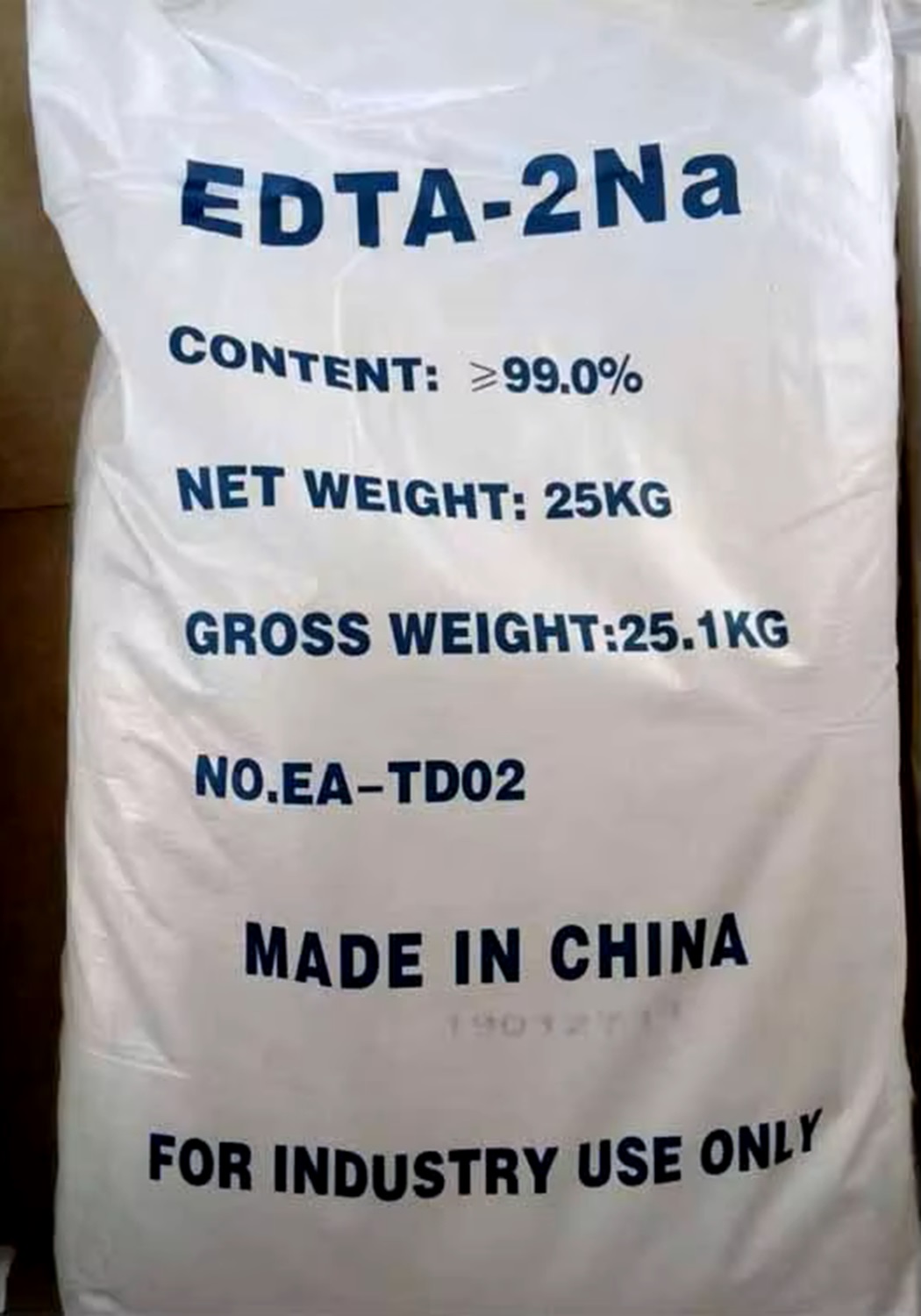
EDTA 2NA (DISODIUM EDTA)
CAS 139-33-3 | C₁₀H₁₄N₂Na₂O₈
SECTION 1: PRODUCT IDENTITY AND DEFINITION
| Parameter | Description |
|---|---|
| Product Name | EDTA 2Na (Disodium EDTA) |
| Other Names | Disodium EDTA, EDTA Disodium Salt, Ethylenediaminetetraacetic Acid Disodium Salt, Edetate Disodium, Two Sodium EDTA, İki Sodyum EDTA |
| Chemical Formula | C₁₀H₁₄N₂Na₂O₈ |
| Molecular Weight | 336.21 g/mol |
| CAS Number | 139-33-3 |
| EC Number (EINECS) | 205-358-3 |
| Chemical Class | Chelating Agent / Aminopolycarboxylic Acid |
| Appearance | White to Off-White Crystalline Powder |
| Odor | Odorless |
| Solubility | Soluble in water |
Description: EDTA 2Na (Disodium EDTA) is a versatile chelating agent. It is the disodium salt of ethylenediaminetetraacetic acid. It is a white, odorless, crystalline powder that is soluble in water. It functions by forming stable complexes with metal ions such as calcium, magnesium, iron, copper, and zinc, effectively "trapping" them and preventing them from participating in unwanted reactions. This property makes it invaluable in water treatment, detergents, cosmetics, food preservation, pharmaceuticals, and agriculture.
SECTION 2: SYNONYMS AND OTHER NAMES
| No | Synonym / Other Name |
|---|---|
| 1 | Disodium EDTA |
| 2 | EDTA Disodium Salt |
| 3 | Ethylenediaminetetraacetic Acid Disodium Salt |
| 4 | Edetate Disodium |
| 5 | Two Sodium EDTA |
| 6 | İki Sodyum EDTA |
| 7 | EDTA 2Na |
| 8 | 139-33-3 |
| 9 | EC 205-358-3 |
| 10 | Disodium Edetate |
| 11 | EDTA Na₂ |
| 12 | Ethylenediaminetetraacetic Acid, Disodium Salt |
| 13 | Sodium Edetate |
| 14 | Edetic Acid Disodium Salt |
SECTION 3: CHEMICAL STRUCTURE AND PROPERTIES
| Parameter | Description |
|---|---|
| Chemical Family | Aminopolycarboxylic Acids / Chelating Agents |
| Structure | EDTA molecule with two sodium ions replacing two hydrogen atoms |
| Functional Groups | Four Carboxylate (-COO⁻), Two Amine (-NH), Two Sodium (Na⁺) |
| Chelation Mechanism | Hexadentate ligand (6 donor atoms: 4 carboxylate O, 2 amine N) |
Structural Formula:
text
    OOC - CH₂         CH₂ - COO⁻
           \         /
            N - CH₂ - CH₂ - N
           /         \
    OOC - CH₂         CH₂ - COO⁻

             2 Na⁺

    Ethylenediaminetetraacetic Acid Disodium Salt (EDTA 2Na)
Description: EDTA 2Na is a hexadentate chelating agent, meaning it can form six coordinate bonds with a metal ion. The molecule contains two amine nitrogen atoms and four carboxylate oxygen atoms that act as donor atoms. In the disodium salt form, two of the four acidic hydrogens are replaced by sodium ions, making the compound water-soluble. The remaining two hydrogens can be neutralized upon binding to metal ions, releasing protons. This structure allows EDTA to form extremely stable 1:1 complexes with polyvalent metal ions.
SECTION 4: PHYSICAL AND CHEMICAL PROPERTIES
| Parameter | Specification | Typical Value | Test Method |
|---|---|---|---|
| Physical State (25°C) | Solid (Crystalline Powder) | - | Visual |
| Appearance | White – Off-White Crystalline Powder | - | Visual |
| Odor | Odorless | - | Organoleptic |
| Chemical Formula | C₁₀H₁₄N₂Na₂O₈ | - | - |
| Molecular Weight | 336.21 g/mol | - | - |
| Purity | ≥ 99.0% | 99.0 – 100.5% | Titration |
| pH (1% Aqueous Solution, 25°C) | 10.5 – 11.5 | ~11.3 | USP <791> |
| Water Solubility (25°C) | Soluble (~100 g/L) | - | - |
| Solubility in Alcohol | Slightly soluble | - | - |
| Loss on Drying (105°C) | ≤ 0.5% | < 0.2% | USP <731> |
| Chloride Content | ≤ 0.01% | < 0.005% | Titration |
| Sulfate Content | ≤ 0.02% | < 0.01% | Titration |
| Heavy Metals (Pb) | ≤ 10 ppm | < 5 ppm | USP <231> |
| Arsenic | ≤ 1 ppm | < 1 ppm | USP <211> |
| Iron (Fe) | ≤ 10 ppm | < 5 ppm | USP <241> |
| Chelation Capacity | ~100 mg CaCO₃/g | - | - |
| Bulk Density | ~0.75 – 0.85 g/cm³ | - | - |
| Melting Point | > 240°C (decomposes) | - | DSC |
| Hygroscopicity | Slightly hygroscopic | - | - |
SECTION 5: CHELATION MECHANISM
| Parameter | Description |
|---|---|
| Chelating Agent | EDTA 2Na is a hexadentate (6-coordinate) chelating agent |
| Donor Atoms | 4 Carboxylate Oxygen atoms + 2 Amine Nitrogen atoms |
| Metal Ion Binding | Forms stable 1:1 complexes with polyvalent metal ions |
| Stability Constants (Log K) | |
| Ca²⁺ | 10.7 |
| Mg²⁺ | 8.7 |
| Fe³⁺ | 25.1 |
| Cu²⁺ | 18.8 |
| Zn²⁺ | 16.5 |
| Mn²⁺ | 13.8 |
| Optimal pH Range | 4.0 – 8.0 (maximum chelation at pH 7-8) |
| Mechanism | EDTA 2Na + Mⁿ⁺ → [EDTA-M]⁽⁴⁻ⁿ⁾ + 2H⁺ |
Description: EDTA 2Na acts by forming extremely stable, water-soluble complexes with metal ions. The chelation process involves the coordination of the metal ion by the four carboxylate oxygen atoms and the two amine nitrogen atoms of the EDTA molecule, forming five-membered rings. This encapsulating structure effectively "traps" the metal ion, preventing it from participating in undesirable chemical reactions such as oxidation, precipitation, or catalysis. The stability of the metal-EDTA complex varies with different metal ions, with Fe³⁺ forming the most stable complex (Log K = 25.1) and Mg²⁺ forming the least stable (Log K = 8.7).
SECTION 6: APPLICATIONS
| Industry | Application | Function / Benefit |
|---|---|---|
| Water Treatment | Water softening | Removes Ca²⁺ and Mg²⁺ ions; prevents scale formation |
| Detergents & Cleaning | Chelating agent | Binds metal ions; improves cleaning efficiency |
| Cosmetics | Stabilizer, chelating agent | Stabilizes formulations; binds metal ions |
| Food Industry | Preservative, antioxidant synergist | Prevents oxidation; maintains color, taste, and texture |
| Pharmaceuticals | Anticoagulant | Used in blood samples as anticoagulant |
| Agriculture | Nutrient availability | Increases availability of essential nutrients to plants |
| Textile Industry | Dyeing auxiliary | Prevents metal ion interference in dyeing |
| Pulp and Paper | Stabilizer | Stabilizes bleaching processes |
| Photography | Processing chemical | Removes metal ions in developing solutions |
| Oil and Gas | Scale inhibition | Prevents mineral scale formation in pipelines |
SECTION 7: INDUSTRIAL APPLICATION DETAILS
7.1 Water Treatment
-
Application: Water softening and scale prevention
-
Mechanism: Binds Ca²⁺ and Mg²⁺ ions, preventing them from forming insoluble carbonates and sulfates
-
Typical Concentration: 1 – 10 ppm (continuous) / 50 – 200 ppm (shock treatment)
7.2 Detergents and Cleaning Products
-
Application: Improves cleaning efficiency
-
Mechanism: Binds metal ions (Ca²⁺, Mg²⁺) that interfere with surfactants
-
Typical Concentration: 0.1 – 1.0%
-
Advantages: Enhances foam stability, prevents soil redeposition
7.3 Cosmetics and Personal Care
-
Application: Formulation stabilizer and chelating agent
-
Mechanism: Binds metal ions that can catalyze oxidation and rancidity
-
Typical Concentration: 0.05 – 0.5%
-
Common Products: Shampoos, conditioners, creams, lotions, soaps
7.4 Food Industry
-
Application: Antioxidant synergist and preservative
-
Mechanism: Binds metal ions (Fe³⁺, Cu²⁺) that catalyze oxidation
-
Typical Concentration: 0.01 – 0.1% (food additive)
-
Benefits: Maintains color, flavor, and texture; prevents rancidity
7.5 Pharmaceuticals
-
Application: Anticoagulant and excipient
-
Mechanism: Binds Ca²⁺ ions required for blood clotting
-
Typical Concentration: 0.5 – 1.0 mg/mL
-
Usage: Blood collection tubes (purple top), topical preparations
7.6 Agriculture
-
Application: Micronutrient availability
-
Mechanism: Binds metal ions; increases solubility and plant uptake
-
Typical Concentration: 0.1 – 0.5%
-
Advantages: Prevents metal ion precipitation; improves nutrient delivery
SECTION 8: COMPARISON WITH OTHER EDTA SALTS
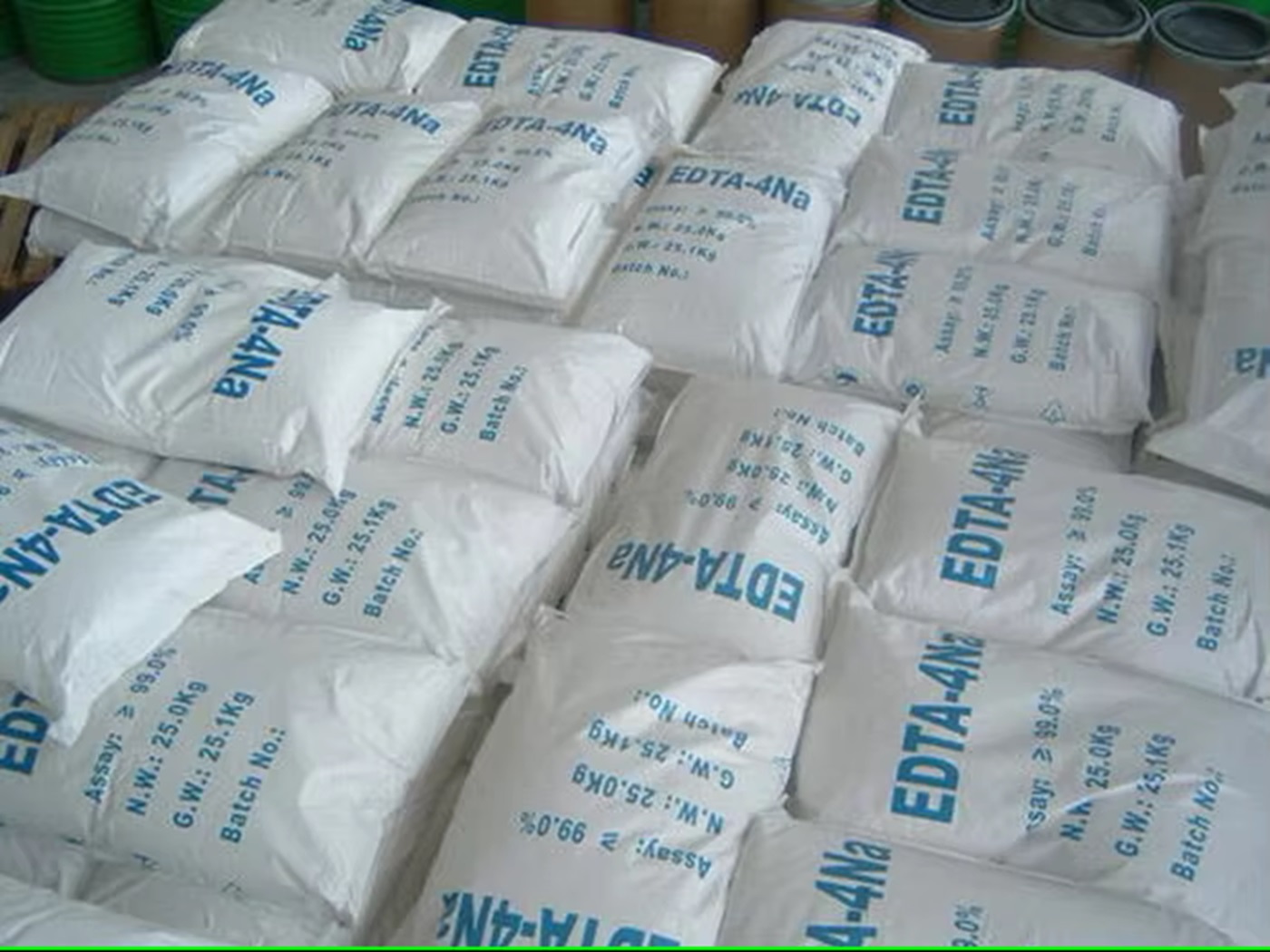
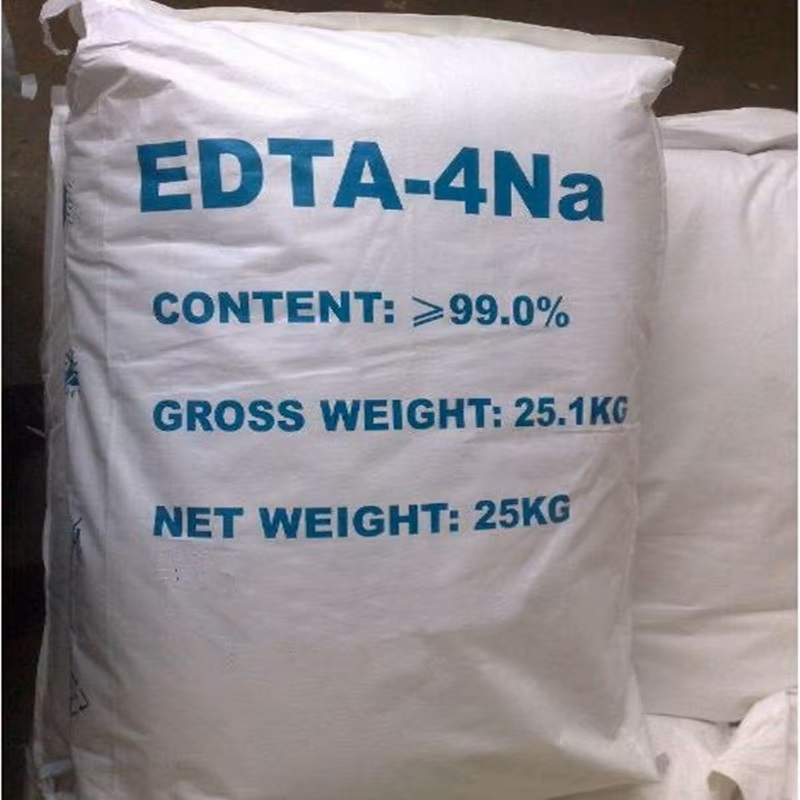
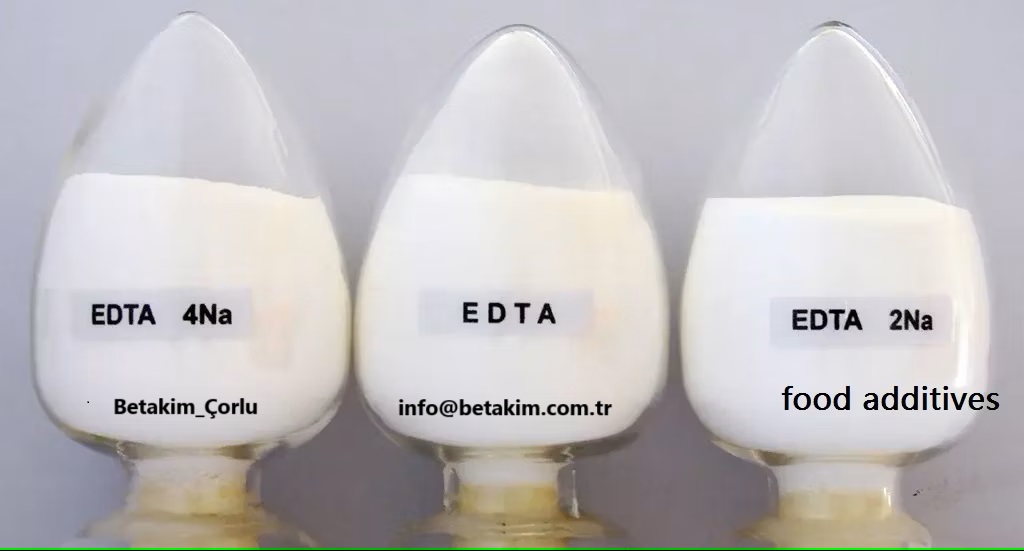
| Property | EDTA 2Na (139-33-3) | EDTA 4Na (64-02-8) | EDTA (60-00-4) |
|---|---|---|---|
| Chemical Formula | C₁₀H₁₄N₂Na₂O₈ | C₁₀H₁₂N₂Na₄O₈ | C₁₀H₁₆N₂O₈ |
| Molecular Weight | 336.21 g/mol | 380.17 g/mol | 292.24 g/mol |
| pH (1% Solution) | ~11.3 | ~12.5 | ~2.5 |
| Water Solubility | Good | Excellent | Poor |
| Sodium Content | 13.7% | 24.2% | 0% |
| CAS | 139-33-3 | 64-02-8 | 60-00-4 |
| Common Use | General chelation | Very soluble form | Acid form |
SECTION 9: REGULATORY STATUS
| Region / Authority | Status | Description |
|---|---|---|
| European Union | Permitted | Food additive (E385 as EDTA); cosmetic ingredient |
| Turkey | Permitted | Compliant with EU legislation |
| USA (FDA) | Permitted | Food additive (21 CFR 172.135); GRAS |
| Japan | Permitted | Food additive approved |
| Canada | Permitted | Health Canada approved |
| USP/EP | Available | Pharmacopoeia quality standard available |
| REACH | Registered | Compliant with EU chemical regulations |
| JECFA (FAO/WHO) | Permitted | Acceptable Daily Intake: 2.5 mg/kg bw/day |
SECTION 10: SAFETY AND TOXICOLOGICAL PROFILE
| Parameter | Assessment |
|---|---|
| Acute Oral Toxicity (LD50) | ~2,000 – 3,000 mg/kg (rat) |
| Acute Dermal Toxicity | Low toxicity |
| Skin Irritation | May cause mild irritation |
| Eye Irritation | May cause severe irritation |
| Skin Sensitization | Low potential |
| Carcinogenicity | Not classified (IARC, NTP) |
| Mutagenicity | Not mutagenic |
| Reproductive Toxicity | Not classified |
| Endocrine Disruption | No known potential |
| Aquatic Toxicity | Low; chelation reduces metal toxicity |
| Biodegradability | Poorly biodegradable; persistent in environment |
| ADI (JECFA) | 2.5 mg/kg bw/day |
| WGK Germany | Class 1 (slightly hazardous to water) |
GHS Classification:
-
Not classified as hazardous for health
-
May cause eye irritation (Category 2)
Safety Recommendations:
-
S26: In case of eye contact, rinse immediately with plenty of water and seek medical advice
-
S36/37: Wear suitable protective clothing and gloves
-
S45: In case of accident, seek medical advice
SECTION 11: STORAGE AND SHELF LIFE
| Parameter | Information |
|---|---|
| Storage Temperature | 15 – 30°C (room temperature) |
| Storage Conditions | Cool, dry, well-ventilated area |
| Container Requirements | Sealed containers; protect from moisture |
| Protect From | Moisture, excessive heat, strong oxidizing agents |
| Hygroscopicity | Slightly hygroscopic |
| Shelf Life | 24 – 36 months (under proper storage) |
| Degradation Signs | Caking, discoloration |
| Stability | Stable under cool and dry conditions |
Packaging Options:
-
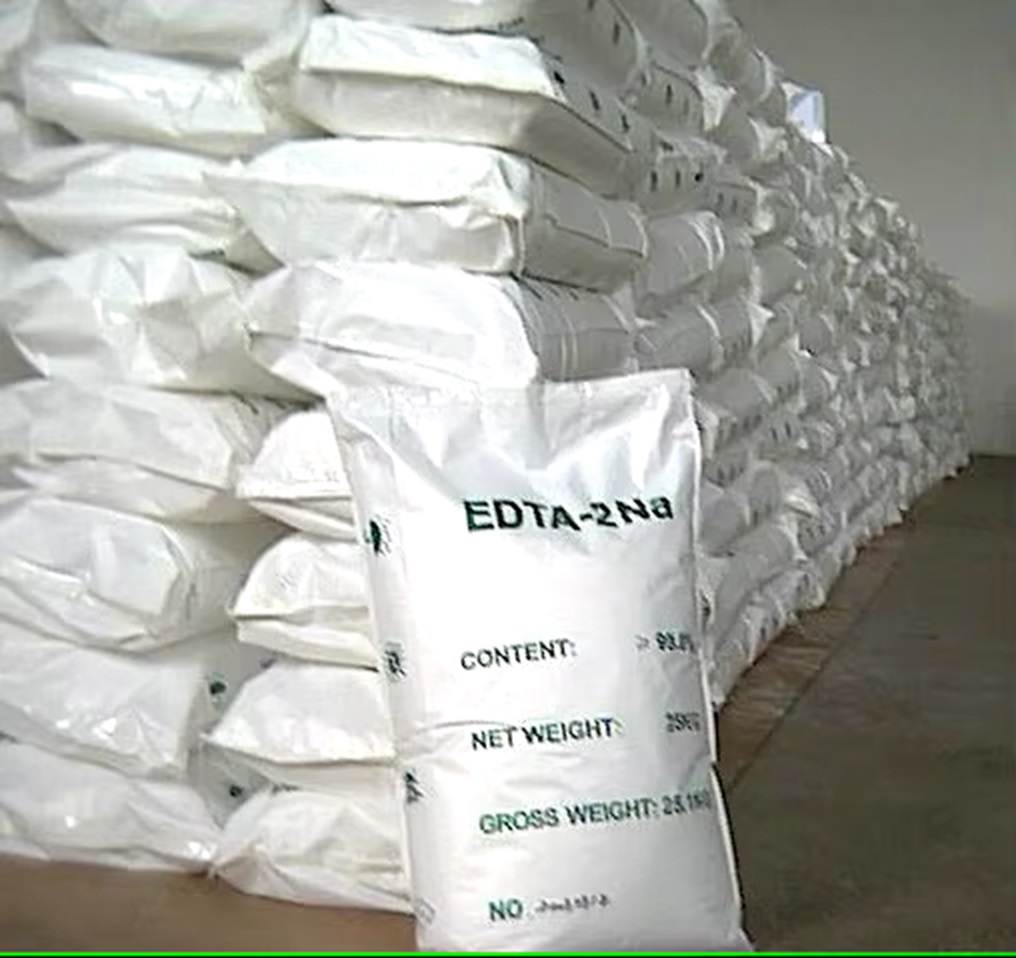
25 kg multi-layer paper bags with PE inner liner
-
25 kg HDPE drums
-
1 kg, 5 kg, 10 kg (upon request)
SECTION 12: QUALITY CERTIFICATES AND STANDARDS
| Certificate / Standard | Status | Description |
|---|---|---|
| ISO 9001:2015 | Certified | Quality management system |
| ISO 14001:2015 | Certified | Environmental management system |
| FDA 21 CFR | Compliant | Food, pharmaceutical, and cosmetic applications |
| USP/EP | Available | Pharmacopoeia quality standard |
| FCC (Food Chemicals Codex) | Compliant | Food chemical standards |
| REACH | Registered | EU chemical regulation compliance |
| Halal | Available | Certified upon request |
| Kosher | Available | Certified upon request |
| Certificate of Analysis (COA) | Provided with each batch | Includes binding specifications |
| Safety Data Sheet (SDS) | Available | Current 16-section document |
| Technical Data Sheet (TDS) | Available | Comprehensive technical information |
| GMP | Compliant | Manufacturing quality standards |
SECTION 13: DISCLAIMER AND LEGAL NOTICE
| Item | Description |
|---|---|
| Information Purpose | This Technical Data Sheet (TDS) is for informational purposes only and does not constitute a binding specification. |
| Typical Values | Values stated herein are based on typical laboratory results and may vary slightly between batches. |
| Binding Data | For binding specifications, the Certificate of Analysis (COA) for each batch should be requested. |
| User Responsibility | The user is solely responsible for determining the suitability of the product for the intended application and ensuring compliance with all applicable regulations. |
| SDS Requirement | A current Safety Data Sheet (SDS) should be requested from the supplier prior to use. |
| Safety Information | Safety information in this document is based on current knowledge but does not constitute a guarantee of the product's health and safety risks. |
| Regulatory Changes | The user is responsible for monitoring local and international regulatory changes. |
| Product Quality | Product quality is guaranteed in accordance with the standards specified in this document. |
| License / Patents | This document does not grant any license or patent rights for use of the product. |
| Side Effects | Allergic reactions are rare but possible in sensitive individuals; users should conduct suitability tests. |
DISCLAIMER (LEGAL NOTICE): This Technical Data Sheet (TDS) is for informational purposes only and does not constitute a binding specification. The values stated herein are based on typical laboratory results. The user is solely responsible for determining the suitability of the product for the intended application and for ensuring compliance with all local regulations. A current Safety Data Sheet (SDS) and Certificate of Analysis (COA) should be requested prior to use. Allergic reactions are rare but possible in sensitive individuals; suitability tests should be conducted. This document does not grant any license or patent rights for use of the product.