We unleash your business potential by maximize the business innovation.
Send EmailPolyacrylic Acid, Acrylic Acid Polymer, Carbomer, Carbopol, PAA, 9003-01-4
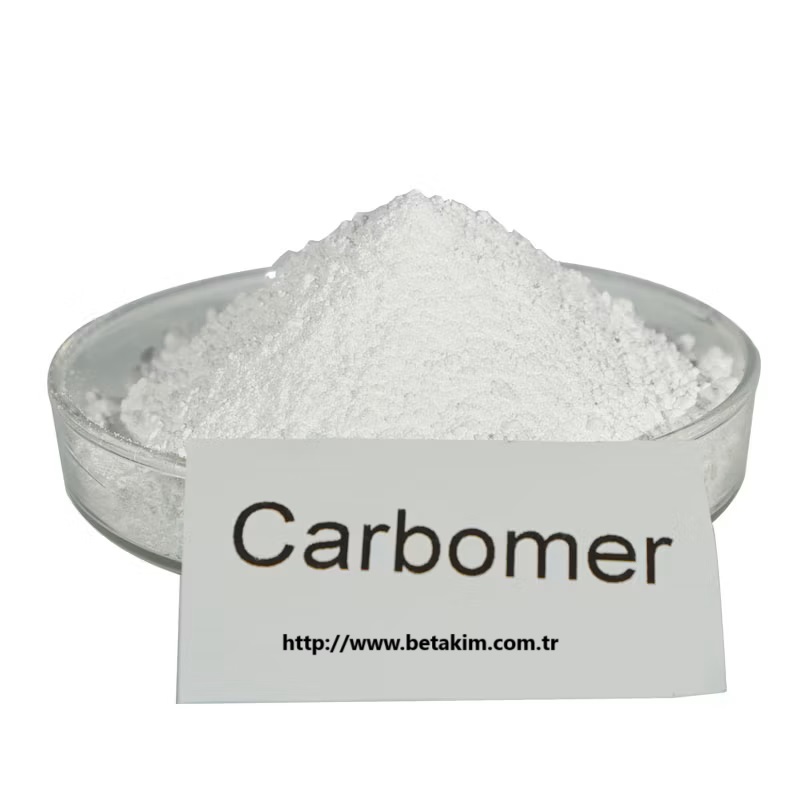
POLYACRYLIC ACID (CARBOMER)
SECTION 1: PRODUCT IDENTITY AND CHEMICAL IDENTIFICATION
| Parameter | Information |
|---|---|
| Product Name | Polyacrylic Acid |
| Chemical Name | 2-Propenoic acid homopolymer |
| Synonyms (Turkish) | Poliakrilik Asit, Karbomer, Akrilik Asit Polimeri, Karboksivinil Polimer |
| Synonyms (English) | Polyacrylic Acid, Carbomer, PAA, Acrylic Acid Polymer, Carbopol |
| CAS Number | 9003-01-4 |
| Molecular Formula | (C₃H₄O₂)ₙ |
| Molecular Weight | Variable (polymerization degree dependent; 1,200 – 250,000+ Da) |
| Chemical Class | Polymer / Polyelectrolyte / Acrylic Polymer |
| Monomer | Acrylic Acid (CH₂=CH-COOH) |
| Source | Synthetic (Acrylic acid polymerization) |
| Appearance | White, fluffy powder (Carbomer) or liquid (solution) |
| Odor | Slight characteristic or odorless |
| Physical State (20°C) | Solid (powder) / Liquid (solution) |
SECTION 2: POLYACRYLIC ACID vs CARBOMER COMPARISON
| Property | Polyacrylic Acid (Linear) | Carbomer (Cross-linked) |
|---|---|---|
| Structure | Linear polymer chain | Cross-linked three-dimensional network |
| Cross-linker | None | Allyl sucrose, divinyl glycol, allyl pentaerythritol |
| Water Solubility | Soluble | Swells (forms gel) |
| Viscosity | Low-Moderate | High-Very High |
| Gel Formation | Weak | Strong |
| Application Area | Detergents, water treatment, dispersants | Cosmetics, pharmaceuticals, gel formers |
| Trade Names | Sokalan, Acumer, Alcosperse | Carbopol, Ultrez, Pemulen |
SECTION 3: CHEMICAL STRUCTURE
Linear Polyacrylic Acid:
    —[CH₂—CH]—[CH₂—CH]—[CH₂—CH]—
            |         |         |
          COOH      COOH      COOH

    Polyacrylic Acid (linear form)
    (C₃H₄O₂)ₙ
Cross-linked Carbomer:
    —[CH₂—CH]—[CH₂—CH]—[CH₂—CH]—
            |         |         |
          COOH      COOH      COOH
            |         |         |
            ===========         |
            |         |         |
    —[CH₂—CH]—[CH₂—CH]—[CH₂—CH]—
            |         |         |
          COOH      COOH      COOH

    Carbomer (Cross-linked polyacrylic acid)
| Parameter | Description |
|---|---|
| Molecular Formula | (C₃H₄O₂)ₙ |
| Monomer Unit | Acrylic acid (CH₂=CH-COOH) |
| Functional Groups | Carboxylic acid (-COOH) |
| Cross-linking Agents | Allyl pentaerythritol, Allyl sucrose, Propylene glycol allyl ether |
| Polymerization | Radical polymerization |
| Ionization | Weak anionic polyelectrolyte; pH-dependent ionization |
| SMILES | C=CC(=O)O (monomer) |
| InChI | InChI=1S/C3H4O2/c1-2-3(4)5/h2H,1H2,(H,4,5) |
SECTION 4: PHYSICAL AND CHEMICAL PROPERTIES
| Property | Value | Test Method / Note |
|---|---|---|
| Appearance | White, fluffy powder | Visual |
| Odor | Slight characteristic or odorless | Olfactometric |
| Density (20°C) | ~1.27 g/cm³ | ASTM D4052 |
| Melting Point | 95 – 106 °C | DSC |
| Flash Point | 61.6 °C | ASTM D93 |
| pH (1% Aqueous Solution) | ~2.5 – 3.5 (unneutralized) | USP <791> |
| pH (Neutralized, Optimum) | 5.5 – 7.5 | pH Meter |
| Water Solubility | Swells / Dispersible | General Method |
| Glycerin Solubility | Swells | General Method |
| Ethanol Solubility (Neutralized) | Soluble (95% ethanol) | General Method |
| Hygroscopicity | High | - |
| Viscosity (0.5% Aqueous, Neutralized) | 500 – 60,000 cP (type dependent) | Brookfield |
| Swelling Ratio | Up to 1,000 times its volume | - |
| Thermal Stability | Stable up to 200°C | TGA |
| Solubility | Dispersible in water, insoluble in organic solvents | - |
SECTION 5: CARBOMER TYPES AND VISCOSITY VALUES
| Type | Description | Viscosity (0.5%, pH 7.3) | Applications |
|---|---|---|---|
| Carbomer 934 | Cross-linked, moderate viscosity | 20,000 – 40,000 cP | Creams, lotions, gels |
| Carbomer 940 | Cross-linked, high viscosity | 40,000 – 60,000 cP | High viscosity gels |
| Carbomer 941 | Low viscosity | 4,000 – 11,000 cP | Low viscosity gels |
| Carbomer 971P | Cross-linked, low viscosity | 2,000 – 8,000 cP | Oral formulations |
| Carbomer 974P | High viscosity | 30,000 – 50,000 cP | Pharmaceutical gels |
| Carbomer 980 | High viscosity (powder) | 40,000 – 60,000 cP | High viscosity gels |
| Carbomer 981 | Low viscosity (powder) | 4,000 – 11,000 cP | Low viscosity gels |
| Carbomer ETD 2020 | High viscosity, salt tolerant | 40,000 – 55,000 cP | Electrolyte-tolerant formulations |
| Carbomer 1382 | Long flow | Variable | Sprays, fluid gels |
| Carbomer 1342 | Moderate viscosity | 20,000 – 35,000 cP | Emulsion stabilizer |
SECTION 6: GELATION AND THICKENING MECHANISM
| Step | Description |
|---|---|
| 1. Dispersion | Carbomer powder is dispersed in water (with stirring) |
| 2. Swelling | Polymer chains absorb water and swell (30-60 minutes) |
| 3. Neutralization | Base is added (NaOH, KOH, TEA, AMP) |
| 4. Ionization | Carboxyl groups (-COOH) → Carboxylate ions (-COO⁻) |
| 5. Chain Unfolding | Electrostatic repulsion unfolds chains → viscosity increases |
| 6. Gel Formation | Transparent, viscous gel is formed |
Neutralizing Agents:
| Agent | Formula | Description |
|---|---|---|
| Sodium Hydroxide | NaOH | Most commonly used |
| Potassium Hydroxide | KOH | Commonly used |
| Triethanolamine | TEA | Common in cosmetics |
| Aminomethyl Propanol | AMP | Common in cosmetics |
SECTION 7: BASF SOKALAN® PRODUCT SERIES (COMPARISON)
| Product | Description | Molecular Weight | Form | Solids (%) | Viscosity (cP) | pH | Application |
|---|---|---|---|---|---|---|---|
| Sokalan® PA 15 | Sodium polyacrylate | ~1,200 | Liquid | 45 | 230 | 7 | Dispersant, scale inhibitor |
| Sokalan® PA 25 XS | Polyacrylic acid | ~5,000 | Liquid | 49 | 500 | 2.5 | Dispersant, scale inhibitor |
| Sokalan® PA 30 CL | Polyacrylic acid | ~8,000 | Liquid | 45 | 1,000 | 8 | Dispersant, scale inhibitor |
| Sokalan® PA 110 S | Polyacrylic acid | ~250,000 | Liquid | 35 | 5,000 | 2 | High molecular weight |
| Sokalan® PA 25 CL PN | Polyacrylic acid, sodium salt | ~4,000 | Liquid | 49 | 600 | 3.5 | Dispersant |
| Sokalan® NR 2555 | Polyacrylic acid, modified | ~4,500 | Liquid | 45 | 900 | 5 | Specialty applications |
| Sokalan® NR 2595 | Polyacrylic acid, modified | ~4,500 | Liquid | 45 | 700 | 8 | Specialty applications |
SECTION 8: APPLICATION AREAS
| Industry | Application | Function / Benefit |
|---|---|---|
| Cosmetics & Personal Care | Shampoos, Hair Conditioners | Thickener, stabilizer |
| Skin Creams, Lotions | Thickener, emulsion stabilizer | |
| Facial Gels, Eye Creams | Gel former, suspending agent | |
| Toothpastes | Thickener, suspending agent | |
| Makeup Products | Thickener, stabilizer | |
| Pharmaceutical | Creams, Lotions | Thickener, emulsifier |
| Sterile Gels | Gel former | |
| Tablet Coating | Binder, controlled release | |
| Eye Drops | Thickener, lubricant | |
| Cleaning Products | Detergents | Defoamer, anti-scaling |
| Industrial Cleaning | Dispersant, anti-scaling | |
| Paints & Coatings | Paints | Thickener, dispersant, suspending agent |
| Printing Inks | Thickener, binder | |
| Water Treatment | Scale inhibitor, dispersant | Prevents scale formation |
| Textile | Finishing, dyeing aids | Softness, color fastness |
| Paper Industry | Coating, sizing | Paper quality |
SECTION 9: COSMETIC FORMULATION TIPS
| Parameter | Recommendation |
|---|---|
| Use Level | 0.1 – 2.0% (typically 0.2 – 0.5%) |
| Dispersion | Add powder slowly to water; disperse with high-speed mixing |
| Swelling Time | Allow 30 – 60 minutes for full swelling |
| Neutralizing Agent | NaOH, KOH, TEA, AMP |
| Neutralization Level | Adjust to pH 5.5 – 7.5 |
| Optimum pH | 5.5 – 7.5 (maximum viscosity) |
| Temperature | Stable up to 60°C |
| Electrolyte Tolerance | Low – high ion concentration reduces viscosity |
| Compatibility | Compatible with nonionic, amphoteric, and cationic ingredients |
| UV Stability | Good |
| Microbial Resistance | Does not support microbial growth |
SECTION 10: QUALITY SPECIFICATIONS
| Parameter | Specification | Test Method |
|---|---|---|
| Appearance | White, fluffy powder | Visual |
| Assay (Carbomer) | ≥99.0% | Titrimetric |
| pH (0.5% Neutralized) | 5.0 – 7.0 | pH Meter |
| Viscosity (0.5%) | Type dependent | Brookfield |
| Moisture Content | ≤2.0% | Karl Fischer |
| Ash Content | ≤1.0% | Gravimetric |
| Benzene Content | ≤0.5% | GC |
| Heavy Metals (Pb) | ≤10 ppm | ICP-MS |
| Arsenic (As) | ≤2 ppm | ICP-MS |
| Lead (Pb) | ≤2 ppm | ICP-MS |
| Particle Size | 100 – 200 mesh | Sieve |
| Microbiological Purity | TAMC ≤10² CFU/g; TYMC ≤10¹ CFU/g | USP <61> |
SECTION 11: SAFETY AND TOXICOLOGICAL PROFILE
| Parameter | Value / Description |
|---|---|
| GHS Classification | May be irritating in powder form |
| Signal Word | Warning (powder form) |
| Hazard Pictograms | GHS07 (Exclamation mark) |
| Acute Oral Toxicity (LD50, Rat) | >5,000 mg/kg (low toxicity) |
| Acute Inhalation Toxicity | Dust may cause respiratory irritation |
| Skin Irritation | Mild irritant |
| Eye Irritation | Mild to moderate irritant |
| Skin Sensitization | Does not cause sensitization |
| Carcinogenicity | Not classified as carcinogenic |
| Mutagenicity | Not mutagenic |
| Reproductive Toxicity | No reproductive toxicity |
| Target Organs | Respiratory tract (dust), skin, eyes |
| Physiological Inertness | Physiologically inert |
SECTION 12: GHS CLASSIFICATION AND LABELING
GHS Classification (in accordance with 1272/2008/EC):
| Hazard Class | Category | H-Statement |
|---|---|---|
| Skin Irritation | Category 2 | H315 |
| Eye Irritation | Category 2 | H319 |
| STOT - SE | Category 3 | H335 |
Signal Word: Warning
Hazard Pictograms: GHS07 (Exclamation mark)
NFPA 704 Hazard Classification:
| Health | Flammability | Reactivity | Special |
|---|---|---|---|
| 1 | 1 | 0 | - |
| (Minimal health hazard) | (Combustible) | (Stable) | (None) |
SECTION 13: PRECAUTIONARY STATEMENTS (P-CODES)
| Code | Statement |
|---|---|
| P261 | Avoid breathing dust/fume/gas |
| P264 | Wash hands thoroughly after handling |
| P271 | Use only outdoors or in a well-ventilated area |
| P280 | Wear protective gloves/protective clothing/eye protection/face protection |
| P304+P340 | IF INHALED: Remove person to fresh air and keep comfortable for breathing |
| P305+P351+P338 | IF IN EYES: Rinse cautiously with water for several minutes |
| P312 | Call a POISON CENTER/doctor if you feel unwell |
| P332+P313 | If skin irritation occurs: Get medical advice/attention |
| P337+P313 | If eye irritation persists: Get medical advice/attention |
| P403+P233 | Store in a well-ventilated place. Keep container tightly closed |
| P501 | Dispose of contents/container in accordance with local/regional/national/international regulations |
SECTION 14: FIRST AID MEASURES
| Route of Exposure | Action |
|---|---|
| Inhalation | If inhaled as powder, move to fresh air. Seek medical attention if respiratory symptoms persist. |
| Skin Contact | Remove contaminated clothing. Wash with plenty of soap and water. Seek medical attention if irritation develops. |
| Eye Contact | Rinse thoroughly with plenty of water for at least 15 minutes. Keep eyelids open. Seek medical attention if irritation persists. |
| Ingestion | Rinse mouth with water. Do NOT induce vomiting. Drink 1-2 glasses of water. Seek medical attention. |
SECTION 15: STORAGE AND SHELF LIFE
| Parameter | Information |
|---|---|
| Storage Conditions | Store in a cool (15-25°C), dry, well-ventilated area; protect from moisture. |
| Temperature Limits | 15-25°C (ideal); do not exceed 30°C |
| Humidity | Low humidity environment (hygroscopic) |
| Container Requirements | Tightly closed, moisture-resistant containers |
| Shelf Life | 24-36 months (under proper storage conditions) |
| Signs of Degradation | Caking, color change, viscosity loss |
SECTION 16: PACKAGING OPTIONS
| Packaging Type | Quantity / Capacity | Material |
|---|---|---|
| Aluminum Foil Bag | 1 kg, 5 kg, 10 kg, 25 kg | Aluminum / PE |
| PE-Lined Kraft Bag | 10 kg, 25 kg | Kraft paper + PE liner |
| Plastic Pail (HDPE) | 20 kg, 25 kg | HDPE |
| Fiber Drum (PE Lined) | 25 kg, 50 kg | Fiber / PE |
| IBC Container | 500 kg, 1000 kg | HDPE (UV protected) |
SECTION 17: TRANSPORTATION INFORMATION
| Parameter | Information |
|---|---|
| UN Number | Not applicable (not classified as dangerous substance) |
| Hazard Class | Not applicable |
| ADR/RID | Not classified as dangerous goods |
| IMDG Code | Not marine pollutant |
| IATA (Air) | Not classified as dangerous goods; can be transported by air |
SECTION 18: REGULATORY STATUS
| Region / Authority | Status |
|---|---|
| USA (FDA) | GRAS; Approved as food additive; Pharmaceutical excipient |
| European Union (EC) | Approved as cosmetic ingredient; Food additive |
| Turkey | Approved as cosmetic, pharmaceutical and food ingredient |
| USP/NF | Official monograph (Carbomer) |
| EP | Official monograph (Carbomer) |
| INCI | Listed (Carbomer, Polyacrylic Acid) |
| REACH | Registered substance |
| Halal | Yes (synthetic, not animal-derived) |
| Kosher | Yes (with certification) |
| Vegan | Yes (synthetic) |
SECTION 19: OTHER NAMES AND SYNONYMS
| Type | Name |
|---|---|
| Turkish Names | Poliakrilik Asit, Karbomer, Akrilik Asit Polimeri |
| English Names | Polyacrylic Acid, Carbomer, PAA, Acrylic Acid Polymer |
| Trade Marks | Carbopol, Ultrez, Pemulen, Sokalan, Acumer, Alcosperse |
| CAS Number | 9003-01-4 |
| INCI Name | Carbomer, Polyacrylic Acid |
| USP/NF Name | Carbomer |
| E Number | E 412 (food) |
| HS Code | 3906.90 |
SECTION 20: CRITICAL WARNINGS AND BEST PRACTICES
CRITICAL WARNINGS:
-
Dust Control: Should be used to minimize dust formation. Airborne dust concentrations may cause respiratory irritation.
-
Hygroscopicity: Absorbs moisture; store in tightly closed, dry containers.
-
Correct Neutralization: Carbomer must be neutralized to pH 5.5-7.5. Acidic or highly alkaline conditions cause viscosity loss.
-
Salt Sensitivity: Electrolytes reduce viscosity; use ETD or 974P series for high salt tolerance formulations.
-
Temperature: Stable up to 60°C; degrades above 80°C.
-
Hydration Time: Carbomer powder should be hydrated in water for at least 1-2 hours.
BEST PRACTICE RECOMMENDATIONS:
-
Concentration: Gels: 0.5-1.0%; Emulsions: 0.1-0.5%; Serums: 0.1-0.3%.
-
Correct Type Selection: Choose the correct Carbomer type based on application.
-
Chelator Use: Add EDTA (0.05-0.1%) to improve stability by binding metal ions.
-
Neutralization: Neutralize with triethanolamine, NaOH, KOH, or AMP to pH 5.5-7.5.
-
Personal Protective Equipment: Dust mask (N95/FFP2), safety goggles, protective clothing.
-
Storage: Store in cool, dry, air-tight containers.
LEGAL DISCLAIMER:
The information provided in this document is based on our current knowledge and experience and is presented in good faith. However, as all conditions of use are beyond our control, it does not constitute a binding specification or guarantee. This Technical Data Sheet is for informational purposes only. Users are responsible for testing suitability for their own applications and for complying with all local, regional, and national regulations. For complete safety, storage, use, handling, waste, and regulatory compliance information, please refer to the official Safety Data Sheet (SDS/MSDS) provided by the manufacturer/supplier.