We unleash your business potential by maximize the business innovation.
Send EmailNitrilo Trimethylene Triphosphonic Acid, Aminotrimethylene Phoshonic Acid, NTMP, ATMP, ATMPA, 6419-19-8
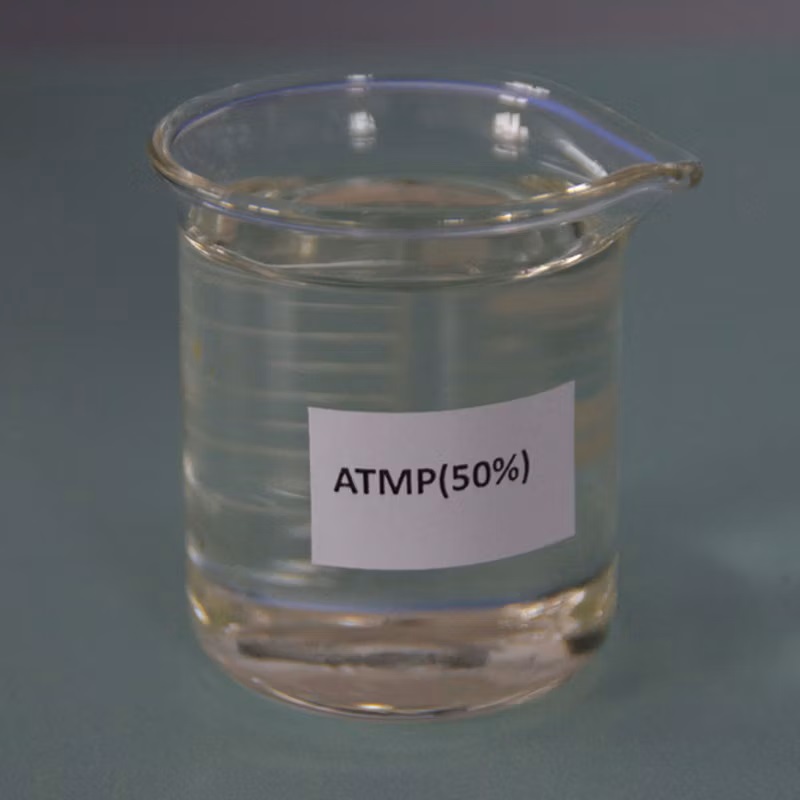
ATMP – Aminotris(methylenephosphonic acid)
General Information
-
Chemical Name: Amino Trimethylene Phosphonic Acid (ATMP)
-
Other Names: Aminotris, Methylenephosphonic Acid, NTMP
-
Chemical Formula: C₃H₁₂NO₉P₃
-
CAS Number: 6419-19-8
-
Molecular Weight: 299.05 g/mol
-
Appearance: White crystalline solid
-
Density: 1.33 g/cm³ (20°C)
-
Melting Point: ~200°C (decomposes)
-
Solubility: Highly soluble in water (61 g/100 mL)
Properties
-
Excellent chelating ability (binds Ca²⁺, Mg²⁺, Fe³⁺ ions).
-
Threshold inhibition – effective at very low concentrations.
-
Lattice distortion effect – prevents crystal growth of scale-forming salts.
-
High chemical stability – resistant to hydrolysis in water systems.
-
Functions as a scale inhibitor and corrosion inhibitor.
Applications
-
Water Treatment: Cooling systems, boilers, oilfield pipelines, power plants, refineries.
-
Textile Industry: Chelating agent in dyeing and finishing.
-
Metal Surface Treatment: Prevents corrosion and scaling.
-
Detergents & Cleaning Agents: Improves cleaning efficiency by preventing scale.
Phosphonates – Variants and CAS Numbers
| Chemical Name | Abbreviation | Formula | CAS No | Key Features |
|---|---|---|---|---|
| Amino Trimetylene Phosphonic Acid | ATMP | C₃H₁₂NO₉P₃ | 6419-19-8 | Strong chelation, scale & corrosion inhibitor |
| Diethylene Triamine Penta(methylenephosphonic acid) | DTMPA | (CH₂PO₃H₂)₂NCH₂CH(NHPO₃H₂)₂ | 15827-60-8 | High chelation, wide pH range, thermal stability |
| Ethylenediamine Tetra(methylenephosphonic acid) | EDTMPA | (CH₂PO₃H₂)₂NCH₂CH(NHPO₃H₂)₂ | 1429-50-1 | Strong binding to Ca, Mg, Fe; stable in acidic/alkaline systems |
| 2-Phosphonobutane-1,2,4-tricarboxylic acid | PBTCA | C₇H₁₁O₉P | 37971-36-1 | High stability, strong lattice distortion, long-term protection |
Summary
-
ATMP (CAS 6419-19-8) is the most widely used phosphonate for scale and corrosion inhibition.
-
DTMPA, EDTMPA, PBTCA are specialized phosphonates with enhanced chelation, stability, and performance under different industrial conditions.
-
Together, these compounds are essential in water treatment, detergents, textiles, coatings, and industrial cleaning, ensuring equipment longevity and process efficiency.
ATMP – Aminotris(methylenephosphonic acid)
General Information
-
Chemical Name: ATMP / Amino Trimethylene Phosphonic Acid
-
Other Names: Methylenephosphonic Acid, Aminotris
-
Chemical Formula: C₃H₁₂NO₉P₃
-
CAS Number: 6419-19-8
-
Molecular Weight: 299.05 g/mol
-
Appearance: White solid (crystalline powder)
-
Density: 1.33 g/cm³ (20°C)
-
Melting Point: ~200°C (decomposes)
-
Solubility: Highly soluble in water (61 g/100 mL)
-
Packaging: Drums
Properties
-
Excellent chelating ability (binds metal ions effectively).
-
Low threshold inhibition – effective at very low concentrations.
-
Lattice distortion effect – prevents crystal growth of scale-forming salts.
-
High chemical stability – resistant to hydrolysis in water systems.
-
Functions as a scale inhibitor and corrosion inhibitor.
Applications
-
Water Treatment:
-
Cooling water systems in power plants and refineries.
-
Oilfield water pipelines.
-
Prevents calcium carbonate scaling and corrosion.
-
-
Textile Industry:
-
Chelating agent in dyeing and finishing processes.
-
-
Metal Surface Treatment:
-
Protects against corrosion and scaling.
-
-
Detergents & Cleaning Agents:
-
Improves cleaning efficiency by preventing scale formation.
-
Phosphonates – Overview
Phosphonates are organophosphorus compounds with strong metal-binding properties, high water solubility, and stability. They are widely used in water treatment, detergents, industrial cleaning, textiles, and coatings.
Key Benefits
-
Prevent scale and corrosion in water systems.
-
Act as chelating agents for calcium, magnesium, and iron.
-
Effective even at low concentrations.
-
Stable across wide pH ranges and high temperatures.
Types of Phosphonates
1. ATMP
-
Formula: N(CH₂PO₃H₂)₃
-
Strong chelation, low threshold inhibition, lattice distortion.
-
Applications: water treatment, detergents, textile finishing, metal surface protection.
2. DTMPA
-
Formula: (CH₂PO₃H₂)₂NCH₂CH(NHPO₃H₂)₂
-
High chelation capacity, effective at low concentrations.
-
Works across wide pH ranges, thermally stable.
-
Applications: boilers, cooling towers, industrial cleaning, coatings, detergents.
3. EDTMPA
-
Formula: (CH₂PO₃H₂)₂NCH₂CH(NHPO₃H₂)₂
-
Similar to DTMPA, with strong binding to Ca, Mg, Fe ions.
-
Effective in acidic and alkaline environments.
-
Applications: water softening, industrial cleaning, coatings, detergents.
4. PBTCA
-
Formula: (CH₂PO₃H₂)₂N(CH₂)₂N(CH₂PO₃H₂)₂
-
High chelation and stability.
-
Strong lattice distortion effect.
-
Applications: water treatment, industrial cleaning, coatings, detergents.
Summary
-
ATMP is a cost-effective, general-purpose phosphonate with excellent chelating and scale-inhibiting properties.
-
Phosphonates (ATMP, DTMPA, EDTMPA, PBTCA) are indispensable in industrial water treatment, detergents, textiles, and coatings due to their ability to prevent scaling, corrosion, and improve cleaning efficiency.
-
Their stability across wide operating conditions makes them reliable for long-term industrial use.