We unleash your business potential by maximize the business innovation.
Send Email
| Additive | CAS No. | Function | Suitability for Halva | Mandatory / Critical Sectors |
|---|---|---|---|---|
| E471 – Glycerol Monostearate (GMS) | 123-94-4 | Emulsifier, stabilizer | ✅ Prevents oil separation in tahini halva | - Food: Halva, chocolate, margarine, ice cream<br>- Pharma: Tablet binder<br>- Cosmetics: Cream stabilizer |
| E492 – Sorbitan Tristearate (Span 65) | 26658-19-5 | Emulsifier, fat crystallization control | ✅ Keeps oil phase homogeneous in halva | - Food: Chocolate (fat bloom prevention), margarine, halva<br>- Cosmetics: Lotions, creams<br>- Pharma: Spray and capsule carrier |
| E322 – Lecithin (Soy/Sunflower) | 8002-43-5 | Natural emulsifier, antioxidant | ✅ Extends shelf life, slows oxidation in halva | - Food: Chocolate, halva, infant formula<br>- Pharma: Capsule coating<br>- Cosmetics: Moisturizers, hair care products |
Chocolate industry:
E492 → critical for preventing fat bloom.
E322 → standard for viscosity control.
Margarine & spreads:
E471 → mandatory for stabilizing oil-water emulsions.
Tahini halva (industrial production):
E471 + E492 → best solution to prevent oil separation.
E322 → optional but beneficial for shelf life.
Pharmaceuticals:
E471 → mandatory as tablet binder.
E322 → widely used for capsule coating.
Cosmetics:
E471 + E322 → standard stabilizers in creams and lotions.
For halva, E471 is the primary additive, E492 is the complementary stabilizer, and E322 is optional but useful.
For chocolate and margarine, E471 and E492 are mandatory.
For pharma and cosmetics, E471 and E322 are standard stabilizers.
The CAS numbers 31566-31-1, 11099-07-3, and 342394-34-7 are all alternative registry entries for Glyceryl Monostearate (GMS, E471). They represent the same substance (monoester of glycerol and stearic acid) but are recorded under different identifiers depending on purity, isomer form, or supplier registration.
Name: Glyceryl monostearate / Stearic acid, monoester with glycerol
Formula: C₂₁H₄₂O₄
Properties: White to cream wax-like solid, melting point ~78–81 °C, insoluble in water but dispersible with surfactants.
Use: Food emulsifier (E471), cosmetics stabilizer, pharmaceutical excipient.
Name: Glyceryl monostearate (alternative registry)
Description: Prepared by esterification of long-chain fatty acids (C16–C18) with glycerol.
Properties: Milky white waxy solid, soluble in ethanol/ether, non-ionic surfactant.
Use: Common in cosmetics (glyceryl stearate SE), food emulsifier, and pharma binder.
Name: Monostearin / 1-Monostearoylglycerol
Formula: C₂₀H₄₀O₅
Synonyms: 2,3-Dihydroxypropyl 17-hydroxyheptadecanoate, Aldo MSLG.
Properties: Density ~1.0 g/cm³, boiling point ~504 °C, flash point ~165 °C.
Use: Same as above — food emulsifier (E471), cosmetic stabilizer, industrial additive.
Isomeric forms: Alpha-monostearate vs. beta-monostearate.
Purity grades: Standard GMS (~40–50% monoglyceride) vs. GMS90 (≥90% monoglyceride).
Different registries: Suppliers and chemical databases sometimes assign alternate CAS identifiers.
Trade names: Linked to commercial products like Arlacel 165, Emerest 2407, Aldo MSD/MSLG.
Primary CAS reference: 123-94-4 is the most widely recognized for E471.
Alternate CAS numbers (31566-31-1, 11099-07-3, 342394-34-7): Should be listed in compliance tables as synonyms to ensure supplier compatibility and audit clarity.
| Name | Monostearin |
| Synonyms | GMS Aldo 33 Aldo 75 Aldo MSD NSC 3875 Aldo MSLG Sandin EU Arlacel 165 Monostearin Emerest 2407 FEMA No. 2527 1-Monostearin Stearin, 1-mono- alpha-Monostearin Glycerol 1-stearate Glycerin 1-stearate 1-glycerol stearate 1-Glyceryl stearate Glyceryl monostearate Glycerol Monostearate 1-Monostearoylglycerol Glycerol stearate, pure Glyceryl 1-monostearate Glycerin 1-monostearate Glycerol 1-monostearate Glycerol alpha-monostearate Stearic acid 1-monoglyceride 3-Stearoyloxy-1,2-propanediol (1)-2,3-Dihydroxypropyl stearate Stearic acid alpha-monoglyceride Octadecanoic acid, 2,3-dihydroxypropyl ester |
| CAS | 123-94-4 31566-31-1 11099-07-3 342394-34-7 |
| EINECS | 204-664-4;250-705-4;234-325-6 |
| InChI | InChI=1/2C21H42O4/c2*1-2-3-4-5-6-7-8-9-10-11-12-13-14-15-16-17-21(24)25-20(18-22)19-23/h2*20,22-23H,2-19H2,1H3 |
| Molecular Formula | C21H42O4 |
| Molar Mass | 358.56 |
| Density | 0.9700 |
| Melting Point | 55-60℃ |
| Boling Point | 410.96°C (rough estimate) |
| Water Solubility | Soluble in hot organic solvents.Soluble in hot water. Slightly soluble in ethanol. Insoluble in aliphatic solvents. |
| Storage Condition | −20°C |
| Refractive Index | 1.4400 (estimate) |
| Physical and Chemical Properties | Chemical properties White or yellowish waxy solid, odorless, tasteless. Relative density 0.97, melting point 56~58 ℃. Soluble in hot organic solvents such as ethanol, benzene, acetone, mineral oil, fatty oil, etc., insoluble in water, but can be dispersed in hot water under strong stirring to form an emulsion. HLB value 3.8. ADI is not limited (No limited,FAO/WHO,1994). |
| Use | As an emulsifier and surfactant in food or cosmetics, it is also an internal and external lubricant for plastic products. |
| Raw Materials | Glycerin Glycerin Adipic acid Pentaerythritol Sodium hydroxide Stearic acid |
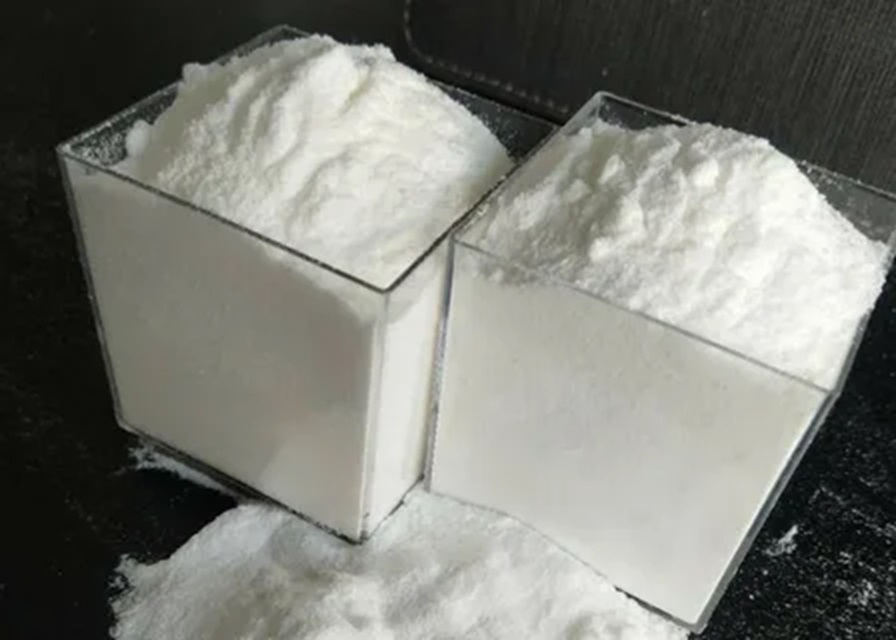
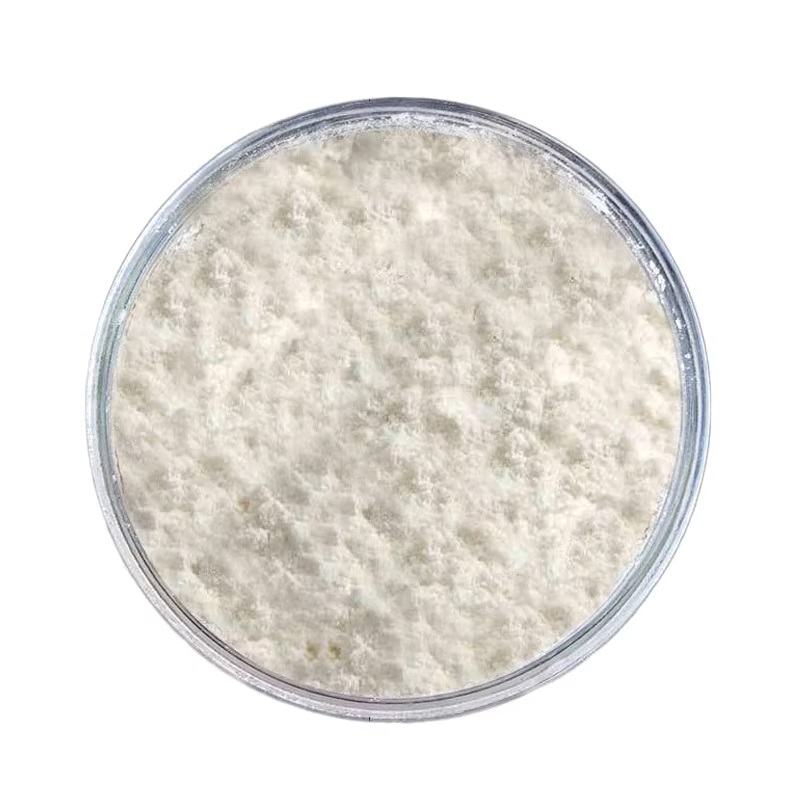
milky white to light yellow flakes or powder. The melting point of 58~59 degrees C, the relative density of 0.97. Insoluble in water, dispersed in hot water, water-in-oil emulsifier, good emulsifying properties. Soluble in hot organic solvents such as ethanol, benzene, acetone and mineral oil.
Use
can be used as emulsifier, co-emulsifier, stabilizer and preservative. Emulsifiers for industrial silk oil and lubricants for textiles; Used as dripping agents and antifogging agents in plastic films; Used as lubricants and antistatic agents in plastic processing; Used as suppository base agents and drug carriers in the pharmaceutical industry. It is also used in the preparation of cosmetic creams, creams and lotions. The reference dosage of dairy products, margarine and cakes was 0.3% ~ 0.5%, and the dosage of defoaming agent of soy sauce, soybean milk and lactic acid beverage was 0.1%.
Safety
non-toxic, non-irritating.
Nature
| storage conditions | Sealed in dry,Store in freezer, under -20°C |
| solubility | Soluble in hot ethanol, ether, chloroform, hot acetone, mineral oil, and fixed oils. Practically insoluble in water, but may be dispersed in water with the aid of a small amount of soap or other surfactant. |
| morphology | Powder |
| color | Pure-white or cream-colored, wax-like solid |
| Odor | faint odor |
| water solubility | Soluble in hot organic solvents.Soluble in hot water. Slightly soluble in ethanol. Insoluble in aliphatic solvents. |
| Merck | 14,4489 |
Uses and synthesis methods
chemical properties
White or yellowish waxy solid, odorless and tasteless. Relative density 0.97, melting point 56~58 ℃. Soluble in hot organic solvents such as ethanol, benzene, acetone, mineral oil, fatty oil, etc., insoluble in water, but can be dispersed in hot water under strong stirring to form an emulsion. HLB value 3.8. ADI is not limited (No limited,FAO/WHO,1994).
use
1, as W/O emulsifier, China's regulations can be used in all kinds of food, according to the production needs of appropriate use.
2. this product is an emulsifier. In the application of food additives, bread, biscuits, cakes, etc. are the most used, followed by cream, butter, and ice cream. As an excipient in pharmaceutical products, it is used for the preparation of neutral ointment; in daily chemicals, it is used for the preparation of snow cream, frost, clam oil, etc. It is also used as a solvent for oils and waxes, a hygroscopic powder protective agent and an opaque opacifier. Glycerol fatty acid esters produced by the reaction of glycerol and fatty acids include monoesters, diesters, and triesters. Triesters are fats and oils, and they have no emulsifying ability at all. Generally, a mixture of monoesters and diesters can be used, and products with a monoester content of about 90% can be obtained by distillation and refining. The fatty acids used can be stearic acid, palmitic acid, myristic acid, oleic acid, linoleic acid, etc. However, in most cases, mixed fatty acids with stearic acid as the main component are used.
production method
1, obtained by esterification of glycerin and stearic acid. Add stearic acid, glycerin and sodium hydroxide into the reaction pot, heat and melt, start stirring, and introduce nitrogen. Heating, reacting at 185 ℃ for 7h, pH should be less than 5 at the end of the reaction. Cooling and discharging to obtain glycerol monostearate. Each ton of product consumes more than 82kg of stearin and 235kg of glycerin (more than 95%).
2, direct esterification
according to the molar ratio of stearic acid and glycerol of 1:(1.2~1.3), under the action of 0.2% acidic catalyst, react at 180~250 ℃ for 2~4h; The reactants are quickly cooled to 100 ℃, alkali is added to neutralize the catalyst, and a product containing monoester 40% ~ 60% is obtained after washing with water.
transesterification
glyceryl stearate and glycerol react at 170~240 ℃ for 1~2h in the presence of 0.06% ~ 0.1% Cu(OH)2. during the reaction, nitrogen is introduced for protection. after deodorization, acid neutralization and purification of the reactants, a product containing monoester 40% ~ 60% is obtained.
Glycidyl saponification method
glycidyl and stearic acid react at 100~130 ℃ for 30~70min under the catalysis of tetraethylammonium iodide. after refining the reactants, a product containing monoester 80% ~ 90% can be obtained.
Epichlorohydrin phase transfer catalysis
epichlorohydrin and sodium stearate (2:1, molar ratio) in toluene, under the catalysis of phase transfer catalyst tetrabutyl ammonium bromide, react at 90~110 ℃ for 2h; The reactants are washed with sodium chloride solution, the organic phase is divided, toluene and unreacted epichlorohydrin are distilled to obtain glycidyl stearate, hydrolyzed with 0.1mol/L Na, the monoester content is above 90%. Monoester products with a content of 40% ~ 60% can obtain high concentration products of more than 90% by molecular distillation.
Security information
| WGK Germany | 1 |
| TSCA | Yes |
| Toxicity | LD50 ipr-mus: 200 mg/kg NTIS** AD277-689 |