We unleash your business potential by maximize the business innovation.
Send EmailPolysorbate 80, Tween 80, PEG-20 Sorbitan Monooleate, Polyoxyethylene Sorbitan Monooleate, E433, 9005-65-6
POLYSORBATE 80 (TWEEN 80 - E433)
| Product Name | Chemical Name | CAS No | E Number |
|---|---|---|---|
| Polysorbate 20 | Polyoxyethylene (20) sorbitan monolaurate | 9005-64-5 | E432 |
| Polysorbate 40 | Polyoxyethylene (20) sorbitan monopalmitate | 9005-66-7 | E434 |
| Polysorbate 60 | Polyoxyethylene (20) sorbitan monostearate | 9005-67-8 | E435 |
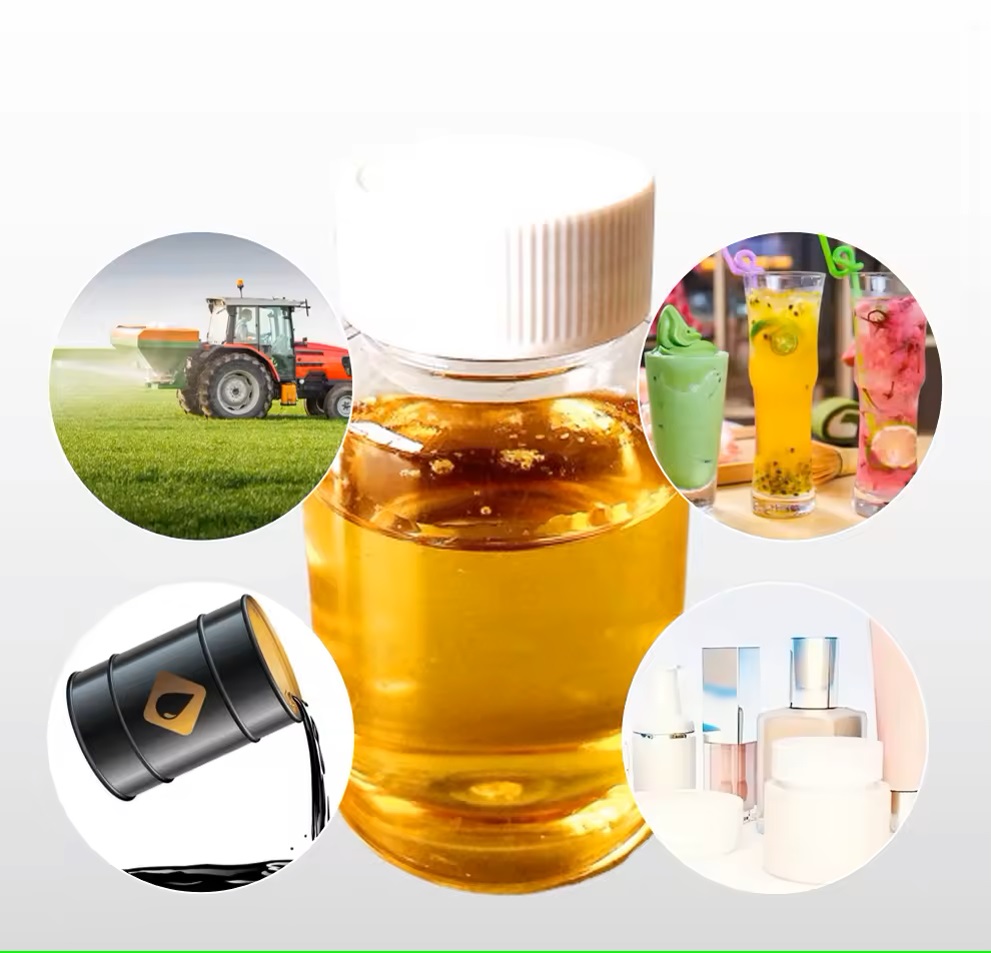
| Polysorbate 80 | Polyoxyethylene (20) sorbitan monooleate | 9005-65-6 | E433 |
SECTION 1: PRODUCT IDENTITY AND CHEMICAL IDENTIFICATION
| Parameter | Information |
|---|---|
| Product Name | Polysorbate 80 |
| Chemical Name | Polyoxyethylene (20) Sorbitan Monooleate |
| Synonyms (Turkish) | Polisorbat 80, Tween 80, PEG-20 Sorbitan Monooleat, E433 |
| Synonyms (English) | Polysorbate 80, Tween 80, PEG-20 Sorbitan Monooleate, Polyoxyethylene Sorbitan Monooleate, E433 |
| E Number | E433 |
| CAS Number | 9005-65-6 |
| Molecular Formula | C₃₂H₆₀O₁₀ |
| Molecular Weight | 604.80 g/mol |
| Chemical Class | Non-ionic surfactant; Polyoxyethylene sorbitan ester |
| Source | Semi-synthetic (ethoxylation of sorbitan monooleate) |
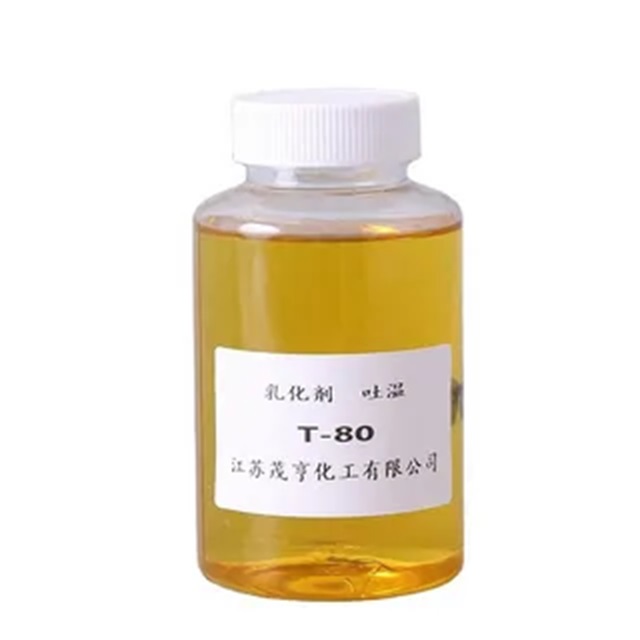
| Physical State (20°C) | Semi-solid |
| Odor | Characteristic slight odor |
| Color | Yellow to amber |
| Taste | Warm, slightly bitter |
SECTION 2: CHEMICAL STRUCTURE
Polysorbate 80 Structure:
                    O
                    ‖
    HO—(CH₂CH₂O)ₙ—CH₂—CH—CH—O—C—(CH₂)₇—CH═CH—(CH₂)₇—CH₃
                    |   |
                 CH₂OH  O
                        |
                 (CH₂CH₂O)ₙH

    Polysorbate 80
    Polyoxyethylene (20) Sorbitan Monooleate
Structure Description:
| Parameter | Description |
|---|---|
| Chemical Structure | Ester of sorbitol (dehydrated to sorbitan) with oleic acid; ethoxylated with approximately 20 moles of ethylene oxide (PEG-20) |
| Hydrophilic Part | Polyoxyethylene chains (PEG-20) |
| Lipophilic Part | Oleic acid group (C18:1) |
| Ionic Character | Non-ionic |
| Surface Activity | Amphiphilic molecule (both hydrophilic and lipophilic) |
| HLB Value | ~15 (oil-in-water emulsifier) |
SECTION 3: PHYSICAL AND CHEMICAL PROPERTIES
| Property | Value | Test Method / Note |
|---|---|---|
| Appearance | Yellow to amber, semi-solid | Visual |
| Odor | Characteristic slight odor | Olfactometric |
| Molecular Weight | 604.80 g/mol | Calculated |
| Density | 1.08 g/mL | ASTM D4052 |
| Melting Point | ~ -15°C to -20°C | - |
| Boiling Point | >100°C | - |
| Flash Point | >100°C | ASTM D93 |
| Water Solubility | Soluble | General Method |
| Ethanol Solubility | Soluble | General Method |
| Ethyl Acetate Solubility | Soluble | General Method |
| Toluene Solubility | Soluble | General Method |
| Oil Solubility | Insoluble | General Method |
| HLB Value | ~15 | - |
| pH (5% Solution) | 5.0 – 7.0 | pH Meter |
| Viscosity (25°C) | ~300 – 500 cP (liquid form) | Brookfield |
| Stability | Stable; Incompatible with strong alkalis and oxidizing agents | - |
| Heavy Metals (Pb) | ≤10 ppm | AAS / ICP |
| Arsenic (As) | ≤2 ppm | AAS / ICP |
| Lead (Pb) | ≤2 ppm | AAS / ICP |
| Acid Value | ≤2.0 mg KOH/g | Titrimetric |
| Saponification Value | 45 – 55 mg KOH/g | Titrimetric |
| Hydroxyl Value | 65 – 80 mg KOH/g | Titrimetric |
| Peroxide Value | ≤5.0 meq/kg | Titrimetric |
| Loss on Drying | ≤0.5% | Gravimetric |
| Assay (Polysorbate 80) | ≥98.0 – 100.0% | HPLC / Titrimetric |
SECTION 4: POLYSORBATE TYPES COMPARISON
| Parameter | Polysorbate 20 | Polysorbate 40 | Polysorbate 60 | Polysorbate 80 |
|---|---|---|---|---|
| Trade Name | Tween 20 | Tween 40 | Tween 60 | Tween 80 |
| Chemical Name | PEG-20 Sorbitan Monolaurate | PEG-20 Sorbitan Monopalmitate | PEG-20 Sorbitan Monostearate | PEG-20 Sorbitan Monooleate |
| Fatty Acid | Lauric acid (C12:0) | Palmitic acid (C16:0) | Stearic acid (C18:0) | Oleic acid (C18:1) |
| CAS Number | 9005-64-5 | 9005-66-7 | 9005-67-8 | 9005-65-6 |
| E Number | E432 | E434 | E435 | E433 |
| HLB Value | ~16.7 | ~15.6 | ~14.9 | ~15.0 |
| Physical State | Liquid | Semi-solid | Semi-solid | Semi-solid |
| Primary Use | Flavor emulsifier, solubilizer | Baking, ice cream | Margarine, creams | Ice cream, vaccines, cosmetics |
SECTION 5: MECHANISM OF ACTION
| Property | Description |
|---|---|
| Emulsion | Reduces surface tension between oil and water phases; Stabilizes oil-in-water (O/W) emulsions; Forms micelles around oil droplets; Prevents coalescence and separation. |
| Solubilization | Solubilizes hydrophobic substances in aqueous media; Encapsulates oil-soluble compounds within micelles; Increases dispersion of water-insoluble components. |
| Surface Activity | Adsorbs at liquid-liquid and liquid-solid interfaces; Hydrophilic PEG chains extend into water; Lipophilic oleic acid chain anchors in oil; Provides steric stabilization. |
| Wetting Agent | Improves wetting of surfaces; Reduces contact angle; Enhances spreading and penetration. |
| Stabilization | Stabilizes emulsions and suspensions; Prevents particle aggregation; Extends shelf life of formulations. |
| Dispersion | Disperses pigments and solid particles; Provides uniform distribution; Prevents sedimentation. |
| Foaming | May stabilize foam in some applications; Used as foaming agent in some food products. |
SECTION 6: MANUFACTURING PROCESS
Industrial Production Method (Three-Step Synthesis):
| Step | Description |
|---|---|
| 1. Sorbitol Dehydration | Sorbitol → Dehydration → Sorbitan |
| 2. Esterification | Sorbitan + Oleic Acid → Esterification → Sorbitan Monooleate |
| 3. Ethoxylation | Sorbitan Monooleate + Ethylene Oxide (20 mol) → Ethoxylation → Polysorbate 80 |
Process Flow:
Sorbitol → Dehydration (heat/vacuum) → Sorbitan → Esterification (oleic acid, catalyst) → Sorbitan Monooleate → Ethoxylation (ethylene oxide, 20 mol) → Neutralization → Purification → Final Product
SECTION 7: FUNCTIONAL PROPERTIES
| Property | Description |
|---|---|
| Emulsifier (O/W) | Oil-in-water (O/W) emulsifier; Stabilizes emulsions in food, cosmetics and pharmaceuticals; Prevents oil-water separation; Forms stable homogeneous mixtures. |
| Surfactant | Non-ionic surfactant; Reduces surface and interfacial tension; Enhances wetting, spreading and dispersion. |
| Solubilizer | Solubilizes hydrophobic compounds in aqueous media; Increases bioavailability of oil-soluble vitamins and drugs. |
| Dispersant | Disperses pigments and solid particles; Prevents agglomeration; Provides uniform color and texture in cosmetics and paints. |
| Viscosity Modifier | Modifies rheological properties; Controls flow behavior; Improves product texture. |
| Stabilizer | Stabilizes emulsions, suspensions and foams; Prevents phase separation; Extends shelf life. |
| Foaming Agent | Helps form and stabilize foam in some applications; Used in food foams and whipped products. |
SECTION 8: MAIN APPLICATION AREAS
| Industry / Application | Function | Typical Use |
|---|---|---|
| Food Industry (E433) | Emulsifier, stabilizer, foaming agent | Ice cream, chocolate sauces, cake mixes, bread, salad dressings, sauces, margarine; Dosage: 0.1 – 1.0% |
| Cosmetics | Surfactant, emulsifier, pigment dispersant | Shampoos, lotions, creams, makeup, bath bombs, sunscreens; Dosage: 0.5 – 5% |
| Pharmaceutical | Excipient, solubilizer, stabilizer | Eye drops, syrups, vaccine formulations, injectable formulations, topical creams; Dosage: 0.1 – 2% |
| Industrial | Emulsifier, dispersant | Soaps, pesticides, agrochemicals, emulsions, paints, coatings; Dosage: 0.1 – 5% |
| Dietary Supplements | Solubilizer, dispersant | Oil-soluble vitamin formulations (A, D, E, K), omega-3 emulsions; Enhances bioavailability. |
| Biotechnology | Membrane solubilizer | Cell lysis buffers, protein extraction; Solubilization of membrane proteins; Laboratory applications. |
SECTION 9: SAMPLE FORMULATIONS
Ice Cream Emulsifier/Stabilizer (100 kg Batch):
| Component | Quantity |
|---|---|
| Polysorbate 80 (E433) | 0.1 – 0.5 kg |
| Mono- & Diglycerides (E471) | 0.2 – 0.5 kg |
| Ice Cream Base (Milk, Cream, Sugar) | q.s. to 100 kg |
Instructions: Add Polysorbate 80 with other emulsifiers during blending; Homogenize at high pressure; Pasteurize; Freeze in ice cream machine.
Cosmetic Lotion (100 kg):
| Component | Quantity |
|---|---|
| Polysorbate 80 | 1 – 3 kg |
| Oil Phase (Oils, Waxes) | 10 – 20 kg |
| Water Phase | q.s. to 100 kg |
| Preservatives, Fragrance | As required |
Instructions: Dissolve Polysorbate 80 in oil phase or water phase; Combine phases with high-shear mixing; Cool with stirring.
SECTION 10: QUALITY SPECIFICATIONS
| Parameter | Food Grade (E433) | Pharmaceutical Grade | Cosmetic Grade | Test Method |
|---|---|---|---|---|
| Appearance | Yellow to amber semi-solid | Yellow to amber semi-solid | Yellow to amber semi-solid | Visual |
| Assay | ≥98.0% | ≥99.0% | ≥98.0% | HPLC / Titrimetric |
| Acid Value | ≤2.0 mg KOH/g | ≤1.0 mg KOH/g | ≤2.0 mg KOH/g | Titrimetric |
| Saponification Value | 45 – 55 mg KOH/g | 45 – 55 mg KOH/g | 45 – 55 mg KOH/g | Titrimetric |
| Hydroxyl Value | 65 – 80 mg KOH/g | 65 – 80 mg KOH/g | 65 – 80 mg KOH/g | Titrimetric |
| Peroxide Value | ≤5.0 meq/kg | ≤3.0 meq/kg | ≤5.0 meq/kg | Titrimetric |
| pH (5% Solution) | 5.0 – 7.0 | 5.0 – 7.0 | 5.0 – 7.0 | pH Meter |
| Loss on Drying | ≤0.5% | ≤0.5% | ≤0.5% | Gravimetric |
| Heavy Metals (Pb) | ≤10 ppm | ≤5 ppm | ≤10 ppm | AAS / ICP |
| Arsenic (As) | ≤2 ppm | ≤1 ppm | ≤2 ppm | AAS / ICP |
| Lead (Pb) | ≤2 ppm | ≤1 ppm | ≤2 ppm | AAS / ICP |
| Ethylene Oxide Residue | ≤1 ppm | ≤1 ppm | ≤1 ppm | GC |
| 1,4-Dioxane Residue | ≤5 ppm | ≤5 ppm | ≤5 ppm | GC |
SECTION 11: TOXICOLOGICAL PROFILE
| Parameter | Value |
|---|---|
| Acute Oral Toxicity (LD50, Rat) | >20,000 mg/kg (very low toxicity) |
| Acute Dermal Toxicity | Low toxicity; Not irritant |
| Skin Irritation | Not irritant |
| Eye Irritation | Mild irritant |
| Inhalation Toxicity | Low toxicity; May cause mild respiratory irritation |
| Chronic Toxicity | Low toxicity; No significant adverse effects at normal use levels |
| Carcinogenicity | Not classified as carcinogenic |
| Mutagenicity | Not mutagenic |
| Reproductive Toxicity | No reproductive toxicity at normal levels |
| Allergenicity | Low allergenicity; Rare hypersensitivity reactions reported |
| Acceptable Daily Intake (ADI) | 0 – 25 mg/kg body weight (JECFA/EFSA) |
| Special Toxicity Note | GRAS (Generally Recognized as Safe) by FDA (21 CFR 172.840); Approved for food, pharmaceutical and cosmetic use; Widely used as stabilizer in vaccines; Generally considered safe; Very high doses may cause mild gastrointestinal discomfort; High dermatological compatibility. |
SECTION 12: GHS CLASSIFICATION AND LABELING
GHS Classification (in accordance with CLP and UN GHS):
| Hazard Class | Category | H-Statement |
|---|---|---|
| Not classified as hazardous according to CLP criteria | – | – |
Signal Word: None (Not classified as hazardous)
Hazard Pictograms: None
NFPA 704 Hazard Classification:
| Health | Flammability | Reactivity | Special |
|---|---|---|---|
| 0 | 1 | 0 | - |
| (Minimal health hazard) | (Combustible) | (Stable) | (None) |
SECTION 13: PRECAUTIONARY STATEMENTS (P-CODES)
| Code | Statement |
|---|---|
| P264 | Wash hands thoroughly after handling |
| P280 | Wear protective gloves/protective clothing/eye protection/face protection |
| P302+P352 | IF ON SKIN: Wash with plenty of soap and water |
| P305+P351+P338 | IF IN EYES: Rinse cautiously with water for several minutes. Remove contact lenses if present and continue rinsing |
| P332+P313 | If skin irritation occurs: Get medical advice/attention |
| P337+P313 | If eye irritation persists: Get medical advice/attention |
| P362+P364 | Take off contaminated clothing and wash it before reuse |
| P403+P233 | Store in a well-ventilated place. Keep container tightly closed |
| P501 | Dispose of contents/container in accordance with local/regional/national/international regulations |
SECTION 14: FIRST AID MEASURES
| Route of Exposure | Action |
|---|---|
| Inhalation | Move to fresh air. Get medical attention if respiratory irritation develops. |
| Skin Contact | Wash with plenty of soap and water. Remove contaminated clothing. Get medical attention if irritation persists. |
| Eye Contact | Rinse immediately with plenty of water for at least 15 minutes. Keep eyelids open. Remove contact lenses if present. Get medical attention if irritation persists. |
| Ingestion | Rinse mouth. Drink plenty of water. If large amounts are swallowed or if you feel unwell, seek medical attention. |
SECTION 15: FIREFIGHTING MEASURES
| Parameter | Information |
|---|---|
| Fire Hazard | Combustible organic material. May burn with thick smoke. |
| Fire-Related Hazards | Thermal decomposition produces carbon monoxide, carbon dioxide and irritating fumes. |
| Suitable Extinguishing Media | Water mist, CO₂, dry chemical powder, foam. |
| Unsuitable Extinguishing Media | Water jet (may spread burning material) |
| Special Protective Equipment | Self-contained breathing apparatus (SCBA), full protective clothing. |
| Special Precautions | Prevent material from entering sewers and water bodies. |
SECTION 16: STORAGE AND SHELF LIFE
| Parameter | Information |
|---|---|
| Storage Conditions | Store in a cool, dry, well-ventilated place; PROTECT FROM LIGHT AND HEAT; Keep away from direct sunlight and high temperatures. |
| Container Requirements | Tightly closed containers (HDPE, PET, stainless steel, lined drums). |
| Incompatible Materials | Light, heat, strong oxidizing agents, strong alkalis |
| Shelf Life | 24 – 48 months (unopened original packaging, under proper storage conditions). |
| Stability Note | Stable under recommended storage conditions; May crystallize or solidify at low temperatures (reversible); Avoid excessive heat; Protect from moisture. |
| Special Storage Requirements | Store in dark, cool, dry place; Avoid exposure to air and light; Opened containers should be reclosed immediately; Keep away from ignition sources. |
SECTION 17: PACKAGING OPTIONS
| Packaging Type | Quantity | Material |
|---|---|---|
| Plastic Canister | 5 L, 10 L, 20 L | HDPE / PET |
| Plastic Drum | 25 kg, 50 kg, 100 kg | HDPE / Polypropylene |
| Steel Drum | 50 kg, 100 kg, 200 kg | Stainless steel or lined steel drum |
| Composite Container | 25 kg, 50 kg | PE-lined composite drum |
| IBC Container | 500 L, 1000 L | HDPE or stainless steel IBC |
SECTION 18: TRANSPORTATION INFORMATION
| Parameter | Information |
|---|---|
| UN Number | Not regulated (not hazardous) |
| Hazard Class | Not applicable |
| Packing Group | Not applicable |
| ADR/RID | Not regulated |
| IMDG Code | Not regulated (not hazardous) |
| IATA (Air) | Not regulated (not hazardous) |
| Marine Pollutant | No |
| Transport Temperature | Ambient temperature; Protect from moisture and extreme temperatures. |
SECTION 19: REGULATORY STATUS
| Region / Authority | Status |
|---|---|
| European Union | EFSA approved food additive E433; ADI: 0-25 mg/kg; Approved for food use. |
| USA (TSCA) | Listed (TSCA Inventory) |
| USA (FDA) | GRAS (Generally Recognized as Safe); 21 CFR 172.840 (Direct food additive); Approved for pharmaceutical and cosmetic use. |
| Turkey | Food additive E433; Ministry of Agriculture approval required; Approved for use. |
| JECFA | Approved; ADI: 0-25 mg/kg body weight; Specifications included. |
| EFSA | Approved; ADI: 0-25 mg/kg body weight. |
| IARC | Not classified (not carcinogenic) |
| NTP | Not listed |
| OSHA | Not regulated as hazardous |
| California (Prop 65) | Not listed |
| Halal | Yes (with certification, from halal sources) |
| Kosher | Yes (with certification) |
| Vegan | Yes (plant-derived) |
SECTION 20: OTHER NAMES AND SYNONYMS
| Type | Name |
|---|---|
| Turkish Names | Polisorbat 80, Tween 80, PEG-20 Sorbitan Monooleat, E433 |
| English Names | Polysorbate 80, Tween 80, PEG-20 Sorbitan Monooleate, Polyoxyethylene Sorbitan Monooleate |
| Trade Names | Tween 80, SABOSORB MOE, Alkest TW 80, Montanox 80 |
| E Number | E433 |
| CAS Number | 9005-65-6 |
| HS Code | 3402.13 |
SECTION 21: SUMMARY TABLE
| Property | Value |
|---|---|
| CAS Number | 9005-65-6 |
| E Number | E433 |
| Molecular Formula | C₃₂H₆₀O₁₀ |
| Molecular Weight | 604.80 g/mol |
| Appearance | Yellow to amber semi-solid |
| HLB Value | ~15 |
| Solubility | Soluble in water, ethanol, ethyl acetate, toluene; Insoluble in oils |
| Primary Function | Emulsifier, solubilizer, dispersant, stabilizer |
| Main Applications | Food (E433), cosmetics, pharmaceutical, industrial |
| Shelf Life | 24 – 48 months |
| GHS Signal Word | None (Not classified as hazardous) |
| UN Number | Not regulated |
SECTION 22: CRITICAL WARNINGS AND BEST PRACTICES
CRITICAL WARNINGS:
-
GRAS Status: FDA GRAS (21 CFR 172.840); EFSA approved (E433); Safe for food, pharmaceutical and cosmetic use.
-
Vaccine Use: Widely used as stabilizer in vaccine formulations.
-
Non-Toxic: Very low toxicity; Not irritating to skin; High dermatological compatibility.
-
Excellent Solubilizer: Solubilizes hydrophobic compounds; Increases bioavailability of oil-soluble vitamins and drugs.
-
O/W Emulsifier: Oil-in-water (O/W) emulsifier, HLB ~15.
-
Incompatibility: Incompatible with strong alkalis and strong oxidizing agents.
-
Storage: Protect from light and heat; May solidify at low temperatures (reversible with heating).
-
Vegan: Derived from plant sources (sorbitol and oleic acid); Suitable for vegan and halal applications (with certification).
BEST PRACTICE RECOMMENDATIONS:
-
Food Industry: Use as emulsifier and stabilizer; Dosage: 0.1-1.0%; Add during blending/homogenization; Use in combination with other emulsifiers for optimal performance.
-
Cosmetics: Use as emulsifier and solubilizer; Dosage: 0.5-5%; Dissolve in oil phase or water phase depending on formulation; High dermatological compatibility.
-
Pharmaceutical: Use as excipient and stabilizer; Dosage: 0.1-2%; Pharmaceutical grade required; Sterilize by filtration for ophthalmic/injectable use.
-
Dietary Supplements: Use as solubilizer for oil-soluble vitamins; Dosage: 0.5-2%; Enhances bioavailability of vitamins A, D, E, K and omega-3 fatty acids.
-
Handling: If solidified, warm gently before use (30-40°C); Use appropriate mixing systems for dispersion; Process at room temperature.
-
Personal Protective Equipment: Chemical-resistant gloves, safety goggles, protective clothing (minimal risk).
-
Hygiene: Wash hands after handling; Maintain good industrial hygiene.
-
Storage: Store in tightly closed containers; Keep in a cool, dry, well-ventilated place; Protect from light and heat; Avoid exposure to air and moisture; Opened containers should be reclosed immediately; Shelf life: 24-48 months under proper conditions.
-
Spill Management: Absorb with inert material (sand, vermiculite); Collect and contain; Do not allow to enter drains or water bodies.
-
Disposal: Dispose of in accordance with local, regional and national regulations; Non-hazardous waste; Can be incinerated or recycled.
LEGAL DISCLAIMER:
The information provided in this document is based on our current knowledge and experience and is presented in good faith. However, as all conditions of use are beyond our control, it does not constitute a binding specification or guarantee. This Technical Data Sheet is for informational purposes only. Users are responsible for testing suitability for their own applications and for complying with all local, regional, and national regulations. For complete safety, storage, use, handling, waste, and regulatory compliance information, please refer to the official Safety Data Sheet (SDS/MSDS) provided by the manufacturer/supplier.