We unleash your business potential by maximize the business innovation.
Send EmailPolisorbate 20, Tween 20, Polyoxyethylene 20 Sorbitan Monolaurate, PS20, E432, 9005-64-5
POLYSORBATE 20 (TWEEN 20 - E432)
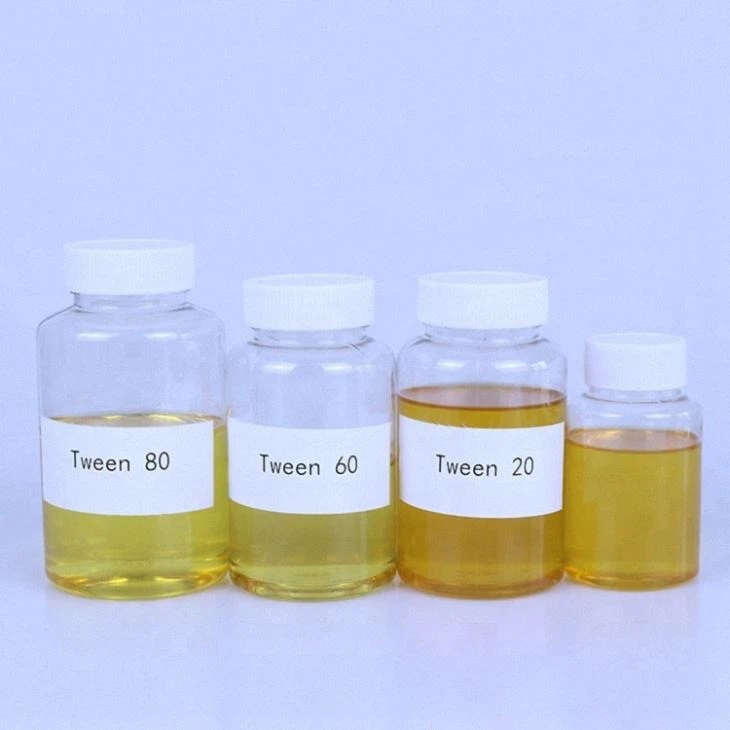
| Product Name | Chemical Name | CAS No | E Number |
|---|---|---|---|
| Polysorbate 20 | Polyoxyethylene (20) sorbitan monolaurate | 9005-64-5 | E432 |
| Polysorbate 40 | Polyoxyethylene (20) sorbitan monopalmitate | 9005-66-7 | E434 |
| Polysorbate 60 | Polyoxyethylene (20) sorbitan monostearate | 9005-67-8 | E435 |
| Polysorbate 80 | Polyoxyethylene (20) sorbitan monooleate | 9005-65-6 | E433 |
SECTION 1: PRODUCT IDENTITY AND CHEMICAL IDENTIFICATION
| Parameter | Information |
|---|---|
| Product Name | Polysorbate 20 |
| Chemical Name | Polyoxyethylene (20) Sorbitan Monolaurate |
| Synonyms (Turkish) | Polisorbat 20, Tween 20, Emülgatör T-20, Polioksietilen Sorbitan Monolaurat, PS 20 |
| Synonyms (English) | Polysorbate 20, Tween 20, Tween(R) 20, Polyoxyethylene Sorbitan Monolaurate, PS 20, Twain 20 |
| CAS Number | 9005-64-5 |
| EC Number (EINECS) | 500-018-3 |
| E Number | E432 (Food Additive) |
| Molecular Formula | C₁₂H₁₈O₁₁ (base structure) |
| Molecular Weight | 338.26 g/mol (base); variable (polymer) |
| Chemical Class | Non-ionic surfactant; Polysorbate; Sorbitan ester |
| HLB Value | ~16.7 |
| Fatty Acid | Lauric Acid (C12:0) |
| Source | Synthetic (Ethoxylation of sorbitan monolaurate) |
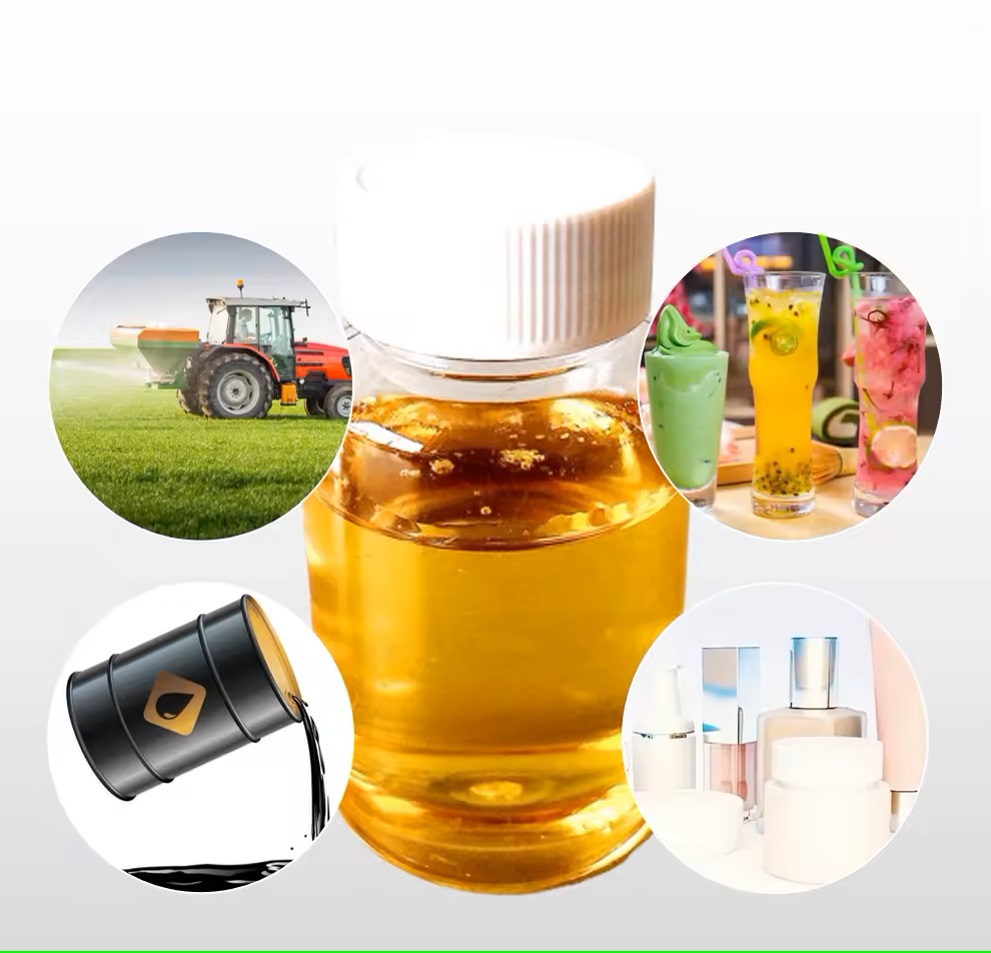
| Appearance | Light yellow to amber viscous liquid |
| Odor | Characteristic, slight |
| Physical State (25°C) | Viscous liquid |
| Ionic Character | Non-ionic |
SECTION 2: CHEMICAL STRUCTURE
Structure Description:
          CH₂ - (OCH₂CH₂)ₙ - OH
         /
    CH - (OCH₂CH₂)ₙ - OH
         \
    CH - OCO - C₁₁H₂₃
         \
    CH - (OCH₂CH₂)ₙ - OH
         \
    CH₂ - (OCH₂CH₂)ₙ - OH

    Polyoxyethylene Sorbitan Monolaurate (Polysorbate 20)
    (total n ≈ 20)
Simplified Structure:
    Sorbitan — OCO — C₁₁H₂₃
          |
    20 mol Ethylene Oxide

    Polysorbate 20
    (Lauric acid + Sorbitan + PEG-20)
| Parameter | Description |
|---|---|
| Chemical Structure | Sorbitan monolaurate ethoxylated with 20 moles of ethylene oxide |
| Functional Groups | Ester (-COO-), Ether (-O-), Hydroxyl (-OH) |
| Hydrophilic Part | Polyoxyethylene chains (PEG-20) |
| Lipophilic Part | Lauric acid group (C12:0) |
| Degree of Ethoxylation | ~20 mol ethylene oxide |
| HLB Value | ~16.7 |
| SMILES | CCCCCCCCCCCC(=O)OC1C(COC1(CO)CO)CO |
| InChI | InChI=1S/C22H42O8/c1-2-3-4-5-6-7-8-9-10-11-12-13-14-15-16-17-18-19(24)29-22-21(26)20(25)18-27-22/h20-22,25-26H,2-18H2,1H3 |
| InChI Key | NONE PROVIDED |
SECTION 3: POLYSORBATE TYPES COMPARISON
| Parameter | Polysorbate 20 | Polysorbate 40 | Polysorbate 60 | Polysorbate 80 |
|---|---|---|---|---|
| Trade Name | Tween 20 | Tween 40 | Tween 60 | Tween 80 |
| Fatty Acid | Lauric (C12:0) | Palmitic (C16:0) | Stearic (C18:0) | Oleic (C18:1) |
| CAS Number | 9005-64-5 | 9005-66-7 | 9005-67-8 | 9005-65-6 |
| E Number | E432 | E434 | E435 | E433 |
| HLB Value | ~16.7 | ~15.6 | ~14.9 | ~15.0 |
| Physical State | Liquid | Semi-solid | Semi-solid | Semi-solid |
| Melting Point | ~0°C | ~0-5°C | ~45-50°C | ~-15°C |
| Primary Use | Flavor emulsifier, solubilizer | Baking, ice cream | Margarine, creams | Ice cream, vaccines, cosmetics |
| INCI Name | Polysorbate 20 | Polysorbate 40 | Polysorbate 60 | Polysorbate 80 |
SECTION 4: PHYSICAL AND CHEMICAL PROPERTIES
| Property | Value | Test Method / Note |
|---|---|---|
| Appearance | Light yellow to amber viscous liquid | Visual |
| Odor | Characteristic, slight | Olfactometric |
| Molecular Weight | 338.26 g/mol | Calculated |
| Density (25°C) | ~1.08 g/cm³ | ASTM D4052 |
| Melting Point | ~0°C | DSC |
| Boiling Point | >100°C | - |
| Flash Point | >150°C | ASTM D93 |
| Viscosity (25°C) | 0.3 – 0.5 Pa·s | - |
| pH (5% Aqueous Solution) | 5.0 – 7.0 | USP <791> |
| Water Solubility | Soluble | General Method |
| Ethanol Solubility | Soluble | General Method |
| Methanol Solubility | Soluble | General Method |
| Isopropanol Solubility | Soluble | General Method |
| Acetone Solubility | Soluble | General Method |
| Mineral Oil Solubility | Insoluble | General Method |
| Vegetable Oil Solubility | Insoluble | General Method |
| Refractive Index (n²⁰/D) | ~1.470 | ASTM D1218 |
| HLB Value | ~16.7 | - |
| Acid Value | ≤2.0 mg KOH/g | Titrimetric |
| Saponification Value | 40 – 50 mg KOH/g | Titrimetric |
| Hydroxyl Value | 96 – 108 mg KOH/g | Titrimetric |
| Peroxide Value | ≤10 meq/kg | Titrimetric |
| Moisture Content | ≤3.0% | Karl Fischer |
| Residue on Ignition | ≤0.25% | Gravimetric |
| Heavy Metals | ≤10 ppm | USP <231> |
| Hygroscopicity | High (absorbs moisture) | - |
SECTION 5: FUNCTIONAL PROPERTIES
| Property | Description |
|---|---|
| Emulsifier (O/W) | Excellent oil-in-water (O/W) emulsifier; Stabilizes emulsions |
| Solubilizer | Solubilizes oils, fragrances, essential oils and lipophilic active ingredients |
| Wetting Agent | Reduces surface tension; Improves wetting properties |
| Dispersant | Disperses solids and immiscible liquids |
| Stabilizer | Stabilizes emulsions and suspensions |
| Detergent | Functions as detergent and cleaning agent |
| Antistatic | Provides antistatic properties |
| Lubricant | Functions as lubricant |
| Penetration Enhancer | Improves penetration of active ingredients |
SECTION 6: COSMETIC AND PERSONAL CARE APPLICATIONS
| Application | Function / Benefit | Typical Use Level |
|---|---|---|
| Facial Cleansers | Emulsifier, solubilizer, mild surfactant | 1 – 5% |
| Shampoos | Emulsifier, solubilizer, conditioner | 0.5 – 3% |
| Hair Conditioners | Emulsifier, antistatic, lubricant | 0.5 – 3% |
| Creams and Lotions | Emulsifier, solubilizer, stabilizer | 1 – 5% |
| Sunscreens | Emulsifier, dispersant, solubilizer | 1 – 5% |
| Makeup Removers | Emulsifier, solubilizer | 2 – 10% |
| Facial Serums | Solubilizer, wetting agent | 1 – 5% |
| Body Washes | Emulsifier, solubilizer | 0.5 – 3% |
| Perfume Products | Solubilizer for essential oils | 1 – 5% |
| Room Sprays | Solubilizer for fragrances | 1 – 5% |
| Baby Care Products | Emulsifier, mild surfactant | 1 – 3% |
SECTION 7: FOOD APPLICATIONS (E432)
| Application | Function / Benefit | Maximum Usage (GB 2760) |
|---|---|---|
| Ice Cream | Emulsifier, stabilizer, improves texture | 1.5 g/kg |
| Fruit Juice Beverages | Emulsifier, solubilizer | 0.75 g/kg |
| Moon Cakes | Emulsifier, improves texture | 0.5 g/kg |
| Vegetable Protein Beverages | Emulsifier, stabilizer | 2.0 g/kg |
| Bakery Products | Emulsifier, dough conditioner | 0.1 – 0.5% |
| Salad Dressings | Emulsifier, stabilizer | 0.1 – 0.5% |
| Confectionery | Emulsifier, dispersant | 0.1 – 0.5% |
| Non-dairy Creamers | Emulsifier, stabilizer | 0.1 – 0.5% |
SECTION 8: PHARMACEUTICAL AND BIOTECHNOLOGY APPLICATIONS
| Application | Function / Benefit |
|---|---|
| Injectable Formulations | Solubilizer, emulsifier for parenteral products |
| Oral Suspensions | Wetting agent, dispersant |
| Topical Preparations | Emulsifier, solubilizer |
| Suppositories | Emulsifier, solubilizer |
| Protein Stabilization | Stabilizes proteins in cell culture media |
| Biotechnology | Cell culture media, protein stabilization |
| Drug Delivery Systems | Solubilizer, emulsifier for lipophilic drugs |
SECTION 9: INDUSTRIAL APPLICATIONS
| Application | Function / Benefit |
|---|---|
| Textile Industry | Lubricant, antistatic agent, emulsifier |
| Metalworking Fluids | Emulsifier, lubricant |
| Agrochemicals | Emulsifier, dispersant |
| Paints and Coatings | Dispersant, wetting agent |
| Cutting Fluids | Emulsifier, lubricant |
| Polishes | Emulsifier, dispersant |
| Industrial Cleaners | Detergent, wetting agent |
| Paper Industry | Coating, defoamer |
| Petroleum Industry | Wax inhibitor, viscosity reducer |
| Rust Preventive Oils | Rust preventive, lubricant |
SECTION 10: QUALITY SPECIFICATIONS
| Parameter | Food Grade (E432) | Pharmaceutical Grade | Cosmetic Grade | Test Method |
|---|---|---|---|---|
| Appearance | Light yellow-amber liquid | Light yellow-amber liquid | Light yellow-amber liquid | Visual |
| Assay | ≥98.0% | ≥99.0% | ≥98.0% | HPLC / Titrimetric |
| Acid Value | ≤2.0 mg KOH/g | ≤1.0 mg KOH/g | ≤2.0 mg KOH/g | Titrimetric |
| Saponification Value | 40 – 50 mg KOH/g | 40 – 50 mg KOH/g | 40 – 50 mg KOH/g | Titrimetric |
| Hydroxyl Value | 96 – 108 mg KOH/g | 96 – 108 mg KOH/g | 96 – 108 mg KOH/g | Titrimetric |
| Peroxide Value | ≤10 meq/kg | ≤5 meq/kg | ≤10 meq/kg | Titrimetric |
| pH (5% Solution) | 5.0 – 7.0 | 5.0 – 7.0 | 5.0 – 7.0 | pH Meter |
| Moisture Content | ≤3.0% | ≤2.0% | ≤3.0% | Karl Fischer |
| Residue on Ignition | ≤0.25% | ≤0.25% | ≤0.25% | Gravimetric |
| Heavy Metals (Pb) | ≤10 ppm | ≤5 ppm | ≤10 ppm | ICP-MS |
| Arsenic (As) | ≤2 ppm | ≤1 ppm | ≤2 ppm | ICP-MS |
| Lead (Pb) | ≤2 ppm | ≤1 ppm | ≤2 ppm | ICP-MS |
| Ethylene Oxide Residue | ≤1 ppm | ≤1 ppm | ≤1 ppm | GC |
| 1,4-Dioxane Residue | ≤5 ppm | ≤5 ppm | ≤5 ppm | GC |
| Ethylene Glycol | ≤0.01% | ≤0.01% | ≤0.01% | GC |
| Diethylene Glycol | ≤0.01% | ≤0.01% | ≤0.01% | GC |
SECTION 11: IDENTIFICATION TESTS
| Test | Method | Result |
|---|---|---|
| Alkaline Hydrolysis Test | 5 ml 1:20 solution + NaOH, boil, cool, acidify | Milky white turbidity |
| Bromine Water Test | 2 ml 1:20 solution + bromine water | Bromine water does not decolorize |
| Gel Formation | 6 ml + 4 ml water | Gel formation |
| Cobalt Thiocyanate Test | 10 ml solution + cobalt ammonium thiocyanate + chloroform | Chloroform layer turns blue |
SECTION 12: SAFETY AND TOXICOLOGICAL PROFILE
| Parameter | Assessment |
|---|---|
| GHS Classification | Not classified as hazardous substance |
| Signal Word | None |
| Acute Oral Toxicity (LD50) | >38,000 mg/kg (rabbit) – practically non-toxic |
| Acute Dermal Toxicity | Low toxicity |
| Skin Irritation | Not irritant - Mildly irritant |
| Eye Irritation | Mildly irritant |
| Skin Sensitization | Low potential |
| Carcinogenicity | Not classified |
| Mutagenicity | Not mutagenic |
| Reproductive Toxicity | Not classified |
| Biodegradability | Readily biodegradable |
Safety Recommendations:
-
S24/25: Avoid contact with skin and eyes
-
S26: In case of contact with eyes, rinse immediately with plenty of water
-
S36: Wear suitable protective clothing
-
Store below +30°C
SECTION 13: GHS CLASSIFICATION AND LABELING
GHS Classification (in accordance with 1272/2008/EC):
| Hazard Class | Category | H-Statement |
|---|---|---|
| Not classified as hazardous substance | – | – |
Signal Word: None (Not classified as hazardous)
Hazard Pictograms: None
NFPA 704 Hazard Classification:
| Health | Flammability | Reactivity | Special |
|---|---|---|---|
| 0 | 1 | 0 | - |
| (Minimal health hazard) | (Combustible) | (Stable) | (None) |
SECTION 14: PRECAUTIONARY STATEMENTS (P-CODES)
| Code | Statement |
|---|---|
| P264 | Wash hands thoroughly after handling |
| P280 | Wear protective gloves/protective clothing/eye protection/face protection |
| P302+P352 | IF ON SKIN: Wash with plenty of soap and water |
| P305+P351+P338 | IF IN EYES: Rinse cautiously with water for several minutes. Remove contact lenses if present and continue rinsing |
| P332+P313 | If skin irritation occurs: Get medical advice/attention |
| P337+P313 | If eye irritation persists: Get medical advice/attention |
| P362+P364 | Take off contaminated clothing and wash it before reuse |
| P403+P233 | Store in a well-ventilated place. Keep container tightly closed |
| P501 | Dispose of contents/container in accordance with local/regional/national/international regulations |
SECTION 15: FIRST AID MEASURES
| Route of Exposure | Action |
|---|---|
| Inhalation | If inhaled as powder or mist, move to fresh air. Seek medical attention if respiratory symptoms persist. |
| Skin Contact | Remove contaminated clothing. Wash with plenty of soap and water. Seek medical attention if irritation develops. |
| Eye Contact | Rinse thoroughly with plenty of water for at least 15 minutes. Keep eyelids open. Remove contact lenses if present. Seek medical attention if irritation persists. |
| Ingestion | Rinse mouth with water. Do NOT induce vomiting. Drink 1-2 glasses of water. Seek medical attention. |
SECTION 16: FIREFIGHTING MEASURES
| Parameter | Information |
|---|---|
| Fire Hazard | Combustible organic material |
| Flash Point | >150°C |
| Fire-Related Hazards | CO, CO₂ |
| Suitable Extinguishing Media | Water mist, CO₂, dry chemical powder, foam |
| Special Protective Equipment | SCBA, full protective clothing |
SECTION 17: STORAGE AND SHELF LIFE
| Parameter | Information |
|---|---|
| Storage Temperature | Store below +30°C |
| Storage Conditions | Cool, dry, well-ventilated area |
| Container Requirements | Closed containers; protect from light |
| Incompatible Materials | Heat, moisture, contamination |
| Hygroscopicity | Easily absorbs moisture |
| Shelf Life | 24 – 36 months (under proper storage) |
| Signs of Degradation | Color change, viscosity change, rancid odor |
SECTION 18: PACKAGING OPTIONS
| Packaging Type | Quantity / Capacity | Material |
|---|---|---|
| HDPE Drum | 25 kg, 50 kg, 200 kg | HDPE |
| Metal Drum (Lined) | 200 kg | Lined steel |
| IBC Container | 500 kg, 1000 kg | HDPE |
| HDPE Canister | 5 kg, 10 kg, 20 kg | HDPE |
| Glass Bottle | 1 L, 5 L | Amber glass |
SECTION 19: TRANSPORTATION INFORMATION
| Parameter | Information |
|---|---|
| UN Number | Not applicable (not classified as dangerous substance) |
| Hazard Class | Not applicable |
| ADR/RID | Not classified as dangerous goods |
| IMDG Code | Not marine pollutant |
| IATA (Air) | Not classified as dangerous goods; can be transported by air |
SECTION 20: REGULATORY STATUS
| Region / Authority | Status |
|---|---|
| European Union | Food additive E432; Approved as cosmetic ingredient |
| USA (FDA) | GRAS (21 CFR 172.515); Approved as food additive |
| Turkey | Approved as food additive and cosmetic ingredient |
| USP/EP | Official monograph |
| INCI | Listed (Polysorbate 20) |
| REACH | Registered substance |
| CIR | Safe for cosmetic use |
| JECFA | Approved; ADI established |
| Halal | Yes (with certification) |
| Kosher | Yes (with certification) |
| Vegan | Yes (plant-derived) |
SECTION 21: OTHER NAMES AND SYNONYMS
| Type | Name |
|---|---|
| Turkish Names | Polisorbat 20, Tween 20, Emülgatör T-20, Polioksietilen Sorbitan Monolaurat, PS 20 |
| English Names | Polysorbate 20, Tween 20, Tween(R) 20, Polyoxyethylene Sorbitan Monolaurate, PS 20, Twain 20 |
| Trade Marks | Tween 20, Tween(R) 20, Emulsifier T-20 |
| E Number | E432 |
| CAS Number | 9005-64-5 |
| EC Number | 500-018-3 |
| INCI Name | Polysorbate 20 |
| HS Code | 3402.13 |
SECTION 22: CRITICAL WARNINGS AND BEST PRACTICES
CRITICAL WARNINGS:
-
Hygroscopicity: Absorbs moisture; store in tightly closed, dry containers.
-
HLB Value: HLB ~16.7 makes it an excellent oil-in-water (O/W) emulsifier and solubilizer.
-
Solubilizing Power: Excellent solubilizer for essential oils, fragrances and lipophilic active ingredients.
-
Compatibility: Compatible with anionic, cationic and non-ionic surfactants.
-
Food Use: E432 is a food additive (ice cream, beverages, baking).
-
Temperature: Decomposition begins above 150°C.
-
Pharmacopoeia Compliance: USP/EP official monograph available.
-
Impurities: Ethylene oxide and dioxane residues are strictly controlled (≤1 ppm and ≤5 ppm).
BEST PRACTICE RECOMMENDATIONS:
-
Addition: Can be added to oil phase or water phase in formulations; mix at 40-50°C.
-
Solubilization: To solubilize essential oils and fragrances, first mix with Polysorbate 20, then add water.
-
Emulsion: Add to oil phase for O/W emulsions.
-
Storage: Store in cool, dry, dark place; protect from moisture.
-
Personal Protective Equipment: Nitrile gloves, safety goggles.
-
Quality Control: Regularly perform acid value, saponification value, pH, moisture content, peroxide value tests.
-
Food Use: Dosage 0.1-0.5%; comply with relevant regulatory limits (GB 2760, FDA).
LEGAL DISCLAIMER:
The information provided in this document is based on our current knowledge and experience and is presented in good faith. However, as all conditions of use are beyond our control, it does not constitute a binding specification or guarantee. This Technical Data Sheet is for informational purposes only. Users are responsible for testing suitability for their own applications and for complying with all local, regional, and national regulations. For complete safety, storage, use, handling, waste, and regulatory compliance information, please refer to the official Safety Data Sheet (SDS/MSDS) provided by the manufacturer/supplier.