We unleash your business potential by maximize the business innovation.
Send EmailPEG-40 Hydrogenated Castor Oil, Ethoxylated Hydrogenated Castor Oil, PEG-40 HCO, 61788-85-0, 61791-12-6
PEG-40 HYDROGENATED CASTOR OIL
SECTION 1: PRODUCT IDENTITY AND CHEMICAL IDENTIFICATION
| Parameter | Information |
|---|---|
| Product Name | PEG-40 Hydrogenated Castor Oil |
| INCI Name | PEG-40 Hydrogenated Castor Oil |
| Chemical Class | Ethoxylated hydrogenated castor oil; Non-ionic surfactant |
| CAS Number | 61788-85-0 (general PEG hydrogenated castor oil) |
| CAS Number | 61791-12-6 (PEG castor oil) |
| Molecular Formula | C₃H₅(OCH₂CH₂)ₙOH (general structure); hydrophobic castor oil backbone with hydrophilic PEG chains |
| Molecular Weight | Variable; depends on degree of ethoxylation |
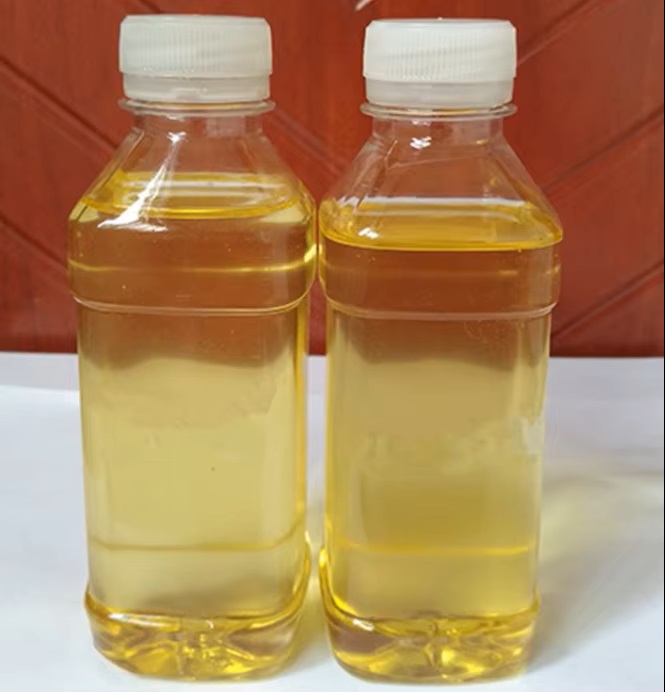
| Appearance | White to yellowish semi-solid paste or slightly hazy yellowish liquid |
| Odor | Slight, characteristic |
Note: PEG-40 Hydrogenated Castor Oil is produced by ethoxylation of hydrogenated castor oil with an average of 40 moles of ethylene oxide (EO). The hydrogenation step saturates the double bonds of castor oil fatty acids, significantly improving the product's oxidative stability, color, and shelf life compared to non-hydrogenated PEG-castor oil derivatives. It is a versatile, non-ionic solubilizer, emulsifier, and emollient widely used in personal care, cosmetic, and pharmaceutical formulations.
SECTION 2: CHEMICAL STRUCTURE
    [Hydrogenated Castor Oil Backbone] — (OCH₂CH₂)ₙ — OH

    n ≈ 40 (average degree of ethoxylation)

    PEG-40 Hydrogenated Castor Oil
    (Non-ionic surfactant)
| Parameter | Description |
|---|---|
| Structure | PEG chains attached to hydrogenated castor oil backbone |
| Hydrophilic Part | Polyethylene glycol (PEG) chains (average 40 EO units) |
| Hydrophobic Part | Hydrogenated castor oil (ricinoleic acid derivative) |
| Ionic Character | Non-ionic |
| Functional Groups | Ether (-O-), hydroxyl (-OH), ester (-COO-) |
SECTION 3: PHYSICAL AND CHEMICAL PROPERTIES
| Property | Value / Description | Test Method / Note |
|---|---|---|
| Physical Form (25°C) | White to yellowish semi-solid paste or slightly hazy viscous liquid | Visual |
| Odor | Slight, characteristic | Olfactometric |
| Density (20°C) | ~1.03 g/cm³ | ASTM D4052 |
| Melting Point | ~30-40°C | DSC |
| Water Solubility | Soluble (clear to slightly hazy) | General Method |
| Oil Solubility | Soluble | General Method |
| Ethanol Solubility | Soluble | General Method |
| Propylene Glycol Solubility | Soluble | General Method |
| HLB Value | ~13 – 15 (oil-in-water emulsifier) | - |
| pH Stability | Stable over wide pH range (~3 – 11) | pH Meter |
| Surface Tension (0.1%) | Low (enables solubilization and emulsification) | - |
| Reactivity | Generally inert; may react with strong oxidizing agents at high temperature | - |
| Thermal Stability | Melting point elevated by hydrogenation process | - |
| Flash Point | >150°C | ASTM D93 |
| Hygroscopicity | Slightly hygroscopic | - |
| Ash Content | ≤0.5% | Gravimetric |
| Water Content | ≤1.0% | Karl Fischer |
SECTION 4: FUNCTIONAL PROPERTIES
| Property | Description |
|---|---|
| Solubilizer | Primary function is the excellent solubilization of lipophilic (oil-soluble) components—e.g., perfumes, essential oils, vitamins (A, D, E, K), and other hydrophobic actives—into clear, water-based formulations. The hydrophobic castor oil portion associates with the oil while the long PEG chains form a hydrophilic shield, creating stable microemulsions. |
| Emulsifier (O/W) | With an HLB value of 13-15, it is an effective oil-in-water (O/W) emulsifier. It stabilizes emulsions by reducing interfacial tension between oil and water phases and forming a strong interfacial film, preventing droplet coalescence. |
| Emollient | As a derivative of castor oil, it provides moisturizing and skin care benefits; leaves a smooth, non-greasy feel. Forms a protective layer on the skin, helping to reduce transepidermal water loss (TEWL). |
| Secondary Surfactant / Thickener | In surfactant-based cleansing systems (shampoos, shower gels), it can function as a thickener, foam stabilizer, and re-fatting agent; softens the harshness of primary anionic surfactants. |
| Stabilizer | Its natural antioxidant content and oxidative stability due to hydrogenation help prevent degradation of sensitive formulation components, contributing to longer product shelf life. |
SECTION 5: INDUSTRY APPLICATIONS
| Industry | Application | Typical Usage Rate (% w/w) | Function |
|---|---|---|---|
| Cosmetics | Moisturizers, shampoos, conditioners, cleansers, sunscreens | 1 – 5% | Solubilizer, emulsifier, emollient, stabilizer |
| Personal Care | Hair serums, leave-in creams, brow/lash care, facial moisturizers | 0.5 – 3% | Moisturizer, emollient, improves combability |
| Pharmaceutical | Dermal treatments, wound healing support products | 1 – 4% | Strengthens skin barrier, moisturizer and protector |
| Industrial | Lubricants, dispersing agents, resin and wax blends | 2 – 10% | Stability enhancer, compatible with various polymers |
| Agriculture | Non-ionic emulsifier in pesticide, herbicide, and insecticide formulations | 1 – 6% | Strong emulsifying, formulation stability |
SECTION 6: TYPICAL FORMULATION CONCENTRATIONS
| Application | Recommended Concentration | Notes |
|---|---|---|
| Fragrance Solubilization | 1-5% | For essential oils and perfume blends |
| Clear Gels | 1-3% | For transparent gel formulations |
| Emulsions (Creams, Lotions) | 1-5% | As O/W emulsifier |
| Shampoos and Shower Gels | 0.5-3% | Foam stabilizer, re-fatting agent |
| Hair Care Products | 0.5-2% | Emollient, combability enhancer |
| Sunscreens | 1-5% | Solubilizer for UV filters |
| Vitamin Supplements | 1-5% | For oil-soluble vitamins |
| Pharmaceutical Ointments | 1-4% | Carrier, penetration enhancer |
SECTION 7: HYDROGENATED vs NON-HYDROGENATED COMPARISON
| Property | PEG-40 Hydrogenated Castor Oil | PEG-40 Castor Oil (Non-Hydrogenated) |
|---|---|---|
| CAS Number | 61788-85-0 | 61791-12-6 |
| Oxidative Stability | High | Low-Moderate |
| Color Stability | Excellent | Yellows over time |
| Shelf Life | Long | Shorter |
| Odor | Slight, characteristic | May become rancid over time |
| Melting Point | Higher (~30-40°C) | Lower |
| Skin Feel | Lighter, less tacky | Heavier, more tacky |
| Preferred Use | Premium cosmetics, pharmaceuticals | Low-cost applications |
SECTION 8: ALTERNATIVES AND COMPARISON
| Alternative | Comparison |
|---|---|
| PEG-35 Castor Oil (Non-Hydrogenated) | Lower oxidative stability; more prone to rancidity and color changes. Hydrogenated version (PEG-40 HCO) preferred for better stability. |
| Polysorbate 20 / Polysorbate 80 | Commonly used solubilizers and emulsifiers. PEG-40 HCO often exhibits superior solubilizing power for certain essential oils and perfumes, and provides better emolliency. |
| PPG-1-PEG-9 Lauryl Glycol Ether | Lighter, low-viscosity solubilizer. PEG-40 HCO is more substantive and provides richer skin feel. |
| Polyglyceryl Esters | Suitable for non-ethoxylated, "PEG-free" formulations. PEG-40 HCO has longer history of use and well-established safety data in many applications. |
SECTION 9: QUALITY SPECIFICATIONS
| Parameter | Specification | Test Method |
|---|---|---|
| Appearance | White to yellowish paste or liquid | Visual |
| Odor | Slight, characteristic | Olfactometric |
| pH (1% Aqueous Solution) | 5.0 – 7.0 | pH Meter |
| Water Content | ≤1.0% | Karl Fischer |
| Ash Content | ≤0.5% | Gravimetric |
| Heavy Metals (Pb) | ≤10 ppm | ICP-MS |
| Arsenic (As) | ≤2 ppm | ICP-MS |
| Lead (Pb) | ≤2 ppm | ICP-MS |
| Ethylene Oxide Content | ≤1 ppm | GC |
| 1,4-Dioxane Content | ≤5 ppm | GC |
| Microbiological Purity | TAMC ≤10² CFU/g; TYMC ≤10¹ CFU/g | USP <61> |
| E. coli | Negative in 1g | USP <62> |
| Salmonella spp. | Negative in 25g | USP <62> |
| S. aureus | Negative in 1g | USP <62> |
| P. aeruginosa | Negative in 1g | USP <62> |
SECTION 10: SAFETY AND TOXICOLOGICAL PROFILE
| Parameter | Value / Description |
|---|---|
| GHS Classification | Not classified as hazardous substance |
| Signal Word | None |
| Hazard Pictograms | None |
| Acute Oral Toxicity (LD50, Rat) | >5000 mg/kg (very low toxicity) |
| Acute Dermal Toxicity (LD50, Rabbit) | >2000 mg/kg (low toxicity) |
| Skin Irritation | Not irritant (at use levels) |
| Eye Irritation | May cause mild irritation |
| Skin Sensitization | Low sensitization potential |
| Carcinogenicity | Not classified as carcinogenic |
| Mutagenicity | Not mutagenic |
| Reproductive Toxicity | No reproductive toxicity |
| CIR Assessment | Considered safe |
| Target Organs | Eyes (mild irritation) |
SECTION 11: GHS CLASSIFICATION AND LABELING
GHS Classification (in accordance with 1272/2008/EC):
| Hazard Class | Category | H-Statement |
|---|---|---|
| Not classified as hazardous substance | – | – |
| Eye Irritation | Category 2 (optional) | H319 |
Signal Word: None (Not classified as hazardous) or Warning (optional)
Hazard Pictograms: None (generally) or GHS07 (Exclamation mark)
NFPA 704 Hazard Classification:
| Health | Flammability | Reactivity | Special |
|---|---|---|---|
| 1 | 1 | 0 | - |
| (Minimal health hazard) | (Combustible) | (Stable) | (None) |
SECTION 12: PRECAUTIONARY STATEMENTS (P-CODES)
| Code | Statement |
|---|---|
| P264 | Wash hands thoroughly after handling |
| P280 | Wear protective gloves/protective clothing/eye protection/face protection |
| P305+P351+P338 | IF IN EYES: Rinse cautiously with water for several minutes |
| P337+P313 | If eye irritation persists: Get medical advice/attention |
| P403+P233 | Store in a well-ventilated place. Keep container tightly closed |
| P501 | Dispose of contents/container in accordance with local/regional/national/international regulations |
SECTION 13: FIRST AID MEASURES
| Route of Exposure | Action |
|---|---|
| Inhalation | Vapor not expected. If respiratory discomfort occurs, move to fresh air. |
| Skin Contact | Wash with plenty of soap and water. Seek medical attention if irritation develops. |
| Eye Contact | Rinse thoroughly with plenty of water for at least 15 minutes. Keep eyelids open. Seek medical attention if irritation persists. |
| Ingestion | Rinse mouth with water. Do NOT induce vomiting. Seek medical attention. |
SECTION 14: FIREFIGHTING MEASURES
| Parameter | Information |
|---|---|
| Fire Hazard | Combustible organic matter |
| Fire-Related Hazards | CO, CO₂ |
| Suitable Extinguishing Media | Water mist, CO₂, dry chemical powder, foam |
| Special Protective Equipment | SCBA, full protective clothing |
SECTION 15: STORAGE AND SHELF LIFE
| Parameter | Information |
|---|---|
| Storage Conditions | Store in a cool (<30°C), dry, well-ventilated area in tightly closed containers. |
| Temperature Limits | 15-30°C (ideal); do not exceed 30°C |
| Heating Note | May thicken or solidify at low temperatures; gentle warming to 30-40°C will restore liquid, pourable form without affecting quality. |
| Container Requirements | Tightly closed, clean containers (HDPE, stainless steel, lined steel) |
| Incompatible Materials | Strong oxidizing agents, excessive heat |
| Shelf Life | 24 months (unopened original packaging) |
| Signs of Degradation | Darkening color, odor change, caking |
SECTION 16: PACKAGING OPTIONS
| Packaging Type | Quantity / Capacity | Material | Application Area |
|---|---|---|---|
| HDPE Drum | 25 kg, 50 kg, 200 kg | HDPE | Cosmetic, pharmaceutical |
| Metal Drum (Lined) | 200 kg | Lined steel | Industrial, bulk supply |
| IBC Container | 500 kg, 1000 kg | HDPE | Large-scale industrial supply |
| Aluminum Foil Bag | 1 kg, 5 kg, 10 kg | Aluminum / PE | Laboratory, high purity |
| HDPE Pail | 5 kg, 10 kg, 25 kg | HDPE | Retail, laboratory |
SECTION 17: TRANSPORTATION INFORMATION
| Parameter | Information |
|---|---|
| UN Number | Not applicable (not classified as dangerous substance) |
| Hazard Class | Not applicable |
| ADR/RID | Not classified as dangerous goods |
| IMDG Code | Not marine pollutant |
| IATA (Air) | Not classified as dangerous goods; can be transported by air |
| Transport Temperature | Ambient temperature; protect from heat |
| Transport Precautions | Protect from leakage; keep away from oxidizing agents |
SECTION 18: REGULATORY STATUS
| Region / Authority | Status |
|---|---|
| USA (FDA) | Approved as cosmetic ingredient |
| European Union (EC) | Approved as cosmetic ingredient (EC 1223/2009) |
| Turkey | Approved as cosmetic ingredient |
| CIR | Considered safe |
| REACH | Registered substance |
| TSCA (USA) | Listed |
| California (Prop 65) | Not listed |
| Halal | Yes (with certification) |
| Kosher | Yes (with certification) |
| Vegan | Yes (plant-derived) |
SECTION 19: OTHER NAMES AND SYNONYMS
| Type | Name |
|---|---|
| Turkish Names | PEG-40 Hidrojene Hint Yağı, Hint Yağı Etoksilat, Etoksile Hint Yağı |
| English Names | PEG-40 Hydrogenated Castor Oil, Ethoxylated Hydrogenated Castor Oil, PEG-40 HCO |
| INCI Name | PEG-40 Hydrogenated Castor Oil |
| Trade Marks | Cremophor RH 40, Kolliphor RH 40, Simulsol 1292, Emulgin RO 40 |
| CAS Number | 61788-85-0 |
| EC Number | 262-977-1 |
| HS Code | 3402.13 |
SECTION 20: CRITICAL WARNINGS AND BEST PRACTICES
CRITICAL WARNINGS:
-
Melting Temperature: Product may be semi-solid at room temperature. Heating to 30-40°C may be required before use.
-
Hydrogenation Importance: Hydrogenated form (61788-85-0) is more stable and longer-lasting than non-hydrogenated form (61791-12-6). Hydrogenated form should be preferred for cosmetic and pharmaceutical applications.
-
Ethoxylation: The degree of ethoxylation (40 EO) determines the product's solubility, HLB value, and emulsion properties. Different PEG grades are available for different applications.
-
Dioxane Content: Ethoxylated products may contain trace amounts of 1,4-dioxane. Low dioxane content certification should be requested for pharmaceutical and premium cosmetic applications.
-
Allergic Reaction: Rare cases of allergic reactions in sensitive individuals.
BEST PRACTICE RECOMMENDATIONS:
-
Heating: Melt solidified product at 30-40°C in a water bath or heated mixer.
-
Addition: Can be added to oil phase or water phase in formulations; mix at 40-50°C.
-
Solubilization: To solubilize perfume and essential oils, first mix with PEG-40 HCO, then add water.
-
Emulsion: Add to oil phase in O/W emulsions.
-
Storage: Store in cool, dry, dark place. Protect from heat and moisture.
-
Personal Protective Equipment: Nitrile gloves, safety goggles.
-
Quality Control: Regularly perform pH, water content, ash content, dioxane, microbiological purity tests.
LEGAL DISCLAIMER:
The information provided in this document is based on our current knowledge and experience and is presented in good faith. However, as all conditions of use are beyond our control, it does not constitute a binding specification or guarantee. This Technical Data Sheet is for informational purposes only. Users are responsible for testing suitability for their own applications and for complying with all local, regional, and national regulations. For complete safety, storage, use, handling, waste, and regulatory compliance information, please refer to the official Safety Data Sheet (SDS/MSDS) provided by the manufacturer/supplier.