We unleash your business potential by maximize the business innovation.
Send EmailPEG-40 Hydrogenated Castor Oil, Castor Oil Ethoxylate, Ethoxylated Hydrogenated Castor Oil, Cremophor EL, Polyoxyl 35 Hydrogenated Castor Oil, PEG-40 HCO, 61788-85-0, 61791-12-6
PEG-40 HYDROGENATED CASTOR OIL
1. PRODUCT DEFINITION AND CHEMICAL IDENTITY
| Parameter | Description |
|---|---|
| Chemical Name (INCI) | PEG-40 Hydrogenated Castor Oil |
| Chemical Class | Ethoxylated hydrogenated castor oil; non-ionic surfactant |
| CAS Numbers | 61788-85-0 (general PEG hydrogenated castor oil) / 61791-12-6 (PEG castor oil) |
| Molecular Formula | C₃H₅(OCH₂CH₂)ₙOH (general structure); hydrophobic castor oil backbone with hydrophilic PEG chains |
| Molecular Weight | Variable; depends on the degree of ethoxylation |
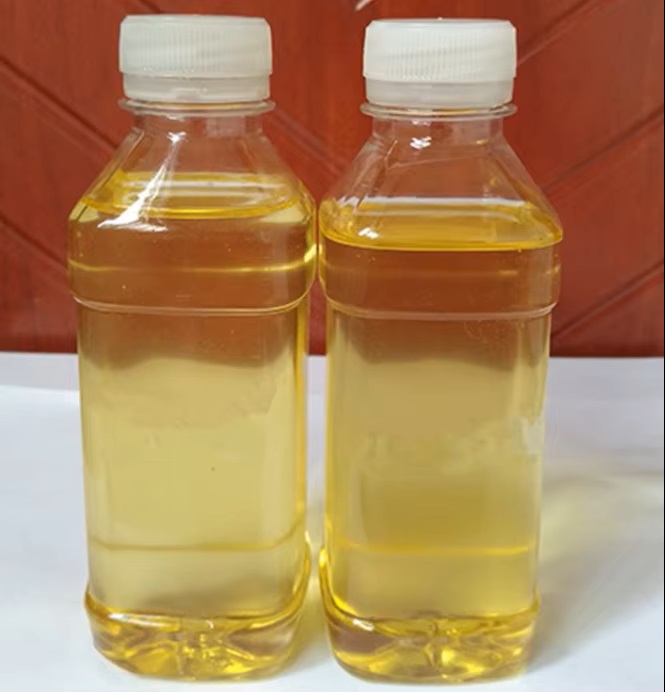
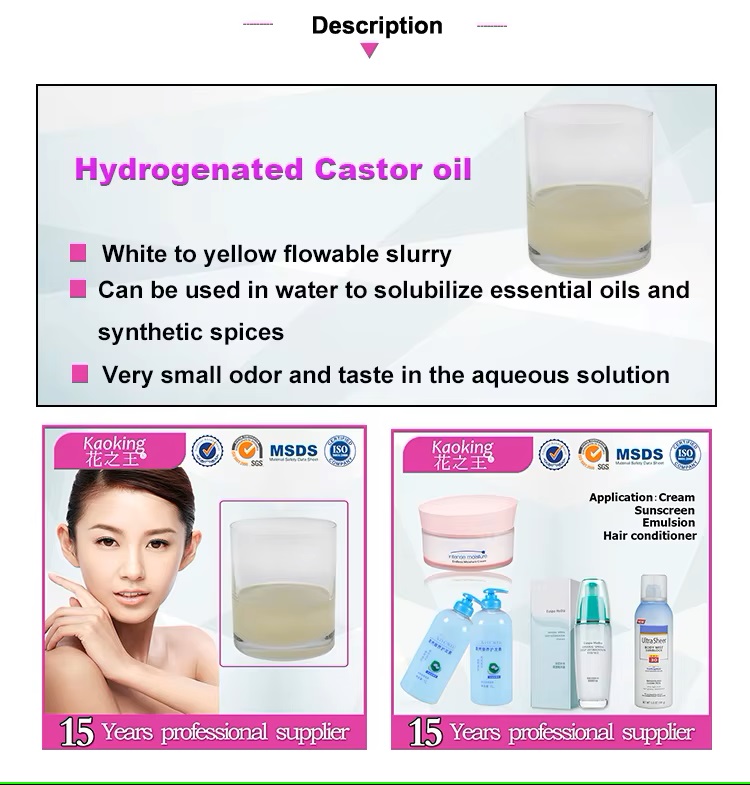
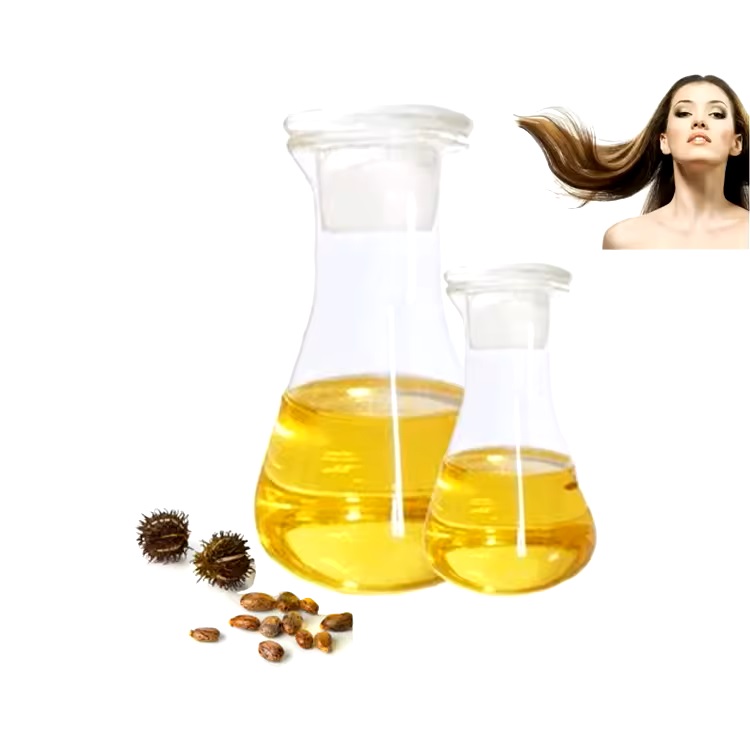
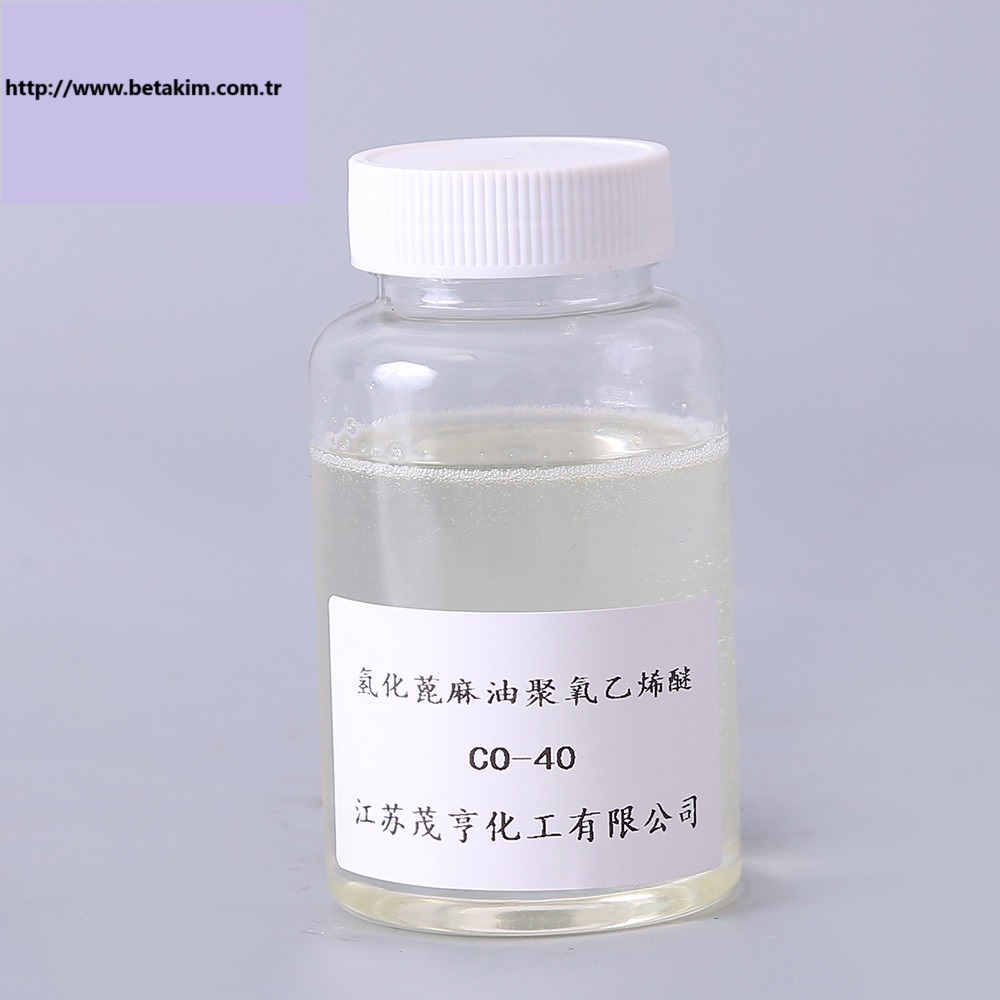
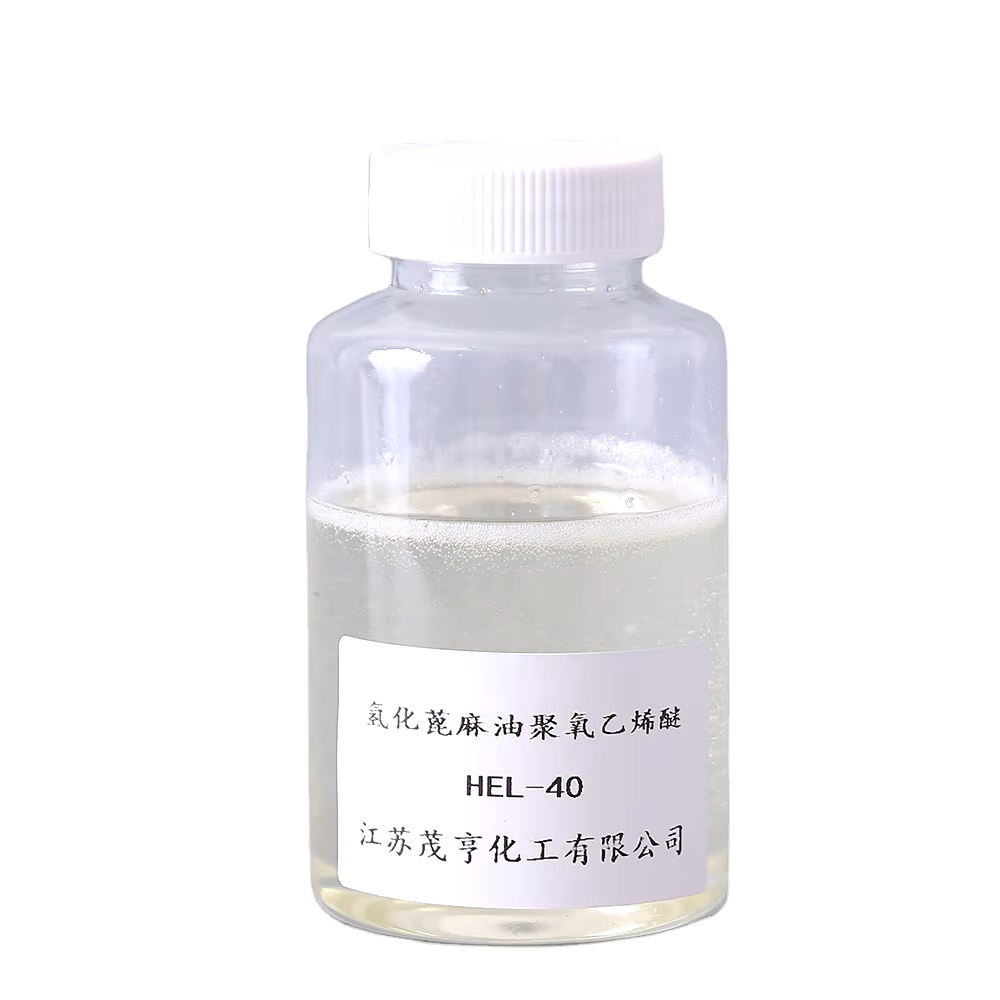
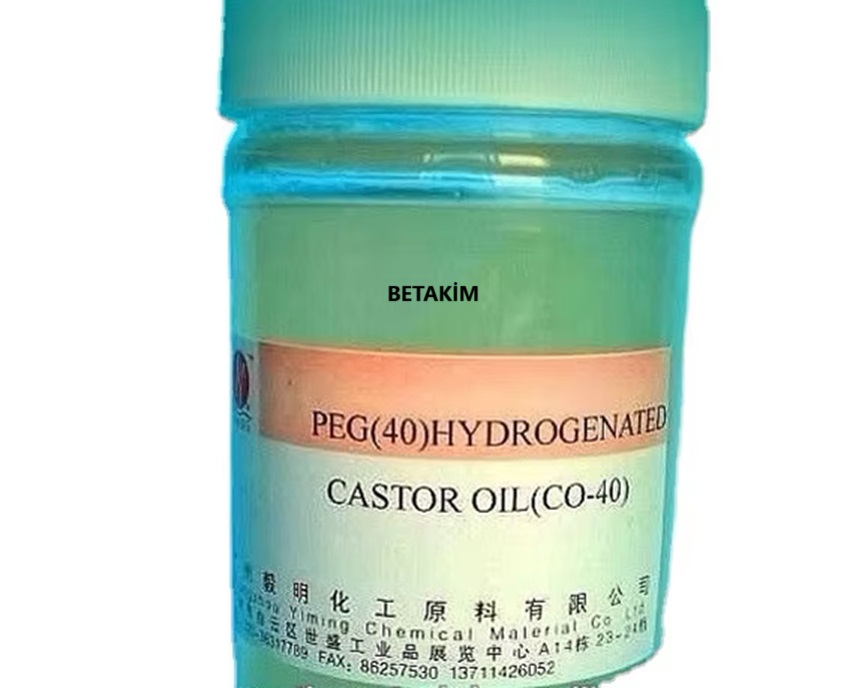
| Appearance | White to yellowish semi-solid paste, or slightly hazy yellowish liquid (depending on form and temperature) |
| Odour | Faint, characteristic |
Note: PEG-40 Hydrogenated Castor Oil is produced by the ethoxylation of hydrogenated castor oil with an average of 40 moles of ethylene oxide (EO). The hydrogenation step saturates the double bonds of the castor oil fatty acids, significantly improving the product's oxidative stability, colour, and shelf life compared to non-hydrogenated PEG-castor oil derivatives. It is a versatile non-ionic solubilizer, emulsifier, and emollient widely used in personal care, cosmetics, and pharmaceutical formulations.
2. PHYSICAL AND CHEMICAL PROPERTIES
| Property | Value / Description |
|---|---|
| Physical form (25 °C) | White to yellowish semi-solid paste, or slightly hazy viscous liquid |
| Density | ~1.03 g/cm³ |
| Solubility | Soluble in both water and oil; also soluble in ethanol, propylene glycol, and many organic solvents |
| HLB Value | ~13 – 15 (effective oil-in-water emulsifier and solubilizer) |
| pH Stability | Stable over a wide pH range (approximately 3 – 11) |
| Reactivity | Generally inert; may react with strong oxidizing agents at elevated temperatures |
| Thermal Stability | The melting point is elevated by the hydrogenation process, enhancing shelf life and formulation stability |
| Surface Tension | Effectively reduces aqueous surface tension, enabling solubilization and emulsification |
3. FUNCTIONAL PROPERTIES AND MECHANISM OF ACTION
-
Solubilizer: The primary function of PEG-40 Hydrogenated Castor Oil is its excellent ability to solubilize lipophilic (oil-soluble) ingredients—such as fragrances, essential oils, vitamins (A, D, E, K), and other hydrophobic actives—into clear, water-based formulations. The hydrophobic castor oil moiety associates with the oil, while the long PEG chains create a hydrophilic shield, forming stable microemulsions.
-
Emulsifier (O/W): With an HLB of 13-15, it is an effective oil-in-water (O/W) emulsifier. It stabilizes emulsions by reducing interfacial tension between oil and water phases and forming a robust interfacial film, preventing droplet coalescence.
-
Emollient and Skin Conditioner: As a derivative of castor oil, it provides moisturizing and skin-conditioning benefits, leaving a smooth, non-greasy after-feel. It helps form a protective layer on the skin, reducing transepidermal water loss (TEWL).
-
Secondary Surfactant / Viscosity Builder: In surfactant-based cleansing systems (shampoos, body washes), it can act as a thickener, foam stabilizer, and refatting agent, mitigating the harshness of primary anionic surfactants.
-
Stabilizer: Its inherent antioxidant content and oxidative stability, due to hydrogenation, help protect sensitive formulation ingredients from degradation, contributing to longer product shelf life.
4. SECTORAL APPLICATIONS AND USAGE RATES
| Sector | Application | Typical Usage Rate (% w/w) | Function |
|---|---|---|---|
| Cosmetics | Moisturizers, shampoos, conditioners, cleansers, sunscreens | 1 – 5% | Solubilizer, emulsifier, emollient, stabilizer |
| Personal Care | Hair care (serums, leave-in conditioners), eyebrow/lash care, facial moisturizers | 0.5 – 3% | Moisturizer, softener, improves combability, prevents breakage |
| Pharmaceutical / Medical | Dermal treatments, wound healing support products | 1 – 4% | Strengthens skin barrier, supports wound healing, moisturizing and protective |
| Industrial | Lubricants, dispersing agents, resin and wax blends | 2 – 10% | High melting point, stability enhancer, compatible with various polymers |
| Agriculture | Non-ionic emulsifier in pesticide, herbicide, and insecticide formulations | 1 – 6% | Strong emulsifying power, provides formulation stability |
5. MARKET AND TECHNOLOGICAL DEVELOPMENTS
-
Global Market: The market for PEG hydrogenated castor oil was valued at approximately USD 1,035.4 million in 2019 and is projected to reach USD 1,429.7 million by 2027, growing at a CAGR of 4.3%. Growth is driven by intense demand from the cosmetics and pharmaceutical sectors.
-
Technological Advancements:
-
More efficient hydrogenation and ethoxylation processes leading to products with a narrower oligomer distribution and improved performance.
-
Development of environmentally friendly, sustainable production methods.
-
6. ADVANTAGES AND DISADVANTAGES
| ✅ Advantages | ❌ Disadvantages |
|---|---|
| Excellent solubilizer for a wide range of lipophilic ingredients | Risk of allergic reaction in some sensitive individuals |
| Highly stable formulation aid, contributing to a long product shelf life | May leave a heavy or oily feel at high usage concentrations |
| Multifunctional (solubilizer, emulsifier, emollient) | Ethoxylated ingredients face scrutiny in some "natural" or "clean beauty" contexts |
| Wide compatibility with cosmetic and pharmaceutical ingredients | |
| Mild and gentle on the skin |
7. ALTERNATIVES AND COMPARISON
| Alternative | Comparison |
|---|---|
| PEG-35 Castor Oil (Non-hydrogenated) | Lower oxidative stability; more prone to rancidity and colour changes. The hydrogenated version (PEG-40 HCO) is preferred for better stability. |
| Polysorbate 20 / Polysorbate 80 | Widely used solubilizers and emulsifiers. PEG-40 HCO often exhibits superior solubilizing power for certain essential oils and fragrances, and has better emollience. |
| PPG-1-PEG-9 Lauryl Glycol Ether | A lighter, low-viscosity solubilizer. PEG-40 HCO is more substantive and provides a richer skin feel. |
| Polyglyceryl Esters (e.g., Polyglyceryl-10 Laurate) | Non-ethoxylated, suitable for "PEG-free" formulations. PEG-40 HCO has a longer history of use and well-established safety data in many applications. |
8. SAFETY, STORAGE, AND REGULATORY INFORMATION
-
GHS Classification: Not classified as a hazardous substance or mixture under CLP. May cause mild eye irritation. Refer to the supplier's SDS for the specific product.
-
Safety Profile: Considered safe for cosmetic and pharmaceutical use at typical concentrations. The Cosmetic Ingredient Review (CIR) panel has assessed PEG-castor oil derivatives as safe.
-
Storage: Store in a cool (<30 °C), dry, and well-ventilated area in tightly sealed containers. The product may thicken or solidify at low temperatures; gentle warming to 30-40 °C will restore its liquid, pourable form without affecting quality.
-
Shelf Life: Typically 24 months from the date of manufacture in unopened, original packaging.
-
Personal Protection: For handling large quantities, standard industrial hygiene practices (nitrile gloves, safety goggles) are recommended.
9. QUICK REFERENCE TABLE
| Property | Value / Description |
|---|---|
| INCI Name | PEG-40 Hydrogenated Castor Oil |
| CAS Number | 61788-85-0 |
| Appearance | White to yellowish paste or hazy viscous liquid |
| HLB Value | ~13 – 15 |
| Solubility | Water and oil soluble |
| Main Functions | Solubilizer, O/W emulsifier, emollient, stabilizer |
| Key Benefit | Excellent solubilization of lipophilic ingredients into clear aqueous systems |