We unleash your business potential by maximize the business innovation.
Send EmailDecyl Glucoside, Octyldecyl Glucoside, Alkyl Polyglucoside, APG, 68515-73-1, 141464-42-8, 110615-47-9
DECYL GLUCOSIDE (ALKYL POLYGLUCOSIDE - APG)
CAS 68515-73-1 | CAS 141464-42-8 | CAS 110615-47-9
SECTION 1: PRODUCT IDENTITY AND DEFINITION
| Parameter | Description |
|---|---|
| Product Name | Decyl Glucoside |
| Other Names | Alkyl Polyglucoside (APG), Decyl Glucoside (INCI), Octyldecyl Glucoside, Decyl Octyl D-Glucose, D-Glucopyranose, Oligomers Decyl Octyl Glycosides |
| CAS Numbers | 68515-73-1, 141464-42-8, 110615-47-9 |
| INCI Name | Decyl Glucoside |
| Chemical Class | Nonionic Surfactant / Alkyl Polyglucoside |
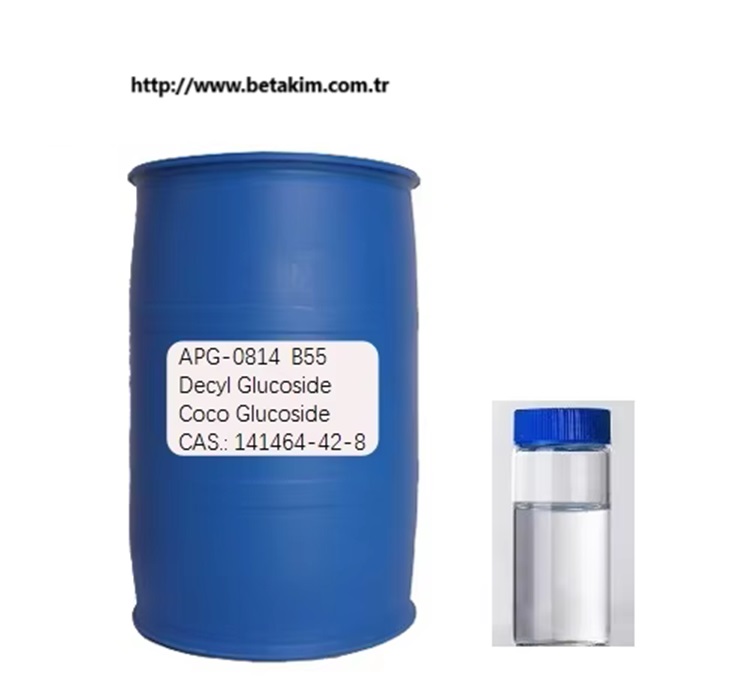
| Appearance | Clear to Light Yellow Viscous Liquid |
| Source | Plant-based (Glucose from corn starch + Fatty alcohols from coconut) |
| HLB Value | ~12 – 14 |
Description: Decyl Glucoside is a nonionic surfactant derived from natural, renewable plant-based raw materials. It is produced by the reaction of glucose (from corn starch) with fatty alcohols (from coconut oil). It is an exceptionally mild and gentle surfactant with excellent foaming, wetting, and emulsifying properties. It is biodegradable, low in toxicity, and performs well in hard water conditions. It is recommended for sensitive skin, facial cleansers, shampoos, body washes, and baby care products. It is the most common surfactant in the alkyl glucoside class and is widely used in natural and organic personal care formulations.
SECTION 2: SYNONYMS AND OTHER NAMES
| No | Synonym / Other Name |
|---|---|
| 1 | Decyl Glucoside |
| 2 | Alkyl Polyglucoside (APG) |
| 3 | Desil Glikozit (Turkish) |
| 4 | Octyldecyl Glucoside |
| 5 | Decyl Octyl D-Glucose |
| 6 | D-Glucopyranose, Oligomers, Decyl Octyl Glycosides |
| 7 | 68515-73-1 |
| 8 | 141464-42-8 |
| 9 | 110615-47-9 |
| 10 | C8-16 Alkyl Polyglucosides |
SECTION 3: CHEMICAL STRUCTURE AND PROPERTIES
| Parameter | Description |
|---|---|
| Chemical Family | Nonionic Surfactant / Alkyl Polyglucoside |
| Structure | Glucose molecule linked to a C8-C16 alkyl chain |
| Functional Groups | Glycosidic Bond, Hydroxyl (-OH) |
| Ionic Character | Nonionic (no electrical charge) |
| Hydrophilic Group | Sugar (Glucose) |
| Lipophilic Group | C8-C16 Alkyl Chain |
Structural Formula:
    CH₂OH
    |  \
    O   H
    |    \
    H    OH
    |    /
    OH   H
    |  /
    O - (CH₂)₉ - CH₃

    Decyl Glucoside (C16H32O6)
Key Characteristics:
-
Nonionic surfactant with no electrical charge
-
Plant-derived from renewable resources (corn starch + coconut)
-
Excellent and stable foaming properties
-
Very mild and gentle on skin
-
Biodegradable and environmentally friendly
-
Low toxicity
-
Performs well in hard water
-
Compatible with other surfactants
-
Stable across a wide pH range (4-12)
SECTION 4: PHYSICAL PROPERTIES
| Parameter | Specification | Typical Value | Test Method |
|---|---|---|---|
| Physical State (25°C) | Liquid (Viscous) | - | Visual |
| Appearance | Clear to Light Yellow | - | Visual |
| Odor | Slight characteristic | - | Organoleptic |
| CAS Numbers | 68515-73-1, 141464-42-8, 110615-47-9 | - | - |
| Active Content | ~50 – 55% | - | Titration |
| pH (as supplied) | 11 – 12 | - | USP <791> |
| pH (Optimal Performance) | 4 – 12 | - | USP <791> |
| HLB Value | ~12 – 14 | - | - |
| Density (25°C) | ~1.08 – 1.10 g/cm³ | - | ASTM D4052 |
| Water Solubility | Fully miscible | - | - |
| Viscosity (25°C) | ~500 – 1500 cP | - | Brookfield |
| Cloud Point | > 80°C | - | - |
| Flash Point | > 100°C | - | ASTM D93 |
SECTION 5: FUNCTIONAL PROPERTIES
| Property | Description |
|---|---|
| Foaming | Excellent and stable foam with fine bubble structure |
| Cleansing | Mild and effective cleansing |
| Wetting | Good wetting properties |
| Emulsification | Stabilizes oil-water emulsions |
| Skin Friendliness | Very mild; non-irritating even at high concentrations |
| Hard Water Tolerance | Performs well in hard water conditions |
| Compatibility | Compatible with anionic, cationic, and nonionic surfactants |
| Biodegradability | Readily biodegradable |
| pH Stability | Stable in pH range 4 – 12 |
| Plant-Based | Derived from renewable plant sources |
SECTION 6: COSMETIC AND PERSONAL CARE APPLICATIONS
| Application | Function / Benefit | Typical Use Level |
|---|---|---|
| Facial Cleansers | Mild surfactant, foaming agent | 10 – 20% |
| Shampoos | Primary/co-surfactant, mild cleansing | 15 – 30% |
| Body Washes | Primary/co-surfactant, mild cleansing | 15 – 30% |
| Baby Shampoos | Primary surfactant, mild and gentle | 10 – 20% |
| Bubble Baths | Foaming agent, mild cleansing | 15 – 30% |
| Sensitive Skin Products | Primary surfactant, non-irritating | 10 – 20% |
| Hand Soaps | Surfactant, mild cleansing | 10 – 20% |
| Makeup Removers | Surfactant, mild cleansing | 10 – 20% |
| Intimate Hygiene Products | Surfactant, mild and gentle | 10 – 20% |
| Sun Care Products | Emulsifier, dispersant | 1 – 5% |
| Facial Serums | Solubilizer, emulsifier | 1 – 5% |
Recommended Use Levels:
-
Facial Washes: 10 – 20%
-
Shower Gels / Bubble Baths / Shampoos: 15 – 30%
-
Maximum Use Level: Up to 40%
SECTION 7: ADVANTAGES AND BENEFITS
| Advantage | Description |
|---|---|
| Excellent Foaming | Produces exceptionally fine and stable foam |
| Very Mild | Gentle on skin; non-irritating even at high concentrations |
| Plant-Based | Derived from renewable plant sources (corn + coconut) |
| Biodegradable | Environmentally friendly; readily biodegradable |
| Low Toxicity | Safe for use in personal care products |
| Hard Water Compatibility | Performs well in hard water conditions |
| Wide pH Range | Stable in pH 4 – 12 |
| Versatile | Suitable for various personal care applications |
| Compatibility | Compatible with other surfactants |
| Natural/Organic Certifications | Suitable for natural and organic formulations |
SECTION 8: CAS NUMBER COMPARISON
| CAS Number | Description | Application |
|---|---|---|
| 68515-73-1 | Decyl Glucoside / Alkyl Polyglucoside | Most common; general applications |
| 141464-42-8 | Decyl Glucoside (alternate isomer) | Formulation variations |
| 110615-47-9 | Decyl Glucoside (alternate) | Formulation variations |
Note: All three CAS numbers belong to the Decyl Glucoside family and are used interchangeably in formulations. The difference in CAS numbers is due to slight variations in the alkyl chain distribution and manufacturing processes.
SECTION 9: REGULATORY STATUS
| Region / Authority | Status | Description |
|---|---|---|
| European Union | Permitted | Cosmetic ingredient; no specific restrictions |
| Turkey | Permitted | Compliant with EU legislation |
| USA (FDA) | Permitted | Approved for cosmetic use |
| Japan | Permitted | Approved for cosmetic use |
| Canada | Permitted | Health Canada approved |
| INCI | Listed | Decyl Glucoside |
| RSPO | Available | Certified sustainable palm oil derivatives available |
| Safer Choice | Compliant | EPA Safer Choice program compliant |
| DID List | Compliant | Detergent Ingredients Database compliant |
SECTION 10: SAFETY AND TOXICOLOGICAL PROFILE
| Parameter | Assessment |
|---|---|
| Acute Oral Toxicity (LD50) | > 5,000 mg/kg (low toxicity) |
| Acute Dermal Toxicity | Low toxicity |
| Skin Irritation | Non-irritating to mildly irritating |
| Eye Irritation | May cause serious eye damage (GHS05) |
| Skin Sensitization | Low potential; known allergen in some cases |
| Carcinogenicity | Not classified |
| Mutagenicity | Not mutagenic |
| Reproductive Toxicity | Not classified |
| Biodegradability | Readily biodegradable |
| Aquatic Toxicity | Low |
GHS Classification:
-
GHS05: May cause serious eye damage (H318)
-
GHS07: Skin irritation (H315)
Allergen Note:
The American Contact Dermatitis Society named Alkyl Glucosides (including Decyl Glucoside) as "Allergen of the Year" in 2017. Decyl Glucoside is the most common allergen in this class and may cause allergic contact dermatitis in sensitive individuals.
Safety Recommendations:
-
S26: In case of eye contact, rinse with plenty of water
-
S36/37: Wear suitable protective clothing and gloves
-
S39: Wear eye/face protection
-
PPE: Gloves, safety goggles, protective clothing
SECTION 11: FORMULATION TIPS
| Parameter | Recommendation |
|---|---|
| pH Range | 4 – 12 (optimal performance) |
| Use Level | 10 – 30% (primary surfactant) |
| Combinations | Can be used alone or with other surfactants |
| Co-surfactants | Enhances foam with other glucosides |
| Thickening | Can be thickened with salts or natural thickeners |
| Processing | Can be processed cold or hot |
| Storage | Protect from freezing; store at 15-30°C |
SECTION 12: STORAGE AND SHELF LIFE
| Parameter | Information |
|---|---|
| Storage Temperature | 15 – 30°C (protect from freezing) |
| Storage Conditions | Well-ventilated, dry area |
| Container Requirements | Sealed containers |
| Protect From | Freezing, excessive heat, contamination |
| Shelf Life | 24 – 36 months (under proper storage) |
| Degradation Signs | Color change, odor change, precipitation |
Packaging Options:
-
25 kg, 50 kg, 200 kg HDPE drums
-
1000 kg IBC containers
-
1 kg, 5 kg, 10 kg (upon request)
SECTION 13: QUALITY CERTIFICATES AND STANDARDS
| Certificate / Standard | Status | Description |
|---|---|---|
| ISO 9001:2015 | Certified | Quality management system |
| ISO 14001:2015 | Certified | Environmental management system |
| REACH | Registered | EU chemical regulation compliance |
| INCI | Listed | Decyl Glucoside |
| RSPO | Available | Mass balance or segregated available |
| Safer Choice | Compliant | EPA Safer Choice program |
| Certificate of Analysis (COA) | Provided with each batch | Includes binding specifications |
| Safety Data Sheet (SDS) | Available | Current 16-section document |
| Technical Data Sheet (TDS) | Available | Comprehensive technical information |
| GMP | Compliant | Manufacturing quality standards |
SECTION 14: DISCLAIMER AND LEGAL NOTICE
| Item | Description |
|---|---|
| Information Purpose | This Technical Data Sheet (TDS) is for informational purposes only and does not constitute a binding specification. |
| Typical Values | Values stated herein are based on typical laboratory results and may vary slightly between batches. |
| Binding Data | For binding specifications, the Certificate of Analysis (COA) for each batch should be requested. |
| User Responsibility | The user is solely responsible for determining the suitability of the product for the intended application and ensuring compliance with all applicable regulations. |
| SDS Requirement | A current Safety Data Sheet (SDS) should be requested from the supplier prior to use. |
| Safety Information | Safety information in this document is based on current knowledge but does not constitute a guarantee of the product's health and safety risks. |
| Regulatory Changes | The user is responsible for monitoring local and international regulatory changes. |
| Product Quality | Product quality is guaranteed in accordance with the standards specified in this document. |
| License / Patents | This document does not grant any license or patent rights for use of the product. |
| Side Effects | May cause allergic reactions in sensitive individuals; users should conduct suitability tests. |
DISCLAIMER (LEGAL NOTICE): This Technical Data Sheet (TDS) is for informational purposes only and does not constitute a binding specification. The values stated herein are based on typical laboratory results. The user is solely responsible for determining the suitability of the product for the intended application and for ensuring compliance with all local regulations. A current Safety Data Sheet (SDS) and Certificate of Analysis (COA) should be requested prior to use. May cause allergic reactions in sensitive individuals; suitability tests should be conducted. This document does not grant any license or patent rights for use of the product.
.jpg)