We unleash your business potential by maximize the business innovation.
Send EmailPotassium Tripolyphosphate, Potassium Triphosphate, Penta Potassium Triphosphate, KTPP, 13845-36-8
POTASSIUM TRIPOLYPHOSPHATE (KTPP)
Pentapotassium Triphosphate / Potassium Triphosphate
CAS Number: 13845-36-8
EINECS Number: 237-574-9
1. IDENTIFICATION
| Property | Information |
|---|---|
| Chemical Name | Potassium tripolyphosphate (Pentapotassium triphosphate) |
| Common Names | KTPP, Potassium Tripolyphosphate, Potassium Triphosphate, Kalium Triphosphat, Kaliumtripolyphosphat |
| Chemical Formula | K₅P₃O₁₀ |
| Molecular Weight | 448.42 g/mol |
| CAS Number | 13845-36-8 |
| EINECS Number | 237-574-9 |
| UNII | NCS08RO8PB |
| DTXSID | DTXSID2047482 |
| Appearance | White granular powder or crystals |
| Odor | Odorless |
Correction Note: The information in your source document stating "H₆KO₁₀P₃ / 298.06 g/mol" is incorrect. The correct formula is K₅P₃O₁₀ and molecular weight is 448.42 g/mol.
2. PHYSICAL AND CHEMICAL PROPERTIES
| Property | Value |
|---|---|
| Appearance | White, free-flowing granules or powder |
| Melting Point | 620 – 640 °C (decomposes) |
| Density (20°C) | 2.54 g/cm³ |
| Specific Gravity | 2.54 |
| pH (1% aqueous solution, 20°C) | 9.6 – 10.2 (alkaline) |
| Solubility in Water (20°C) | > 140 g/100 mL (highly soluble) |
| Color | White |
| Storage Condition | Inert atmosphere, room temperature, dry environment |
| Stability | Hygroscopic in humid air; rapidly soluble in water |
3. PRODUCT TYPES & GRADES
| Type / Grade | Description |
|---|---|
| Technical Grade KTPP | Standard quality for industrial applications (detergents, water treatment, metal surface treatment) |
| KTPP TG (Food Grade) | For low-sodium formulations; emulsifier, stabilizer, texture improver |
| KTPP 50% Solution | Liquid form; convenient for detergent and metal surface applications |
| Powder Form | Used in special dispersion systems and coating chemistry |
4. CHARACTERISTICS & REACTIVITY
-
High Solubility: Extremely high water solubility (>140 g/100 mL). Better solubility than sodium-based analogues (STPP).
-
Alkaline Nature: Aqueous solutions are moderately alkaline (pH 9.6–10.2).
-
Chelating / Complexing Agent: Binds hardness ions (Ca²⁺, Mg²⁺) by forming soluble complexes.
-
Dispersion: Keeps particles suspended and prevents agglomeration.
-
Hygroscopic: Absorbs moisture from humid air; tends to cake. Must be stored in inert, dry atmosphere.
-
Emulsifier & Stabilizer: Prevents phase separation in emulsion systems.
5. APPLICATIONS
| Industry | Application |
|---|---|
| Detergents & Cleaning Products | In liquid and powder detergents: complexing agent (hardness remover), pH buffer, soil dispersant |
| Food Industry (KTPP TG) | Emulsifier, stabilizer, texture improver, chelating agent, water retention agent, humectant, color stabilizer, antioxidant, preservative |
| – Meat & Seafood | Increases water holding capacity; improves texture and flavor for shrimp, fish fillets, processed meats |
| – Dairy Products | Texture improver; processed cheese, ice cream, condensed milk |
| – Canned Foods & Beverages | Canned goods, fruit-flavored beverages, vegetable protein drinks |
| – Instant Noodles & Poultry | Texture and shelf-life improvement |
| Paints & Coatings | Pigment dispersion in latex emulsion paints |
| Water Treatment | Hardness removal, dispersant, corrosion inhibitor |
| Metal Surface Treatment | Protective film formation, anti-rust agent |
| Rubber & Latex | Suspending agent in latex emulsions; dispersion of pigments and fillers |
| Ceramics | Viscosity control of ceramic slurries, dispersion |
6. FOOD ADDITIVE USAGE LIMITS (KTPP TG)
| Product Category | Maximum Usage Level |
|---|---|
| Canned foods, fruit-flavored beverages, vegetable protein drinks | 1.0 g/kg |
| Dairy products, poultry products, ice cream, instant noodles, meat products | 5.0 g/kg |
| Fruit-flavored (non-juice) products | 0.15 g/kg |
| Canned meat products (as combined phosphate) | Total phosphate ≤ 11.0 g/kg |
| Condensed milk | 0.5 g/kg |
| Combination with sodium pyrophosphate + sodium tripolyphosphate + trisodium phosphate | Maximum 5 g/kg |
Note: Food-grade KTPP is preferred in products requiring low-sodium formulations as an alternative to sodium phosphates.
7. INDUSTRIAL PRODUCTION PROCESS (TECHNICAL GRADE)
Raw Materials:
-
Phosphoric acid (H₃PO₄ – 85%, food or technical grade)
-
Potassium hydroxide (KOH)
Production Steps:
| Step | Conditions / Description |
|---|---|
| 1. Neutralization | Phosphoric acid and KOH are mixed at controlled pH (8.4 – 9.0). |
| 2. Filtration & Decolorization | Decolorized with activated carbon; filtrate is clarified. |
| 3. Evaporation (Concentration) | Solution is heated to 120 – 124 °C for concentration. |
| 4. Crystallization & Dehydration | Trihydrate form is separated by centrifugation, then dehydrated at 120 – 130 °C. |
| 5. Calcination (Polymerization) | Polymerization is achieved at 500 – 600 °C to obtain KTPP. |
8. SAFETY AND HEALTH INFORMATION (MSDS SUMMARY)
GHS Classification (Typical)
| Hazard Class | Status |
|---|---|
| Skin Irritation | Category 3 (mild irritation) |
| Eye Irritation | Category 2B (moderate irritation) |
Hazard Statements (H-Codes)
| Code | Statement |
|---|---|
| H319 | Causes serious eye irritation |
| H335 | May cause respiratory irritation |
Precautionary Statements (P-Codes)
| Code | Statement |
|---|---|
| P261 | Avoid breathing dust |
| P280 | Wear protective gloves and eye/face protection |
| P305+P351+P338 | IF IN EYES: Rinse cautiously with water for several minutes |
| P302+P352 | IF ON SKIN: Wash with plenty of soap and water |
Toxicology
| Parameter | Value |
|---|---|
| Oral LD50 (rat) | > 2000 mg/kg (low toxicity) |
| Skin Irritation | Mild irritant |
| Eye Irritation | Moderately irritating |
9. TRANSPORT & STORAGE
| Property | Information |
|---|---|
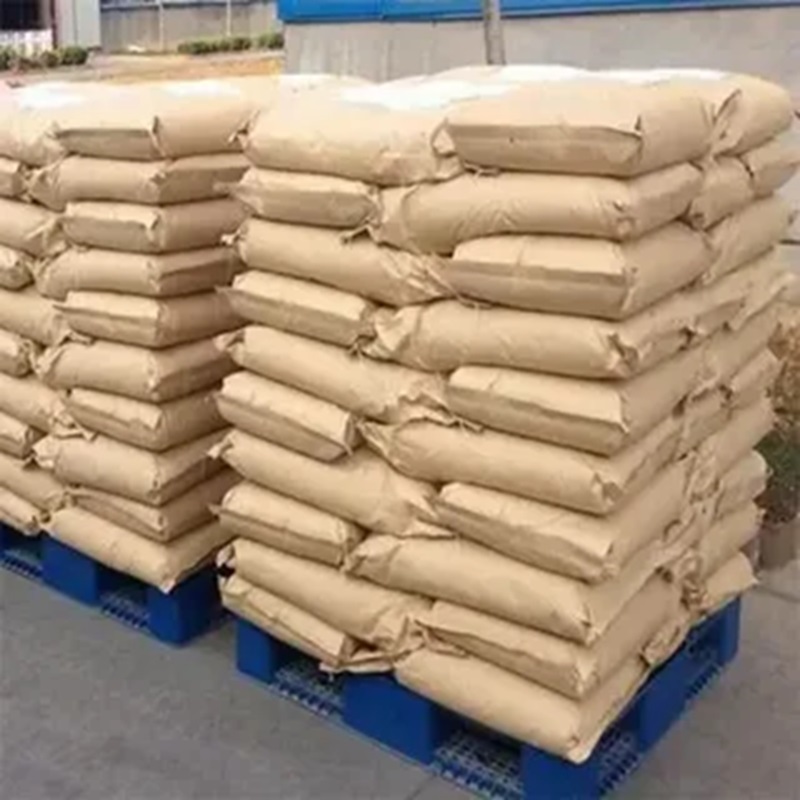
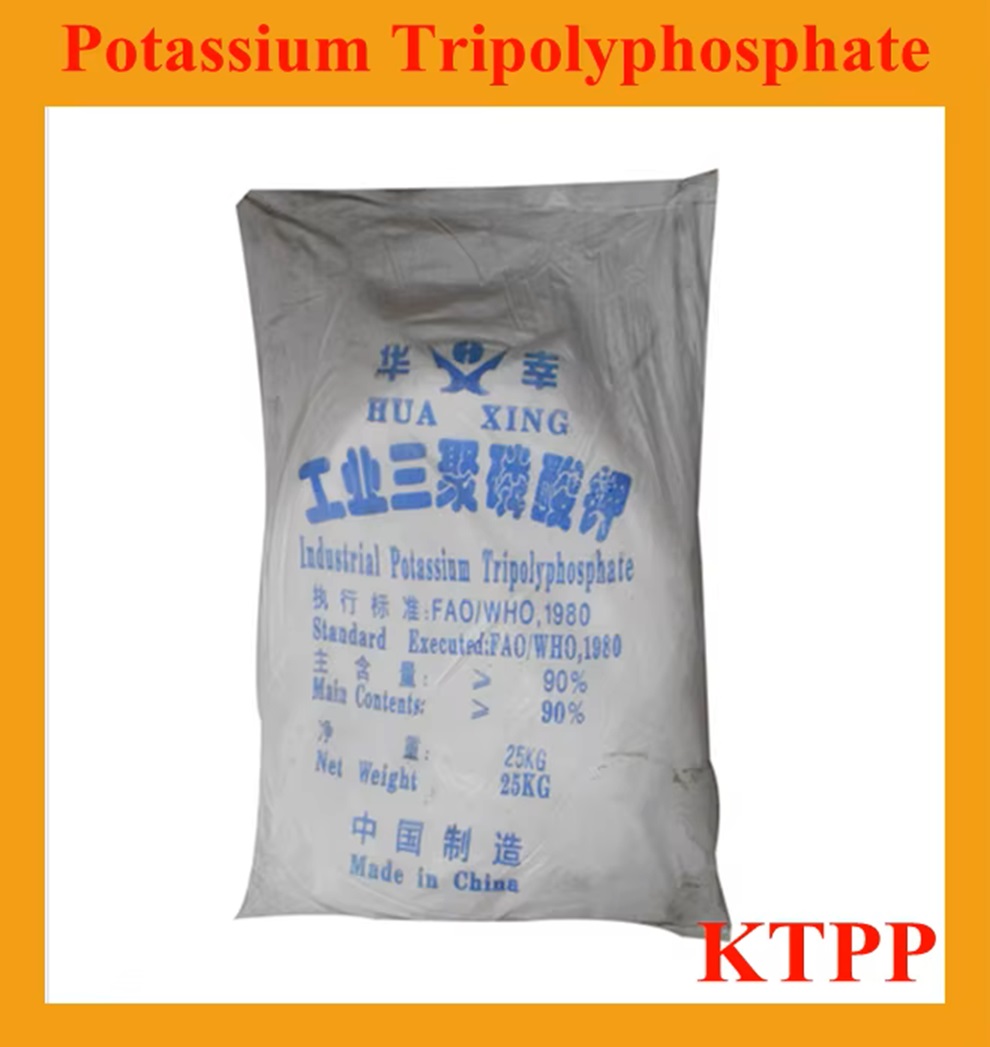
| Packaging | 25 kg multi-layer paper or PP bags, palletized; FIBC (big bags) |
| Storage Conditions | Cool, dry, well-ventilated area; inert atmosphere preferred. Protect from moisture (hygroscopic). |
| Incompatible Materials | Strong acids, oxidizers |
| Shelf Life | 24 months under proper storage conditions |
| Transport Classification | Not classified as dangerous goods |
10. OTHER NAMES & SYNONYMS
| Name | Description |
|---|---|
| Potassium Tripolyphosphate | Most common commercial name |
| Pentapotassium Triphosphate | Systematic name derived from formula (K₅P₃O₁₀) |
| Potassium Triphosphate | Short variant of KTPP |
| Triphosphoric Acid, Pentapotassium Salt | IUPAC systematic name |
| Kaliumtriphosphat / Kaliumtripolyphosphat | German nomenclature |
| KTPP TG | Indicates grade (Technical Grade / Food Grade) |
Database Identifiers:
-
UNII: NCS08RO8PB
-
DTXSID: DTXSID2047482
-
CTK3J2303
11. REGULATORY INFORMATION (Summary)
| Region | Status |
|---|---|
| European Union | Registered under REACH (EC) 1907/2006. Permitted as food additive. |
| Turkey | Compliant with Turkish Food Codex (TGK) Additives Regulation. |
| China | Permitted under GB 2760 standard with usage limits specified above. |
| USA (FDA) | GRAS (Generally Recognized as Safe) for specified uses. |
12. COMPARISON WITH OTHER PHOSPHATES
| Property | KTPP (Potassium) | STPP (Sodium) |
|---|---|---|
| Formula | K₅P₃O₁₀ | Na₅P₃O₁₀ |
| Molecular Weight | 448.42 g/mol | 367.86 g/mol |
| Water Solubility | >140 g/100 mL | ~14.5 g/100 mL |
| pH (1% solution) | 9.6 – 10.2 | 9.0 – 10.0 |
| Sodium Content | None (low-sodium) | High |
| Primary Use | Low-sodium formulations, food, paints | Detergents, water softening |
13. SUMMARY & IMPORTANT NOTES
-
KTPP is the potassium-based alternative to STPP and offers higher solubility.
-
Preferred in low-sodium formulations (food, specialty detergents).
-
Widely used in the food industry as a texture improver, water retention agent, and emulsifier.
-
Hygroscopic – must be stored in dry, airtight packaging.
-
The information in your source document stating "H₆KO₁₀P₃ / 298.06 g/mol" is incorrect; correct values are provided above.
Important: This TDS is exclusively for Potassium Tripolyphosphate (KTPP, CAS 13845-36-8) . Do not confuse with Sodium Tripolyphosphate (STPP, CAS 7758-29-4) . For emergencies or a detailed Material Safety Data Sheet (MSDS), contact the manufacturer/supplier.