We unleash your business potential by maximize the business innovation.
Send EmailGlycerin, Glycerol, Glycyl Alcohol, Propanetriol, E422, 56-81-5
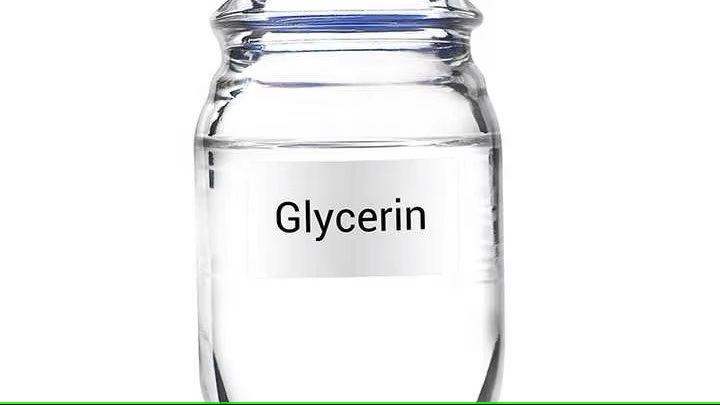
GLYCERIN (GLYCEROL, E422)
1. Chemical Identity and Material Classification
-
Chemical Name: Propane-1,2,3-triol, Glycerol, Glycerin
-
Synonyms: Glycyl Alcohol, Propanetriol, 1,2,3-Trihydroxypropane, Trihydroxypropane, 1,2,3-Propanetriol
-
CAS Number: 56-81-5
-
EC Number (EINECS): 200-289-5
-
Molecular Formula: C₃H₈O₃
-
Molecular Weight: 92.09 g/mol
-
Chemical Class: Sugar alcohol (polyol), trihydric alcohol
-
HS Code / GTIP: 1520.00.00 (crude); 2905.45.00 (refined)
-
E Number: E422 (food additive)
-
REACH Status: Registered under EC 200-289-5
2. Physical Properties
2.1 General Physical Properties
| Property | Value |
|---|---|
| Appearance (20°C) | Colorless, odorless, clear, viscous hygroscopic liquid |
| Physical state (20°C) | Liquid (viscous) |
| Odor | Odorless |
| Taste | Sweet (approximately 0.6× sweetness of sucrose) |
| Density (20°C) | 1.261 g/cm³ (1.26–1.26 g/cm³) |
| Specific gravity (20°C) | 1.26 |
| Refractive index (nD20) | 1.472–1.474 |
| Viscosity (20°C) | 1,412 cP (1.412 Pa·s) – very viscous |
| Viscosity (40°C) | 300 cP |
| Melting point / Freezing point | 17.8°C (64°F) (supercools; may remain liquid below this temperature) |
| Boiling point (at 760 mmHg) | 290°C (554°F) (decomposes) |
| Boiling point (at 20 mmHg) | 130–140°C |
| Flash point | 160°C (closed cup) – combustible |
| Autoignition temperature | 370°C (698°F) |
| Vapor pressure (20°C) | <1 mmHg (very low) |
| Vapor density (air = 1) | 3.17 (heavier than air) |
| Surface tension (20°C) | 63.4 mN/m |
| Heat of vaporization | 86.7 kJ/mol |
2.2 Thermal Properties
| Parameter | Value |
|---|---|
| Specific heat capacity (20°C) | 2.41 kJ/(kg·K) (0.576 cal/g·°C) |
| Thermal conductivity (20°C) | 0.29 W/(m·K) |
| Coefficient of thermal expansion (20°C) | 0.00061 /K |
| Heat of fusion | 18.3 kJ/mol |
| Decomposition temperature | >200°C (produces acrolein – irritating) |
2.3 Freezing / Crystallization Behavior
| Parameter | Value |
|---|---|
| Freezing point (pure) | 17.8°C (64°F) |
| Supercooling | Glycerin readily supercools – may remain liquid below freezing point |
| Crystallization | Slow; can be induced by seeding |
Note: 99.5% glycerin may crystallize at temperatures between 12–17°C. Warming to 25–30°C with mild agitation will re-dissolve crystals without affecting quality.
3. Solubility
3.1 Solvent Solubility
| Solvent | Solubility |
|---|---|
| Water | Completely miscible (all proportions) |
| Ethanol (95%) | Completely miscible |
| Methanol | Completely miscible |
| Acetone | Sparingly soluble |
| Propylene glycol | Completely miscible |
| Polyethylene glycol | Completely miscible |
| Diethyl ether | Sparingly soluble |
| Chloroform | Insoluble |
| Benzene | Insoluble |
| Carbon tetrachloride | Insoluble |
| Oils (mineral, vegetable) | Slightly soluble (acts as humectant, not solvent) |
3.2 Solution Properties
| Parameter | Value |
|---|---|
| pH (10% solution, 20°C) | 5.5–7.0 (neutral to slightly acidic) |
| pH (50% solution, 20°C) | 5.0–6.5 |
| Heat of dilution (in water) | Exothermic (heats up) |
4. Chemical Properties
4.1 Molecular Structure
Structure: HOCH₂–CH(OH)–CH₂OH
-
Three hydroxyl groups (one secondary, two primary)
-
Trihydric alcohol (three -OH groups)
-
High hydroxyl density – responsible for hygroscopicity and hydrogen bonding
-
Chiral center (optically inactive; glycerol is not chiral due to symmetry)
4.2 Key Chemical Characteristics
| Parameter | Value |
|---|---|
| Number of hydroxyl groups | 3 |
| Hydroxyl groups | Two primary (C1, C3), one secondary (C2) |
| pKa (25°C) | 14.15 (very weak acid) |
| Isoelectric point | Not applicable (no ionizable groups) |
| Refractive index (nD20) | 1.472–1.474 |
4.3 Chemical Reactivity
| Reaction Type | Description |
|---|---|
| Esterification | With fatty acids → mono-, di-, triglycerides (fats and oils) |
| Transesterification | With methanol → biodiesel (fatty acid methyl esters) + glycerin (by-product) |
| Etherification | With alcohols → glycerol ethers |
| Acetal / ketal formation | With aldehydes/ketones → solketal |
| Dehydration | Heating with KHSO₄ or H₂SO₄ → acrolein (unsaturated aldehyde, toxic) |
| Oxidation | With strong oxidizers → glyceraldehyde, dihydroxyacetone, tartronic acid, mesoxalic acid |
| Chlorination | With HCl → chlorohydrins (epichlorohydrin precursor) |
| Nitration | With nitric acid → nitroglycerin (explosive) |
4.4 Hygroscopicity
| Relative Humidity | Equilibrium Moisture Content (%) |
|---|---|
| 0% RH | ~0% |
| 20% RH | ~10% |
| 50% RH | ~25% |
| 80% RH | ~45% |
Key property: Glycerin attracts and retains moisture from the air – excellent humectant.
4.5 Thermal Decomposition
| Temperature | Products |
|---|---|
| >200°C | Decomposes to acrolein (toxic, irritating aldehyde), acetaldehyde, formaldehyde, carbon monoxide |
| >290°C | Boiling with decomposition |
| Combustion | CO₂, H₂O, acrolein (incomplete combustion) |
4.6 Incompatibilities
| Substance | Hazard |
|---|---|
| Strong oxidizing agents (HNO₃, H₂O₂, KMnO₄, chromates) | Fire/explosion risk, oxidation |
| Strong acids (H₂SO₄, H₃PO₄, HCl) | Dehydration to acrolein (toxic) |
| Strong bases | May cause degradation at high temperatures |
| Nitrating mixtures | Forms nitroglycerin (highly explosive) |
5. Quality Specifications
5.1 Glycerin Grades – Overview
| Grade | Purity | Primary Use |
|---|---|---|
| Technical Grade | 85–99% | Industrial applications (antifreeze, lubricants, textiles) |
| Cosmetic Grade | 99.5–99.7% | Personal care (lotions, creams, soaps, shampoos) |
| Pharmaceutical Grade (USP/EP) | 99.5–101.0% | Pharmaceuticals (syrups, suppositories, topical preparations) |
| Food Grade (E422) | 99.5–99.9% | Food and beverage applications (humectant, sweetener, solvent) |
| Biodiesel Grade | 80–85% | Crude by-product from biodiesel production |
5.2 Pharmaceutical Grade (USP / Ph. Eur.)
| Parameter | Specification | Test Method |
|---|---|---|
| Assay (anhydrous basis) | 99.5–101.0% | Titration |
| Specific gravity (20°C) | 1.2607–1.2615 | Hydrometer |
| Refractive index (nD20) | 1.471–1.474 | Refractometer |
| Water content (K. Fischer) | ≤ 1.0% | Karl Fischer |
| Residue on ignition | ≤ 0.02% | Ignition (800°C) |
| Chlorides (Cl) | ≤ 0.001% | Turbidimetric |
| Sulfates (SO₄) | ≤ 0.002% | Turbidimetric |
| Heavy metals (as Pb) | ≤ 5 ppm | Colorimetric / ICP |
| Iron (Fe) | ≤ 5 ppm | Colorimetric |
| Arsenic (As) | ≤ 1 ppm | Atomic absorption |
| Lead (Pb) | ≤ 1 ppm | Atomic absorption |
| Reducing substances | Passes test | Redox titration |
| Fatty acids and esters | ≤ 0.1% (as butyric acid) | Titration |
| Glucose | Passes test (no coloration) | Colorimetric |
| Acrolein | Passes test (no yellow coloration) | Colorimetric |
| Bacterial endotoxins | ≤ 10 IU/g | LAL test |
5.3 Food Grade (E422)
| Parameter | Specification |
|---|---|
| Purity (anhydrous basis) | 99.5–99.9% |
| Water content | ≤ 1.0% |
| Residue on ignition | ≤ 0.02% |
| Chlorides (Cl) | ≤ 0.001% |
| Sulfates (SO₄) | ≤ 0.002% |
| Heavy metals (as Pb) | ≤ 5 ppm |
| Lead (Pb) | ≤ 1 ppm |
| Arsenic (As) | ≤ 1 ppm |
| Mercury (Hg) | ≤ 1 ppm |
| Cadmium (Cd) | ≤ 1 ppm |
| Reducing substances | Passes test |
| Fatty acids and esters | ≤ 0.1% (as butyric acid) |
| Color (APHA) | ≤ 10 |
5.4 Cosmetic Grade
| Parameter | Specification |
|---|---|
| Purity | 99.5–99.7% |
| Water content | ≤ 1.0% |
| Glycerin content | ≥ 99.5% |
| Heavy metals | ≤ 5 ppm |
| Ash content | ≤ 0.02% |
| Chlorides | ≤ 0.001% |
| Sulfates | ≤ 0.002% |
| Color (APHA) | ≤ 15 |
6. Production Methods
6.1 Natural / Vegetable Glycerin (Most Common)
Source: Vegetable oils (palm, soybean, canola, sunflower, coconut)
Process (Saponification):
-
Triglycerides + NaOH → Glycerin + Soap
-
Crude glycerin recovered from soap lye
-
Purification: evaporation, distillation, activated carbon treatment, ion exchange
-
Concentration to 99.5%+
Process (Transesterification – Biodiesel Co-product):
-
Triglycerides + Methanol + Catalyst (KOH/NaOH) → Methyl esters (biodiesel) + Glycerin
-
Crude glycerin (~80%) separated
-
Purification: acidulation, filtration, distillation, activated carbon, ion exchange
-
Concentration to 99.5%+
6.2 Synthetic Glycerin
Source: Propylene (petrochemical)
Process:
-
Propylene → allyl chloride → epichlorohydrin → glycerin
-
Propylene → acrolein → glycerin
Quality: Equivalent to natural glycerin; pharmaceutical and food grades available
6.3 Crude Glycerin (Biodiesel By-product)
| Parameter | Typical Value |
|---|---|
| Glycerin content | 80–85% |
| Water | 10–15% |
| Methanol | 1–5% |
| Ash (salts) | 5–10% |
| MONG (Matter Organic Non-Glycerol) | 2–5% |
7. Industrial Applications
7.1 Food and Beverage Industry (E422) – Largest Application
| Application | Function | Typical Concentration |
|---|---|---|
| Humectant in baked goods | Prevents drying, extends shelf life | 0.5–5% |
| Sweetener in sugar-free products | Low-calorie sweetener (0.6× sucrose) | 1–20% |
| Solvent for flavors and colors | Carrier for extracts, colors | 0.1–10% |
| Plasticizer in edible films | Improves flexibility of food coatings | 0.5–5% |
| Frozen desserts | Prevents ice crystal formation | 0.5–3% |
| Marshmallows and confections | Retains moisture, prevents stickiness | 1–10% |
| Beverages | Body and mouthfeel enhancer | 0.1–1% |
| Processed meats | Moisture retention | 0.5–3% |
| Chewing gum | Plasticizer, humectant | 1–5% |
Food additive status: E422 – permitted worldwide as GRAS (FDA) and EFSA
7.2 Pharmaceutical Applications
| Application | Function | Typical Concentration |
|---|---|---|
| Cough syrups | Solvent, sweetener, viscosity modifier | 10–40% |
| Elixirs | Solvent for active ingredients | 10–50% |
| Suppositories | Base (with gelatin) | 10–70% |
| Topical creams and ointments | Humectant, emollient, skin protectant | 5–20% |
| Toothpaste | Humectant, prevents drying | 10–30% |
| Glycerin suppositories | Laxative (irritant effect) | 70–90% |
| Liquid formulations | Sweetener, viscosity enhancer | 10–50% |
| Mouthwash | Sweetener, solvent | 5–20% |
| Otic preparations (ear drops) | Vehicle, emollient | 5–50% |
7.3 Cosmetics and Personal Care Applications
| Application | Function | Typical Concentration |
|---|---|---|
| Skin lotions and creams | Humectant, emollient, skin conditioning | 1–10% |
| Shampoos | Humectant, viscosity modifier | 0.5–5% |
| Conditioners | Humectant, antistatic | 0.5–3% |
| Soaps | Moisture retention, clarity | 1–10% |
| Shaving creams | Lubricant, humectant | 1–5% |
| Facial cleansers | Humectant, mildness | 1–5% |
| Deodorants | Humectant, skin conditioning | 0.5–2% |
| Sunscreens | Humectant, solvent | 1–5% |
| Lip balms | Emollient, humectant | 1–10% |
| Baby wipes | Humectant | 0.5–2% |
INCI Name: Glycerin
7.4 Industrial and Technical Applications
| Application | Function | Typical Concentration |
|---|---|---|
| Antifreeze | Lowers freezing point (cryoprotectant) | 20–50% |
| De-icing fluids | Aircraft and runway de-icing | 10–80% |
| Textile lubricants | Fiber lubricant, softening agent | 1–10% |
| Printing inks | Humectant, prevents drying on press | 1–10% |
| Paper coatings | Plasticizer, humectant | 1–5% |
| Cellophane production | Plasticizer | 5–15% |
| Explosives manufacturing | Nitroglycerin production | Precursor |
| Polyurethane foams | Polyol component (alkoxylated) | 1–10% |
| Metalworking fluids | Lubricant, corrosion inhibitor | 1–5% |
| Hydraulic fluids | Base fluid (with water) | 10–90% |
| Tobacco products | Humectant (prevents drying) | 1–10% |
7.5 Chemical Intermediate
| Application | Product |
|---|---|
| Epichlorohydrin production | ECH (via glycerin-to-ECH process) |
| Acrolein production | Dehydration |
| Glycidol production | Dehydration |
| Propylene glycol production | Hydrogenolysis |
| Glycerol carbonate | Phosgene-free carbonate synthesis |
| 1,3-Propanediol (PDO) | Fermentation route |
| Polyglycerol esters | Emulsifiers (E475) |
7.6 Bioplastics and Biorefinery
| Application | Description |
|---|---|
| Polyglycerol | Polymerization → polyglycerols (emulsifiers, lubricants) |
| Propylene glycol | Hydrogenolysis |
| Acrylic acid | Dehydration + oxidation |
| Lactic acid | Fermentation |
| Succinic acid | Fermentation |
8. Toxicology and Safety
8.1 Acute Toxicity
| Parameter | Value | Classification |
|---|---|---|
| Oral LD₅₀ (rat) | 12,600–40,000 mg/kg (very low toxicity) | Not classified |
| Dermal LD₅₀ (rabbit) | >10,000 mg/kg | Not classified |
| Inhalation LC₅₀ | Not determined (low vapor pressure) | Not classified |
| Skin irritation | Non-irritant (generally) | Not classified |
| Eye irritation | Mild irritant (may cause mild redness) | Not classified |
| Skin sensitization | Non-sensitizer | Not classified |
8.2 Chronic Toxicity
| Endpoint | Classification |
|---|---|
| Carcinogenicity | Not classified (IARC Group 3 – not classifiable) |
| Mutagenicity | Negative |
| Reproductive toxicity | Not classified |
| Target organ toxicity | Not classified (low toxicity) |
8.3 GHS Classification
| Classification | Category |
|---|---|
| Signal word | None (not classified as hazardous) |
| Hazard statements | None (under normal conditions) |
| Precautionary statements | P264, P280 (for industrial handling – eye protection) |
8.4 Special Hazards (Decomposition)
| Hazard | Description |
|---|---|
| Acrolein formation | Glycerin heated to >200°C with dehydration agents (H₂SO₄, KHSO₄) produces acrolein – toxic, flammable, lachrymatory |
| Combustion | Produces CO, CO₂, acrolein, smoke |
9. Safety Precautions and Personal Protective Equipment (PPE)
-
Hazards:
-
Very low acute toxicity
-
May cause mild eye irritation (dust/mist)
-
Hygroscopic – absorbs moisture from air
-
Combustible (flash point 160°C)
-
When heated to decomposition (>200°C), produces toxic acrolein
-
-
PPE (recommended – industrial handling):
-
Safety glasses (EN 166) – side shields (for splash protection)
-
Chemical-resistant gloves (nitrile – optional, low hazard)
-
Protective clothing (for bulk handling)
-
Respiratory protection: Not normally required (low vapor pressure)
-
-
Engineering controls:
-
Adequate ventilation
-
Eyewash stations
-
-
First aid:
-
Inhalation: Move to fresh air
-
Skin contact: Wash with soap and water
-
Eye contact: Rinse with water for 15 minutes
-
Ingestion: Rinse mouth; drink water (low hazard)
-
10. Environmental Fate
| Parameter | Value |
|---|---|
| Biodegradability | Readily biodegradable (OECD 301) – 100% degradation |
| Aquatic toxicity (fish, LC₅₀, 96 hours) | >10,000 mg/L (very low toxicity) |
| Daphnia magna (EC₅₀, 48 hours) | >5,000 mg/L |
| Algal toxicity (EC₅₀, 72 hours) | >1,000 mg/L |
| Bioaccumulation | Very low (BCF <10) |
| Mobility in soil | High (high water solubility) |
| WGK Germany | 1 (low hazard to water) |
| Disposal method | Incineration (CO₂ + H₂O) or wastewater treatment (biodegradable) |
11. Storage and Shelf Life
11.1 Storage Conditions
| Parameter | Requirement |
|---|---|
| Storage temperature | 15–30°C (room temperature) |
| Prevent from | Freezing (may crystallize; warm to 25–30°C to re-dissolve), moisture (hygroscopic – keep tightly sealed) |
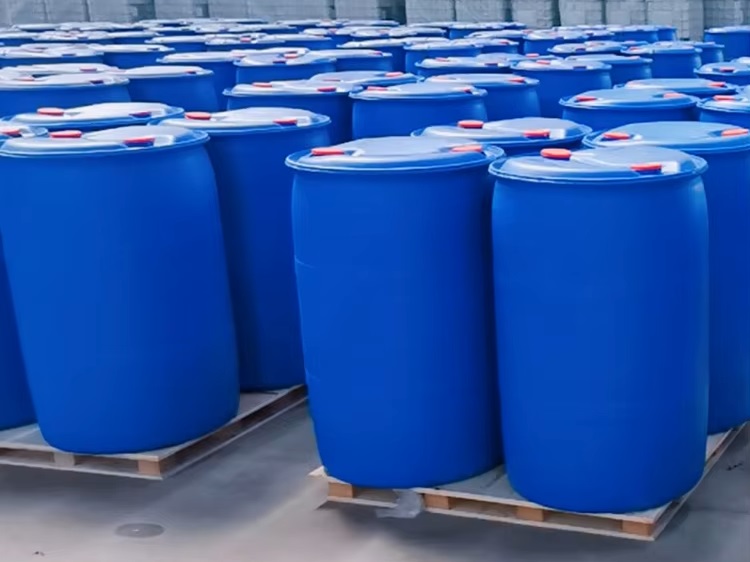
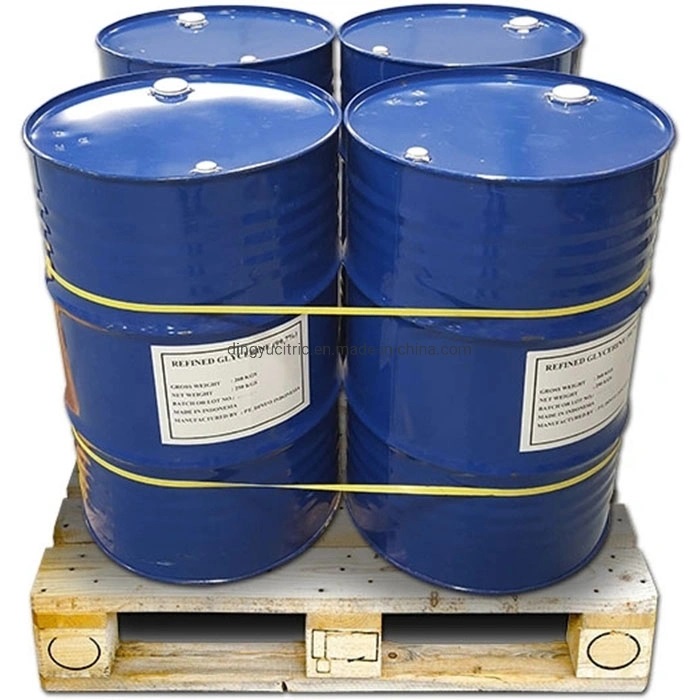
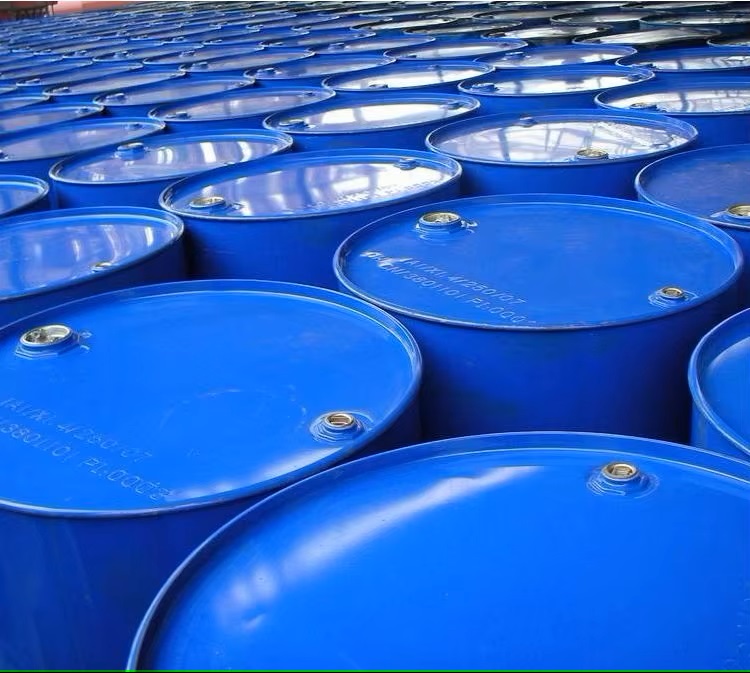
| Container | Keep tightly closed in original container (HDPE, stainless steel, glass, aluminum, lined steel) |
| Protect from | Strong oxidizing agents, strong acids (dehydration to acrolein) |
| Environment | Cool, dry, well-ventilated area |
| Shelf life (sealed) | 24–36 months |
| Shelf life (opened) | 12–24 months (if kept dry and sealed) |
11.2 Container Materials
| Container Type | Suitability |
|---|---|
| HDPE (High-Density Polyethylene) | Suitable |
| Polypropylene | Suitable |
| Stainless steel (304, 316) | Suitable |
| Glass | Suitable |
| Aluminum | Suitable |
| Lined carbon steel | Suitable |
| Unlined carbon steel | Not recommended (may cause discoloration) |
12. Transport Information
| Regulation | Classification |
|---|---|
| UN Number | Not regulated (non-hazardous) |
| ADR/RID | Not classified as dangerous goods |
| IMDG | Not regulated |
| IATA | Not regulated |
| Proper shipping name | Glycerin, Glycerol (non-hazardous) |
13. Synonyms and Common Names
-
English: Glycerin, Glycerol, Glycerine, Glycyl Alcohol, Propanetriol, 1,2,3-Propanetriol, 1,2,3-Trihydroxypropane, Glyceritol
-
Trade names: Glycerine 99.5%, Glycerol USP, Glycerol Ph. Eur., Vegetable Glycerin, Synthetic Glycerin
-
French: Glycérine
-
German: Glycerin
-
Spanish: Glicerina
-
Turkish: Gliserin, Gliserol
14. Regulatory Status
| Regulation | Status |
|---|---|
| REACH (EU) | Registered (EC 200-289-5) |
| TSCA (US) | Listed |
| FDA | GRAS (Generally Recognized as Safe) – food additive E422 |
| EFSA | Permitted as food additive (E422) |
| USP / Ph. Eur. | Monographed |
| EPA | Not restricted |
15. Why Choose Glycerin?
| Advantage | Description |
|---|---|
| Excellent humectant | Attracts and retains moisture – ideal for cosmetics, foods, and pharmaceuticals |
| Very low toxicity | Oral LD₅₀ >12,600 mg/kg – safe for food, pharmaceutical, and cosmetic use |
| Versatile | Used in foods, cosmetics, pharmaceuticals, industrial applications |
| Biodegradable | 100% biodegradable – environmentally friendly |
| Sweet taste | Natural sweetener (0.6× sucrose) – suitable for sugar-free formulations |
| Compatible with many ingredients | Miscible with water, alcohols, glycols |
| FDA and EFSA approved | GRAS for food use (E422) |
| Multiple grades available | Technical, cosmetic, pharmaceutical, food grades |
| Renewable source (vegetable glycerin) | Derived from vegetable oils (palm, soybean, coconut) |
| Good solvent | Solubilizes many active ingredients |
Limitations:
-
High viscosity (1,412 cP at 20°C) – Requires pumping consideration; may need warming for easy transfer
-
Hygroscopic – Absorbs moisture; requires airtight storage
-
Crystallizes below 17.8°C – May solidify in cold storage; requires warming before use
-
Combustible – Flash point 160°C; keep away from ignition sources
-
Forms acrolein upon thermal decomposition – Toxic; avoid overheating (>200°C) with dehydration agents
16. Glycerin Grades – Comparison Table
| Parameter | Technical Grade | Cosmetic Grade | Pharmaceutical Grade (USP/EP) | Food Grade (E422) | Biodiesel Grade (Crude) |
|---|---|---|---|---|---|
| Purity | 85–99% | 99.5–99.7% | 99.5–101.0% | 99.5–99.9% | 80–85% |
| Water content | ≤2–5% | ≤1.0% | ≤1.0% | ≤1.0% | 10–15% |
| Ash content | ≤0.1–0.5% | ≤0.02% | ≤0.02% | ≤0.02% | 5–10% |
| Heavy metals | ≤10–50 ppm | ≤5 ppm | ≤5 ppm | ≤5 ppm | >50 ppm |
| Color (APHA) | ≤30–50 | ≤15 | ≤10 | ≤10 | Dark |
| Applications | Industrial, antifreeze | Cosmetics, personal care | Pharmaceuticals, medical | Food, beverages | Biodiesel co-product |
17. Glycerin vs. Other Polyols – Comparison
| Property | Glycerin (C3) | Propylene Glycol (C3) | Sorbitol (C6) | Ethylene Glycol (C2) |
|---|---|---|---|---|
| Formula | C₃H₈O₃ | C₃H₈O₂ | C₆H₁₄O₆ | C₂H₆O₂ |
| OH groups | 3 | 2 | 6 | 2 |
| Viscosity (20°C) | 1,412 cP | 56 cP | Very high (syrup) | 21 cP |
| Sweetness | 0.6× sucrose | 0.5× sucrose | 0.6× sucrose | Sweet (toxic) |
| Toxicity | Very low | Low | Very low | High (toxic) |
| Humectancy | Excellent | Good | Excellent | Good |
| Freezing point | 17.8°C | -59°C | 95–99°C (solid) | -13°C |
| Primary use | Food, cosmetic, pharma | Food, cosmetic | Food, toothpaste | Antifreeze |
| Biodegradability | Yes | Yes | Yes | Yes |
18. Frequently Asked Questions (FAQs)
Q1: What is the difference between glycerin and glycerol?
A1: Glycerin and glycerol are the same compound (C₃H₈O₃). "Glycerin" is the common name (often used for commercial grades), while "Glycerol" is the chemical name (IUPAC).
Q2: Is glycerin safe to eat?
A2: Yes, food-grade glycerin (E422) is GRAS (Generally Recognized as Safe) by FDA and EFSA. It is used as a humectant, sweetener, and solvent in many food products.
Q3: Is glycerin vegan?
A3: Glycerin can be derived from vegetable oils (palm, soybean, coconut) – vegetable glycerin is vegan. It can also be derived from animal fats (tallow) – not vegan. Synthetic glycerin (from propylene) is vegan.
Q4: Why does glycerin crystallize in cold storage?
A4: Pure glycerin has a freezing point of 17.8°C (64°F). Below this temperature, it crystallizes. Warming to 25–30°C with mild agitation will re-dissolve crystals without affecting quality.
Q5: How is glycerin used in biodiesel production?
A5: Glycerin is a co-product of biodiesel production (transesterification). For every 100 kg of biodiesel produced, approximately 10 kg of crude glycerin is generated.
19. Storage Recommendations
| Condition | Recommendation |
|---|---|
| Winter storage | Store in heated warehouse (20–30°C) to prevent crystallization |
| Bulk storage | Use tank heating or circulation to maintain liquid state |
| Containers | HDPE, stainless steel, aluminum, lined steel |
| Incompatibles | Strong oxidizing agents, strong acids |
| Hygroscopicity | Keep containers tightly sealed; use nitrogen blanketing for long-term storage |
| Shelf life | 24–36 months (unopened); 12–24 months (opened, if kept dry) |
20. Summary Table – Key Specifications at a Glance
| Parameter | Value |
|---|---|
| Product Name | Glycerin (Glycerol, E422) |
| CAS Number | 56-81-5 |
| Molecular Formula | C₃H₈O₃ |
| Molecular Weight | 92.09 g/mol |
| Appearance | Colorless, odorless, clear, viscous liquid |
| Density (20°C) | 1.261 g/cm³ |
| Viscosity (20°C) | 1,412 cP |
| Refractive Index (nD20) | 1.472–1.474 |
| pH (10% solution) | 5.5–7.0 (neutral) |
| Melting Point | 17.8°C (64°F) |
| Boiling Point | 290°C (554°F) |
| Flash Point | 160°C |
| Water Solubility | Completely miscible |
| log P | -1.76 |
| Assay (USP/Ph. Eur.) | 99.5–101.0% |
| Primary Applications | Food (E422), cosmetics (humectant), pharmaceuticals (syrups, suppositories), industrial (antifreeze, lubricants), chemical intermediate |
| Oral LD₅₀ (rat) | 12,600–40,000 mg/kg (very low toxicity) |
| GHS Signal Word | None (non-hazardous) |
| Hazard Statements | None |
| Biodegradability | Readily biodegradable (100%) |
| UN Number | Not regulated |
This TDS is prepared in compliance with ISO 11014-1 format and is intended for food technologists, cosmetic formulators, pharmaceutical scientists, chemical engineers, and procurement professionals. Certificates of Analysis (CoA), Safety Data Sheets (SDS), and sample validation reports are available upon request.