We unleash your business potential by maximize the business innovation.
Send EmailEsterquat, Dialkylester Ammonium Methosulfate, Triethanolamine Diesterquat Methosulfate, 91995-81-2
ESTERQUAT (ESTER QUATERNARY AMMONIUM SALT)
CAS 91995-81-2 | EC 295-344-3
SECTION 1: PRODUCT IDENTITY AND DEFINITION
| Parameter | Description |
|---|---|
| Product Name | Esterquat |
| Other Names | Ester Quaternary Ammonium Salt, Dialkyl Ammonium Methosulfate, Esterquart, Di(tallow-carboxyethyl)hydroxyethylmethylammoniummethylsulfate, Triethanolamine Diesterquat Methosulfate |
| CAS Number | 91995-81-2 |
| EC Number (EINECS) | 295-344-3 |
| INCI Name | Dialkylester Ammonium Methosulfate |
| Chemical Formula | Variable (C16/C18 fatty acid based) |
| Chemical Class | Cationic Surfactant / Quaternary Ammonium Salt |
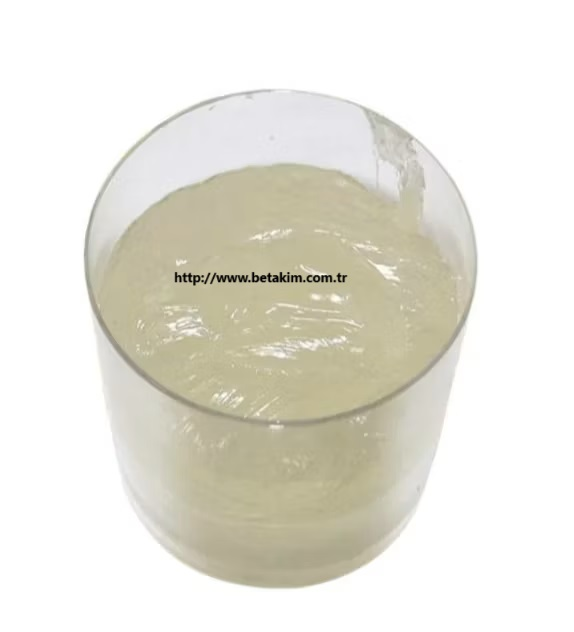
| Appearance | White to Yellowish Waxy Paste/Solid |
| Ionic Type | Cationic |
| Source | Synthetic (C16/C18 fatty acids + Triethanolamine + Dimethyl Sulfate) |
Description: Esterquat is a class of quaternary ammonium salts (QAS) containing ester linkages. It is primarily composed of triethanolamine diesterquat methosulfate based on C16/C18 saturated and unsaturated fatty acids. As a cationic surfactant, it adsorbs onto negatively charged surfaces (fabric, hair), providing excellent softening, antistatic, and conditioning properties. The ester linkages provide better biodegradability compared to conventional quaternary ammonium compounds.
SECTION 2: SYNONYMS AND OTHER NAMES
| No | Synonym / Other Name |
|---|---|
| 1 | Esterquat |
| 2 | Ester Quaternary Ammonium Salt |
| 3 | Dialkyl Ammonium Methosulfate |
| 4 | Esterquart |
| 5 | Triethanolamine Diesterquat Methosulfate |
| 6 | Di(tallow-carboxyethyl)hydroxyethylmethylammoniummethylsulfate |
| 7 | Di(palmiticcarboxyethyl) Hydroxyethyl Methyl Ammonium Methylsulfate |
| 8 | Fatty acids, C10-20 and C16-18-unsatd., reaction products with triethanolamine, di-Me sulfate-quaternized |
| 9 | KAOSOFT HW |
| 10 | KAOSOFT AG80 |
| 11 | STEPANTEX SP-90 |
| 12 | TETRANYL AT60Q |
| 13 | ELOTANT EQ series |
| 14 | 91995-81-2 |
| 15 | EC 295-344-3 |
SECTION 3: CHEMICAL STRUCTURE AND PROPERTIES
| Parameter | Description |
|---|---|
| Chemical Family | Cationic Surfactant / Quaternary Ammonium Salt |
| Structure | Hydrophobic alkyl chains (C16/C18) linked by ester bonds to a quaternary ammonium head group |
| Functional Groups | Quaternary Ammonium (N⁺), Ester (-COO-), Methosulfate (CH₃SO₄⁻) |
| Ionic Character | Cationic (positive charge) |
| Hydrophobic Chain | C16/C18 saturated and unsaturated fatty acids |
| Ester Bonds | 2 ester bonds (diesterquat) |
| Counter Ion | Methosulfate (CH₃SO₄⁻) |
Structural Formula (Representative):
    CH₂ - OOC - R
    |
    CH - OOC - R
    |
    CH₂ - N⁺ - CH₃  CH₃SO₄⁻
         |
        CH₂ - CH₂ - OH

    Triethanolamine Diesterquat Methosulfate (R = C16/C18 alkyl chain)
Key Characteristics:
-
Cationic quaternary ammonium surfactant
-
Ester-containing "cleavable" structure
-
Better biodegradability than conventional quaternary ammonium compounds
-
Dispersible in hot water
-
Soluble in isopropanol
-
Low yellowing effect
-
Excellent softening and antistatic properties
SECTION 4: PHYSICAL AND CHEMICAL PROPERTIES
| Parameter | Specification | Typical Value | Test Method |
|---|---|---|---|
| Physical State (25°C) | Paste/Solid | - | Visual |
| Appearance | White - Yellowish | - | Visual |
| Odor | Slight characteristic / Isopropanol-like | - | Organoleptic |
| Density (20°C) | ~0.96 g/cm³ | - | ASTM D4052 |
| Melting Point | ~36°C | - | DSC |
| Flash Point | ~60.5°C | - | ASTM D93 |
| pH (5% Aqueous) | 2.0 – 4.0 | 2.5 – 3.5 | USP <791> |
| Solids Content | ≥ 90% | 92 – 98% | 105°C/2 hrs |
| Volatile Matter | 7.0 – 22.0% | - | |
| Water Content | < 1% | - | Karl Fischer |
| Color (Gardner) | ≤ 4.0 | < 3.0 | ASTM D1544 |
| Water Solubility | Dispersible | - | |
| Acid Value | ≤ 5.0 mg KOH/g | < 3.0 | Titration |
| Amine Value | ≤ 5.0 mg KOH/g | < 3.0 | Titration |
SECTION 5: HYDROLYSIS STABILITY
| Parameter | Description |
|---|---|
| Hydrolysis Sensitivity | Sensitive to hydrolysis due to ester bonds |
| pH Effect | Stable at acidic and neutral pH; hydrolysis accelerates at alkaline pH |
| Temperature Effect | High temperature accelerates hydrolysis |
| Optimum pH Range | 3.0 – 5.0 |
| Recommended Storage Temperature (Molten) | 50 – 55°C (do not exceed 55°C) |
| Warning | High temperatures cause color loss and solvent loss |
SECTION 6: FUNCTIONAL PROPERTIES
| Property | Description |
|---|---|
| Softening | Excellent softening effect on fabrics and hair |
| Antistatic | Effectively reduces static electricity |
| Conditioning | Provides conditioning for hair and fabrics |
| Biodegradability | Superior biodegradability (environmentally friendly) |
| Low Yellowing | Very low yellowing effect |
| Rewettability | Good water absorption on softened fabrics |
| Dispersion | Good dispersibility in hot water |
| High Viscosity | Provides high viscosity in concentrated formulations |
| Plant-Based Source | Palm oil-based options available |
SECTION 7: COSMETIC AND PERSONAL CARE APPLICATIONS
| Application | Function / Benefit | Typical Use Level |
|---|---|---|
| Hair Conditioners | Conditioning, antistatic, softener | 1.0 – 5.0% |
| Shampoos | Conditioning, antistatic | 0.5 – 2.0% |
| Hair Masks | Deep conditioning, softening | 1.0 – 3.0% |
| Hair Dyes | Conditioning, color retention | 1.0 – 2.0% |
| Creams and Lotions | Emulsifier, emollient | 0.5 – 2.0% |
| Moisturizers | Emollient, moisturizer | 0.5 – 2.0% |
| Sunscreens | Emulsifier, emollient | 0.5 – 2.0% |
| Toothpastes | Surfactant | 0.5 – 1.5% |
SECTION 8: FABRIC SOFTENER APPLICATIONS
| Application | Function / Benefit | Typical Use Level |
|---|---|---|
| Laundry Softeners | Primary softener, antistatic | 5 – 20% |
| Concentrated Softeners | Primary softener | 15 – 30% |
| Textile Auxiliaries | Softening, antistatic | 1 – 5% |
| Fabric Sprays | Softener, antistatic | 1 – 5% |
| Dryer Sheets | Softener, antistatic | 5 – 15% |
Advantages in Fabric Softeners:
-
Excellent softening effect on fabrics
-
Good rewettability
-
Biodegradable
-
Low yellowing effect
-
Provides high viscosity
-
Suitable for cold mixing (palm-based variants)
SECTION 9: INDUSTRIAL APPLICATIONS
| Industry | Application | Function / Benefit |
|---|---|---|
| Textile Industry | Fiber softener, antistatic agent | Softens fibers, reduces static electricity |
| Detergents | Surfactant, softener | Cleaning and softening |
| Paper Industry | Softening and isolation paper | Softens paper, provides isolation properties |
| Fuel Additives | Antistatic additive | Prevents static electricity |
| Paints and Coatings | Emulsifier, dispersant | Pigment dispersion |
SECTION 10: ADVANTAGES AND BENEFITS
| Advantage | Description |
|---|---|
| Excellent Softening | Superior softening effect on fabrics and hair |
| Biodegradable | Environmentally friendly; better biodegradability than conventional quaternary ammonium compounds |
| Low Yellowing | Very low yellowing effect |
| High Activity | Cost advantage due to high activity |
| Concentrated Formulation | Suitable for concentrated softener production |
| Good Rewettability | Good water absorption on softened fabrics |
| Antistatic | Effectively reduces static electricity |
| Plant-Based Source | Palm oil-based options available |
| Cold Mixing | Suitable for cold mixing process (selected products) |
| High Viscosity | Provides high viscosity in concentrated formulations |
SECTION 11: COMPARISON WITH OTHER SOFTENING AGENTS
| Property | Esterquat | DHTDMAC | Imidazolinium Salts |
|---|---|---|---|
| Softening | Excellent | Excellent | Good |
| Biodegradability | Good (cleavable) | Poor (persistent) | Moderate |
| Yellowing | Low | Moderate | Low |
| Rewettability | Good | Poor | Moderate |
| Environmentally Friendly | Yes | No | Partially |
| Concentrated Formulation | Suitable | Limited | Suitable |
SECTION 12: FORMULATION TIPS
| Parameter | Recommendation |
|---|---|
| Use Level | 5 – 20% (fabric softeners) |
| pH Range | 3.0 – 5.0 (optimum stability) |
| Temperature | 50 – 55°C (melting); do not exceed 55°C |
| Water Quality | Soft water preferred (hard water reduces viscosity) |
| Additives | Compatible with perfumes, colorants, preservatives |
| Mixing | Low shear mixing recommended |
| Cold Mixing | Palm-based variants suitable for cold mixing |
| Pre-Dissolving | Pre-dissolving in hot water recommended |
| Container Material | Stainless steel or rubber-lined steel |
SECTION 13: REGULATORY STATUS
| Region / Authority | Status | Description |
|---|---|---|
| European Union | Permitted | Cosmetic and detergent ingredient |
| Turkey | Permitted | Compliant with EU legislation |
| USA (FDA) | Permitted | For specific uses |
| REACH | Registered | EU chemical regulation compliance |
| TSCA | Listed | US Toxic Substances Control Act |
| EINECS | 295-344-3 | European Inventory of Existing Chemical Substances |
SECTION 14: SAFETY AND TOXICOLOGICAL PROFILE
| Parameter | Assessment |
|---|---|
| Acute Oral Toxicity | Low toxicity |
| Acute Dermal Toxicity | Low toxicity |
| Skin Irritation | Mild – Moderate irritant |
| Eye Irritation | Irritating |
| Skin Sensitization | Low potential |
| Biodegradability | Biodegradable |
| Aquatic Toxicity | Low – Moderate |
GHS Classification:
-
H315 – Causes skin irritation
-
H319 – Causes serious eye irritation
-
H335 – May cause respiratory irritation
Safety Recommendations:
-
S26: In case of eye contact, rinse with plenty of water and seek medical advice
-
S36/37: Wear suitable protective clothing and gloves
-
PPE: Chemical resistant gloves, safety goggles
-
Be careful of temperature burns when working with molten product
SECTION 15: STORAGE AND SHELF LIFE
| Parameter | Information |
|---|---|
| Storage Temperature (Solid) | 15 – 30°C (cool, dry) |
| Storage Temperature (Molten) | 50 – 55°C |
| Maximum Temperature (Long-term) | Do not exceed 55°C |
| Storage Conditions | Well-ventilated, moisture-protected area |
| Container Requirements | Stainless steel or rubber-lined steel containers |
| Protect From | Excessive heat, moisture, contamination |
| Shelf Life | 12 – 24 months (under proper storage) |
| Degradation Signs | Color change, odor change, viscosity change |
| Warning | High temperatures cause color loss and solvent loss |
Packaging Options:
-
25 kg HDPE pails
-
50 kg, 100 kg drums
-
190 kg drums
-
1000 kg IBC containers
-
Bulk tanker deliveries
SECTION 16: TRANSPORTATION AND SHIPPING
| Parameter | Description |
|---|---|
| UN Number | Not regulated (non-hazardous) |
| Hazard Class | Not classified |
| Packing Group | Not applicable |
| Marine Pollutant | No |
| Transport Temperature | Ambient temperature (15-30°C) |
| Transport Precautions | Protect from excessive heat and moisture; temperature control for molten product |
SECTION 17: QUALITY CERTIFICATES AND STANDARDS
| Certificate / Standard | Status | Description |
|---|---|---|
| ISO 9001:2015 | Certified | Quality management system |
| ISO 14001:2015 | Certified | Environmental management system |
| REACH | Registered | EU chemical regulation compliance |
| TSCA | Listed | US Toxic Substances Control Act |
| EINECS | 295-344-3 | European Inventory of Existing Chemical Substances |
| Certificate of Analysis (COA) | Provided with each batch | Includes binding specifications |
| Safety Data Sheet (SDS) | Available | Current 16-section document |
| Technical Data Sheet (TDS) | Available | Comprehensive technical information |
| GMP | Compliant | Manufacturing quality standards |
SECTION 18: FREQUENTLY ASKED QUESTIONS (FAQ)
Q1: What are the advantages of Esterquat?
A: Esterquat offers better biodegradability, low yellowing, and good rewettability compared to conventional quaternary ammonium compounds.
Q2: Is Esterquat biodegradable?
A: Yes, ester linkages make it biodegradable (cleavable).
Q3: In which pH range is Esterquat stable?
A: Esterquat is stable at acidic and neutral pH (3.0-5.0). Ester bonds hydrolyze at alkaline pH.
Q4: What is the typical use level of Esterquat in fabric softeners?
A: Typically used at 5-20% concentrations in fabric softener formulations.