We unleash your business potential by maximize the business innovation.
Send EmailCoconut Oil Mono Ethanol Amide, Cocoanut Oil Glycolamide, Cocoamide MEA, CMEA, 68140-00-1
COCAMIDE MEA (COCONUT OIL MONOETHANOLAMIDE)
CAS 68140-00-1 | EC 268-770-2 | C₁₄H₂₉NO₂
SECTION 1: PRODUCT IDENTITY AND DEFINITION
| Parameter | Description |
|---|---|
| Product Name | Cocamide MEA |
| Other Names | Coconut Oil Monoethanolamide, Cocoanut Oil Glycolamide, N-(Hydroxyethyl)amide Coconut, Coconut Fatty Acid Monoethanolamide, Coconut Acid Monoethanolamide, Detergent 6501, Cocoamide Monoethanolamine |
| Chemical Formula | C₁₄H₂₉NO₂ |
| Molecular Weight | 243.39 g/mol |
| CAS Number | 68140-00-1 |
| EC Number (EINECS) | 268-770-2 |
| Chemical Class | Nonionic Surfactant / Alkanolamide |
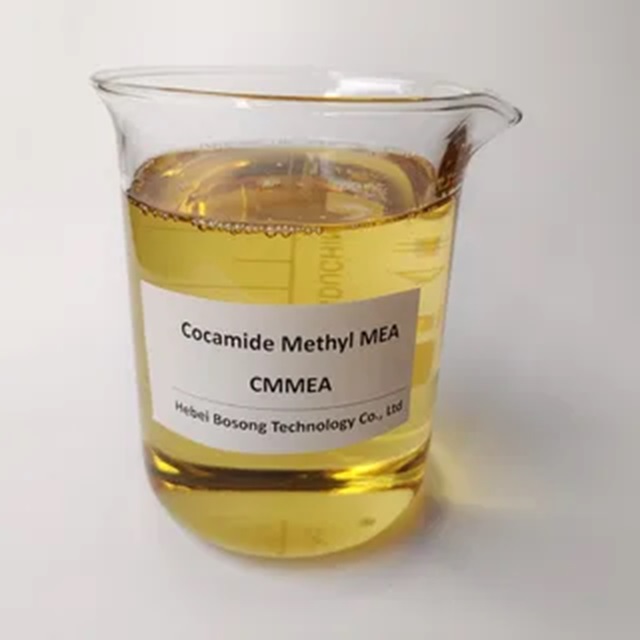
| Appearance | White to Off-White Solid/Flakes or Yellow Viscous Liquid |
| Physical State | Solid (Flakes/Powder) or Viscous Liquid |
| Source | Coconut Oil (natural renewable source) |
Description: Cocamide MEA (Coconut Oil Monoethanolamide) is a nonionic surfactant derived from coconut oil fatty acids and monoethanolamine (MEA). It is a white to off-white solid (flakes or powder) or yellow viscous liquid at room temperature. It is widely used as a thickening agent, foam stabilizer, and viscosity builder in personal care and detergent formulations. It is readily soluble in water, has strong foaming properties with excellent foam stability, and is stable to alkalis and hard water. It also exhibits good emulsification performance and is compatible with various surfactants, enhancing their cleaning effects. It is biodegradable and derived from renewable natural sources.
SECTION 2: SYNONYMS AND OTHER NAMES
| No | Synonym / Other Name |
|---|---|
| 1 | Cocamide MEA |
| 2 | Coconut Oil Monoethanolamide |
| 3 | Cocoanut Oil Glycolamide |
| 4 | Coconut Fatty Acid Monoethanolamide |
| 5 | Coconut Acid Monoethanolamide |
| 6 | N-(Hydroxyethyl)amide Coconut |
| 7 | Amides, coco, N-(hydroxyethyl) |
| 8 | N-Hydroxyethyl Cocamide |
| 9 | Detergent 6501 |
| 10 | Cocoamide Monoethanolamine |
| 11 | 68140-00-1 |
| 12 | EC 268-770-2 |
SECTION 3: CHEMICAL STRUCTURE AND PROPERTIES
| Parameter | Description |
|---|---|
| Chemical Family | Nonionic Surfactant / Alkanolamide |
| Structure | Coconut fatty acid amide with monoethanolamine |
| Functional Groups | Amide (-CONH-), Primary Alcohol (-OH) |
| Ionic Character | Nonionic (no electrical charge) |
| Fatty Acid Composition | Lauric acid (C12), Myristic acid (C14), Palmitic acid (C16), Oleic acid (C18:1), etc. |
| HLB Value | ~12 – 14 |
Structural Formula:
    R - CO - NH - CH₂ - CH₂ - OH

    Where R = Coconut fatty acid alkyl chain (mainly C11H23 for lauric acid)
Key Characteristics:
-
Nonionic surfactant derived from natural coconut oil
-
Excellent thickening and viscosity building properties
-
Strong foaming and stable foam
-
Good hard water tolerance
-
Stable to alkalis (not acid resistant)
-
Biodegradable
-
Compatible with various surfactants
-
Good emulsification performance
SECTION 4: PHYSICAL PROPERTIES
| Parameter | Specification | Typical Value | Test Method |
|---|---|---|---|
| Physical State (25°C) | Solid (Flakes/Powder) or Viscous Liquid | - | Visual |
| Appearance | White to Off-White / Yellowish | - | Visual |
| Odor | Mild, characteristic | - | Organoleptic |
| Chemical Formula | C₁₄H₂₉NO₂ (representative) | - | - |
| Molecular Weight | 243.39 g/mol | - | - |
| CAS Number | 68140-00-1 | - | - |
| Melting Point | 65 – 67 °C | - | DSC |
| pH (1% Aqueous Solution) | 9.0 – 10.5 | - | USP <791> |
| Active Content | ≥ 90% | 92 – 98% | Titration |
| Free Amine | ≤ 2.0% | < 1.0% | Titration |
| Free Fatty Acid | ≤ 2.0% | < 1.0% | Titration |
| Water Content | ≤ 1.0% | < 0.5% | Karl Fischer |
| Amine Value | ≤ 2.0 mg KOH/g | < 1.0 | Titration |
| Acid Value | ≤ 2.0 mg KOH/g | < 1.0 | Titration |
| Water Solubility | Readily soluble | - | - |
| Hard Water Compatibility | Excellent | - | - |
| Alkali Stability | Good | - | - |
| Acid Stability | Not stable | - | - |
SECTION 5: FUNCTIONAL PROPERTIES
| Property | Description |
|---|---|
| Thickening | Significantly increases viscosity of aqueous systems |
| Foam Stabilization | Excellent foam stability and foam boosting |
| Cleansing | Good cleansing and degreasing properties |
| Emulsification | Good emulsification performance |
| Hard Water Tolerance | Stable and effective in hard water conditions |
| Alkali Stability | Stable to alkalis and boiling |
| Surfactant Compatibility | Compatible with various surfactants (anionic, nonionic, amphoteric) |
| Biodegradability | Readily biodegradable |
| Soap Compatibility | Increases resistance to hard water when combined with soap |
SECTION 6: COSMETIC AND PERSONAL CARE APPLICATIONS
| Application | Function / Benefit | Typical Use Level |
|---|---|---|
| Shampoos | Thickener, foam stabilizer, viscosity builder | 1.0 – 5.0% |
| Body Washes | Thickener, foam stabilizer | 1.0 – 5.0% |
| Shower Gels | Thickener, foam stabilizer | 1.0 – 5.0% |
| Liquid Soaps | Thickener, foam stabilizer | 1.0 – 5.0% |
| Bubble Baths | Foam booster, thickener | 1.0 – 5.0% |
| Facial Cleansers | Thickener, foam stabilizer | 1.0 – 3.0% |
| Baby Care Products | Mild thickener, foam stabilizer | 1.0 – 3.0% |
| Hair Conditioners | Thickener, emulsifier | 0.5 – 2.0% |
SECTION 7: DETERGENT AND CLEANING APPLICATIONS
| Application | Function / Benefit | Typical Use Level |
|---|---|---|
| Household Detergents | Thickener, foam stabilizer | 2.0 – 5.0% |
| Industrial Cleaners | Surfactant, thickener | 2.0 – 5.0% |
| Metal Cleaners | Surfactant, emulsifier | 2.0 – 5.0% |
| Calcium Soap Dispersants | Dispersant in hard water | 0.5 – 2.0% |
| Low-Grade Daily Chemicals | Thickener, foam stabilizer | 2.0 – 5.0% |
SECTION 8: TEXTILE APPLICATIONS
| Application | Function / Benefit | Typical Use Level |
|---|---|---|
| Wool Scouring | Penetration, cleaning, softness | 1.0 – 2.0 g/L |
| Printing After-treatment | Removes floating color, prevents staining | 0.3 – 1.0 g/L |
| Dyeing Auxiliary | Leveling agent, prevents staining | 0.2 – 0.4% of fabric weight |
| Fabric Softening | Soft and full hand feel | 1.0 – 2.0 g/L |
SECTION 9: ADVANTAGES AND BENEFITS
| Advantage | Description |
|---|---|
| Excellent Thickening | Significantly increases viscosity of formulations |
| Strong Foaming | Produces rich, stable foam |
| Hard Water Tolerance | Effective in hard water conditions |
| Natural Source | Derived from renewable coconut oil |
| Biodegradable | Environmentally friendly |
| Versatile | Suitable for cosmetics, detergents, and textiles |
| Good Compatibility | Compatible with various surfactants |
| Emulsification | Provides good emulsification properties |
| Cost-Effective | Economical thickening and foam stabilization solution |
| Safe Profile | Low toxicity (LD50 > 10,000 mg/kg, rat) |
SECTION 10: COMPARISON WITH OTHER ALKANOLAMIDES
| Property | Cocamide MEA | Cocamide DEA | Lauramide DEA | Oleamide DEA |
|---|---|---|---|---|
| CAS Number | 68140-00-1 | 68603-42-9 | 120-40-1 | 93-83-4 |
| Amine Type | MEA | DEA | DEA | DEA |
| Thickening | Good | Excellent | Good | Good |
| Foam Stabilization | Good | Excellent | Good | Good |
| Hard Water Tolerance | Good | Good | Good | Good |
| Toxicity | Low | Moderate | Low | Low |
| Regulatory Status | Widely accepted | Restricted in some regions | Widely accepted | Widely accepted |
SECTION 11: REGULATORY STATUS
| Region / Authority | Status | Description |
|---|---|---|
| European Union | Permitted | Cosmetic ingredient; no specific restrictions |
| Turkey | Permitted | Compliant with EU legislation |
| USA (FDA) | Permitted | Approved for cosmetic use |
| Japan | Permitted | Approved for cosmetic use |
| Canada | Permitted | Health Canada approved |
| REACH | Registered | EU chemical regulation compliance |
| TSCA | Listed | US Toxic Substances Control Act |
| EINECS | 268-770-2 | European Inventory of Existing Chemical Substances |
SECTION 12: SAFETY AND TOXICOLOGICAL PROFILE
| Parameter | Assessment |
|---|---|
| Acute Oral Toxicity (LD50) | > 10,000 mg/kg (rat) – very low toxicity |
| Acute Dermal Toxicity | Low toxicity |
| Skin Irritation | Non-irritating to mildly irritating |
| Eye Irritation | May cause mild to moderate irritation |
| Skin Sensitization | Low potential |
| Carcinogenicity | Not classified (IARC, NTP) |
| Mutagenicity | Not mutagenic |
| Biodegradability | Readily biodegradable |
| Aquatic Toxicity | Low to moderate |
Safety Recommendations:
-
S24/25: Avoid contact with skin and eyes
-
S26: In case of eye contact, rinse with plenty of water
-
S36/37: Wear suitable protective clothing and gloves
-
PPE: Chemical resistant gloves, safety goggles, protective clothing
First Aid Measures:
| Exposure Route | Action |
|---|---|
| Inhalation | Move to fresh air; seek medical attention if symptoms persist |
| Skin Contact | Wash with soap and water |
| Eye Contact | Rinse with plenty of water for 15 minutes; seek medical attention |
| Ingestion | Rinse mouth; do not induce vomiting; seek medical attention |
SECTION 13: STORAGE AND SHELF LIFE
| Parameter | Information |
|---|---|
| Storage Temperature | 15 – 30°C (cool, dry) |
| Storage Conditions | Well-ventilated, moisture-protected area |
| Container Requirements | Sealed containers |
| Protect From | Moisture, heat, acids, contamination |
| Shelf Life | 24 months (under proper storage) |
| Degradation Signs | Color change, odor change, caking |
Packaging Options:
-
25 kg multi-layer bags (solid/flakes)
-
25 kg HDPE pails
-
50 kg, 100 kg drums
-
500 kg, 1000 kg big-bags
SECTION 14: QUALITY CERTIFICATES AND STANDARDS
| Certificate / Standard | Status | Description |
|---|---|---|
| ISO 9001:2015 | Certified | Quality management system |
| ISO 14001:2015 | Certified | Environmental management system |
| REACH | Registered | EU chemical regulation compliance |
| TSCA | Listed | US Toxic Substances Control Act |
| EINECS | Listed | 268-770-2 |
| Certificate of Analysis (COA) | Provided with each batch | Includes binding specifications |
| Safety Data Sheet (SDS) | Available | Current 16-section document |
| Technical Data Sheet (TDS) | Available | Comprehensive technical information |
| GMP | Compliant | Manufacturing quality standards |
SECTION 15: DISCLAIMER AND LEGAL NOTICE
| Item | Description |
|---|---|
| Information Purpose | This Technical Data Sheet (TDS) is for informational purposes only and does not constitute a binding specification. |
| Typical Values | Values stated herein are based on typical laboratory results and may vary slightly between batches. |
| Binding Data | For binding specifications, the Certificate of Analysis (COA) for each batch should be requested. |
| User Responsibility | The user is solely responsible for determining the suitability of the product for the intended application and ensuring compliance with all applicable regulations. |
| SDS Requirement | A current Safety Data Sheet (SDS) should be requested from the supplier prior to use. |
| Safety Information | Safety information in this document is based on current knowledge but does not constitute a guarantee of the product's health and safety risks. |
| Regulatory Changes | The user is responsible for monitoring local and international regulatory changes. |
| Product Quality | Product quality is guaranteed in accordance with the standards specified in this document. |
| License / Patents | This document does not grant any license or patent rights for use of the product. |
| Side Effects | May cause mild skin and eye irritation; appropriate protective measures should be taken. |
DISCLAIMER (LEGAL NOTICE): This Technical Data Sheet (TDS) is for informational purposes only and does not constitute a binding specification. The values stated herein are based on typical laboratory results. The user is solely responsible for determining the suitability of the product for the intended application and for ensuring compliance with all local regulations. A current Safety Data Sheet (SDS) and Certificate of Analysis (COA) should be requested prior to use. May cause mild skin and eye irritation; appropriate protective measures should be taken. This document does not grant any license or patent rights for use of the product.