We unleash your business potential by maximize the business innovation.
Send EmailPhosphoric Acid, Orthophosphoric Acid, Polyphosphoric Acid, Acid Phosphoric, E338, 7664-38-2
PHOSPHORIC ACID (H₃PO₄)
1. Chemical Identity and Material Classification
-
Chemical Name: Orthophosphoric Acid, Phosphoric Acid
-
Synonyms: Orthophosphoric Acid, Trihydroxidooxidophosphorus, O-Phosphoric Acid, Polyphosphoric Acid, Acid Phosphoric, E338 (food additive)
-
CAS Number: 7664-38-2
-
EC Number (EINECS): 231-633-2
-
Molecular Formula: H₃PO₄
-
Molecular Weight: 97.99 g/mol
-
Chemical Class: Mineral acid (tribasic)
-
HS Code / GTIP: 2809.20.00
-
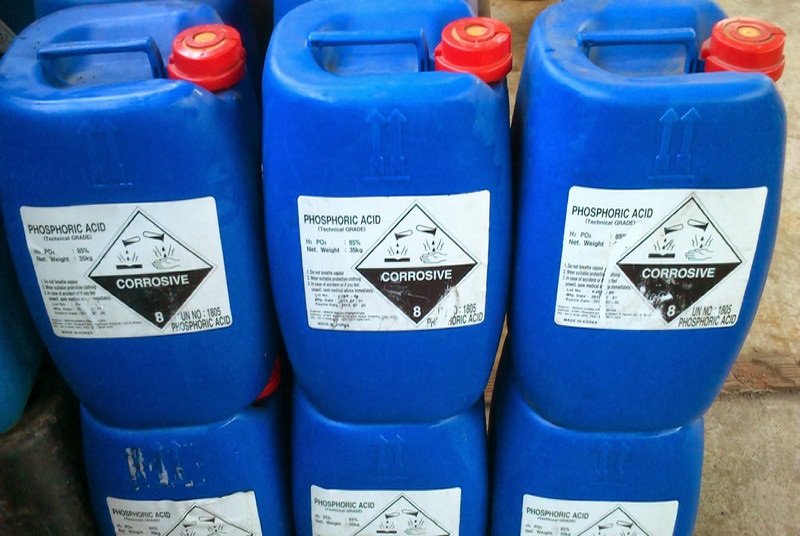
UN Number: 1805 (Phosphoric acid solution, corrosive)
-
REACH Status: Registered under EC 231-633-2
2. Physical Properties
2.1 General Physical Properties
| Property | Value |
|---|---|
| Appearance (20°C) | Colorless, odorless, viscous liquid or crystalline solid |
| Physical state (20°C) | Liquid (commercial solutions); Solid (pure, >42.35°C melts) |
| Odor | Odorless |
| Density (85% solution, 20°C) | 1.834 g/cm³ (1.68–1.71 for 75%; 1.83–1.85 for 85%) |
| Density (75% solution, 20°C) | 1.68–1.71 g/cm³ |
| Melting point (pure) | 42.35°C (108°F) (solidifies below this temperature) |
| Melting point (85% solution) | 21°C (solidifies below this temperature – may crystallize in cold storage) |
| Boiling point (85% solution) | 158°C (decomposes) |
| Flash point | Non-flammable |
| Autoignition temperature | Not applicable |
| Vapor pressure (85% solution, 20°C) | 2.8 hPa |
| Refractive index (85% solution, nD20) | 1.434–1.436 |
| Viscosity (85% solution, 20°C) | 47–55 cP (moderate viscosity) |
| Dissociation constant (pKa₁) | 2.12 |
| Dissociation constant (pKa₂) | 7.20 |
| Dissociation constant (pKa₃) | 12.67 |
2.2 Concentration-Dependent Properties
| Parameter | 75% Solution | 85% Solution |
|---|---|---|
| Density (20°C) | 1.68–1.71 g/cm³ | 1.83–1.85 g/cm³ |
| H₃PO₄ content | 75.0 ± 0.5% | 85.0 ± 0.5% |
| P₂O₅ content | ~54% | ~61.6% |
| Iron (Fe) | ≤ 5–20 ppm | ≤ 5–20 ppm |
| Chlorides (Cl) | ≤ 5–10 ppm | ≤ 5–10 ppm |
| Sulfates (SO₄) | ≤ 30–100 ppm | ≤ 30–100 ppm |
| Heavy metals (as Pb) | ≤ 5–10 ppm | ≤ 5–10 ppm |
| Color (APHA) | ≤ 10–20 | ≤ 10–20 |
3. Chemical Properties
3.1 Molecular Structure
Structure: H₃PO₄
-
Tribasic acid – can donate three protons (H⁺)
-
Three dissociable hydroxyl groups (OH) attached to central phosphorus atom
-
One double-bonded oxygen (P=O)
-
Sequestering agent – chelates metal ions (Fe²⁺, Cu²⁺, Ca²⁺, Mg²⁺)
3.2 Acid Dissociation
| Dissociation Step | pKa | Equation |
|---|---|---|
| First dissociation | 2.12 | H₃PO₄ ⇌ H₂PO₄⁻ + H⁺ |
| Second dissociation | 7.20 | H₂PO₄⁻ ⇌ HPO₄²⁻ + H⁺ |
| Third dissociation | 12.67 | HPO₄²⁻ ⇌ PO₄³⁻ + H⁺ |
Acidity comparison: Stronger than acetic acid (pKa 4.76), weaker than sulfuric acid (pKa -3) and hydrochloric acid (pKa -6)
3.3 Thermal Stability
| Parameter | Value |
|---|---|
| Decomposition temperature | >158°C (forms metaphosphoric acid, then P₂O₅) |
| Heating behavior | Loses water → forms pyrophosphoric acid (H₄P₂O₇) → metaphosphoric acid (HPO₃) → phosphorus pentoxide (P₂O₅) |
| Corrosive nature | Corrosive to metals and tissues |
3.4 Chemical Reactivity
| Reaction | Description |
|---|---|
| With metals | Reacts with most metals → hydrogen gas + metal phosphates |
| With alkalis | Neutralization → phosphate salts (mono-, di-, tribasic) |
| With ammonia | Ammonium phosphate fertilizers (MAP, DAP) |
| With calcium | Forms insoluble calcium phosphate (water softening, scale removal) |
| Sequestration | Binds Fe²⁺, Cu²⁺, Ca²⁺, Mg²⁺ – prevents precipitation |
3.5 Condensation Reactions
-
Heating with dehydration → pyrophosphoric acid (H₄P₂O₇)
-
Further heating → polyphosphoric acids (Hₙ₊₂PₙO₃ₙ₊₁)
-
Complete dehydration → phosphorus pentoxide (P₂O₅)
4. Quality Specifications
4.1 Technical Grade (85% Solution)
| Parameter | Specification |
|---|---|
| H₃PO₄ content (w/w) | 85.0 ± 0.5% |
| P₂O₅ content (w/w) | 61.5–62.5% |
| Color (APHA) | ≤ 10–20 |
| Specific gravity (20°C) | 1.688–1.710 |
| Iron (Fe) | ≤ 20 ppm |
| Chlorides (Cl) | ≤ 10 ppm |
| Sulfates (SO₄) | ≤ 100 ppm |
| Heavy metals (as Pb) | ≤ 10 ppm |
| Arsenic (As) | ≤ 5–20 ppm |
| Fluorine (F) | ≤ 10–50 ppm |
4.2 Food Grade (E338 – 85% Solution)
| Parameter | Specification |
|---|---|
| H₃PO₄ content (w/w) | 85.0 ± 0.5% |
| P₂O₅ content (w/w) | 61.5–62.5% |
| Arsenic (As) | ≤ 1–2 ppm |
| Fluorides (F) | ≤ 10 ppm |
| Lead (Pb) | ≤ 1–5 ppm |
| Cadmium (Cd) | ≤ 1 ppm |
| Mercury (Hg) | ≤ 1 ppm |
| Heavy metals (as Pb) | ≤ 10 ppm |
| Easily oxidizable substances (H₃PO₃) | ≤ 0.012% |
| Volatile acids (as CH₃COOH) | ≤ 0.001% |
| Nitrates (NO₃) | ≤ 5 ppm |
| Color (APHA) | ≤ 10 |
4.3 Pharmaceutical Grade
| Parameter | Specification |
|---|---|
| H₃PO₄ content (w/w) | 85.0 ± 0.5% |
| Heavy metals (as Pb) | ≤ 5 ppm |
| Arsenic (As) | ≤ 1 ppm |
| Chlorides (Cl) | ≤ 5 ppm |
| Sulfates (SO₄) | ≤ 50 ppm |
| Iron (Fe) | ≤ 10 ppm |
5. Production Methods
5.1 Wet Process (Fertilizer Grade – Most Common)
Reaction: Ca₅(PO₄)₃OH (phosphate rock) + 5 H₂SO₄ → 3 H₃PO₄ + 5 CaSO₄ + H₂O
Process:
-
Phosphate rock is reacted with sulfuric acid
-
Calcium sulfate (gypsum) precipitates and is filtered off
-
Dilute phosphoric acid (25–32% P₂O₅) is produced
-
Concentration by evaporation to 40–55% P₂O₅
-
Further purification for higher grades
Purity: Lower purity (contains metal impurities – Fe, Al, Mg, F)
Primary application: Fertilizer production (MAP, DAP, TSP)
5.2 Thermal Process (High Purity – Food/Pharmaceutical Grade)
Reaction: P₄ + 5 O₂ → P₄O₁₀; then P₄O₁₀ + 6 H₂O → 4 H₃PO₄
Process:
-
Elemental phosphorus (P₄) is burned in air to produce P₄O₁₀
-
P₄O₁₀ is hydrated with water
-
High-purity phosphoric acid is obtained (no metal impurities)
Purity: Very high (meets food and pharmaceutical specifications)
Primary application: Food additives, pharmaceuticals, electronics, metal treatment
5.3 Comparison: Wet Process vs. Thermal Process
| Property | Wet Process | Thermal Process |
|---|---|---|
| Purity | Lower (contains metal impurities) | Very high |
| Color | Dark (green to brown) | Clear, colorless |
| Heavy metals | Present | Absent |
| Cost | Lower | Higher |
| Primary use | Fertilizers | Food, pharma, electronics |
6. Industrial Applications
6.1 Fertilizer Production (Largest Application – ~80%)
| Application | Products | Function |
|---|---|---|
| Phosphate fertilizers | MAP (monoammonium phosphate), DAP (diammonium phosphate), TSP (triple superphosphate), NPK | Phosphorus source for plant nutrition |
| Typical consumption | >80% of global phosphoric acid production | Essential for crop growth (root development, flowering, fruiting) |
6.2 Food and Beverage Industry (E338)
| Application | Function | Typical Concentration |
|---|---|---|
| Acidulant in soft drinks (cola) | Imparts tangy flavor, acidity regulator | 0.02–0.05% |
| Acidifier in jams and jellies | pH adjustment | 0.1–0.5% |
| Buffering agent | pH stabilization | 0.01–0.1% |
| Yeast nutrient | Source of phosphorus for fermentation | 0.01–0.05% |
| Cheese processing (emulsifier) | Phosphate salts (food grade) | 0.1–0.5% |
| Meat and seafood processing | pH control, water retention | 0.05–0.2% |
Food additive status: E338 – permitted as food additive (EU, USA, Japan)
6.3 Pharmaceutical Applications
| Application | Function |
|---|---|
| Phosphate salts production | Sodium phosphate, potassium phosphate, calcium phosphate |
| Buffer solutions | pH control in formulations |
| Effervescent tablets | Component in effervescent systems |
| Dental cements | Zinc phosphate cement |
| Laxatives | Sodium phosphate solutions |
| Nutritional supplements | Phosphorus source |
6.4 Metal Treatment and Surface Preparation
| Application | Function | Typical Concentration |
|---|---|---|
| Rust removal (steel, iron) | Converts Fe₂O₃ to iron phosphate | 5–10% solution |
| Metal degreasing | Acidic cleaner | 1–5% |
| Phosphating (metal pretreatment) | Forms phosphate coating for paint adhesion | 1–5% |
| Passivation of stainless steel | Removes iron contamination | 10–20% |
6.5 Water Treatment
| Application | Function |
|---|---|
| Scale prevention | Sequesters Ca²⁺ and Mg²⁺ (prevents scale formation) |
| pH adjustment | Acidic pH control in cooling water systems |
| Corrosion inhibition | Forms protective phosphate film |
| Boiler water treatment | Precipitates hardness salts |
6.6 Detergents and Cleaning Products
| Application | Function |
|---|---|
| Phosphate builders | Sodium tripolyphosphate (STPP) – water softening |
| Metal cleaning | Acidic cleaner for scale removal |
| Dairy cleaning (CIP) | Acid rinse (removes milk stone) |
| Bottle washing | Component in bottle washing formulations |
6.7 Chemical Industry
| Application | Products |
|---|---|
| Phosphate salt manufacturing | Monosodium phosphate, disodium phosphate, trisodium phosphate, monopotassium phosphate, dipotassium phosphate, tripotassium phosphate, ammonium phosphates, calcium phosphates |
| Phosphorus-based compounds | Phosphorus pentoxide, phosphorus trichloride, phosphine (via intermediates) |
| Fire retardants | Ammonium polyphosphate (APP) |
| Surfactants | Phosphate esters |
6.8 Electronics Industry
| Application | Function |
|---|---|
| Semiconductor etching | Etchant for silicon wafers |
| PCB cleaning | Flux residue removal |
| Metal surface preparation | Cleaning and etching |
6.9 Oil and Gas Industry
| Application | Function |
|---|---|
| Drilling fluids | pH control, corrosion inhibition |
| Well stimulation | Acidizing treatments (scale removal) |
6.10 Animal Feed
| Application | Function |
|---|---|
| Monocalcium phosphate (MCP) | Phosphorus and calcium source for animal nutrition |
| Dicalcium phosphate (DCP) | Phosphorus and calcium source for animal nutrition |
7. Toxicology and Safety
7.1 Acute Toxicity
| Parameter | Value | Classification |
|---|---|---|
| Oral LD₅₀ (rat) | 1,530–3,000 mg/kg | Not classified |
| Dermal LD₅₀ (rabbit) | 2,740 mg/kg | Not classified |
| Inhalation LC₅₀ (rat, 4 hours) | >0.5 mg/L | Not classified |
| Skin corrosion | Category 1B – Causes severe skin burns (H314) | |
| Eye damage | Category 1 – Causes serious eye damage (H318) | |
| Inhalation | May cause respiratory tract irritation |
7.2 Chronic Toxicity
| Endpoint | Classification |
|---|---|
| Carcinogenicity | Not classified (IARC Group 3 – not classifiable) |
| Mutagenicity | Negative |
| Reproductive toxicity | Not classified |
| Target organ toxicity | Respiratory system, teeth (dental erosion with chronic exposure) |
7.3 GHS Classification
| Classification | Category |
|---|---|
| Signal word | Danger |
| Hazard statements | H314 – Causes severe skin burns and eye damage |
| H318 – Causes serious eye damage | |
| H290 – May be corrosive to metals | |
| Precautionary statements | P260, P264, P280, P301+P330+P331, P303+P361+P353, P305+P351+P338, P310 |
7.4 NFPA Rating
| Health | Flammability | Reactivity |
|---|---|---|
| 3 | 0 | 0 |
8. Occupational Exposure Limits
| Authority | Limit | Type |
|---|---|---|
| OSHA PEL | 1 mg/m³ (as total P) | TWA (8 hour) |
| ACGIH TLV | 1 mg/m³ (as total P) | TWA (8 hour) |
| NIOSH REL | 1 mg/m³ (as total P) | TWA (10 hour) |
| EU IOELV | 1 mg/m³ (as total P) | TWA (8 hour) |
9. Safety Precautions and Personal Protective Equipment (PPE)
-
Hazards:
-
Corrosive – causes severe skin burns and eye damage (H314)
-
May be corrosive to metals (H290)
-
Harmful to aquatic life (in concentrated form)
-
Non-flammable (stable)
-
-
PPE (mandatory):
-
Chemical-resistant gloves (butyl rubber, neoprene, nitrile, EN 374)
-
Chemical splash goggles (EN 166) or full face shield – mandatory
-
Protective clothing (acid-resistant apron or coverall)
-
Respiratory protection: P2/P3 filter for mist; SCBA for high concentrations
-
-
Engineering controls:
-
Local exhaust ventilation (LEV) for mist control
-
Eyewash stations and safety showers in immediate vicinity
-
Acid-resistant flooring and containment
-
-
Storage conditions:
-
Store in tightly closed original containers (HDPE, stainless steel, or lined carbon steel)
-
Keep away from alkalis (neutralization – exothermic), reducing agents, combustible materials
-
Protect from freezing (85% solution may crystallize below 21°C – warm before use)
-
Store in corrosion-proof area with secondary containment
-
Do not store in metal containers (corrosive to many metals – use plastic or lined steel)
-
Store in cool, dry, well-ventilated area (5–30°C)
-
-
Container materials:
-
Suitable: HDPE, polypropylene, PVC, PTFE, glass, stainless steel (304, 316), lined carbon steel
-
Not suitable: Carbon steel (unlined), aluminum (corrodes), copper (corrodes), brass (corrodes)
-
-
First aid:
-
Inhalation: Move to fresh air; if breathing difficult, give oxygen; if stopped, give artificial respiration; seek medical attention
-
Skin contact: Remove contaminated clothing; rinse immediately with copious water for at least 15 minutes; seek medical attention immediately
-
Eye contact: Rinse with water for at least 15 minutes, lifting eyelids; remove contact lenses; seek immediate medical attention
-
Ingestion: Do NOT induce vomiting; rinse mouth; drink water or milk; seek immediate medical attention (never give anything by mouth to an unconscious person)
-
10. Environmental Fate
| Parameter | Value |
|---|---|
| Biodegradability | Not applicable (inorganic) |
| Aquatic toxicity (fish, LC₅₀, 96 hours) | 100–500 mg/L (as P) – moderate |
| Daphnia magna (EC₅₀, 48 hours) | 50–200 mg/L |
| Algal toxicity (EC₅₀, 72 hours) | 10–100 mg/L |
| Eutrophication potential | High (phosphorus input promotes algal blooms) |
| Mobility in soil | High (high water solubility) |
| Bioaccumulation | Low potential |
| WGK Germany | 1 (low hazard to water) – but note eutrophication risk |
| Disposal method | Neutralization with lime or caustic soda → calcium phosphate sludge → landfill (non-hazardous) |
11. Transport Information
| Regulation | Classification |
|---|---|
| UN Number | 1805 |
| Proper shipping name | Phosphoric acid solution |
| ADR/RID | Class 8 (Corrosive), Packing group III |
| IMDG | Class 8, PG III |
| IATA | Class 8, PG III |
| DOT | Class 8, PG III |
| Hazard label | Corrosive (8) |
| Marine pollutant | No |
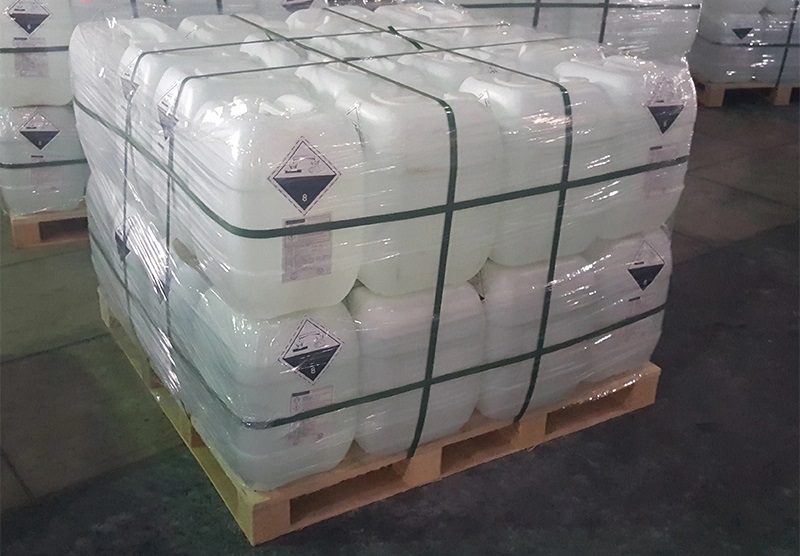
12. Packaging and Shipping Options
| Package Type | Weight | Origin |
|---|---|---|
| IBC (Intermediate Bulk Container) | 1,700 kg | Prayon (85%) |
| IBC (returnable) | 1,650 kg | China (85%) |
| IBC (included) | 1,650 kg | China (85%) |
| Original drum | 35 kg | China (85%) |
| Bulk tanker | Variable | Domestic (Çorlu, Gebze, Bursa regions – Turkey) |
13. Synonyms and Common Names
-
English: Phosphoric Acid, Orthophosphoric Acid, Trihydroxidooxidophosphorus, O-Phosphoric Acid, Polyphosphoric Acid, Acid Phosphoric
-
Other names: E338 (food additive), Orthophosphoric acid (IUPAC)
-
French: Acide phosphorique
-
German: Phosphorsäure
-
Spanish: Ácido fosfórico
-
Turkish: Fosforik Asit, Orto Fosforik Asit
14. Regulatory Status
| Regulation | Status |
|---|---|
| REACH (EU) | Registered (EC 231-633-2) |
| TSCA (US) | Listed |
| FDA | GRAS (Generally Recognized as Safe) – food additive E338 |
| EFSA | Permitted as food additive (E338) |
| EPA | Not restricted (but phosphorus discharge regulated) |
| EU Fertilizer Regulation | Permitted (component in phosphate fertilizers) |
15. Why Choose Phosphoric Acid?
| Advantage | Description |
|---|---|
| Versatile tribasic acid | Three dissociable protons allow multiple salt forms (mono-, di-, tribasic) |
| Excellent sequestering agent | Chelates Fe²⁺, Cu²⁺, Ca²⁺, Mg²⁺ – prevents scale and precipitation |
| Essential fertilizer component | Critical for global food production (~80% of consumption) |
| Food grade available (E338) | Permitted food additive – safe for human consumption at regulated levels |
| Corrosive – effective cleaner | Removes rust, scale, and deposits from metal surfaces |
| Non-flammable | Safe to handle; no fire hazard |
| Widely available | Produced globally in large quantities |
| Multiple grades | Technical, food, pharmaceutical – suitable for diverse applications |
| Recyclable | Phosphate can be recovered from waste streams |
Limitations:
-
Corrosive – Causes severe skin burns and eye damage (H314); requires PPE (goggles, gloves, protective clothing)
-
Eutrophication potential – Phosphorus discharge to water bodies causes algal blooms; strict discharge limits apply
-
Crystallization in cold storage – 85% solution solidifies below 21°C; requires warming before use
-
Heavy metal impurities (wet process grade) – Not suitable for food/pharmaceutical use; requires thermal process grade for sensitive applications
-
Corrosive to metals – Requires plastic or stainless steel equipment
16. Concentration Grades – Comparison
| Property | 75% Solution | 85% Solution | Pure (100%) |
|---|---|---|---|
| Physical state (20°C) | Liquid | Liquid (viscous) | Solid (crystalline) |
| Density (20°C) | 1.68–1.71 g/cm³ | 1.83–1.85 g/cm³ | ~1.87 g/cm³ |
| P₂O₅ content | ~54% | ~61.6% | ~72.4% |
| Freezing point | <0°C | 21°C (crystallizes below) | 42.35°C |
| Viscosity (20°C) | ~10–20 cP | 47–55 cP | Solid |
| Corrosivity | Moderate | High | Very high |
| Typical applications | Fertilizers, detergents | Food, metal treatment | Laboratory, specialty |
17. Comparison with Other Mineral Acids
| Property | Phosphoric Acid (H₃PO₄) | Sulfuric Acid (H₂SO₄) | Hydrochloric Acid (HCl) | Nitric Acid (HNO₃) |
|---|---|---|---|---|
| Basicity | Tribasic | Dibasic | Monobasic | Monobasic |
| pKa₁ | 2.12 | -3 (very strong) | -6 (very strong) | -1.3 (strong) |
| Corrosivity | Moderate | Very high | High | Very high |
| Oxidizing power | None | None (conc. is oxidizing) | None | Strong |
| Fuming | No | No | Yes (conc.) | Yes (conc.) |
| Metal compatibility | Poor (corrodes) | Poor (corrodes) | Poor (corrodes) | Poor (corrodes) |
| Volatility | Non-volatile | Low | High | High |
| Thermal stability | Decomposes >158°C | Very stable | Stable | Decomposes |
| Sequestration | Excellent (chelates) | None | None | None |
| Primary use | Fertilizers, food | Industrial, batteries | Steel pickling | Explosives, etching |
18. Phosphate Salts Derived from Phosphoric Acid
| Salt | Formula | Primary Application |
|---|---|---|
| Monosodium phosphate (MSP) | NaH₂PO₄ | pH buffer, food additive |
| Disodium phosphate (DSP) | Na₂HPO₄ | pH buffer, emulsifier |
| Trisodium phosphate (TSP) | Na₃PO₄ | Detergent builder, cleaner |
| Monopotassium phosphate (MKP) | KH₂PO₄ | Fertilizer (soluble), pH buffer |
| Dipotassium phosphate (DKP) | K₂HPO₄ | Fertilizer, pH buffer |
| Monoammonium phosphate (MAP) | NH₄H₂PO₄ | Fertilizer |
| Diammonium phosphate (DAP) | (NH₄)₂HPO₄ | Fertilizer |
| Monocalcium phosphate (MCP) | Ca(H₂PO₄)₂ | Animal feed, baking powder |
| Dicalcium phosphate (DCP) | CaHPO₄ | Animal feed, toothpaste abrasive |
19. Frequently Asked Questions (FAQs)
Q1: What is the difference between phosphoric acid and phosphorus acid (H₃PO₃)?
A1: Phosphoric acid (H₃PO₄) is H₃PO₄ (orthophosphoric) – a tribasic acid with no P-H bonds. Phosphorus acid (H₃PO₃) is HP(O)(OH)₂ – a dibasic acid with one P-H bond and strong reducing properties.
Q2: Why does 85% phosphoric acid crystallize in cold storage?
A2: The freezing point of 85% phosphoric acid is 21°C. Below this temperature, the solution crystallizes. Warming to 30–40°C with mild agitation will re-dissolve the crystals without affecting quality.
Q3: Is phosphoric acid safe in food (cola drinks)?
A3: Yes, food-grade phosphoric acid (E338) is GRAS (Generally Recognized as Safe) by FDA and EFSA at regulated concentrations (typically 0.02–0.05% in soft drinks).
Q4: Which metals are suitable for phosphoric acid storage?
A4: Suitable materials: HDPE, polypropylene, PVC, PTFE, glass, stainless steel (304, 316), lined carbon steel. NOT suitable: unlined carbon steel, aluminum, copper, brass (will corrode).
Q5: How do I neutralize phosphoric acid spills?
A5: Use lime (calcium hydroxide) or soda ash (sodium carbonate) for neutralization. Neutralization is exothermic – add slowly. The residue (calcium phosphate) can be disposed as non-hazardous waste.
20. Summary Table – Key Specifications at a Glance
| Parameter | Value |
|---|---|
| Product Name | Phosphoric Acid (Orthophosphoric Acid) |
| CAS Number | 7664-38-2 |
| Molecular Formula | H₃PO₄ |
| Molecular Weight | 97.99 g/mol |
| Appearance (85% solution) | Clear, colorless viscous liquid |
| Density (85%, 20°C) | 1.834 g/cm³ |
| Melting Point (pure) | 42.35°C |
| Melting Point (85% solution) | 21°C (crystallizes below) |
| Boiling Point (85% solution) | 158°C (decomposes) |
| Flash Point | Non-flammable |
| pKa₁ / pKa₂ / pKa₃ | 2.12 / 7.20 / 12.67 |
| Water Solubility | Fully miscible |
| Viscosity (85%, 20°C) | 47–55 cP |
| H₃PO₄ content (typical) | 75% or 85% w/w |
| P₂O₅ content (85% solution) | ~61.6% |
| Primary Applications | Fertilizers (~80%), food additive (E338), metal treatment, pharmaceuticals, detergents |
| GHS Signal Word | Danger |
| Hazard Statements | H314, H318, H290 |
| UN Number | 1805 |
| DOT Hazard Class | 8 (Corrosive) |
| Biodegradability | Not applicable (inorganic) |
| Eutrophication potential | High (phosphorus input) |
This TDS is prepared in compliance with ISO 11014-1 format and is intended for fertilizer manufacturers, food technologists, metal treatment specialists, chemical engineers, pharmaceutical formulators, and procurement professionals. Certificates of Analysis (CoA), Safety Data Sheets (SDS), and sample validation reports are available upon request.