We unleash your business potential by maximize the business innovation.
Send EmailChlorinated Paraffin, Solid Chlorinated Alkane, CP, PCA, 85535-85-9, 68920-70-7, 63449-39-8, 106232-86-4, 61788-76-9, 108171-26-2, 85535-84-8, 85535-86-0, 85535-87-1, 85535-88-2, 85535-89-3, 85535-90-6, 85535-91-7, 85535-92-8
CHLORINATED PARAFFINS (CP)
Chlorinated Paraffin / Klor Parafin / Solid Chlorinated Alkane / Polychlorinated Alkanes (PCA)
CAS Numbers: 85535-85-9, 68920-70-7, 63449-39-8, 106232-86-4, 61788-76-9, 108171-26-2, 85535-84-8, 85535-86-0, 85535-87-1, 85535-88-2, 85535-89-3, 85535-90-6, 85535-91-7, 85535-92-8
EC Number: 287-477-0
1. IDENTIFICATION INFORMATION
| Property | Information |
|---|---|
| Chemical Name | Chlorinated Paraffins |
| Other Names | Klor Parafin, Chlorinated Paraffin, Solid Chlorinated Alkane, Polychlorinated Alkanes (PCA), Chlorinated Alkanes |
| Chemical Formula | CₓHᵧCl₂ (variable) |
| Molecular Weight | Variable (depends on chain length and chlorine content) |
| CAS Numbers | Multiple (see above) |
| EC Number (EINECS) | 287-477-0 |
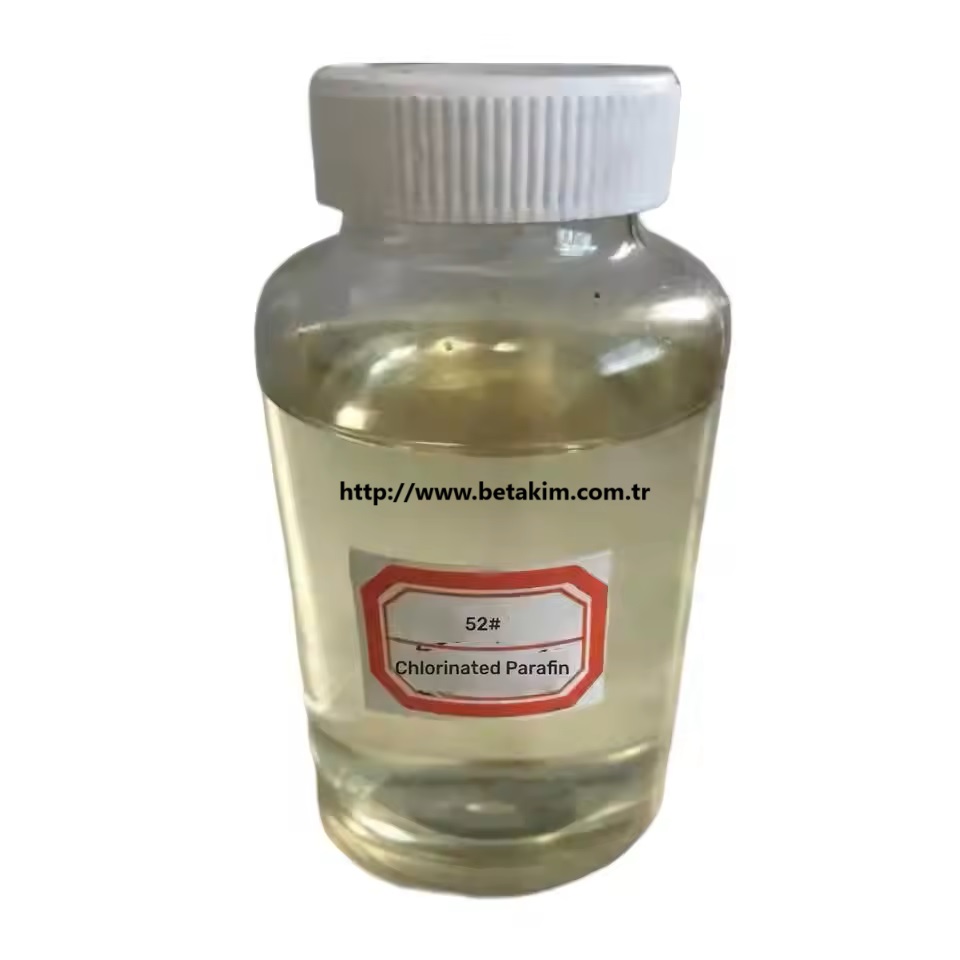
| Appearance | Colorless to yellowish, viscous, dense liquid or solid |
| Physical State | Liquid or solid (depends on chain length and chlorine content) |
| Odor | Slight, characteristic |
2. TYPES AND CLASSIFICATION
| Type | Chain Length | Chlorine Content | Physical Form | Abbreviation |
|---|---|---|---|---|
| Short-Chain Chlorinated Paraffins | C10-C13 | 50-70% | Liquid | SCCP |
| Medium-Chain Chlorinated Paraffins | C14-C17 | 40-70% | Liquid/Semi-solid | MCCP |
| Long-Chain Chlorinated Paraffins | C18-C30+ | 40-70% | Solid (wax-like) | LCCP |
Note: SCCPs (short-chain chlorinated paraffins) are banned under the Stockholm Convention. MCCPs and LCCPs are restricted in some regions.
3. PHYSICAL PROPERTIES
| Property | Value |
|---|---|
| Physical State (20°C) | Liquid to solid (depends on chain length) |
| Appearance | Colorless to yellowish, viscous, dense liquid or solid |
| Odor | Slight, characteristic |
| Chemical Formula | CₓHᵧCl₂ (variable) |
| Molecular Weight | Variable (depends on chain length and chlorine content) |
| Density (20°C) | 1.1 - 1.7 g/cm³ (depends on chlorine content) |
| Melting Point | Variable (from -20°C for liquids to >60°C for solids) |
| Boiling Point | >200°C (decomposes) |
| Flash Point | >200°C (some grades are non-flammable) |
| Autoignition Temperature | >250°C |
| Vapor Pressure | Very low |
| Water Solubility | Insoluble (<0.1 mg/L) |
| Solubility in Organic Solvents | Miscible with oils, hydrocarbons, chlorinated solvents, phthalates |
| Refractive Index (20°C) | 1.409 nD |
| Viscosity | Variable (depends on chain length and chlorine content) |
| pH | Neutral |
| Dielectric Constant | Low to medium |
| Volatility | Very low |
4. CHEMICAL PROPERTIES
| Property | Information |
|---|---|
| Chemical Formula | CₓHᵧCl₂ (variable) |
| Chemical Class | Chlorinated alkane / Chlorinated hydrocarbon |
| Structure | Chlorination of branched or linear paraffin chains |
| Stability | Stable under normal conditions (with stabilizers) |
| Thermal Decomposition | Decomposes above 150-200°C, producing hydrogen chloride (HCl) gas and toxic fumes |
| Flammability | Difficult to ignite (flame retardant properties) |
| Hydrolysis | Very slow hydrolysis |
| Photolysis | Light exposure may cause slow decomposition |
| Reactivity | Incompatible with strong bases and oxidizing agents |
| Stabilizers | Epoxidized esters, epoxidized soybean oils, pentaerythritol, thymol, urea, glycidyl ethers, acetonitriles, organic phosphates |
| Incompatible Materials | Strong oxidizing agents, strong bases, alkali metals |
Thermal Decomposition Reaction:
CₓHᵧCl₂ —[Heat (>150-200°C)]—> HCl (Hydrogen chloride) + Toxic fumes + Charred residue
Production Reaction (Paraffin Chlorination):
CₙH₂ₙ₊₂ + x Cl₂ —[UV or Heat]—> CₙH₂ₙ₊₂₋ₓClₓ + x HCl
5. PRODUCTION PROCESS
| Method | Description |
|---|---|
| Paraffin Chlorination (Industrial Standard) | Reaction of branched or linear paraffin derivatives with chlorine gas (Cl₂) |
| Reaction Conditions | Reaction accelerated by UV light or heat |
| Chlorine Content Control | Controlled by reaction time and chlorine amount (30-70%) |
| Purification | Neutralization, washing, drying |
| Stabilizer Addition | Epoxidized compounds added to prevent decomposition |
Reaction Equation:
CₙH₂ₙ₊₂ (Paraffin) + x Cl₂ —[UV/Heat]—> CₙH₂ₙ₊₂₋ₓClₓ (Chlorinated Paraffin) + x HCl
6. AVAILABLE FORMS AND SPECIFICATIONS
| Grade | Chain Length | Chlorine Content | Physical Form | Stabilizer | Applications |
|---|---|---|---|---|---|
| SCCP | C10-C13 | 50-70% | Liquid | Epoxidized compounds | BANNED |
| MCCP | C14-C17 | 40-70% | Liquid/Semi-solid | Epoxidized compounds | PVC, oils, metalworking |
| LCCP | C18-C30+ | 40-70% | Solid (wax-like) | Epoxidized compounds | Flame retardants, coatings |
| CP-52 | C14-C20 | ~52% | Liquid | Epoxidized soybean oil | Rubber, paints, PVC |
| CP-70 | C20-C30 | ~70% | Solid | Epoxidized compounds | Flame retardants, high temperature |
Typical Specifications (CP-52 - Medium-Chain Liquid):
| Parameter | Specification | Test Method |
|---|---|---|
| Chlorine Content | 50-54% | Titration |
| Appearance | Clear to pale yellow liquid | Visual |
| Density (25°C) | 1.23 - 1.27 g/cm³ | ASTM D4052 |
| Viscosity (25°C) | 150 - 300 mPa·s | ASTM D445 |
| Color (APHA) | ≤100 | ASTM D1209 |
| Acidity (as HCl) | ≤0.05 mg KOH/g | Titration |
| Water Content | ≤0.1% | Karl Fischer |
| Non-Volatile Residue | ≥99% | Gravimetric |
| Thermal Stability (180°C) | ≥180 minutes | Thermal test |
| Color Stability (170°C) | ≤200 APHA | Heat test |
Typical Specifications (CP-70 - Long-Chain Solid):
| Parameter | Specification | Test Method |
|---|---|---|
| Chlorine Content | 68-72% | Titration |
| Appearance | White to off-white solid | Visual |
| Density (25°C) | 1.45 - 1.55 g/cm³ | ASTM D4052 |
| Melting Point | 60-80°C | DSC |
| Color | White to light yellow | Visual |
| Acidity (as HCl) | ≤0.05 mg KOH/g | Titration |
| Water Content | ≤0.1% | Karl Fischer |
| Non-Volatile Residue | ≥99% | Gravimetric |
7. APPLICATIONS
7.1. PVC and Plastics Industry – Largest Use
| Application | Function |
|---|---|
| PVC Plasticizer | Secondary plasticizer (with primary plasticizers - phthalates, phosphate esters) |
| Flexible PVC | Provides flexibility and processability |
| Cable Sheathing | Flame retardant additive, flexibility |
| Floor Coverings | Durability and flame retardancy |
| Automotive Parts | Plasticizer, flame retardant |
| Toys | Flexible PVC applications (restricted) |
| Wall Coverings | Flexibility and durability |
| Seals and Profiles | Flexibility, weather resistance |
7.2. Metalworking Fluids and Lubricants
| Application | Function |
|---|---|
| Cutting Fluids | Extreme pressure (EP) additive |
| Metal Forming Fluids | Lubricant, anti-wear |
| Drilling Fluids | Reduces wear under high pressure |
| Metalworking Fluids | Coolant and lubricant |
| Industrial Lubricants | Extreme pressure additive |
Mechanism: Chlorinated paraffins react with metal surfaces at high temperatures by releasing hydrogen chloride (HCl) gas, forming a metal chloride layer that prevents wear and seizure.
7.3. Flame Retardants
| Application | Function |
|---|---|
| Rubber Products | Flame retardant additive |
| Paints and Coatings | Flame retardant properties |
| Textiles | Flame retardant surface coatings |
| PVC Compounds | Flame retardant plasticizer |
| Conveyor Belts | Flame retardant additive |
| Electrical Cables | Flame retardant insulation |
7.4. Paints and Coatings
| Application | Function |
|---|---|
| Vinyl and Acrylic Paints | Plasticizer, hardness and gloss enhancer |
| Marine Paints | Resistance to water and chemicals |
| Industrial Floor Coatings | Chemical resistance, durability |
| Container Coatings | Corrosion resistance |
| Swimming Pool Coatings | Resistance to water and chemicals |
| Sealing Compounds | Flexibility, water resistance |
Benefits: Addition of chlorinated paraffins to paints and varnishes increases hardness, gloss, resistance to acids and alkalis, and improves elasticity of the final product.
7.5. Adhesives and Sealants
| Application | Function |
|---|---|
| Adhesives | Plasticizer, water resistance |
| Waterproof Adhesives | Provides water resistance |
| Sealants | Flexibility, durability |
| Gaskets | Water and chemical resistance |
7.6. Textile Industry
| Application | Function |
|---|---|
| Flame Retardant Surface Coatings | Impregnation of natural fiber fabrics |
| Waterproofing Treatment | Waterproofing of synthetic fibers |
| Coatings | In combination with chlorinated polyethylene or chlorinated rubber |
7.7. Rubber Industry
| Application | Function |
|---|---|
| Rubber Manufacturing | Plasticizer, processing aid |
| Flame Retardant Rubber | Flame retardant additive |
| Rubber Profiles | Flexibility and durability |
7.8. Leather Industry
| Application | Function |
|---|---|
| Leather Lubricants | Lubricant due to polar properties |
| Leather Processing | Imparts softness and flexibility |
7.9. Other Applications
| Application | Function |
|---|---|
| Zinc Batteries | Additive |
| Screen Printing Inks | Plasticizer, flow regulator |
| Fire Extinguishers | Flame retardant component |
| Wood Impregnation | Flame retardancy |
8. PHYSICAL PROPERTIES RELATION TO APPLICATIONS
| Property | Application Relationship |
|---|---|
| High chlorine content (50-70%) | Flame retardant properties, EP additive effectiveness |
| Low water solubility | Water-resistant coatings, waterproofing |
| Low volatility | High-temperature applications, low emissions |
| Compatibility with oils and plasticizers | Secondary plasticizer in PVC, oil additive |
| High density | Heavier than water; easy phase separation |
| Thermal instability (HCl release) | Important for EP additive mechanism |
9. SAFETY AND HEALTH INFORMATION (GHS CLASSIFICATION)
| Hazard Class | Category |
|---|---|
| Carcinogenicity | Category 1B (SCCP) / Category 2 (MCCP) |
| Skin Irritation | Category 2 (H315) |
| Eye Irritation | Category 2 (H319) |
| Acute Aquatic Toxicity | Category 1 (H400) |
| Chronic Aquatic Toxicity | Category 1 (H410) |
| Specific Target Organ Toxicity (Repeated exposure) | Category 1 (H372) - Liver, Kidneys |
Note: SCCPs (short-chain chlorinated paraffins) are banned under the Stockholm Convention. MCCPs are restricted in the EU.
10. HAZARD STATEMENTS (H-CODES)
| Code | Statement |
|---|---|
| H315 | Causes skin irritation |
| H319 | Causes serious eye irritation |
| H350 | May cause cancer (SCCP) |
| H351 | Suspected of causing cancer (MCCP) |
| H360 | May damage fertility or the unborn child |
| H372 | Causes damage to organs (liver, kidneys) through prolonged or repeated exposure |
| H400 | Very toxic to aquatic life |
| H410 | Very toxic to aquatic life with long lasting effects |
11. SAFETY STATEMENTS (P-CODES)
| Code | Statement |
|---|---|
| P201 | Obtain special instructions before use |
| P202 | Do not handle until all safety precautions have been read and understood |
| P260 | Do not breathe dust/fume/gas/mist/vapors/spray |
| P273 | Avoid release to the environment |
| P280 | Wear protective gloves, protective clothing, eye protection, face protection |
| P302+P352 | IF ON SKIN: Wash with plenty of water |
| P305+P351+P338 | IF IN EYES: Rinse cautiously with water for several minutes. Remove contact lenses if present and easy to do. Continue rinsing |
| P308+P313 | If exposed or concerned: Get medical advice/attention |
| P332+P313 | If skin irritation occurs: Get medical advice/attention |
| P337+P313 | If eye irritation persists: Get medical advice/attention |
| P391 | Collect spillage |
| P403+P233 | Store in a well-ventilated place. Keep container tightly closed |
| P405 | Store locked up |
| P501 | Dispose of contents/container in accordance with local regulations |
12. TOXICOLOGICAL INFORMATION
| Parameter | SCCP (C10-13) | MCCP (C14-17) | LCCP (C18+) |
|---|---|---|---|
| Oral LD50 (rat) | >5,000 mg/kg | >5,000 mg/kg | >10,000 mg/kg |
| Dermal LD50 (rabbit) | >2,000 mg/kg | >2,000 mg/kg | >2,000 mg/kg |
| Skin Irritation | Mild irritant | Mild irritant | Non-irritant |
| Eye Irritation | Mild irritant | Mild irritant | Non-irritant |
| Carcinogenicity | IARC Group 2B (SCCP) | Possibly carcinogenic (animal studies) | Not classified |
Health Effects:
| Exposure | Effect |
|---|---|
| Acute (Inhalation) | Respiratory tract irritation, coughing |
| Acute (Skin Contact) | Mild irritation, redness (with prolonged contact) |
| Acute (Eye Contact) | Mild irritation, tearing |
| Acute (Ingestion) | Low toxicity; gastrointestinal discomfort |
| Chronic (SCCP) | Liver and kidney damage, carcinogenic potential |
| Chronic (MCCP) | Liver and kidney damage, thyroid effects |
| Chronic (LCCP) | Low toxicity, minimal systemic effects |
Environmental Impact:
| Parameter | SCCP | MCCP | LCCP |
|---|---|---|---|
| Aquatic Toxicity | Very high | High | Moderate |
| Bioaccumulation | High (Log P >5) | Moderate (Log P 4-6) | Low-Moderate |
| Persistence | Very high | High | Low-Moderate |
| Stockholm Convention | Banned (2017) | Under review | Not classified |
13. FIRST AID MEASURES
| Exposure Route | Action |
|---|---|
| Inhalation | Remove to fresh air. Give oxygen if breathing difficulty. Seek medical attention if symptoms persist. |
| Skin Contact | Remove contaminated clothing. Wash with soap and plenty of water. Seek medical attention if irritation persists. |
| Eye Contact | Rinse immediately with plenty of water for at least 15 minutes. Remove contact lenses. Seek medical attention if irritation persists. |
| Ingestion | Do NOT induce vomiting. Rinse mouth. Drink water. Seek medical attention. |
14. FIRE FIGHTING MEASURES
| Parameter | Information |
|---|---|
| Fire Hazard | Difficult to ignite (flame retardant properties) |
| Extinguishing Media | Water mist, CO₂, dry chemical powder, foam |
| Special Hazards | Thermal decomposition produces toxic and corrosive gases: hydrogen chloride (HCl), phosgene (COCl₂), chlorine gas (Cl₂), carbon monoxide (CO) |
| Protective Equipment | Self-contained breathing apparatus (SCBA), full protective clothing, acid-resistant gloves |
15. ENVIRONMENTAL INFORMATION
| Parameter | SCCP | MCCP | LCCP |
|---|---|---|---|
| Aquatic Toxicity | Very toxic (H400) | Toxic | Moderate |
| Bioaccumulation | High (Log P >5) | Moderate | Low |
| Persistence | Very high | High | Low-Moderate |
| Mobility in Soil | Low | Low | Very low |
| Waste Disposal | Licensed hazardous waste incineration required. Do not discharge to sewers or waterways. |
16. STORAGE AND HANDLING
| Parameter | Information |
|---|---|
| Storage Conditions | Cool (15-30°C), dry, well-ventilated area, protected from direct sunlight |
| Container Requirements | Tightly closed containers (HDPE, steel, lined drums) |
| Protect from | Heat (decomposition), UV light, moisture, strong oxidizing agents, strong bases |
| Shelf Life | 12-24 months (stabilized, proper storage) |
| Stability Note | Contains stabilizers; high temperature causes decomposition |
| Hygroscopicity | Low (insoluble in water) |
| Incompatible Materials | Strong oxidizing agents, strong bases, alkali metals |
| Packaging Options | 25 kg drum, 200 kg drum, 1000 kg IBC, bulk tanker |
Handling Notes:
-
Use in well-ventilated areas
-
Avoid overheating (releases HCl gas)
-
Avoid eye and skin contact
-
Use appropriate PPE (gloves, goggles, protective clothing)
-
Avoid release to the environment (aquatic toxicity)
-
Do not use SCCP (illegal)
-
Dispose of waste at licensed facilities
17. TRANSPORT INFORMATION
| Parameter | Information |
|---|---|
| UN Number | 3082 (Environmentally hazardous substances, liquid, n.o.s.) |
| Hazard Class | 9 (Miscellaneous dangerous goods) |
| Packing Group | III |
| Proper Shipping Name | ENVIRONMENTALLY HAZARDOUS SUBSTANCE, LIQUID, N.O.S. (Chlorinated paraffin) |
| Marine Pollutant | Yes |
| ADR/RID Label | 9 |
| EMS | F-A, S-F |
Note: Transport classification may vary depending on concentration and chain length.
18. REGULATORY INFORMATION
| Region | SCCP (C10-13) | MCCP (C14-17) | LCCP (C18+) |
|---|---|---|---|
| EU | Banned (POP Regulation) | Restricted (REACH Annex XIV) | Approved |
| Türkiye (KKDİK) | Banned (Stockholm Convention) | Under review | Approved |
| USA (TSCA) | Restricted | Approved | Approved |
| Canada (DSL) | Banned | Restricted | Approved |
| China | Banned | Restricted | Approved |
Stockholm Convention: SCCPs (short-chain chlorinated paraffins) were added to Annex A (POPs to be eliminated) in 2017. Turkey is a party to the convention.
EU POP Regulation (EU) 2019/1021: SCCPs are banned (exemption for concentration ≤0.15% in some jurisdictions).
EU REACH: MCCPs (C14-17) are candidates for inclusion in Annex XIV (substances requiring authorization).
EU Ecodesign Directive: Products containing SCCPs cannot be placed on the market.
19. OTHER NAMES AND SYNONYMS
| Name |
|---|
| Chlorinated Paraffin |
| Klor Parafin |
| Chlorinated Alkane |
| Polychlorinated Alkanes (PCA) |
| Chlorinated Hydrocarbons |
| Solid Chlorinated Alkane |
| CP |
| Chlorowax |
| Cereclor |
| Hordaflex |
Trade Names:
| Trade Name | Manufacturer |
|---|---|
| Cereclor | INEOS |
| Chlorowax | Dover Chemical |
| Hordaflex | HOECHST |
| Paroil | Dover Chemical |
| Witaclor | Witco |
CAS Numbers Classification:
| CAS No. | Type | Description |
|---|---|---|
| 63449-39-8 | SCCP/MCCP | Chlorinated paraffins, C10-18 |
| 68920-70-7 | SCCP | Chlorinated paraffins, C10-13 |
| 85535-84-8 | SCCP | Chlorinated paraffins, C10-13 |
| 85535-85-9 | MCCP | Chlorinated paraffins, C14-17 |
| 85535-86-0 | MCCP | Chlorinated paraffins, C14-17 |
| 85535-87-1 | LCCP | Chlorinated paraffins, C18-28 |
| 61788-76-9 | LCCP | Chlorinated paraffins, C20-30 |
| 108171-26-2 | MCCP/LCCP | Chlorinated paraffins, C14-26 |
| 106232-86-4 | LCCP | Chlorinated paraffins, C18-30 |
| 85535-88-2 to -92-8 | Various | Specific chain length and chlorine content variants |
20. SUMMARY AND IMPORTANT WARNINGS
SUMMARY:
Chlorinated paraffins (CP) are industrial chemicals produced by chlorinating paraffin chains with chlorine gas. They are classified into three main types: short-chain (SCCP, C10-13), medium-chain (MCCP, C14-17), and long-chain (LCCP, C18-30+). Chlorine content ranges from 30-70% by weight. SCCPs are viscous, colorless to yellowish liquids; LCCPs are solid, wax-like substances. SCCPs are banned under the Stockholm Convention (environmental persistence, bioaccumulation, toxicity). MCCPs and LCCPs are restricted in some regions. Major applications include: secondary plasticizer and flame retardant in PVC (cable sheathing, floor coverings, automotive parts), extreme pressure (EP) additive in metalworking oils (cutting fluids, drilling fluids), flame retardants (rubber, textiles, paints), paints and coatings (marine paints, industrial floor coatings), adhesives and sealants (waterproofing), textiles (flame retardant coatings, waterproofing), rubber manufacturing, leather lubricants, and others.
Key Properties:
| Property | SCCP (C10-13) | MCCP (C14-17) | LCCP (C18-30+) |
|---|---|---|---|
| Appearance | Colorless/yellowish liquid | Colorless/yellowish liquid | White/yellowish solid |
| Chlorine Content | 50-70% | 40-70% | 40-70% |
| Density | 1.1-1.5 g/cm³ | 1.1-1.5 g/cm³ | 1.1-1.5 g/cm³ |
| Water Solubility | <0.1 mg/L | <0.1 mg/L | <0.1 mg/L |
| Bioaccumulation | High | Moderate | Low |
| Regulatory Status | BANNED | Restricted | Approved |
| Primary Use | (Illegal) | PVC, oils, metalworking | Flame retardants, coatings |
Main Application Areas:
| Industry | Applications | Preferred Type |
|---|---|---|
| PVC/Plastics | Flexible PVC, cable sheathing, floor coverings | MCCP, LCCP |
| Metalworking | Cutting fluids, drilling fluids, EP additives | MCCP |
| Flame Retardants | Rubber, textiles, paints | LCCP |
| Paints/Coatings | Marine paints, industrial coatings | MCCP, LCCP |
| Adhesives | Waterproof adhesives, sealants | MCCP |
| Textiles | Flame retardant coatings, waterproofing | LCCP |
| Rubber | Rubber manufacturing | MCCP |
Key Safety Points:
-
DO NOT USE SCCP - BANNED (Stockholm Convention)
-
CARCINOGEN: SCCP IARC Group 2B; MCCP classified as carcinogen
-
ENVIRONMENTAL TOXICITY: Very toxic to aquatic life (H400, H410)
-
PERSISTENCE: SCCPs are highly persistent in the environment
-
BIOACCUMULATION: SCCPs bioaccumulate in food chains
-
LIVER/KIDNEY DAMAGE: Prolonged exposure causes organ damage (H372)
-
IRRITANT: Causes skin and eye irritation (H315, H319)
-
THERMAL DECOMPOSITION: Releases toxic HCl gas when heated
-
USE PPE: Protective gloves (nitrile, neoprene), safety goggles, protective clothing
-
VENTILATION: Use in well-ventilated area
-
STORAGE: Cool, dry, well-ventilated area, away from heat and UV light
IMPORTANT WARNINGS:
SCCP BAN - STOCKHOLM CONVENTION: Short-chain chlorinated paraffins (SCCP, C10-13) were added to Annex A of the Stockholm Convention (POPs to be eliminated) in 2017. Turkey is a party to the convention. Production, use, and trade of SCCPs are banned. Products containing SCCPs cannot be placed on the market. Exception: SCCP concentration in a compound is less than 0.15% by weight (in some jurisdictions). Follow the strictest limits.
MCCP RESTRICTIONS: Medium-chain chlorinated paraffins (MCCP, C14-17) are candidates for inclusion in REACH Annex XIV (substances requiring authorization) in the EU. Their use may be restricted in some applications. If you export or sell MCCP-containing products to the EU, check current regulations.
PVC Applications: Chlorinated paraffins are used as secondary plasticizers in PVC, working together with primary plasticizers (phthalates). They improve flexibility and processability. They also provide flame retardant properties, making them suitable for PVC cables, floor coverings, wall coverings, and automotive parts. Since SCCPs are now banned, only MCCPs and LCCPs can be used in these applications.
Metalworking Applications (EP Additives): Chlorinated paraffins are widely used as extreme pressure (EP) additives in metalworking fluids (cutting oils, drilling fluids). The mechanism involves release of hydrogen chloride (HCl) gas at high temperatures (due to friction), followed by reaction with metal surfaces to form a metal chloride layer. This layer prevents wear, seizure, and tool wear. SCCPs were particularly effective due to their high chlorine content but are banned; MCCPs are now preferred.
Thermal Decomposition - HCl Gas Hazard: Chlorinated paraffins decompose above 150-200°C, releasing hydrogen chloride (HCl) gas, carbon monoxide (CO), and other toxic fumes. HCl gas is corrosive and harmful to the respiratory tract. Fumes are also toxic and irritating. Avoid overheating chlorinated paraffins. Use SCBA in case of spill (especially during fires). Processing should keep chlorinated paraffin temperature below 150°C.
Bioaccumulation and Environmental Persistence: SCCPs have high bioaccumulation potential (Log P >5) and accumulate in food chains. They are very persistent in the environment (half-lives from months to years). MCCPs have lower bioaccumulation potential (Log P 4-6) but are still of environmental concern. LCCPs have the lowest bioaccumulation and persistence. Avoid release to the environment (especially water bodies). Do not discharge chlorinated paraffins to sewers or waterways.
Toxicity: SCCPs have shown toxicity in animal studies including liver damage, kidney damage, thyroid effects, and carcinogenicity. They are classified as IARC Group 2B (possibly carcinogenic to humans). MCCPs have shown liver and kidney toxicity and thyroid effects at higher doses. LCCPs have lower toxicity. Since SCCPs are banned, exposure will primarily be to MCCPs and LCCPs. However, appropriate industrial hygiene practices should still minimize exposure.
Aquatic Toxicity: All chlorinated paraffins are toxic to aquatic organisms (H400, H410). SCCPs have the highest aquatic toxicity, followed by MCCP and then LCCP. Release of chlorinated paraffins to water bodies is harmful to fish, algae, crustaceans, and other aquatic life. SCCPs also bioaccumulate in aquatic organisms. Strongly avoid release to the environment. Use inert absorbent materials to clean up spills and dispose at licensed hazardous waste facilities.
Regulatory Compliance - Turkey: Turkey is a party to the Stockholm Convention. SCCPs (short-chain chlorinated paraffins) are banned. Do not produce, import, sell, or use SCCPs in Turkey. MCCPs and LCCPs are not banned, but restrictions may come during the EU harmonization process. Monitor future regulatory changes. When exporting products containing chlorinated paraffins, comply with the destination country's regulations (especially EU, USA, Japan, China).
Alternatives: In many applications, chlorinated paraffins can be replaced with more environmentally friendly alternatives:
| Application | Alternatives |
|---|---|
| PVC Plasticizer | Phthalate-free plasticizers (DOTP, DINCH, adipates, sebacates) |
| Flame Retardant | Phosphate esters (RDP, BDP, TCPP), metal hydroxides (ATH, MDH), boron-containing compounds |
| Metalworking (EP additive) | Ester-based EP additives, sulfurized EP additives, polyalphaolefins |
| Coatings | Water-based coatings, polyamide epoxy coatings |
Storage: Store chlorinated paraffins in a cool (15-30°C), dry, well-ventilated area, protected from direct sunlight and heat sources, to prevent decomposition. Keep containers tightly closed. Properly label containers containing SCCPs and dispose as hazardous waste. Keep away from strong oxidizing agents, strong bases, and heat sources.
Spill Response: In case of spill, eliminate all ignition sources. Evacuate the area and provide adequate ventilation. Wear appropriate PPE (SCBA, chemically resistant suit, nitrile gloves). Contain the spill with inert absorbent material (sand, vermiculite, diatomaceous earth). Collect absorbent and place in a properly labeled hazardous waste container. Wipe remaining spill with appropriate solvent. Prevent entry into sewers, waterways, or soil. Contact licensed hazardous waste hauler for disposal.
Important Disclaimer: This Technical Data Sheet (TDS) is for informational purposes only. For complete safety, handling, storage, and regulatory compliance information, always refer to the official Safety Data Sheet (SDS) provided by the manufacturer/supplier. Short-chain chlorinated paraffins (SCCP, C10-13) are banned under the Stockholm Convention. Do not produce, import, use, or sell SCCPs. When using MCCPs and LCCPs, comply with applicable regional regulations. Chlorinated paraffins are toxic to aquatic life and can accumulate in the environment. Avoid release to the environment. When heated, toxic hydrogen chloride (HCl) gas may be released. Use appropriate personal protective equipment. Use in well-ventilated areas. In case of spill or fire, follow emergency procedures. Dispose of waste at licensed facilities. This document summarizes information from various sources and is not a substitute for technical expertise or site-specific safety assessments.