We unleash your business potential by maximize the business innovation.
Send EmailDicyandiamide, Cyanoguanidine, DCD, DCDA, DICY, 461-58-5
DICYANDIAMIDE (DICY)
1. PRODUCT DEFINITION AND CHEMICAL IDENTITY
| Parameter | Description |
|---|---|
| Chemical Name (IUPAC) | Cyanoguanidine |
| Common Name | Dicyandiamide (DICY) |
| Other Names | DCD, Dicyanodiamide, N-Cyanoguanidine, 1-Cyanoguanidine |
| CAS Number | 461-58-5 |
| EC Number | 207-312-8 |
| Molecular Formula | C₂H₄N₄ |
| Molecular Weight | 84.08 g/mol |
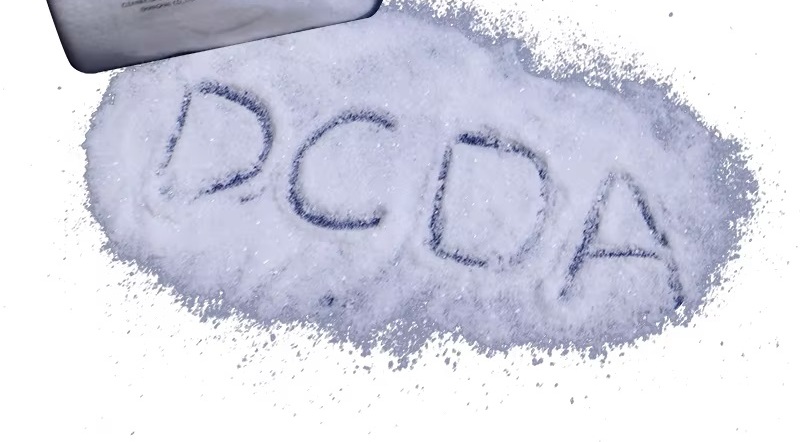
| Appearance | White crystalline powder |
| Odour | Odourless |
2. PHYSICAL AND CHEMICAL PROPERTIES
| Property | Value |
|---|---|
| Physical form | White crystalline powder or granules |
| Melting point | 209.5 °C |
| Density | 1.4 g/cm³ |
| Solubility in water (25 °C) | ~4.1 g/100 mL (soluble) |
| Solubility in organic solvents | Soluble in alcohol and acetone; insoluble in non-polar solvents (benzene, hexane, etc.) |
| pH (aqueous solution, 1%) | ~6.5 – 7.5 (neutral) |
| Stability | Stable at room temperature; decomposes at elevated temperatures, releasing ammonia |
| Flash point | >200 °C |
3. FUNCTIONAL PROPERTIES
-
Epoxy Curing Agent (Latent Hardener): Functions as a latent curing agent for epoxy resins. It remains stable at room temperature; upon heating, it is activated and provides rapid, controlled crosslinking. This property forms the basis of single-component (1K) epoxy systems.
-
Nitrification Inhibitor: Slows the conversion of ammonium nitrogen to nitrate (nitrification) in soil. This extends the retention time of nitrogen in the soil, increases plant uptake, and reduces nitrate leaching.
-
Melamine and Guanidine Precursor: A critical intermediate in the synthesis of melamine resins, guanidine salts, and other nitrogen-containing organic compounds.
-
Flame Retardant Synergist: Thanks to its nitrogen content, it acts synergistically, especially with phosphorus-based flame retardants, and is used in intumescent coatings and plastics.
-
Stabilizer: Serves as a stabilizer and fuel component in some explosive and pyrotechnic formulations.
4. ALTERNATIVE NAMES AND SYNONYMS
-
Dicyandiamide (DICY)
-
DCD (Dicyandiamide)
-
Cyanoguanidine
-
N-Cyanoguanidine
-
1-Cyanoguanidine
-
Dicyanodiamide
5. PRODUCTION METHOD (Summary)
Dicyandiamide is produced via a two-stage process:
-
Cyanamide Production: Cyanamide (CH₂N₂) is obtained from calcium cyanamide (CaCN₂) or the reaction of ammonia with cyanogen halides.
-
Polymerization: Cyanamide is dimerized under controlled temperature, pH, and catalyst conditions to form dicyandiamide (cyanoguanidine dimer). Production parameters (temperature, pH, catalyst type) are critical for the purity and yield of the final product.
6. SECTORAL APPLICATIONS AND USAGE RATES
| Sector | Purpose | Typical Usage Rate / Notes |
|---|---|---|
| Agriculture | Nitrification inhibitor in slow-release fertilizers; increases nitrogen efficiency | 2 – 10% in fertilizer formulation; combined with urea or ammonium sulfate |
| Chemical Industry | Intermediate in the production of melamine and guanidine derivatives | Large tonnage raw material consumption; enters reactions at stoichiometric ratios |
| Epoxy Resins | Latent curing agent for 1K epoxy adhesives, powder coatings, laminates, and prepregs | 3 – 10% (on resin solids weight); typical cure temperature 150 – 180 °C |
| Electronics / Laminates | Hardener in epoxy laminates for PCB circuit boards | 5 – 10%; high-purity grade preferred |
| Powder Coatings & Adhesives | Hardener additive in powder coatings and heat-cured adhesives | Low percentages (1 – 5%); provides controlled reactivity |
| Flame Retardants | Synergist in intumescent coatings and plastics | 5 – 20% (within flame retardant package); synergy with phosphorus compounds |
| Explosives / Defence | Stabilizer and fuel component | 1 – 3% (stabilizer); added in controlled amounts |
| Water Treatment | Water conditioning chemical; corrosion inhibitor | 0.5 – 2% (depending on formulation) |
| Leather & Textile | Selective filler (leather); flame-retardant finishing chemical (textile) | 1 – 3%; easily applied in water-based systems |
| Rubber | Specialty chemical additive; vulcanization auxiliary | Added to formulation at low percentages |
Example Formulations:
-
1K Epoxy Adhesive (Latent Cure):
-
Bisphenol A epoxy resin: 100 parts
-
Dicyandiamide (micronized): 6 – 8 parts (curing agent)
-
Accelerator (e.g., urea derivative): 1 – 3 parts
-
Filler (silica, calcium carbonate): optional
Curing: 20 – 30 minutes at 160 – 180 °C.
-
-
Urea Fertilizer with Nitrification Inhibitor:
-
Urea (46% N): 95 – 98 parts
-
Dicyandiamide: 2 – 5 parts
Mixed and granulated. When applied to soil, it slows the conversion of ammonium nitrogen to nitrate for 4 – 10 weeks.
-
7. ALTERNATIVES AND COMPARISON
| Alternative | Application Area | Comparison with Dicyandiamide |
|---|---|---|
| Imidazole Derivatives (e.g., 2-Ethyl-4-methylimidazole) | Epoxy curing | Lower cure temperature (80 – 120 °C), but shorter shelf life. DICY offers longer latency and storage stability. |
| Amine Complexes (e.g., BF₃-amine) | Epoxy curing | Very low usage rate; but high moisture sensitivity. DICY is more economical and widely used. |
| DMP-30 (Tris(dimethylaminomethyl)phenol) | Epoxy cure accelerator | Not a standalone curing agent; used as an accelerator together with DICY. |
| Nitrapyrin (N-Serve) | Nitrification inhibitor | Higher efficacy, but higher cost and volatility issues. DICY is more economical and more stable in soil. |
| DMPP (3,4-Dimethylpyrazole phosphate) | Nitrification inhibitor | High effect at low dose; more expensive than DICY. DICY offers a cost advantage for large-area applications. |
8. REGULATORY STATUS, SAFETY, AND STORAGE
-
GHS Classification (Typical):
-
Signal Word: Warning
-
Hazard Statements: H302 (Harmful if swallowed), H319 (Causes serious eye irritation). Refer to the product SDS for precise information.
-
-
REACH Registration: Fully registered in the EU with an annual production/import volume of 10,000 – 100,000 tonnes.
-
Storage: Store at room temperature in a dry and well-ventilated area, in tightly sealed packaging. Protect from moisture. Packaging should be closed promptly after opening.
-
Personal Protective Equipment (PPE): Avoid breathing dust; use protective gloves, goggles, and a dust mask.
-
Environmental Precautions: Do not release large quantities into the aquatic environment. May contribute to aquatic eutrophication due to its nitrogen content.
-
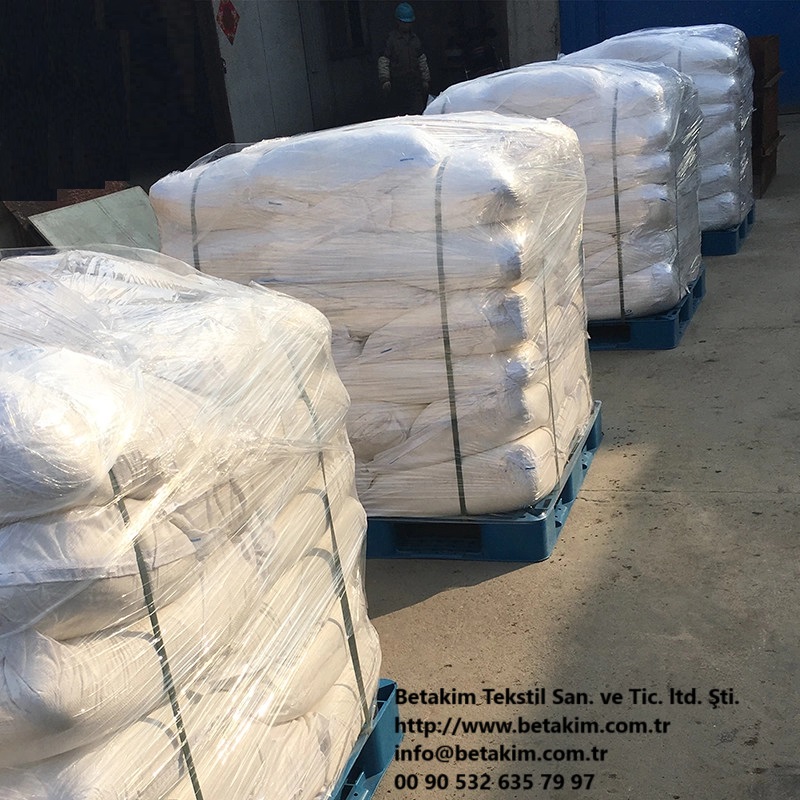
Packaging: Typically 25 kg kraft bags or big bags (500 – 1000 kg).
9. FREQUENTLY ASKED QUESTIONS
Q1: Why is dicyandiamide preferred in 1K epoxy systems?
DICY is an excellent "latent" curing agent because it does not dissolve in or react with epoxy resins at room temperature. This property allows single-component (1K) systems, where the resin and hardener are pre-mixed, to be stored for months. The curing reaction is only initiated upon heating (>150 °C), when DICY melts.
Q2: How does it work as a nitrification inhibitor in agriculture?
In soil, ammonium (NH₄⁺) nitrogen is first converted to nitrite (NO₂⁻) and then to nitrate (NO₃⁻) by Nitrosomonas bacteria. Nitrate is highly mobile in soil and readily leaches into groundwater. DICY temporarily suppresses the activity of these bacteria (specifically Nitrosomonas), slowing the conversion of ammonium to nitrate. This keeps nitrogen in the plant root zone for a longer time.
Q3: In which solvents is dicyandiamide soluble?
It is soluble in water, alcohol (methanol, ethanol), and acetone. However, it is insoluble in non-polar organic solvents such as benzene, toluene, and hexane. For this reason, in epoxy formulations, DICY solid particles are dispersed within the resin.
Q4: What is the role of DICY in melamine production?
Dicyandiamide reacts with ammonia under high temperature and pressure to form melamine (C₃H₆N₆). Melamine is the main raw material for melamine-formaldehyde resins (laminates, adhesives, moulding compounds). This is one of the largest tonnage application areas for DICY.
Q5: What is the shelf life?
Under proper storage conditions (dry, cool, sealed packaging), the shelf life is at least 24 months. Moisture can cause the product to cake and lead to performance loss in epoxy systems.
10. QUICK REFERENCE TABLE
| Property | Value |
|---|---|
| CAS | 461-58-5 |
| Formula | C₂H₄N₄ |
| Molecular weight | 84.08 g/mol |
| Appearance | White crystalline powder |
| Melting point | 209.5 °C |
| Density | 1.4 g/cm³ |
| Main uses | Epoxy curing, nitrification inhibitor, melamine precursor |
| Usage rate range | 1 – 10% (sector dependent) |