We unleash your business potential by maximize the business innovation.
Send EmailTrisodium Phosphate, Trisodium Phosphate Anhydrous, Sodium Phosphate Tribasic, TSP, TSPA, ATSP, TSPC, E339, 7601-54-9, 7632-05-5
TRISODIUM PHOSPHATE ANHYDROUS (TSP)
1. Chemical Identity and Material Classification
-
Chemical Name: Trisodium Phosphate Anhydrous, Sodium Phosphate Tribasic, Trisodium Orthophosphate
-
Synonyms: TSP, TSPA, ATSP, TSPC, Sodium phosphate tribasic, Phosphoric acid trisodium salt, Sodium orthophosphate, Tribasic sodium phosphate, Oakite, Dri-Tri, AntiSal 4, Nutrifos STP
-
CAS Numbers:
-
7601-54-9 (anhydrous)
-
7632-05-5 (anhydrous – alternative)
-
-
Molecular Formula: Na₃PO₄
-
Molecular Weight: 163.94 g/mol
-
EC Number (EINECS): 231-509-8
-
MDL Number: MFCD00003510
-
RTECS: TC9490000
-
UN Number: 3262 (Corrosive solid, basic, inorganic, n.o.s.)
2. Physical Properties
2.1 General Physical Properties
| Property | Value |
|---|---|
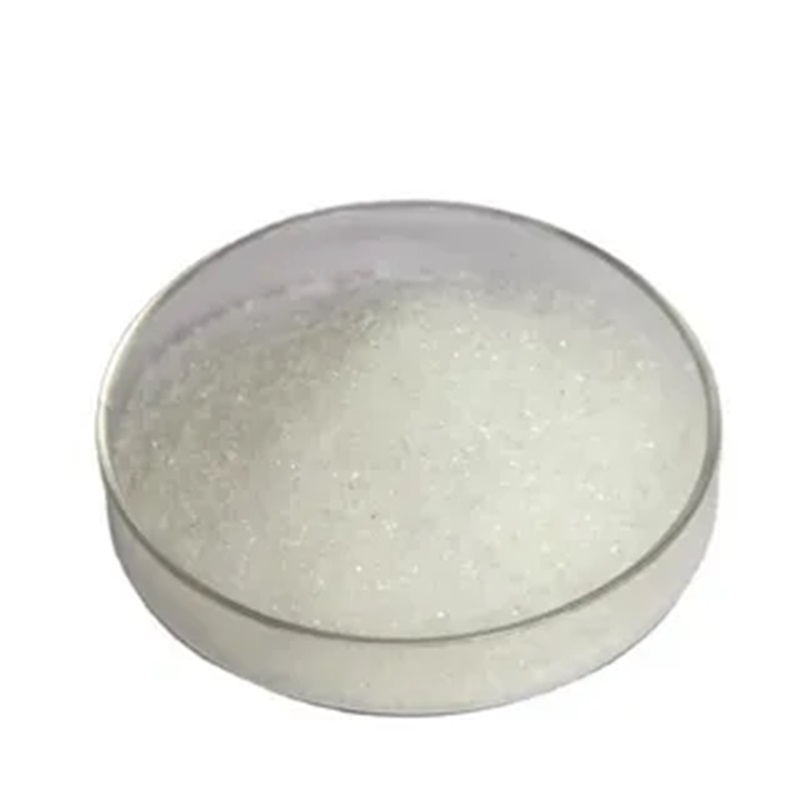
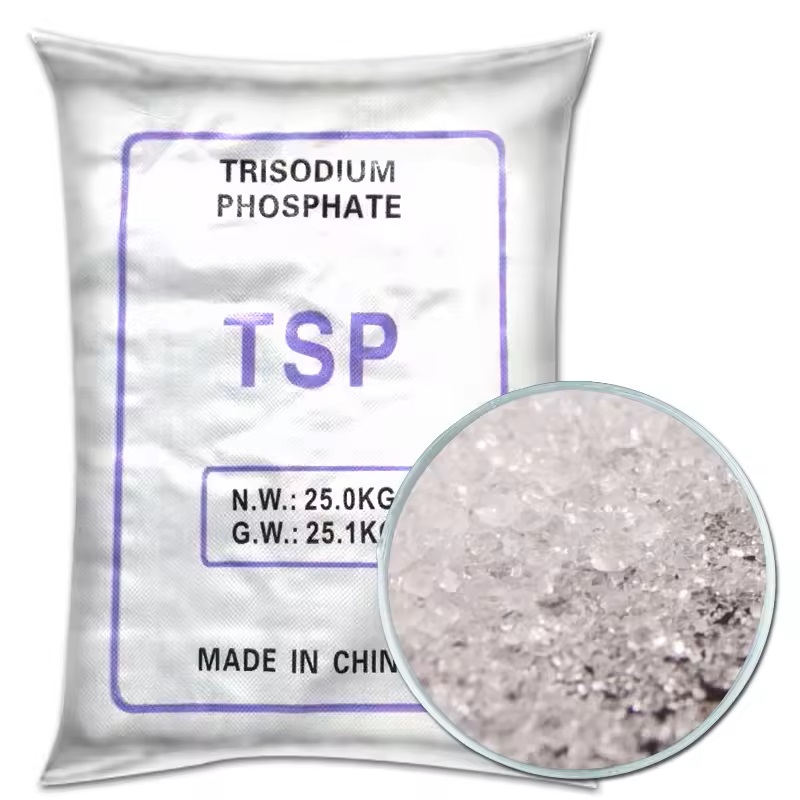
| Appearance | White to off-white crystalline powder or granules |
| Crystal form | Colorless to white crystals |
| Odor | Odorless |
| Density (17.5°C) | 2.536 g/cm³ |
| Bulk density (tapped) | 0.8–1.1 g/cm³ (depending on particle size) |
| Melting point | 1,340°C (2,444°F) |
| Solubility in water (20°C) | 12.1 g/100 mL (highly soluble) |
| pH (1 mM solution) | 10.95 (strongly alkaline) |
| pH (10 mM solution) | 11.71 |
| pH (100 mM solution) | 12.12 |
| Vapor pressure (20°C) | 0 Pa (negligible) |
| Flash point | Non-flammable |
| Hygroscopicity | Hygroscopic (absorbs moisture from air) |
| Thermal stability | Stable up to high temperatures; decomposes at >1,340°C |
2.2 Temperature-Dependent Water Solubility
| Temperature (°C) | Solubility (g/100 mL water) |
|---|---|
| 0°C | 4.5 |
| 10°C | 8.2 |
| 20°C | 12.1 |
| 30°C | 16.3 |
| 40°C | 20.2 |
| 60°C | 20.9 |
| 80°C | 60.0 |
| 90°C | 68.1 |
| 100°C | 77.0 |
2.3 Hydrate Forms and Thermal Behavior
| Hydrate | Transition Temperature | Water Molecules |
|---|---|---|
| Dodecahydrate (Na₃PO₄·12H₂O) | Melting point: 73.4°C | 12 H₂O |
| Decahydrate | Forms at 55–65°C | 10 H₂O |
| Hexahydrate | Forms at 60–100°C | 6 H₂O |
| Monohydrate | Forms at 100–212°C | 1 H₂O |
| Anhydrous | Forms above 212°C | 0 H₂O |
3. Chemical Properties
3.1 Aqueous Solution Behavior
When dissolved in water, trisodium phosphate hydrolyzes strongly to produce an alkaline solution:
Hydrolysis reaction:
PO₄³⁻ + H₂O ⇌ HPO₄²⁻ + OH⁻
Na₃PO₄ + H₂O → Na₂HPO₄ + NaOH (nearly complete decomposition in water)
Key characteristics:
-
1% aqueous solution pH: 11.5–12.1
-
Strongly alkaline – corrosive to skin and eyes
-
Completely decomposes in water to disodium hydrogen phosphate + sodium hydroxide
3.2 Chemical Reactivity
| Reaction | Description |
|---|---|
| With strong acids | Na₃PO₄ + 2H⁺ → NaH₂PO₄ + 2Na⁺ (sequential neutralization) |
| With Ca²⁺/Mg²⁺ | Forms insoluble calcium/magnesium phosphates (water softening) |
| With metal ions | Precipitates metal phosphates (corrosion inhibition) |
| Thermal decomposition | Stable up to 1,340°C; no decomposition below this temperature |
3.3 Stability
| Parameter | Behavior |
|---|---|
| Stability | Stable under normal conditions |
| Hygroscopicity | Highly hygroscopic – absorbs moisture from air |
| Air sensitivity | Absorbs CO₂ from air to form sodium carbonate/bicarbonate |
| Deliquescence | Can deliquesce in humid air |
| Thermal stability | Stable up to 1,340°C |
3.4 Incompatibilities
-
Strong acids (violent neutralization, exothermic)
-
Calcium and magnesium salts (precipitation)
-
Heavy metal salts (precipitation)
-
Aluminum (corrosion in presence of water)
4. Quality Specifications
4.1 Industrial / Technical Grade (Anhydrous)
| Parameter | Specification |
|---|---|
| Purity (Na₃PO₄, w/w) | ≥ 98.0% |
| Na₂O content | 18–20% |
| P₂O₅ content | 24–26% |
| Na₃PO₄ content | ≥ 98% |
| Phosphorus (P) content | 18–19% |
| Loss on ignition (LOI, 800°C) | ≤ 1.0% |
| Water insolubles | ≤ 0.1% |
| pH (1% solution) | 11.5–12.1 |
| Heavy metals (as Pb) | ≤ 10 ppm |
| Iron (Fe) | ≤ 50 ppm |
| Chloride (Cl) | ≤ 0.05% |
| Sulfate (SO₄) | ≤ 0.1% |
4.2 Food Grade (E339(iii))
| Parameter | Specification |
|---|---|
| Purity (Na₃PO₄, w/w) | ≥ 96.0% |
| P₂O₅ content | 18–22% |
| Loss on drying (120°C, 2 hours) | ≤ 1.0% |
| Water insolubles | ≤ 0.1% |
| Fluoride (F) | ≤ 50 ppm |
| Arsenic (As) | ≤ 3 ppm |
| Heavy metals (as Pb) | ≤ 10 ppm |
| Cadmium (Cd) | ≤ 1 ppm |
| Mercury (Hg) | ≤ 1 ppm |
| pH (1% solution) | 11.5–12.5 |
5. Production Methods
5.1 Double Neutralization Method (Industrial Standard)
| Step | Description |
|---|---|
| 1 | Phosphoric acid (H₃PO₄) is partially neutralized with soda ash (Na₂CO₃) |
| 2 | Na₂CO₃ + H₃PO₄ → Na₂HPO₄ + H₂O + CO₂↑ (pH 8.4–8.6) |
| 3 | Sodium fluosilicate precipitates and is filtered off |
| 4 | The filtrate is further neutralized with sodium hydroxide (NaOH) |
| 5 | Na₂HPO₄ + NaOH → Na₃PO₄ + H₂O |
| 6 | Solution concentrated to 28–30°Bé |
| 7 | Cooled, crystallized, centrifuged, dried |
5.2 Hot Phosphoric Acid Method
| Step | Description |
|---|---|
| 1 | H₃PO₄ + 3NaOH → Na₃PO₄ + 3H₂O |
| 2 | Neutralization solution cooled, crystallized, centrifuged, dried |
5.3 Spray Drying Method (for Anhydrous)
| Step | Description |
|---|---|
| 1 | Dodecahydrate crystals dissolved with 10–15% water at 85–95°C |
| 2 | Solution purified and pumped to metering tank |
| 3 | Spray dried under: |
| – Atomizing steam: 0.15–0.3 MPa | |
| – Inlet temperature: 650–750°C | |
| – Outlet temperature: 140–170°C |
6. Industrial Applications
6.1 Water Softening and Boiler Scale Removal
| Parameter | Value |
|---|---|
| Function | Removes Ca²⁺ and Mg²⁺ hardness from water via precipitation |
| Mechanism | 2PO₄³⁻ + 3Ca²⁺ → Ca₃(PO₄)₂↓ (insoluble) |
| Application | Boiler water treatment, industrial water softening |
| Typical dosage | 10–100 mg/L |
6.2 Detergents and Cleaning Products
| Parameter | Value |
|---|---|
| Function | Builder, water softener, alkaline source, emulsifier |
| Typical concentration | 5–20% in formulations |
| Applications | Laundry detergents, dishwashing detergents, industrial cleaners, bottle washing |
| Benefits | Reduces water hardness, prevents redeposition of soils, maintains alkalinity |
6.3 Metal Treatment and Corrosion Inhibition
| Parameter | Value |
|---|---|
| Application | Metal degreasing, rust inhibitor, corrosion protection |
| Mechanism | Forms protective phosphate film on metal surfaces |
| Typical concentration | 1–5% in cleaning baths |
| Industries | Metallurgical, automotive, metal finishing |
6.4 Food Industry (E339(iii) – Quality Improver)
| Application | Maximum Usage |
|---|---|
| Cheese | 5 g/kg |
| Western ham, meat products | 3 g/kg |
| Fish, shrimp, crab | 3 g/kg |
| Canned foods | 0.5 g/kg |
| Fruit juice, beverages | 0.5 g/kg |
| Dairy products | 0.5 g/kg |
Functions in food:
-
Water retention agent (improves water holding capacity)
-
pH buffer (maintains alkalinity)
-
Complexing agent (chelates metal ions)
-
Increases ionic strength
-
Improves adhesion and texture
ADI (FAO/WHO): 0–70 mg/kg body weight (as total phosphate, expressed as phosphorus)
6.5 Textile and Dyeing Industry
| Application | Function |
|---|---|
| Water softener | Removes hardness ions that interfere with dyeing |
| Dye fixing agent | Improves dye fastness |
| Mercerizing enhancer | Improves fabric luster and strength |
| Degumming agent (silk) | Removes sericin from raw silk |
6.6 Pulp and Paper Industry
| Parameter | Value |
|---|---|
| Application | Water softener, pH buffer, detergent in paper dyeing, wax paper adhesive |
| Function | Removes hardness, maintains alkaline pH, improves paper quality |
6.7 Nuclear Industry (EAS – Containment Spray System)
| Parameter | Value |
|---|---|
| Application | Added to spray water in containment spray systems (EAS) |
| Function | Adjusts pH of spray liquid; effectively removes iodine gas released from leaked cooling water |
| Advantages | Safer than NaOH; easier to clean after accidents; avoids strong alkali injuries to workers |
6.8 Rubber Industry
| Parameter | Value |
|---|---|
| Application | Coagulant for rubber latex |
| Function | Causes coagulation of natural rubber latex |
6.9 Photography
| Parameter | Value |
|---|---|
| Application | Accelerator in photographic developing solutions |
| Function | Maintains alkaline pH for developer activity |
6.10 Sugar and Juice Purification
| Parameter | Value |
|---|---|
| Application | Purification of sugar cane and beet sugar juices |
| Function | Precipitates impurities, adjusts pH |
6.11 Enamel and Ceramic Industry
| Parameter | Value |
|---|---|
| Application | Flux, decolorizing agent in enamel production |
| Function | Lowers melting temperature, removes color impurities |
6.12 Leather Industry
| Parameter | Value |
|---|---|
| Application | Fat-liquoring agent, degumming agent, dehairing agent |
| Function | Removes fats and proteins from hides |
7. Toxicology and Safety
7.1 Acute Toxicity
| Parameter | Value |
|---|---|
| Oral LD₅₀ (rat) | >2,000 mg/kg (low to moderate toxicity) |
| Dermal LD₅₀ (rabbit) | >300 mg/kg (note: low value – indicates significant dermal hazard) |
| Skin irritation | Corrosive – causes burns |
| Eye irritation | Severe damage – causes serious eye damage |
| Inhalation | May cause respiratory tract irritation |
7.2 Health Effects (Excessive Exposure)
| Effect | Description |
|---|---|
| Mucous membrane damage | Irritation of upper respiratory tract, eyes, skin |
| Inhalation | May be fatal due to spasm, inflammation, edema of larynx/bronchi; chemical pneumonia or pulmonary edema |
| Symptoms after exposure | Burning sensation, cough, wheezing, laryngitis, shortness of breath, headache, nausea, vomiting |
| Chronic effects (excessive intake) | May cause tumor lesions, bleeding gums, angular cheilitis, neuritis, affect offspring (deformation, genetic mutations), liver function damage |
7.3 GHS Classification
| Classification | Category |
|---|---|
| Signal word | Danger |
| Hazard statements | H314 – Causes severe skin burns and eye damage |
| H318 – Causes serious eye damage | |
| Precautionary statements | P260, P280, P301+P330+P331, P303+P361+P353, P305+P351+P338, P310 |
7.4 NFPA Rating
| Health | Flammability | Instability |
|---|---|---|
| 3 (Severe) | 0 | 0 |
8. Safety Precautions and Personal Protective Equipment (PPE)
-
Hazards:
-
Corrosive – causes severe skin burns and eye damage (H314)
-
Harmful if swallowed in large quantities
-
Hygroscopic – absorbs moisture from air
-
Non-flammable
-
-
PPE (mandatory):
-
Chemical-resistant gloves (nitrile or neoprene, EN 374)
-
Chemical splash goggles (EN 166) or face shield
-
Protective clothing (acid/alkali-resistant)
-
Dust mask (FFP2/N95) – for powder handling
-
-
Engineering controls:
-
Local exhaust ventilation (LEV) for dust control
-
Eyewash stations and safety showers
-
-
First aid:
-
Eye contact: Rinse immediately with water for at least 15 minutes; remove contact lenses; seek immediate medical attention
-
Skin contact: Remove contaminated clothing; wash with copious water for 15 minutes; seek medical attention
-
Inhalation: Move to fresh air; if breathing difficulty, give oxygen; if stopped, give artificial respiration; seek medical attention
-
Ingestion: Rinse mouth; do NOT induce vomiting; drink water or milk; seek immediate medical attention
-
9. Environmental Fate
| Parameter | Value |
|---|---|
| Biodegradability | Not applicable (inorganic) |
| Aquatic toxicity | Moderate to high (eutrophication risk – phosphorus input) |
| Bioaccumulation | Low potential |
| WGK Germany | 1 (low hazard to water) |
10. Storage and Shelf Life
| Parameter | Requirement |
|---|---|
| Storage temperature | 5–30°C (room temperature) |
| Container | Keep tightly closed in original packaging (HDPE, lined steel, or moisture-proof bags) |
| Protect from | Moisture (hygroscopic – absorbs water), CO₂ (forms carbonate) |
| Incompatibles | Strong acids, magnesium/calcium salts |
| Environment | Cool, dry, well-ventilated area |
| Shelf life (sealed) | 24–36 months |
| Shelf life (opened) | 12 months (if kept dry) |
Degradation indicators:
-
Caking/hardening (moisture absorption)
-
pH decrease (carbonation with CO₂)
11. Transport Information
| Regulation | Classification |
|---|---|
| UN Number | 3262 |
| Proper shipping name | Corrosive solid, basic, inorganic, n.o.s. (Trisodium phosphate) |
| ADR/RID | Class 8 (Corrosive), Packing group III |
| IMDG | Class 8, PG III |
| IATA | Class 8, PG III |
| DOT | Class 8, PG III |
| Hazard label | Corrosive (8) |
| Marine pollutant | No |
12. Synonyms and Common Names
-
English: Trisodium phosphate anhydrous, TSP, Sodium phosphate tribasic, Trisodium orthophosphate, Tribasic sodium phosphate, Phosphoric acid trisodium salt, Sodium orthophosphate, TSPA, ATSP, TSPC
-
Trade names: Oakite, Dri-Tri, AntiSal 4, Nutrifos STP
-
French: Phosphate trisodique
-
German: Trinatriumphosphat, Natriumphosphat tribasisch
-
Spanish: Fosfato trisódico
-
Turkish: Trisodyum fosfat susuz, TSP, Tribazik sodyum fosfat
13. Regulatory Status
| Regulation | Status |
|---|---|
| REACH (EC 1907/2006) | Registered |
| TSCA (US) | Listed |
| EINECS | 231-509-8 |
| FDA | GRAS (Generally Recognized as Safe) – 21 CFR § 182.1778, § 182.5778, § 182.2000 |
| EU Food Additive | E339(iii) – permitted |
| ADI (FAO/WHO) | 0–70 mg/kg body weight (as total phosphate expressed as phosphorus) |
14. Why Choose Trisodium Phosphate Anhydrous?
| Advantage | Description |
|---|---|
| Powerful water softener | Precipitates Ca²⁺ and Mg²⁺ as insoluble phosphates |
| Strong alkalinity | 1% solution pH 11.5–12.1 – effective for cleaning and degreasing |
| Non-flammable | Safe for high-temperature applications |
| Effective corrosion inhibitor | Forms protective phosphate film on metal surfaces |
| GRAS for food use | Permitted as food additive (E339(iii)) for multiple applications |
| Thermally stable | Stable up to 1,340°C |
| Multi-functional | Water softener, cleaner, degreaser, pH buffer, emulsifier |
| Cost-effective | Low cost compared to specialty chemicals |
| Widely available | Produced globally by multiple manufacturers |
Limitations:
-
Corrosive – Causes severe skin burns and eye damage; requires PPE
-
Hygroscopic – Absorbs moisture; requires airtight storage
-
Eutrophication risk – Phosphorus input to water bodies can cause algal blooms
-
Not compatible with strong acids – Violent neutralization reaction
-
High pH can damage certain materials – Not suitable for aluminum or sensitive surfaces
15. Applications Summary Table
| Sector | Application | Typical Concentration | Alternatives |
|---|---|---|---|
| Water Treatment | Boiler water treatment, softening | 10–100 mg/L | Sodium carbonate, zeolites |
| Detergents | Builder, water softener | 5–20% | Sodium carbonate, zeolites, silicates |
| Metal Treatment | Degreasing, rust inhibition | 1–5% | Sodium hydroxide, silicates |
| Food Industry | Water retention agent, pH buffer, E339(iii) | 0.5–5 g/kg | Other phosphates |
| Textile | Water softener, dye fixing | 1–10 g/L | Soda ash, other phosphates |
| Paper | Water softener, pH buffer | 0.1–1% | Other phosphates |
| Rubber | Latex coagulant | 0.5–2% | Acids, salts |
| Photography | Developer accelerator | 1–5 g/L | Other alkalis |
| Sugar Refining | Juice purification | 0.05–0.2% | Lime, carbonation |
| Nuclear | Containment spray additive | 0.1–1% | Sodium hydroxide |
16. Comparison with Other Phosphates
| Property | TSP (Na₃PO₄) | DSP (Na₂HPO₄) | MSP (NaH₂PO₄) | STPP (Na₅P₃O₁₀) |
|---|---|---|---|---|
| Na content | 3 | 2 | 1 | 5 |
| pH (1% solution) | 11.5–12.1 | 9.0–9.5 | 4.0–4.5 | 9.5–10.0 |
| Alkalinity | Very high | Moderate | Acidic | High |
| Sequestration | Low | Low | Low | Very high |
| Water softening | Precipitation only | Limited | None | Sequestration + dispersion |
| Primary use | Cleaner, degreaser | Buffer, intermediate | Buffer, fertilizer | Detergent builder |
17. Quality Control and Testing
| Test | Method | Acceptance Criteria |
|---|---|---|
| Assay (Na₃PO₄) | Acid-base titration | ≥ 98.0% |
| pH (1% solution) | pH meter | 11.5–12.1 |
| Loss on ignition | 800°C, 2 hours | ≤ 1.0% |
| Water insolubles | Gravimetric | ≤ 0.1% |
| Heavy metals | ICP-OES or colorimetric | ≤ 10 ppm |
| Iron (Fe) | Spectrophotometric | ≤ 50 ppm |
| Particle size | Sieve analysis | As specified |
18. Food Additive Status (E339(iii))
| Parameter | Value |
|---|---|
| Codex Alimentarius | E339(iii) |
| ADI (FAO/WHO) | 0–70 mg/kg bw (as total phosphate, expressed as phosphorus) |
| GRAS (FDA) | Yes (21 CFR 182.1778, 182.5778, 182.2000) |
| European Union | Permitted (Regulation (EC) No 1333/2008) |
| Applications | Cheese, meat products, fish products, canned foods, beverages, dairy |
19. Hydrate Forms – Comparison
| Hydrate | Formula | Water Content | Melting Point |
|---|---|---|---|
| Anhydrous | Na₃PO₄ | 0% | 1,340°C |
| Monohydrate | Na₃PO₄·H₂O | ~10% | Forms at 100–212°C |
| Hexahydrate | Na₃PO₄·6H₂O | ~40% | Forms at 60–100°C |
| Decahydrate | Na₃PO₄·10H₂O | ~55% | Forms at 55–65°C |
| Dodecahydrate | Na₃PO₄·12H₂O | ~57% | 73.4°C |
20. Summary Table – Key Specifications at a Glance
| Parameter | Value |
|---|---|
| Product Name | Trisodium Phosphate Anhydrous (TSP) |
| CAS Number | 7601-54-9 (7632-05-5) |
| Molecular Formula | Na₃PO₄ |
| Molecular Weight | 163.94 g/mol |
| Appearance | White to off-white crystalline powder |
| Density | 2.536 g/cm³ |
| Melting Point | 1,340°C |
| pH (1% solution) | 11.5–12.1 (strongly alkaline) |
| Water Solubility (20°C) | 12.1 g/100 mL |
| Purity (technical grade) | ≥ 98.0% |
| Purity (food grade) | ≥ 96.0% |
| Primary Applications | Water softening, detergents, metal treatment, food additive (E339(iii)), textile, paper, sugar refining |
| GHS Signal Word | Danger |
| Hazard Statements | H314, H318 |
| UN Number | 3262 |
| Hygroscopicity | High (absorbs moisture) |
| Biodegradability | Not applicable (inorganic) |
This TDS is prepared in compliance with ISO 11014-1 format and is intended for water treatment engineers, detergent formulators, metal finishing specialists, food technologists, textile chemists, and procurement professionals. Certificates of Analysis (CoA), Safety Data Sheets (SDS), and sample validation reports are available upon request.