We unleash your business potential by maximize the business innovation.
Send EmailEthyl Acetate, Ethyl Ethanoate, 141-78-6
ETHYL ACETATE (C₄H₈O₂)
Ethyl Acetate / Ethyl Ethanoate / Acetic Acid Ethyl Ester
CAS Number: 141-78-6
EC Number: 205-500-4
1. IDENTIFICATION INFORMATION
| Property | Information |
|---|---|
| Chemical Name | Ethyl Acetate |
| Other Names | Ethyl Acetate, Ethyl Ethanoate, Acetic Acid Ethyl Ester, Ethyl Ester |
| Chemical Formula | C₄H₈O₂ |
| Molecular Weight | 88.11 g/mol |
| CAS Number | 141-78-6 |
| EC Number (EINECS) | 205-500-4 |
| IUPAC Name | Ethyl Ethanoate |
| SMILES Notation | O=C(OCC)C |
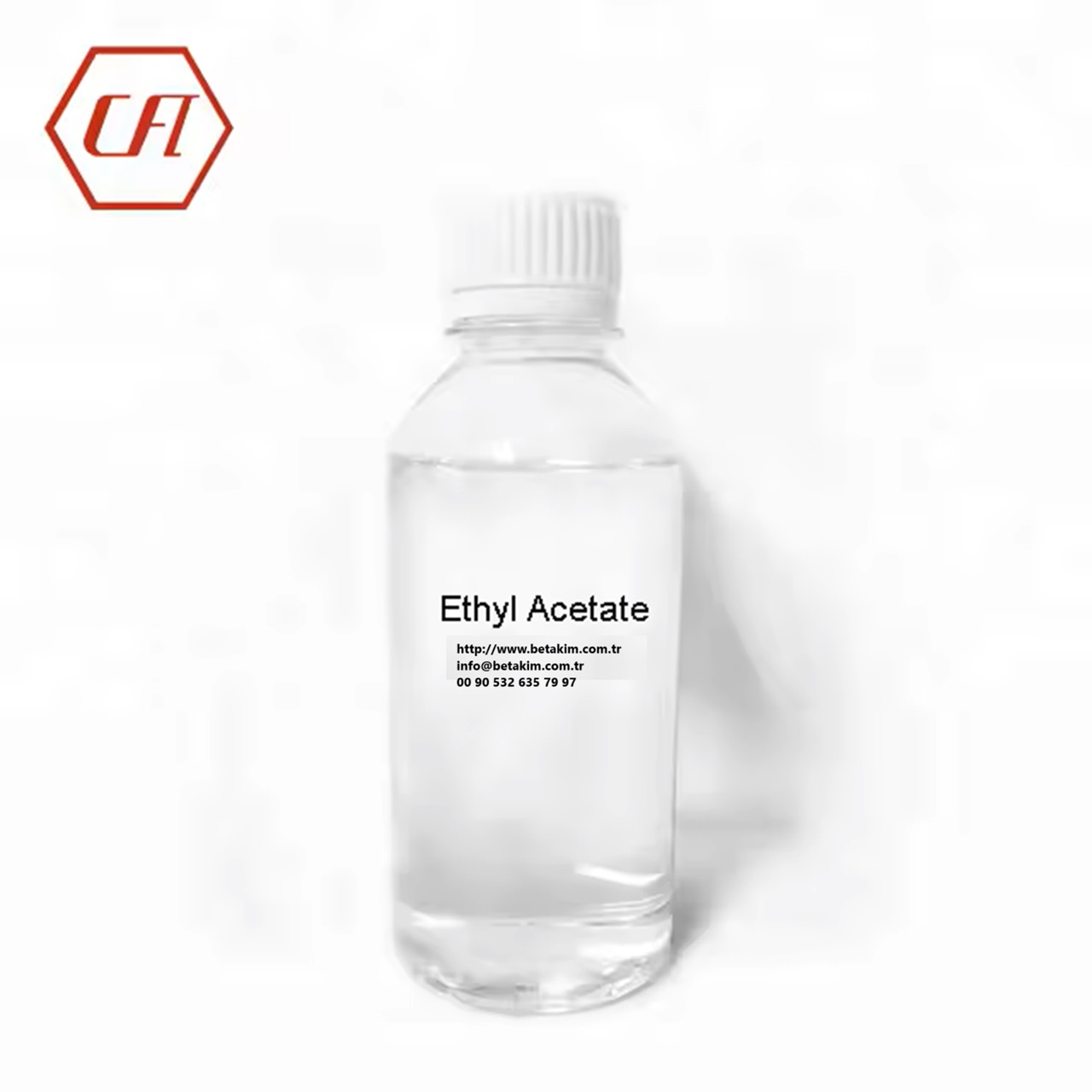
| Appearance | Colorless, clear liquid |
| Odor | Fruity, pleasant (banana, pear, pineapple-like) |
| Physical State | Liquid |
2. PHYSICAL PROPERTIES
| Property | Value |
|---|---|
| Physical State (20°C) | Liquid |
| Appearance | Colorless, clear liquid |
| Odor | Fruity, pleasant (banana, pear, pineapple) |
| Chemical Formula | C₄H₈O₂ |
| Molecular Weight | 88.11 g/mol |
| Density (25°C) | 0.902 g/mL |
| Density (20°C) | 0.900 - 0.902 g/cm³ |
| Melting Point | -83.6°C |
| Boiling Point | 76.5 - 77.5°C |
| Flash Point | 24°C (75°F) (closed cup) |
| Autoignition Temperature | 427°C (800°F) |
| Vapor Pressure (20°C) | 97 mmHg |
| Vapor Density (air=1) | 3.04 |
| Water Solubility (25°C) | 64 g/L (8.3 g/100 mL) |
| Solubility in Ethanol | Completely miscible |
| Solubility in Diethyl Ether | Completely miscible |
| Solubility in Benzene | Completely miscible |
| Solubility in Acetone | Completely miscible |
| Solubility in Chloroform | Completely miscible |
| pH | ~7 (neutral) |
| Viscosity (20°C) | 0.426 mPa·s |
| Refractive Index (n20/D) | 1.3720 - 1.3730 |
| Dielectric Constant (25°C) | 6.02 |
| Dipole Moment | 1.78 D |
| Explosive Limit | 2.0 - 11.5% (V) |
| Evaporation Rate (Butyl Acetate=1) | ~6.5 |
| Critical Temperature | 250.1°C |
| Critical Pressure | 3.87 MPa |
3. CHEMICAL PROPERTIES
| Property | Information |
|---|---|
| Chemical Formula | C₄H₈O₂ |
| Molecular Weight | 88.11 g/mol |
| Chemical Class | Carboxylic acid ester |
| Functional Group | Ester (-COO-) |
| Structure | CH₃-COO-CH₂-CH₃ |
| Stability | Stable under normal conditions |
| pH | Neutral (~7) |
| Hydrolysis | Slowly hydrolyzes in water (acid or base catalyzed) |
| Acidic Hydrolysis | CH₃COOC₂H₅ + H₂O —[H⁺]—> CH₃COOH + C₂H₅OH |
| Basic Hydrolysis (Saponification) | CH₃COOC₂H₅ + NaOH —> CH₃COONa + C₂H₅OH |
| Transesterification | Exchange of ester group with other alcohols |
| Oxidation | Combustible; complete combustion produces CO₂ and H₂O |
| Volatility | Highly volatile (vapor pressure 97 mmHg at 20°C) |
| Incompatible Materials | Strong oxidizing agents, strong acids, strong bases, alkalis, nitrates |
Esterification (Fischer Esterification):
CH₃COOH + CH₃CH₂OH —[H₂SO₄]—> CH₃COOC₂H₅ + H₂O
Acidic Hydrolysis Reaction:
CH₃COOC₂H₅ + H₂O —[H⁺]—> CH₃COOH + C₂H₅OH
Basic Hydrolysis (Saponification) Reaction:
CH₃COOC₂H₅ + NaOH —> CH₃COONa + C₂H₅OH
Combustion Reaction:
C₄H₈O₂ + 5 O₂ —> 4 CO₂ + 4 H₂O + Heat
Tishchenko Reaction (from Acetaldehyde):
2 CH₃CHO —[Al(OEt)₃]—> CH₃COOC₂H₅
Ethylene + Acetic Acid Addition Reaction:
CH₂=CH₂ + CH₃COOH —[Catalyst]—> CH₃COOC₂H₅
4. PRODUCTION METHODS
4.1. Fischer Esterification (Traditional Method)
| Parameter | Information |
|---|---|
| Raw Materials | Ethanol + Acetic Acid |
| Catalyst | Sulfuric acid (H₂SO₄), Hydrochloric acid (HCl) |
| Reaction Type | Equilibrium reaction (reversible) |
| Yield | ~65% (increases when water is removed) |
| Principle | Equilibrium shifts to the right when water is removed |
Reaction Equation:
CH₃CH₂OH + CH₃COOH ⇌ CH₃COOC₂H₅ + H₂O
4.2. Tishchenko Reaction
| Parameter | Information |
|---|---|
| Raw Materials | Acetaldehyde (CH₃CHO) |
| Catalyst | Aluminum triethoxide (Al(OEt)₃) |
| Reaction Type | Disproportionation reaction |
Reaction Equation:
2 CH₃CHO —[Al(OEt)₃]—> CH₃COOC₂H₅
4.3. Ethylene + Acetic Acid Addition Reaction
| Parameter | Information |
|---|---|
| Raw Materials | Ethylene (CH₂=CH₂) + Acetic Acid (CH₃COOH) |
| Catalyst | Clay or heteropoly acid |
| Advantage | More sustainable |
| Disadvantage | Acetic acid use causes corrosion; acetaldehyde supply is difficult |
Reaction Equation:
CH₂=CH₂ + CH₃COOH —[Catalyst]—> CH₃COOC₂H₅
Production Note: More sustainable and lower-risk production methods are in demand.
5. QUALITY SPECIFICATIONS
| Parameter | Specification | Test Method |
|---|---|---|
| Assay (C₄H₈O₂) | ≥99.5 - 99.9% | GC |
| Appearance | Colorless clear liquid | Visual |
| Odor | Fruity, pleasant (banana, pear, pineapple) | Organoleptic |
| Density (20°C) | 0.900 - 0.902 g/cm³ | ASTM D4052 |
| Refractive Index (n20/D) | 1.3720 - 1.3730 | Refractometer |
| Acidity (as Acetic Acid) | ≤0.01% | Titration |
| Water Content | ≤0.1% | Karl Fischer |
| Color (APHA) | ≤10 | ASTM D1209 |
| Non-Volatile Residue | ≤0.002% | Gravimetric |
| Alcohols (as Ethanol) | ≤0.1% | GC |
| Acetaldehyde | ≤0.01% | Titration |
| Inhibitors (MEHQ) | ≤5 ppm (if required) | HPLC |
| Distillation Range | 76.5 - 77.5°C | ASTM D1078 |
6. APPLICATIONS
6.1. Chemical Industry
| Application | Function |
|---|---|
| Acylamide Production | Intermediate |
| Acetyl Acetate Production | Chemical intermediate |
| Methyl Heptanone Production | Intermediate |
| Reaction Solvent | Polar solvent in organic syntheses |
| Extraction Solvent | Liquid-liquid extraction processes |
6.2. Food Industry
| Application | Function |
|---|---|
| Flavor Solvent | Carrier for banana, pear, peach, pineapple, grape flavors |
| Decaffeinated Coffee/Tea Production | Caffeine extraction solvent |
| Food Additive | Artificial fruit flavors (FEMA 2414) |
| Flavoring Agent | Fruity taste additive |
6.3. Cosmetic Industry
| Application | Function |
|---|---|
| Nail Polish Remover | Main component for dissolving nail polish |
| Perfume Solvent | Carrier and diluent in perfumes |
| Artificial Fruit Flavors | Fragrance component in cosmetic products |
| Makeup Removers | Solvent and carrier |
| Nail Care Products | Solvent and flow improver |
6.4. Textile Industry
| Application | Function |
|---|---|
| Cleaning Chemical | Fabric cleaning and degreasing |
| Printing Aid | Solvent for textile printing dyes |
| Finishing Agents | Solvent in finishing processes |
6.5. Electronics Industry
| Application | Function |
|---|---|
| Photoresist Resins | Viscosity reduction and thinning |
| Semiconductor Cleaning | Component cleaning |
| Electronic Component Cleaning | Oil and dirt removal |
6.6. Pharmaceutical Industry
| Application | Function |
|---|---|
| Extraction Solvent | Extraction of active ingredients from natural products |
| Drug Coatings | Solvent in film coatings |
| Tablet Coating | Use in enteric coatings |
| Drug Synthesis | Reaction medium and solvent |
6.7. Laboratory Applications
| Application | Function |
|---|---|
| Chromatography Reagent | Eluent in column chromatography |
| TLC (Thin Layer Chromatography) | Mobile phase component |
| Spectroscopy Reference | Reference in UV and IR analyses |
| Extraction Solvent | Liquid-liquid extractions |
6.8. Other Applications
| Application | Function |
|---|---|
| Adhesives | Solvent in adhesive formulations |
| Varnishes and Paints | Thinner, flow regulator |
| Photographic Films | Solvent in film base production |
| Artificial Pearl Production | Solvent in pearl essence production |
| Printing Inks | Thinner, fast drying agent |
| Plastic Surface Treatment | Surface preparation and cleaning |
| Rubber Industry | Solvent and processing aid |
| Leather Processing | Degreasing and cleaning |
7. PHYSICAL PROPERTIES RELATION TO APPLICATIONS
| Property | Value | Application Relationship |
|---|---|---|
| High volatility | Boiling point 77°C | Fast-drying applications (nail polish, adhesives, inks) |
| Flash point 24°C | Highly flammable | Requires caution in storage and transport |
| Water solubility 64 g/L | Moderate | Can be used in water-based systems |
| Low toxicity | LD50 >5000 mg/kg | Suitable for food and cosmetic applications |
| Fruity odor | Pleasant aroma | Preferred in perfumes and food flavors |
| Low viscosity | 0.426 mPa·s | Ideal for flow-requiring applications |
8. SAFETY AND HEALTH INFORMATION (GHS CLASSIFICATION)
| Hazard Class | Category |
|---|---|
| Flammable Liquid | Category 2 (H225) |
| Skin Irritation | Category 2 (H315) |
| Eye Irritation | Category 2 (H319) |
| Specific Target Organ Toxicity (Single exposure) | Category 3 (H335, H336) |
EU Risk Phrases (R-Codes):
| Code | Statement |
|---|---|
| R11 | Highly flammable |
| R36 | Irritating to eyes |
| R66 | Repeated exposure may cause skin dryness or cracking |
| R67 | Vapors may cause drowsiness and dizziness |
9. HAZARD STATEMENTS (H-CODES)
| Code | Statement |
|---|---|
| H225 | Highly flammable liquid and vapor |
| H315 | Causes skin irritation |
| H319 | Causes serious eye irritation |
| H335 | May cause respiratory irritation |
| H336 | May cause drowsiness or dizziness |
10. SAFETY STATEMENTS (P-CODES)
| Code | Statement |
|---|---|
| P210 | Keep away from heat, hot surfaces, sparks, open flames, and other ignition sources. No smoking |
| P233 | Keep container tightly closed |
| P240 | Ground and bond container and receiving equipment |
| P241 | Use explosion-proof electrical equipment |
| P242 | Use non-sparking tools |
| P243 | Take precautionary measures against static discharge |
| P261 | Avoid breathing dust/fume/gas/mist/vapors/spray |
| P264 | Wash hands thoroughly after handling |
| P271 | Use only outdoors or in a well-ventilated area |
| P280 | Wear protective gloves, protective clothing, eye protection, face protection |
| P303+P361+P353 | IF ON SKIN (or hair): Remove immediately all contaminated clothing. Rinse skin with water/shower |
| P304+P340 | IF INHALED: Remove person to fresh air and keep comfortable for breathing |
| P305+P351+P338 | IF IN EYES: Rinse cautiously with water for several minutes. Remove contact lenses if present and easy to do. Continue rinsing |
| P312 | Call a POISON CENTER or doctor if you feel unwell |
| P337+P313 | If eye irritation persists: Get medical advice/attention |
| P403+P233 | Store in a well-ventilated place. Keep container tightly closed |
| P403+P235 | Store in a well-ventilated place. Keep cool |
| P405 | Store locked up |
| P501 | Dispose of contents/container in accordance with local regulations |
11. EXPOSURE LIMITS
| Agency | Limit | Value |
|---|---|---|
| ACGIH TLV | TWA | 400 ppm (1400 mg/m³) |
| NIOSH REL | TWA | 400 ppm (1400 mg/m³) |
| OSHA PEL | TWA | 400 ppm (1400 mg/m³) |
| MEL (UK) | - | 2000 ppm (short-term) |
| IDLH | - | 2000 ppm (NIOSH) |
12. TOXICOLOGICAL INFORMATION
| Parameter | Value |
|---|---|
| Oral LD50 (rat) | ~5,620 mg/kg (low toxicity) |
| Dermal LD50 (rabbit) | >18,000 mg/kg |
| Inhalation LC50 (rat) | ~2000 mg/L (4 hours) |
| Skin Irritation | Mild to moderate irritant |
| Eye Irritation | Mild to moderate irritant |
| Skin Sensitization | Not sensitizing |
| Mutagenicity | Negative (Ames test) |
| Carcinogenicity | Not classified as carcinogenic (IARC: Not listed) |
| Reproductive Toxicity | Not classified |
Health Effects:
| Exposure | Effect |
|---|---|
| Acute (Inhalation) | Respiratory tract irritation, coughing, dizziness, drowsiness, lightheadedness |
| Acute (Skin Contact) | Skin dryness, redness, irritation (with prolonged contact) |
| Acute (Eye Contact) | Redness, tearing, irritation |
| Acute (Ingestion) | Low toxicity; large amounts cause gastrointestinal discomfort, nausea, vomiting |
| Chronic | Prolonged exposure may cause skin dryness and cracking (dermatitis) |
13. FIRST AID MEASURES
| Exposure Route | Action |
|---|---|
| Inhalation | Remove to fresh air. Give oxygen if breathing difficulty. If breathing has stopped, give artificial respiration. Seek medical attention if symptoms persist. |
| Skin Contact | Remove contaminated clothing. Wash with soap and plenty of water for at least 15 minutes. Seek medical attention if irritation persists. |
| Eye Contact | Rinse immediately with plenty of water for at least 15 minutes. Remove contact lenses. Seek medical attention if irritation persists. |
| Ingestion | Do NOT induce vomiting. Rinse mouth. Drink water. Seek medical attention. |
14. FIRE FIGHTING MEASURES
| Parameter | Information |
|---|---|
| Fire Hazard | Highly flammable liquid (flash point 24°C) |
| Explosion Hazard | Vapors may form explosive mixtures with air (2.0-11.5% V) |
| Extinguishing Media | Dry chemical powder, CO₂, alcohol-resistant foam, water mist |
| Special Hazards | Vapors are heavier than air (3.04 x air) and may travel to ignition sources; thermal decomposition produces toxic gases (CO, CO₂) |
| Protective Equipment | Self-contained breathing apparatus (SCBA), full protective clothing |
15. ENVIRONMENTAL INFORMATION
| Parameter | Information |
|---|---|
| Aquatic Toxicity | Moderate toxicity (fish LC50: ~100-200 mg/L) |
| Biodegradability | Readily biodegradable (OECD 301) |
| Bioaccumulation | Low potential (Log P = 0.73) |
| Mobility in Water | High (64 g/L solubility) |
| Volatility | High (vapor pressure 97 mmHg at 20°C) |
| Atmospheric Effect | Vapors may react in the atmosphere to form by-products |
| Waste Disposal | Dispose according to local regulations. Controlled incineration recommended. |
16. STORAGE AND HANDLING
| Parameter | Information |
|---|---|
| Storage Conditions | Cool (15-25°C), dry, well-ventilated area, away from direct sunlight |
| Container Requirements | Tightly closed, grounded containers (HDPE, steel, glass) |
| Protect from | Heat, sparks, open flames, static electricity, strong oxidizing agents, strong acids, strong bases |
| Shelf Life | 12-24 months (unopened, proper storage) |
| Hygroscopicity | Low |
| Static Electricity | May accumulate static charge; use grounding and bonding |
| Incompatible Materials | Strong oxidizing agents, strong acids, strong bases, nitrates, alkalis |
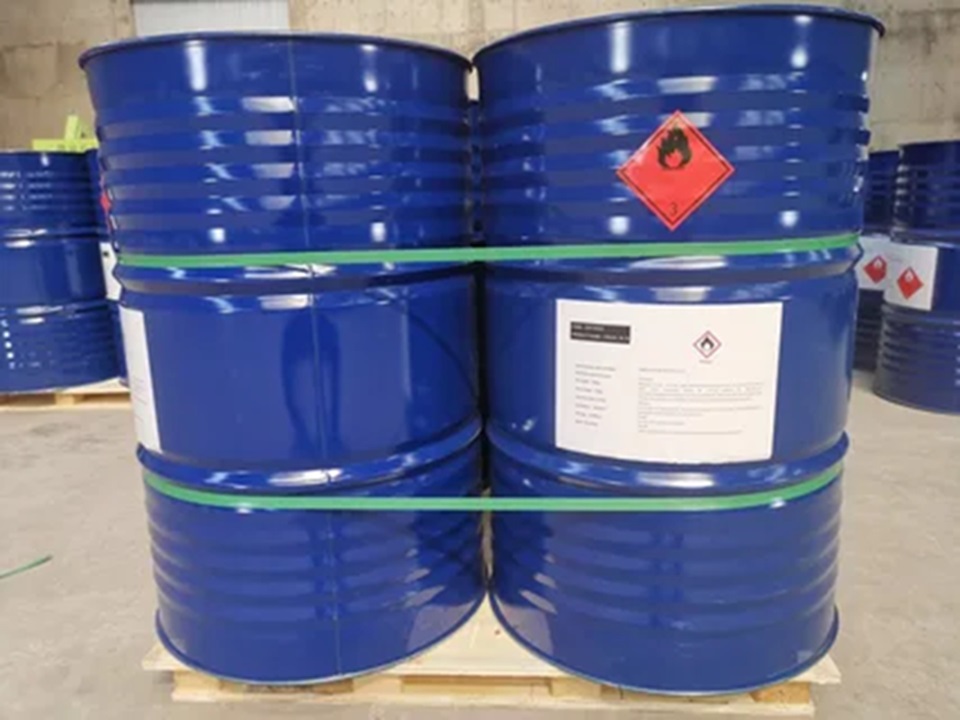
| Packaging Options | 1 L, 5 L, 20 L canisters; 200 L drum; 1000 L IBC; bulk tanker |
Handling Notes:
-
Use explosion-proof electrical equipment
-
Ground and bond containers during transfer to prevent static sparks
-
Use only in well-ventilated areas or under fume hood
-
Avoid breathing vapors (may cause drowsiness and dizziness)
-
Keep away from heat, sparks, and open flames
-
Avoid eye and skin contact
-
Empty containers may contain explosive vapors
-
Use non-sparking tools
17. TRANSPORT INFORMATION
| Parameter | Information |
|---|---|
| UN Number | 1173 |
| Hazard Class | 3 (Flammable liquid) |
| Packing Group | II |
| Proper Shipping Name | ETHYL ACETATE |
| Marine Pollutant | No |
| ADR/RID Label | 3 |
| EMS | F-E, S-D |
| HS Code | 2915 31 00 |
18. REGULATORY INFORMATION
| Region | Status |
|---|---|
| EU | REACH registered; approved for industrial use |
| Türkiye (KKDİK) | Mandatory compliance; registration required |
| USA (TSCA) | Listed |
| Canada (DSL) | Listed |
| Australia (AICS) | Listed |
| Japan (ENCS) | Listed |
| Korea (KECL) | Listed |
| China (IECSC) | Listed |
FDA Status: Approved as food additive and flavoring agent (FEMA 2414)
EU Status: Approved as food additive
19. OTHER NAMES AND SYNONYMS
| Name |
|---|
| Ethyl Acetate |
| Ethyl Ethanoate |
| Acetic Acid Ethyl Ester |
| Ethyl Ester |
| Acetic Ether |
| Vinegar Naphtha |
| Acetic Ester |
| Ethyl Acetic Ester |
Database Identifiers:
| Database | Identifier |
|---|---|
| CAS | 141-78-6 |
| EC | 205-500-4 |
| MDL | MFCD00009171 |
| PubChem CID | 8857 |
| RTECS | AH5425000 |
| UN | 1173 |
| Beilstein | 506104 |
| Merck | 14,3767 |
| FEMA | 2414 |
| ChEBI | CHEBI:27750 |
20. SUMMARY AND IMPORTANT WARNINGS
SUMMARY:
Ethyl acetate (C₄H₈O₂, CAS 141-78-6) is a colorless, clear liquid with a pleasant fruity odor (banana, pear, pineapple-like). It is a carboxylic acid ester produced by the esterification of ethanol and acetic acid. It has a molecular weight of 88.11 g/mol, boiling point of 76.5-77.5°C, flash point of 24°C, and density of 0.902 g/mL at 25°C. It has moderate water solubility (64 g/L at 25°C) and is completely miscible with ethanol, diethyl ether, benzene, acetone, and chloroform. It is highly flammable (H225) and its vapor is heavier than air (vapor density 3.04). Major applications include the chemical industry (acylamide, acetyl acetate, methyl heptanone production, reaction solvent), food industry (flavor solvent, decaffeinated coffee/tea production), cosmetic industry (nail polish remover, perfume solvent, artificial fruit flavors), textile (cleaning chemical), electronics (photoresist resin viscosity reduction), pharmaceutical (extraction solvent), laboratory (chromatography reagent), and others (adhesives, varnishes, photographic films, artificial pearl production).
Key Properties:
| Property | Value |
|---|---|
| Appearance | Colorless clear liquid |
| Odor | Fruity, pleasant (banana, pear, pineapple) |
| Chemical Formula | C₄H₈O₂ |
| Molecular Weight | 88.11 g/mol |
| Boiling Point | 76.5 - 77.5°C |
| Flash Point | 24°C (75°F) |
| Density (25°C) | 0.902 g/mL |
| Water Solubility (25°C) | 64 g/L |
| Vapor Density (air=1) | 3.04 |
| Explosive Limit | 2.0 - 11.5% V |
| Oral LD50 (rat) | ~5,620 mg/kg |
| Primary Use | Solvent, extraction agent, flavor carrier |
Main Application Areas:
| Industry | Applications |
|---|---|
| Chemical | Acylamide, acetyl acetate, methyl heptanone production, reaction solvent |
| Food | Flavor solvent, decaffeinated coffee/tea production, artificial fruit flavors |
| Cosmetics | Nail polish remover, perfume solvent, artificial fruit flavors |
| Textile | Cleaning chemical, printing aid |
| Electronics | Photoresist resin viscosity reduction |
| Pharmaceutical | Extraction solvent, drug coatings |
| Laboratory | Chromatography reagent, extraction solvent |
| Other | Adhesives, varnishes, photographic films, artificial pearls |
Key Safety Points:
-
HIGHLY FLAMMABLE: Flash point 24°C (H225); keep away from heat, sparks, open flames
-
IRRITANT: Causes skin and eye irritation (H315, H319)
-
RESPIRATORY HAZARD: Vapors may cause respiratory irritation, drowsiness, and dizziness (H335, H336)
-
VAPOR HAZARD: Vapors are heavier than air (3.04 x air); may travel to ignition sources
-
EXPLOSION RISK: May form explosive mixtures with air (2.0-11.5% V)
-
STATIC ELECTRICITY: May accumulate static charge; use grounding and bonding
-
USE PPE: Protective gloves (nitrile, neoprene), safety goggles, face shield, protective clothing
-
VENTILATION: Use in fume hood or well-ventilated area
-
STORAGE: Cool, well-ventilated area away from oxidizers and ignition sources
IMPORTANT WARNINGS:
High Volatility and Flammability: Ethyl acetate is a highly flammable liquid due to its low boiling point (77°C) and low flash point (24°C). Its vapors are heavier than air and may travel along the ground to distant ignition sources and flash back to the ignition source. Keep away from all ignition sources (sparks, open flames, hot surfaces, static electricity). Use explosion-proof electrical equipment and non-sparking tools. Ground and bond containers during transfer to prevent static discharge.
Inhalation Hazard: Due to its high vapor pressure (97 mmHg at 20°C), ethyl acetate vapors can rapidly accumulate in enclosed spaces and reach hazardous concentrations. Inhalation of vapors can cause respiratory tract irritation, dizziness, drowsiness, and lightheadedness. High concentrations can cause central nervous system depression. Ensure adequate ventilation to keep workplace concentrations below the TWA limit of 400 ppm (1400 mg/m³). Use air monitoring and respiratory protection in enclosed spaces. The NIOSH IDLH (Immediately Dangerous to Life and Health) level is 2000 ppm.
Skin and Eye Irritation: Ethyl acetate can defat the skin and cause dermatitis (skin dryness, cracking, redness) with prolonged or repeated exposure (H315, R66). Eye contact causes irritation and redness (H319, R36). Use nitrile or neoprene gloves to prevent skin contact. Use safety goggles or face shield when there is a risk of eye contact. Wash with plenty of water upon contact.
Static Electricity Hazard: Ethyl acetate can accumulate static electric charge during transfer (pouring, mixing, pumping). Static discharge can ignite flammable vapors and cause fire or explosion. Ground and bond containers, equipment, and yourself during transfer. Use conductive hoses. Avoid high transfer rates that can increase static buildup.
Storage Incompatibilities: Store ethyl acetate away from strong oxidizing agents (nitric acid, peroxides, permanganates, chlorates, perchlorates), strong acids, and strong bases. These materials can cause violent reactions, fire, or explosion. Use stainless steel, HDPE, or glass containers to prevent corrosion. Avoid reactive metals (aluminum, magnesium, zinc).
Food and Cosmetic Applications: Ethyl acetate is widely used in food and cosmetic applications due to its low toxicity and pleasant fruity odor. It is approved by the FDA as a food additive and flavoring agent (FEMA 2414). In food applications, it is used as a flavor solvent and caffeine extraction solvent. In cosmetics, it is the main component of nail polish removers and is used as a carrier in perfumes. The quality of ethyl acetate used must meet appropriate specifications for these applications (low impurities, food-grade purity).
Explosion Limits: Ethyl acetate vapors form explosive mixtures with air in the range of 2.0% to 11.5% by volume. Below the lower explosive limit (LEL, 2.0%), the mixture is too lean to ignite. Above the upper explosive limit (UEL, 11.5%), the mixture is too rich to ignite. However, any concentration between these limits can explode if an ignition source is present. Ensure adequate ventilation to keep workplace concentrations below the LEL.
Fire Fighting: In case of fire, use dry chemical powder, CO₂, alcohol-resistant foam, or water mist for extinction. Do not use water jets (may spread the flames). Containers exposed to fire should be cooled with water mist as they may build up pressure. Firefighters should wear self-contained breathing apparatus (SCBA) and full protective clothing. Thermal decomposition may produce toxic gases including carbon monoxide and carbon dioxide.
Spill Response: In case of spill, eliminate all ignition sources. Evacuate the area and provide adequate ventilation. Wear appropriate PPE (acid-resistant suit, gloves, goggles, SCBA). Contain the spill with inert absorbent material (sand, vermiculite, diatomaceous earth). Collect the absorbent and place in a properly labeled container for hazardous waste disposal. Dilute remaining spill with water (if local regulations permit) or wipe with appropriate solvent. Prevent entry into sewers, waterways, or groundwater.
Analytical Methods (Spectroscopy and Chromatography):
-
UV-Vis Spectroscopy: Absorption of ethyl acetate in the UV region can be used for concentration determination.
-
IR Spectroscopy: The ester carbonyl group (C=O) shows characteristic absorption at approximately 1740 cm⁻¹, and the C-O stretch at 1200-1250 cm⁻¹. This is used for functional group determination and identification.
-
Gas Chromatography (GC): The most common method for purity analysis and contaminant determination of ethyl acetate.
-
Thin Layer Chromatography (TLC): Ethyl acetate is a common mobile phase component for polar compounds.
Important Disclaimer: This Technical Data Sheet (TDS) is for informational purposes only. For complete safety, handling, storage, and regulatory compliance information, always refer to the official Safety Data Sheet (SDS) provided by the manufacturer/supplier. Ethyl acetate is a highly flammable liquid and may be harmful if inhaled. Always use appropriate personal protective equipment (PPE). Ensure adequate ventilation. Keep away from ignition sources. Ground containers to prevent static discharge. In case of spill or fire, follow emergency procedures. Seek immediate medical attention for significant exposures, especially inhalation or ingestion.