We unleash your business potential by maximize the business innovation.
Send EmailSodium 2-ethylhexyl Sulfate, 2-ethyl Hexyl Sulfate, Sodium Etasulfate, 126-92-1
SODIUM 2-ETHYLHEXYL SULFATE (2-EHS)
1. PRODUCT DEFINITION AND CHEMICAL IDENTITY
| Parameter | Description |
|---|---|
| Chemical Name (IUPAC) | Sodium 2-ethylhexyl sulfate |
| Common Name | Sodium 2-ethylhexyl sulfate, Sodium etasulfate |
| Trade Names | Niaproof 08, Tergitol Anionic 08, Propaste 6708, Emersal 6465, Tergimist, Sulfirol 8, Pentrone, TERGITOL-8, Sipex BOST |
| CAS Number | 126-92-1 |
| EC Number | 204-812-8 |
| Molecular Formula | C₈H₁₇NaO₄S |
| Molecular Weight | 232.27 g/mol |
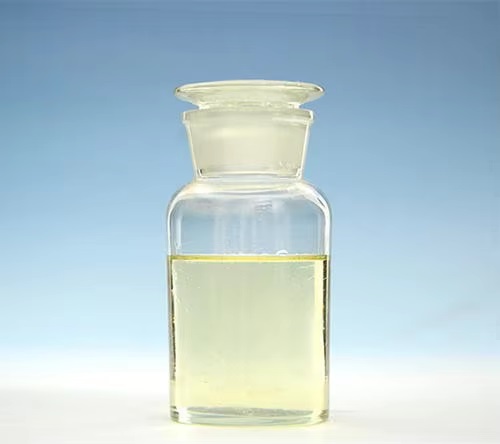
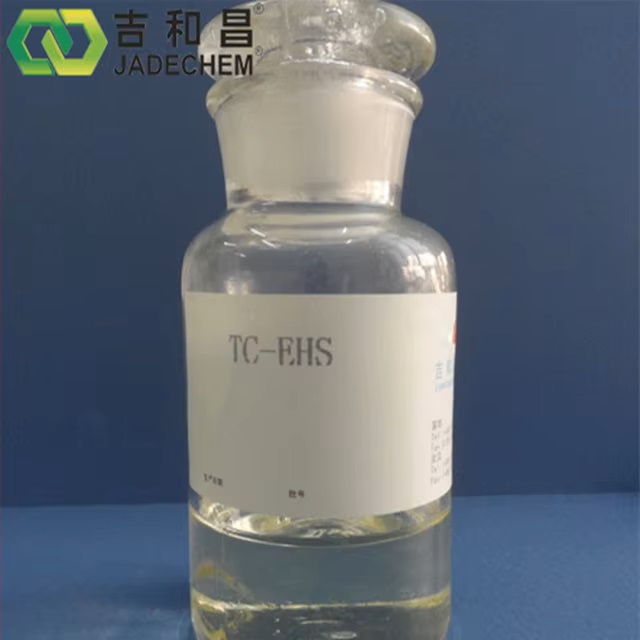
| Appearance | Clear, colourless to pale yellow, viscous liquid |
| Chemical Type | Anionic surfactant, alkyl sulfate |
2. PHYSICAL AND CHEMICAL PROPERTIES
| Property | Value |
|---|---|
| Physical form | Viscous liquid |
| Colour | Colourless to pale yellow |
| Density (20 °C) | ~1.12 g/mL |
| Solubility in water | Freely soluble |
| Solubility in DMSO | Soluble |
| pH compatibility | Stable in both acidic and alkaline media |
| Stability | Stable at room temperature; avoid strong oxidizing agents |
| Electrolyte tolerance | High; remains effective in high-salt formulations |
3. FUNCTIONAL PROPERTIES
-
Excellent wetting agent: Rapidly reduces surface tension, providing fast penetration and wetting on hard surfaces and textiles.
-
Low-foaming surfactant: Produces minimal stable foam, ideal for industrial cleaning, metal treatment, and high-shear processes.
-
Alkali and acid stable: Maintains surfactant performance in both highly caustic (e.g., mercerisation) and acidic (e.g., metal pickling) environments.
-
Electrolyte compatible: Does not salt-out or gel easily in concentrated salt solutions.
-
Good emulsifying and dispersing power: Aids in suspending oils, pigments, and soils in aqueous systems.
4. ALTERNATIVE NAMES AND SYNONYMS
-
Sodium 2-ethylhexyl sulfate
-
Sodium etasulfate
-
2-Ethylhexyl sulfuric acid, sodium salt
-
Sulfuric acid, mono(2-ethylhexyl) ester, sodium salt
-
Mono(2-ethylhexyl) sulfate sodium salt
-
2-Ethyl-1-hexanol hydrogen sulfate sodium salt
-
Trade names: Niaproof 08, Tergitol Anionic 08, Propaste 6708, Emersal 6465, Tergimist, Sulfirol 8, Pentrone, TERGITOL-8, Sipex BOST, TC-EHS
5. PRODUCTION PROCESS (SUMMARY)
A. Sulfation (Esterification):
2-Ethylhexanol reacts with sulfuric acid to form 2-ethylhexyl hydrogen sulfate (monoester) and water.
C₈H₁₈O + H₂SO₄ → C₈H₁₇OSO₃H + H₂O
B. Neutralization:
The monoester is neutralized with sodium hydroxide to yield the sodium salt.
C₈H₁₇OSO₃H + NaOH → C₈H₁₇OSO₃Na + H₂O
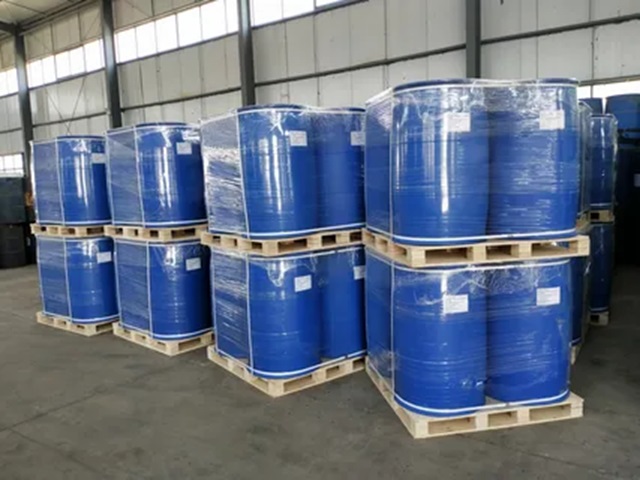
C. Finishing: Purification by filtration, optionally vacuum drying, then packaging into drums or IBCs.
6. SECTORAL APPLICATIONS, USAGE RATES, AND EXAMPLE FORMULATIONS
| Sector | Purpose | Usage Rate / Notes |
|---|---|---|
| Industrial & Household Detergents | Low-foaming surfactant, wetting agent in machine dishwashing, hard surface cleaners, CIP cleaning | 1–10% of formulation; excellent for high-pressure spray cleaning |
| Textile | Wetting agent in mercerisation (strong NaOH) and bleaching (with calcium hypochlorite); improves penetration of finishing chemicals | 0.5–3 g/L in processing baths |
| Metal Treatment & Cleaning | Wetting and cleaning in acidic degreasers, pickling baths, and surface preparation | 0.5–5% in acid baths; stable in HCl, H₂SO₄, and phosphoric acid |
| Cosmetics & Personal Care | Surfactant in shampoos, shower gels, and liquid soaps; valued for its mildness and low-foam profile | 2–8% in rinse-off formulations |
| Pharmaceuticals | Auxiliary wetting agent in topical antiseptic formulations (restricted – pharma grade may be required) | Low concentrations, use according to specific formulation requirements |
| Agrochemicals | Wetting and dispersing agent in pesticide and herbicide soluble concentrates (SL) and emulsifiable concentrates (EC) | 1–5% of formulation |
| Paints & Inks | Pigment dispersing and wetting aid; used in limited cases where low foam is critical | 0.1–0.5% in waterborne systems |
| Adhesives | Improves wetting on low-energy surfaces in water-based adhesives | 0.2–1% |
| Paper Industry | Wetting and cleaning aid in felt conditioning and paper machine cleaning | 0.2–1% |
Example Formulations:
-
Alkaline Industrial Cleaner (Low Foam):
-
Water: 80.0%
-
Sodium metasilicate pentahydrate: 5.0%
-
Sodium hydroxide (50%): 3.0%
-
Sodium 2-ethylhexyl sulfate: 5.0% (wetting agent)
-
Non-ionic surfactant (low foam): 2.0%
-
Corrosion inhibitor, chelate, dye: q.s.
-
Balance to 100%. Effective in spray and immersion cleaning.
-
-
Textile Mercerisation Wetting Bath:
-
Sodium hydroxide (35 °Bé): 300 g/L
-
Sodium 2-ethylhexyl sulfate: 2–5 g/L (depends on fabric density)
-
Operate at 15–25 °C; ensures rapid uniform wetting of cotton, even with strong alkali.
-
-
Acid Pickling Bath for Steel:
-
Hydrochloric acid (30%): 20%
-
Sodium 2-ethylhexyl sulfate: 1.0%
-
Corrosion inhibitor: 0.5%
-
Water: 78.5%
-
Used at ambient to 60 °C for removal of rust and scale with low foaming.
-
7. ALTERNATIVES AND COMPARISON
| Alternative | Chemical Type | Comparison |
|---|---|---|
| Sodium Lauryl Sulfate (SLS) | Linear alkyl sulfate (C12) | High foam, excellent cleaning; less stable in acid/strong alkali, not for low-foam applications |
| Ammonium Lauryl Sulfate (ALS) | Alkyl sulfate ammonium salt | Similar to SLS, milder; high foam, not suitable for highly alkaline systems |
| Sodium Coco Sulfate (SCS) | Natural alkyl sulfate blend (C8–C18) | More natural appeal; medium to high foam, good cleaning |
| Sodium Octyl Sulfate | Short-chain alkyl sulfate (C8 linear) | Very low foam, good wetting; similar stability to 2-EHS but with linear chain; often used interchangeably |
| Decyl Alcohol Sulfate (C10) | Medium-chain alkyl sulfate | Low foam, good wetting; slightly less electrolyte tolerance than 2-EHS |
| Sodium 2-Ethylhexyl Sulfate (this product) | Branched alkyl sulfate | Key advantage: exceptional electrolyte and acid/alkali stability; low foam with excellent wetting; branched chain prevents gelling |
8. REGULATORY STATUS AND SAFETY
-
GHS Classification (CLP Regulation): No harmonised classification. Historically listed as an irritant; suppliers may classify as Skin Irrit. 2 / Eye Irrit. 2. Consult the manufacturer's SDS for exact classification.
-
Food contact: Not approved for direct food contact; industrial use only. Avoid in food-grade applications.
-
Environmental: Readily biodegradable under OECD 301 test. Avoid release to water bodies in concentrated form.
-
Storage: Keep in tightly closed containers, preferably HDPE or stainless steel, in a cool, dry place (+5 to +40 °C). Avoid strong oxidisers.
9. FREQUENTLY ASKED QUESTIONS
Q1. Why is this surfactant so effective in strong alkaline and acidic solutions?
The branched 2-ethylhexyl group makes the molecule resistant to hydrolysis. Unlike linear alkyl sulfates, it remains stable in hot alkali (mercerisation) and strong acids (metal pickling), thus maintaining wetting without decomposing.
Q2. Can I use this in a high-foam shampoo?
It is not suitable for high-foam requirements because it naturally produces low foam. If foam is desired, combine it with a higher-foaming surfactant (like SLS or cocamidopropyl betaine).
Q3. What is the difference between sodium octyl sulfate and sodium 2-ethylhexyl sulfate?
Sodium octyl sulfate has a linear C8 chain; sodium 2-ethylhexyl sulfate has a branched chain. The branched version has better solubility, greater electrolyte tolerance, and improved stability in harsh acidic and alkaline conditions.
Q4. What is the typical active content of commercial sodium 2-ethylhexyl sulfate?
Commercial products are typically supplied as aqueous solutions with ~40–50% active content, sometimes as a concentrated paste. The exact concentration varies by supplier.
Q5. Is sodium 2-ethylhexyl sulfate compatible with non-ionic surfactants?
Yes, it is highly compatible with most non-ionic surfactants and can be used in blends to adjust foam and wetting properties.
Q6. Can it be used in agrochemical pesticide formulations?
Yes, it is commonly used as a wetting/spreading agent in soluble liquid (SL) and emulsion concentrate (EC) formulations at 1–5% by weight. Its low foam is beneficial in tank-mix applications.
10. QUICK REFERENCE TABLE
| Property | Value |
|---|---|
| CAS | 126-92-1 |
| Formula | C₈H₁₇NaO₄S |
| Molecular weight | 232.27 g/mol |
| Appearance | Viscous, pale yellow liquid |
| Solubility | Water-soluble, DMSO-soluble |
| Key functions | Wetting agent, low-foam surfactant, acid/alkali stable |
| Main applications | Textile mercerisation, metal cleaning, industrial detergents, agrochemicals |