Aluminum Sulfate, Dialuminum Trisulfate, Dialuminum Sulfate, Alum, Aluminium Sulphate, 10043-01-3
ALUMINUM SULFATE
CHEMICAL PROFILE AND IDENTIFICATION
| Parameter |
Information |
| Chemical Name |
Aluminum Sulfate |
| Other Names |
Dialuminum Trisulfate, Dialuminum Sulfate, Aluminum(III) Sulfate, Sulfuric Acid Aluminum Salt, Cake Alum, Alum, Aluminium Sulphate |
| Chemical Formula |
Al₂(SO₄)₃ |
| Molecular Weight |
342.15 g/mol (anhydrous), 666.43 g/mol (octadecahydrate) |
| CAS Number |
10043-01-3 |
| EC Number (EINECS) |
233-135-0 |
| MDL Number |
MFCD00003423 |
| RTECS Number |
BD1700000 |
| UN Number |
Not regulated (not classified as dangerous goods for transport) |
| E Number |
Not applicable |
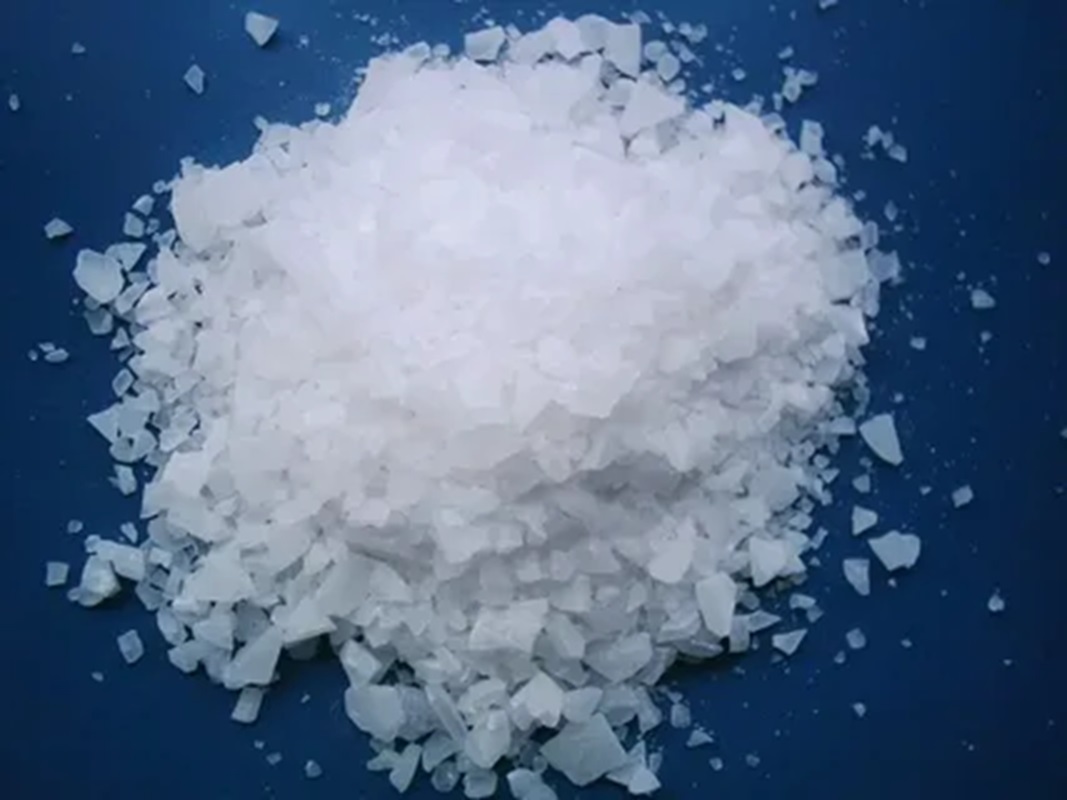
| Appearance |
White to off-white crystalline powder, granules, or lumps |
| Odor |
Odorless |
| Taste |
Astringent, sweetish metallic taste |
SECTION 1: PHYSICAL PROPERTIES
| Property |
Value |
| Physical State (20°C) |
Solid (crystalline) |
| Appearance |
White to off-white crystalline powder, granules, or lumps |
| Odor |
Odorless |
| Taste |
Astringent, sweetish metallic |
| Molecular Weight |
342.15 g/mol (anhydrous) / 666.43 g/mol (octadecahydrate) |
| Density (Anhydrous) |
2.672 g/cm³ |
| Density (Octadecahydrate) |
1.62 g/cm³ |
| Melting Point (Anhydrous) |
770°C (decomposes) |
| Melting Point (Octadecahydrate) |
86.5°C |
| Boiling Point |
Decomposes before boiling |
| Solubility in Water (20°C) |
36.4 g/100 mL (anhydrous), 87.2 g/100 mL (octadecahydrate) |
| Solubility in Ethanol |
Slightly soluble |
| pH (1% aqueous solution) |
2.5 - 3.5 (acidic) |
| Hygroscopicity |
Moderately hygroscopic |
| Crystal System |
Monoclinic (octadecahydrate) |
| Refractive Index |
~1.47 (octadecahydrate) |
| Specific Heat |
~0.75 J/g·K |
| Vapor Pressure |
Negligible |
| Surface Tension |
~72 mN/m (aqueous solution) |
SECTION 2: CHEMICAL PROPERTIES
| Property |
Information |
| Chemical Formula |
Al₂(SO₄)₃ |
| Molecular Weight |
342.15 g/mol |
| Aluminum (Al) Content |
~15.8% (as Al₂O₃ ~28-30%) |
| Sulfur (S) Content |
~28.1% |
| Oxygen (O) Content |
~56.1% |
| pH (1% solution) |
2.5 - 3.5 (acidic) |
| Stability |
Stable under normal storage conditions |
| Hydrolysis |
Al³⁺ + 3H₂O ⇌ Al(OH)₃ + 3H⁺ (acidic solution) |
| Thermal Decomposition |
>770°C decomposes to Al₂O₃ and SO₃ |
| Compatible with |
Water, acids |
| Incompatible with |
Strong alkalis, bases (neutralization), oxidizing agents |
Key Reactions
Hydrolysis (Water Treatment):
Al₂(SO₄)₃ + 6H₂O ⇌ 2Al(OH)₃↓ + 3H₂SO₄
Neutralization:
Al₂(SO₄)₃ + 6NaOH → 2Al(OH)₃↓ + 3Na₂SO₄
Thermal Decomposition:
Al₂(SO₄)₃ → Al₂O₃ + 3SO₃↑ (at >770°C)
Reaction with Alkalinity (Water Treatment):
Al³⁺ + 3HCO₃⁻ → Al(OH)₃↓ + 3CO₂↑
SECTION 3: HYDRATE FORMS
| Form |
Formula |
CAS |
Appearance |
Properties |
| Anhydrous |
Al₂(SO₄)₃ |
10043-01-3 |
White powder |
More stable, hygroscopic |
| Octadecahydrate |
Al₂(SO₄)₃·18H₂O |
7784-31-8 |
White crystals |
Most common commercial form |
| Hexadecahydrate |
Al₂(SO₄)₃·16H₂O |
– |
White crystals |
Less common |
| Tetradecahydrate |
Al₂(SO₄)₃·14H₂O |
– |
White crystals |
Less common |
SECTION 4: PRODUCTION PROCESS
| Stage |
Description |
| 1. Raw Material |
Bauxite ore (Al₂O₃·nH₂O) or Aluminum Hydroxide [Al(OH)₃] |
| 2. Reaction |
Aluminum hydroxide + Sulfuric acid |
| 3. Reaction Equation |
2Al(OH)₃ + 3H₂SO₄ → Al₂(SO₄)₃ + 6H₂O |
| 4. Filtration |
Removal of insoluble impurities |
| 5. Concentration |
Evaporation to desired concentration |
| 6. Crystallization |
Cooling to crystallize aluminum sulfate |
| 7. Centrifugation |
Separation of crystals |
| 8. Drying and Packaging |
Drying and packaging |
Alternative Production (From Bauxite):
Al₂O₃·nH₂O + H₂SO₄ → Al₂(SO₄)₃ + (n+3)H₂O
Giulini Process:
Shale Process:
SECTION 5: APPLICATIONS
5.1 Water Treatment (Primary Use ~66%)
| Application |
Description |
| Drinking Water Treatment |
Coagulant for removal of suspended particles, turbidity, microorganisms |
| Wastewater Treatment |
Phosphorus removal, coagulation of colloidal particles |
| Industrial Water Treatment |
Cooling water treatment, process water clarification |
| Municipal Water Treatment |
Primary coagulant in water clarification |
| Swimming Pool Water |
Water clarification and pH control |
5.2 Paper Industry (Major Use ~33%)
| Application |
Description |
| Paper Sizing |
Rosin sizing agent, pH control |
| Paper Filler |
Improves paper quality, opacity, and smoothness |
| Pulp Treatment |
Cellulose fiber bonding, strength enhancement |
| Coagulation |
Separation of solid and liquid phases in paper production |
5.3 Leather Tanning
| Application |
Description |
| Leather Processing |
Protein precipitation, improves leather quality |
| Chrome Tanning |
Used as auxiliary in tanning processes |
5.4 Agriculture and Horticulture
| Application |
Description |
| Soil Acidification |
Lowers soil pH for acid-loving plants (azaleas, blueberries, rhododendrons) |
| Fertilizer Additive |
Improves phosphate availability |
| Plant Growth |
Promotes growth by improving soil conditions |
5.5 Wood Preservation
| Application |
Description |
| Wood Treatment |
Reduces water absorption, protects against fungi and insects |
| Surface Treatment |
Improves surface hardness and gloss |
| Dipping Method |
Deep penetration protection |
5.6 Textile and Dyeing
| Application |
Description |
| Mordant |
Fixes dyes to fibers |
| Dyeing Assistant |
Improves color fastness |
| Printing |
Used in textile printing applications |
5.7 Cosmetics and Personal Care
| Application |
Description |
| Antiperspirants |
Active ingredient in antiperspirant sprays |
| Astringent |
In skincare products |
| Deodorants |
Component in deodorant formulations |
5.8 Construction
| Application |
Description |
| Cement Additive |
Accelerates setting time |
| Concrete |
Improves durability |
| Bricks and Tiles |
Colorant and binder |
5.9 Other Applications
| Application |
Description |
| Potash Alum Production |
Precursor for potassium aluminum sulfate (alum) |
| Flocculant |
Used in mining and mineral processing |
| Mordant |
Used in pigment and paint industry |
| Decolorizing Agent |
Used in recycling and waste oil treatment |
| Odor Control |
Used as deodorizing agent |
| Catalysis |
Used as catalyst in organic synthesis |
| Analytical Chemistry |
Used in analytical methods |
| Photo Processing |
Used in photography |
SECTION 6: QUALITY SPECIFICATIONS (TECHNICAL GRADE)
| Parameter |
Specification |
| Purity (Al₂(SO₄)₃) |
≥ 17% (as Al₂O₃) or ≥ 99% for high purity |
| Al₂O₃ Content |
17-18% (liquid solution) / 28-30% (solid) |
| Iron (Fe) Content |
≤ 0.5-1.0% (industrial grade), ≤ 0.005% (high purity) |
| Water Insolubles |
≤ 0.1-0.5% |
| pH (1% solution) |
2.5 - 3.5 |
| Free Acid (as H₂SO₄) |
≤ 0.5-2.0% |
| Heavy Metals (as Pb) |
≤ 0.001% |
| Arsenic (As) |
≤ 0.0005% (for water treatment) |
| Appearance |
White to off-white powder or crystals |
| Solubility in Water |
Complete solution in water |
SECTION 7: STORAGE AND HANDLING
| Parameter |
Information |
| Storage Temperature |
Ambient (15-30°C) |
| Storage Conditions |
Cool, dry, well-ventilated area |
| Container Requirements |
Tightly closed, corrosion-resistant containers |
| Materials to Protect From |
Moisture (hygroscopic), strong alkalis, bases |
| Shelf Life |
12-24 months (in unopened original packaging under proper storage) |
| Hygroscopicity |
Moderate hygroscopicity |
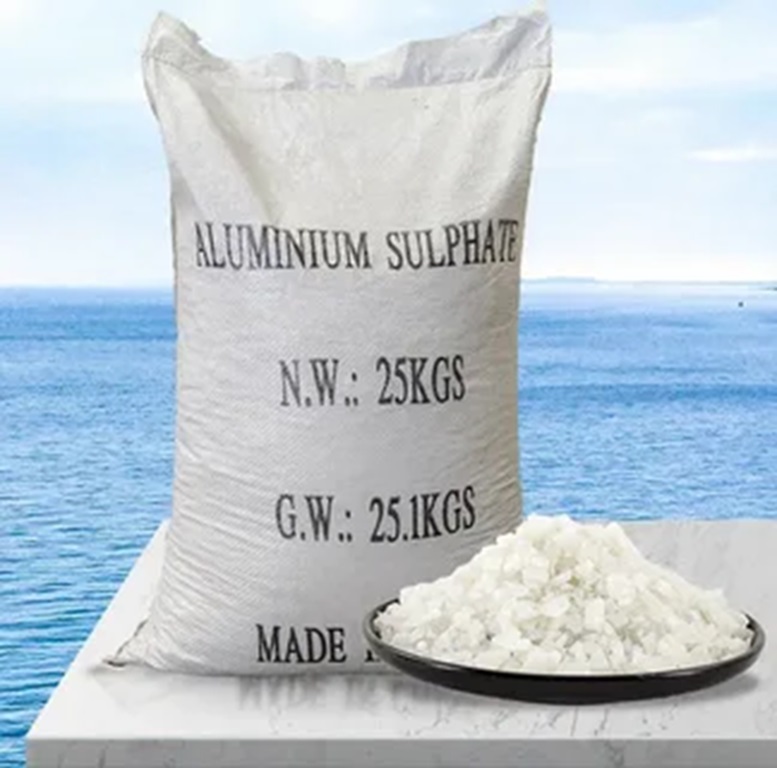
| Packaging Options |
25 kg bags (HDPE), 50 kg bags, 500 kg/1000 kg FIBC bags |
| Additional Notes |
Corrosive to metals; keep away from incompatible materials |
SECTION 8: GHS CLASSIFICATION (TYPICAL)
Note: GHS classification can vary slightly between suppliers and product grades.
| Hazard Class |
Category |
H-Phrase |
| Acute Toxicity (Oral) |
Category 4 |
H302 |
| Skin Irritation |
Category 2 |
H315 |
| Eye Irritation |
Category 2A |
H319 |
| Specific Target Organ Toxicity (STOT-SE) |
Category 3 |
H335 |
| Aquatic Toxicity (Chronic) |
Category 3 |
H412 |
Signal Word: WARNING
Hazard Pictograms: GHS07 (Exclamation Mark)
Hazard Statements (H-Codes):
| Code |
Statement |
| H302 |
Harmful if swallowed |
| H315 |
Causes skin irritation |
| H319 |
Causes serious eye irritation |
| H335 |
May cause respiratory irritation |
| H412 |
Harmful to aquatic life with long lasting effects |
SECTION 9: PRECAUTIONARY STATEMENTS (P-CODES)
| Code |
Statement |
| P261 |
Avoid breathing dust |
| P264 |
Wash skin thoroughly after handling |
| P270 |
Do not eat, drink or smoke when using this product |
| P280 |
Wear protective gloves/protective clothing/eye protection/face protection |
| P302+P352 |
IF ON SKIN: Wash with plenty of soap and water |
| P304+P340 |
IF INHALED: Remove person to fresh air and keep comfortable for breathing |
| P305+P351+P338 |
IF IN EYES: Rinse cautiously with water for several minutes. Remove contact lenses if present and easy to do. Continue rinsing |
| P312 |
Call a POISON CENTER/doctor if you feel unwell |
| P501 |
Dispose of contents/container to licensed waste disposal facility |
SECTION 10: TOXICOLOGICAL PROFILE
| Parameter |
Value |
| Acute Oral Toxicity (LD50, Rat) |
~2,000-5,000 mg/kg |
| Acute Dermal Toxicity (LD50, Rabbit) |
> 2,000 mg/kg |
| Skin Irritation |
Irritant |
| Eye Irritation |
Irritant |
| Carcinogenicity |
Not classified as carcinogenic |
| Mutagenicity |
Negative in standard tests |
| Reproductive Toxicity |
Not classified |
| Target Organs |
Respiratory tract, eyes, skin, gastrointestinal tract |
Health Effects
| Exposure Type |
Effects |
| Acute (Ingestion) |
Nausea, vomiting, abdominal pain, diarrhea, gastrointestinal irritation |
| Acute (Inhalation) |
Respiratory tract irritation, coughing, wheezing |
| Acute (Skin Contact) |
Irritation, dermatitis |
| Acute (Eye Contact) |
Irritation, redness, pain |
| Chronic |
Aluminum accumulation in body tissues (rare) |
SECTION 11: FIRST AID MEASURES
| Exposure |
Action |
| Inhalation |
Move to fresh air. If breathing difficulties, get medical attention |
| Skin Contact |
Wash immediately with plenty of soap and water. Remove contaminated clothing |
| Eye Contact |
Rinse immediately with plenty of water for at least 15 minutes. Get medical attention |
| Ingestion |
Rinse mouth. Do NOT induce vomiting. Get medical attention |
SECTION 12: FIRE-FIGHTING MEASURES
| Parameter |
Information |
| Fire Hazard |
Non-flammable (not combustible) |
| Extinguishing Media |
Water spray, dry powder, carbon dioxide, foam |
| Special Hazards |
Decomposes at high temperatures, releasing toxic sulfur oxides |
| Protective Equipment |
Self-contained breathing apparatus (SCBA), full protective clothing |
| Firefighting Notes |
Use water spray to cool containers; prevent fire water from entering environment |
SECTION 13: ENVIRONMENTAL INFORMATION
| Parameter |
Information |
| Aquatic Toxicity |
Harmful to aquatic life with long lasting effects |
| Persistence |
Slow degradation in environment |
| Bioaccumulation |
Low potential |
| Soil Mobility |
High (soluble in water) |
| Waste Disposal |
Dispose according to local regulations as non-hazardous waste |
| Environmental Fate |
Hydrolyzes to aluminum hydroxide, affects pH of water bodies |
SECTION 14: TRANSPORT INFORMATION
| Parameter |
Information |
| UN Number |
Not regulated (not classified as dangerous goods) |
| Hazard Class |
Not classified |
| Packing Group |
Not applicable |
| Proper Shipping Name |
ALUMINIUM SULPHATE |
| Marine Pollutant |
No |
| Transport Temperature |
Ambient temperature |
| Special Provisions |
Protect from moisture |
SECTION 15: REGULATORY INFORMATION
| Region |
Status |
| EU |
REACH registered; listed |
| Turkey (KKDİK) |
Registered; compliance required |
| USA (TSCA) |
Listed |
| Canada (DSL) |
Listed |
| Australia (AICS) |
Listed |
| Japan (ENCS) |
Listed |
| Korea (KECL) |
Listed |
| China (IECSC) |
Listed |
| Food Additive |
Approved (E number not assigned for aluminum sulfate) |
| Water Treatment |
NSF/ANSI Standard 60 certified |
SECTION 16: OTHER NAMES AND SYNONYMS
| Turkish Name |
English Name |
| Alüminyum Sülfat |
Aluminum Sulfate |
| Dialüminyum Trisülfat |
Dialuminum Trisulfate |
| Sülfürik Asit Alüminyum Tuzu |
Sulfuric Acid Aluminum Salt |
| Alüminyum (III) Sülfat |
Aluminum(III) Sulfate |
| Koagülant |
Coagulant |
| Flokülant |
Flocculant |
| Şap |
Alum |
Database Identifiers
| Identifier |
Value |
| CAS (Anhydrous) |
10043-01-3 |
| CAS (Octadecahydrate) |
7784-31-8 |
| EC |
233-135-0 |
| MDL |
MFCD00003423 |
| RTECS |
BD1700000 |
| PubChem CID |
24850 |
SECTION 17: SUMMARY AND CRITICAL WARNINGS
SUMMARY:
Aluminum Sulfate (Al₂(SO₄)₃, CAS 10043-01-3) is a white, odorless, crystalline solid that is highly soluble in water. It is an acidic salt (pH 2.5-3.5 in 1% solution) and is primarily used as a coagulant in water treatment.
Key Properties:
| Property |
Value |
| Appearance |
White crystalline solid |
| Molecular Weight |
342.15 g/mol |
| Density |
2.672 g/cm³ |
| Melting Point |
770°C (decomposes) |
| Solubility in Water (20°C) |
36.4 g/100 mL |
| pH (1% solution) |
2.5 - 3.5 (acidic) |
Main Applications:
| Sector |
Applications |
| Water Treatment (66%) |
Drinking water, wastewater, industrial water clarification |
| Paper Industry (33%) |
Paper sizing, pulp treatment, coagulation |
| Leather |
Leather processing, protein precipitation |
| Agriculture |
Soil acidification, fertilizer additive |
| Cosmetics |
Antiperspirants, deodorants |
| Construction |
Cement additive, concrete improvement |
SECTION 18: CRITICAL WARNINGS
| Warning |
Description |
| Acidic Nature |
Aluminum sulfate forms acidic solutions (pH 2.5-3.5). Causes irritation to skin, eyes, and respiratory tract. |
| Water Treatment Coagulant |
Primary use; reacts with water to form aluminum hydroxide flocs, removing suspended particles. |
| Hydrolysis |
Al³⁺ + 3H₂O ⇌ Al(OH)₃ + 3H⁺. This hydrolysis is the basis for its coagulant action. |
| Non-Flammable |
Not combustible, but decomposes at high temperatures releasing toxic SO₃ fumes. |
| Corrosive to Metals |
Can corrode iron and steel in the presence of moisture. Use corrosion-resistant equipment. |
| Alkali Incompatibility |
Contact with strong bases (NaOH, KOH) causes rapid neutralization and heat generation. |
| Hygroscopic |
Absorbs moisture from air; store in tightly closed containers. |
| Environmental Effect |
Harmful to aquatic life with long lasting effects (pH reduction and aluminum toxicity). |
| Heavy Metal Impurities |
Technical grade may contain iron and other impurities; water treatment grades must meet strict purity standards. |
| Personal Protective Equipment |
When handling aluminum sulfate: Always use safety goggles, protective gloves (nitrile or neoprene), protective clothing, and dust mask. |
LEGAL DISCLAIMER
The information provided in this document is based on our current knowledge and experience and is presented in good faith; however, as all conditions of use are beyond our control, it does not constitute a binding specification or warranty. This Technical Data Sheet is for informational purposes only. Users are responsible for testing the suitability for their own applications. For complete safety, storage, use, handling, disposal, and regulatory compliance information, please refer to the official Safety Data Sheet (SDS/MSDS) provided by the manufacturer/supplier.