We unleash your business potential by maximize the business innovation.
Send EmailLauramine Oxide, Myristamine Oxide, C12-14 Alkyl Dimethyl Amine Oxide, Dimethylalkylamine N-oxide, 308062-28-4
C12-14 ALKYL DIMETHYL AMINE OXIDE (C12-14 AO)
1. Chemical Identity and Material Classification
-
Chemical Name: Amines, C12-14 (even numbered)-alkyldimethyl, N-oxides
-
Synonyms: C12-14 Alkyl Dimethyl Amine Oxide, Lauramine Oxide/Myristamine Oxide blend, C12-14 Amine Oxide, C12-14 AO, Amine Oxide (C12-14), N,N-Dimethylalkylamine N-oxide (C12-14)
-
CAS Number: 308062-28-4
-
EC Number (EINECS): 931-292-6
-
Molecular Formula: R(CH₃)₂N→O (where R = C12H25 and C14H29, even-numbered carbon chains)
-
Chemical Class: Amine oxide (non-ionic to cationic surfactant)
-
UN Number: Not classified as hazardous for transport (typically)
2. Raw Material Composition
This product is a blend of even-numbered carbon chain alkyl dimethyl amine oxides:
| Chain Length | Common Name | Typical Content (%) |
|---|---|---|
| C12 | Lauramine Oxide | 50–70% |
| C14 | Myristamine Oxide | 25–45% |
| Other (C10, C16) | Minor components | <5% |
Key feature: Contains only even-numbered carbon chains (C12, C14) – no odd-numbered chains.
3. Physical Properties
3.1 General Physical Properties
| Property | Value |
|---|---|
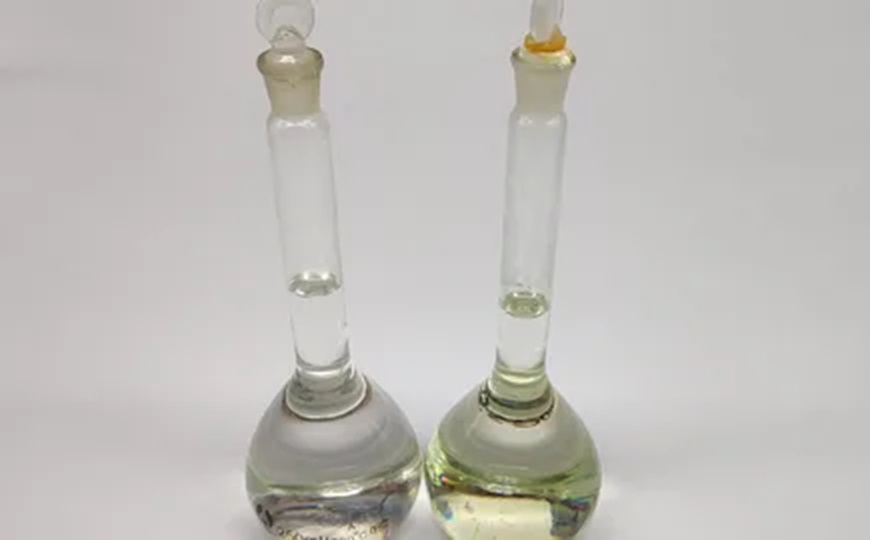
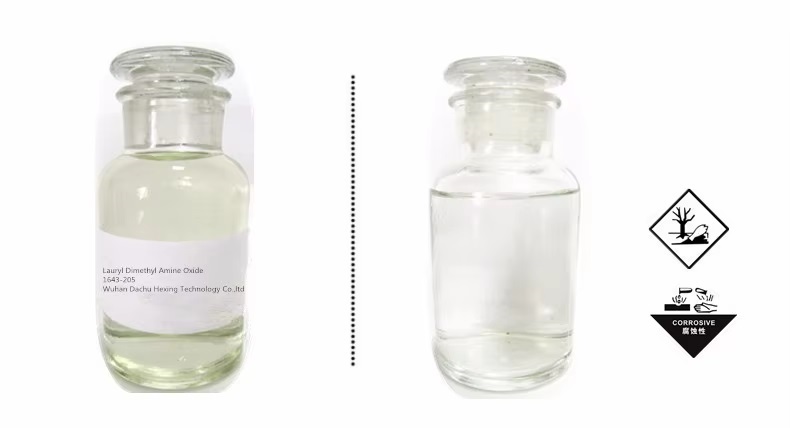
| Appearance | Colorless to pale yellow clear liquid or powder (depending on concentration) |
| Physical state (20°C) | Liquid (30% solution) or solid (anhydrous powder) |
| Odor | Mild, characteristic amine oxide odor |
| Density (23°C) | 0.716 g/cm³ (anhydrous); ~1.0 g/cm³ (30% solution) |
| Vapor pressure (25°C) | 0–0 Pa (negligible) |
| Melting point | Variable (depends on concentration and chain distribution) |
| Flash point | >100°C (non-flammable for aqueous solutions) |
| pH (10% aqueous solution) | 6.5–8.5 (typically neutral to slightly alkaline) |
| Solubility in water | Soluble (forms clear solutions) |
| Solubility in organic solvents | Soluble in alcohols, ethers, ketones; partially soluble in hydrocarbons |
3.2 Solution Properties
| Parameter | Value |
|---|---|
| Cloud point | Typically >100°C (excellent solubility) |
| Surface tension (0.1% solution) | ~30–35 mN/m |
| Foaming height (Ross-Miles) | High (excellent foam booster) |
| Krafft point | <0°C (remains soluble in cold water) |
3.3 pH-Dependent Properties
| pH Range | Behavior |
|---|---|
| pH < 3 (acidic) | Cationic (protonated form) – acts as cationic surfactant |
| pH 4–8 (neutral) | Zwitterionic / non-ionic (predominantly amine oxide form) |
| pH > 8 (alkaline) | Non-ionic (stable amine oxide) |
| pH > 10 | May decompose slowly |
4. Chemical Properties
4.1 Molecular Structure
General structure: R–N⁺(CH₃)₂–O⁻ (amine oxide)
Where R = C₁₂H₂₅ and C₁₄H₂₉ (even-numbered alkyl chains)
Key feature: The amine oxide group is highly polar and can act as both hydrogen bond acceptor and donor.
4.2 pH-Dependent Protonation Equilibrium
| Equilibrium | pH | Surfactant Type |
|---|---|---|
| R(CH₃)₂N→O + H⁺ ⇌ R(CH₃)₂N⁺–OH | Low pH (<3) | Cationic |
| R(CH₃)₂N→O (unchanged) | Neutral (4–8) | Non-ionic / zwitterionic |
| R(CH₃)₂N→O (unchanged) | Alkaline (>8) | Non-ionic (stable) |
4.3 Stability
| Parameter | Behavior |
|---|---|
| Stability at neutral pH | Excellent |
| Thermal stability | Stable up to 50°C; decomposes at >80°C |
| Hydrolytic stability | Stable in neutral and alkaline conditions; may decompose in strong acids |
| Oxidizing agents | Compatible with most oxidizing agents (peroxides, hypochlorite) |
| Reducing agents | May be reduced to tertiary amine |
| Light sensitivity | Stable (no significant degradation) |
4.4 Decomposition
| Condition | Products |
|---|---|
| Strong acid (pH <2) | Protonated amine oxide (reversible) |
| Strong acid + heat | Tertiary amine + water |
| Strong base (>pH 12) | No decomposition (stable) |
| High temperature (>150°C) | Tertiary amine + oxygen |
4.5 Incompatibilities
-
Strong reducing agents (may reduce amine oxide to tertiary amine)
-
Strong mineral acids (low pH causes protonation but not degradation; extreme pH may cause decomposition with heat)
-
Strong oxidizing agents (generally compatible but may cause exothermic reaction at high concentrations)
5. Production Method
5.1 Synthesis Route
Reaction: R(CH₃)₂N (tertiary amine) + H₂O₂ → R(CH₃)₂N→O + H₂O
Process:
-
C12-14 alkyl dimethyl tertiary amines are reacted with hydrogen peroxide in aqueous solution
-
Reaction temperature: 50–80°C
-
pH control: 7–9 (typically using chelating agents to prevent metal-catalyzed decomposition)
-
Reaction time: 4–8 hours
-
Excess peroxide is neutralized with reducing agent (e.g., sodium sulfite)
-
Product is filtered and adjusted to final concentration (typically 30% or 50% active)
Typical yield: >95%
5.2 Alternative Method
Reaction with organic peracids (e.g., peracetic acid) – less common.
6. Quality Specifications
6.1 Typical Specifications (30% Aqueous Solution)
| Parameter | Specification | Test Method |
|---|---|---|
| Appearance | Clear to slightly hazy, colorless to pale yellow liquid | Visual |
| Active content (amine oxide, w/w) | 29.0–31.0% | Titration |
| Free amine (tertiary amine) | ≤ 0.5% | Titration |
| Hydrogen peroxide (residual) | ≤ 0.05% | Titration |
| pH (as supplied) | 6.5–8.5 | pH meter |
| Density (20°C) | ~1.0 g/cm³ | Hydrometer |
| Color (APHA) | ≤ 100 | Visual |
| Viscosity (25°C) | 20–100 cP | Brookfield |
| Iron (Fe) | ≤ 5 ppm | ICP-OES |
6.2 Typical Specifications (Powder/Anhydrous Form)
| Parameter | Specification |
|---|---|
| Appearance | White to off-white powder |
| Active content | ≥ 95% |
| Free amine | ≤ 2.0% |
| Moisture | ≤ 5% |
7. Mechanism of Action (Surfactant)
7.1 Surface Activity
| Mechanism | Description |
|---|---|
| Hydrophobic tail | C12-14 alkyl chain provides oil solubility and surface activity |
| Hydrophilic head | Amine oxide group (N→O) is highly polar, providing water solubility and hydrogen bonding |
| pH-dependent charge | Cationic at low pH, non-ionic at neutral/alkaline pH – unique versatility |
| Reduces surface tension | Effective wetting agent |
| Stabilizes foams | Excellent foam booster and stabilizer |
7.2 Foaming Properties
| Parameter | Performance |
|---|---|
| Foam height | High (excellent foam booster) |
| Foam stability | Good (stable foam) |
| Lime soap dispersant | Excellent |
8. Industrial Applications
8.1 Detergents and Cleaning Products (Primary Application)
| Application | Function | Typical Concentration |
|---|---|---|
| Laundry detergents | Foam booster, stabilizer, viscosity modifier | 1–5% |
| Dishwashing liquids | Foam booster, grease emulsifier | 2–8% |
| Hand soaps | Foam booster, mildness enhancer | 1–5% |
| Hard surface cleaners | Wetting agent, soil suspension | 0.5–3% |
| Industrial cleaners | Emulsifier, detergent | 1–10% |
| Car wash shampoos | Foam booster, lubricant | 1–5% |
Benefits:
-
Excellent foam boosting and stabilization
-
Mild to skin (reduces irritation of anionic surfactants)
-
Good lime soap dispersant
-
Viscosity builder in certain formulations
-
Biodegradable
8.2 Personal Care and Cosmetics
| Application | Function | Typical Concentration |
|---|---|---|
| Shampoos | Foam booster, mildness enhancer, conditioner | 1–5% |
| Body washes | Foam booster, viscosity builder | 1–5% |
| Facial cleansers | Mild surfactant, foam booster | 0.5–3% |
| Bath products | Foam booster, skin feel enhancer | 1–4% |
| Hair conditioners | Antistatic agent, conditioner | 0.5–2% |
| Baby shampoos | Mild cleansing, low irritation | 1–5% |
Benefits in personal care:
-
Reduces irritation of anionic surfactants (SLS, SLES)
-
Enhances foam creaminess and stability
-
Provides mild conditioning effect
-
pH-tolerant (works across wide pH range)
-
Compatible with cationic polymers
8.3 Shampoo Formulations (Example)
| Component | % w/w |
|---|---|
| SLES (70%) | 10.0 |
| C12-14 Amine Oxide | 2.0 |
| Cocamidopropyl Betaine | 3.0 |
| PEG-150 Distearate | 0.5 |
| Preservative | qs |
| Water | to 100 |
8.4 Dishwashing Liquid Formulation (Example)
| Component | % w/w |
|---|---|
| SLES (70%) | 15.0 |
| C12-14 Amine Oxide | 5.0 |
| Cocamide DEA | 2.0 |
| Sodium chloride | 1.0 |
| Fragrance | 0.5 |
| Water | to 100 |
8.5 Textile Industry
| Application | Function |
|---|---|
| Fiber lubricant | Reduces friction during processing |
| Antistatic agent | Reduces static charge on synthetic fibers |
| Wetting agent | Improves penetration of processing baths |
| Dyeing auxiliary | Leveling agent, dispersant |
| Scouring agent | Removes natural impurities from fibers |
8.6 Oil and Gas Industry
| Application | Function |
|---|---|
| Corrosion inhibitor | Forms protective film on metal surfaces |
| Biocide adjuvant | Enhances biocide effectiveness |
| Emulsifier | Oil-in-water emulsions |
| Foaming agent | Foam drilling fluids |
8.7 Paints, Coatings, and Inks
| Application | Function |
|---|---|
| Pigment dispersant | Stabilizes pigment suspensions |
| Wetting agent | Improves substrate wetting |
| Defoamer component | Used in combination with defoamers |
8.8 Metalworking Fluids
| Application | Function |
|---|---|
| Emulsifier | Stabilizes oil-in-water emulsions |
| Corrosion inhibitor | Provides metal protection |
| Wetting agent | Improves cooling and lubrication |
8.9 Agricultural Formulations
| Application | Function |
|---|---|
| Adjuvant | Improves wetting and penetration |
| Emulsifier | Stabilizes pesticide emulsions |
| Wetting agent | Enhances spray coverage |
9. Comparison with Other Amine Oxides
| Property | C12-14 AO | C10-16 AO (Coconut) | C12-18 AO (Tallow) | Lauramine Oxide (C12 only) |
|---|---|---|---|---|
| Chain length | C12-14 (even) | C10-16 (mixed) | C12-18 (mixed) | C12 |
| Foaming | Excellent | Excellent | Good | Excellent |
| Solubility (cold water) | Excellent | Excellent | Good | Excellent |
| Biodegradability | Excellent | Excellent | Good | Excellent |
| Skin mildness | Very good | Good | Moderate | Very good |
| Lime soap dispersant | Excellent | Excellent | Good | Excellent |
| Primary use | Detergents, shampoos | Detergents, cleaners | Industrial | Personal care |
10. Toxicology and Safety
10.1 Acute Toxicity
| Parameter | Value |
|---|---|
| Oral LD₅₀ (rat) | 2,000–5,000 mg/kg (low to moderate toxicity) |
| Dermal LD₅₀ (rabbit) | >2,000 mg/kg |
| Skin irritation | Mild irritant (may cause mild irritation) |
| Eye irritation | Moderate to severe irritant (may cause eye irritation) |
| Skin sensitization | Generally non-sensitizer |
| Inhalation | Not expected to be hazardous (low vapor pressure) |
10.2 Chronic Toxicity
| Endpoint | Classification |
|---|---|
| Carcinogenicity | Not classified |
| Mutagenicity | Negative |
| Reproductive toxicity | Not classified |
| Environmental toxicity | Moderate (algae and aquatic invertebrates sensitive) |
10.3 GHS Classification (Typical)
| Classification | Category |
|---|---|
| Signal word | Warning (for concentrated product) |
| Hazard statements | H315 – Causes skin irritation |
| H319 – Causes serious eye irritation | |
| H400 – Very toxic to aquatic life (varies by concentration) | |
| Precautionary statements | P264, P280, P302+P352, P305+P351+P338, P332+P313, P337+P313, P273, P391, P501 |
11. Safety Precautions and Personal Protective Equipment (PPE)
-
Hazards:
-
Causes eye irritation (concentrated product)
-
May cause skin irritation
-
Toxic to aquatic life – avoid environmental release
-
-
PPE (recommended):
-
Chemical-resistant gloves (nitrile or neoprene)
-
Safety glasses (EN 166) or chemical goggles
-
Protective clothing (for industrial handling)
-
-
First aid:
-
Eye contact: Rinse with water for 15 minutes; remove contact lenses; seek medical attention if irritation persists
-
Skin contact: Wash with soap and water
-
Inhalation: Move to fresh air (unlikely route)
-
Ingestion: Rinse mouth; do NOT induce vomiting; drink water; seek medical attention if large amount swallowed
-
12. Environmental Fate
| Parameter | Value |
|---|---|
| Biodegradability | Readily biodegradable (OECD 301) |
| Aquatic toxicity (fish, LC₅₀, 96 hours) | 1–10 mg/L (moderate to high) |
| Daphnia magna (EC₅₀, 48 hours) | 1–10 mg/L |
| Algae (EC₅₀, 72 hours) | 0.5–5 mg/L (sensitive) |
| Bioaccumulation | Low potential |
| Ecotoxicity classification | H400 (Very toxic to aquatic life) |
Note: Amine oxides are known to be toxic to aquatic organisms, especially algae. Avoid direct discharge to water bodies.
13. Storage and Handling
13.1 Handling Precautions
| Parameter | Recommendation |
|---|---|
| Ventilation | Adequate ventilation |
| Personal hygiene | Wash hands after handling |
| Spill response | Contain spill; prevent entry into waterways |
13.2 Storage Conditions
| Parameter | Requirement |
|---|---|
| Temperature | 5–40°C (room temperature) |
| Container | Keep tightly closed in original container (HDPE, stainless steel) |
| Protect from | Freezing (may gel upon freezing; thaw and mix before use), strong acids, strong reducing agents |
| Environment | Cool, dry, well-ventilated area |
| Shelf life (sealed) | 12–24 months |
| Shelf life (opened) | 6–12 months |
Note: Amine oxide solutions may gel upon freezing but return to liquid upon warming with mild agitation.
14. Transport Information
| Regulation | Classification |
|---|---|
| UN Number | Not regulated (typically) |
| ADR/RID | Not classified as dangerous goods |
| IMDG | Not regulated |
| IATA | Not regulated |
| Proper shipping name | Amine oxide solution (non-hazardous for most concentrations) |
15. Synonyms and Common Names
-
English: C12-14 Alkyl Dimethyl Amine Oxide, C12-14 Amine Oxide, Lauramine Oxide / Myristamine Oxide blend, Amine Oxide (C12-14), N,N-Dimethylalkylamine N-oxide (C12-14), C12-14 AO, C12-14 Dimethyl Amine Oxide
-
Trade names: Aromox C/12, Barlox 12, Chemoxide CAW, Empigen OB, Mackamine CAO, Schercamox C-AA, Tomamine AO-14-2
-
Turkish: C12-14 Alkil Dimetil Amin Oksit
-
French: Oxyde d'amine C12-14
-
German: C12-14 Alkyl Dimethyl Aminoxid
16. Regulatory Status
| Regulation | Status |
|---|---|
| REACH (EU) | Registered |
| TSCA (US) | Listed |
| EU Detergent Regulation (EC 648/2004) | Permitted as surfactant |
| EU Cosmetics Regulation (EC 1223/2009) | Permitted (up to 5% in leave-on, 30% in rinse-off) |
| FDA (US) | Permitted for certain applications |
17. Why Choose C12-14 Alkyl Dimethyl Amine Oxide?
| Advantage | Description |
|---|---|
| Excellent foam booster | Significantly enhances foam volume and creaminess |
| Mild to skin | Reduces irritation of anionic surfactants – ideal for mild formulations |
| Lime soap dispersant | Prevents soap scum formation in hard water |
| pH-tolerant | Effective across wide pH range (2–12) |
| Viscosity builder | Increases viscosity in certain formulations |
| Biodegradable | Environmentally friendly |
| Compatible | Compatible with all surfactant types (anionic, cationic, non-ionic, amphoteric) |
| Versatile | Multiple applications across industries |
| Cold water soluble | Remains soluble even in cold water |
| Even-numbered carbon chains | Consistent, high-purity blend (C12-14 only, no odd-numbered chains) |
Limitations:
-
Eye irritant – concentrated product requires handling precautions
-
Aquatic toxicity – toxic to algae and aquatic invertebrates; avoid environmental release
-
May gel upon freezing – requires warming and mixing before use
-
Decomposes in strong acids with heat – avoid high-temperature, low-pH conditions
18. Product Grades Available
| Grade | Active Content | Form | Applications |
|---|---|---|---|
| 30% aqueous solution | 29–31% | Clear to pale yellow liquid | Detergents, personal care, industrial cleaning |
| 50% aqueous solution | 49–51% | Viscous liquid | Industrial applications, concentrates |
| Anhydrous powder | ≥95% | White to off-white powder | Specialty formulations, solid products |
19. Storage Stability – Freeze-Thaw Behavior
| Condition | Behavior | Recovery |
|---|---|---|
| Freezing at -5 to -10°C | Forms gel or semi-solid | Returns to liquid upon warming (15–25°C) with mild agitation |
| Multiple freeze-thaw cycles | May cause slight haze | Performance not significantly affected |
| Recommended storage | Above 5°C | To prevent gelling |
20. Summary Table – Key Specifications at a Glance
| Parameter | Value |
|---|---|
| Product Name | C12-14 Alkyl Dimethyl Amine Oxide |
| CAS Number | 308062-28-4 |
| EC Number | 931-292-6 |
| Appearance | Colorless to pale yellow clear liquid |
| Density (23°C) | 0.716 g/cm³ (anhydrous); ~1.0 g/cm³ (30% soln) |
| Active Content (typical) | 30% or 50% (liquid); ≥95% (powder) |
| pH (10% solution) | 6.5–8.5 |
| Water Solubility | Soluble |
| Foaming | Excellent |
| Primary Applications | Detergents, shampoos, dishwashing liquids, personal care, industrial cleaning |
| Biodegradability | Readily biodegradable |
| Aquatic Toxicity | Very toxic to aquatic life (H400) |
| GHS Signal Word | Warning |
| Hazard Statements | H315, H319, H400 |
This TDS is prepared in compliance with ISO 11014-1 format and is intended for detergent formulators, personal care chemists, cleaning product manufacturers, industrial hygienists, and procurement professionals. Certificates of Analysis (CoA), Safety Data Sheets (SDS), and sample validation reports are available upon request.