We unleash your business potential by maximize the business innovation.
Send EmailPolyethylene Glycol Oleylamine Ether, Oleylamine Ethoxylate, PEG-5 Oleamine, Ethoxylated Oleylamine, PEG Oleylamine, 26635-93-8
POLYETHYLENE GLYCOL OLEYLAMINE ETHER (PEG-5 OLEAMINE)
1. Chemical Identity and Material Classification
-
Chemical Name: Polyethylene Glycol Oleylamine Ether, Oleylamine Ethoxylate, PEG-5 Oleamine
-
Synonyms: Polyoxyethylene Oleylamine Ether, Ethoxylated Oleylamine, Oleylamine Ethoxylate (5 EO), PEG Oleylamine
-
CAS Number: 26635-93-8
-
Molecular Formula: C₂₂H₄₅NO₄ (representative; actual is polymeric)
-
Molecular Weight: ~387.60 g/mol (nominal; depends on degree of ethoxylation)
-
Chemical Class: Non-ionic surfactant (ethoxylated fatty amine)
-
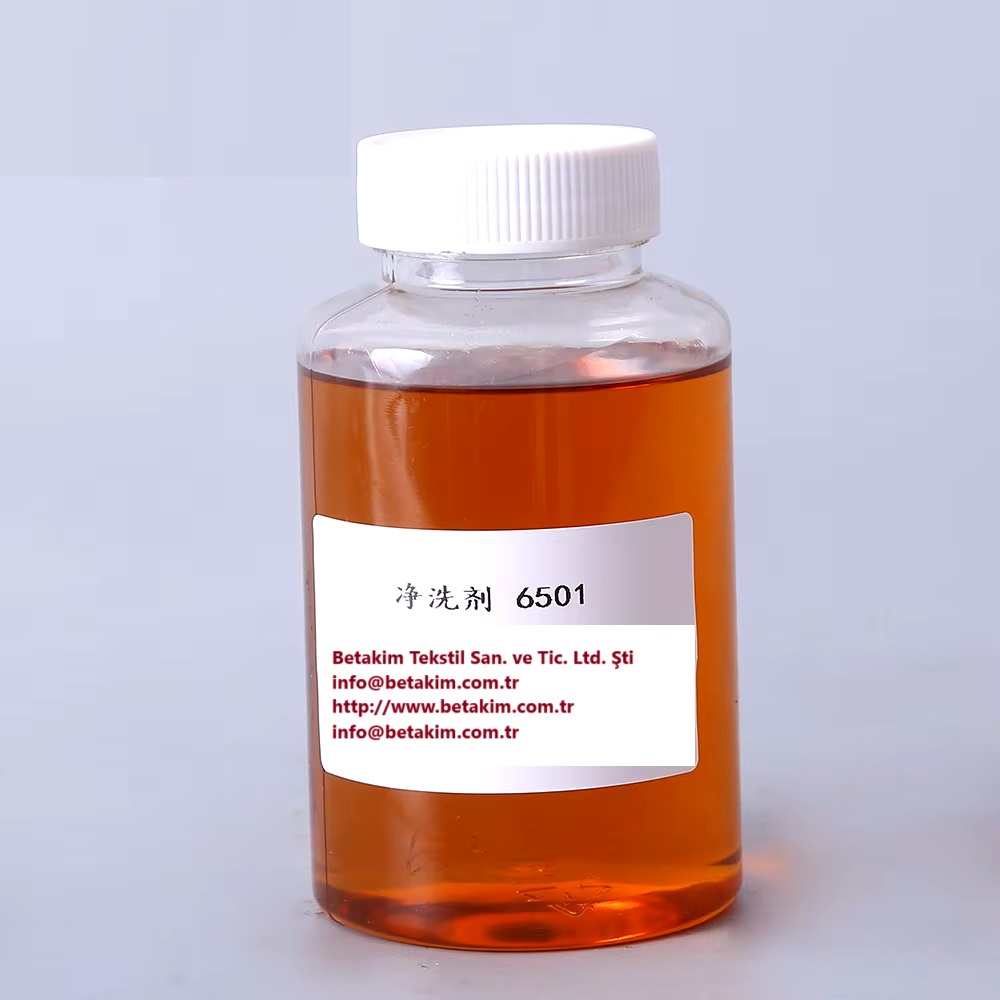
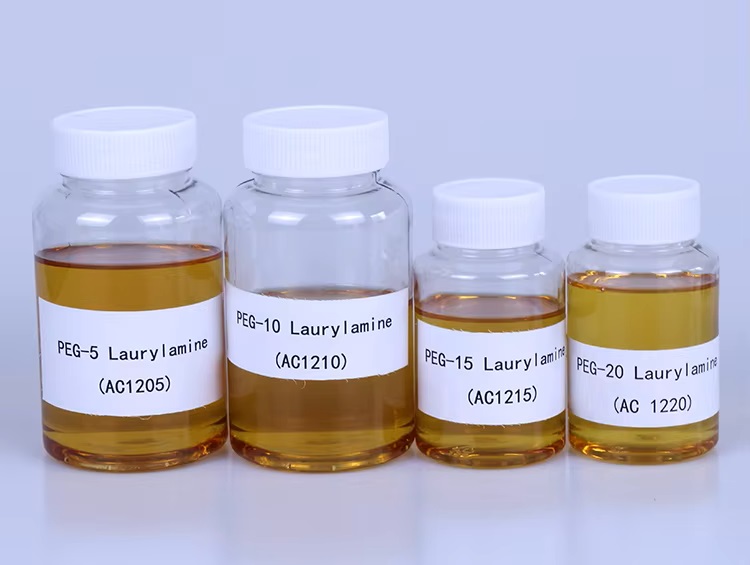
Appearance: Colorless to pale yellow liquid
-
UN Number: Not classified as hazardous for transport (typically)
2. Raw Material Composition
This product is an ethoxylated derivative of oleylamine:
| Component | Description |
|---|---|
| Hydrophobic tail | Oleylamine (C18:1 unsaturated fatty amine) |
| Hydrophilic head | Polyethylene glycol chain (5 ethylene oxide units average) |
| Ethoxylation degree | Approximately 5 EO units (PEG-5) |
Oleylamine source: Derived from oleic acid (vegetable oil source, typically olive or sunflower oil)
3. Physical Properties
3.1 General Physical Properties
| Property | Value |
|---|---|
| Appearance | Colorless to pale yellow liquid |
| Physical state (20°C) | Liquid (viscous) |
| Odor | Mild, characteristic amine odor |
| Density (20°C) | ~0.94 g/cm³ (0.93–0.95) |
| Viscosity (25°C) | Moderate to high (depends on EO content) |
| Melting point | <0°C (remains liquid) |
| Flash point | >100°C (closed cup) – combustible |
| Vapor pressure | Negligible |
| HLB (Hydrophilic-Lipophilic Balance) | ~11–13 (depending on EO distribution) |
3.2 Solubility
| Solvent | Solubility |
|---|---|
| Water | Soluble (forms clear to hazy solutions) |
| Alcohols (ethanol, isopropanol) | Soluble |
| Glycols | Soluble |
| Oils (mineral oil, vegetable oils) | Soluble / miscible |
| Organic solvents (acetone, toluene) | Soluble |
| Aliphatic hydrocarbons | Partially soluble |
| Aromatic hydrocarbons | Soluble |
3.3 Solution Properties
| Parameter | Value |
|---|---|
| pH (1% aqueous solution) | 8.0–10.5 (weakly alkaline) |
| Surface tension (0.1% solution) | ~30–35 mN/m |
| Cloud point | Typically >60°C (depends on EO content) |
| CMC (Critical Micelle Concentration) | ~0.01–0.1 g/L (typical for ethoxylated amines) |
3.4 pH-Dependent Properties
| pH Range | Behavior |
|---|---|
| pH < 5 (acidic) | Partially protonated (cationic surfactant) |
| pH 5–9 (neutral) | Predominantly non-ionic (stable) |
| pH > 9 (alkaline) | Non-ionic (stable) |
4. Chemical Properties
4.1 Molecular Structure
Structure: C₁₈H₃₅–NH–(CH₂CH₂O)₅H
Where:
-
C₁₈H₃₅ = Oleyl chain (unsaturated C18:1)
-
NH = Secondary amine linkage
-
(CH₂CH₂O)₅ = Polyethylene glycol chain (5 EO units average)
Key features:
-
Hydrophobic oleyl tail (unsaturated – provides flexibility)
-
Hydrophilic PEG head (5 EO units – provides water solubility)
-
Secondary amine group (pH-responsive behavior)
4.2 Ethoxylation Degree (PEG Chain Length)
| Property | PEG-5 Oleamine (this product) | Higher EO (PEG-10, PEG-20) | Lower EO (PEG-2) |
|---|---|---|---|
| Water solubility | Soluble | Highly soluble | Dispersible |
| HLB | ~11–13 | 14–17 | 8–10 |
| Viscosity | Moderate | Higher | Lower |
| Primary use | Emulsifier, dispersant | Solubilizer | W/O emulsifier |
4.3 Chemical Reactivity
| Reaction Type | Description |
|---|---|
| Acid neutralization | Forms amine salts with mineral and organic acids |
| Quaternization | With alkylating agents → quaternary ammonium compounds |
| Esterification | Can react with fatty acids |
| Oxidation | Unsaturated oleyl chain may oxidize slowly in air |
4.4 Stability
| Parameter | Behavior |
|---|---|
| Thermal stability | Stable up to 50°C; decomposes at >150°C |
| Hydrolytic stability | Stable in neutral and alkaline conditions |
| Oxidative stability | Moderate (contains unsaturated C18:1 chain – may oxidize) |
| Light stability | Stable (store in opaque containers for long-term) |
| pH stability | Stable at pH 4–10 |
4.5 Incompatibilities
-
Strong oxidizing agents (may cause oxidation of unsaturated chain)
-
Strong acids (protonation; may cause viscosity changes)
-
Strong reducing agents
5. Production Method
5.1 Synthesis Route
Reaction: Oleylamine + 5 C₂H₄O → C₁₈H₃₅–NH–(CH₂CH₂O)₅H
Process:
-
Oleylamine (derived from oleic acid) is charged to reactor
-
Ethylene oxide (5 moles per mole of oleylamine) is added under pressure (2–5 bar)
-
Reaction temperature: 120–180°C
-
Alkaline catalyst (KOH or NaOH) used to initiate reaction
-
Product is neutralized, filtered, and packaged
Typical yield: >95%
Ethoxylation degree: Approximately 5 EO units (average)
6. Quality Specifications
6.1 Typical Specifications (Commercial Grade)
| Parameter | Specification | Test Method |
|---|---|---|
| Appearance | Colorless to pale yellow liquid | Visual |
| Odor | Mild amine odor | Organoleptic |
| Active content | ≥ 99% (non-volatile) | Gravimetric |
| pH (1% aqueous solution) | 8.0–10.5 | pH meter |
| Density (20°C) | 0.93–0.95 g/cm³ | Hydrometer |
| Viscosity (25°C) | 100–300 cP (typical) | Brookfield |
| Water content (K. Fischer) | ≤ 0.5% | Karl Fischer |
| Amine value | 70–90 mg KOH/g | Titration |
| HLB | 11–13 | Calculated |
| Cloud point (1% aqueous) | >60°C | Visual |
| Color (APHA) | ≤ 200 | Visual |
6.2 Typical Specifications (Refined / Cosmetic Grade)
| Parameter | Specification |
|---|---|
| Purity | ≥ 99.5% |
| Residual ethylene oxide | ≤ 1 ppm |
| Residual 1,4-dioxane | ≤ 5 ppm |
| Heavy metals (as Pb) | ≤ 10 ppm |
| Amine value | 75–85 mg KOH/g |
| Free oleylamine | ≤ 1% |
7. Mechanism of Action (Surfactant)
7.1 Surface Activity
| Mechanism | Description |
|---|---|
| Hydrophobic tail | Oleyl chain (C18:1) provides oil solubility and surface activity |
| Hydrophilic head | PEG chain (5 EO) provides water solubility |
| Secondary amine | Provides pH-responsive behavior and emulsification properties |
| Reduces surface tension | Effective wetting and emulsifying agent |
7.2 Emulsification Properties
| Emulsion Type | Suitability |
|---|---|
| Oil-in-water (O/W) | Excellent |
| Water-in-oil (W/O) | Moderate |
| Microemulsions | Good |
7.3 Dispersant Properties
-
Stabilizes pigments and particles in aqueous systems
-
Precludes agglomeration and settling
8. Industrial Applications
8.1 Emulsifier (Primary Application)
| Application | Function | Typical Concentration |
|---|---|---|
| Emulsion polymerization | Emulsifier, stabilizer | 1–5% |
| Agricultural emulsions | Pesticide emulsifier | 1–10% |
| Metalworking fluids | Emulsifier, corrosion inhibitor | 1–10% |
| Paints and coatings | Pigment dispersant, emulsifier | 0.5–5% |
8.2 Textile Industry
| Application | Function |
|---|---|
| Fiber lubricant | Reduces friction during processing |
| Antistatic agent | Reduces static charge on synthetic fibers |
| Knitting oils | Emulsifier, lubricant |
| Dyeing auxiliaries | Leveling agent, dispersant |
| Scouring agent | Removes natural impurities |
8.3 Industrial Cleaners and Detergents
| Application | Function | Typical Concentration |
|---|---|---|
| Industrial degreasers | Surfactant, emulsifier | 1–10% |
| Metal cleaning | Wetting agent, corrosion inhibitor | 0.5–5% |
| Hard surface cleaners | Wetting, soil suspension | 0.5–3% |
8.4 Personal Care and Cosmetics
| Application | Function | Typical Concentration |
|---|---|---|
| Hair conditioners | Antistatic agent, conditioner | 0.5–2% |
| Creams and lotions | Emulsifier, solubilizer | 1–3% |
| Shampoos | Foam booster, mild surfactant | 0.5–2% |
| Makeup removers | Emulsifier, solubilizer | 1–5% |
8.5 Agricultural Formulations
| Application | Function |
|---|---|
| Pesticide emulsifier | Stabilizes pesticide emulsions |
| Adjuvant | Improves wetting and penetration |
| Herbicide adjuvant | Enhances uptake of water-soluble compounds |
8.6 Oil and Gas Industry
| Application | Function |
|---|---|
| Corrosion inhibitor | Forms protective film on metal surfaces |
| Emulsifier | Oil-in-water emulsions for enhanced oil recovery |
| Foaming agent | Foam drilling fluids |
8.7 Paints, Coatings, and Inks
| Application | Function |
|---|---|
| Pigment dispersant | Stabilizes pigment suspensions |
| Wetting agent | Improves substrate wetting |
| Leveling agent | Improves flow and leveling |
| Antifoam (at high concentrations) | Reduces foam in formulations |
8.8 Paper Industry
| Application | Function |
|---|---|
| De-inking aid | Helps remove ink from recycled paper |
| Coating additive | Improves coating properties |
8.9 Plastic and Polymer Industry
| Application | Function |
|---|---|
| Internal lubricant | Improves melt flow |
| Antistatic agent | Reduces surface resistivity |
| Dispersant for fillers | Improves dispersion |
9. Comparison with Other Ethoxylated Amines
| Property | PEG-5 Oleamine | PEG-5 Cocoamine | PEG-5 Tallowamine | PEG-5 Stearylamine |
|---|---|---|---|---|
| Chain type | C18:1 (unsaturated) | C12-14 (saturated) | C16-18 (saturated) | C18 (saturated) |
| Form at 20°C | Liquid | Liquid | Paste/solid | Solid |
| Water solubility | Soluble | Soluble | Soluble | Dispersible |
| HLB | ~11–13 | ~11–12 | ~11–12 | ~10–11 |
| Unsaturation | Yes | No | No | No |
| Oxidation sensitivity | Moderate | Low | Low | Low |
| Primary use | Emulsifier | Detergents | Industrial | Textile |
10. Toxicology and Safety
10.1 Acute Toxicity
| Parameter | Value |
|---|---|
| Oral LD₅₀ (rat) | >2,000 mg/kg (low to moderate toxicity) |
| Dermal LD₅₀ (rabbit) | >2,000 mg/kg |
| Skin irritation | Mild irritant (may cause mild irritation) |
| Eye irritation | Mild to moderate irritant |
| Skin sensitization | Generally non-sensitizer |
| Inhalation | Not expected to be hazardous (low vapor pressure) |
10.2 Special Concerns
| Concern | Information |
|---|---|
| Residual ethylene oxide | Trace amounts may be present; refined grades have ≤1 ppm |
| Residual 1,4-dioxane | Trace amounts possible; cosmetic grades are purified |
| Biodegradability | Readily biodegradable |
| Aquatic toxicity | Moderate (avoid environmental release) |
10.3 GHS Classification (Typical)
| Classification | Category |
|---|---|
| Signal word | None (not classified as hazardous for most grades) |
| Hazard statements | None (for pure product) |
| Precautionary statements | P264, P280, P302+P352, P305+P351+P338, P332+P313, P337+P313 |
11. Safety Precautions and PPE
-
Hazards:
-
Mild skin and eye irritant
-
May cause mild respiratory irritation if heated
-
Avoid environmental release (aquatic toxicity)
-
-
PPE (recommended):
-
Chemical-resistant gloves (nitrile)
-
Safety glasses (EN 166)
-
Protective clothing (for industrial handling)
-
-
First aid:
-
Eye contact: Rinse with water for 15 minutes; seek medical attention if irritation persists
-
Skin contact: Wash with soap and water
-
Inhalation: Move to fresh air
-
Ingestion: Rinse mouth; do NOT induce vomiting; drink water; seek medical attention if large amount swallowed
-
12. Environmental Fate
| Parameter | Value |
|---|---|
| Biodegradability | Readily biodegradable (OECD 301) |
| Aquatic toxicity (fish, LC₅₀, 96 hours) | 1–10 mg/L (moderate) |
| Daphnia magna (EC₅₀, 48 hours) | 1–10 mg/L |
| Algae (EC₅₀, 72 hours) | 1–10 mg/L |
| Bioaccumulation | Low potential |
13. Storage and Handling
13.1 Handling Precautions
| Parameter | Recommendation |
|---|---|
| Ventilation | Adequate ventilation |
| Personal hygiene | Wash hands after handling |
| Spill response | Absorb with inert material; collect in sealed containers |
13.2 Storage Conditions
| Parameter | Requirement |
|---|---|
| Temperature | 5–40°C (room temperature) |
| Container | Keep tightly closed in original container (HDPE, stainless steel) |
| Protect from | Extreme heat, strong oxidizing agents, prolonged air exposure (oxidation) |
| Environment | Cool, dry, well-ventilated area |
| Shelf life (sealed) | 24 months |
| Shelf life (opened) | 12 months (if protected from contamination) |
Degradation indicators:
-
Color darkening (yellow to brown – oxidation)
-
Viscosity change
-
Acid value increase
14. Transport Information
| Regulation | Classification |
|---|---|
| UN Number | Not regulated |
| ADR/RID | Not classified as dangerous goods |
| IMDG | Not regulated |
| IATA | Not regulated |
| Proper shipping name | Polyethylene glycol oleylamine ether (non-hazardous) |
15. Synonyms and Common Names
-
English: Polyethylene Glycol Oleylamine Ether, PEG-5 Oleamine, Polyoxyethylene Oleylamine Ether, Oleylamine Ethoxylate, Ethoxylated Oleylamine, PEG Oleylamine
-
Trade names: Lutensol FA series (BASF), Ethomeen O series, Noramox O series, Trymeen O series
-
BASF products: Quadrol® L, Lutensol® FA 12 K, Plurafac® LF 1430 (similar amine alkoxylates)
-
French: Éther d'oléylamine de polyéthylène glycol
-
German: Polyethylenglykol-Oleylaminether
-
Spanish: Éter de oleilamina de polietilenglicol
-
Turkish: Polietilen Glikol Oleilamin Eter, PEG-5 Oleamin
16. Regulatory Status
| Regulation | Status |
|---|---|
| REACH (EU) | Registered |
| TSCA (US) | Listed |
| EINECS | Registered (for components) |
| RoHS | Compliant |
| FDA | Permitted for certain indirect food contact applications |
17. Why Choose PEG-5 Oleamine?
| Advantage | Description |
|---|---|
| Excellent emulsifier | Forms stable oil-in-water emulsions |
| Good wetting agent | Reduces surface tension effectively |
| pH-responsive | Behaves as non-ionic at neutral/alkaline pH, cationic at low pH |
| Unsaturated chain | Provides flexibility and good solubility in various oils |
| Good compatibility | Compatible with anionic, cationic, non-ionic, and amphoteric surfactants |
| Biodegradable | Environmentally friendly |
| Low toxicity | Safe for industrial and limited personal care applications |
| Liquid at room temperature | Easy to handle and incorporate |
| Versatile | Multiple applications across industries |
Limitations:
-
Oxidation sensitivity – Unsaturated oleyl chain may oxidize over time; store under inert atmosphere or with antioxidant for long-term stability
-
May darken with age – Color may darken upon prolonged storage
-
Moderate aquatic toxicity – Avoid environmental release
-
May cause mild irritation – At high concentrations
18. BASF Equivalent Products (Amine Alkoxylates)
| BASF Product | Description | Viscosity (23°C) | Application |
|---|---|---|---|
| Quadrol® L | Ethylene diamine + 4 PO | ~75,000 cP | Curing agent, emulsifier |
| Lutensol® FA 12 K | C12-C14-amine ethoxylate | >100 cP / ~190 cP (23°C) | Detergents, cleaners |
| Plurafac® LF 1430 | Amine alkoxylate | ~36 cP (E) / ~450 cP (approx. 19) | Low-foaming surfactant |
Note: These BASF products are related amine alkoxylates but differ in amine type and alkoxylation degree.
19. Storage Stability – Oxidation Prevention
Due to the unsaturated C18:1 oleyl chain, PEG-5 Oleamine is moderately susceptible to oxidation:
| Condition | Effect | Prevention |
|---|---|---|
| Prolonged air exposure | Color darkening (yellow to brown), viscosity increase | Store under nitrogen blanket |
| High temperature (>40°C) | Accelerated oxidation | Store at 5–30°C |
| Light exposure | May accelerate color change | Store in opaque containers |
| Metal contamination (Fe, Cu) | Catalyzes oxidation | Use stainless steel or HDPE equipment |
Antioxidant addition (for long-term storage):
Add 0.05–0.1% BHT (butylated hydroxytoluene) or tocopherol (vitamin E) to inhibit oxidation.
20. Summary Table – Key Specifications at a Glance
| Parameter | Value |
|---|---|
| Product Name | Polyethylene Glycol Oleylamine Ether (PEG-5 Oleamine) |
| CAS Number | 26635-93-8 |
| Molecular Formula | C₂₂H₄₅NO₄ (representative) |
| Molecular Weight | ~387.60 g/mol |
| Appearance | Colorless to pale yellow liquid |
| Density (20°C) | ~0.94 g/cm³ |
| Viscosity (25°C) | 100–300 cP |
| pH (1% solution) | 8.0–10.5 |
| HLB | ~11–13 |
| Water Solubility | Soluble |
| Flash Point | >100°C |
| Cloud Point (1%) | >60°C |
| Ethoxylation Degree | ~5 EO |
| Chain Type | Oleyl (C18:1 unsaturated) |
| Primary Applications | Emulsifier, dispersant, wetting agent, textile auxiliary, industrial cleaner |
| Biodegradability | Readily biodegradable |
| GHS Signal Word | None (non-hazardous for most grades) |
This TDS is prepared in compliance with ISO 11014-1 format and is intended for emulsion formulators, textile chemists, industrial cleaner formulators, agricultural chemical formulators, and procurement professionals. Certificates of Analysis (CoA), Safety Data Sheets (SDS), and sample validation reports are available upon request.