Tara Gum, Tara Powder, Caesalpinia Spinosa, E417, 39300-88-4
TARA POWDER (TARA GUM)
CHEMICAL PROFILE AND IDENTIFICATION
| Parameter |
Information |
| Product Name |
Tara Powder, Tara Gum |
| Botanical Source |
Caesalpinia spinosa (Tara tree) |
| Other Names |
Peruvian Carob, Spiny Holdback, Tara Gum, E417 |
| CAS Number |
39300-88-4 |
| E Number |
E417 (Food additive) |
| Chemical Formula |
C₇₅H₅₂O₄₆ |
| Molecular Weight |
1688 g/mol |
| Appearance |
Light beige to light brown, fine and homogeneous powder |
| Odor |
Slightly characteristic, earthy |
| Tannin Type |
Pyrogallol group (contains small amounts of catechol derivatives) |
| Ionic Character |
Anionic |
SECTION 1: PHYSICAL AND CHEMICAL PROPERTIES
| Property |
Value |
| Molecular Formula |
C₇₅H₅₂O₄₆ |
| Molecular Weight |
1688 g/mol |
| Appearance |
Light beige to light brown, fine and homogeneous powder |
| Odor |
Slightly characteristic, earthy |
| Tannin Content |
56% ± 4 |
| Active Content |
93.5% |
| Moisture Content |
6-8% |
| Insoluble Matter |
5-15% |
| pH (solution) |
3.0 - 5.0 |
| Density |
0.6-0.8 g/cm³ |
| Tannin Type |
Pyrogallol group (hydrolyzable) |
| Ionic Character |
Anionic |
| Shelf Life |
24 months (under proper storage) |
| Solubility |
Soluble in water (moderate in cold, high in hot) |
| Particle Size |
Fine powder (>200 mesh) |
| Color Property |
Contains no coloring agents |
SECTION 2: BOTANICAL ORIGIN AND HARVESTING
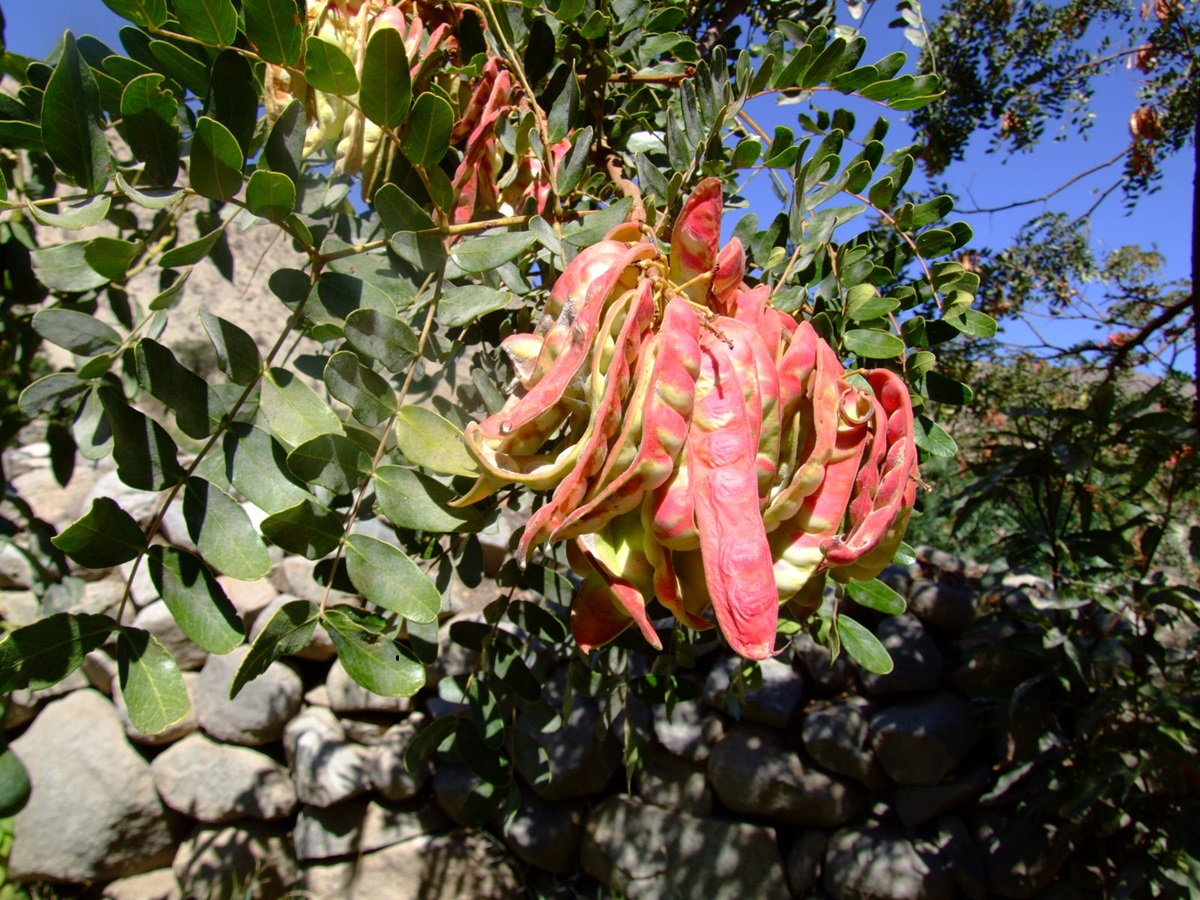
2.1 Plant Profile
| Parameter |
Information |
| Scientific Name |
Caesalpinia spinosa (Syn. Caesalpinia tinctoria) |
| Common Name |
Tara tree, Peruvian Carob, Spiny Holdback |
| Family |
Fabaceae (Legume family) |
| Origin |
Peruvian Andes (especially Cajamarca, La Libertad, Ancash) |
| Growing Conditions |
Dry and semi-arid regions, 1500-3000 m altitude |
| Tree Type |
Dwarf tree or shrub (5-8 meters) |
| Pod Tannin Content |
43-51% |
| Flowering |
Seasonal (dependent on rainfall period) |
| Yield |
~5-10 kg dry pods per mature tree |
2.2 Harvesting and Processing
| Stage |
Description |
| Harvest Period |
April (according to local calendar) |
| Harvest Method |
Hand-picked without damaging the trees |
| Drying |
Natural sun drying (3-5 days) |
| Pod Shelling |
Mechanical pod shelling process |
| Grinding |
Mechanical grinding to fine powder |
| Sieving |
Sieving for homogeneous particle size (>200 mesh) |
| Quality Control |
Tannin content, moisture, insoluble matter analysis |
| Packaging |
25 kg laminated polypropylene bags |
| Sustainability |
Planted as erosion control, biodegradable, contributes to local economy |
SECTION 3: CHEMICAL COMPOSITION AND TANNIN TYPES
3.1 Chemical Composition
| Component |
Percentage / Value |
| Total Tannins |
56% ± 4 |
| Hydrolyzable Tannins |
Main component |
| Gallotannins |
93.5% (active substance) |
| Pyrogallol Group |
Main tannin type |
| Catechol Derivatives |
Small amounts |
| Moisture |
6-8% |
| Insoluble Matter |
5-15% |
| Coloring Agents |
None |
| Mineral Matter (Ash) |
Low amount (1-2%) |
| Proteins |
Trace amounts |
| Sugars |
Trace amounts |
3.2 Tannin Types
| Tannin Type |
Property |
Example |
| Hydrolyzable Tannins |
Hydrolyzed by acids or enzymes |
Gallotannins, ellagitannins |
| Condensed Tannins |
Polymerized by acids |
Catechins, procyanidins |
| Tara Tannin |
Predominantly hydrolyzable |
Pyrogallol group |
3.3 Tannin Activity
| Parameter |
Value |
| Tannin Content (Hydrolysis) |
High |
| Light Fastness |
Excellent |
| Color Change |
Minimal |
| Metal Complexation |
High (especially with iron) |
| Protein Binding |
High |
SECTION 4: APPLICATIONS
4.1 Leather Industry (Most Common Use - 60-70%)
Tanning and Retanning Applications
| Application |
Description |
| Vegetable Tanning |
Used as primary tanning agent |
| Retanning |
Used in retanning of chrome leathers |
| Combined Tanning |
Chrome and vegetable tanning combination |
| Imparted Properties |
Brightness, fullness, softness, elongation resistance |
| Light Fastness |
High, minimal color change |
| Fullness |
Imparts superior fullness to leather |
| Porosity |
Maintains leather breathability |
Usage Rates
| Leather Type |
Rate |
Basis |
Description |
| Bovine Leather - Upper |
3-8% |
Shaved weight |
Standard retanning |
| Bovine Leather - Upholstery |
5-10% |
Shaved weight |
High fullness |
| Goat Leather |
2-3% |
Shaved weight |
For softness |
| Calf Leather |
2-3% |
Shaved weight |
For softness |
| Deep Black Shades |
20% WOF + 1% |
Leather weight |
With iron sulfate mordant |
| Light Colored Leathers |
2-5% |
Shaved weight |
Lightening property |
Tanning Parameters
| Parameter |
Value |
| pH Range |
3.0-5.0 |
| Temperature |
25-35°C |
| Duration |
2-6 hours (process dependent) |
| Penetration Time |
15-30 minutes |
| Fixation Time |
60-120 minutes |
Special Notes
| Note |
Description |
| Iron Salt Sensitivity |
Forms dark complexes with iron |
| Stain Prevention |
Sequestering agent recommended to prevent staining |
| Light Colored Leathers |
Ideal due to colorless nature |
| Light Fastness |
High light fastness, excellent color stability |
| Fullness Effect |
Medium to high fullness |
4.2 Textile Industry
| Application |
Description |
| Natural Dyeing |
Production of black and grey shades |
| Mordant Use |
Fixes dyes to fibers |
| Fastness Improvement |
Improves light and washing fastness |
| Fiber Compatibility |
Better performance on cellulose fibers than protein fibers |
| Dye Fixation |
Effective in fixing natural dyes |
Usage Rates
| Application |
Rate |
Notes |
| General Fastness Improvement |
5-10% WOF |
Standard application |
| Deep Black Shades |
15-20% WOF + 1% |
With iron mordant |
| Grey Shades |
5-15% WOF |
With iron mordant |
| Hot Dyeing |
Recommended |
Not suitable for cold dyeing |
| Dyeing Temperature |
60-100°C |
Requires hot dyeing |
Dyeing Results
| Parameter |
Value |
| Light Fastness (Black) |
4-5 (on 1-8 scale) |
| Washing Fastness |
4-5 (on 1-5 scale) |
| Color Depth |
High |
| Color Evenness |
Good |
4.3 Food and Beverage Industry
| Application |
Description |
| Tannic Acid Production |
Used as primary raw material |
| Wine Production |
Clarification, stabilization and color fixing |
| Beer Production |
Clarification additive |
| Fruit Juice |
Cloudiness removal |
| E Number |
E417 (as food additive) |
| Usage Form |
Not directly as powder, as extract |
| Clarification Mechanism |
Binds and precipitates proteins and polyphenols |
4.4 Pharmaceutical and Cosmetic Industry
| Application |
Description |
| Gallic Acid Production |
Used as pharmaceutical raw material |
| Antioxidant Property |
In cosmetic formulations |
| Anti-inflammatory |
Under research (topical applications) |
| Antimicrobial |
Potential as natural preservative |
| Usage Form |
Not as direct powder, as extract form |
| Wound Healing |
Wound healing properties under research |
| Skin Care |
Astringent and tonic properties |
4.5 Paper Industry
| Application |
Description |
| Paper Processing |
As natural tannin source |
| Sizing |
Controls paper water permeability |
| Durability Enhancement |
Imparts natural processability to paper |
| Usage Rate |
Process dependent, generally in mixture with other extracts |
4.6 Agriculture and Soil Management
| Application |
Description |
| Organic Fertilizer |
Enriches soil, increases microbial activity |
| Water Holding Capacity |
Increases soil water holding capacity |
| Sustainable Agriculture |
Alternative to synthetic chemicals |
| Soil Rehabilitation |
Erosion control and soil improvement |
| Organic Matter |
Adds organic matter to soil |
4.7 Water Treatment
| Application |
Description |
| Coagulant |
As natural coagulant |
| Heavy Metal Binding |
Capacity to bind heavy metals |
| Wastewater Treatment |
Treatment of industrial wastewater |
| Natural Treatment |
Alternative to chemical coagulants |
4.8 Adhesive Industry
| Application |
Description |
| Natural Adhesives |
Tannin-based adhesive formulations |
| Wood Adhesive |
In wood panel production |
| Coating |
Surface coating applications |
4.9 Ceramics and Glass
| Application |
Description |
| Ceramic Decoration |
As colorant |
| Glass Production |
In glass formulations |
SECTION 5: SECTORAL COMPLIANCE TABLE
| Sector |
Suitability Level |
Usage Rates |
Special Notes |
| Leather |
Very High |
2-10% (bovine), 2-3% (goat/calf) |
Most common application |
| Textile |
High |
5-10% WOF, 15-20% WOF + mordant |
More effective on cellulose fibers |
| Food |
Medium |
Via extraction |
As E417 |
| Pharmaceutical |
Medium |
Extract form |
Gallic acid production |
| Cosmetics |
Medium |
Extract form |
Antioxidant property |
| Paper |
Low-Medium |
Process dependent |
In mixture with other extracts |
| Agriculture |
High |
Variable |
Organic fertilizer |
| Water Treatment |
Medium |
Variable |
Natural coagulant |
| Adhesive |
Low-Medium |
Variable |
Research stage |
SECTION 6: ADVANTAGES AND DISADVANTAGES
Advantages
| Advantage |
Description |
| Natural and Biodegradable |
Environmentally friendly, sustainable resource |
| High Tannin Content |
56% ±4 active substance, 93.5% active content |
| Colorless |
No coloring agents, ideal for light colored leathers |
| Light Fastness |
High, minimal color change |
| Leather Brightness |
Superior surface brightness and fullness |
| Softness |
Imparts natural softness to leather |
| Versatile |
Potential use in 9 different sectors |
| Local Economy |
Income source for local communities |
| Sustainable |
Planted as erosion control |
| Low pH |
Suitable for processes requiring acidic environment |
| Fast Penetration |
Rapid penetration into leather |
| Good Fixation |
Good binding to leather |
Disadvantages
| Disadvantage |
Description |
| Iron Salt Sensitivity |
Stain risk, requires sequestering agent |
| Not Suitable for Cold Dyeing |
Requires hot dyeing |
| Lower Effect on Protein Fibers |
Less effective than on cellulose fibers |
| Low pH |
May require balancing in some processes |
| Moisture Control |
Moisture content must be controlled during storage |
| Natural Variation |
Minor variations between batches possible |
| Iron Complexation |
Caution with iron-containing equipment |
| Caking |
Caking may occur in high humidity |
SECTION 7: STORAGE AND SHELF LIFE
| Parameter |
Information |
| Storage Temperature |
15-25°C (cool) |
| Storage Conditions |
Dry, well-ventilated area |
| Container Requirements |
Tightly closed, original packaging |
| Materials to Protect From |
Moisture, direct sunlight, excessive heat |
| Shelf Life |
24 months (in unopened original packaging under proper storage) |
| Packaging |
25 kg laminated polypropylene bags |
| Moisture Control |
Maintain at 6-8% |
| Caking Prevention |
Store in moisture-free environment |
SECTION 8: CRITICAL WARNINGS
| Warning |
Description |
| Iron Salt Sensitivity |
Forms dark complexes with iron; sequestering agent recommended |
| Hot Dyeing |
Not suitable for cold dyeing; requires hot dyeing |
| Low pH |
pH 3.0-5.0; may require balancing in some processes |
| Natural Product |
Minor variations between batches; quality control important |
| Moisture Sensitivity |
Caking may occur in high humidity; store in dry conditions |
| Iron Equipment |
Risk of staining with iron-containing equipment; prefer stainless steel or plastic equipment |
| Light Fastness |
Provides high light fastness; slight fading may occur with prolonged UV exposure |
| Sequestering Agent |
Important to prevent iron stains |
| Dosage Control |
Overuse may cause hardening of leather; follow dosage recommendations |
SECTION 9: SUMMARY AND CRITICAL INFORMATION
SUMMARY
Tara Powder (Caesalpinia spinosa) is a natural, biodegradable, high-tannin product obtained from the pods of a tree native to the Peruvian Andes. Its most common application is in the leather industry, where it imparts brightness, fullness, softness, and high light fastness to leather.
Key Properties
| Property |
Value |
| Appearance |
Light beige to light brown powder |
| Tannin Content |
56% ± 4 |
| Active Content |
93.5% |
| pH |
3.0 - 5.0 |
| Moisture |
6-8% |
| Shelf Life |
24 months |
| Ionic Character |
Anionic |
Main Application Areas
| Sector |
Application |
| Leather Industry |
Tanning, retanning, vegetable tanning |
| Textile Industry |
Natural dyeing, mordant, fastness improvement |
| Food Industry |
Tannic acid production, wine and beer clarification |
| Pharmaceutical and Cosmetics |
Gallic acid production, antioxidant properties |
| Agriculture |
Organic fertilizer, soil conditioner |
Critical Warnings
| Warning |
Description |
| Iron Sensitivity |
Risk of staining with iron salts; use sequestering agent |
| Hot Dyeing |
Not suitable for cold dyeing |
| Low pH |
May require balancing |
| Natural Variation |
Quality control important |
| Moisture Control |
Store in dry conditions |
LEGAL DISCLAIMER
The information provided in this document is based on our current knowledge and experience and is presented in good faith; however, as all conditions of use are beyond our control, it does not constitute a binding specification or warranty. This Technical Data Sheet is for informational purposes only. Users are responsible for testing the suitability for their own applications. For complete safety, storage, use, handling, disposal, and regulatory compliance information, please refer to the official Safety Data Sheet (SDS/MSDS) provided by the manufacturer/supplier.
, Tanning and Re-tanning.jpg)
