We unleash your business potential by maximize the business innovation.
Send EmailNonyl Phenol Ethoxylate, NPEO, NPE, 68412-54-4
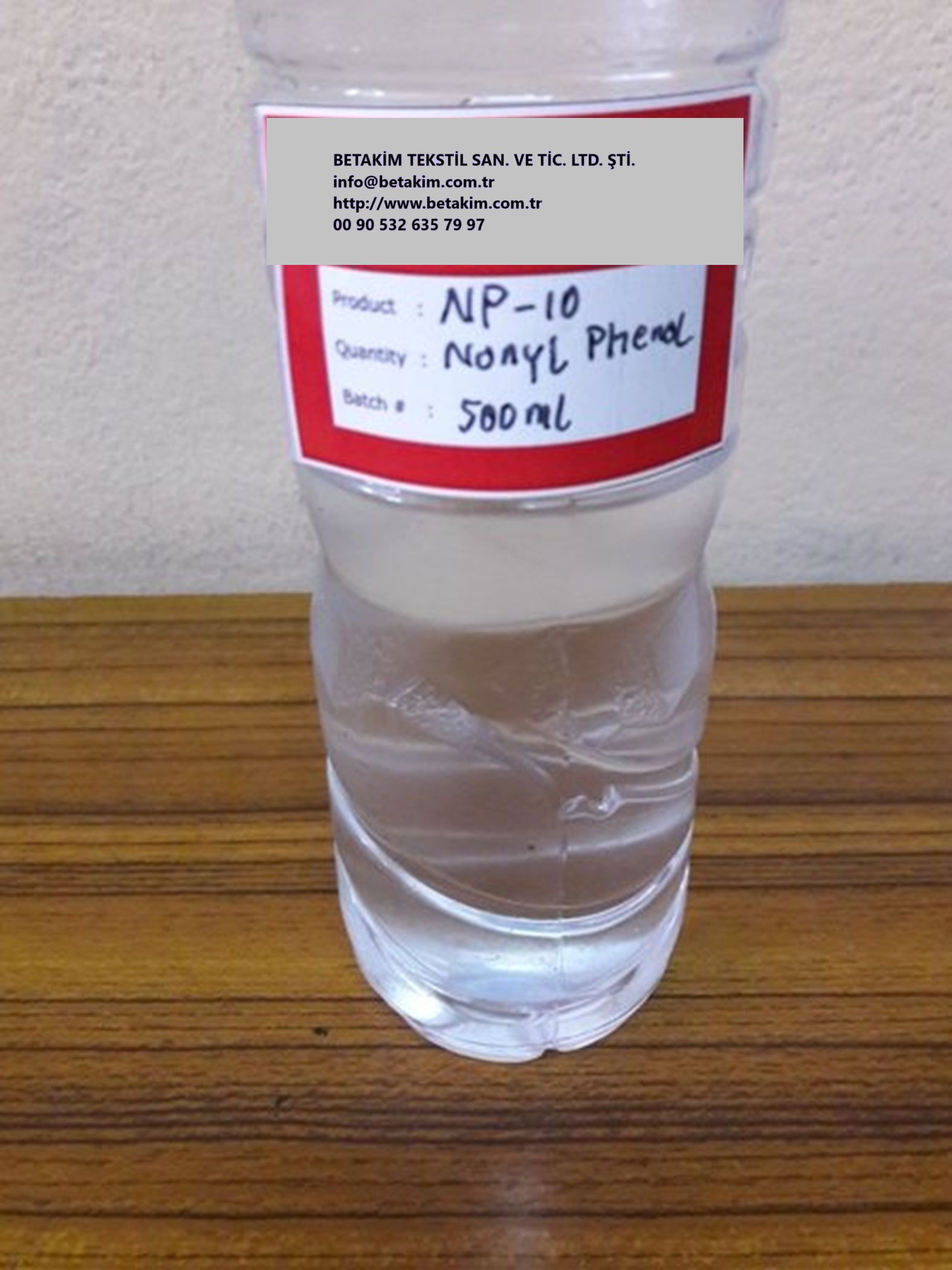
NONYLPHENOL ETHOXYLATE (NPE)
1. Chemical Identity and Material Classification
-
Chemical Name: Polyethylene glycol mono(branched nonylphenyl) ether; Nonylphenol ethoxylate (branched)
-
Synonyms: NPEO, NPE, Nonoxynol (with varying EO numbers e.g., Nonoxynol-4, -9, -12), Octoxynol-9, Triton N-101, Igepal CO series, Tergitol NP series, Surfonic N series
-
CAS Number: 68412-54-4
-
EC Number (EINECS): 500-209-1
-
General Molecular Formula: C₁₅H₂₄O.(C₂H₄O)ₙ (where n = average number of ethylene oxide units)
-
Chemical Class: Non-ionic surfactant (ethoxylated alkylphenol)
-
UN Number: 3082 (Environmentally hazardous substance, liquid, n.o.s.)
2. Available Grades and EO Content
| Grade | EO Moles | HLB | Form at 20°C | Cloud Point (°C) | Primary Application |
|---|---|---|---|---|---|
| Nonoxynol-4 (NP-4) | 4 | ~8-9 | Liquid | <20°C | Oil-soluble emulsifier, degreaser |
| Nonoxynol-6 (NP-6) | 6 | ~11 | Liquid | ~30-40°C | Detergents, emulsifiers |
| Nonoxynol-9 (NP-9) | 9 | ~13 | Liquid/Paste | 50-60°C | General-purpose detergent |
| Nonoxynol-12 (NP-12) | 12 | ~15 | Paste/Solid | 80-90°C | High HLB emulsifier |
| Nonoxynol-30 (NP-30) | 30 | ~17 | Solid | >100°C | Solubilizer, emulsifier |
| Nonoxynol-40 (NP-40) | 40 | ~18 | Solid | >100°C | Emulsifier |
3. Physical Properties
3.1 General Physical Properties (Typical for NP-9)
| Property | Value |
|---|---|
| Appearance | Colorless to pale yellow clear to hazy liquid |
| Physical state (20°C) | Liquid (lower EO); Paste / Solid (higher EO) |
| Odor | Mild aromatic odor |
| Density (25°C) | 1.053 g/mL |
| Molecular weight | ~617 (NP-9); varies by EO content |
| Melting point | 46-47°C (lit.) |
| Boiling point | 250°C (lit.) |
| Flash point | >94°C – combustible |
| pH (1% aqueous solution) | 5-8 (neutral to slightly alkaline) |
| Refractive index (nD20) | 1.508 |
| Vapor pressure | 0.043 Pa at 20°C |
| Water solubility | 4.55 mg/L at 20°C (for NP-9) |
3.2 Solubility
| Solvent | Solubility |
|---|---|
| Water | Soluble to dispersible (depends on EO content) |
| Ethanol | Soluble |
| Isopropanol | Soluble |
| Chloroform | Slightly soluble |
| Methanol | Slightly soluble |
| Mineral oil | Soluble (lower EO grades) |
| Aromatic hydrocarbons | Soluble |
4. Chemical Properties
4.1 Molecular Structure
Structure: C₉H₁₉-C₆H₄–O–(CH₂CH₂O)ₙ–H
Where:
-
C₉H₁₉: Highly branched nonyl group (hydrophobic tail)
-
C₆H₄: Phenylene ring
-
n: Average number of ethylene oxide units (4 to 100+)
4.2 HLB and EO Content Relationship
| EO Moles | HLB Value | Water Solubility | Primary Use |
|---|---|---|---|
| 1-3 | 4-7 | Dispersible | W/O emulsifiers |
| 4-6 | 8-10 | Partially soluble | Oil-soluble emulsifiers, degreasers |
| 7-9 | 11-13 | Soluble | Detergents, general cleaning |
| 10-15 | 13-15 | Highly soluble | O/W emulsifiers, solubilizers |
| 16-40 | 15-18 | Very soluble | High HLB emulsifiers |
4.3 Critical Micelle Concentration (CMC)
| Grade | CMC (mM) |
|---|---|
| NP-9 | ~0.1-0.3 |
4.4 Chemical Stability
| Parameter | Behavior |
|---|---|
| Thermal stability | Stable up to 50°C; decomposes at >150°C |
| Hydrolytic stability | Stable in neutral and alkaline conditions |
| pH stability | Stable at pH 4-11 |
| Oxidative stability | Moderate |
4.5 Incompatibilities
-
Strong oxidizing agents
-
Strong reducing agents
-
Strong acids (may cause hydrolysis at high temperatures)
5. Production Method
5.1 Ethoxylation Process
Reaction: C₁₅H₂₄O (Nonylphenol) + n C₂H₄O → C₁₅H₂₄O.(C₂H₄O)ₙ
Process:
-
Nonylphenol (branched isomer mixture) is charged to a reactor
-
Alkaline catalyst (KOH or NaOH) is added
-
Ethylene oxide is added under pressure (2-5 bar) at 120-180°C
-
The exothermic reaction requires cooling
-
Product is neutralized, filtered, and packaged
Typical yield: >98%
6. Mechanism of Action
6.1 Surface Activity
| Mechanism | Description |
|---|---|
| Hydrophobic tail | Branched nonylphenol group provides oil solubility |
| Hydrophilic head | Polyethylene glycol chain provides water solubility |
| Reduces surface tension | Effective wetting, emulsifying, and detergency |
| Non-ionic | Compatible with anionic, cationic, and other non-ionic surfactants |
7. Industrial Applications
7.1 Emulsion Polymerization
| Parameter | Value |
|---|---|
| Function | Primary emulsifier, co-emulsifier, post-stabilizer |
| Benefits | Controls particle size, reduces coagulum levels, improves freeze-thaw stability, enhances calcium ion stability |
| Applications | Paints, coatings, adhesives, synthetic latexes |
7.2 Paints and Coatings
| Application | Function |
|---|---|
| Pigment dispersants | Stabilizes pigment suspensions |
| Wetting agents | Improves substrate wetting |
| Flow and leveling agents | Improves coating appearance |
7.3 Industrial and Institutional Cleaners
| Application | Function |
|---|---|
| Degreasers | Oil and grease removal |
| All-purpose cleaners | Wetting, detergency |
| Metal cleaners | Emulsification, corrosion protection |
| Dairy cleaners | Hard surface cleaning |
| Concrete cleaners | Penetration, soil suspension |
| Steam cleaners | Low-foaming surfactant |
7.4 Oilfield Chemicals
| Application | Function |
|---|---|
| Drilling fluids | Emulsifier, wetting agent |
| Production chemicals | Demulsifier, flow enhancer |
| Oil spill dispersants | Emulsifies oil for cleanup |
7.5 Textile Industry
| Application | Function |
|---|---|
| Scouring | Wetting agent, emulsifier |
| Dyeing auxiliaries | Leveling agent, dispersant |
| Fiber lubricants | Lubricant, antistatic |
7.6 Agricultural Formulations
| Application | Function |
|---|---|
| Pesticide emulsifiers | Stabilizes emulsions |
| Adjuvants | Improves wetting and penetration |
| Herbicide adjuvants | Enhances uptake |
7.7 Metalworking Fluids
| Application | Function |
|---|---|
| Semi-synthetic coolants | Emulsifier, wetting agent |
| Drawing compounds | Lubricant, emulsifier |
| Cleaning baths | Detergent, emulsifier |
7.8 Cosmetics and Personal Care (Limited)
| Application | Function |
|---|---|
| Hair colorants | Emulsifier, dispersant |
| Shampoos | Surfactant (decreasing use due to regulatory concerns) |
8. Toxicity and Environmental Concerns (Critical)
8.1 Regulatory Status – Restricted Use
Important Notice: Nonylphenol ethoxylates (NPEs) are heavily restricted in many jurisdictions due to environmental persistence and toxicity:
| Jurisdiction | Status |
|---|---|
| EU | Restricted under REACH (Annex XVII) – use in industrial and institutional cleaning phased out |
| Canada | Restricted – NPEs are subject to environmental regulations |
| USA | Voluntary phase-out by major manufacturers for household detergents; still permitted for industrial use |
| Switzerland | Prohibited by law for use in detergents and cleaners |
| China | Permitted with concentration limits |
8.2 Environmental Fate – Biodegradation
-
Primary biodegradation: 90-100% loss of surface activity under semi-continuous activated sludge method
-
Metabolites: Forms nonylphenol (NP), NP monoethoxylate (NPE1), and NP diethoxylate (NPE2) as persistent degradation intermediates
-
Nonylphenol toxicity: More toxic and persistent than parent compound; acts as an endocrine disruptor
-
Complete mineralization: Limited; EO chain degrades but aromatic ring persists
8.3 Aquatic Toxicity (Nonylphenol)
| Organism | Endpoint | Value |
|---|---|---|
| Fish (acute) | LC₅₀ (96h) | 0.1-1.0 mg/L |
| Daphnia magna | EC₅₀ (48h) | 0.1-0.5 mg/L |
| Algae | EC₅₀ (72h) | 0.05-0.2 mg/L |
8.4 GHS Classification
| Classification | Category |
|---|---|
| Signal word | Danger |
| Hazard statements | H302 – Harmful if swallowed |
| H318 – Causes serious eye damage | |
| H411 – Toxic to aquatic life with long-lasting effects | |
| Precautionary statements | P264, P270, P273, P280, P301+P312, P305+P351+P338 |
8.5 Human Health
| Parameter | Value |
|---|---|
| Oral LD₅₀ (rat) | >2,000 mg/kg (estimated) |
| Skin irritation | Mild to moderate irritant |
| Eye irritation | Severe – causes serious eye damage (H318) |
| Skin sensitization | Non-sensitizer |
8.6 California Prop 65 Warning
Nonylphenol ethoxylates may contain trace levels of residual ethylene oxide and 1,4-dioxane, both listed as carcinogens under California Proposition 65 .
9. Safety Precautions and PPE
-
Hazards:
-
Causes serious eye damage (H318)
-
Harmful if swallowed (H302)
-
Toxic to aquatic life with long-lasting effects (H411)
-
May contain trace ethylene oxide and 1,4-dioxane
-
-
PPE (mandatory):
-
Chemical-resistant gloves (nitrile)
-
Chemical splash goggles (EN 166) or face shield
-
Protective clothing (for industrial handling)
-
-
First aid:
-
Eye contact: Rinse with water for 15 minutes; remove contact lenses; seek immediate medical attention
-
Skin contact: Wash with soap and water
-
Inhalation: Move to fresh air
-
Ingestion: Rinse mouth; do NOT induce vomiting; drink water; seek medical attention
-
10. Storage and Handling
10.1 Storage Conditions
| Parameter | Requirement |
|---|---|
| Temperature | 5-40°C |
| Container | Keep tightly closed in original container (HDPE, stainless steel, or lined steel) |
| Protect from | Extreme heat, freezing (solid grades), strong oxidizing agents |
| Environment | Cool, dry, well-ventilated area |
| Shelf life (liquid grades) | 24 months |
| Shelf life (solid grades) | 36 months |
10.2 Special Storage Notes
-
Carbon steel tanks: May be used for anhydrous storage, but moisture ingress causes severe corrosion. Use nitrogen blanket for long-term storage
-
Solid sediment: May form upon standing. Maintain circulation in storage vessel
-
Heat tracing: Recommended for transfer lines in cold environments
11. Transport Information
| Regulation | Classification |
|---|---|
| UN Number | 3082 |
| Proper shipping name | Environmentally hazardous substance, liquid, n.o.s. (nonylphenol ethoxylate) |
| ADR/RID | Class 9 (Miscellaneous dangerous goods), Packing group III |
| IMDG | Class 9, PG III |
| IATA | Class 9, PG III |
| Marine pollutant | Yes |
| Hazard label | Class 9, Environmentally hazardous substance |
12. Synonyms and Common Names
-
English: Nonylphenol Ethoxylate, NPE, NPEO, Nonoxynol (with number indicating EO count), Polyoxyethylene nonylphenyl ether, Ethoxylated nonylphenol
-
Trade names: Triton N series (Dow), Igepal CO series (Solvay), Tergitol NP series (Dow), Surfonic N series (Indorama Ventures), Antarox CA, Synperonic NP
-
Specific grades: Nonoxynol-4 (4 EO), Nonoxynol-9 (9 EO, average Mn 617), Nonoxynol-12 (12 EO), Nonoxynol-30 (30 EO), Nonoxynol-40 (40 EO)
13. Alternatives (Eco-friendly)
Due to regulatory restrictions, the following alternatives are increasingly replacing NPEs:
| Alternative | Advantages | Limitations |
|---|---|---|
| Alcohol ethoxylates | Readily biodegradable, low aquatic toxicity | Higher cost, different performance profile |
| Alkyl polyglucosides | Fully biodegradable, renewable source | Higher cost, foamier |
| Fatty alcohol alkoxylates | Good biodegradability | Performance may differ |
| Sorbitan esters | Biodegradable | Lower HLB range |
14. Regulatory Summary
| Regulation | Status |
|---|---|
| REACH (EU) | Registered; restricted (Annex XVII) |
| TSCA (US) | Listed; voluntary phase-out for household use |
| EINECS | 500-209-1 |
| EU Detergent Regulation | Restricted – use in household detergents limited |
| RoHS | Not applicable |
| WGK Germany | 3 (high hazard to water) |
15. Summary Table – Key Specifications at a Glance
| Parameter | Value |
|---|---|
| Product Name | Nonylphenol Ethoxylate (NPE) |
| CAS Number | 68412-54-4 |
| Appearance | Colorless to pale yellow liquid/paste/solid |
| Density (25°C) | 1.053 g/mL |
| Flash Point | >94°C |
| pH (1% solution) | 5-8 |
| HLB Range | 8-18 (depending on EO content) |
| EO Range | 4 to 100+ moles |
| Water Solubility | Soluble to dispersible |
| Biodegradation | Primary: 90-100%; Ultimate: limited |
| Aquatic Toxicity | Toxic to aquatic organisms (H411) |
| GHS Signal Word | Danger |
| Hazard Statements | H302, H318, H411 |
| UN Number | 3082 |
| Regulatory Status | Restricted in EU, Canada; phased out in US household products |
This TDS is prepared in compliance with ISO 11014-1 format and is intended for industrial formulators, paint and coating chemists, oilfield engineers, and procurement professionals. Important: Due to environmental persistence and endocrine-disrupting properties of nonylphenol metabolites, this product is subject to regulatory restrictions in many jurisdictions. Alternative surfactants (alcohol ethoxylates, alkyl polyglucosides) are preferred for environmentally sensitive applications. Certificates of Analysis (CoA), Safety Data Sheets (SDS), and sample validation reports are available upon request.