We unleash your business potential by maximize the business innovation.
Send EmailKaolin, Calcined Kaolin, Aluminum Silicate Dihydroxide, Aluminum Silicate Hydroxide, Kaolinite, Porcelain Clay, 1332-58-7, 52624-41-6, 92704-41-1
KAOLIN (KAOLIN CLAY / CHINA CLAY)
Kaolin / Calcined Kaolin / Kaolin Clay / Aluminum Silicate Dihydroxide / Aluminum Silicate Hydroxide / Porcelain Clay
CAS Numbers: 1332-58-7, 52624-41-6, 92704-41-1
EC Number: 310-194-1
1. IDENTIFICATION INFORMATION
| Property | Information |
|---|---|
| Chemical Name | Kaolin |
| Other Names | Kaolin Clay, China Clay, Porcelain Clay, Aluminum Silicate Dihydroxide, Aluminum Silicate Hydroxide, Kaolinite, Bolus Alba, Calcined Kaolin |
| Chemical Formula | Al₂Si₂O₅(OH)₄ (Kaolinite) |
| Molecular Weight | 258.16 g/mol (Kaolinite) |
| CAS Numbers | 1332-58-7 (Kaolin, natural), 52624-41-6 (Kaolin), 92704-41-1 (Calcined Kaolin) |
| EC Number (EINECS) | 310-194-1 |
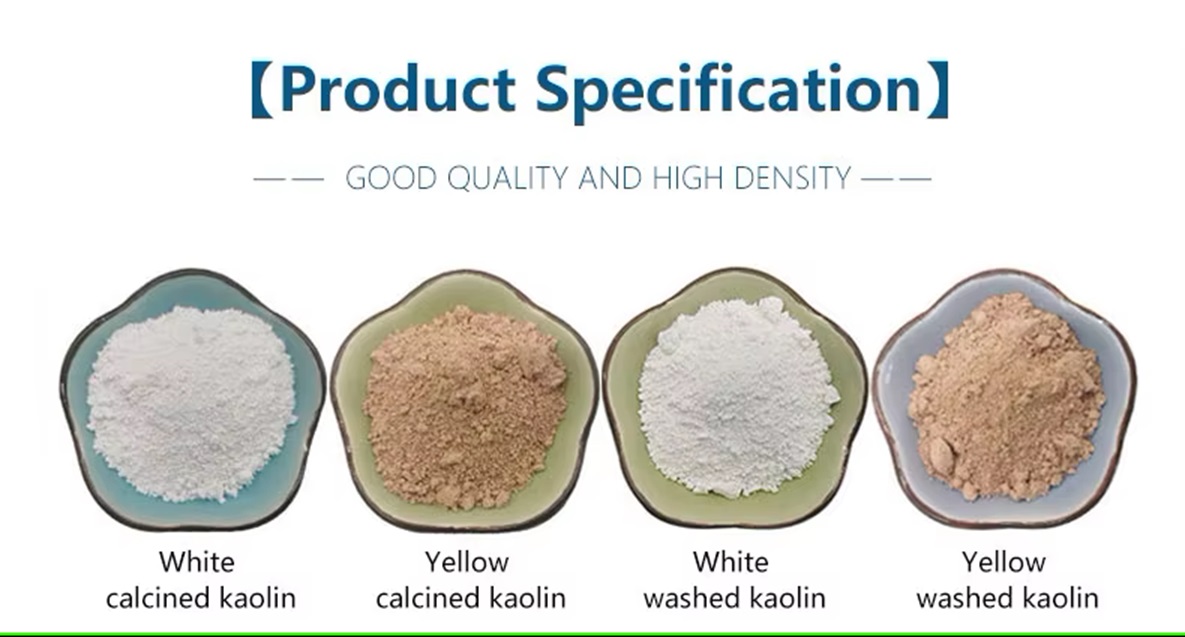
| Appearance | White to off-white fine powder |
| Odor | Odorless |
| Physical State | Solid (powder) |
2. PHYSICAL PROPERTIES
| Property | Value |
|---|---|
| Physical State (20°C) | Solid (powder) |
| Appearance | White to off-white fine powder |
| Odor | Odorless |
| Chemical Formula | Al₂Si₂O₅(OH)₄ |
| Molecular Weight | 258.16 g/mol |
| Density | ~2.6 g/cm³ |
| Bulk Density | 0.4 - 0.8 g/cm³ (varies with grade) |
| Melting Point | Decomposes at high temperatures (does not melt) |
| pH (10% aqueous suspension) | 6.0 - 8.0 (neutral to slightly alkaline) |
| Water Solubility | Insoluble |
| Particle Size | 0.1 - 10 microns (varies with grade) |
| Specific Surface Area | 10 - 25 m²/g (varies with grade) |
| Hardness (Mohs) | 2 - 2.5 |
| Refractive Index | 1.56 - 1.57 |
| Whiteness (ISO) | 80 - 95% (depends on grade and purity) |
| Oil Absorption | 30 - 50 g/100g (varies with grade) |
| Loss on Ignition (1000°C) | ~13 - 14% (for hydrous kaolin) |
| Plasticity | Low to medium |
| Swelling Property | Non-swelling (does not swell in water) |
| Cation Exchange Capacity | 3 - 15 meq/100g (low) |
3. CHEMICAL PROPERTIES
| Property | Information |
|---|---|
| Chemical Formula | Al₂Si₂O₅(OH)₄ |
| Molecular Weight | 258.16 g/mol |
| Chemical Class | Phyllosilicate clay mineral |
| Structure | Layered aluminosilicate (1:1 layer structure) |
| Crystal System | Triclinic (pseudohexagonal platelets) |
| Chemical Inertness | Chemically inert; neutral pH |
| Stability | Stable under normal conditions |
| Thermal Decomposition | Loses water at ~500-600°C; transforms to metakaolin |
| Acid Resistance | Resistant to dilute acids |
| Alkali Resistance | Reacts with strong alkalis |
| Adsorption | High adsorption capacity for certain ions and molecules |
| Ion Exchange Capacity | Very low (non-expanding clay) |
Thermal Decomposition (Calcination):
Al₂Si₂O₅(OH)₄  —[500-600°C]—> Al₂Si₂O₇ (Metakaolin) + 2 H₂O↑
Al₂Si₂O₇  —[900-1000°C]—> Al₂O₃·SiO₂ (Spinel)
Mineral Composition (Typical):
| Mineral | Typical Content |
|---|---|
| Kaolinite (Al₂Si₂O₅(OH)₄) | 85-99% |
| Quartz (SiO₂) | 0.5-10% |
| Muscovite (Mica) | 0-5% |
| Feldspar | 0-3% |
| Anatase (TiO₂) | 0-2% |
| Iron Oxides (Fe₂O₃) | 0-1.5% |
4. PRODUCTION PROCESS
| Method | Description |
|---|---|
| Mining | Open-pit mining using excavators, draglines, or hydraulic mining |
| Beneficiation | Blunging (mixing with water), degritting, classification, centrifugation |
| Purification | Bleaching with sulfuric acid or hydrosulfite to remove iron |
| Dewatering | Filtration and dewatering |
| Drying | Rotary dryers or spray dryers |
| Dry Processing | Crushing, pulverizing, air classification (for dry-ground kaolin) |
| Wet Processing | Blunging, degritting, centrifuging, bleaching, filtering, drying (for water-washed kaolin) |
| Calcination | Rotary kilns or flash calciners at 500-1000°C (for calcined kaolin) |
| Surface Treatment | Silane treatment or other surface modifications (for specialized grades) |
Processing Routes:
| Process | Description | Applications |
|---|---|---|
| Air-Floated (Dry Processed) | Dry-crushed and air-classified | Rubber, plastics, ceramics |
| Water-Washed (Wet Processed) | Blunged, degritted, centrifuged, bleached | Paper coating, paints, high-grade fillers |
| Calcined | Heat-treated at 500-1000°C | Paper coatings, paints, plastics, refractories |
| Delaminated | Mechanically delaminated to produce thin platelets | Paper coatings (high gloss) |
| Surface-Modified | Silane or other chemical treatment | Specialty plastics, rubber |
5. AVAILABLE GRADES AND SPECIFICATIONS
| Grade | Description | Whiteness | Particle Size (d50) | Applications |
|---|---|---|---|---|
| Hydrous Kaolin (Water-Washed) | Natural, not calcined | 80-88% | 0.5-2 µm | Paper coating, paint, ceramics |
| Air-Floated Kaolin | Dry ground and classified | 75-85% | 2-10 µm | Rubber, plastics, construction |
| Calcined Kaolin | Heat-treated (500-1000°C) | 88-95% | 1-5 µm | Paper, paints, plastics, refractories |
| Delaminated Kaolin | Mechanically delaminated | 82-88% | 0.2-0.5 µm | High-gloss paper coatings |
| Surface-Modified Kaolin | Silane or other treatment | 80-90% | 1-5 µm | Specialty plastics, rubber |
Typical Specifications (Water-Washed Hydrous Kaolin):
| Parameter | Specification | Test Method |
|---|---|---|
| Brightness (ISO) | 85-88% | ISO 2470 |
| Whiteness | 80-88% | Colorimetry |
| Residue on 325 Mesh (45 µm) | ≤0.02% | Wet sieve |
| Particle Size (d50) | 0.5 - 1.5 µm | Sedigraph |
| pH (20% slurry) | 6.0 - 7.5 | ASTM E70 |
| Moisture Content | ≤1.5% | Gravimetric |
| Loss on Ignition (1000°C) | 13.0 - 14.0% | Gravimetric |
| SiO₂ Content | 45-48% | XRF |
| Al₂O₃ Content | 37-39% | XRF |
| Fe₂O₃ Content | ≤0.8% | XRF |
| TiO₂ Content | ≤1.5% | XRF |
| CaO Content | ≤0.5% | XRF |
| MgO Content | ≤0.3% | XRF |
| K₂O + Na₂O | ≤1.0% | XRF |
Typical Specifications (Calcined Kaolin):
| Parameter | Specification | Test Method |
|---|---|---|
| Brightness (ISO) | 90-95% | ISO 2470 |
| Whiteness | 88-95% | Colorimetry |
| Residue on 325 Mesh (45 µm) | ≤0.02% | Wet sieve |
| Particle Size (d50) | 1 - 5 µm | Sedigraph |
| pH (20% slurry) | 6.0 - 8.0 | ASTM E70 |
| Moisture Content | ≤0.5% | Gravimetric |
| Loss on Ignition | ≤0.5% (after calcination) | Gravimetric |
| SiO₂ Content | 50-55% | XRF |
| Al₂O₃ Content | 42-45% | XRF |
| Fe₂O₃ Content | ≤0.6% | XRF |
| TiO₂ Content | ≤1.5% | XRF |
| Oil Absorption | 40-70 g/100g | ASTM D281 |
| Specific Gravity | 2.5 - 2.6 g/cm³ | Pycnometer |
6. APPLICATIONS
6.1. Ceramics Industry – Largest Use
| Application | Function |
|---|---|
| Porcelain | Primary raw material (white color, high fusion temperature) |
| Fine China | Provides whiteness, translucency, and strength |
| Wall and Floor Tiles | Improves mechanical strength and reduces cracking |
| Sanitary Ware | Provides plasticity and workability |
| Tableware | Gives white color and vitrification properties |
| Electrical Porcelain | Provides high dielectric strength |
| Refractories (Calcined Kaolin) | High-temperature resistance |
| Ceramic Glazes | Suspension agent, flux modifier |
6.2. Paper and Packaging Industry
| Application | Function |
|---|---|
| Paper Coating | Improves brightness, gloss, smoothness, and printability |
| Paper Filler | Extends fibers, improves opacity and sheet formation |
| Magazine Paper | Enhances print quality and ink absorption |
| Coated Cardboard | Provides smooth surface for high-quality printing |
| Inkjet Paper | Optimizes ink absorption and color reproduction |
| Corrugated Board | Improves surface smoothness |
6.3. Paints and Coatings Industry
| Application | Function |
|---|---|
| Latex Paints | Extender pigment, improves opacity and scrub resistance |
| Industrial Coatings | Improves corrosion resistance and durability |
| Automotive Coatings | Enhances appearance and weatherability |
| Powder Coatings | Improves flow and leveling |
| Traffic Paints | Enhances wear resistance and reflectivity |
| Primer Paints | Improves adhesion and hiding power |
| Wood Coatings | Enhances sandability and film properties |
6.4. Plastics and Rubber Industry
| Application | Function |
|---|---|
| Wire and Cable Insulation | Improves electrical resistivity (calcined kaolin) |
| Plastic Films | Anti-blocking agent, improves mechanical properties |
| Rubber Compounding | Reinforcing filler, improves tear strength and abrasion resistance |
| Engineering Plastics | Increases modulus, improves heat distortion temperature |
| PVC Compounds | Extender filler, improves electrical properties |
| Polyolefins | Nucleating agent, improves stiffness |
| Silicone Rubber | Reinforcing filler |
| Tire Manufacturing | Processing aid, improves cure properties |
6.5. Construction and Building Materials
| Application | Function |
|---|---|
| Cement and Concrete | Pozzolanic additive, improves strength and durability |
| White Cement | Provides whiteness and improves workability |
| Mortar and Grout | Improves workability and water retention |
| Fiber Cement Boards | Improves dimensional stability and strength |
| Asphalt | Filler and anti-stripping agent |
| Gypsum Products | Extender and workability aid |
6.6. Cosmetics and Personal Care
| Application | Function |
|---|---|
| Face Powders | Absorbent, slip agent, mattifying |
| Creams and Lotions | Absorbent, texture modifier |
| Facial Masks | Adsorbent, cleansing agent |
| Makeup Products | Extender, improves spreadability |
| Baby Powders | Absorbent, skin protectant |
| Deodorants | Absorbent, friction reducer |
| Toothpaste | Mild abrasive, thickener |
6.7. Pharmaceutical Industry
| Application | Function |
|---|---|
| Tablet Excipient | Disintegrant, binder, filler |
| Antidiarrheal Products | Adsorbent for toxins and bacteria |
| Topical Formulations | Absorbent, protectant |
| Suspensions | Viscosity modifier, suspending agent |
| Gastrointestinal Protectants | Coating agent for digestive tract |
6.8. Agriculture
| Application | Function |
|---|---|
| Crop Protection | Particle film barrier against pests and diseases |
| Sun Protection for Crops | UV barrier, reduces heat stress |
| Seed Coating | Improves handling and germination success |
| Pesticide Carriers | Adsorbent carrier for active ingredients |
| Soil Amendment | Improves soil structure and water retention |
| Animal Feed | Anti-caking agent, binder |
| Fruit Ripening Control | Green fruit ripening agent |
6.9. Adhesives and Sealants
| Application | Function |
|---|---|
| Adhesives | Filler, improves wet strength and film strength |
| Sealants | Thixotropic agent, improves barrier properties |
| Putty | Extender, improves workability |
| Caulks | Filler, controls shrinkage |
6.10. Fiberglass Industry
| Application | Function |
|---|---|
| Continuous Filament Fiberglass | Source of alumina, reinforcing filler |
| Fiberglass Insulation | Improves thermal insulation properties |
| Fiberglass Composites | Reinforcing filler |
| Printed Circuit Boards | Component in fiberglass laminates |
6.11. Wastewater Treatment
| Application | Function |
|---|---|
| Heavy Metal Removal | Adsorbent for metal ions (copper, lead, zinc, cadmium) |
| Industrial Wastewater | Coagulant aid, flocculant |
| Phosphorus Removal | Adsorbent for phosphate |
| Dye Removal | Adsorbent for organic dyes |
6.12. Other Applications
| Industry | Application | Function |
|---|---|---|
| Catalyst Supports | High surface area carrier for catalysts | |
| Molecular Sieves | Raw material for zeolite synthesis | |
| Foundry Sands | Binder additive | |
| Welding Rods | Flux component | |
| Abrasives | Mild abrasive in polishes | |
| Food Additive | Anti-caking agent (E559) |
7. CALCINED KAOLIN VS HYDROUS KAOLIN
| Property | Hydrous Kaolin | Calcined Kaolin |
|---|---|---|
| Chemical Formula | Al₂Si₂O₅(OH)₄ | Al₂Si₂O₇ or Al₂O₃·2SiO₂ |
| Water Content | ~13-14% | <0.5% |
| Brightness | 80-88% | 90-95% |
| Oil Absorption | 30-45 g/100g | 50-80 g/100g |
| Specific Gravity | 2.58-2.62 g/cm³ | 2.50-2.55 g/cm³ |
| Hardness | Soft (Mohs 2-2.5) | Harder (Mohs 5-6) |
| pH (slurry) | 6-7 | 6-8 |
| Electrical Resistivity | Lower | Higher |
| Opacity | Moderate | High (better hiding power) |
| Cost | Lower | Higher |
| Applications | Paper coating, paint, ceramics | Paper coatings, paints, plastics, refractories |
8. STORAGE AND HANDLING
| Parameter | Information |
|---|---|
| Storage Conditions | Cool, dry, well-ventilated area |
| Container Requirements | Tightly closed containers (bags, FIBC) |
| Protect from | Moisture (caking), contamination |
| Shelf Life | 24-36 months (unopened, proper storage) |
| Hygroscopicity | Low to moderate (may absorb moisture) |
| Dust Control | Use local exhaust ventilation; avoid dust generation |
| Packaging Options | 25 kg bags, 50 kg bags, 1000 kg FIBC (big bags), bulk containers |
Handling Notes:
-
Kaolin dust can be irritating to respiratory tract
-
Use dust mask when handling significant quantities
-
Avoid generating dust (static electricity hazard for organic dust mixtures)
-
Wash hands after handling
-
In case of spill, sweep up or vacuum to minimize dust
9. SAFETY AND HEALTH INFORMATION (GHS CLASSIFICATION)
| Hazard Class | Category |
|---|---|
| Not classified as hazardous under normal use conditions (natural kaolin) | - |
| May cause mechanical irritation to eyes and respiratory tract | - |
Note: Kaolin is generally recognized as safe (GRAS) for food and pharmaceutical applications. Inhalation of large amounts of dust may cause mechanical irritation. Prolonged heavy exposure may cause kaolinosis (benign pneumoconiosis).
10. HAZARD STATEMENTS (H-CODES)
| Code | Statement |
|---|---|
| Natural kaolin is not classified as hazardous under GHS | - |
| May cause mechanical irritation to eyes and respiratory tract | - |
11. SAFETY STATEMENTS (P-CODES)
| Code | Statement |
|---|---|
| P261 | Avoid breathing dust |
| P271 | Use only outdoors or in a well-ventilated area |
| P280 | Wear protective gloves and eye protection (for dusty operations) |
| P304+P340 | IF INHALED: Remove person to fresh air and keep comfortable for breathing |
| P312 | Call a POISON CENTER or doctor if you feel unwell |
| P362+P364 | Take off contaminated clothing and wash it before reuse |
12. TOXICOLOGICAL INFORMATION
| Parameter | Value |
|---|---|
| Oral LD50 (rat) | >5,000 mg/kg (very low toxicity) |
| Dermal LD50 (rabbit) | >2,000 mg/kg |
| Inhalation | May cause mechanical irritation |
| Eye Irritation | Mechanical irritant |
| Skin Irritation | Non-irritating (may cause drying) |
| Skin Sensitization | Not sensitizing |
| Mutagenicity | Not mutagenic |
| Carcinogenicity | Not classified (IARC Group 3 - not classifiable) |
| Silica Content (crystalline) | Low (<0.5% respirable crystalline silica in typical grades) |
Health Effects:
| Exposure | Effect |
|---|---|
| Acute (Inhalation) | Mechanical irritation of nose, throat, and lungs; coughing |
| Acute (Skin Contact) | May cause drying; generally non-irritating |
| Acute (Eye Contact) | Mechanical irritation, redness |
| Acute (Ingestion) | Very low toxicity; large amounts may cause gastrointestinal discomfort |
| Chronic (Heavy Exposure) | May cause kaolinosis (benign pneumoconiosis) with massive long-term exposure |
| Chronic (Crystalline Silica) | Very low risk (typical grades have <0.5% crystalline silica) |
Regulatory Status:
| Status | Information |
|---|---|
| FDA GRAS | Generally Recognized as Safe for food and pharmaceutical use |
| Food Additive | Approved as anti-caking agent (E559) |
| Pharmaceutical Excipient | USP/NF, Ph. Eur., JP compliant |
| IARC Classification | Group 3 (Not classifiable as to carcinogenicity to humans) |
13. FIRST AID MEASURES
| Exposure Route | Action |
|---|---|
| Inhalation | Remove to fresh air. If breathing difficulty, give oxygen. Seek medical attention if symptoms persist. |
| Skin Contact | Wash with soap and plenty of water. Remove contaminated clothing. |
| Eye Contact | Rinse immediately with plenty of water for at least 15 minutes. Remove contact lenses. Seek medical attention if irritation persists. |
| Ingestion | Rinse mouth. Drink plenty of water. Seek medical attention if large amount ingested. |
14. FIRE FIGHTING MEASURES
| Parameter | Information |
|---|---|
| Fire Hazard | Non-flammable. Does not burn. |
| Extinguishing Media | Use extinguishing media appropriate for surrounding fire (water spray, CO₂, dry chemical, foam). |
| Special Hazards | May create dust explosion hazard if mixed with combustible materials |
| Protective Equipment | Self-contained breathing apparatus (SCBA), full protective clothing |
15. ENVIRONMENTAL INFORMATION
| Parameter | Information |
|---|---|
| Aquatic Toxicity | Low toxicity to aquatic organisms |
| Biodegradability | Not applicable (inorganic mineral) |
| Bioaccumulation | Not applicable |
| Mobility in Soil | Low (insoluble) |
| Waste Disposal | Dispose according to local regulations. Landfill or controlled disposal permitted. |
16. TRANSPORT INFORMATION
| Parameter | Information |
|---|---|
| UN Number | Not classified as dangerous goods |
| Hazard Class | Not applicable |
| Packing Group | Not applicable |
| Proper Shipping Name | KAOLIN (China Clay) |
| Marine Pollutant | No |
| ADR/RID | Not classified as dangerous goods |
17. REGULATORY INFORMATION
| Region | Status |
|---|---|
| EU | REACH registered; approved for industrial use |
| Türkiye (KKDİK) | Mandatory compliance; registration required |
| USA (TSCA) | Listed |
| Canada (DSL) | Listed |
| Australia (AICS) | Listed |
| Japan (ENCS) | Listed |
| Korea (KECL) | Listed |
| China (IECSC) | Listed |
FDA Compliance: GRAS (21 CFR 182.2729) for food contact and pharmaceutical use
EU Compliance: Food additive E559 (anti-caking agent)
18. OTHER NAMES AND SYNONYMS
| Name |
|---|
| Kaolin Clay |
| China Clay |
| Porcelain Clay |
| Aluminum Silicate Dihydroxide |
| Aluminum Silicate Hydroxide |
| Kaolinite |
| Bolus Alba |
| White Bole |
| Argilla |
| Hydrated Aluminum Silicate |
| Calcined Kaolin |
| Metakaolin (calcined form) |
| E559 (Food additive code) |
Database Identifiers:
| Database | Identifier |
|---|---|
| CAS (Kaolin) | 1332-58-7 |
| CAS (Kaolin alt) | 52624-41-6 |
| CAS (Calcined Kaolin) | 92704-41-1 |
| EC | 310-194-1 |
| RTECS | GF1670000 |
19. PHYSICAL AND CHEMICAL NOTES
Kaolinite Crystal Structure:
-
1:1 layer silicate (one tetrahedral silica sheet + one octahedral alumina sheet)
-
No interlayer swelling (hydrogen bonding between layers)
-
Hexagonal platelet morphology (0.1-10 µm diameter, 0.05-0.2 µm thickness)
-
Low cation exchange capacity (3-15 meq/100g)
Calcination Effects:
-
At 500-600°C: Dehydroxylation → Metakaolin (amorphous)
-
At 900-1000°C: Spinel phase formation
-
At >1000°C: Mullite formation
-
Calcination increases hardness, brightness, oil absorption, and electrical resistivity
Major Global Deposits:
-
USA (Georgia, South Carolina)
-
Brazil
-
United Kingdom (Cornwall)
-
China
-
Germany
-
Czech Republic
-
Australia
20. SUMMARY AND IMPORTANT WARNINGS
SUMMARY:
Kaolin (Al₂Si₂O₅(OH)₄, CAS 1332-58-7) is a naturally occurring white clay mineral primarily composed of kaolinite, a 1:1 layered aluminosilicate. It is a soft, fine white powder with a density of approximately 2.6 g/cm³ and a Mohs hardness of 2-2.5. Kaolin is chemically inert, has a neutral pH, does not swell in water, and has good adsorption properties. It is produced by open-pit mining followed by beneficiation processes including blunging, degritting, classification, bleaching, dewatering, and drying. Dry-processed (air-floated), wet-processed (water-washed), calcined, delaminated, and surface-modified grades are available. Kaolin is one of the most widely used industrial minerals with applications across numerous industries: ceramics (porcelain, tiles, sanitary ware), paper and packaging (coating and filler), paints and coatings (extender pigment), plastics and rubber (reinforcing filler), construction (cement additive), cosmetics (absorbent), pharmaceuticals (excipient), agriculture (crop protection), adhesives, fiberglass, and wastewater treatment.
Key Properties:
| Property | Value |
|---|---|
| Appearance | White to off-white fine powder |
| Chemical Formula | Al₂Si₂O₅(OH)₄ |
| Molecular Weight | 258.16 g/mol |
| Density | ~2.6 g/cm³ |
| Hardness (Mohs) | 2 - 2.5 |
| pH (10% slurry) | 6.0 - 8.0 |
| Water Solubility | Insoluble |
| Swelling | Non-swelling |
| Particle Size | 0.1 - 10 µm |
| Primary Use | Ceramics, paper, paints, plastics, rubber |
Main Application Areas:
| Industry | Applications |
|---|---|
| Ceramics | Porcelain, china, tiles, sanitary ware, refractories |
| Paper | Coating, filler (improves brightness, gloss, printability) |
| Paints/Coatings | Extender pigment, opacity, scrub resistance |
| Plastics/Rubber | Reinforcing filler, anti-blocking, electrical insulation |
| Construction | Cement additive, concrete, mortar, fiber cement |
| Cosmetics | Absorbent, slip agent, mattifying |
| Pharmaceuticals | Tablet excipient, adsorbent |
| Agriculture | Crop protection, seed coating, pesticide carrier |
| Adhesives/Sealants | Filler, wet strength, film strength |
| Fiberglass | Source of alumina, reinforcing filler |
Key Safety Points:
-
LOW TOXICITY: Oral LD50 >5,000 mg/kg; FDA GRAS status
-
MECHANICAL IRRITANT: Dust may cause mechanical irritation to eyes and respiratory tract
-
NON-FLAMMABLE: Does not burn; use appropriate extinguishing media for surrounding fire
-
DUST CONTROL: Avoid generating dust; use local exhaust ventilation
-
USE PPE: Dust mask for dusty operations, safety goggles, gloves
-
STORAGE: Cool, dry area; protect from moisture (caking)
-
ENVIRONMENT: Low environmental impact; non-hazardous
IMPORTANT WARNINGS:
Kaolin Mining and Processing: Kaolin is mined from natural deposits using open-pit methods. Major global deposits are found in the United States (Georgia - the "kaolin capital of the world"), Brazil, the United Kingdom (Cornwall), China, Germany, Czech Republic, and Australia. Processing includes dry processing (crushing, pulverizing, air classification) for applications such as rubber and plastics, and wet processing (blunging, degritting, centrifugation, bleaching, filtering, drying) for high-grade applications such as paper coating and paints.
Calcination Benefits: Calcined kaolin (heat-treated at 500-1000°C) has enhanced properties including higher brightness (90-95%), higher oil absorption (50-80 g/100g), higher hardness, and higher electrical resistivity. Calcined kaolin is preferred for paper coatings (improved opacity and printability), paints (better hiding power), plastics (improved electrical properties), and refractories (high-temperature resistance).
Chemical Inertness: Kaolin is chemically inert and has a neutral pH (6-8), making it ideal for use in pharmaceuticals, cosmetics, and food applications where it will not alter product chemistry or promote bacterial growth. It is approved as a food additive (E559) and is GRAS (Generally Recognized as Safe) by the FDA.
Non-Swelling Property: Unlike other clay minerals (such as bentonite), kaolin does not swell in water. Hydrogen bonds between kaolinite layers prevent water molecules from penetrating the crystal structure. This non-swelling property is valuable in applications where dimensional stability is required.
Adsorption Capacity: Kaolin has excellent adsorption properties due to its high surface area (10-25 m²/g) and platelet structure. It is effective at adsorbing metal ions (copper, lead, zinc, cadmium), organic compounds, dyes, and bacteria. This property makes kaolin useful in wastewater treatment, gastrointestinal protectants, and facial masks.
Paper Industry Significance: The paper and paperboard industry is a major consumer of kaolin, particularly water-washed and calcined grades. Kaolin improves paper brightness, gloss, smoothness, opacity, and printability. As a filler, it extends wood fibers and reduces production costs. As a coating pigment, it provides a smooth, high-quality surface for printing.
Pozzolanic Activity in Cement: Kaolin, particularly metakaolin (calcined at 500-600°C), has high pozzolanic activity, meaning it reacts with Portland cement hydration products to improve concrete strength and durability. Metakaolin also improves concrete's resistance to chemical attack and reduces permeability.
Fiberglass Applications: Kaolin is a critical raw material in fiberglass production, providing the necessary alumina (Al₂O₃) for glass formulation. It improves surface durability, reduces weight while maintaining strength, and enhances thermal insulation properties.
Kaolinosis (Benign Pneumoconiosis): Prolonged, heavy inhalation exposure to kaolin dust may cause kaolinosis, a benign form of pneumoconiosis (dust-induced lung disease). This condition is rare and typically only occurs with massive, long-term occupational exposure without dust controls. Using proper dust control measures (ventilation, dust masks) prevents this risk. Typical commercial grades contain very low levels of respirable crystalline silica (<0.5%).
Agricultural Applications: Kaolin-based crop protectants form a barrier film on plant surfaces that controls damage from insects, mites, and fungal pathogens. Kaolin sunscreens for crops reduce heat stress and sunburn while promoting photosynthesis. Seed coatings with kaolin improve handling, planting, germination success, and seedling vigor.
Wastewater Treatment Studies: Research has shown that kaolin is highly effective at removing contaminants from wastewater, including chloride, iron, heavy metal ions (copper, lead, zinc, cadmium), and organic dyes. Kaolin demonstrates excellent adsorption properties and recyclability, remaining effective after multiple regeneration cycles. Its low cost makes it an attractive alternative to traditional wastewater treatment minerals.
Cosmetic Applications: Kaolin is valued in cosmetics for its absorbent, adsorbent, and gentle exfoliating properties. It absorbs excess sebum and impurities without irritating the skin, making it ideal for facial masks, powders, and cleansing products. Its non-swelling property ensures it does not dry or crack on the skin.
Important Disclaimer: This Technical Data Sheet (TDS) is for informational purposes only. For complete safety, handling, storage, and regulatory compliance information, always refer to the official Safety Data Sheet (SDS) provided by the manufacturer/supplier. Kaolin is generally recognized as safe for most applications. However, avoid generating and inhaling dust. Use appropriate dust control measures. Store in a dry environment to prevent caking. This document summarizes information from various sources and is not a substitute for technical expertise or site-specific safety assessments.