We unleash your business potential by maximize the business innovation.
Send EmailFormaldehyde, Methyl Aldehyde, Formol, Methanal, Methylene Oxide, Formic Aldehyde, Farmalin, Formalin, %37, 50-00-0, 8013-13-6
FORMALDEHYDE – FORMALDEHYDE
1. CHEMICAL IDENTITY AND DEFINITION
| Parameter | Information |
|---|---|
| Chemical Name (IUPAC) | Methanal |
| Other Names | Formic Aldehyde, Methyl Aldehyde, Formalin, Formol, Fannoform, Formalith, Farmalin |
| Chemical Formula | CH₂O |
| Molecular Weight | 30.03 g/mol |
| CAS Number | 50-00-0 (pure) ; 8013-13-6 (solution) |
| EC Number (EINECS) | 200-001-8 |
| Appearance | Colorless gas (pure) or colorless liquid (solution) |
| Odor | Pungent, suffocating, characteristic |
| Physical State (20°C) | Gas (pure) / Liquid (solution) |
| Chemical Class | Aldehyde (organic compound) |
2. WHAT IS FORMALDEHYDE?
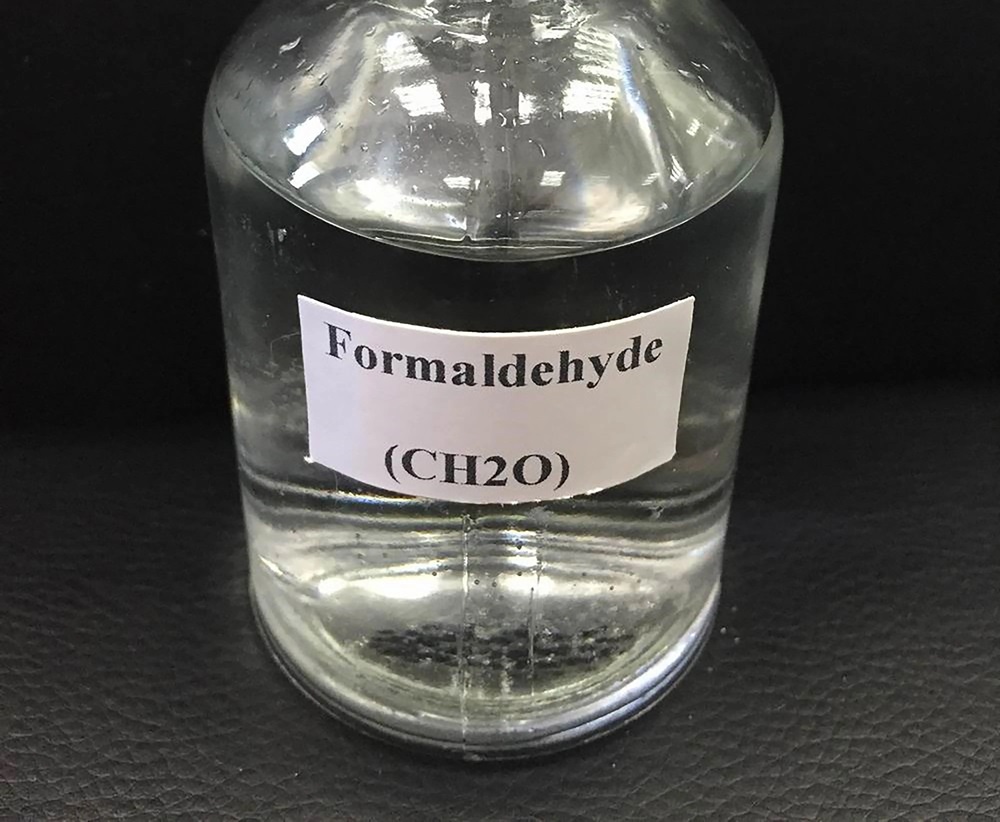
Formaldehyde (CH₂O) is the simplest aldehyde, a colorless organic compound with a pungent, suffocating odor. It is one of the most widely used aldehydes in the chemical industry. It has high solubility in water and is commercially available as a 37-40% aqueous solution (formalin) stabilized with methanol . It plays a critical role in resin production, building materials, textiles, paper, medicine, and disinfection. It is highly irritating and classified as a carcinogen.
3. PHYSICAL AND CHEMICAL PROPERTIES
| Property | Pure (Gas) | 37% Solution (Formalin) |
|---|---|---|
| Appearance | Colorless gas | Colorless liquid |
| Chemical Formula | CH₂O | CH₂O + H₂O + CH₃OH |
| Molecular Weight | 30.03 g/mol | ~30.03 g/mol |
| Density | 0.8153 g/cm³ (-20°C) | ~1.08 – 1.11 g/cm³ |
| Melting Point | -92 °C | -21 °C |
| Boiling Point | -19 °C | -15 °C |
| Flash Point | -53 °C (gas) | ~64 °C (solution) |
| Vapor Pressure (20°C) | 3,890 mmHg | ~30 mmHg |
| Solubility in Water | Fully miscible | Fully miscible |
| pH | - | ~2.8 – 4.0 (acidic) |
| Odor Threshold | 0.05 – 1.0 ppm | 0.05 – 1.0 ppm |
Typical Formalin Composition:
-
Formaldehyde: 37 – 40%
-
Methanol (stabilizer): 10 – 15%
-
Water: Balance
4. CHEMICAL PROPERTIES
| Property | Information |
|---|---|
| Chemical Formula | CH₂O |
| CAS Number | 50-00-0 |
| EC Number | 200-001-8 |
| Molecular Weight | 30.03 g/mol |
| Reactivity | High; prone to polymerization |
| Polymerization | Forms trioxane, paraformaldehyde |
| Oxidation | Oxidizes to formic acid |
| Reduction | Reduces to methanol |
| Aldol Reaction | Undergoes aldol reactions in basic media |
| Stabilization | Stabilized with methanol |
5. CHEMICAL STRUCTURE AND REACTIONS
Chemical Structure:
    H
     \
      C = O
     /
    H
Formaldehyde is the simplest aldehyde with two hydrogen atoms attached to the carbonyl group.
Polymerization Reaction:
nCH₂O → (CH₂O)ₙ (Paraformaldehyde / Trioxane)
Oxidation Reaction:
CH₂O + O₂ → HCOOH (Formic Acid)
Reduction Reaction:
CH₂O + H₂ → CH₃OH (Methanol)
6. APPLICATIONS
6.1. Chemical Industry
| Application | Description |
|---|---|
| Phenol-Formaldehyde Resins | Adhesives, molding compounds |
| Urea-Formaldehyde Resins | Adhesives, coatings |
| Melamine-Formaldehyde Resins | Laminates, coatings |
| Polyacetal (POM) Production | Engineering plastic |
| Polymer and Plastics | Various polymer production |
6.2. Building Materials
| Application | Description |
|---|---|
| Particle Board | Binder material |
| MDF (Medium Density Fiberboard) | Binder material |
| Plywood | Adhesive material |
| Insulation Materials | Fiberglass, stone wool binder |
| Laminate Flooring | Resin production |
6.3. Textile Industry
| Application | Description |
|---|---|
| Crease-Resistant Finishes | Wrinkle-free fabric treatments |
| Finishing Chemicals | Textile finishing |
| Dye Fixation | Dye fixing agent |
6.4. Paper Industry
| Application | Description |
|---|---|
| Paper Strengthening | Adds strength to paper |
| Coating Processes | Surface coatings |
| Wet Strength | Improves wet strength of paper |
6.5. Medical and Laboratory
| Application | Description |
|---|---|
| Tissue Fixation | Cadavers and histological samples |
| Sterilization | Medical equipment and environments |
| Disinfectant | Surface and instrument disinfection |
| Vaccine Production | Inactivating agent |
6.6. Agriculture and Livestock
| Application | Description |
|---|---|
| Disinfectant | Barns, coops, animal shelters |
| Fish Farms | Fungal and parasite prevention |
| Mushroom Cultivation | Soil sterilization |
| Pesticide | Pesticide formulations |
| Fertilizer | Slow-release fertilizer production |
6.7. Cosmetics and Household Products
| Application | Description |
|---|---|
| Preservative | Detergents, softeners, cleaning products |
| Adhesives | Household glues |
| Paints and Coatings | Water-based paints |
| Cosmetic Preservative | Limited use |
7. FORMALDEHYDE – SECTOR APPLICATION TABLE
| Sector | Application | Suitability / Notes |
|---|---|---|
| Chemical Industry | Resins, plastics, polymer production | High suitability. Essential raw material. |
| Building Materials | Particle board, MDF, plywood, insulation | Widespread use. Emission limits (E1/E0) must be considered. |
| Textile | Crease-resistant finishes, finishing chemicals | Usage decreasing. Formaldehyde-free alternatives preferred. |
| Paper Industry | Strengthening, coating processes | Suitable, but controlled use required for worker health. |
| Medical / Laboratory | Formalin solution, tissue fixation, sterilization | High suitability. Controlled environment required due to toxicity. |
| Agriculture & Livestock | Disinfectant, pesticide, fish farms | Suitable, but dose and application control required due to environmental risks. |
| Cosmetics | Preservative (detergents, softeners) | Limited suitability. Restricted by EU and Turkey regulations. |
| Household Products | Adhesives, paints, coatings | Suitable, but low-formaldehyde products should be preferred. |
| Food | Previously used as preservative | Not suitable. Banned as a food additive. |
8. HEALTH AND SAFETY INFORMATION
| Parameter | Value |
|---|---|
| Oral LD50 (Rat) | ~800 – 1,000 mg/kg |
| Inhalation LC50 (Rat, 4h) | ~0.3 – 0.5 mg/L |
| Dermal LD50 (Rabbit) | ~270 mg/kg |
| Skin Irritation | Severe irritant |
| Eye Contact | Severe irritation, blindness risk |
| Inhalation | Respiratory irritation, asthma |
| Carcinogenicity (IARC) | Group 1 (carcinogenic to humans) |
| Mutagenicity | Positive |
| Reproductive Toxicity | Positive (at high doses) |
8.1. GHS CLASSIFICATION
| Hazard Category | Description |
|---|---|
| Acute Toxicity | Category 3 (H301, H311, H331) |
| Skin Corrosion | Category 1B (H314) |
| Eye Damage | Category 1 (H318) |
| Carcinogenicity | Category 1B (H350) |
| Mutagenicity | Category 2 (H341) |
| Reproductive Toxicity | Category 2 (H361) |
| Specific Target Organ Toxicity | Category 3 (H335) |
Hazard Statements:
-
H301: Toxic if swallowed
-
H311: Toxic in contact with skin
-
H314: Causes severe skin burns and eye damage
-
H317: May cause allergic skin reaction
-
H331: Toxic if inhaled
-
H335: May cause respiratory irritation
-
H341: Suspected of causing genetic defects
-
H350: May cause cancer
-
H361: Suspected of damaging fertility
8.2. CRITICAL SAFETY INFORMATION
Carcinogenicity Classification:
-
IARC: Group 1 (carcinogenic to humans) – Nasopharyngeal cancer, leukemia
-
EPA: Carcinogen
-
NTP: Carcinogen
Exposure Limits:
-
OSHA PEL (USA): 0.75 ppm (8-hour), 2 ppm (STEL)
-
ACGIH TLV (USA): 0.1 ppm (8-hour), 0.3 ppm (STEL)
-
EU Limit Value: 0.3 ppm (8-hour)
-
Turkey: TWA 0.3 ppm, STEL 0.6 ppm
8.3. FIRST AID MEASURES
| Route of Exposure | Action |
|---|---|
| Inhalation | Remove to fresh air. If breathing difficulty, give oxygen. Get immediate medical attention. |
| Skin Contact | Remove contaminated clothing. Wash with plenty of soap and water. Get immediate medical attention. |
| Eye Contact | Rinse with plenty of water for at least 20 minutes. Get immediate medical attention. |
| Ingestion | Do NOT induce vomiting. Rinse mouth. Get immediate medical attention. |
9. STORAGE AND HANDLING
| Parameter | Information |
|---|---|
| Storage Conditions | Cool, dry, well-ventilated area |
| Container Requirements | Tightly closed, stainless steel or HDPE |
| Protect From | Heat, sparks, flames, oxidizing agents, bases |
| Temperature | 15-30°C (solution) |
| Shelf Life | 6-12 months (stabilized with methanol) |
| Special Note | 37% formalin contains 10-15% methanol to prevent polymerization. |
10. TRANSPORT INFORMATION
| Parameter | Information |
|---|---|
| UN Number | 2209 (Formalin) |
| Hazard Class | 8 (Corrosive) + 3 (Flammable) |
| Packing Group | III |
| ADR/RID | 8 + 3 |
| IMDG Code | 8 + 3 |
| IATA (Air) | 8 + 3 |
11. PACKAGING OPTIONS
| Packaging Type | Quantity | Material |
|---|---|---|
| Plastic Canister | 5-25 kg | HDPE |
| Plastic Drum | 25-200 kg | HDPE |
| IBC Container | 800-1000 kg | HDPE / Stainless steel |
| Tanker | 10,000+ kg | Stainless steel |
12. REGULATORY STATUS
| Region / Authority | Status |
|---|---|
| European Union (REACH) | Substance of Very High Concern (SVHC) |
| USA (EPA) | Toxic substance, carcinogen |
| USA (OSHA) | Formaldehyde regulation |
| IARC | Group 1 (Carcinogen) |
| Turkey | Hazardous substance, restricted |
| RoHS | Prohibited |
13. ALTERNATIVES
| Alternative | Description |
|---|---|
| Glutaraldehyde | Alternative for disinfection and fixation |
| Glyoxal | Textile and paper industry |
| HMF (Hydroxymethylfurfural) | Bio-based resin production |
| Lignin | As adhesive |
| Polyaspartic Ester | Protective coatings |
| Other Aldehydes | Specialty applications |
14. OTHER NAMES AND SYNONYMS
| Type | Name |
|---|---|
| Turkish Names | Formaldehit, Metil Aldehit, Formik Aldehit, Formalin, Formol |
| English Names | Formaldehyde, Formic Aldehyde, Methyl Aldehyde, Formalin, Formol |
| CAS Numbers | 50-00-0 (pure), 8013-13-6 (solution) |
15. SUMMARY AND CRITICAL WARNINGS
Product Summary
| Parameter | Value |
|---|---|
| Product | Formaldehyde (Formalin) |
| CAS Number | 50-00-0 |
| Formula | CH₂O |
| Molecular Weight | 30.03 g/mol |
| Appearance | Colorless liquid (solution) |
| Odor | Pungent, suffocating |
| Primary Applications | Resins, building materials, textiles, paper, medical |
CRITICAL WARNINGS
1. CARCINOGEN: IARC Group 1 (carcinogenic to humans). Risk of nasopharyngeal cancer and leukemia. Minimize exposure.
**2. INHALATION: Fatal if inhaled. Prolonged exposure causes asthma and chronic respiratory diseases.
3. SKIN AND EYES: Causes severe burns, irritation, and permanent eye damage. Protective equipment is mandatory.
**4. STORAGE: 37% formalin is stabilized with methanol. Store at 15-30°C to prevent polymerization. Keep away from heat.
5. REGULATIONS: Legal limits for formaldehyde emissions exist in EU, USA, and Turkey (especially in furniture and building materials). Pay attention to E1/E0 classifications.
6. TRANSPORT: UN 2209, Class 8 (Corrosive) + 3 (Flammable). Packing Group III.
7. ALTERNATIVES: Formaldehyde-free binders and preservatives are increasingly preferred in textiles and cosmetics.
8. FOOD: Banned as a food additive. Cannot be used in food-contact applications.
9. TRAINING: All personnel working with formaldehyde must receive regular safety training.
10. PPE: Full protective equipment (gloves, goggles, faceshield, respirator) is required when handling.
IMPORTANT DISCLAIMER: This Technical Data Sheet (TDS) is for informational purposes only and is prepared based on available technical data. The user is responsible for determining the suitability of the product for their specific application and for complying with all local, national, and international regulations. For complete safety, storage, use, handling, disposal, and regulatory compliance information, refer to the official Safety Data Sheet (SDS/MSDS) provided by the manufacturer/supplier. This document is not a substitute for professional or medical advice.