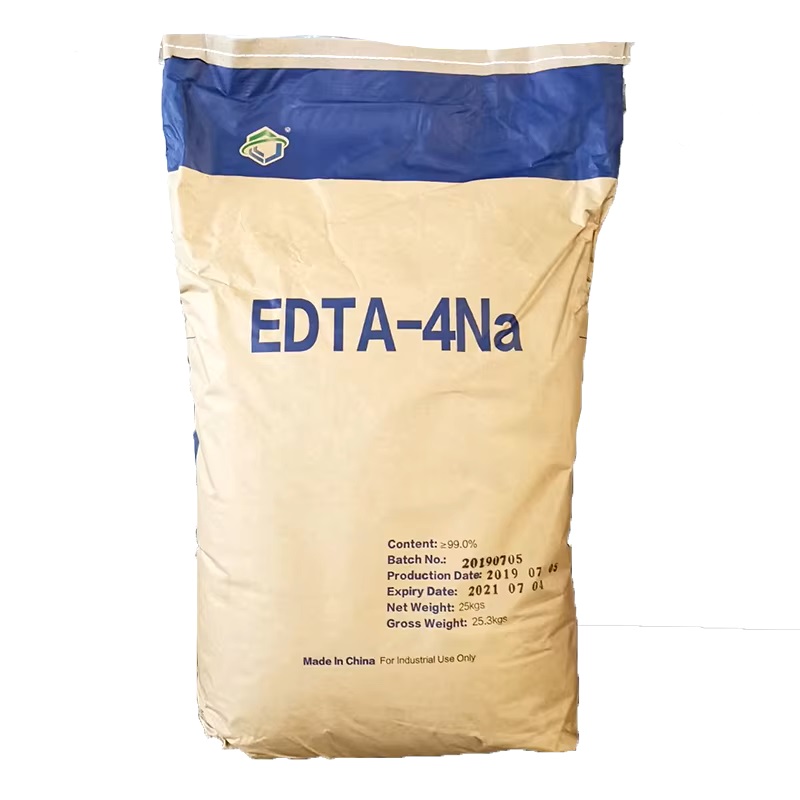
Tetrasodium EDTA, EDTA 4Na, Edetate Sodium, Tetra Sodium Ethylene Diamine Tetra Acetate, Trilon B, 64-02-8
TETRASODYUM EDTA – TETRASODIUM EDTA
1. CHEMICAL IDENTITY AND DEFINITION
| Parameter |
Information |
| Chemical Name (IUPAC) |
Ethylenediaminetetraacetic Acid Tetrasodium Salt |
| Other Names |
Tetrasodium EDTA, Edetate Sodium, EDTA 4Na, Trilon B, Komplekson 3, Chelaton 3, Ethylenediamine Tetraacetic Acid Tetrasodium Salt |
| Chemical Formula |
C₁₀H₁₂N₂Na₄O₈ |
| Molecular Weight |
380.17 g/mol |
| CAS Number |
64-02-8 |
| EC Number (EINECS) |
200-573-9 |
| Appearance |
White crystalline powder |
| Odor |
Odorless |
| Physical State (20°C) |
Solid (powder) |
| Chemical Class |
Chelating agent (aminopolycarboxylic acid salt) |
2. WHAT IS TETRASODIUM EDTA?
Tetrasodium EDTA is the tetrasodium salt of ethylenediaminetetraacetic acid (EDTA). It is a versatile chelating agent with the chemical formula C₁₀H₁₂N₂Na₄O₈. It is a white crystalline powder that is soluble in water and other polar solvents. It decomposes at 150-200°C, gradually losing water of crystallization and changing color. It is widely used as a water softener, preservative, and stabilizer in various industries including water treatment, detergents, cosmetics, food, pharmaceuticals, and agriculture.
3. PHYSICAL PROPERTIES
| Property |
Value |
| Appearance |
White crystalline powder |
| Chemical Formula |
C₁₀H₁₂N₂Na₄O₈ |
| Molecular Weight |
380.17 g/mol |
| CAS Number |
64-02-8 |
| EC Number |
200-573-9 |
| pH (1% Solution) |
~11.3 (alkaline) |
| Solubility in Water |
Soluble |
| Solubility in Polar Solvents |
Soluble |
| Solubility in Alcohol |
Slightly soluble |
| Solubility in Organic Solvents |
Insoluble |
| Decomposition Temperature |
150 – 200 °C |
| Color |
White |
| Odor |
Odorless |
4. CHEMICAL PROPERTIES
| Property |
Information |
| Chemical Formula |
C₁₀H₁₂N₂Na₄O₈ |
| Molecular Weight |
380.17 g/mol |
| CAS Number |
64-02-8 |
| EC Number |
200-573-9 |
| pH (1% Solution) |
~11.3 |
| Chelation Capacity |
High (tetravalent chelating agent) |
| Metal Ion Binding |
Binds Ca²⁺, Mg²⁺, Fe³⁺, Cu²⁺, Zn²⁺, Pb²⁺, etc. |
| Stability |
Stable under normal conditions |
| Decomposition |
Decomposes at 150-200°C, losing water of crystallization |
| Hygroscopicity |
Hygroscopic |
| Solubility in Water |
Freely soluble |
5. CHEMICAL STRUCTURE
EDTA 4Na Structure:
              CH₂ — COONa
              |
    NaOOC — CH₂ — N — CH₂ — CH₂ — N — CH₂ — COONa
                    |               |
              CH₂ — COONa      CH₂ — COONa
Tetrasodium EDTA (EDTA 4Na):
Four sodium cations (Na⁺) are bonded to the four negatively charged oxygen atoms of the EDTA molecule. This structure allows Tetrasodium EDTA to effectively chelate metal ions.
Chelation Mechanism:
[EDTA]⁴⁻ + M²⁺ → [EDTA-M]²⁻
(Where M²⁺ represents a divalent metal ion)
6. EDTA TYPES COMPARISON
| Property |
EDTA (Free Acid) |
Disodium EDTA |
Tetrasodium EDTA |
| Formula |
C₁₀H₁₆N₂O₈ |
C₁₀H₁₄N₂Na₂O₈ |
C₁₀H₁₂N₂Na₄O₈ |
| CAS |
60-00-4 |
139-33-3 |
64-02-8 |
| pH (1% Solution) |
~2.5 |
~4.5 |
~11.3 |
| Water Solubility |
Low |
Moderate |
High |
| Sodium Content |
None |
~12% |
~24% |
| Chelation Capacity |
High |
High |
High |
| Primary Use |
Laboratory |
Cosmetics, food |
Water treatment, industrial |
7. APPLICATIONS
7.1. Water Treatment
| Application |
Description |
| Water Softening |
Binds Ca²⁺ and Mg²⁺ ions to prevent scale formation |
| Scale Prevention |
Prevents limescale in pipes and boilers |
| Metal Ion Sequestration |
Removes heavy metal ions from water |
| Boiler Water Treatment |
Prevents scaling in industrial boilers |
| Cooling Water Systems |
Prevents scale and corrosion |
7.2. Detergents and Cleaning Products
| Application |
Description |
| Builder |
Binds metal ions to enhance cleaning efficiency |
| Stabilizer |
Prevents decomposition of bleaching agents |
| Water Softener |
Softens water in washing machines |
| Industrial Cleaners |
Removes metal deposits from surfaces |
7.3. Cosmetics and Personal Care
| Application |
Description |
| Preservative |
Prevents metal ion-catalyzed degradation |
| Stabilizer |
Stabilizes formulations |
| Skin Barrier Modifier |
Weakens natural skin barrier for deeper penetration |
| Shampoo Additive |
Prevents minerals from binding to other ingredients |
| Creams and Lotions |
Stabilizes emulsions |
| Conditioner Additive |
Prevents product degradation |
7.4. Food Industry
| Application |
Description |
| Preservative |
Prevents oxidation and color change |
| Stabilizer |
Maintains flavor, color, and texture |
| Color Retention |
Prevents discoloration of fruits and vegetables |
| Antioxidant Synergist |
Enhances antioxidant activity |
7.5. Pharmaceutical Industry
| Application |
Description |
| Anticoagulant |
Preserves blood samples |
| Stabilizer |
Stabilizes vaccines and pharmaceuticals |
| Antihemagglutinin |
Prevents blood cell clumping |
| Chelation Therapy |
Removes heavy metals from the body |
| Psoriasis Treatment |
Used as precursor in ethylimide synthesis |
7.6. Agriculture
| Application |
Description |
| Micronutrient Availability |
Increases nutrient availability to plants |
| Soil Conditioner |
Binds metals in soil |
| Micronutrient Fertilizers |
Chelates trace elements for plant uptake |
7.7. Textile and Dyeing
| Application |
Description |
| Dye Stabilizer |
Improves color fastness and brightness |
| Metal Ion Control |
Prevents metal ions from affecting dyes |
| Printing |
Used in textile printing processes |
7.8. Paper Industry
| Application |
Description |
| Pulp Treatment |
Treats steamed fibers |
| Whiteness Enhancement |
Improves paper whiteness |
| Scale Reduction |
Reduces scaling in digesters |
7.9. Polymer Industry
| Application |
Description |
| Polymerization Activator |
For butyl benzene latex |
| Polymerization Terminator |
In acrylic fiber production |
8. ADVANTAGES OF TETRASODIUM EDTA
| Advantage |
Description |
| High Chelation Capacity |
Binds a wide range of metal ions |
| High Water Solubility |
Easily dissolves in aqueous solutions |
| Stabilizing Effect |
Improves product shelf life |
| Versatility |
Applicable across multiple industries |
| Low Toxicity |
Safe for use in food and cosmetics |
| Cost-Effective |
Economical chelating agent |
| Alkaline pH |
Useful in alkaline formulations |
9. SAFETY AND HEALTH INFORMATION
| Parameter |
Value |
| Oral LD50 (Rat) |
~1,200 mg/kg |
| Skin Contact |
May cause mild irritation |
| Eye Contact |
May cause irritation |
| Inhalation |
Dust may cause respiratory irritation |
| Ingestion |
May cause gastrointestinal discomfort |
| Carcinogenicity |
Not classified as carcinogenic |
| Mutagenicity |
Negative |
| Reproductive Toxicity |
No evidence of adverse effects |
9.1. GHS CLASSIFICATION
| Hazard Category |
Description |
| Eye Irritation |
Category 2 (H319) |
| Skin Irritation |
Category 2 (H315) |
9.2. FIRST AID MEASURES
| Route of Exposure |
Action |
| Inhalation |
Remove to fresh air. If respiratory irritation, seek medical attention. |
| Skin Contact |
Wash with plenty of soap and water. |
| Eye Contact |
Rinse thoroughly with water for at least 15 minutes. Seek medical attention. |
| Ingestion |
Rinse mouth. Drink plenty of water. Seek medical attention. |
10. STORAGE AND HANDLING
| Parameter |
Information |
| Storage Conditions |
Cool, dry, well-ventilated area |
| Container Requirements |
Tightly closed, original packaging |
| Protect From |
Moisture, strong acids, strong oxidizing agents |
| Shelf Life |
24-36 months (with proper storage) |
| Hygroscopicity |
Hygroscopic; store in a dry environment |
11. TRANSPORT INFORMATION
| Parameter |
Information |
| UN Number |
Not regulated (not a hazardous material) |
| Hazard Class |
Not applicable |
| Packing Group |
Not applicable |
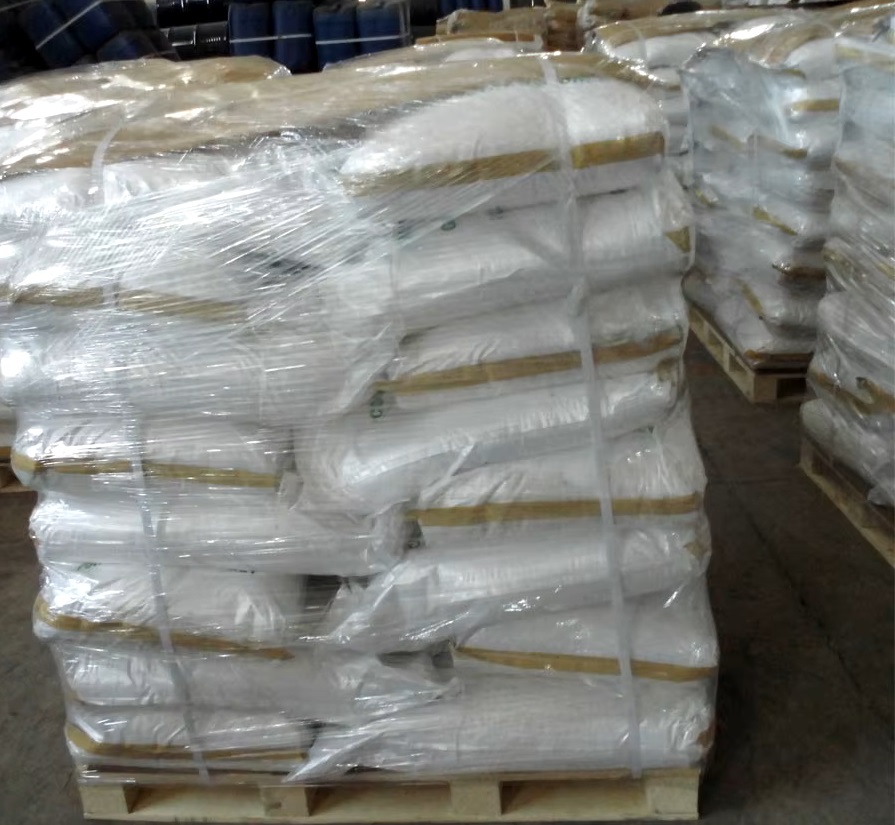
12. PACKAGING OPTIONS
| Packaging Type |
Quantity |
Material |
| Kraft Bag |
25 kg |
Kraft + PE liner |
| Plastic Bucket |
5-25 kg |
HDPE |
| Plastic Drum |
25-50 kg |
HDPE |
| Fibre Drum |
25-50 kg |
Fibreboard |
13. REGULATORY STATUS
| Region / Authority |
Status |
| European Union (REACH) |
Registered substance |
| USA (EPA TSCA) |
Listed on TSCA inventory |
| USA (FDA) |
Approved for food and pharmaceutical use |
| Turkey |
Registered substance |
14. OTHER NAMES AND SYNONYMS
| Type |
Name |
| Turkish Names |
Tetrasodyum EDTA, Edetat Sodyum, EDTA 4Na, Komplekson 3, Şelaton 3, Trilon B |
| English Names |
Tetrasodium EDTA, Edetate Sodium, EDTA 4Na, Trilon B |
| CAS Number |
64-02-8 |
| EC Number |
200-573-9 |
15. SUMMARY AND CRITICAL WARNINGS
Product Summary
| Parameter |
Value |
| Product |
Tetrasodium EDTA |
| CAS Number |
64-02-8 |
| Formula |
C₁₀H₁₂N₂Na₄O₈ |
| Molecular Weight |
380.17 g/mol |
| Appearance |
White crystalline powder |
| pH (1% Solution) |
~11.3 |
| Primary Applications |
Water treatment, detergents, cosmetics, food, pharmaceuticals, agriculture |
CRITICAL WARNINGS
1. Alkaline pH: Tetrasodium EDTA has a high pH (~11.3). Avoid contact with skin and eyes. Use appropriate protective equipment.
2. Hygroscopicity: Tetrasodium EDTA is hygroscopic. Store in a dry environment in tightly closed containers to prevent caking.
3. Chelation: Binds metal ions (Ca²⁺, Mg²⁺, Fe³⁺, Cu²⁺, Zn²⁺, etc.). This property is beneficial but may deplete essential minerals.
4. Cosmetic Use: In cosmetics, it acts as a preservative and stabilizer. It can weaken the skin barrier for deeper penetration of other ingredients.
5. Food Use: Approved for food use as a preservative and stabilizer. Effective at low concentrations.
6. Pharmaceutical Use: Used as an anticoagulant in blood collection tubes. Also used in chelation therapy for heavy metal poisoning.
7. Water Treatment: Effective for water softening and scale prevention. Binds calcium and magnesium ions.
8. Storage: Store in a cool, dry, well-ventilated area. Protect from moisture and strong acids.
9. Compatibility: Incompatible with strong acids, strong oxidizing agents, and metal ions (will chelate).
10. Safety: Generally recognized as safe (GRAS) for food and pharmaceutical applications. Use appropriate PPE during handling.
IMPORTANT DISCLAIMER: This Technical Data Sheet (TDS) is for informational purposes only and is prepared based on available technical data. The user is responsible for determining the suitability of the product for their specific application and for complying with all local, national, and international regulations. For complete safety, storage, use, handling, disposal, and regulatory compliance information, refer to the official Safety Data Sheet (SDS/MSDS) provided by the manufacturer/supplier. This document is not a substitute for professional or medical advice.