We unleash your business potential by maximize the business innovation.
Send EmailAmmonium Sulfate, Diammonium Sulfate, Ammonium Sulphate, Sugar Fertilizer, E517, 7783-20-2
AMMONIUM SULFATE – AMMONIUM SULFATE
1. CHEMICAL IDENTITY AND DEFINITION
| Parameter | Information |
|---|---|
| Chemical Name (IUPAC) | Ammonium Sulfate |
| Other Names | Diammonium Sulfate, Sulfuric Acid Diammonium Salt, Sugar Fertilizer, E517 |
| Chemical Formula | (NH₄)₂SO₄ |
| Molecular Weight | 132.14 g/mol |
| CAS Number | 7783-20-2 |
| EC Number (EINECS) | 231-984-1 |
| E Number | E517 |
| Appearance | White crystalline / granular solid |
| Odor | Odorless |
| Physical State (20°C) | Solid (crystals / granules) |
| Chemical Class | Inorganic salt (ammonium salt) |
2. WHAT IS AMMONIUM SULFATE?
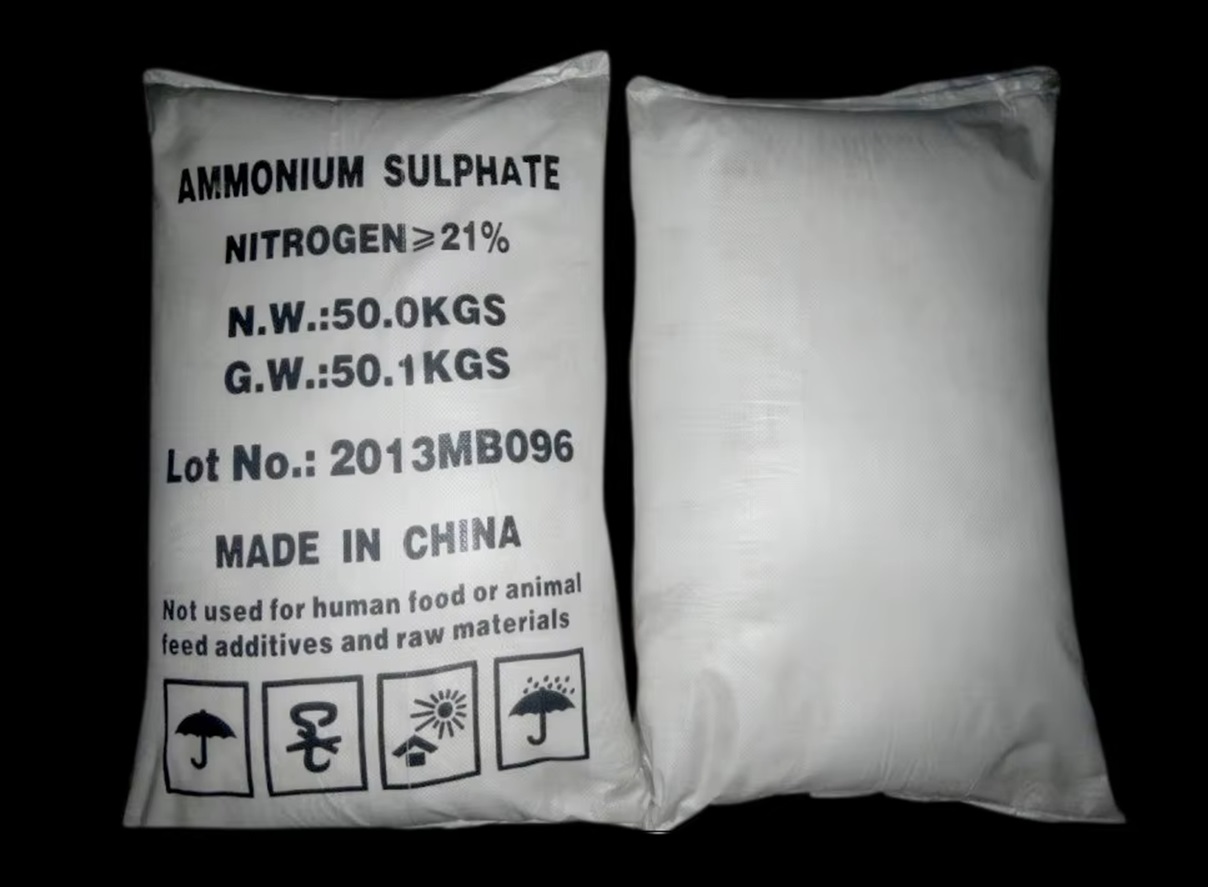
Ammonium sulfate ((NH₄)₂SO₄) is an inorganic salt formed by the neutralization of sulfuric acid and ammonia. It appears as white crystals or granules and has high solubility in water. It contains 21% nitrogen and 24% sulfur. It is one of the most widely used nitrogen and sulfur fertilizers in agriculture, and also has diverse industrial applications in food additives (E517), water treatment, fire retardants, and laboratory applications.
3. PHYSICAL PROPERTIES
| Property | Value |
|---|---|
| Appearance | White crystalline / granular (may have yellow, gray, blue, or green tones) |
| Chemical Formula | (NH₄)₂SO₄ |
| Molecular Weight | 132.14 g/mol |
| Density (20°C) | 1.769 g/cm³ |
| Melting Point | 235 – 280 °C (decomposes) |
| Boiling Point | Decomposes |
| Solubility in Water (20°C) | ~76.4 g/100 mL (highly soluble) |
| Solubility in Water (100°C) | ~104 g/100 mL |
| Solubility in Alcohol | Insoluble |
| Solubility in Ether | Insoluble |
| pH (Aqueous Solution, 5%) | ~5.0 – 6.0 (slightly acidic) |
| Hygroscopicity | Low (but absorbs moisture) |
| Odor | Odorless |
4. CHEMICAL PROPERTIES
| Property | Information |
|---|---|
| Chemical Formula | (NH₄)₂SO₄ |
| CAS Number | 7783-20-2 |
| EC Number | 231-984-1 |
| Nitrogen Content (N) | ~21% |
| Sulfur Content (S) | ~24% |
| pH (Aqueous Solution) | ~5.0 – 6.0 (slightly acidic) |
| Thermal Decomposition | (NH₄)₂SO₄ → NH₃↑ + NH₄HSO₄ (at 235°C) |
| Reaction with Bases | (NH₄)₂SO₄ + 2NaOH → 2NH₃↑ + Na₂SO₄ + 2H₂O |
| Stability | Stable under normal conditions |
| Hygroscopicity | Low hygroscopicity (sensitive to moisture) |
5. CHEMICAL STRUCTURE AND REACTIONS
Chemical Structure:
       NH₄⁺     SO₄²⁻
          \    /
           \  /
          (NH₄)₂SO₄
Ammonium sulfate consists of two ammonium ions (NH₄⁺) and one sulfate ion (SO₄²⁻).
Neutralization Reaction (Production):
2NH₃ + H₂SO₄ → (NH₄)₂SO₄
Thermal Decomposition:
(NH₄)₂SO₄ → NH₃↑ + NH₄HSO₄ (at 235°C)
Reaction with Bases:
(NH₄)₂SO₄ + 2NaOH → 2NH₃↑ + Na₂SO₄ + 2H₂O
6. PRODUCTION METHODS
| Method | Description |
|---|---|
| Neutralization | 2NH₃ + H₂SO₄ → (NH₄)₂SO₄ (most common) |
| By-product | By-product from caprolactam production |
| Coke Oven Gas | Ammonia recovery from coke oven gas |
| Gypsum Method | Production from gypsum and ammonia |
7. APPLICATIONS
7.1. Agriculture (Fertilizer)
| Application | Description |
|---|---|
| Nitrogen and Sulfur Fertilizer | Provides essential nutrients to plants |
| Alkaline and Neutral Soils | Preferred fertilizer type |
| Acidic Soils | Must be applied with lime |
| Tea Cultivation | Widely used |
| Rice Cultivation | Preferred in paddy fields |
| Cereal Crops | Wheat, barley, corn, etc. |
| Phosphorus Uptake | Facilitates phosphorus uptake by plants |
| Plant Growth | Accelerates plant growth |
| Sulfur Requirement | Meets plant sulfur needs |
7.2. Agricultural Sprays (Adjuvant)
| Application | Description |
|---|---|
| Herbicide Efficacy | Enhances efficacy of glyphosate, glufosinate, and 2,4-D herbicides |
| Adjuvant | Auxiliary agent in agricultural sprays |
7.3. Food Industry
| Application | Description |
|---|---|
| E517 Additive | As food additive |
| Bread Additive | Acidity regulator in bread and bakery products |
| Yeast Nutrient | Nutrient source in yeast fermentation |
7.4. Water Treatment
| Application | Description |
|---|---|
| Monochloramine Production | For water disinfection |
| Disinfectant | In water treatment facilities |
7.5. Fire Retardant
| Application | Description |
|---|---|
| Flame Retardant | In compositions similar to diammonium phosphate |
| Char Formation | Lowers combustion temperature, increases char residue |
7.6. Laboratory Applications
| Application | Description |
|---|---|
| Protein Purification | Ammonium sulfate precipitation (salting out) |
| Crystallography | Protein and nucleic acid analysis |
| NMR Spectroscopy | External standard for sulfur (³³S) |
| Rubber Analysis | Precipitant for volatile fatty acid determination |
7.7. Industrial Applications
| Application | Description |
|---|---|
| Ammonium Persulfate Synthesis | Production of other ammonium salts |
| Paint Industry | Paint and pigment production |
| Textiles | Textile processing and dyeing |
| Paper | Paper production |
8. ADVANTAGES OF AMMONIUM SULFATE
| Advantage | Description |
|---|---|
| Nitrogen and Sulfur Source | Provides two essential nutrients together |
| Effective in Alkaline Soils | Increases productivity |
| Facilitates Phosphorus Uptake | Enhances phosphorus absorption by plants |
| Protein Purification | Reliable and widely used laboratory method |
| Low Cost | Economical fertilizer source |
| Versatile | Wide range of applications from agriculture to industry |
| Acidic pH | pH regulation in alkaline soils |
9. DISADVANTAGES OF AMMONIUM SULFATE
| Disadvantage | Description |
|---|---|
| Soil Acidification | Long-term use leads to soil acidification |
| Low Nitrogen Content | Lower nitrogen compared to ammonium nitrate (21%) |
| Transportation Cost | Low nitrogen content increases transportation costs |
| Hygroscopic | Sensitive to moisture; requires careful storage |
10. SAFETY AND HEALTH INFORMATION
| Parameter | Value |
|---|---|
| Toxicity | Low toxicity |
| Oral LD50 (Rat) | ~3,000 – 4,000 mg/kg |
| Skin Contact | May cause mild irritation |
| Eye Contact | May cause irritation |
| Inhalation | Dust may cause respiratory irritation |
| Ingestion | High doses may cause stomach discomfort |
| Carcinogenicity | Not classified |
| Mutagenicity | Negative |
10.1. GHS CLASSIFICATION
| Hazard Category | Description |
|---|---|
| Skin Irritation | Category 2 (H315) |
| Eye Irritation | Category 2 (H319) |
10.2. FIRST AID MEASURES
| Route of Exposure | Action |
|---|---|
| Inhalation | Remove to fresh air. If respiratory irritation, seek medical attention. |
| Skin Contact | Wash with plenty of soap and water. |
| Eye Contact | Rinse thoroughly with water for at least 15 minutes. Seek medical attention. |
| Ingestion | Rinse mouth. Drink plenty of water. Seek medical attention. |
11. STORAGE AND HANDLING
| Parameter | Information |
|---|---|
| Storage Conditions | Cool, dry, well-ventilated area |
| Container Requirements | Tightly closed, moisture-protected |
| Protect From | Moisture, heat, strong oxidizing agents, strong bases |
| Shelf Life | 12-24 months (with proper storage) |
| Hygroscopicity | Sensitive to moisture; store in dry environment |
12. TRANSPORT INFORMATION
| Parameter | Information |
|---|---|
| UN Number | Not regulated (not a hazardous material) |
| Hazard Class | Not applicable |
| Packing Group | Not applicable |
| ADR/RID | Not regulated |
| IMDG Code | Not regulated |
| IATA (Air) | Not regulated |
13. PACKAGING OPTIONS
| Packaging Type | Quantity | Material |
|---|---|---|
| Kraft Bag | 25 kg | Kraft + PE liner |
| Plastic Bag | 25-50 kg | PP/PE |
| Big Bag | 500-1000 kg | Polypropylene |
| Plastic Bucket | 5-25 kg | HDPE |
14. REGULATORY STATUS
| Region / Authority | Status |
|---|---|
| European Union (REACH) | Registered substance |
| USA (EPA TSCA) | Listed on TSCA inventory |
| USA (FDA) | Approved as food additive (E517) |
| Turkey | Approved as fertilizer and food additive |
15. OTHER NAMES AND SYNONYMS
| Type | Name |
|---|---|
| Turkish Names | Amonyum Sülfat, Diamonyum Sülfat, Şeker Gübresi |
| English Names | Ammonium Sulfate, Ammonium Sulphate, Diammonium Sulfate |
| E Number | E517 |
| CAS Number | 7783-20-2 |
| EC Number | 231-984-1 |
16. SUMMARY AND CRITICAL WARNINGS
Product Summary
| Parameter | Value |
|---|---|
| Product | Ammonium Sulfate |
| CAS Number | 7783-20-2 |
| Formula | (NH₄)₂SO₄ |
| Molecular Weight | 132.14 g/mol |
| Appearance | White crystalline/granular |
| Nitrogen Content | ~21% |
| Sulfur Content | ~24% |
| Primary Applications | Fertilizer, food additive, laboratory |
CRITICAL WARNINGS
1. Soil Acidification: Long-term use leads to soil acidification. Must be applied with lime in acidic soils.
2. Hygroscopicity: Sensitive to moisture. Caking and dissolution may occur in humid conditions. Store in a dry environment in tightly closed containers.
3. Low Nitrogen Content: Contains 21% nitrogen. Lower nitrogen content compared to ammonium nitrate (33-34%) increases transportation costs.
4. Reaction with Bases: Reacts with strong bases (NaOH, KOH) releasing toxic ammonia gas. Do not store with bases.
5. Food Use: Approved as food additive E517. Only food-grade products should be used in food applications.
6. Agricultural Applications: Preferred for alkaline and neutral soils. Widely used in tea, rice, and cereal cultivation.
7. Laboratory Use: Widely used in protein purification through "salting out" precipitation.
8. Adjuvant Use: Enhances efficacy of glyphosate, glufosinate, and 2,4-D herbicides in agricultural sprays.
9. Storage: Store in a cool, dry, well-ventilated area in tightly closed containers. Keep away from strong oxidizing agents and bases.
10. PPE: Use dust mask, gloves, and protective goggles in dust-generating operations.
IMPORTANT DISCLAIMER: This Technical Data Sheet (TDS) is for informational purposes only and is prepared based on available technical data. The user is responsible for determining the suitability of the product for their specific application and for complying with all local, national, and international regulations. For complete safety, storage, use, handling, disposal, and regulatory compliance information, refer to the official Safety Data Sheet (SDS/MSDS) provided by the manufacturer/supplier. This document is not a substitute for professional or medical advice.