We unleash your business potential by maximize the business innovation.
Send EmailSodium Cumene Sulfonate, Sodium Cumenesulfonate, Natrium Cumene Sulfonate, SCS, SCS40, 28348-53-0
SODIUM CUMENE SULFONATE (SCS)
1. Chemical Identity and Material Classification
-
Chemical Name: Sodium Cumene Sulfonate, Sodium Cumenesulfonate
-
Synonyms: Natrium Cumene Sulfonate, Natrium Cumol Sulfonat, Sodium 3-Isopropylbenzenesulfonate, Sodium (1-methylethyl)benzenesulfonate, Eltesol SC 40 F
-
CAS Number: 28348-53-0
-
EC Number (EINECS): 248-983-7
-
Molecular Formula: C₉H₁₁NaO₃S
-
Molecular Weight: 222.24 g/mol
-
Chemical Class: Anionic hydrotrope (does not form distinct micelles at standard concentrations)
-
UN Number: Not regulated as hazardous material for transport
2. Physical Properties
| Property | Value |
|---|---|
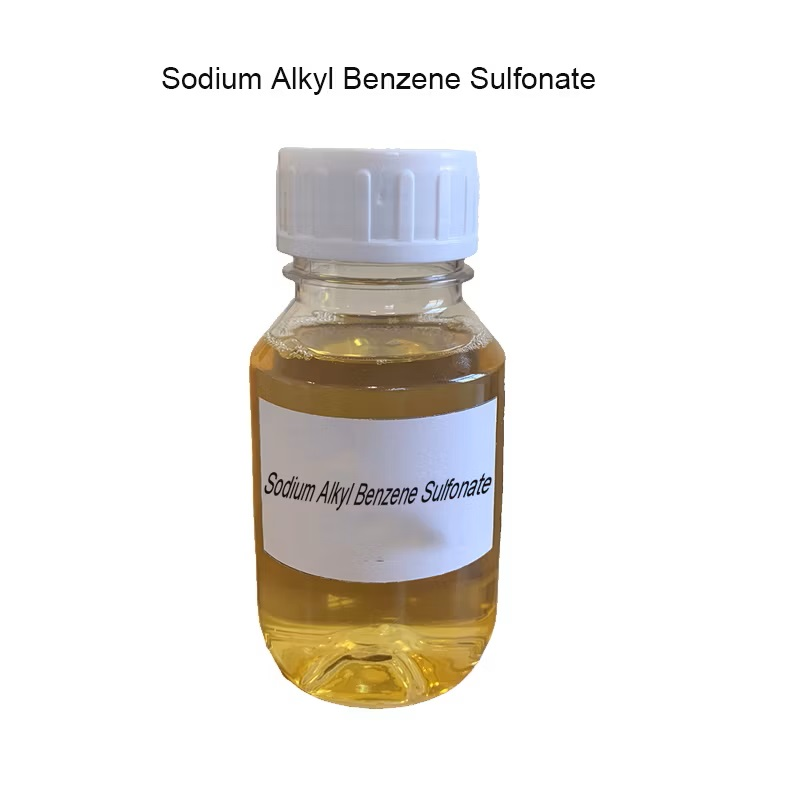
| Appearance (25°C) | Clear, pale yellow liquid |
| Physical state (20°C) | Liquid; white flake crystals may precipitate at low temperatures |
| Odor | Mild, characteristic |
| Active content (w/w) | 40% (typical commercial grade) |
| pH (1% active solution) | 8.0 |
| Density (25°C) | 1.10 g/mL (9.18 lbs/gal) |
| Boiling point | >100°C |
| Flash point (PMCC) | >94°C (>321°F) – combustible |
| Freezing point | -5°C (23°F) |
| Viscosity (30°C) | ~200 cP |
| Water solubility (25°C) | 634.6 g/L (very high) |
| log P (octanol/water, 25°C) | -1.5 |
| RVOC (U.S. EPA) | 0% |
3. Physical Stability and Low Temperature Behavior
At low temperatures, Sodium Cumene Sulfonate may precipitate into white flake crystals. This is a reversible physical process that does not alter its chemical properties; the crystals will re-dissolve when the liquid is heated to 50-60°C with mild agitation.
4. Chemical Properties
4.1 Hydrotropic Mechanism
Unlike conventional surfactants, Sodium Cumene Sulfonate acts as a hydrotrope. It does not form distinct micelles but increases the solubility of other substances through self-aggregation and stacking. At a specific concentration (the Minimum Hydrotrope Concentration, MHC), SCS molecules self-associate, creating microenvironments that can solubilize otherwise insoluble organic materials in aqueous solutions.
4.2 Solubilizer and Coupling Agent
Its primary function is to act as a coupling agent or solubilizer, allowing normally incompatible ingredients to be incorporated into a clear, homogeneous liquid formulation. It is also effective at lowering the cloud point of non-ionic surfactants and reducing the crystallization temperature of complex blends.
4.3 Biodegradability
Sodium Cumene Sulfonate is fully and readily biodegradable under aerobic conditions, according to OECD methods:
-
60% degradation in 6 days
-
100% degradation in 15 days in a Modified Sturm test (OECD 301B)
-
82.5-91.5% degradation in a Coupled Unit test (OECD 301E)
4.4 Hydrolytic and Oxidative Stability
| Parameter | Behavior |
|---|---|
| Hydrolytic stability | Excellent in neutral and alkaline conditions |
| pH stability | Stable at pH 4–11 |
| Thermal stability | Stable up to 50°C; decomposes at >100°C |
5. Quality Specifications (40% Active Solution)
| Parameter | Specification |
|---|---|
| Appearance (25°C) | Clear, pale yellow liquid |
| Active content | 40.0% |
| Solids content | 41.5% |
| pH (1% active solution) | 8.0 |
| Color (Klett) | 70 max. |
| Density (25°C) | 1.10 g/mL |
| Flash point | >94°C |
6. Mechanism of Action (Hydrotrope)
| Step | Description |
|---|---|
| 1 | At the Minimum Hydrotrope Concentration (MHC), SCS molecules self-associate |
| 2 | Creates microenvironments in aqueous solution |
| 3 | Solubilizes otherwise insoluble organic materials within these microenvironments |
| 4 | Lowers the cloud point of non-ionic surfactants |
| 5 | Reduces the crystallization temperature of complex blends |
7. Industrial Applications
7.1 Household, Industrial, and Institutional Cleaning (Primary)
| Application | Function |
|---|---|
| Heavy-duty cleaners | Coupling agent to prevent phase separation in highly concentrated formulas |
| Wax strippers | Solubilizes waxes and other hydrophobic residues |
| Automatic dishwashing detergents | Cloud point depressant to ensure clear rinsing |
| Liquid laundry detergents | Solubilizer for non-ionic surfactants and fragrances |
| Hard surface cleaners | Maintains uniformity of ready-to-use and dilutable cleaners |
| Degreasers | Emulsifies and solubilizes oily soils |
| Metalworking cleaners | Coupling agent in complex industrial formulations |
7.2 Cosmetics and Personal Care (INCI: Sodium Cumene Sulfonate)
| Application | Function |
|---|---|
| Shampoos & conditioners | Low-level hydrotrope to maintain clarity and solubilize oils |
| Liquid hand soaps | Clarifying agent and coupling agent |
7.3 Industrial and Miscellaneous
| Application | Function |
|---|---|
| Textile industry | Dyeing auxiliaries to improve solubility of dyes |
| Leather processing | Used in tanning and degreasing baths |
| Fire fighting foams | Additive to improve solubility of foam concentrate |
| Dry powder detergents | Anti-caking agent in spray-dried formulations |
8. Toxicology and Environmental Profile
8.1 Acute Mammalian Toxicity
| Test | Species | Result |
|---|---|---|
| Oral LD₅₀ | Rat | >7,000 mg/kg body weight |
| Dermal LD₅₀ | Rabbit | >2,000 mg/kg body weight |
| Skin irritation | Rabbit | Practically non-irritating |
| Eye irritation | Rabbit | Slightly irritating |
8.2 Environmental Fate
| Parameter | Value |
|---|---|
| Biodegradability | Readily biodegradable (>60-100% in OECD tests) |
| Aquatic toxicity | Low potential for acute toxicity |
| Bioaccumulation | Very low potential (Predicted BCF <1 L/kg) |
9. Safety Precautions and Personal Protective Equipment (PPE)
-
Hazards: Not classified as hazardous under normal conditions of use. However, may cause mild eye irritation.
-
PPE (recommended – industrial handling):
-
Safety glasses with side shields
-
Chemical-resistant gloves (nitrile)
-
Protective clothing
-
-
First aid:
-
Eye contact: Rinse immediately with plenty of water for 15 minutes. Get medical attention if irritation persists.
-
Skin contact: Wash with soap and water.
-
Ingestion: Rinse mouth. If large amounts are swallowed, seek medical attention.
-
10. Storage and Shelf Life
-
Storage conditions: Store in a cool, dry, well-ventilated area in closed containers. Protect from extreme temperatures.
-
Shelf life: Under proper storage conditions, the product is stable for 24 months.
11. Transport Information
| Regulation | Classification |
|---|---|
| IMO / IATA | Not regulated as Dangerous Goods |
| NTP / IARC / OSHA | Not listed as a carcinogen |
| TSCA (USA) | Listed |
| EINECS (EU) | 248-983-7 |
12. Synonyms and Common Names
-
English: Sodium Cumene Sulfonate, Sodium Cumenesulfonate, Sodium 3-Isopropylbenzenesulfonate, Sodium (1-methylethyl)benzenesulfonate
-
Trade names: Eltesol SC 40, Eltesol SC 40 F, Stepanate SCS, Naxel SCS
-
Turkish: Sodyum Kümen Sülfonat, Natrium Kümen Sülfonat
13. Regulatory Status
| Regulation | Status |
|---|---|
| REACH (EU) | Registered |
| TSCA (US) | Listed |
| EINECS | 248-983-7 |
| EU Detergent Regulation | Permitted as surfactant |
| FDA | Permitted for certain applications |
14. Why Choose Sodium Cumene Sulfonate?
| Advantage | Description |
|---|---|
| Excellent coupling agent | Allows normally incompatible ingredients to form clear formulations |
| Cloud point depressant | Lowers the cloud point of non-ionic surfactants |
| Crystallization inhibitor | Reduces the crystallization temperature of complex blends |
| Readily biodegradable | Environmentally friendly (100% degradation in 15 days) |
| Low toxicity | Oral LD₅₀ >7,000 mg/kg – very low acute toxicity |
| Low bioaccumulation potential | BCF <1 L/kg – does not accumulate in the environment |
| Versatile | Wide range of applications (cleaning, cosmetics, textile, leather) |
| Stable over wide pH range | Effective at pH 4–11 |
| Low temperature precipitation is reversible | Crystals re-dissolve upon warming; performance unaffected |
Limitations:
-
Precipitates at low temperatures – May crystallize during cold storage/transport; requires warming before use
-
Not a classical surfactant – Used as an auxiliary agent, not as a primary cleaner
-
Mild eye irritant – Concentrated product may cause irritation upon eye contact
15. Usage Guide – As a Hydrotrope
| Step | Description |
|---|---|
| 1 | Add 1–5% SCS to the formulation |
| 2 | Effective for lowering the cloud point of non-ionic surfactants |
| 3 | Use to solubilize fragrances and essential oils |
| 4 | If precipitation occurs at low temperatures, warm the product to 50–60°C and mix |
16. Formulation Examples
16.1 Clear Liquid Laundry Detergent (SCS as Hydrotrope)
| Component | % w/w |
|---|---|
| Anionic surfactant (LAS) | 10.0 |
| Non-ionic surfactant | 5.0 |
| Sodium Cumene Sulfonate (40%) | 2.0–5.0 |
| Preservative | q.s. |
| Water | to 100 |
16.2 Automatic Dishwashing Detergent – Rinse Aid
| Component | % w/w |
|---|---|
| Low-foam non-ionic surfactant | 10.0 |
| Sodium Cumene Sulfonate (40%) | 2.0–4.0 |
| Water | to 100 |
17. Frequently Asked Questions (FAQs)
Q1: Is Sodium Cumene Sulfonate a surfactant?
A1: Technically, it is a hydrotrope. It does not form distinct micelles like classical surfactants but possesses the ability to increase the solubility of other substances.
Q2: What is the primary function of SCS?
A2: Its primary function is to act as a coupling agent or solubilizer, allowing normally incompatible ingredients to be incorporated into clear, homogeneous liquid formulations.
Q3: Is SCS biodegradable?
A3: Yes, it is fully and readily biodegradable under aerobic conditions according to OECD test methods.
Q4: Why does SCS crystallize at low temperatures?
A4: Physical precipitation occurs at low temperatures. This is a reversible process that does not alter chemical properties. Crystals will re-dissolve when the liquid is heated to 50–60°C with mild agitation.
18. Storage and Shipping Notes
-
Winter months: If the product is stored at or below its freezing point (-5°C), crystallization can be expected. Bring crystallized product to room temperature or 50–60°C and mix before use.
-
Containers: HDPE, polypropylene, stainless steel, or lined carbon steel are suitable.
19. Compatibility
| Surfactant Type | Compatibility |
|---|---|
| Anionic | Excellent |
| Non-ionic | Excellent |
| Cationic | Good |
| Amphoteric | Good |
20. Summary Table – Key Specifications at a Glance
| Parameter | Value |
|---|---|
| Product Name | Sodium Cumene Sulfonate (SCS) |
| CAS Number | 28348-53-0 |
| Appearance (25°C) | Clear, pale yellow liquid |
| Active Content (typical) | 40% |
| Density (25°C) | 1.10 g/mL |
| pH (1% solution) | 8.0 |
| Flash Point | >94°C |
| Freezing Point | -5°C |
| Water Solubility | 634.6 g/L |
| log P | -1.5 |
| Biodegradability | Readily biodegradable (OECD 301B: 100% in 15 days) |
| Oral LD₅₀ (Rat) | >7,000 mg/kg |
| Primary Functions | Hydrotrope, solubilizer, coupling agent, cloud point depressant |
| Major Applications | Industrial & institutional cleaners, detergents, metalworking fluids, cosmetics |
This TDS is prepared in compliance with ISO 11014-1 format and is intended for detergent formulators, industrial cleaning specialists, cosmetic chemists, and procurement professionals. Certificates of Analysis (CoA), Safety Data Sheets (SDS), and sample validation reports are available upon request.