We unleash your business potential by maximize the business innovation.
Send EmailCocamide DEA, Cocamide Diethanol Amine, Coconut Diethanolamide, Coconut Fatty Acid Diethanolamide, Cocamide DEA, 68603-42-9, 61791-31-9
COCAMIDE DEA (COCO DIETHANOLAMIDE)
1. Chemical Identity and Material Classification
-
Chemical Name: Amides, coco, N,N-bis(hydroxyethyl); Coconut Fatty Acid Diethanolamide
-
Synonyms: Cocamide DEA, Coco Diethanolamide, Coconut Acid Diethanolamide, Coconut Diethanolamide, CDEA, Cocodiethanolamide, N,N-Bis(2-hydroxyethyl)coco amides, Lauramide DEA (C12-rich grade), Alkamide CDE, Comperland KD, KD (Koko Dietanolamin)
-
CAS Numbers:
-
68603-42-9 (primary – fatty acid mixture)
-
61791-31-9 (alternative – alkyl amine derivative)
-
-
Molecular Formula: R–CON(CH₂CH₂OH)₂ (where R–CO represents coconut fatty acid radical, primarily C8–C18)
-
Molecular Weight: Variable (mixture of fatty acid chain lengths)
-
Chemical Class: Non-ionic surfactant (alkanolamide)
-
UN Number: Not classified as hazardous for transport (typically)
2. Raw Material Composition
Cocamide DEA is produced from coconut oil-derived fatty acids reacted with diethanolamine. The typical fatty acid composition of coconut oil is:
| Fatty Acid | Carbon Chain | Typical Content (%) |
|---|---|---|
| Caprylic Acid | C8 | 5–8% |
| Capric Acid | C10 | 5–8% |
| Lauric Acid | C12 | 45–53% (dominant) |
| Myristic Acid | C14 | 15–21% |
| Palmitic Acid | C16 | 8–12% |
| Stearic Acid | C18 | 2–4% |
| Oleic Acid | C18:1 | 5–12% |
3. Physical Properties
| Property | Value |
|---|---|
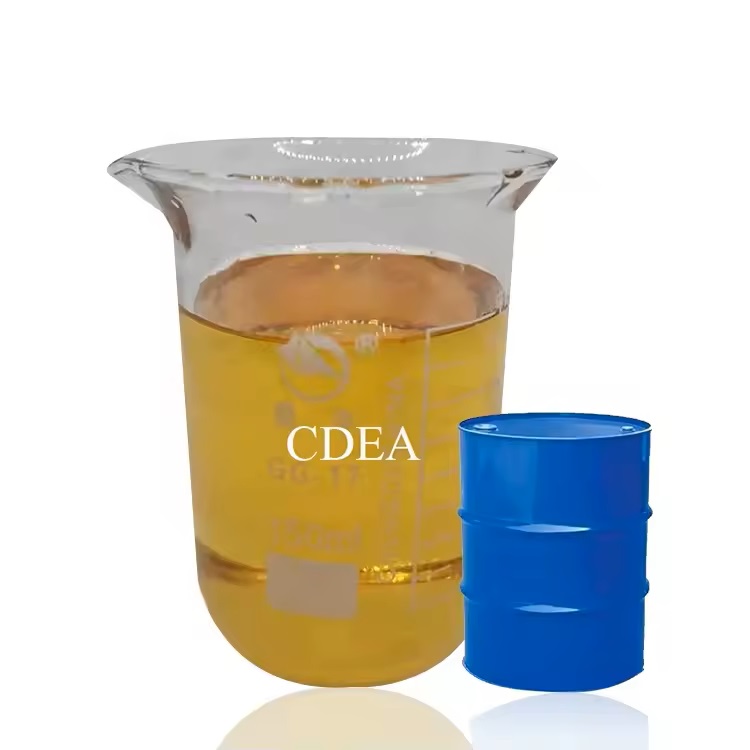
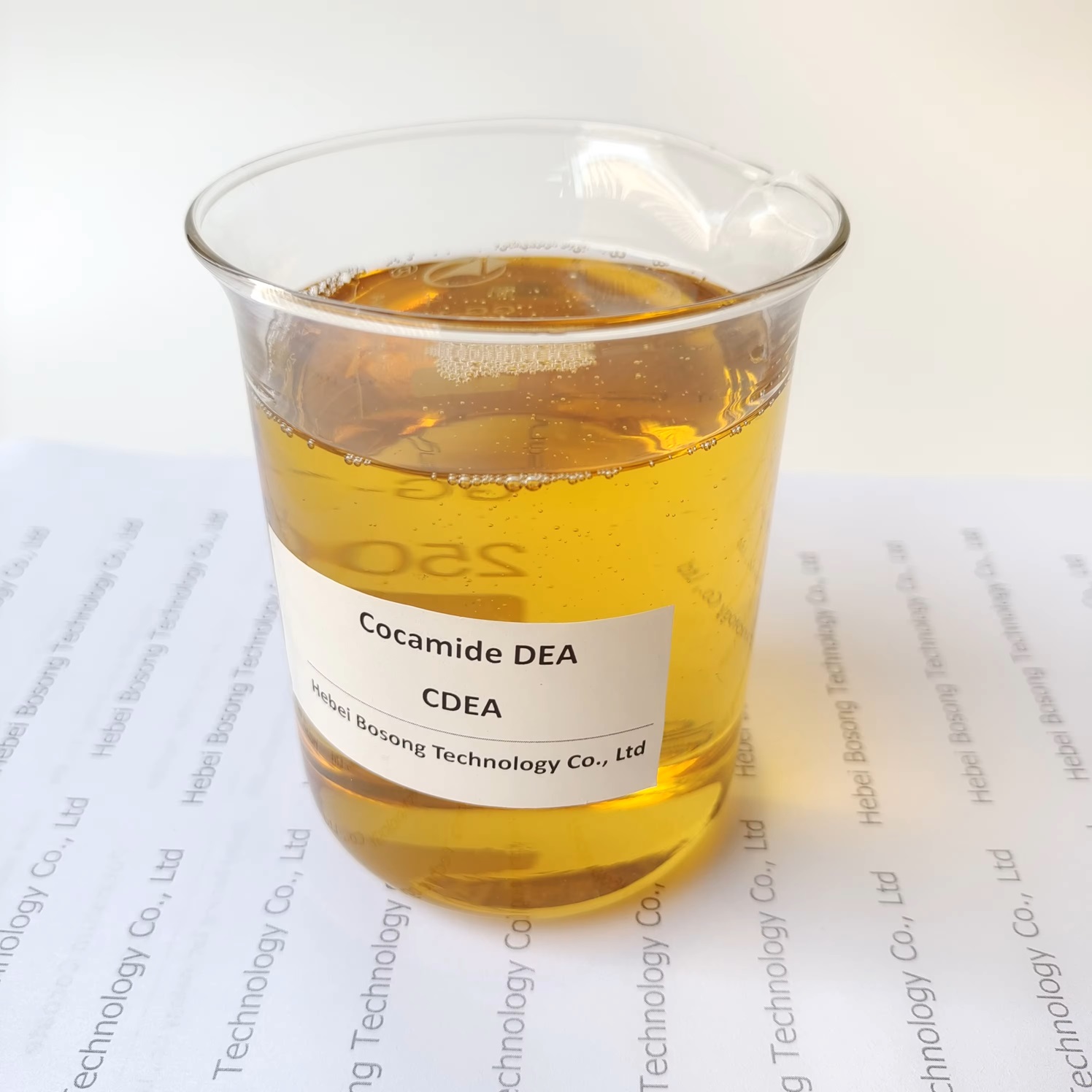
| Appearance | Yellow to amber, clear to hazy viscous liquid |
| Physical state (20°C) | Viscous liquid (may thicken or gel at lower temperatures) |
| Odor | Slight ammonia-like or characteristic amine odor (residual diethanolamine) |
| Density (25°C) | 0.98–1.02 g/cm³ |
| Boiling point | 168–274°C (wide range due to mixture) |
| Flash point | >94°C (combustible) |
| Water solubility | 5–10 g/100 mL at 18°C (dispersible, forms opaque mist-like solution) |
| pH (1% aqueous solution) | 9.0–11.0 (alkaline) |
| HLB (Hydrophilic-Lipophilic Balance) | 3–7 (lipophilic) |
4. Quality Specifications (Grade: 1:1 Type)
| Parameter | Specification | Test Method |
|---|---|---|
| Appearance (25°C) | Yellow to amber viscous liquid | Visual |
| Amide content | ≥ 78% | Titration |
| Free amine content | 1.8–7.5% | Titration |
| Free fatty acid | ≤ 0.5% | Titration |
| Ester content | ≤ 7% | Titration |
| Glycerol content | ≤ 10% | Titration |
| Water content | ≤ 1.0% | Karl Fischer |
| pH (10g/L, 10% ethanol solution) | 9.0–11.0 | pH meter |
| Amine value | 10–40 mg KOH/g | Titration |
4.2 Alternative Grades (1:1.5 and 1:2 Types)
| Parameter | 1:1 Type | 1:1.5 Type | 1:2 Type |
|---|---|---|---|
| Amide content | ≥ 78% | ≥ 70% | ≥ 62% |
| Amine value (mg KOH/g) | 10–40 | 60–90 | 100–130 |
| Free amine content (%) | 1.8–7.5 | 11–16.9 | 18.5–24.5 |
| pH (10g/L, 10% ethanol) | 9–11 | 9–11 | 9–11 |
Note: The ratio refers to the molar ratio of fatty acid to diethanolamine used in production (1:1, 1:1.5, or 1:2).
5. Chemical Properties
5.1 Molecular Structure
Structure: R–C(=O)–N(CH₂CH₂OH)₂
Where:
-
R: Mixed coconut alkyl chain (C8–C18, predominantly C12)
-
Amide linkage: Provides stability and surface activity
-
Two hydroxyethyl groups: Provide water solubility and hydrogen bonding
5.2 Key Functional Properties
| Property | Description |
|---|---|
| Thickening agent | Excellent viscosity builder, especially in anionic surfactant systems |
| Foam stabilizer | Enhances foam volume, creaminess, and stability |
| Emulsifier | Stabilizes oil-in-water emulsions |
| Anti-corrosion | Provides rust inhibition in metalworking fluids |
| Anti-static agent | Reduces static charge in fibers and fabrics |
| Detergency booster | Enhances cleaning performance when combined with anionic surfactants |
4.3 Production Method
Reaction: Coconut fatty acids + Diethanolamine (DEA) → Cocamide DEA + H₂O
Process:
-
Coconut fatty acids are charged to a reactor
-
Diethanolamine is added (typical molar ratios: 1:1 to 1:2)
-
Reaction temperature: 150–180°C
-
Water is removed to drive reaction to completion
-
Product is cooled, neutralized, and packaged
Typical yield: >95%
6. Mechanism of Action
6.1 Thickening Mechanism
In anionic surfactant systems (e.g., SLES, LAS), Cocamide DEA:
-
Intercalates between surfactant molecules
-
Increases the size and number of micelles
-
Results in increased viscosity
Viscosity synergy: Maximum viscosity obtained at certain ratios with anionic surfactants.
6.2 Foam Stabilization Mechanism
-
Reduces surface tension at air-water interface
-
Forms stronger film around air bubbles
-
Prevents bubble coalescence
-
Increases foam creaminess and longevity
6.3 Detergency Synergy
When combined with anionic surfactants:
-
Improves wetting and penetration
-
Enhances soil suspension
-
Prevents soil redeposition
-
Boosts overall cleaning performance
7. Industrial Applications
7.1 Personal Care and Cosmetics (Primary Application)
| Application | Function | Typical Concentration |
|---|---|---|
| Shampoos | Thickener, foam booster, conditioner | 1–5% |
| Conditioners | Emulsifier, antistatic agent | 0.5–2% |
| Body washes | Viscosity builder, foam stabilizer | 1–5% |
| Liquid hand soaps | Thickener, foam booster | 1–5% |
| Facial cleansers | Mild surfactant, foam enhancer | 1–3% |
| Baby shampoos | Mildness enhancer, foam stabilizer | 1–3% |
| Bath products | Foam booster, skin feel enhancer | 1–4% |
Benefits in personal care:
-
Reduces irritation of anionic surfactants (SLS, SLES)
-
Creates rich, creamy, stable foam
-
Provides conditioning and antistatic properties
-
Excellent viscosity builder
-
Mild to skin and eyes
7.2 Detergents and Cleaning Products
| Application | Function | Typical Concentration |
|---|---|---|
| Laundry detergents | Thickener, foam stabilizer, soil suspending agent | 1–5% |
| Dishwashing liquids | Foam booster, grease emulsifier, thickener | 2–8% |
| Hard surface cleaners | Wetting agent, emulsifier | 0.5–3% |
| Industrial cleaners | Detergency booster, corrosion inhibitor | 1–10% |
| Car wash products | Foam booster, lubricant | 1–5% |
7.3 Textile Industry
| Application | Function |
|---|---|
| Wool and fiber cleansers | Gentle cleaning, fiber protection |
| Spinning oils | Lubricant, antistatic agent |
| Dyeing auxiliaries | Leveling agent, dispersant |
| Fabric softeners | Emulsifier, softener |
| Polypropylene fiber production | Spin finish component |
7.4 Metalworking and Industrial
| Application | Function |
|---|---|
| Metal cleaning formulations | Rust inhibitor, detergent |
| Cutting fluids | Corrosion inhibitor, emulsifier |
| Paint strippers | Thickener, penetration aid |
| Metal finishing | Emulsifier, wetting agent |
7.5 Other Industrial Applications
| Sector | Application |
|---|---|
| Electroplating | Wetting agent, emulsifier |
| Printing inks | Emulsifier, stabilizer |
| Shoe polish | Emulsifier, stabilizer |
| Pet care products | Shampoos and cleansers for animals |
| Agriculture | Emulsifier in pesticide formulations |
8. Comparison with Other Alkanolamides
| Property | Cocamide DEA | Cocamide MEA | Lauramide DEA | Coconut Betaine (CAPB) |
|---|---|---|---|---|
| Amine type | Diethanolamine | Monoethanolamine | Diethanolamine | Tertiary amine |
| HLB | 3–7 | 5–8 | 3–7 | Amphoteric |
| Viscosity building | Excellent | Good | Excellent | Moderate |
| Foam boosting | Excellent | Good | Excellent | Good |
| Compatibility | Anionic > Non-ionic > Cationic | Anionic | Anionic | All types |
| Cost | Moderate | Lower | Higher | Moderate |
9. Toxicology and Safety
9.1 Acute Toxicity
| Parameter | Value |
|---|---|
| Oral LD₅₀ (rat) | >5,000 mg/kg (low toxicity) |
| Dermal LD₅₀ (rabbit) | >2,000 mg/kg |
| Skin irritation | Mild irritant (may cause mild irritation) |
| Eye irritation | Moderate to severe irritant |
| Skin sensitization | May cause sensitization in some individuals |
9.2 Special Concerns – Diethanolamine (DEA) and Nitrosamines
| Concern | Information |
|---|---|
| DEA content | Residual free diethanolamine may be present (typically 1.8–7.5% in 1:1 grade) |
| Nitrosamine formation | Cocamide DEA may contain or form trace levels of nitrosamines (potential carcinogens) under certain conditions |
| Regulatory status | Subject to restriction in some jurisdictions; use levels in cosmetics limited |
| EU Cosmetic Regulation | Permitted up to specified limits; must meet purity requirements (low nitrosamine content) |
9.3 Regulatory Status
| Region | Status |
|---|---|
| EU | Permitted in cosmetics (Annex III, entry 2 – restrictions apply) |
| USA | Generally recognized as safe for use in cosmetics (CIR reviewed) |
| Canada | Permitted |
| Japan | Permitted (MHLW list) |
9.4 GHS Classification
| Classification | Category |
|---|---|
| Signal word | Warning |
| Hazard statements | H315 – Causes skin irritation |
| H319 – Causes serious eye irritation | |
| H411 – Toxic to aquatic life with long-lasting effects | |
| Precautionary statements | P264, P273, P280, P302+P352, P305+P351+P338, P332+P313, P337+P313, P391 |
10. Safety Precautions and Personal Protective Equipment (PPE)
-
Hazards:
-
Causes eye and skin irritation
-
May cause allergic skin reaction in susceptible individuals
-
Toxic to aquatic life with long-lasting effects – avoid environmental release
-
-
PPE (recommended):
-
Chemical-resistant gloves (nitrile)
-
Safety glasses (EN 166) or chemical goggles
-
Protective clothing (for industrial handling)
-
-
First aid:
-
Eye contact: Rinse with water for 15 minutes; remove contact lenses; seek medical attention if irritation persists
-
Skin contact: Wash with soap and water
-
Inhalation: Move to fresh air
-
Ingestion: Rinse mouth; do NOT induce vomiting; drink water; seek medical attention if large amount swallowed
-
11. Environmental Fate
| Parameter | Value |
|---|---|
| Biodegradability | Readily biodegradable |
| Aquatic toxicity | Moderate to high – harmful to aquatic organisms |
| Bioaccumulation | Low potential |
| WGK Germany | 2 (hazard to water) |
12. Storage and Handling
12.1 Storage Conditions
| Parameter | Requirement |
|---|---|
| Temperature | 15–40°C (protect from freezing) |
| Container | Keep tightly closed in original container (HDPE, stainless steel) |
| Protect from | Extreme heat, freezing (may thicken or gel), strong oxidizing agents |
| Environment | Cool, dry, well-ventilated area |
| Shelf life (sealed) | 12–24 months |
| Shelf life (opened) | 6–12 months |
12.2 Low Temperature Behavior
-
Product may thicken or gel at low temperatures (<15°C)
-
Gelled material can be liquefied by warming to 30–40°C with mild agitation
-
No loss of performance after freeze-thaw cycles
13. Transport Information
| Regulation | Classification |
|---|---|
| UN Number | Not regulated (typically) |
| ADR/RID | Not classified as dangerous goods |
| IMDG | Not regulated |
| IATA | Not regulated |
14. Synonyms and Common Names
-
English: Cocamide DEA, Coco Diethanolamide, Coconut Fatty Acid Diethanolamide, CDEA, Cocodiethanolamide, N,N-Bis(2-hydroxyethyl)coco amides, Amides, coco, N,N-bis(hydroxyethyl)
-
Trade names: Alkamide CDE, Comperland KD, Ninol, Witcamide, Empilan CDE, Rewomid, Schercomid, Cyclomide, Stepan CDE
-
Korean: 코카마이드 DEA
-
Japanese: コカミドDEA
15. Regulatory Status
| Regulation | Status |
|---|---|
| REACH (EU) | Registered |
| TSCA (US) | Listed |
| EINECS | 263-163-9 / 271-657-0 |
| EU Cosmetic Regulation | Permitted (Annex III, entry 2 – restrictions apply) |
| FDA | Permitted for certain applications |
16. Why Choose Cocamide DEA?
| Advantage | Description |
|---|---|
| Excellent viscosity builder | Significantly increases viscosity in anionic surfactant systems |
| Superior foam booster | Enhances foam volume, creaminess, and stability |
| Cost-effective | Lower cost than many specialty thickeners |
| Good detergency synergy | Improves cleaning performance when combined with anionic surfactants |
| Mildness enhancer | Reduces irritation of primary anionic surfactants |
| Versatile | Multiple applications across personal care, cleaning, and industrial sectors |
| Biodegradable | Environmentally friendly |
| Effective emulsifier | Stabilizes oil-in-water emulsions |
| Corrosion inhibition | Provides rust protection in metalworking fluids |
Limitations:
-
Potential nitrosamine formation – Requires careful quality control and formulation
-
May cause skin sensitization – In susceptible individuals
-
Freezes/thickens at low temperatures – Requires warming before use in cold environments
-
Not compatible with highly acidic or oxidizing systems
17. Formulation Examples
17.1 Thickened Shampoo (Cocamide DEA as Thickener)
| Component | % w/w |
|---|---|
| SLES (70%) | 10.0 |
| Cocamidopropyl Betaine | 3.0 |
| Cocamide DEA (1:1) | 2.0–3.0 |
| Sodium chloride | 0.5 |
| Preservative | q.s. |
| Water | to 100 |
17.2 High-Foam Dishwashing Liquid
| Component | % w/w |
|---|---|
| SLES (70%) | 15.0 |
| Cocamide DEA (1:1.5) | 3.0–5.0 |
| Sodium chloride | 1.0 |
| Fragrance | 0.5 |
| Water | to 100 |
18. Product Grades Comparison
| Grade | Ratio | Amide Content | Free Amine | Viscosity Building | Foam Boosting | Primary Use |
|---|---|---|---|---|---|---|
| 1:1 Type | 1:1 | ≥78% | 1.8–7.5% | Highest | Excellent | Personal care, premium detergents |
| 1:1.5 Type | 1:1.5 | ≥70% | 11–17% | High | Good | Industrial cleaners, cost-effective |
| 1:2 Type | 1:2 | ≥62% | 18–25% | Moderate | Good | General industrial use |
19. Storage Recommendations
| Condition | Requirement |
|---|---|
| Winter storage | Store in heated warehouse (15–40°C) to maintain pumpability |
| Bulk storage | Use tank heating or circulation to prevent gelation |
| Containers | HDPE, stainless steel, or lined steel |
| Incompatibles | Strong oxidizing agents, strong acids |
20. Summary Table – Key Specifications at a Glance
| Parameter | Value |
|---|---|
| Product Name | Cocamide DEA (Coco Diethanolamide) |
| CAS Number | 68603-42-9 (primary); 61791-31-9 (alternative) |
| Appearance | Yellow to amber viscous liquid |
| Amide Content (1:1 grade) | ≥ 78% |
| pH (1% solution) | 9.0–11.0 |
| Flash Point | >94°C |
| Water Solubility | 5–10 g/100 mL at 18°C |
| HLB | 3–7 |
| Primary Functions | Thickener, foam stabilizer, emulsifier, anti-corrosion agent |
| Primary Applications | Shampoos, detergents, dishwashing liquids, textile auxiliaries, metalworking fluids |
| Biodegradability | Readily biodegradable |
| Aquatic Toxicity | Toxic to aquatic life (H411) |
| GHS Signal Word | Warning |
| Hazard Statements | H315, H319, H411 |
This TDS is prepared in compliance with ISO 11014-1 format and is intended for personal care formulators, detergent chemists, industrial cleaning specialists, textile processors, and procurement professionals. Certificates of Analysis (CoA), Safety Data Sheets (SDS), and sample validation reports are available upon request.