We unleash your business potential by maximize the business innovation.
Send EmailBetaine Hydrochloride, Betaine HCl, Trimethylglycine Hydrochloride, Betaine Chloride, Acidol-Pepsin, Acinorm, Aciventral Forte, 590-46-5
BETAINE HYDROCHLORIDE
1. PRODUCT DEFINITION AND CHEMICAL IDENTITY
| Parameter | Description |
|---|---|
| Chemical Name (IUPAC) | 1-Carboxy-N,N,N-trimethylmethanaminium chloride |
| Common Name | Betaine Hydrochloride (Betaine HCl) |
| Other Names | Trimethylglycine hydrochloride, Betaine chloride, Acidol-Pepsin, Acinorm, Aciventral Forte |
| CAS Number | 590-46-5 |
| EINECS | 209-683-1 |
| Molecular Formula | C₅H₁₁NO₂ · HCl |
| Molecular Weight | 153.61 g/mol |
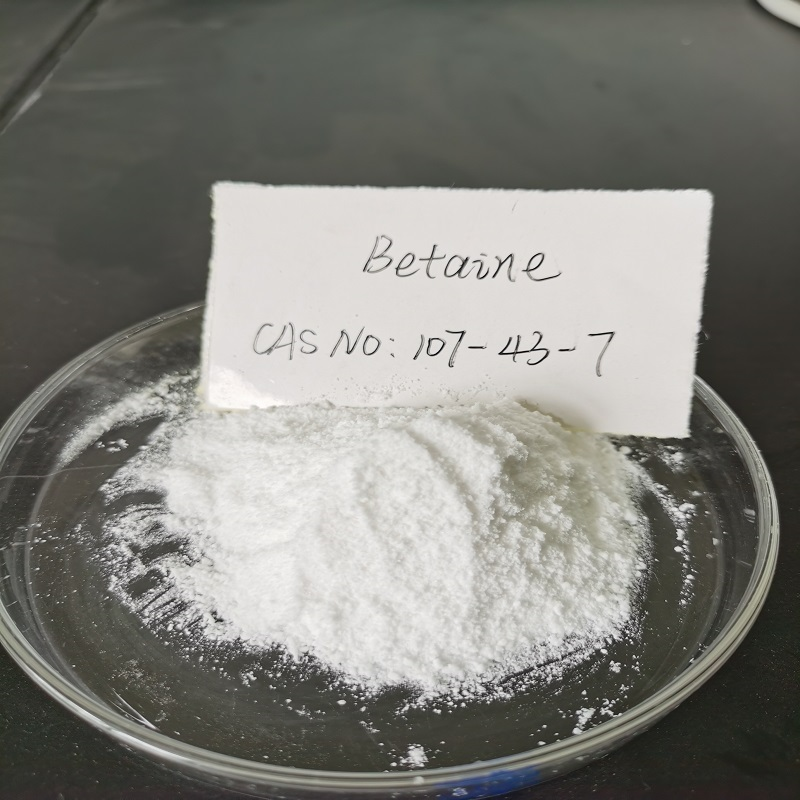
| Appearance | Colourless or white crystalline powder |
| Odour | Odourless or faint characteristic odour |
Note: Betaine hydrochloride is the hydrochloride salt of betaine (trimethylglycine), a naturally occurring compound found in sugar beets, spinach, whole grains, seafood, and meat. It functions as a potent methyl donor in metabolic pathways, supports liver health, and aids digestion by providing a supplemental source of hydrochloric acid. It is widely used as a feed additive, a dietary supplement, and in pharmaceutical and cosmetic applications.
2. PHYSICAL AND CHEMICAL PROPERTIES
| Property | Value / Description |
|---|---|
| Physical form | Colourless or white crystalline powder |
| Density (20 °C) | 1.29 g/cm³ |
| Melting point | 241 – 242 °C (decomposes) |
| Solubility in water (25 °C) | 64.7 g/100 mL (freely soluble) |
| Solubility in ethanol | Soluble |
| Solubility in ether/chloroform | Sparingly soluble |
| pH (50 g/L, H₂O, 20 °C) | ~1 (strongly acidic) |
| Hygroscopy | Hygroscopic; absorbs moisture from the air |
| Stability | Stable under normal conditions; reacts with strong oxidizing agents |
3. FUNCTIONAL PROPERTIES AND BIOLOGICAL ROLE
-
Acidifier and Digestive Aid: In its hydrochloride form, it is a source of supplemental hydrochloric acid. When ingested, it dissociates in the stomach, helping to lower gastric pH. This promotes the activation of pepsinogen to pepsin, facilitating the efficient digestion of proteins and improving the absorption of minerals like calcium, iron, and zinc.
-
Methyl Donor (Metabolic): The betaine molecule is a key methyl donor in the methionine cycle (homocysteine remethylation). This process is vital for liver function, DNA methylation, and maintaining healthy homocysteine levels, supporting cardiovascular and overall metabolic health.
-
Osmoprotectant (Cellular): Betaine is a highly effective organic osmolyte. It accumulates in cells under osmotic stress (dehydration, high salinity) to stabilize protein structures and maintain cellular water balance without disrupting normal cellular metabolism.
-
Lipid Metabolism Support: In the liver, betaine donates a methyl group for the synthesis of carnitine, which is essential for transporting fatty acids into mitochondria for energy production, thereby helping to prevent hepatic lipid accumulation (fatty liver).
4. SECTORAL APPLICATIONS AND USAGE RATES
| Sector | Application | Typical Usage / Notes |
|---|---|---|
| Food & Feed Additive | Dietary supplement for digestive support; feed additive for poultry and livestock to improve growth and feed efficiency | Feed: can partially replace methionine and choline chloride; Supplement: 500-2000 mg per dose with meals |
| Pharmaceutical | Gastrointestinal function regulator; supportive therapy for hypochlorhydria (low stomach acid) | Formulation-specific; used as an active ingredient in digestive aids |
| Cosmetics & Personal Care | Amphoteric surfactant in shampoos and cleansers; enhances foam quality, provides a softening effect on skin and hair | 1 – 5% |
| Industrial | Organic synthesis intermediate; resin processing; welding flux additive | Process-specific |
5. ALTERNATIVE NAMES AND SYNONYMS
| Category | Names |
|---|---|
| Systematic Names | Betaine Hydrochloride, Trimethylglycine Hydrochloride, 1-Carboxy-N,N,N-trimethylmethanaminium chloride |
| Pharmacopoeia / Brand Names | Betaine HCl, Betaine Chloride, Acinorm, Acipepsol, Acidol-Pepsin, Aciventral Forte |
6. ADVANTAGES AND DISADVANTAGES
| Advantages | Disadvantages |
|---|---|
| Effective, targeted digestive aid for individuals with low stomach acid | Strongly hygroscopic; must be stored in tightly sealed, moisture-proof containers |
| Dual benefit: supports both digestion (HCl) and liver/cellular health (betaine) | The pure powder is highly acidic and can be irritating to the skin and eyes |
| Low acute oral toxicity (LD50 > 5000 mg/kg) | Can cause gastrointestinal discomfort if taken on an empty stomach or without adequate water |
| Naturally occurring; compatible with clean-label formulations |
7. SAFETY, STORAGE, AND REGULATORY INFORMATION
-
GHS Classification (CLP Regulation):
-
Signal Word: Warning
-
Hazard Statements: H315 (Causes skin irritation), H319 (Causes serious eye irritation), H335 (May cause respiratory irritation).
-
Precautionary Statements: P261, P264, P280, P302+P352, P304+P340, P305+P351+P338, P312, P332+P313, P337+P313.
-
-
Toxicity: Low acute oral toxicity (LD50, oral, rat > 5000 mg/kg).
-
WKG (Germany): Water Hazard Class 3 (significant hazard to water).
-
Storage:
-
Store at room temperature in a dry, cool, and well-ventilated area.
-
Keep containers tightly sealed and protected from moisture; the product is hygroscopic.
-
Store away from strong oxidizing agents.
-
-
Personal Protective Equipment (PPE): For handling bulk quantities, use nitrile gloves, safety goggles, and a dust mask to avoid irritation from the acidic powder.
8. FREQUENTLY ASKED QUESTIONS
Q1: What is the difference between betaine and betaine hydrochloride?
Betaine (trimethylglycine) is the free base form. Betaine hydrochloride is the salt form, where the betaine molecule is bound to hydrochloric acid (HCl). Betaine HCl is preferred for digestive support because it provides a supplemental source of stomach acid. The betaine portion then goes on to perform its functions as a methyl donor.
Q2: How does betaine HCl aid digestion?
When taken with a meal, betaine HCl dissolves in the stomach and dissociates, releasing hydrochloric acid. This helps to lower the gastric pH, which is essential for activating the protein-digesting enzyme pepsin and for the absorption of many nutrients.
Q3: Is betaine HCl natural?
Betaine is a naturally occurring compound found in many foods like sugar beets, spinach, and whole grains. The hydrochloride form is produced by reacting betaine with hydrochloric acid but remains bioidentical to the form found in nature.
Q4: Why must betaine HCl be stored in a sealed container?
The product is highly hygroscopic, meaning it readily absorbs moisture from the air. Exposure to humidity can cause the powder to cake, liquefy, and degrade, reducing its potency and making it difficult to handle.
9. QUICK REFERENCE TABLE
| Property | Value |
|---|---|
| CAS | 590-46-5 |
| Formula | C₅H₁₁NO₂ · HCl |
| Molecular Weight | 153.61 g/mol |
| Appearance | White crystalline powder |
| pH (5% solution) | ~1 (strongly acidic) |
| Melting Point | 241 – 242 °C |
| Main Functions | Digestive aid (acidifier), methyl donor, osmoprotectant |
| Key Feature | Provides a supplemental source of hydrochloric acid and supports liver health |