We unleash your business potential by maximize the business innovation.
Send EmailBetaine Hydrochloride, Betaine HCL, 590-46-5
Chemical Identity
-
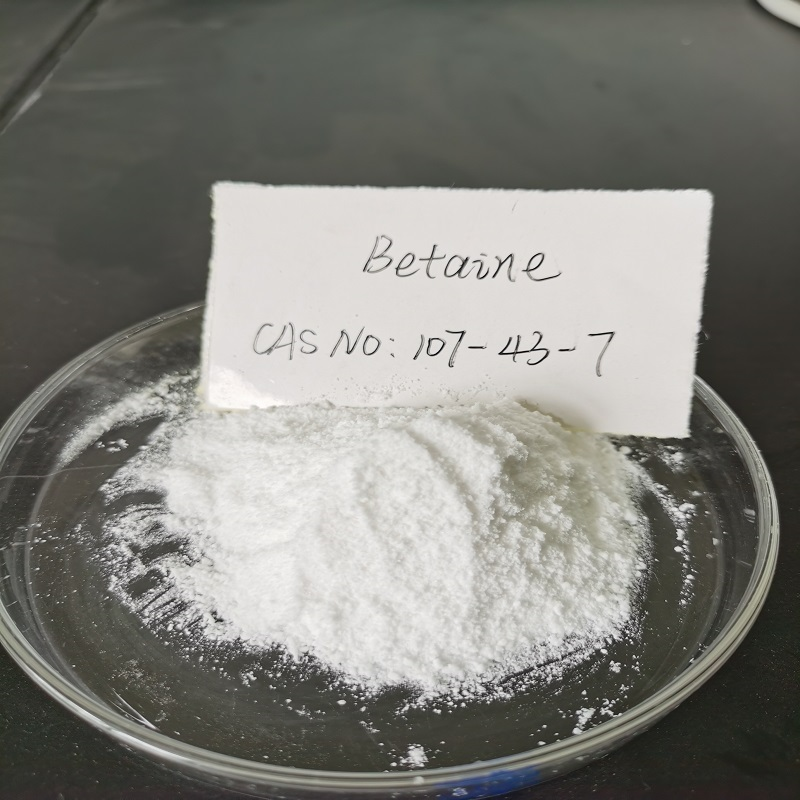
Name: Betaine Hydrochloride
-
Molecular Formula: C₅H₁₂ClNO₂
-
Molecular Weight: 153.61 g/mol
-
CAS Number: 590-46-5
-
EINECS: 209-683-1
-
IUPAC Name: 1-Carboxy-N,N,N-trimethylmethanaminium chloride
-
Synonyms:
-
Betaine HCl
-
Acinorm
-
Acipepsol
-
Acidol-Pepsin
-
Aciventral forte
-
Betaine chloride
-
Ammonium (carboxymethyl)trimethyl-, chloride
-
Carboxy-N,N,N-trimethylmethanaminium chloride
-
Physico-Chemical Properties
-
Appearance: White to yellowish crystalline powder
-
Color: Colorless to white
-
Density: 1.29 g/cm³ (20 °C)
-
Melting Point: 241–242 °C (lit.)
-
Specific Rotation (α): -29.51 (H₂O)
-
Water Solubility: 64.7 g/100 mL (25 °C)
-
Solubility: Easily soluble in water and ethanol; poorly soluble in ether and chloroform
-
pH: ~1 (50 g/L in water, 20 °C)
-
Vapor Pressure: 0 Pa at 25 °C
-
Storage Condition: Room temperature, tightly sealed (moisture-sensitive)
-
Autoignition Temperature: ~400 °C
Functional Role
-
Methyl donor: Works with folic acid, vitamin B12, SAMe, and choline in methylation reactions.
-
Liver support: Important for detoxification, lipid metabolism, and carnitine synthesis.
-
Kidney protection: Helps reduce renal stress and damage.
-
Digestive aid: Increases stomach acidity, improving protein digestion and mineral absorption.
-
Osmoprotectant: Buffers ion balance, supports nutrient absorption in animals.
Applications
-
Pharmaceutical / Medical:
-
Gastrointestinal function regulator (hypochlorhydria treatment).
-
Supports liver function and detoxification.
-
Promotes mineral and nutrient absorption.
-
Not recommended with NSAIDs or corticosteroids (risk of gastric ulcer).
-
-
Food / Nutraceuticals:
-
Used as a fortifier in cereals, dairy, and functional foods.
-
Supplement for individuals with low stomach acid.
-
-
Animal Feed:
-
Efficient methyl donor, partially replacing methionine and choline chloride.
-
Improves nutrient absorption and growth in poultry and livestock.
-
Protects stability of vitamins A and B in premixes.
-
-
Industrial / Chemical:
-
Organic synthesis, resin treatment, welding additives.
-
Amphoteric surfactant in chemical formulations.
-
Risk and Safety
-
Hazard Codes:
-
R36: Irritating to eyes
-
R36/37/38: Irritating to eyes, respiratory system, and skin
-
R20/21/22: Harmful if inhaled, in contact with skin, or swallowed
-
-
Safety Precautions:
-
S26: In case of eye contact, rinse with plenty of water and seek medical advice
-
S24/25: Avoid contact with skin and eyes
-
S36: Wear suitable protective clothing
-
S39: Wear eye/face protection
-
-
WGK Germany: 3 (water hazard classification)
-
Toxicity: LD50 (oral, rat) > 5000 mg/kg → low acute toxicity