We unleash your business potential by maximize the business innovation.
Send EmailMagnesium Nitrate, Magnesium Dinitrate, Magnesium Nitrate Hexahydrate, Anhydrous Magnesium Nitrate, 10377-60-3
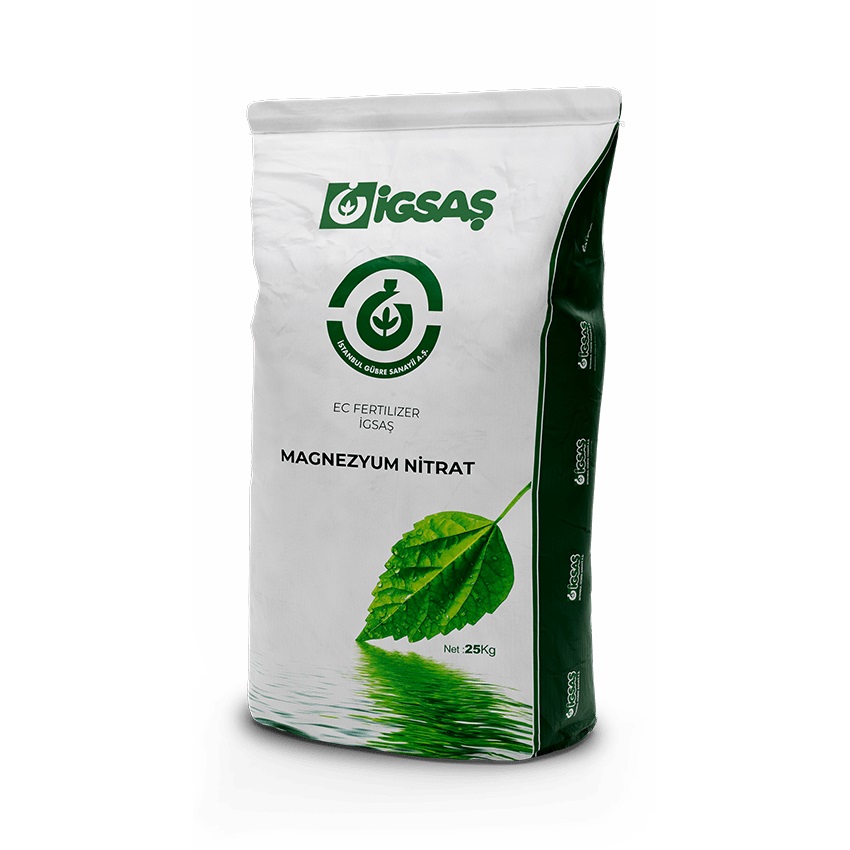
MAGNESIUM NITRATE
PRODUCT IDENTIFICATION INFORMATION
| Parameter | Information |
|---|---|
| Product Name | Magnesium Nitrate |
| Chemical Name | Magnesium Nitrate |
| Synonyms (Turkish) | Magnezyum Nitrat, Nitrik Asit Magnezyum Tuzu, Hegzahidrat, Anhidrat, Susuz Magnezyum Nitrat, Magniyosan, Nitromagnezit |
| Synonyms (English) | Magnesium Nitrate, Magnesium Dinitrate, Nitric Acid Magnesium Salt, Magnesium Nitrate Hexahydrate, Anhydrous Magnesium Nitrate, Nitromagnesite |
| CAS Number | 10377-60-3 |
| Molecular Formula | Mg(NO₃)₂ |
| Molecular Weight | 148.32 g/mol (anhydrous) |
CHEMICAL STRUCTURE
Magnesium Nitrate Structure:
        O⁻
        ||
   Mg²⁺  O=N—O⁻
        ||
        O
Structure Description:
-
Inorganic nitrate salt of magnesium.
-
Ionic compound composed of magnesium cation (Mg²⁺) and two nitrate anions (NO₃⁻).
-
Highly soluble in water.
-
Exists as anhydrous form and various hydrates (hexahydrate Mg(NO₃)₂·6H₂O is most common).
-
Found naturally as the mineral nitromagnesite.
SECTION 1: CHEMICAL IDENTITY AND DESCRIPTION
| Parameter | Information |
|---|---|
| Product Name | Magnesium Nitrate |
| Chemical Name | Magnesium Nitrate |
| Synonyms (Turkish) | Magnezyum Nitrat, Nitrik Asit Magnezyum Tuzu, Hegzahidrat, Anhidrat, Susuz Magnezyum Nitrat, Magniyosan, Nitromagnezit |
| Synonyms (English) | Magnesium Nitrate, Magnesium Dinitrate, Nitric Acid Magnesium Salt, Magnesium Nitrate Hexahydrate, Anhydrous Magnesium Nitrate, Nitromagnesite |
| CAS Number | 10377-60-3 |
| EC Number | 233-826-7 |
| Molecular Formula | Mg(NO₃)₂ |
| Molecular Weight | 148.32 g/mol (anhydrous); 256.41 g/mol (hexahydrate) |
| Chemical Class | Inorganic salt; Nitrate; Magnesium compound; Oxidizer |
| Source | Synthetic (reaction of magnesium compounds with nitric acid) |
| Physical State (20°C) | Solid (crystalline) |
| Odor | Odorless |
| Color | White to colorless crystalline solid |
| Taste | Bitter, saline taste |
SECTION 2: PHYSICAL AND CHEMICAL PROPERTIES
| Property | Value | Test Method / Note |
|---|---|---|
| Appearance | White to colorless crystalline solid | Visual |
| Odor | Odorless | Olfactometric |
| Molecular Weight | 148.32 g/mol (anhydrous); 256.41 g/mol (hexahydrate) | Calculated |
| Density (Anhydrous) | 2.3 g/cm³ | ASTM D4052 |
| Density (Hexahydrate) | 1.45 g/cm³ | ASTM D4052 |
| Melting Point | 129°C (hexahydrate); 330°C (decomposes, anhydrous) | DSC |
| Boiling Point | 330°C (decomposes) | – |
| Decomposition Temperature | ~330°C (NOx, O₂) | – |
| Solubility in Water (25°C) | 71.2 g/100 g water (very high) | General Method |
| Solubility in Ethanol | Soluble | General Method |
| Solubility in Methanol | Soluble | General Method |
| pH (5% Solution) | ~5.0 – 6.5 | pH Meter |
| Stability | Stable under normal conditions; Hygroscopic | – |
| Oxidizing Properties | Strong oxidizer (when heated/decomposed) | – |
| Hygroscopicity | Moderately hygroscopic | – |
| Heavy Metals (as Pb) | ≤ 10 ppm | AAS / ICP |
| Arsenic (As) | ≤ 2 ppm | AAS / ICP |
| Lead (Pb) | ≤ 2 ppm | AAS / ICP |
| Magnesium Oxide (MgO) Content | ~15% | Titrimetric |
| Nitrate Nitrogen Content | ~11% | Kjeldahl |
| Loss on Drying | ≤ 0.5% | Gravimetric |
| Water Insoluble Matter | ≤ 0.1% | Gravimetric |
| Assay (Mg(NO₃)₂) | ≥ 98.0% (anhydrous); ≥ 99.0% (hexahydrate) | Titrimetric |
SECTION 3: MAGNESIUM NITRATE vs OTHER MAGNESIUM SALTS
| Property | Magnesium Nitrate Mg(NO₃)₂ | Magnesium Sulfate MgSO₄ | Magnesium Chloride MgCl₂ | Magnesium Carbonate MgCO₃ |
|---|---|---|---|---|
| CAS Number | 10377-60-3 | 7487-88-9 | 7786-30-3 | 546-93-0 |
| Molecular Weight | 148.32 g/mol | 120.37 g/mol | 95.21 g/mol | 84.31 g/mol |
| Magnesium Content | ~16.5% | ~20.2% | ~25.5% | ~28.8% |
| Solubility in Water | Very high (71.2 g/100 mL) | High | Very high | Insoluble |
| pH (Solution) | ~5.0-6.5 | ~5.5-7.0 | ~6.0-7.5 | ~8.0-9.5 |
| Nitrogen Content | ~11% | 0% | 0% | 0% |
| Oxidizing Properties | Yes | No | No | No |
| Hygroscopicity | Moderate | Low | High | Low |
| Primary Use | Fertilizer, catalysis | Fertilizer, medicine | De-icing, fertilizer | Fertilizer, antacid |
| Organic Farming | Not allowed (synthetic nitrate) | Allowed | Allowed | Allowed |
SECTION 4: MECHANISM OF ACTION
| Property | Description |
|---|---|
| Fertilizer (Magnesium Source) | Provides plant-available magnesium (Mg²⁺); Magnesium is the central atom of chlorophyll; Essential for photosynthesis; Enzyme activation and carbohydrate metabolism. |
| Fertilizer (Nitrogen Source) | Provides plant-available nitrate nitrogen (NO₃⁻); Immediate nitrogen uptake; Promotes vegetative growth; Nitrate form is readily absorbed by roots. |
| Oxidizer | Nitrate ion (NO₃⁻) acts as oxygen donor; Supports combustion at elevated temperatures; Decomposes to release nitrogen oxides and oxygen. |
| Matrix Modifier | Used in atomic absorption spectroscopy; Prevents matrix interferences; Enhances analyte signal stability; Improves detection limits. |
| Desensitizer | Used in lithographic plates; Reduces sensitivity of plates; Controls plate characteristics. |
| Viscosity Modifier | Adjusts viscosity in industrial formulations; Improves application properties; Used in inks and coatings. |
SECTION 5: PRODUCTION PROCESS
Industrial Production Method:
Reaction 1 (Magnesium Oxide + Nitric Acid): MgO + 2HNO₃ → Mg(NO₃)₂ + H₂O
Reaction 2 (Magnesium Carbonate + Nitric Acid): MgCO₃ + 2HNO₃ → Mg(NO₃)₂ + CO₂ + H₂O
Reaction 3 (Magnesium Hydroxide + Nitric Acid): Mg(OH)₂ + 2HNO₃ → Mg(NO₃)₂ + 2H₂O
Process Flow:
Magnesium Compound (Oxide, Carbonate, Hydroxide, or Metal) + Nitric Acid → Neutralization → Filtration → Evaporation/Concentration → Crystallization → Drying → Final Product
Step-by-Step Description:
-
Neutralization: Magnesium compound (MgO, MgCO₃, Mg(OH)₂, or Mg metal) is reacted with nitric acid in a neutralization reactor.
-
Filtration: The resulting solution is filtered to remove impurities.
-
Evaporation/Concentration: The magnesium nitrate solution is concentrated by evaporation.
-
Crystallization: Concentrated solution is crystallized to form solid magnesium nitrate (hexahydrate or anhydrous).
-
Drying: Crystals are dried to achieve specified moisture content.
-
Final Product: Hexahydrate, anhydrous, or liquid formulations are produced.
Natural Occurrence: Found as the mineral nitromagnesite in mines and caves. However, nearly all commercial production is synthetic.
SECTION 6: FUNCTIONAL PROPERTIES
| Property | Description |
|---|---|
| Fertilizer | Water-soluble magnesium and nitrogen source; Provides ~11% nitrate nitrogen and ~15% magnesium oxide (MgO); Suitable for foliar, drip, and fertigation applications; Promotes chlorophyll synthesis and photosynthesis; Corrects magnesium deficiencies. |
| Catalyst Precursor | Used as precursor for catalyst production; High-purity magnesium nitrate for nano-material synthesis; Production of magnesium oxide catalysts. |
| Matrix Modifier (Analytical) | Used in atomic absorption spectroscopy (AAS) as matrix modifier; Reduces interferences from other elements; Stabilizes analyte signals; Improves accuracy of trace metal analysis. |
| Viscosity Modifier | Used in industrial applications to adjust viscosity; Improves flow properties of inks and coatings; Enhances application characteristics. |
| Desensitizer | Used in lithographic plate production; Desensitizes plates to improve quality; Controls plate characteristics. |
| Dehydrating Agent | Used in some industrial processes; Removes water from certain systems; Used in denitrification processes. |
SECTION 7: MAIN APPLICATION AREAS
| Industry / Application | Function | Typical Use |
|---|---|---|
| Agriculture (Fertilizer) | Magnesium and nitrogen source | Foliar application, drip irrigation, fertigation; Greenhouse and hydroponic commercial applications; Corrects magnesium deficiencies; ~11% N + ~15% MgO. |
| Agriculture (Fertilizer Blends) | Component of compound fertilizers | Blended with ammonium nitrate, calcium nitrate, potassium nitrate; Used in NPK formulations; Enhances magnesium content. |
| Analytical Chemistry | Matrix modifier, reagent | Atomic Absorption Spectroscopy (AAS); Graphite Furnace AAS; Trace metal analysis; Improves analytical accuracy. |
| Catalyst Production | Precursor material | High-purity catalysts; Magnesium oxide production; Nano-material synthesis; Catalyst support materials. |
| Printing & Inks | Viscosity modifier, desensitizer | Toner and colorant manufacturing; Inkjet toner formulations; Lithographic plate desensitization. |
| Pyrotechnics | Oxidizer | Pyrotechnic compositions; Fireworks and signal flares; Colored flame production. |
| Chemical Industry | Raw material, intermediate | Production of other magnesium compounds; Ammonium nitrate production (seed growth and coating aid); Inorganic salt removal at high temperatures. |
| Industrial Formulations | Viscosity adjuster | Various industrial applications; Process optimization; Product stability improvement. |
SECTION 8: SAMPLE FORMULATIONS
Foliar Spray Fertilizer (Magnesium Nitrate Solution):
| Component | Amount |
|---|---|
| Magnesium Nitrate (Hexahydrate) | 1 – 2 kg |
| Water | 100 L |
|
Instructions: Dissolve magnesium nitrate in water; Apply as foliar spray during active growth; Compatible with most pesticides (check compatibility); Do not apply before rain; Best applied during early morning or late evening. |
Fertigation Application (Drip Irrigation):
| Component | Amount |
|---|---|
| Magnesium Nitrate (Hexahydrate) | 0.5 – 2 kg |
| Water | 1000 L |
|
Instructions: Dissolve in irrigation water; Apply through drip or sprinkler system; Corrects magnesium deficiencies; Used in greenhouse and hydroponic systems. |
SECTION 9: QUALITY SPECIFICATIONS
| Parameter | Fertilizer Grade | Technical Grade | Analytical Grade | Test Method |
|---|---|---|---|---|
| Appearance | White to colorless crystals | White to colorless crystals | White to colorless crystals | Visual |
| Assay (Mg(NO₃)₂·6H₂O) | ≥ 98.0% | ≥ 99.0% | ≥ 99.5% | Titrimetric |
| Magnesium Oxide (MgO) | ~15% | ~15% | ~15% | Titrimetric |
| Nitrate Nitrogen | ~11% | ~11% | ~11% | Kjeldahl |
| pH (5% Solution) | 5.0 – 6.5 | 5.0 – 6.5 | 5.0 – 6.5 | pH Meter |
| Loss on Drying | ≤ 0.5% | ≤ 0.3% | ≤ 0.2% | Gravimetric |
| Water Insoluble | ≤ 0.1% | ≤ 0.05% | ≤ 0.02% | Gravimetric |
| Heavy Metals (as Pb) | ≤ 10 ppm | ≤ 5 ppm | ≤ 2 ppm | AAS / ICP |
| Arsenic (As) | ≤ 2 ppm | ≤ 1 ppm | ≤ 0.5 ppm | AAS / ICP |
| Lead (Pb) | ≤ 2 ppm | ≤ 1 ppm | ≤ 0.5 ppm | AAS / ICP |
| Iron (Fe) | ≤ 0.001% | ≤ 0.0005% | ≤ 0.0002% | AAS / ICP |
| Chloride (Cl) | ≤ 0.05% | ≤ 0.02% | ≤ 0.01% | Titrimetric |
SECTION 10: TOXICOLOGICAL PROFILE
| Parameter | Value |
|---|---|
| Acute Oral Toxicity (LD50, Rat) | ~ 5,000 mg/kg (low toxicity) |
| Acute Dermal Toxicity | Low toxicity; May cause mild irritation |
| Skin Irritation | Mild irritant |
| Eye Irritation | May cause irritation |
| Inhalation Toxicity | May cause respiratory irritation (dust) |
| Chronic Toxicity | Low toxicity at normal exposure levels |
| Carcinogenicity | Not classified as carcinogenic |
| Mutagenicity | Not mutagenic |
| Reproductive Toxicity | No reproductive toxicity at normal levels |
| Environmental Toxicity | Nitrate can contribute to water contamination; Excessive use may cause eutrophication; Handle with care near water bodies. |
| Special Toxicity Note | LD50 low; Generally considered non-toxic; FDA-approved food additive for specific applications (21 CFR 184.1438); May release toxic nitrogen oxides (NOx) at high temperatures (>330°C); Protective equipment recommended for industrial handling. |
SECTION 11: GHS CLASSIFICATION AND LABELING
GHS Classification (in accordance with CLP and UN GHS):
| Hazard Class | Category | H-Statement |
|---|---|---|
| Oxidizing Solids | Category 3 | H272 |
| Eye Irritation | Category 2 | H319 |
| Specific Target Organ Toxicity (Single) | Category 3 | H335 |
Signal Word: WARNING
Hazard Pictograms: GHS03 (Flame Over Circle), GHS07 (Exclamation Mark)
Hazard Statements (H-Codes):
| Code | Statement |
|---|---|
| H272 | May intensify fire; oxidizer |
| H319 | Causes serious eye irritation |
| H335 | May cause respiratory irritation |
NFPA 704 Hazard Classification:
| Health | Flammability | Reactivity | Special |
|---|---|---|---|
| 1 | 0 | 1 | OX |
| (Slight health hazard) | (Non-flammable) | (Mild reactivity) | (Oxidizer) |
SECTION 12: PRECAUTIONARY STATEMENTS (P-CODES)
| Code | Statement |
|---|---|
| P220 | Keep away from clothing and other combustible materials |
| P221 | Take any precaution to avoid mixing with combustibles |
| P264 | Wash hands thoroughly after handling |
| P280 | Wear protective gloves/protective clothing/eye protection/face protection |
| P302+P352 | IF ON SKIN: Wash with plenty of soap and water |
| P304+P340 | IF INHALED: Remove person to fresh air and keep comfortable for breathing |
| P305+P351+P338 | IF IN EYES: Rinse cautiously with water for several minutes. Remove contact lenses if present and continue rinsing |
| P312 | Call a POISON CENTER/doctor if you feel unwell |
| P337+P313 | If eye irritation persists: Get medical advice/attention |
| P370+P378 | In case of fire: Use water spray, foam, or dry chemical powder |
| P403+P233 | Store in a well-ventilated place. Keep container tightly closed |
| P501 | Dispose of contents/container in accordance with local/regional/national/international regulations |
SECTION 13: FIRST AID MEASURES
| Exposure Route | Action to Take |
|---|---|
| Inhalation | Remove to fresh air immediately. If respiratory irritation develops, seek medical attention. |
| Skin Contact | Wash with plenty of soap and water. Remove contaminated clothing. If irritation persists, get medical attention. |
| Eye Contact | Rinse immediately with plenty of water for at least 15 minutes. Keep eyelids open. Remove contact lenses if present. If irritation persists, seek medical attention. |
| Ingestion | Rinse mouth. Drink plenty of water. Seek medical attention if large quantities are ingested or if feeling unwell. |
SECTION 14: FIREFIGHTING MEASURES
| Parameter | Information |
|---|---|
| Fire Hazard | Not flammable but is an oxidizer. May support combustion of other materials. |
| Hazards Arising from Fire | Thermal decomposition produces nitrogen oxides (NOx) and oxygen; May intensify fire in contact with combustibles. |
| Suitable Extinguishing Media | Water spray (large quantities), water fog, foam, dry chemical powder. |
| Unsuitable Extinguishing Media | CO₂ (ineffective for oxidizing agents) |
| Special Protective Equipment | Self-contained breathing apparatus (SCBA), full protective clothing, firefighting goggles. |
| Special Precautions | Prevent fire-fighting water from entering waterways; Evacuate area; Cool fire-exposed containers with water spray. |
SECTION 15: STORAGE AND SHELF LIFE
| Parameter | Information |
|---|---|
| Storage Conditions | Store in a cool, dry, well-ventilated area; PROTECT FROM MOISTURE and CONTAMINATION; Separate from combustible materials and reducing agents. |
| Container Requirements | Tightly closed, moisture-proof containers (PE-lined bags, HDPE drums). |
| Materials to Protect From | Moisture, heat, combustible materials, organic substances, reducing agents |
| Shelf Life | 24 – 36 months (in unopened original packaging, under proper storage conditions). |
| Stability Note | Stable under recommended storage conditions; Hygroscopic; Absorbs moisture from air; May deliquesce if exposed to high humidity. |
| Special Storage Requirements | Store in a dry, cool place; Avoid exposure to air and moisture; Opened containers must be resealed immediately; Keep away from combustible materials. |
SECTION 16: PACKAGING OPTIONS
| Packaging Type | Quantity | Material |
|---|---|---|
| PE-Lined Paper Bag | 25 kg, 50 kg | PE-lined kraft paper bag (moisture-proof) |
| Plastic Bag | 10 kg, 25 kg, 50 kg | PE bag (inner-lined, sealed, moisture-proof) |
| Plastic Drum | 25 kg, 50 kg | HDPE / Polypropylene (moisture-proof, chemical-resistant) |
| FIBC / Big Bag | 500 kg, 1000 kg | PE-lined, moisture-resistant PP woven bag |
SECTION 17: TRANSPORT INFORMATION
| Parameter | Information |
|---|---|
| UN Number | UN 1474 (Magnesium Nitrate) |
| Hazard Class | Class 5.1 - Oxidizing Substances |
| Packing Group | III |
| ADR/RID | Class 5.1; UN 1474; Packing Group III |
| IMDG Code | Class 5.1; UN 1474; Marine pollutant: No |
| IATA (Air) | Class 5.1; UN 1474; Packing Group III |
| Transport Label | Oxidizer (Class 5.1) |
| Marine Pollutant | No |
| Special Transport Requirements | Segregation from combustibles and reducing agents; Secure from unauthorized access. |
SECTION 18: REGULATORY STATUS
| Region / Authority | Status |
|---|---|
| European Union | REACH registered; Regulated as oxidizing substance; Approved for use as fertilizer. |
| USA (TSCA) | Listed (TSCA Inventory) |
| USA (FDA) | GRAS (Generally Recognized as Safe); 21 CFR 184.1438 (Food additive: nutrient supplement, dough strengthener, stabilizer, thickener). |
| USA (EPA) | Regulated under fertilizer and industrial chemical programs. |
| Turkey | Regulated as fertilizer and industrial chemical; Subject to KKDIK regulation; Ministry of Agriculture approval for fertilizer use; Organic farming: Not allowed (synthetic nitrate). |
| Organic Farming | NOT PERMITTED in organic agriculture; Magnesium sulfate or magnesium chloride are used as alternatives. |
| IARC | Not classified (non-carcinogenic) |
| NTP | Not listed |
| California (Prop 65) | Not listed |
| Fertilizer Regulations | Subject to national fertilizer standards; Heavy metal limits apply; Labeling requirements apply. |
SECTION 19: OTHER NAMES AND SYNONYMS
| Type | Name |
|---|---|
| Turkish Names | Magnezyum Nitrat, Nitrik Asit Magnezyum Tuzu, Hegzahidrat, Anhidrat, Susuz Magnezyum Nitrat, Magniyosan, Nitromagnezit |
| English Names | Magnesium Nitrate, Magnesium Dinitrate, Nitric Acid Magnesium Salt, Magnesium Nitrate Hexahydrate, Anhydrous Magnesium Nitrate, Nitromagnesite |
| CAS Number | 10377-60-3 |
| EC Number | 233-826-7 |
| HS Code | 2834.29 |
| Synonyms | Magniyosan, Nitromagnesite, Magnesium (II) nitrate, Magnesium salt of nitric acid |
SECTION 20: SUMMARY TABLE
| Parameter | Value |
|---|---|
| Product | Magnesium Nitrate |
| CAS Number | 10377-60-3 |
| Molecular Formula | Mg(NO₃)₂ |
| Molecular Weight | 148.32 g/mol (anhydrous) |
| Appearance | White to colorless crystalline solid |
| Melting Point | 129°C (hexahydrate); 330°C (decomposes, anhydrous) |
| Solubility in Water | Very high (71.2 g/100 g at 25°C) |
| Primary Functions | Fertilizer, matrix modifier, catalyst precursor, oxidizer |
| Main Application Areas | Agriculture (fertilizer), analytical chemistry, catalyst production, printing, pyrotechnics |
| Shelf Life | 24 – 36 months |
| GHS Signal Word | WARNING |
| UN Number | 1474 |
| Hazard Class | Class 5.1 (Oxidizer) |
| Packing Group | III |
| Special Properties | Oxidizer; Hygroscopic; Water-soluble magnesium and nitrogen source; ~11% N + ~15% MgO; FDA GRAS; Organic farming not permitted; Forms hexahydrate (most common commercial form). |
SECTION 21: CRITICAL WARNINGS AND BEST PRACTICES
CRITICAL WARNINGS:
-
OXIDIZER (H272): May intensify fire and support combustion. KEEP AWAY FROM COMBUSTIBLE MATERIALS.
-
CAUSES SERIOUS EYE IRRITATION (H319): Eye contact should be avoided. EYE PROTECTION IS RECOMMENDED.
-
MAY CAUSE RESPIRATORY IRRITATION (H335): Avoid inhalation of dust.
-
HYGROSCOPIC: Absorbs moisture from air; may deliquesce. Store in tightly closed containers.
-
DECOMPOSITION: Decomposes at high temperatures (>330°C) releasing toxic nitrogen oxides (NOx).
-
ORGANIC FARMING NOT PERMITTED: Synthetic nitrate source; not allowed in organic agriculture.
-
FDA GRAS: Approved as food additive for specific applications (nutrient supplement, dough strengthener, stabilizer, thickener).
-
WATER CONTAMINATION: Nitrate can contaminate groundwater; use according to recommended rates.
BEST PRACTICE RECOMMENDATIONS:
-
Agriculture (Fertilizer): Use as foliar spray or fertigation; Recommended dosage: 0.5-2 kg per 1000 L water; Apply during active growth; Compatible with most fertilizers; Best applied in early morning or late evening; Do not apply before rain.
-
Analytical Chemistry: Use as matrix modifier in AAS; Recommended concentration: 0.1-1%; Use high-purity grade; Calibrate instrument accordingly.
-
Handling: Use in well-ventilated areas; Avoid dust formation; Use dust masks (N95/FFP2) when handling powder; Use gloves and safety goggles; Avoid contact with combustible materials.
-
Personal Protective Equipment: Dust mask (N95/FFP2 or higher), safety goggles, chemical-resistant gloves, protective clothing.
-
Hygiene: Wash hands thoroughly after handling; Do not eat, drink, or smoke while using; Remove contaminated clothing and wash before reuse.
-
Storage: Store in tightly closed, moisture-proof containers; Store in cool, dry, well-ventilated area; Protect from moisture and heat; Keep away from combustible materials; Opened containers must be resealed immediately; Shelf life: 24-36 months under proper conditions.
-
Spill Management: Sweep or vacuum (HEPA) and place in suitable sealed container; Avoid dust formation; Do not allow entry into drains or waterways.
-
Disposal: Dispose of in accordance with local, regional, and national regulations; Non-hazardous waste; Can be incinerated in compliance with regulations.
DETECTION METHODS:
| Method | Description | Advantages | Disadvantages |
|---|---|---|---|
| Titrimetric (EDTA) | Magnesium determination by complexometric titration | Standard method, accurate | Time-consuming |
| AAS / ICP | Magnesium and trace element analysis | High sensitivity, accurate | High cost, requires expertise |
| Ion Chromatography | Nitrate ion determination | Specific nitrate analysis | High cost, requires expertise |
| Gravimetric Analysis | Magnesium oxide determination after ignition | Standard method | Time-consuming |
| pH Meter | pH of solution | Simple, rapid | Indicative only |
MAGNESIUM NITRATE vs ALTERNATIVES COMPARISON:
| Product | Chemical Name / E Code | Application | Strength | Weakness | Status |
|---|---|---|---|---|---|
| Magnesium Nitrate | Mg(NO₃)₂ | Fertilizer, analytical | N + Mg source, water-soluble, oxidizer | Not organic, oxidizing hazard | Approved (not organic) |
| Magnesium Sulfate (Epsom Salt) | MgSO₄ | Fertilizer, medicine | Safe, organic-approved, cheap | No nitrogen, lower solubility | Widely used (organic) |
| Magnesium Chloride | MgCl₂ | Fertilizer, de-icing | High Mg content, water-soluble | Can be corrosive, hygroscopic | Approved (organic) |
| Magnesium Carbonate | MgCO₃ | Fertilizer, antacid | Slow release Mg, safe | Insoluble, no nitrogen | Approved (organic) |
| Magnesium Oxide | MgO | Fertilizer, refractory | High Mg content, cheap | Insoluble, no nitrogen | Approved |
LEGAL DISCLAIMER:
The information provided in this document is based on our current knowledge and experience and is presented in good faith. However, as all conditions of use are beyond our control, it does not constitute a binding specification or warranty. This Technical Data Sheet is for informational purposes only. Users are responsible for testing the suitability for their own applications and for complying with all local, regional, and national regulations. For complete safety, storage, use, handling, waste, and regulatory compliance information, please refer to the official Safety Data Sheet (SDS/MSDS) provided by the manufacturer/supplier. Magnesium nitrate is an oxidizer; keep away from combustible materials and follow proper safety protocols.