We unleash your business potential by maximize the business innovation.
Send EmailPolypropylene Glycol, Poly Propylene Glycol, Propylene Oxide Polymer, Polypropylene Oxide, Case Polyol, PPG, 25322-69-4
POLYPROPYLENE GLYCOL (PPG)
PRODUCT IDENTIFICATION INFORMATION
| Parameter | Information |
|---|---|
| Product Name | Polypropylene Glycol |
| Synonyms | Polypropylene Glycol, Poly Propylene Glycol, Case Polyol, PPG, Poly(propylene glycol), Propylene Oxide Polymer, Polypropylene Oxide |
| Chemical Formula | HO–(CH(CH₃)CH₂O)ₙ–H |
| CAS Number | 25322-69-4 |
| EC Number (EINECS) | 500-039-8 |
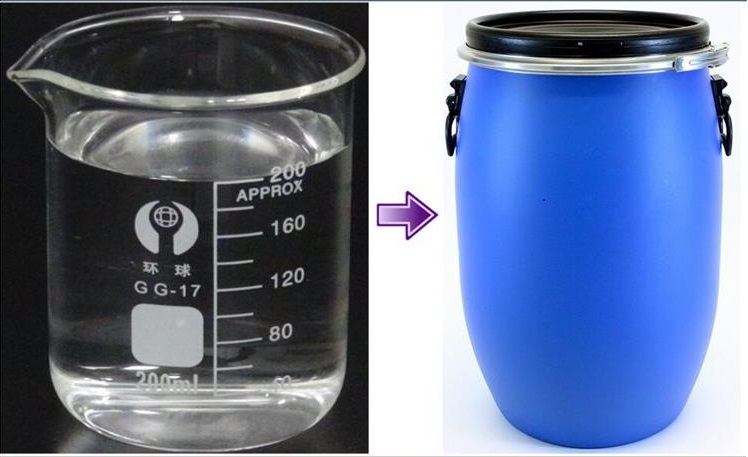
| Appearance | Clear, colorless to pale yellow viscous liquid |
| Physical State | Liquid (for most commercial grades) |
| Odor | Slight characteristic odor |
CHEMICAL STRUCTURE
    Polypropylene Glycol (PPG)

    General Structure:

    HO-CH(CH₃)-CH₂-O-[CH(CH₃)-CH₂-O]ₙ-CH(CH₃)-CH₂-OH

    Key Features:
    - Methyl side groups (-CH₃) providing hydrophobicity
    - Hydroxyl end groups (-OH) for reactivity
    - Linear or branched chain structure
    - Polyether polyol class
Molecular Formula: HO–(CH(CH₃)CH₂O)ₙ–H
Functional Groups: Terminal hydroxyl groups (-OH)
Structure: Contains methyl side groups; linear or branched chain
Chemical Class: Polyether polyol
SECTION 1: CHEMICAL IDENTITY AND DEFINITION
| Parameter | Information |
|---|---|
| Product Name | Polypropylene Glycol |
| Synonyms (English) | Polypropylene Glycol, Poly Propylene Glycol, Case Polyol, PPG, Poly(propylene glycol) |
| Synonyms (Turkish) | Polipropilen Glikol, Poli Propilen Glikol, PPG |
| CAS Number | 25322-69-4 |
| EC Number (EINECS) | 500-039-8 |
| Molecular Formula | HO–(CH(CH₃)CH₂O)ₙ–H |
| Molecular Weight Range | 400 - 4,000+ g/mol (wide range) |
| Chemical Class | Polyether polyol |
| Functional Groups | Hydroxyl end groups (-OH) |
| Physical State (20°C) | Liquid (most commercial grades) |
| Appearance | Clear, colorless to pale yellow viscous liquid |
| Odor | Slight characteristic odor |
| pH (1% aqueous solution) | 6 - 7 (neutral) |
SECTION 2: PHYSICAL AND CHEMICAL PROPERTIES
| Property | Value | Test Method / Note |
|---|---|---|
| Appearance | Clear, colorless to pale yellow viscous liquid | Visual |
| Odor | Slight characteristic odor | Olfactometric |
| Molecular Weight Range | 400 - 4,000+ g/mol | - |
| Melting Point | -15°C to -40°C (depends on MW) | DSC |
| Density (25°C) | ~1.05 g/cm³ | ASTM D4052 |
| pH (1% aqueous solution) | 6 - 7 (neutral) | pH Meter |
| Solubility in Water | Depends on MW; Low MW soluble, high MW slightly soluble | General Method |
| Solubility in Organic Solvents | Soluble in alcohols, aromatics, ketones | General Method |
| Viscosity (25°C) | 10 - 1,500 mPa·s (depends on MW) | ASTM D445 |
| Hydroxyl Value | 28 - 280 mg KOH/g (depends on MW) | Titrimetric |
| Flash Point | >200°C | ASTM D93 |
| Hygroscopicity | Moderate to high | - |
| Surface Activity | Non-ionic surfactant properties | - |
| Boiling Point | Decomposes before boiling | - |
| Refractive Index (20°C) | ~1.445 - 1.450 | Refractometer |
| Thermal Stability | Good up to ~200°C | - |
SECTION 3: PPG GRADES BY MOLECULAR WEIGHT
| Grade | Molecular Weight Range | Physical Form | Hydroxyl Value (mg KOH/g) | Typical Applications |
|---|---|---|---|---|
| PPG 400 | ~380-420 | Liquid | ~280 | Cosmetics, lubricants, defoamers |
| PPG 600 | ~570-630 | Liquid | ~187 | Cosmetics, industrial lubricants |
| PPG 700 | ~650-750 | Liquid | ~160 | Adhesives, coatings |
| PPG 900 | ~850-950 | Liquid | ~124 | Polyurethane prepolymers |
| PPG 1000 | ~950-1050 | Liquid | ~112 | Polyurethane elastomers, adhesives |
| PPG 2000 | ~1900-2200 | Liquid | ~56 | Polyurethane foams, CASE applications |
| PPG 4000 | ~3500-4500 | Liquid | ~28 | High MW polyols, specialty applications |
SECTION 4: DETAILED PROPERTIES BY GRADE
| Grade | Molecular Weight | Viscosity (25°C) | Hydroxyl Value | Density (25°C) | Water Solubility |
|---|---|---|---|---|---|
| PPG 400 | ~400 | 80-100 mPa·s | ~280 | 1.05 g/cm³ | Soluble |
| PPG 600 | ~600 | 110-140 mPa·s | ~187 | 1.05 g/cm³ | Partially soluble |
| PPG 700 | ~700 | 120-150 mPa·s | ~160 | 1.05 g/cm³ | Partially soluble |
| PPG 900 | ~900 | 130-160 mPa·s | ~124 | 1.05 g/cm³ | Slightly soluble |
| PPG 1000 | ~1000 | 140-180 mPa·s | ~112 | 1.05 g/cm³ | Slightly soluble |
| PPG 2000 | ~2000 | 400-500 mPa·s | ~56 | 1.05 g/cm³ | Very low |
| PPG 4000 | ~4000 | 1000-1500 mPa·s | ~28 | 1.05 g/cm³ | Very low |
SECTION 5: MANUFACTURER PRODUCT LISTS
BASF Products (Pluriol® P Series)
| Product Name | Molecular Weight | Physical Form | Viscosity (20°C) | Hydroxyl Value |
|---|---|---|---|---|
| Pluriol® P 600 | 600 | Liquid | ~130 mPa·s | 187 |
| Pluriol® P 900 CA | 900 | Liquid | ~140 mPa·s | 124 |
| Pluriol® P 2000 | 2000 | Liquid | ~440 mPa·s | 56 |
| Pluriol® P 4000 | 4000 | Liquid | ~1050 mPa·s | 28 |
Manufacturer Reference Data
| Manufacturer | Product | Molecular Weight | Hydroxyl Value |
|---|---|---|---|
| PPG (Company) | PPG 1000 | ~1000 | 112 |
| Dow | Dow 2000 | ~2000 | 52 |
| BASF | BASF 2000 | ~2000 | 52 |
| Evonik | Evonik 2000 | ~2000 | 52 |
| SABIC | SABIC 2000 | ~2000 | 52 |
SECTION 6: FUNCTIONAL PROPERTIES AND MECHANISM OF ACTION
| Property | Description |
|---|---|
| Humectant | Attracts and retains moisture; Used in cosmetics and personal care products; Provides skin hydration |
| Emollient | Softens and smoothes skin; Acts as skin conditioning agent; Improves skin feel |
| Lubricant | Reduces friction between surfaces; Used in industrial lubricants and metalworking fluids |
| Surfactant | Reduces surface tension; Non-ionic surfactant properties; Used in detergents and emulsifiers |
| Plasticizer | Increases flexibility and workability; Used in adhesives, coatings, and plastics |
| Viscosity Modifier | Adjusts and controls viscosity; Used in various formulations |
| Defoamer | Reduces foam formation; Used in industrial processes and coatings |
| Carrier/Solvent | Dissolves and carries active ingredients; Used in pharmaceuticals and cosmetics |
| Polyol Component | Reacts with isocyanates to form polyurethanes; Provides soft segments in elastomers and foams |
SECTION 7: MAIN APPLICATION AREAS
7.1 Cosmetics and Personal Care
| Application | Function |
|---|---|
| Soaps | Humectant, viscosity modifier |
| Creams and Lotions | Emollient, moisturizer, carrier |
| Lipstick | Plasticizer, gloss enhancer |
| Shampoos | Softener, foam regulator |
| Hair Conditioners | Softener, detangler |
| Deodorants | Carrier, skin feel improver |
| Shaving Creams | Lubricant, skin protectant |
| Sunscreens | Dispersant, film former |
7.2 Food Industry
| Application | Function |
|---|---|
| Margarine | Emulsifier, texture modifier |
| Butter | Spreadability enhancer |
| Ice Cream | Anti-freezing, texture stabilizer |
| Confectionery | Plasticizer, anti-sticking agent |
| Chocolate | Viscosity modifier, flow enhancer |
| Bakery Products | Dough conditioner, moisture retention |
7.3 Industrial Applications
| Application | Function |
|---|---|
| Adhesives | Plasticizer, viscosity modifier, tackifier |
| Paints and Coatings | Flow control agent, leveling agent |
| Plastics | Processing aid, lubricant |
| Rubber | Plasticizer, processing aid |
| Textiles | Lubricant, antistatic, softener |
| CASE Applications | Polyol component |
7.4 Polyurethane Production
| Application | Function |
|---|---|
| Flexible PU Foams | Polyol component, soft segment |
| Rigid PU Foams | Polyol component |
| PU Elastomers | Soft segment, flexibility provider |
| PU Coatings | Polyol component |
| PU Adhesives | Reactive diluent, flexibility enhancer |
| PU Sealants | Polyol component |
7.5 Industrial Lubricants
| Application | Function |
|---|---|
| Hydraulic Fluids | Base fluid, viscosity modifier |
| Metalworking Fluids | Lubricant, coolant |
| Compressor Lubricants | Base oil |
| Gear Oils | Lubricant |
| Greases | Thickener, base oil |
7.6 Pharmaceutical Industry
| Application | Function |
|---|---|
| Topical Formulations | Emollient, penetration enhancer |
| Oral Solutions | Solvent, carrier |
| Suppositories | Base material |
| Tablet Coatings | Plasticizer |
| Active Ingredient Carrier | Solubilizer |
7.7 Other Applications
| Industry | Application | Function |
|---|---|---|
| Defoamers | Industrial defoamers | Foam control |
| Textile | Fiber lubricants | Processing aid |
| Paper | Coating lubricants | Gloss enhancer |
| Petroleum | Demulsifiers | Oil-water separation |
| Agriculture | Pesticide formulations | Carrier, dispersant |
| Printing Inks | Flow control agents | Leveling |
SECTION 8: PPG VS PEG COMPARISON
| Property | PPG (Polypropylene Glycol) | PEG (Polyethylene Glycol) |
|---|---|---|
| Monomer | Propylene Oxide (PO) | Ethylene Oxide (EO) |
| Structure | Has CH₃ side groups | No side groups |
| Hydrophilicity | Less hydrophilic (more lipophilic) | Highly hydrophilic |
| Water Solubility | Decreases with MW; Low MW soluble | All MW soluble |
| Oil Solubility | Higher than PEG | Low |
| Surface Activity | Higher (better surfactant properties) | Lower |
| Melting Point | Lower (liquid at RT for most MW) | Increases with MW (high MW solid) |
| Typical Use | Polyurethanes, lubricants, defoamers | Cosmetics, pharmaceuticals, food |
SECTION 9: QUALITY SPECIFICATIONS
| Parameter | PPG 400 | PPG 1000 | PPG 2000 | PPG 4000 | Test Method |
|---|---|---|---|---|---|
| Average Molecular Weight | 380-420 | 950-1050 | 1900-2200 | 3500-4500 | OH Value |
| Appearance | Clear liquid | Clear liquid | Clear liquid | Clear liquid | Visual |
| Color (APHA) | ≤50 | ≤50 | ≤50 | ≤50 | ASTM D1209 |
| pH (5% solution) | 6.0-7.0 | 6.0-7.0 | 6.0-7.0 | 6.0-7.0 | ASTM E70 |
| Water Content | ≤0.1% | ≤0.1% | ≤0.1% | ≤0.1% | Karl Fischer |
| Viscosity (25°C) | 80-100 mPa·s | 140-180 mPa·s | 400-500 mPa·s | 1000-1500 mPa·s | ASTM D445 |
| Hydroxyl Value | 260-295 | 105-120 | 52-60 | 25-32 | Titration |
| Density (25°C) | 1.04-1.06 g/cm³ | 1.04-1.06 g/cm³ | 1.04-1.06 g/cm³ | 1.04-1.06 g/cm³ | ASTM D4052 |
| Unsaturation | ≤0.1 meq/g | ≤0.1 meq/g | ≤0.1 meq/g | ≤0.1 meq/g | Titration |
| Acid Value | ≤0.1 mg KOH/g | ≤0.1 mg KOH/g | ≤0.1 mg KOH/g | ≤0.1 mg KOH/g | Titration |
SECTION 10: TOXICOLOGICAL PROFILE
| Parameter | Value |
|---|---|
| Acute Oral Toxicity (LD50, Rat) | > 20,000 mg/kg (very low toxicity) |
| Acute Dermal Toxicity (LD50, Rabbit) | > 10,000 mg/kg |
| Skin Irritation | Non-irritant to mildly irritant |
| Eye Irritation | Mildly irritant (may cause slight redness) |
| Respiratory Irritation | Low toxicity; May cause mild respiratory irritation at high concentrations |
| Mutagenicity | Negative |
| Carcinogenicity | Not classified as carcinogenic |
| Reproductive Toxicity | Not classified as reproductive toxicant |
| Sensitization | Not classified as sensitizer |
| Chronic Toxicity | No known chronic effects |
Health Effects:
| Exposure Route | Effect |
|---|---|
| Inhalation (Acute) | Low toxicity; May cause mild respiratory irritation at high concentrations |
| Skin Contact (Acute) | Generally non-irritant; Prolonged contact may cause mild irritation |
| Eye Contact (Acute) | Mild irritation; Rinse thoroughly |
| Ingestion (Acute) | Very low toxicity; Large quantities may cause gastrointestinal discomfort |
| Chronic | No known chronic effects |
SECTION 11: GHS CLASSIFICATION AND LABELING
GHS Classification (Compliant with CLP and UN GHS):
| Hazard Class | Category | H-Statement |
|---|---|---|
| Most PPG grades are not classified as hazardous | - | - |
Note: PPG is generally considered safe (low toxicity) and is approved for many food, cosmetic, and pharmaceutical applications.
Hazard Statements (H-Codes):
| Code | Statement |
|---|---|
| Most PPG grades are not classified as hazardous under GHS | - |
Precautionary Statements (P-Codes):
| Code | Statement |
|---|---|
| P264 | Wash hands thoroughly after handling |
| P280 | Wear protective gloves and eye protection |
| P302+P352 | IF ON SKIN: Wash with plenty of water |
| P305+P351+P338 | IF IN EYES: Rinse cautiously with water for several minutes |
NFPA 704 Hazard Classification:
| Health | Flammability | Reactivity | Special |
|---|---|---|---|
| 0 | 1 | 0 | - |
| (Minimal health hazard) | (Slightly flammable) | (Stable) | (None) |
SECTION 12: FIRST AID MEASURES
| Exposure Route | Action to Take |
|---|---|
| Inhalation | Move to fresh air. If breathing is difficult, give oxygen. If symptoms persist, get medical attention. |
| Skin Contact | Wash with soap and plenty of water. Remove contaminated clothing. |
| Eye Contact | Rinse immediately with plenty of water for at least 15 minutes. Remove contact lenses if present. If irritation persists, get medical attention. |
| Ingestion | Rinse mouth. Drink plenty of water. If large amount ingested, get medical attention. |
SECTION 13: FIREFIGHTING MEASURES
| Parameter | Information |
|---|---|
| Fire Hazard | Combustible but not readily ignitable |
| Flash Point | >200°C |
| Suitable Extinguishers | Water spray, CO₂, dry chemical powder, foam |
| Unsuitable Extinguishers | None |
| Special Hazards | Thermal decomposition produces carbon oxides (CO, CO₂) |
| Special Protective Equipment | Self-contained breathing apparatus (SCBA), full protective clothing |
| Special Precautions | Prevent runoff from entering sewers and waterways |
SECTION 14: STORAGE AND SHELF LIFE
| Parameter | Information |
|---|---|
| Storage Conditions | Store in a cool (15-25°C), dry, well-ventilated area |
| Container Requirements | Tightly closed containers (HDPE, steel, lined drums) |
| Materials to Protect From | Moisture (hygroscopic), heat, strong oxidizing agents |
| Shelf Life | 12-24 months (unopened, under proper storage) |
| Hygroscopicity | Moderate to high (absorbs moisture) |
| Special Storage Notes | Keep containers tightly closed to prevent moisture absorption; Avoid extreme temperatures |
SECTION 15: PACKAGING OPTIONS
| Packaging Type | Quantity | Material |
|---|---|---|
| Plastic Drum | 25 kg, 200 kg | HDPE |
| Steel Drum | 200 kg | Corrosion-resistant lined steel |
| IBC Container | 1000 kg | HDPE |
| Bulk | Custom quantities | Tanker |
SECTION 16: TRANSPORT INFORMATION
| Parameter | Information |
|---|---|
| UN Number | Not regulated (non-hazardous) |
| Hazard Class | Not applicable |
| Packing Group | Not applicable |
| ADR/RID | Not regulated |
| IMDG Code | Not regulated |
| IATA (Air) | Not regulated |
| Marine Pollutant | No |
| Transport Temperature | Ambient temperature; Protect from moisture |
SECTION 17: REGULATORY STATUS
| Region / Authority | Status |
|---|---|
| European Union | REACH registered; Not classified as hazardous |
| USA (TSCA) | Listed |
| USA (FDA) | Approved for food, cosmetic, and pharmaceutical applications |
| Turkey | Industrial chemical; Subject to KKDIK regulation |
| IARC | Group 3 (Not classifiable as to carcinogenicity to humans) |
| NTP | Not listed |
| California (Prop 65) | Not listed |
| EU Restrictions | Not restricted under REACH Annex XVII |
SECTION 18: OTHER NAMES AND SYNONYMS
| Type | Name |
|---|---|
| Turkish Names | Polipropilen Glikol, Poli Propilen Glikol, PPG |
| English Names | Polypropylene Glycol, Poly Propylene Glycol, Case Polyol, PPG, Poly(propylene glycol) |
| Chemical Names | Polypropylene Glycol; Propylene Oxide Polymer; Polypropylene Oxide; Hydroxy-terminated Polypropylene Oxide |
| CAS Number | 25322-69-4 |
| EC Number | 500-039-8 |
| MDL Number | MFCD00084446 |
| PubChem CID | 423 |
SECTION 19: SUMMARY TABLE
| Parameter | Value |
|---|---|
| Product | Polypropylene Glycol (PPG) |
| CAS Number | 25322-69-4 |
| Molecular Formula | HO–(CH(CH₃)CH₂O)ₙ–H |
| Molecular Weight Range | 400 - 4,000+ g/mol |
| Appearance | Clear, colorless to pale yellow viscous liquid |
| Density (25°C) | ~1.05 g/cm³ |
| Melting Point | -15°C to -40°C |
| pH (1% solution) | 6 - 7 (neutral) |
| Water Solubility | Depends on MW; Low MW soluble, high MW slightly soluble |
| Primary Function | Polyol, humectant, lubricant, surfactant |
| Main Applications | Polyurethanes, cosmetics, food, industrial lubricants, defoamers |
| Shelf Life | 12-24 months |
| GHS Signal Word | No signal word required (non-hazardous) |
| UN Number | Not regulated |
| Toxicity | Very low toxicity (LD50 >20,000 mg/kg) |
| Special Feature | Less hydrophilic than PEG; Better surfactant properties; Lower water solubility at high MW |
SECTION 20: CRITICAL WARNINGS AND BEST PRACTICES
CRITICAL WARNINGS:
-
Very low toxicity. Generally considered safe for most applications.
-
Slightly combustible. Flash point >200°C; Not readily ignitable.
-
Hygroscopic. Absorbs moisture from air. Keep containers tightly closed.
-
Slippery. PPG spills on floors create a significant slip hazard. Clean up immediately.
-
Incompatibilities: Keep away from strong oxidizing agents, strong acids, and strong bases (at high temperatures).
-
Eye Irritant: May cause mild eye irritation. Use eye protection.
-
Food and Pharmaceutical Use: Only appropriate grades (food/pharma grade) should be used.
-
Polyurethane Production: Moisture must be strictly avoided as water reacts with isocyanates.
BEST PRACTICE RECOMMENDATIONS:
-
Cosmetics and Personal Care: Use appropriate MW grade (PPG 400-600 for water-based, PPG 1000-2000 for oil-based); Provides humectant, emollient, and carrier properties.
-
Polyurethane Production: Use as polyol component; Reacts with diisocyanates (MDI, TDI) to form polyurethanes; Provides soft segments, flexibility, low-temperature performance, and hydrolysis resistance; PPG-based polyurethanes are more hydrophobic than PEG-based.
-
Food Industry: Use as emulsifier and texture modifier in margarine and butter; Anti-freezing agent and texture stabilizer in ice cream; Plasticizer and anti-sticking agent in confectionery; Viscosity modifier in chocolate.
-
Industrial Lubricants: Use as base fluid in hydraulic fluids, compressor oils, gear oils, and metalworking fluids; Provides good lubricity, low volatility, high viscosity index, and excellent thermal stability; Biodegradable and low aquatic toxicity.
-
Defoamer Applications: Higher MW grades (PPG 2000-4000) are particularly effective as defoamers due to reduced water solubility and surface-active properties.
-
Handling: Use in well-ventilated areas; Wear protective gloves and safety goggles; Avoid dust generation; Clean up spills immediately (slippery).
-
Personal Protective Equipment: Safety goggles, protective gloves (nitrile, neoprene), protective clothing, NIOSH-approved respirator (if mist).
-
Hygiene: Wash hands thoroughly after handling; Do not eat, drink, or smoke when using.
-
Storage: Store in tightly closed containers in dry conditions; Protect from moisture; Keep away from oxidizing agents and acids; Use HDPE or lined steel containers.
-
Spill Response: Absorb with inert material (sand, vermiculite); Place in closed containers; Clean area with detergent and water; Do not allow to enter drains or waterways.
-
Disposal: Dispose of in accordance with local, regional, and national regulations; Incineration recommended.
SPECIAL NOTE ON PPG VS PEG:
PPG differs significantly from PEG:
-
Structure: PPG has methyl side groups (-CH₃) while PEG has no side groups
-
Hydrophilicity: PPG is less hydrophilic and more lipophilic than PEG
-
Water Solubility: PPG water solubility decreases with MW; PEG is soluble at all MW
-
Surface Activity: PPG has better surfactant properties than PEG
-
Physical State: PPG is liquid at room temperature for all commercial MW; High MW PEGs are solid
-
Applications: PPG is preferred for polyurethanes, lubricants, defoamers; PEG for cosmetics, pharmaceuticals, food
SPECIAL NOTE ON MOLECULAR WEIGHT SELECTION:
-
Low MW (400-600): Water-soluble; Used in cosmetics, lubricants, defoamers
-
Medium MW (1000-2000): Partially water-soluble; Used in polyurethane elastomers, adhesives, lubricants
-
High MW (2000-4000): Very low water solubility; Used in polyurethane foams, defoamers, specialty applications
SPECIAL NOTE ON POLYURETHANE APPLICATIONS:
PPG is one of the most important polyols for polyurethane production:
-
Reaction: PPG hydroxyl groups react with diisocyanates to form polyurethane polymers
-
Soft Segments: PPG provides the soft segments in elastomers and foams
-
Properties: Contributes to flexibility, low-temperature performance, hydrolysis resistance
-
Advantages: PPG-based polyurethanes are more hydrophobic and have better hydrolytic stability than PEG-based polyurethanes
LEGAL DISCLAIMER:
The information provided in this document is based on our current knowledge and experience and is presented in good faith. However, as all conditions of use are beyond our control, this document does not constitute a binding specification or warranty. This Technical Data Sheet is for informational purposes only. Users are responsible for testing suitability for their own applications. For complete safety, storage, handling, transportation, waste, and regulatory compliance information, please refer to the official Safety Data Sheet (SDS/MSDS) provided by the manufacturer/supplier.