We unleash your business potential by maximize the business innovation.
Send EmailButyl Diglycol, Butyldiglycol, Butoxyethoxy Ethanol, Butyl Carbitol, Butoxydiglycol, 112-34-5
BUTYL DIGLYCOL (BDG)
1. PRODUCT DEFINITION AND CHEMICAL IDENTITY
| Parameter | Description |
|---|---|
| Chemical Name (IUPAC) | 2-(2-Butoxyethoxy)ethanol |
| Common Name | Butyl diglycol (BDG) |
| Trade Names | Butyl Di Glycol; Dowanol DB; Butyl Carbitol; Poly-Solv DB; Jeffersol DB; Ektasolve DB |
| CAS Number | 112-34-5 |
| EC No | 203-961-6 |
| HS Code (Harmonized System) | 2909.44.00 (glycol ethers) |
| Molecular Formula | C₈H₁₈O₃ |
| Molecular Weight | 162.20 – 162.23 g/mol |
| Appearance | Clear, colourless, low-volatility liquid |
| Odour | Mild characteristic, slightly sweet odour |
Important Note: Do not confuse this product with Butyl Diglycol Acetate (BDGA, CAS 124-17-4) . BDG is an alcohol (glycol ether) whereas BDGA is an ester. Their physical properties and application areas differ.
2. PHYSICAL AND CHEMICAL PROPERTIES
-
Physical form: Clear, colourless, slightly viscous liquid.
-
Melting point: −68 °C
-
Boiling point: 230–231 °C (at 760 mmHg)
-
Density: ~0.954 – 0.967 g/cm³ (at 20–25 °C)
-
Vapour pressure: <0.02 hPa (at 20 °C); 30 mmHg at 130 °C
-
Vapour density: 5.6 (air = 1)
-
Flash point: 100–106 °C (closed cup); ~115 °C (open cup)
-
Auto-ignition temperature: ~204 °C (400 °F)
-
Explosive limits: 0.7 – 5.9% (v/v)
-
Volatility: Very low (vapour pressure <0.01–0.02 hPa)
-
Solubility:
-
Completely miscible with water in all proportions.
-
Soluble in ethanol, ether, oils, and many organic solvents.
-
-
Viscosity: ~6.5 mPa·s (at 20 °C)
-
Refractive index (n₂₀/D): ~1.431–1.432
-
pH: Neutral (aqueous solution)
-
Stability: Stable under normal conditions. Combustible. Incompatible with strong oxidisers and strong bases. Hygroscopic.
3. FUNCTIONAL PROPERTIES
-
Solvent: Dissolves a wide range of organic and inorganic substances; its low volatility ensures effectiveness in long-duration processes.
-
Coupling agent: Bridges aqueous and hydrophobic phases, improving formulation homogeneity.
-
Flow and levelling agent: Reduces surface defects in paints and varnishes, contributing to a smooth film formation.
-
Coalescing agent: Facilitates the fusion of polymer particles in waterborne emulsion paints to form a durable film.
-
Humectant (moisture regulator): Controls drying rate in printing inks; prevents clogging and skinning.
-
Defoamer component: Included in formulations of foam control agents.
-
Chemical intermediate: Starting material for the production of plasticisers (via reaction with phthalic anhydride) and other glycol ether derivatives.
4. ALTERNATIVE NAMES AND SYNONYMS
-
Butyl diglycol (BDG)
-
Butyl di glycol
-
Diethylene glycol monobutyl ether
-
2-(2-Butoxyethoxy)ethanol
-
Butyl Carbitol
-
Butoxydiglycol
-
Butyl Dioxitol
-
Butoxyethoxy Ethanol
-
Glycol ether DB
-
Diethylene glycol butyl ether
-
Diglycol monobutyl ether
-
Commercial names: Dowanol DB, Poly-Solv DB, Jeffersol DB, Ektasolve DB
5. SECTORAL APPLICATIONS, USAGE RATES, AND EXAMPLE FORMULATIONS
| Sector | Purpose | Typical Usage Rate |
|---|---|---|
| Paints & Coatings | Flow promoter, coupling agent, coalescent, brushability improver | 1–10% of total formulation (1–3% for flow; 3–10% as coalescent) |
| Printing Inks | Humectant, viscosity modifier, retarder | 2–8% |
| Industrial & Household Cleaning | Degreaser, solvent, coupling agent | 2–15% |
| Cosmetics & Personal Care | Solvent in hair dyes and skin care products | Limited use; generally <1–3% |
| Agriculture | Solvent/coupler in pesticide formulations | 5–20% |
| Metal Cleaning/Degreasing | Main component in metal degreasing solutions | 5–15% |
| Defoamers | Formulation additive | 1–5% |
| Hydraulic Brake Fluids | Diluent and coupling component | Variable, formulation-dependent |
Example Formulations:
-
Waterborne Stoving Enamel (as flow improver):
-
Resin (urea/melamine/phenol/epoxy): 35 kg
-
Co-solvents: 15 kg
-
Butyl diglycol: 2.0 kg (2% – flow improver)
-
Water: 48 kg
Butyl diglycol reduces surface tension during stoving, ensuring a smooth flow and reducing cratering tendency.
-
-
Can/Bobbin Coating Varnish (higher ratio):
-
Epoxy/phenolic resin: 40 kg
-
Butyl diglycol: 6.0 kg (high ratio for long open time)
-
Other solvents: 10 kg
-
Water: 44 kg
-
-
All-Purpose Industrial Cleaner:
-
Butyl diglycol: 8.0 kg (degreaser and coupler)
-
Non-ionic surfactant: 5.0 kg
-
Sodium metasilicate: 1.5 kg
-
Water: 85.5 kg
BDG dissolves greasy soils and ensures formulation stability.
-
-
Water-Based Flexographic Ink (as humectant):
-
Acrylic resin solution: 25 kg
-
Pigment dispersion: 20 kg
-
Butyl diglycol: 5.0 kg (retarder/humectant)
-
Water: 50 kg
Prevents drying on the anilox roll and plate during printing, enhancing print quality.
-
6. PRODUCTION PROCESS
Butyl Diglycol is produced via an ethoxylation reaction:
-
Initiation: Butyl alcohol (starter) is reacted with ethylene oxide in the presence of a basic catalyst to produce butyl monoethyl glycol (butyl glycol, CAS 111-76-2) .
-
Further Reaction: The resulting butyl glycol reacts with a second mole of ethylene oxide to form butyl diglycol (BDG) .
-
Purification: The crude product is purified using vacuum distillation and fractional separation to achieve the desired purity.
Correction: BDG production is an ethoxylation (ring-opening addition) process, not an oxidation. The source mention of "oxidation with nitric acid and hydrogen peroxide" is incorrect; those are not used in the standard industrial synthesis.
7. REGULATORY STATUS AND SAFETY
-
GHS Classification (according to CLP Regulation):
-
Signal word: Warning
-
Hazard statement: H319 – Causes serious eye irritation.
-
Precautionary statements: P264, P280, P305+P351+P338, P337+P313.
-
-
Occupational exposure limit: ACGIH TLV-TWA: 10 ppm.
-
WGK (German Water Hazard Class): 1 (low hazard to water)
-
Toxicology:
-
Acute oral toxicity (LD50, rat): 6,560 mg/kg (low acute toxicity)
-
Acute dermal toxicity (LD50, guinea pig): 2,000 mg/kg
-
Skin contact: Mild irritant; repeated contact may cause defatting.
-
Eye contact: Irritant (H319).
-
-
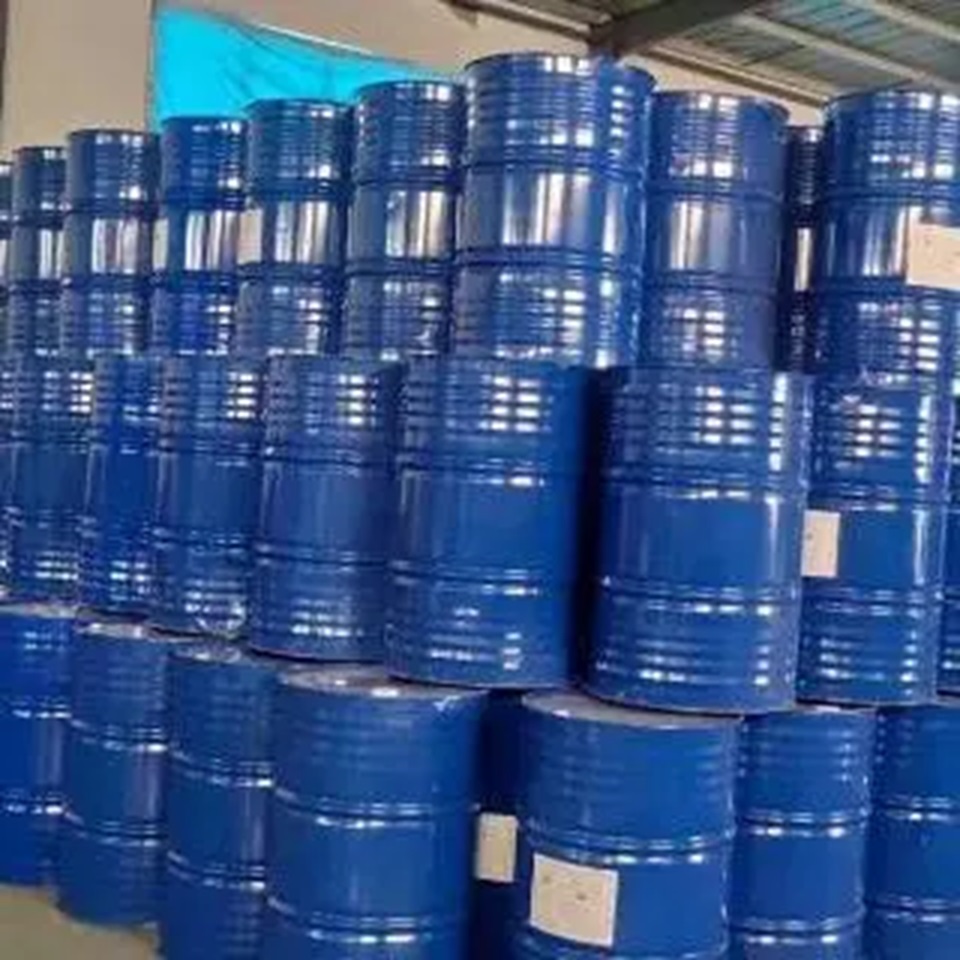
Storage: Store in tightly closed containers in a cool (<+30 °C), dry, well-ventilated area, protected from light and moisture. Avoid contact with strong oxidisers and bases. Keep away from heat, sparks, and open flames as it is combustible.
-
Safety Precautions: Avoid contact with skin and eyes (S24, S26). Wear protective gloves and goggles. Do not inhale vapour or mist.
8. FREQUENTLY ASKED QUESTIONS
Q1. What is the difference between Butyl Diglycol (BDG) and Butyl Glycol (BG)?
Butyl Glycol (BG, CAS 111-76-2) is ethylene glycol monobutyl ether; it has a lower boiling point (~171 °C) and higher volatility. BDG contains an additional ethoxy group, resulting in a higher boiling point (~230 °C) and lower volatility.
Q2. Is it the same product as Butyl Diglycol Acetate?
No. BDGA (CAS 124-17-4) is an ester. BDG is an alcohol. They have different solubility and evaporation profiles.
Q3. Why is BDG used in waterborne paints?
It acts as a coalescent to help polymer particles fuse, improves flow, reduces brush marks, and decreases the risk of cratering.
Q4. What are its most common trade names?
Dowanol DB (Dow), Butyl Carbitol (Union Carbide), Poly-Solv DB (Olin), Jeffersol DB (Huntsman), Ektasolve DB (Eastman) are the best-known commercial names.
Q5. Is it toxic?
Its acute toxicity is low. The main safety risk is eye irritation (H319). It is recommended to wear safety goggles during handling.