We unleash your business potential by maximize the business innovation.
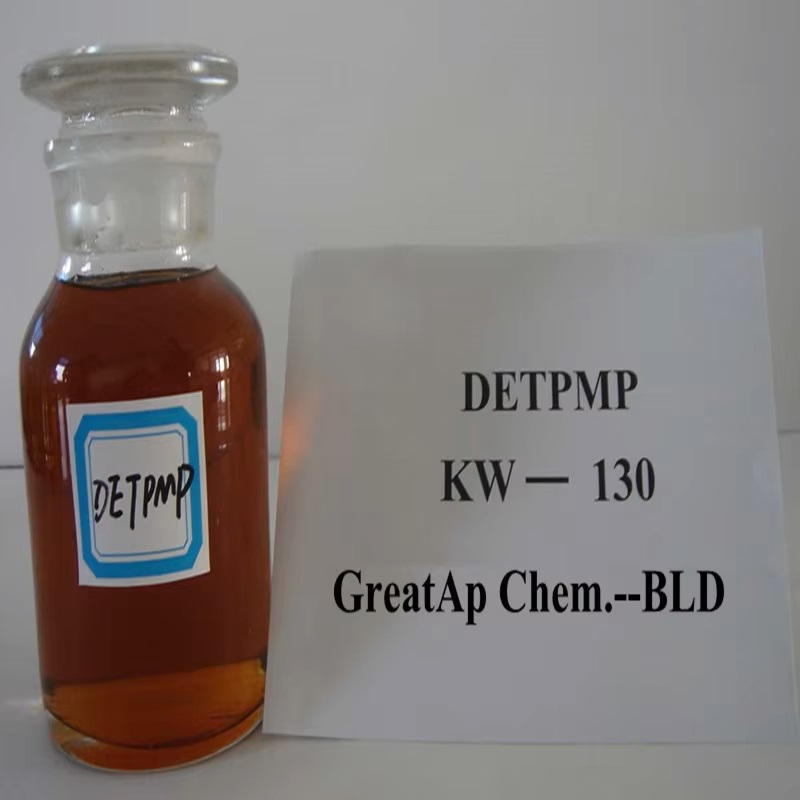
Send EmailDiethylene Triamine Penta Methylene Pphosphonic Acid, Diethylenetriaminepentakis Methylphosphonic Acid, DETPMP, DTPMP, DTPMPA, 15827-60-8, 67774-91-8, 244775-22-2, 291513-72-9
DIETHYLENE TRIAMINE PENTA (METHYLENE PHOSPHONIC ACID) (DTPMP)
1. Chemical Identity and Material Classification
-
Chemical Name: Diethylene Triamine Penta (Methylene Phosphonic Acid)
-
Synonyms: DTPMP, DTPMPA, Diethylenetriaminepenta(methylenephosphonic acid), Diethylenetriaminepentakis(methylphosphonic acid), DETPMP, Dequest 2060
-
CAS Numbers:
-
15827-60-8 (primary)
-
67774-91-8
-
244775-22-2
-
291513-72-9
-
-
Molecular Formula: C₉H₂₈N₃O₁₅P₅
-
Molecular Weight: 573.20 g/mol
-
EC Number: 239-953-2 (for 15827-60-8)
-
Chemical Family: Organophosphonate, Aminophosphonic acid
2. Physical Properties
| Property | Value |
|---|---|
| Appearance | White crystalline powder |
| Physical state | Solid (acid form) |
| Odor | Odorless |
| Density | 1.35 g/cm³ |
| Melting point | >200°C (decomposes) |
| Solubility in water | Limited solubility; tends to crystallize in concentrated aqueous solutions |
| pH (1% aqueous solution) | 1.5–2.5 (strongly acidic) |
| Hydrolytic stability | Excellent (thermally stable up to 210°C) |
2.1 Note on Solubility
The acid form of DTPMP has limited solubility in water and tends to crystallize from concentrated aqueous solutions. For most industrial applications, DTPMP is supplied as water-soluble salts (typically sodium salts) for easier handling and formulation.
3. Chemical Properties and Specifications
3.1 Active Acid Form (Typical)
| Parameter | Specification |
|---|---|
| Active content (DTPMP, w/w) | ≥ 95% |
| Phosphonic acid content (as PO₄³⁻) | ≥ 45% |
| Phosphorous acid (H₃PO₃) | ≤ 1.0% |
| Phosphate (PO₄³⁻) | ≤ 0.5% |
| Chloride (Cl⁻) | ≤ 0.1% |
| Iron (Fe) | ≤ 50 ppm |
| pH (1% solution) | 1.5–2.5 |
| Density (20°C, 50% solution) | ~1.35 g/cm³ |
3.2 Sodium Salt Solution (Typical – 40–50% active)
| Parameter | Specification |
|---|---|
| Appearance | Clear to slightly hazy, colorless to pale yellow liquid |
| Active content (as DTPMP) | 40–50% |
| Density (20°C) | 1.28–1.35 g/cm³ |
| pH (as supplied) | 6.5–8.5 |
| Free acid | ≤ 0.5% |
| Iron (Fe) | ≤ 50 ppm |
| Chloride (Cl) | ≤ 0.1% |
3.3 Molecular Structure
DTPMP contains five phosphonic acid groups (–PO₃H₂) attached to the nitrogen atoms of the diethylene triamine backbone via methylene (–CH₂–) bridges.
-
Nitrogen atoms: 3 (tertiary amines)
-
Phosphonic acid groups: 5
-
Structure type: Nitrogenous organic polyphosphonic acid
4. Chelation and Scale Inhibition Mechanism
4.1 Chelation Mechanism
DTPMP forms stable complexes with metal ions through coordination of the phosphonic acid groups and the nitrogen lone pairs:
| Metal Ion | Chelate Stability | Application |
|---|---|---|
| Ca²⁺ (Calcium) | High | Scale inhibition (CaCO₃, CaSO₄) |
| Mg²⁺ (Magnesium) | Moderate | Water softening |
| Ba²⁺ (Barium) | Very high | BaSO₄ scale inhibition (critical for oilfields) |
| Fe²⁺/Fe³⁺ (Iron) | Very high | Iron stabilization, corrosion inhibition |
| Zn²⁺ (Zinc) | High | Zinc stabilization in cooling water |
4.2 Scale Inhibition Mechanism
| Step | Description |
|---|---|
| 1 | DTPMP adsorbs onto crystal nucleation sites |
| 2 | Distorts crystal lattice growth |
| 3 | Prevents precipitation of scale-forming salts (CaCO₃, CaSO₄, BaSO₄) |
| 4 | Disperses micro-crystals, preventing agglomeration |
| 5 | Keeps metal ions in solution (threshold inhibition) |
4.3 Threshold Inhibition Performance
| Scale Type | Inhibition Efficiency | Optimal pH | Optimal Temperature |
|---|---|---|---|
| Calcium carbonate (CaCO₃) | >90% | 7–10 | 20–90°C |
| Calcium sulfate (CaSO₄) | >85% | 6–9 | 20–90°C |
| Barium sulfate (BaSO₄) | Excellent (>95%) | 6–10 | 20–120°C |
| Iron (Fe) stabilization | Excellent | 7–11 | 20–90°C |
5. Key Advantages Over Other Phosphonates
| Property | DTPMP | ATMP | HEDP | PBTC |
|---|---|---|---|---|
| BaSO₄ scale inhibition | Excellent | Poor | Moderate | Good |
| Thermal stability | Up to 210°C | Up to 150°C | Up to 180°C | Up to 200°C |
| Calcium tolerance | Good | Excellent | Excellent | Good |
| Chlorine tolerance | Moderate | Low | High | High |
| Biodegradability | Low (controlled) | Low | Low | Low |
| Iron stabilization | Excellent | Moderate | Good | Moderate |
| Cost | Higher | Lower | Lower | Higher |
6. Industrial Applications
6.1 Oilfield Scale Inhibition (Primary Application)
| Parameter | Value |
|---|---|
| Application | Prevention of barium sulfate (BaSO₄), calcium carbonate (CaCO₃), and strontium sulfate (SrSO₄) scale in oil and gas production |
| Typical dosage | 5–50 mg/L (active) |
| Temperature range | Up to 210°C (exceptional thermal stability) |
| pH range | 6–11 |
| Compatibility | Compatible with most oilfield chemicals (corrosion inhibitors, biocides, demulsifiers) |
Why DTPMP for Oilfields?
-
Barium sulfate (BaSO₄) scale is extremely difficult to remove mechanically or with acids
-
DTPMP is one of the most effective BaSO₄ inhibitors available
-
Stable at high temperatures (up to 210°C) encountered in deep wells
-
Effective in high-salinity brines (seawater, produced water)
6.2 Water Treatment – Cooling Water Systems
| Parameter | Value |
|---|---|
| Application | Scale inhibition (CaCO₃, CaSO₄), corrosion inhibition (in combination with Zn²⁺, molybdate, azoles) |
| Typical dosage | 2–20 mg/L |
| Operating pH | 7–10 |
| Temperature | Up to 90°C |
| Synergists | Zinc salts, molybdates, tolyltriazole (TTA), benzotriazole (BTA) |
6.3 Boiler Water Treatment
| Parameter | Value |
|---|---|
| Application | Scale control, iron stabilization, oxygen scavenger support |
| Typical dosage | 5–50 mg/L |
| Temperature | Up to 210°C (exceptional) |
6.4 Detergents and Cleaning Products
| Parameter | Value |
|---|---|
| Application | Chelating agent, builder, scale inhibitor in industrial and institutional detergents |
| Function | Prevents redeposition of soils, binds hardness ions (Ca²⁺, Mg²⁺), stabilizes bleaches |
| Typical concentration | 0.5–5% in concentrated formulations |
6.5 Industrial Water Treatment (General)
| Parameter | Value |
|---|---|
| Application | Scale control in reverse osmosis (RO) systems, evaporators, heat exchangers |
| Typical dosage | 2–15 mg/L |
| Compatibility | Compatible with polyacrylates, polymaleic acid, and other dispersants |
6.6 Corrosion Inhibition
| Parameter | Value |
|---|---|
| Mechanism | Forms protective film on metal surfaces; stabilizes corrosion inhibitors (Zn²⁺, molybdate) |
| Effective metals | Carbon steel, copper, admiralty brass |
| Synergistic effect | Excellent with zinc salts (Zn-DTPMP complex) |
6.7 Textile and Pulp & Paper Industries
| Application | Function |
|---|---|
| Textile bleaching | Stabilizes hydrogen peroxide (H₂O₂) by chelating metal ions (Fe, Cu, Mn) |
| Pulp & paper | Chelation of metal ions that catalyze degradation of pulp |
6.8 Concrete Additives
| Parameter | Value |
|---|---|
| Application | Superplasticizer additive, set retarder, water reducer |
| Function | Extends workability time, reduces water demand |
7. Comparison with Other Aminophosphonates
| Property | DTPMP (5 phosphonate groups) | DETPMP (same) | EDTMP (4 groups) | ATMP (1 group) |
|---|---|---|---|---|
| Number of phosphonate groups | 5 | 5 | 4 | 1 |
| BaSO₄ inhibition | Excellent | Excellent | Good | Poor |
| CaCO₃ inhibition | Good | Good | Excellent | Excellent |
| Thermal stability | 210°C | 210°C | 180°C | 150°C |
| Iron chelation | Very high | Very high | High | Moderate |
| Calcium tolerance | Good | Good | Excellent | Excellent |
8. Product Forms Available
| Form | Active Content | Appearance | Typical Applications |
|---|---|---|---|
| Acid (crystalline) | ≥95% DTPMP | White powder | Chemical intermediate, laboratory use |
| Sodium salt solution | 40–50% | Clear liquid | Water treatment, detergents, oilfield |
| Concentrated solution | 50–60% | Liquid | Industrial water treatment |
| Custom blends | Variable | Liquid | Combined scale/corrosion inhibitor formulations |
9. Dosage Guidelines
| Application | Typical Dosage (active DTPMP) |
|---|---|
| Oilfield scale inhibition (BaSO₄) | 5–50 mg/L |
| Cooling water systems | 2–20 mg/L |
| Boiler water treatment | 5–50 mg/L |
| Reverse osmosis (RO) scale control | 2–15 mg/L |
| Detergent formulations | 0.5–5% (concentrate) |
| Textile H₂O₂ stabilization | 100–500 mg/L |
10. Safety and Toxicology
10.1 Acute Toxicity
| Parameter | Value |
|---|---|
| Oral LD₅₀ (rat) | >2,000 mg/kg (low to moderate toxicity) |
| Dermal LD₅₀ (rabbit) | >2,000 mg/kg |
| Skin irritation | Mild irritant |
| Eye irritation | Moderate irritant |
| Inhalation | Dust may cause respiratory tract irritation |
| Skin sensitization | Non-sensitizer |
| Mutagenicity | Negative |
| Carcinogenicity | Not classified |
10.2 Environmental Fate
| Parameter | Value |
|---|---|
| Biodegradability | Low (persistent in the environment) |
| Ecotoxicity (fish, LC₅₀, 96 hours) | 100–500 mg/L (low to moderate) |
| Bioaccumulation potential | Low |
| Aquatic environmental concern | Due to low biodegradability, use controlled in some jurisdictions |
11. Safety Precautions and Personal Protective Equipment (PPE)
-
Hazards:
-
Mild to moderate skin and eye irritant
-
Dust may cause respiratory irritation
-
Acidic in concentrated form (pH 1.5–2.5)
-
-
PPE (recommended):
-
Chemical-resistant gloves (nitrile or neoprene)
-
Safety glasses with side shields (EN 166) or goggles
-
Protective clothing (acid-resistant)
-
Dust mask (FFP2/N95) – for powder handling
-
-
Engineering controls:
-
Local exhaust ventilation (LEV) for powder handling
-
Eyewash stations and safety showers
-
-
First aid:
-
Inhalation: Move to fresh air
-
Skin contact: Wash with soap and copious water
-
Eye contact: Rinse with water for 15 minutes; seek medical attention
-
Ingestion: Rinse mouth; drink water; seek medical attention if large amount
-
12. Storage and Shelf Life
| Parameter | Acid Form (Powder) | Solution Form |
|---|---|---|
| Storage temperature | 5–30°C | 5–40°C (do not freeze) |
| Container | Sealed, moisture-resistant containers | HDPE drums, IBC, bulk tanks |
| Protect from | Moisture, heat, strong oxidizers | Freezing, strong oxidizers |
| Shelf life | 24 months (if kept dry) | 12–24 months |
-
Degradation indicators:
-
Powder: Caking (moisture absorption)
-
Solution: Precipitation, color change
-
13. Transport Information
| Regulation | Classification |
|---|---|
| UN Number (powder) | 3261 (Corrosive solid, acidic, organic) |
| UN Number (solution) | 1760 (Corrosive liquid, n.o.s.) |
| ADR/RID | Class 8 (Corrosive), Packing group III |
| IMDG | Class 8, PG III |
| IATA | Class 8, PG III |
14. Synonyms and Common Names
-
English: Diethylene Triamine Penta (Methylene Phosphonic Acid), DTPMP, DTPMPA, Diethylenetriaminepenta(methylenephosphonic acid), Diethylenetriaminepentakis(methylphosphonic acid), DETPMP, Dequest 2060
-
Other names:
-
Phosphonic acid, [[(phosphonomethyl)imino]bis[2,1-ethanediylnitrilobis(methylene)]]tetrakis-
-
[[Bis[2-[bis(phosphonomethyl)amino]ethyl]amino]methyl]phosphonic acid
-
CAS Numbers (multiple):
-
15827-60-8 (primary)
-
67774-91-8
-
244775-22-2
-
291513-72-9
15. Standards Compliance
| Standard | Compliance |
|---|---|
| NSF/ANSI 60 | Certified for certain grades (drinking water treatment) |
| REACH (EC 1907/2006) | Registered |
| TSCA (US) | Listed |
| RoHS | Compliant |
| EU Detergent Regulation (EC 648/2004) | Permitted as builder/complexing agent |
16. Why Choose DTPMP? (Technical Summary)
| Advantage | Description |
|---|---|
| Excellent BaSO₄ scale inhibition | One of the most effective inhibitors for barium sulfate scale – critical for oilfield applications |
| Exceptional thermal stability | Stable up to 210°C – suitable for deep wells, geothermal, and high-temperature boilers |
| Five phosphonic acid groups | Provides strong chelation and threshold inhibition for multiple metal ions (Ca, Mg, Ba, Sr, Fe, Zn) |
| High alkalinity tolerance | Effective at pH 7–11 – suitable for cooling water, boiler water, and alkaline detergents |
| Corrosion inhibition synergy | Excellent performance when combined with Zn²⁺, molybdates, and azoles |
| Versatile applications | Oilfields, cooling water, boilers, RO systems, detergents, textiles, concrete |
| Iron stabilization | Prevents iron precipitation and deposition (red water, iron fouling) |
| Available in multiple forms | Acid powder and sodium salt solutions for formulation flexibility |
Limitations:
-
Limited solubility (acid form) – tends to crystallize in concentrated solutions; use sodium salt for liquid applications
-
Low biodegradability – persistent in the environment; use controlled in some jurisdictions
-
Higher cost than ATMP and HEDP (but justified for BaSO₄ inhibition and high-temperature applications)
-
Chlorine tolerance – moderate (lower than HEDP and PBTC)
17. Typical Applications Summary Table
| Sector | Application | Typical Dosage | Alternatives |
|---|---|---|---|
| Oil & Gas | BaSO₄, CaCO₃, SrSO₄ scale inhibition in production wells, water injection | 5–50 mg/L | ATMP (poor for BaSO₄), HEDP |
| Cooling Water | Scale inhibition (CaCO₃, CaSO₄), corrosion inhibition (with Zn²⁺) | 2–20 mg/L | HEDP, ATMP, PBTC |
| Boiler Water | Scale control, iron stabilization | 5–50 mg/L | HEDP, phosphates |
| Reverse Osmosis | Scale control, antiscalant | 2–15 mg/L | Polyacrylates, HEDP |
| Detergents | Chelating agent, builder, scale inhibitor | 0.5–5% (concentrate) | EDTA, NTA, citric acid |
| Textile | H₂O₂ stabilizer in bleaching | 100–500 mg/L | Sodium silicate, DTPA |
| Concrete | Superplasticizer additive, set retarder | 0.1–1% of cement | Lignosulfonates, polycarboxylates |
18. Related Products – Other Phosphonates
| Product | Number of Phosphonate Groups | Key Applications |
|---|---|---|
| DTPMP | 5 | Oilfield (BaSO₄), cooling water, detergents |
| EDTMP | 4 | CaCO₃ inhibition, cooling water |
| ATMP | 1 | CaCO₃ inhibition, cooling water, low temperature |
| HEDP | 1 (with hydroxyl) | CaCO₃, CaSO₄ inhibition, chlorine tolerant |
| PBTC | 1 (with carboxyl) | High chlorine tolerance, cooling water |
| BHMTPMP | 5 (higher molecular weight) | High brine, oilfield scale inhibition |
19. Note on Multiple CAS Numbers
DTPMP has multiple CAS numbers registered for:
-
The acid form (primary: 15827-60-8)
-
Various salt forms (sodium, potassium, ammonium salts)
-
Different purity grades and hydrate forms
-
Isomeric or polymeric variants
For commercial applications, 15827-60-8 is the most commonly referenced CAS number for the active acid form.
20. Summary Table – Key Specifications at a Glance
| Parameter | Value |
|---|---|
| Product Name | Diethylene Triamine Penta (Methylene Phosphonic Acid) |
| Common Abbreviation | DTPMP, DTPMPA |
| CAS Number (primary) | 15827-60-8 |
| Molecular Formula | C₉H₂₈N₃O₁₅P₅ |
| Molecular Weight | 573.20 g/mol |
| Appearance (acid form) | White crystalline powder |
| Appearance (solution) | Clear to pale yellow liquid |
| Density | ~1.35 g/cm³ |
| pH (1% solution, acid) | 1.5–2.5 |
| pH (40% sodium salt) | 6.5–8.5 |
| Number of phosphonate groups | 5 |
| Thermal stability | Up to 210°C |
| BaSO₄ inhibition | Excellent (>95%) |
| Primary applications | Oilfield scale inhibition, cooling water, detergents, boiler water |
| Biodegradability | Low (persistent) |
| Shelf life | 12–24 months |
This TDS is prepared in compliance with ISO 11014-1 format and is intended for oilfield chemical engineers, water treatment specialists, detergent formulators, and procurement professionals. Certificates of Analysis (CoA), Safety Data Sheets (SDS), and sample validation reports are available upon request.