We unleash your business potential by maximize the business innovation.
Send EmailPhosphorus Pentoxide, Phosphoric Pentoxide, Diphosphorus Pentoxide, 1314-56-3
PHOSPHORUS PENTOXIDE (P₂O₅ / P₄O₁₀)
Phosphorus Pentoxide / Phosphoric Pentoxide / Diphosphorus Pentoxide / Phosphorus(V) Oxide / Phosphoric Anhydride
CAS Number: 1314-56-3
EC Number: 215-236-1
1. IDENTIFICATION INFORMATION
| Property | Information |
|---|---|
| Chemical Name | Phosphorus Pentoxide |
| Other Names | Phosphorus(V) Oxide, Phosphoric Anhydride, Diphosphorus Pentoxide, Tetraphosphorus Decaoxide |
| Chemical Formula | P₄O₁₀ (P₂O₅ empirical formula) |
| Molecular Weight | 220.02 g/mol (P₂O₅: 141.94 g/mol) |
| CAS Number | 1314-56-3 |
| EC Number (EINECS) | 215-236-1 |
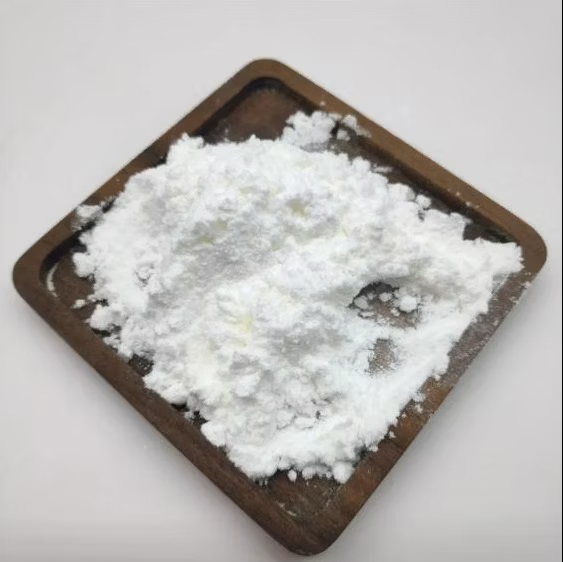
| Appearance | White, crystalline powder |
| Odor | Odorless |
| Physical State | Solid |
2. PHYSICAL PROPERTIES
| Property | Value |
|---|---|
| Physical State (20°C) | Solid |
| Appearance | White, crystalline powder |
| Odor | Odorless |
| Chemical Formula | P₄O₁₀ |
| Molecular Weight (P₄O₁₀) | 220.02 g/mol |
| Empirical Formula | P₂O₅ |
| Molecular Weight (P₂O₅) | 141.94 g/mol |
| Density (20°C) | 2.39 g/cm³ |
| Melting Point | 340°C |
| Boiling Point | 360°C (sublimes) |
| Refractive Index (20°C) | 1.435 |
| Vapor Pressure | Very low |
| Water Solubility | Does not dissolve; reacts violently with water to form phosphoric acid |
| Hygroscopicity | Extremely high (strongly hygroscopic) |
3. CHEMICAL PROPERTIES
| Property | Information |
|---|---|
| Chemical Formula | P₄O₁₀ |
| Molecular Weight | 220.02 g/mol |
| Chemical Class | Inorganic oxide / acid anhydride |
| Structure | Dimeric form of P₂O₅; consists of P₄O₁₀ cage-like structure |
| Reactivity with Water | Violent exothermic reaction; forms phosphoric acid derivatives |
| Hygroscopicity | Extremely high; absorbs moisture aggressively from air |
| Dehydration Agent | One of the strongest drying agents known |
| Incompatible Materials | Water, alcohols, bases, moisture, combustible materials, organic compounds |
Hydrolysis Reactions:
To Orthophosphoric Acid:
P₂O₅ + 3 H₂O → 2 H₃PO₄ (Orthophosphoric acid)
To Pyrophosphoric Acid:
P₂O₅ + 2 H₂O → H₄P₂O₇ (Pyrophosphoric acid)
To Metaphosphoric Acid:
P₂O₅ + H₂O → 2 HPO₃ (Metaphosphoric acid)
Production Reaction (White Phosphorus Combustion):
P₄ + 5 O₂ → 2 P₂O₅ (or P₄O₁₀)
Reaction with Alcohols (Esterification):
P₂O₅ + 6 ROH → 2 (RO)₃PO + 3 H₂O
4. PRODUCTION PROCESS
| Method | Description |
|---|---|
| White Phosphorus Combustion (Industrial Standard) | White phosphorus (P₄) is burned in excess oxygen → P₂O₅ (P₄O₁₀) |
| Reaction Conditions | Controlled combustion in dry air or oxygen |
| Purification | Sublimation to obtain high purity product |
| Yield | Very high (near quantitative) |
Reaction Equation:
P₄ (white phosphorus) + 5 O₂ → 2 P₂O₅ (or P₄O₁₀) + Heat (highly exothermic)
5. AVAILABLE FORMS AND SPECIFICATIONS
| Form | Purity | Description | Applications |
|---|---|---|---|
| Technical Grade | ≥98.0% | White crystalline powder | Phosphoric acid production, fertilizers |
| High Purity Grade | ≥99.5% | White crystalline powder | Laboratory drying agent, organic synthesis |
| Sublimed Grade | ≥99.9% | White powder | Electronics, specialty applications |
Typical Specifications:
| Parameter | Specification | Test Method |
|---|---|---|
| Assay (P₂O₅) | ≥98.0 - 99.9% | Titration |
| Appearance | White crystalline powder | Visual |
| Density (20°C) | 2.38 - 2.40 g/cm³ | Hydrometer |
| Purity as P₂O₅ | ≥99.0% | Gravimetric |
| Reducing Substances | ≤0.01% | Titration |
| Heavy Metals (as Pb) | ≤0.005% | ICP |
| Iron (Fe) | ≤0.01% | ICP |
| Arsenic (As) | ≤0.005% | ICP |
| Chlorides (Cl) | ≤0.001% | Colorimetric |
| Sulfates (SO₄) | ≤0.01% | Turbidimetric |
6. APPLICATIONS
6.1. Phosphoric Acid Production – Largest Use
| Application | Function |
|---|---|
| Orthophosphoric Acid (H₃PO₄) | Hydrolysis with water → H₃PO₄ (food grade, technical grade) |
| Pyrophosphoric Acid (H₄P₂O₇) | Controlled hydrolysis → H₄P₂O₇ |
| Metaphosphoric Acid (HPO₃) | Controlled hydrolysis → HPO₃ |
| Polyphosphoric Acid (PPA) | Controlled hydrolysis → polyphosphoric acid mixture |
6.2. Fertilizer Industry
| Application | Function |
|---|---|
| Phosphate Fertilizer Production | Intermediate for phosphate-based fertilizers |
| DAP Production | Diammonium phosphate (18-46-0) - highest phosphorus content fertilizer |
| MAP Production | Monoammonium phosphate |
| NPK Fertilizers | Component in complex fertilizer production |
| Superphosphate | Production of single and triple superphosphate |
Fertilizer Note: P₂O₅ is the standard measure of phosphorus content in fertilizers. Plants require phosphorus for root development and flowering. Phosphorus deficiency causes stunted growth and dark green to reddish leaf tips. Excess phosphorus can reduce iron, zinc, and copper uptake.
6.3. Dehydrating and Drying Agent
| Application | Function |
|---|---|
| Laboratory Drying | Desiccant for drying gases and organic solvents |
| Industrial Drying | Drying of gases, hydrocarbons, and organic liquids |
| Vacuum Drying | Used in desiccators and vacuum systems |
| Solid Fuel Drying | Drying of solid fuels and other materials |
| Organic Synthesis | Removal of water from reaction mixtures |
Note: Phosphorus pentoxide is one of the strongest drying agents available. It can reduce water vapor concentration to less than 0.0001% (1 ppm) in gases.
6.4. Organic Synthesis
| Application | Function |
|---|---|
| Dehydration Agent | Removes water from organic compounds |
| Esterification | Forms phosphate esters (trialkyl phosphates) |
| Cyclization Reactions | Promotes ring-closing reactions |
| Condensation Reactions | Catalyzes various condensation reactions |
| Beckmann Rearrangement | Converts oximes to amides |
Dehydration Examples:
-
Carboxylic acids → acid anhydrides
-
Amides → nitriles
-
Alcohols → alkenes
6.5. Laboratory Applications
| Application | Function |
|---|---|
| Desiccant | Strong drying agent for desiccators |
| Gas Drying | Drying of inert gases (N₂, Ar, He, etc.) |
| Solvent Drying | Drying of organic solvents |
| Analytical Chemistry | Sample preparation, gravimetric analysis |
| Spectrophotometry | Reference material, UV/Vis calibration |
6.6. Coatings, Varnishes and Polishes
| Application | Function |
|---|---|
| Varnish Additive | Drying agent, improves film formation |
| Polish Component | Modifies viscosity and drying properties |
| Coatings | Component in specialty coating formulations |
6.7. Chemical Intermediate
| Application | Function |
|---|---|
| Phosphate Esters | Production of trialkyl phosphates, triaryl phosphates |
| Flame Retardants | Intermediate for organophosphate flame retardants |
| Plasticizers | Intermediate for phosphate-based plasticizers |
| Metal Treatment | Production of metal phosphating solutions |
6.8. Other Applications
| Application | Function |
|---|---|
| Electronics | Drying agent in electronic component manufacturing |
| Glass Industry | Component in specialty glasses (phosphate glasses) |
| Water Treatment | Defluoridation of drinking water (as phosphoric acid) |
| Food Industry | As phosphoric acid (food additive E338) |
| Pharmaceuticals | Production of pharmaceutical-grade phosphates |
| Metal Cleaning | Component in metal cleaning formulations |
7. PHOSPHORUS CONTENT IN FERTILIZERS
| Fertilizer | N-P-K Ratio | P₂O₅ Content | Water Solubility |
|---|---|---|---|
| DAP (Diammonium Phosphate) | 18-46-0 | 46% (highest) | Water soluble |
| MAP (Monoammonium Phosphate) | 11-52-0 | 52% | Water soluble |
| Triple Superphosphate (TSP) | 0-46-0 | 46% | Water soluble |
| Single Superphosphate (SSP) | 0-20-0 | 20% | Water soluble |
| Phosphoric Acid (75%) | 0-54-0 | 54% | Completely soluble |
8. SAFETY AND HEALTH INFORMATION (GHS CLASSIFICATION)
| Hazard Class | Category |
|---|---|
| Corrosive | Category 1B (H314) |
| Serious Eye Damage | Category 1 (H318) |
| Skin Corrosion | Category 1B (H314) |
| Reacts Violently with Water | - (Reacts vigorously) |
Note: The GHS classification is based on the corrosive nature of phosphoric acid formed upon contact with moisture.
9. HAZARD STATEMENTS (H-CODES)
| Code | Statement |
|---|---|
| H314 | Causes severe skin burns and eye damage |
10. SAFETY STATEMENTS (P-CODES)
| Code | Statement |
|---|---|
| P260 | Do not breathe dust |
| P280 | Wear protective gloves, protective clothing, eye protection, face protection |
| P301+P330+P331 | IF SWALLOWED: Rinse mouth. Do NOT induce vomiting |
| P303+P361+P353 | IF ON SKIN (or hair): Remove immediately all contaminated clothing. Rinse skin with water/shower |
| P305+P351+P338 | IF IN EYES: Rinse cautiously with water for several minutes. Remove contact lenses if present and easy to do. Continue rinsing |
| P310 | Immediately call a POISON CENTER or doctor |
| P363 | Wash contaminated clothing before reuse |
| P405 | Store locked up |
11. TOXICOLOGICAL INFORMATION
| Parameter | Value |
|---|---|
| Oral LD50 (rat, as H₃PO₄ formed) | ~1,530 mg/kg (based on H₃PO₄) |
| Dermal LD50 (rabbit) | >2,000 mg/kg |
| Inhalation LC50 (rat) | Not established (corrosive dust) |
| Skin Corrosion | Causes severe burns |
| Eye Damage | Causes serious eye damage |
| Carcinogenicity | Not classified as carcinogenic |
| Mutagenicity | Not classified |
Health Effects:
| Exposure | Effect |
|---|---|
| Acute (Inhalation) | Severe respiratory tract irritation, coughing, choking, pulmonary edema (due to H₃PO₄ formation) |
| Acute (Skin Contact) | Severe burns, blistering, ulceration |
| Acute (Eye Contact) | Severe burns, corneal damage, potential blindness |
| Acute (Ingestion) | Severe burns of mouth, throat, esophagus, and stomach (due to H₃PO₄ formation) |
| Chronic | Dental erosion (due to phosphoric acid) |
12. FIRST AID MEASURES
| Exposure Route | Action |
|---|---|
| Inhalation | Remove to fresh air. Give oxygen if breathing difficulty. If breathing has stopped, give artificial respiration. Seek immediate medical attention. |
| Skin Contact | Remove contaminated clothing. Wash with soap and plenty of water for at least 15 minutes. Do not attempt to neutralize. Seek immediate medical attention. |
| Eye Contact | Rinse immediately with plenty of water for at least 15-20 minutes. Remove contact lenses. Keep eyelids open. Seek immediate medical attention. |
| Ingestion | Do NOT induce vomiting. Rinse mouth. Do not give anything by mouth to an unconscious person. Seek immediate medical attention. |
13. FIRE FIGHTING MEASURES
| Parameter | Information |
|---|---|
| Fire Hazard | Non-flammable. Does not burn. |
| Extinguishing Media | Do not use water directly on phosphorus pentoxide. Use dry sand, dry chemical powder, or CO₂ for surrounding fires. |
| Special Hazards | Contact with water produces phosphoric acid and heat. May ignite combustible materials if moisture is present. |
| Protective Equipment | Self-contained breathing apparatus (SCBA), full protective clothing, acid-resistant gloves and boots. |
14. ENVIRONMENTAL INFORMATION
| Parameter | Information |
|---|---|
| Aquatic Toxicity | Toxic to aquatic organisms due to pH decrease (forms H₃PO₄) |
| Biodegradability | Not applicable (inorganic) |
| Bioaccumulation | Not applicable |
| Mobility in Water | Reacts violently with water to form phosphoric acid |
| pH Effect | Lowers pH of water bodies significantly |
| Waste Disposal | Dispose according to local regulations. Carefully neutralize with water (in controlled conditions) then dispose as phosphoric acid waste. |
15. STORAGE AND HANDLING
| Parameter | Information |
|---|---|
| Storage Conditions | Cool, dry, well-ventilated area. Store away from moisture, water, and humidity. |
| Container Requirements | Tightly closed, moisture-proof containers (glass, plastic coated steel, HDPE) |
| Protect from | Moisture, water, humidity, alcohols, bases, combustible materials |
| Incompatible Materials | Water, alcohols, bases, combustible materials, organic compounds |
| Shelf Life | 12-24 months (unopened, proper storage) |
| Special Storage Tip | Store in a sealed container with desiccant or under dry inert gas (N₂, Ar) |
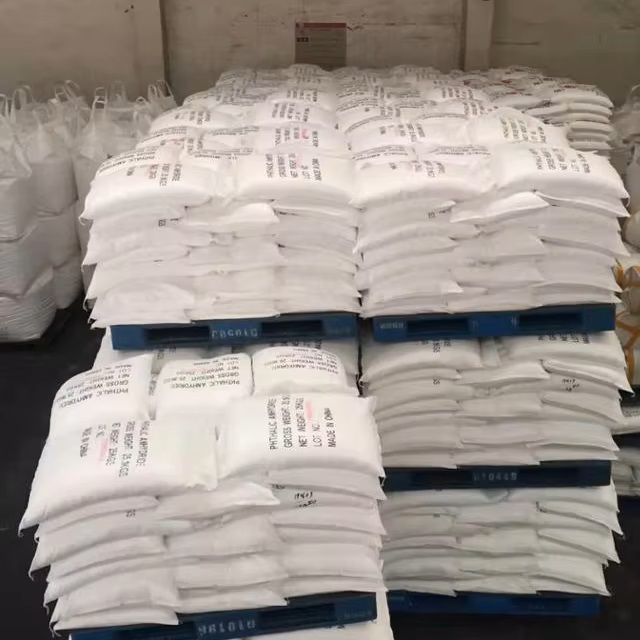
| Packaging Options | 1 kg, 5 kg, 25 kg, 50 kg, 100 kg drums (plastic coated or glass lined), bag-in-box |
Handling Notes:
-
Handle under dry inert atmosphere (nitrogen or argon) when possible
-
Avoid generating dust
-
Use only in well-ventilated areas (local exhaust)
-
Do not allow contact with water or moisture
-
Add small amounts to large volumes of water when making solutions (always add P₂O₅ to water, not water to P₂O₅)
-
Wear full personal protective equipment
-
Have emergency eyewash and safety shower available
16. TRANSPORT INFORMATION
| Parameter | Information |
|---|---|
| UN Number | 1807 |
| Hazard Class | 8 (Corrosive substance) |
| Packing Group | II |
| Proper Shipping Name | PHOSPHORUS PENTOXIDE |
| Marine Pollutant | No |
| ADR/RID Label | 8 |
| EMS | F-A, S-B |
17. REGULATORY INFORMATION
| Region | Status |
|---|---|
| EU | REACH registered; approved for industrial use |
| Türkiye (KKDİK) | Mandatory compliance; registration required |
| USA (TSCA) | Listed |
| Canada (DSL) | Listed |
| Australia (AICS) | Listed |
| Japan (ENCS) | Listed |
| Korea (KECL) | Listed |
| China (IECSC) | Listed |
18. OTHER NAMES AND SYNONYMS
| Name |
|---|
| Phosphorus Pentoxide |
| Phosphorus(V) Oxide |
| Phosphoric Anhydride |
| Diphosphorus Pentoxide |
| Tetraphosphorus Decaoxide |
| Phosphorus Pentaoxide |
| P₂O₅ |
| P₄O₁₀ |
| Orthophosphoric Acid Anhydride |
Database Identifiers:
| Database | Identifier |
|---|---|
| CAS | 1314-56-3 |
| EC | 215-236-1 |
| MDL | MFCD00011440 |
| PubChem CID | 14812 |
| RTECS | TH3945000 |
| UN | 1807 |
| InChIKey | VEUZZDOCACZPRY-UHFFFAOYSA-N |
19. IMPORTANT REACTIONS AND NOTES
Hydrolysis Sequence:
-
With limited water: forms metaphosphoric acid (HPO₃) and pyrophosphoric acid (H₄P₂O₇)
-
With excess water: forms orthophosphoric acid (H₃PO₄)
-
The reaction is highly exothermic (large amount of heat released)
Dehydration Examples:
-
Amides → Nitriles: RCONH₂ + P₂O₅ → RCN + H₂O
-
Carboxylic acids → Acid anhydrides: 2 RCOOH + P₂O₅ → (RCO)₂O + H₂O
-
Alcohols → Alkenes: ROH + P₂O₅ → R' (alkene) + H₂O
Drying Efficiency:
-
P₂O₅ reduces water vapor concentration to <0.0001% (1 ppm) in gases
-
One of the most effective desiccants available
-
More powerful than silica gel, molecular sieves, calcium chloride, and calcium sulfate
20. SUMMARY AND IMPORTANT WARNINGS
SUMMARY:
Phosphorus pentoxide (P₂O₅ / P₄O₁₀, CAS 1314-56-3) is a white, odorless, crystalline powder that is one of the strongest drying agents known. It has a density of 2.39 g/cm³ at 20°C, melts at 340°C, and sublimes at 360°C. P₂O₅ is the anhydride of phosphoric acid and reacts violently and exothermically with water to form orthophosphoric acid (H₃PO₄), pyrophosphoric acid (H₄P₂O₇), or metaphosphoric acid (HPO₃), depending on water quantity. It is produced by burning white phosphorus in excess oxygen (P₄ + 5 O₂ → 2 P₂O₅). The largest application is the production of phosphoric acid, followed by fertilizer production (as the standard measure of phosphorus content in fertilizers such as DAP - diammonium phosphate). Other major applications include use as a powerful dehydrating agent (drying gases and organic solvents), in organic synthesis (dehydration reactions, esterification, cyclization), as a laboratory desiccant, and in the production of phosphate esters, flame retardants, and coatings/varnishes.
Key Properties:
| Property | Value |
|---|---|
| Appearance | White crystalline powder |
| Chemical Formula | P₄O₁₀ (P₂O₅ empirical) |
| Molecular Weight | 220.02 g/mol (P₄O₁₀) |
| Density (20°C) | 2.39 g/cm³ |
| Melting Point | 340°C |
| Boiling Point | 360°C (sublimes) |
| Water Reaction | Violent, exothermic → H₃PO₄ |
| Hygroscopicity | Extremely high |
| Primary Use | Phosphoric acid, fertilizer production, drying agent |
Main Application Areas:
| Industry | Applications |
|---|---|
| Chemical Production | Phosphoric acid, pyrophosphoric acid, metaphosphoric acid |
| Fertilizers | DAP (18-46-0), MAP, TSP, superphosphate |
| Drying/Desiccant | Gas drying, solvent drying, laboratory desiccators |
| Organic Synthesis | Dehydration agent, esterification, cyclization |
| Coatings | Varnishes, polishes, specialty coatings |
| Flame Retardants | Organophosphate flame retardant intermediate |
| Electronics | Drying agent in component manufacturing |
Key Safety Points:
-
CORROSIVE: Causes severe skin burns and eye damage (H314)
-
WATER REACTION: Reacts violently with water - generates heat and forms corrosive phosphoric acid
-
DUST HAZARD: Avoid breathing dust (corrosive to respiratory tract)
-
HANDLING: Always add phosphorus pentoxide to water (never water to P₂O₅) when making solutions
-
PROTECT FROM MOISTURE: Store in tightly closed, moisture-proof containers
-
USE PPE: Chemical goggles, face shield, acid-resistant gloves (neoprene, nitrile, butyl rubber), protective clothing
-
USE VENTILATION: Use in well-ventilated area or under fume hood
-
STORAGE: Store in cool, dry place; under dry inert gas (N₂, Ar) if possible
-
INCOMPATIBLES: Water, alcohols, bases, combustible materials
IMPORTANT WARNINGS:
Violent Water Reaction: Phosphorus pentoxide reacts violently and exothermically with water to form phosphoric acid. The reaction is highly exothermic and can cause splattering of hot acid. NEVER add water to phosphorus pentoxide. ALWAYS add phosphorus pentoxide slowly to a large volume of water with stirring and cooling. The reaction produces orthophosphoric acid (H₃PO₄), pyrophosphoric acid (H₄P₂O₇), or metaphosphoric acid (HPO₃) depending on water quantity.
Extreme Hygroscopicity: P₂O₅ is extremely hygroscopic and will aggressively absorb moisture from the air, converting to sticky phosphoric acid. It is one of the most powerful drying agents available, capable of reducing water vapor concentration in gases to less than 0.0001% (1 ppm). Containers must be kept tightly sealed and opened only in dry environments. Ideally, handle under dry inert gas (nitrogen or argon).
Corrosive Hazard: The phosphoric acid formed upon contact with moisture causes severe skin burns and eye damage (H314). Contact with skin or eyes causes immediate chemical burns. Inhalation of dust causes severe respiratory tract irritation. Always wear appropriate personal protective equipment including chemical goggles, face shield, acid-resistant gloves (neoprene, nitrile, butyl rubber), and acid-resistant protective clothing. Work under fume hood or with adequate local exhaust ventilation.
Fertilizer Applications: P₂O₅ is the standard measure of phosphorus content in fertilizers. The highest phosphorus content fertilizer is DAP (diammonium phosphate) with 46% P₂O₅ (18-46-0). Phosphorus is essential for plant root development and flowering. Phosphorus deficiency causes stunted growth and dark green to reddish-purple leaf tips. Excess phosphorus can inhibit iron, zinc, and copper uptake, potentially reducing crop yields. The N-P-K ratio represents nitrogen (N), phosphorus (as P₂O₅), and potassium (as K₂O) percentages.
Drying Applications: P₂O₅ is used as an extremely powerful desiccant for drying gases and organic solvents. It is more effective than calcium chloride, silica gel, molecular sieves, and calcium sulfate. It is commonly used in laboratory desiccators and industrial gas drying systems. However, it cannot be used for drying materials that are reactive with phosphoric acid (e.g., bases, alcohols, many organic compounds).
Organic Synthesis Dehydration: In organic synthesis, P₂O₅ is a powerful dehydration agent used to convert:
-
Amides to nitriles (RCONH₂ → RCN)
-
Carboxylic acids to acid anhydrides (2 RCOOH → (RCO)₂O)
-
Alcohols to alkenes (ROH → alkene)
-
Oximes to amides (Beckmann rearrangement)
It is also used in cyclization reactions and condensation reactions.
Phosphoric Acid Production: The largest industrial use of P₂O₅ is the production of phosphoric acid (H₃PO₄) by controlled hydrolysis. Phosphoric acid is used in fertilizers (as ammonium phosphates), food additive (E338), water treatment (defluoridation), metal treatment (phosphating), and production of phosphate esters.
Storage Requirements: Store in tightly closed, moisture-proof containers (glass, plastic-coated steel, HDPE) in a cool, dry, well-ventilated area. Avoid storage near water sources or high humidity areas. For long-term storage, seal containers under dry inert gas (nitrogen or argon). Shelf life is 12-24 months when stored properly.
First Aid - Immediate Action: For skin contact, remove contaminated clothing immediately and wash with large amounts of water for at least 15 minutes. Do not attempt to neutralize with bases. For eye contact, flush immediately with water for 15-20 minutes. Seek immediate medical attention for all significant exposures. For inhalation, move to fresh air; give oxygen if breathing difficulty. For ingestion, do not induce vomiting; seek immediate medical attention.
Incompatibilities: P₂O₅ is incompatible with water (violent reaction), alcohols (esterification with heat release), bases (neutralization), and combustible materials (may ignite if moisture is present). It should be stored away from these materials.
Important Disclaimer: This Technical Data Sheet (TDS) is for informational purposes only. For complete safety, handling, storage, and regulatory compliance information, always refer to the official Safety Data Sheet (SDS) provided by the manufacturer/supplier. Phosphorus pentoxide is a corrosive material that reacts violently with water. Always wear appropriate personal protective equipment. Handle under dry conditions away from moisture. Never add water to phosphorus pentoxide; always add phosphorus pentoxide slowly to water. In case of fire or spill, follow emergency procedures. Seek immediate medical attention for significant exposures.