We unleash your business potential by maximize the business innovation.
Send EmailTriisobutyl Phosphate, Tri-isobutyl Phosphate, TIBP, 126-71-6
TRIISOBUTYL PHOSPHATE (TIBP)
Triisobutyl Phosphate / Tri Iso Butyl Phosphate / Tris(2-methylpropyl) Phosphate / Phosphoric Acid Triisobutyl Ester
CAS Number: 126-71-6
EC Number: 204-798-3
1. IDENTIFICATION INFORMATION
| Property | Information |
|---|---|
| Chemical Name | Triisobutyl Phosphate |
| Other Names | Tri Iso Butyl Phosphate, Tris(2-methylpropyl) phosphate, Phosphoric acid triisobutyl ester, TIBP |
| Chemical Formula | C12H27O4P |
| Molecular Weight | 266.31 g/mol |
| CAS Number | 126-71-6 |
| EC Number (EINECS) | 204-798-3 |
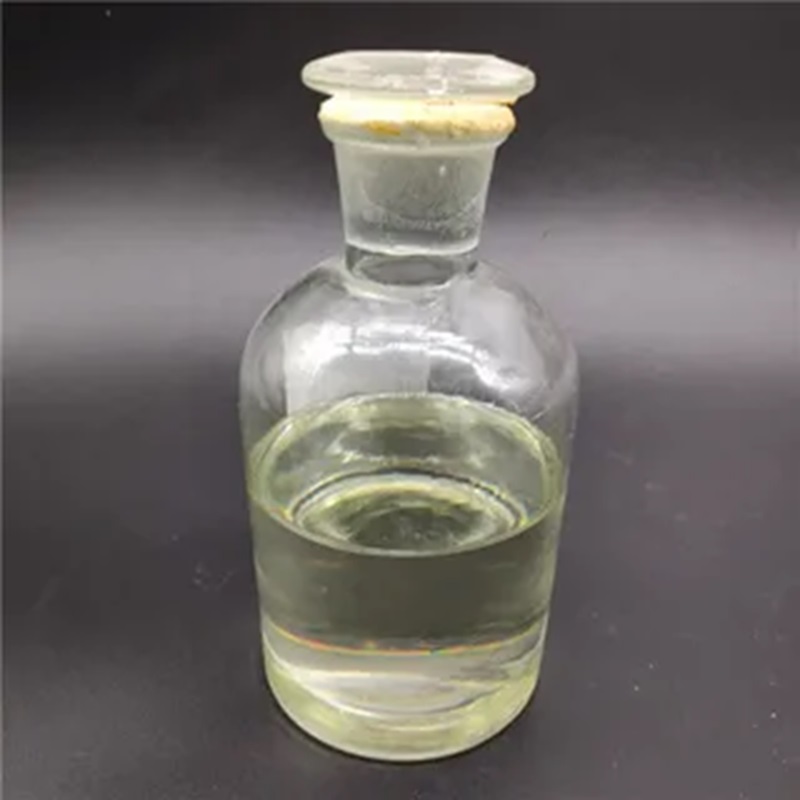
| Appearance | Colorless, transparent liquid |
| Physical State | Liquid |
2. PHYSICAL PROPERTIES
| Property | Value |
|---|---|
| Physical State (20°C) | Liquid |
| Appearance | Colorless, transparent liquid |
| Chemical Formula | C12H27O4P |
| Molecular Weight | 266.31 g/mol |
| Density (20°C) | 0.965 g/mL |
| Melting Point | 150°C |
| Boiling Point | ~205°C |
| Flash Point | 150°C |
| Autoignition Temperature | 430°C (DIN 51794) |
| Vapor Pressure (20°C) | 0.002 hPa |
| Water Solubility (25°C) | 264 mg/L |
| Refractive Index (n20/D) | 1.420 |
| Flammability | Combustible when exposed to high heat, open flame, or oxidizers |
| Decomposition Products | Toxic phosphorus oxides upon thermal decomposition |
3. CHEMICAL PROPERTIES
| Property | Information |
|---|---|
| Chemical Formula | C12H27O4P |
| Molecular Weight | 266.31 g/mol |
| Chemical Class | Organophosphate ester |
| Functional Group | Phosphate ester (P=O with three alkoxy groups) |
| Structure | (CH3)2CHCH2O-P(=O)(OCH2CH(CH3)2)2 |
| Hydrolysis | Hydrolyzes slowly in water |
| Stability | Stable under normal conditions |
| Thermal Decomposition | Produces toxic phosphorus oxides (POx) |
| Incompatible Materials | Strong oxidizing agents, strong bases, high heat |
General Structure:
        O
        ||
(CH3)2CHCH2O - P - OCH2CH(CH3)2
        |
        OCH2CH(CH3)2
4. PRODUCTION PROCESS
| Method | Description |
|---|---|
| Esterification (Industrial Standard) | Isobutanol + Phosphorus oxychloride (POCl3) → Triisobutyl phosphate + HCl |
| Reaction Conditions | Low temperature (≤20°C) initially, then raise to 65-70°C |
| Reaction Time | 3-4 hours under reduced pressure |
| Purification | Vacuum distillation to remove excess alcohol and HCl |
| Final Product Purity | >99% |
| Yield | >85% |
Reaction Equation:
POCl3 + 3 (CH3)2CHCH2OH → (CH3)2CHCH2O-P(=O)(OCH2CH(CH3)2)2 + 3 HCl
5. AVAILABLE FORMS AND SPECIFICATIONS
| Form | Purity | Description | Applications |
|---|---|---|---|
| Technical Grade | ≥99.0% | Colorless transparent liquid | Textile chemicals, defoamers, penetrants |
| High Purity Grade | ≥99.5% | Colorless transparent liquid | Specialty applications, inks, construction chemicals |
Typical Specifications:
| Parameter | Specification | Test Method |
|---|---|---|
| Assay (C12H27O4P) | ≥99.0% | GC |
| Appearance | Colorless transparent liquid | Visual |
| Density (20°C) | 0.960 - 0.970 g/cm³ | Hydrometer |
| Refractive Index (n20/D) | 1.418 - 1.422 | Refractometer |
| Water Content | ≤0.1% | Karl Fischer |
| Acidity (as H3PO4) | ≤0.05% | Titration |
| Color (APHA) | ≤50 | Colorimetric |
| Ash Content | ≤0.01% | Gravimetric |
6. APPLICATIONS
6.1. Textile Industry – Most Common Use
| Application | Function |
|---|---|
| Textile Auxiliaries | Processing aid in textile manufacturing |
| Penetrants | Enhances penetration of dyes and finishing agents into fabrics |
| Dyeing Aids | Improves dye uniformity and color fastness |
| Leveling Agents | Promotes even dye distribution |
| Wetting Agents | Reduces surface tension for better fiber wetting |
6.2. Defoamers (Foam Control Agents)
| Application | Function |
|---|---|
| Industrial Defoamer | Prevents and eliminates foam in various processes |
| Textile Processing | Foam control in dyeing and finishing baths |
| Pulp and Paper | Foam suppression in paper manufacturing |
| Water Treatment | Foam control in wastewater treatment |
| Chemical Processing | Foam prevention in reactors and mixing vessels |
6.3. Printing Inks
| Application | Function |
|---|---|
| Ink Formulations | Levelling agent, flow improver |
| Flexographic Inks | Improves print quality and uniformity |
| Gravure Inks | Enhances ink transfer and drying properties |
| Screen Printing Inks | Improves flow and leveling |
6.4. Construction Chemicals
| Application | Function |
|---|---|
| Concrete Admixtures | Air entrainment control, defoamer |
| Mortar and Grout | Improves workability and foam suppression |
| Gypsum Products | Processing aid, defoamer |
| Cement Grinding Aids | Improves grinding efficiency |
6.5. Oil Field Chemicals
| Application | Function |
|---|---|
| Drilling Fluids | Defoamer for drilling muds |
| Production Chemicals | Foam control in oil/gas separation |
| Enhanced Oil Recovery | Surfactant additive |
| Well Stimulation | Foam suppression in acidizing operations |
6.6. Plastics and Polymers Industry
| Application | Function |
|---|---|
| Plastic Additives | Processing aid, lubricant |
| Polymer Processing | Defoamer and flow improver |
| PVC Compounding | Plasticizer (limited use) |
| Rubber Manufacturing | Processing aid, dispersant |
6.7. Paints and Coatings
| Application | Function |
|---|---|
| Paint Formulations | Defoamer, flow control agent |
| Water-based Coatings | Foam suppression during application |
| Industrial Coatings | Leveling agent |
6.8. Other Applications
| Application | Function |
|---|---|
| Metalworking Fluids | Defoamer, lubricant additive |
| Adhesives | Foam control agent |
| Cleaning Products | Defoamer in industrial cleaners |
| Agrochemicals | Emulsifier, adjuvant |
| Leather Processing | Wetting agent, penetrant |
7. PHOSPHATE ESTERS COMPARISON TABLE
| Phosphate Ester | Abbreviation | CAS | Key Applications | Suitability for TIBP |
|---|---|---|---|---|
| Triisobutyl Phosphate | TIBP | 126-71-6 | Textile auxiliaries, defoamers, penetrants, inks, construction chemicals, oil field | Base compound |
| Tributyl Phosphate | TBP | 126-73-8 | Nuclear fuel processing, metal extraction, defoamer | Higher extraction efficiency, different selectivity |
| Trioctyl Phosphate | TOP | 78-42-2 | Plasticizers, lubricant additives | Higher molecular weight, better heat stability |
| Triethyl Phosphate | TEP | 78-40-0 | Catalyst, ethylating agent, stabilizer | Lower viscosity, more volatile |
| Triphenyl Phosphate | TPP | 115-86-6 | Flame retardant, plasticizer | Solid at room temperature, different compatibility |
| Tri(2-ethylhexyl) Phosphate | TEHP | 78-42-2 | Plasticizers, synthetic lubricants | Higher molecular weight, better flexibility |
Industry Suitability Summary:
| Industry | TIBP | TBP | TOP | TEP | TPP | TEHP |
|---|---|---|---|---|---|---|
| Textile & Dyes | Very High | Medium | Low | Medium | Low | Low |
| Inks & Printing | Very High | Medium | Low | Medium | Low | Low |
| Construction Chemicals | Very High | Medium | Medium | Very High | Medium | Medium |
| Oil Field | Very High | Medium | Low | Low | Low | Low |
| Nuclear & Metallurgy | Low | Very High | Low | Low | Low | Low |
| Plastics & Polymers | Medium | Medium | Very High | Medium | Very High | Very High |
| Food & Pharmaceutical | Low | Low | Low | Low | Low | Low |
8. SAFETY AND HEALTH INFORMATION (GHS CLASSIFICATION)
| Hazard Class | Category |
|---|---|
| Skin Sensitization | Category 1 (H317) |
| Flammable Liquid | Category 4 (H227) |
| Acute Toxicity | Low toxicity (see toxicological data) |
Risk Phrases (EU):
| Code | Statement |
|---|---|
| R43 | May cause sensitization by skin contact |
Safety Phrases (EU):
| Code | Statement |
|---|---|
| S36/37 | Wear suitable protective clothing and gloves |
9. HAZARD STATEMENTS (H-CODES)
| Code | Statement |
|---|---|
| H227 | Combustible liquid |
| H317 | May cause an allergic skin reaction |
10. SAFETY STATEMENTS (P-CODES)
| Code | Statement |
|---|---|
| P210 | Keep away from heat, hot surfaces, sparks, open flames, and other ignition sources. No smoking |
| P261 | Avoid breathing mist/vapors/spray |
| P272 | Contaminated work clothing should not be allowed out of the workplace |
| P280 | Wear protective gloves, protective clothing, eye protection, face protection |
| P302+P352 | IF ON SKIN: Wash with plenty of water |
| P333+P313 | If skin irritation or rash occurs: Get medical advice/attention |
| P362+P364 | Take off contaminated clothing and wash it before reuse |
11. TOXICOLOGICAL INFORMATION
| Parameter | Value |
|---|---|
| Oral LD50 (rabbit) | >5,000 mg/kg (very low toxicity) |
| Dermal LD50 (rabbit) | >5,000 mg/kg (very low toxicity) |
| Skin Sensitization | May cause sensitization (R43) |
| Carcinogenicity | Not classified as carcinogenic |
| Mutagenicity | Not classified |
| Reproductive Toxicity | Not classified |
Health Effects:
| Exposure | Effect |
|---|---|
| Acute (Inhalation) | Low toxicity; may cause mild respiratory irritation |
| Acute (Skin Contact) | May cause allergic skin reaction in susceptible individuals |
| Acute (Eye Contact) | Mild irritant |
| Acute (Ingestion) | Low toxicity; large amounts may cause gastrointestinal discomfort |
| Chronic | Repeated exposure may cause skin sensitization |
Water Hazard Classification (WGK Germany):
| Class | Rating |
|---|---|
| WGK 1 | Low hazard to water |
12. FIRST AID MEASURES
| Exposure Route | Action |
|---|---|
| Inhalation | Remove to fresh air. If breathing difficulty, give oxygen. Seek medical attention if symptoms persist. |
| Skin Contact | Wash with soap and plenty of water. Remove contaminated clothing. Seek medical attention if skin irritation or rash develops. |
| Eye Contact | Rinse immediately with plenty of water for at least 15 minutes. Remove contact lenses. Seek medical attention if irritation persists. |
| Ingestion | Rinse mouth. Drink plenty of water. Do NOT induce vomiting. Seek medical attention if large amount ingested. |
13. FIRE FIGHTING MEASURES
| Parameter | Information |
|---|---|
| Fire Hazard | Combustible liquid (flash point 150°C) |
| Extinguishing Media | Water spray, CO₂, dry chemical powder, foam |
| Special Hazards | Thermal decomposition produces toxic gases including phosphorus oxides (POx) |
| Protective Equipment | Self-contained breathing apparatus (SCBA), full protective clothing |
14. ENVIRONMENTAL INFORMATION
| Parameter | Information |
|---|---|
| Aquatic Toxicity | Low toxicity to aquatic organisms (264 mg/L solubility) |
| Biodegradability | Slowly biodegradable |
| Bioaccumulation | Low to moderate potential |
| Water Hazard Classification | WGK 1 (Low hazard to water) |
| Waste Disposal | Dispose according to local regulations. Controlled incineration recommended. |
15. STORAGE AND HANDLING
| Parameter | Information |
|---|---|
| Storage Temperature | Below +30°C |
| Storage Conditions | Cool, dry, well-ventilated area |
| Container Requirements | Tightly closed containers (HDPE, steel, glass) |
| Protect from | High heat, open flames, strong oxidizing agents, strong bases |
| Shelf Life | 12-24 months (unopened, proper storage) |
| Hygroscopicity | Low |
| Incompatible Materials | Strong oxidizing agents, strong bases |
| Packaging Options | 25 kg drum, 200 kg drum, 1000 kg IBC, bulk container |
Handling Notes:
-
Avoid prolonged or repeated skin contact (may cause sensitization)
-
Use with adequate ventilation
-
Wear chemical resistant gloves (nitrile, neoprene)
-
Keep away from ignition sources
-
In case of spill, contain with inert absorbent material
16. TRANSPORT INFORMATION
| Parameter | Information |
|---|---|
| UN Number | Not regulated (generally not classified as dangerous goods for transport) |
| Hazard Class | Not applicable |
| Packing Group | Not applicable |
| Proper Shipping Name | Triisobutyl phosphate |
| Marine Pollutant | No |
| ADR/RID | Not classified as dangerous goods |
17. REGULATORY INFORMATION
| Region | Status |
|---|---|
| EU | REACH registered; approved for industrial use |
| Türkiye (KKDİK) | Mandatory compliance; registration required |
| USA (TSCA) | Listed |
| Canada (DSL) | Listed |
| Australia (AICS) | Listed |
| Japan (ENCS) | Listed |
| Korea (KECL) | Listed |
| China (IECSC) | Listed |
EINECS: 204-798-3
WGK Germany: 1 (Low hazard to water)
18. OTHER NAMES AND SYNONYMS
| Name |
|---|
| Triisobutyl Phosphate |
| Tri Iso Butyl Phosphate |
| Tris(2-methylpropyl) phosphate |
| Phosphoric acid triisobutyl ester |
| TIBP |
| Isobutyl phosphate (Tris) |
| Triisobutyl orthophosphate |
Database Identifiers:
| Database | Identifier |
|---|---|
| CAS | 126-71-6 |
| EC | 204-798-3 |
| MDL | MFCD00039855 |
| PubChem CID | 31352 |
| InChIKey | HRKAMJBPFPHCSD-UHFFFAOYSA-N |
19. INDUSTRY SUITABILITY SUMMARY
| Industry | Suitability | Usage Intensity | Application Description |
|---|---|---|---|
| Textile & Dyes | Very High | High | Textile auxiliaries, penetrants, dyeing aids, leveling agents |
| Inks & Printing | Very High | High | Ink formulations, levelling agents, flow improvers |
| Construction Chemicals | Very High | High | Concrete admixtures, defoamers, mortar and grout additives |
| Oil Field | Very High | High | Drilling fluid defoamers, production chemicals |
| Paints & Coatings | Medium | Medium | Defoamers, flow control agents |
| Plastics & Polymers | Medium | Medium | Processing aids, lubricants |
| Metalworking | Medium | Low | Defoamers, lubricant additives |
| Adhesives | Low | Low | Foam control agents |
20. SUMMARY AND IMPORTANT WARNINGS
SUMMARY:
Triisobutyl phosphate (TIBP, C12H27O4P, CAS 126-71-6) is a colorless, transparent liquid organophosphate ester. It has a molecular weight of 266.31 g/mol, density of 0.965 g/mL at 20°C, boiling point of approximately 205°C, and flash point of 150°C. It is produced by the esterification of isobutanol with phosphorus oxychloride (POCl3), yielding >99% purity product with >85% yield. TIBP is primarily used in the textile industry as an auxiliary chemical, penetrant, and dyeing aid. It is also widely used as a defoamer (foam control agent) in various industrial processes including textile processing, pulp and paper, water treatment, and chemical manufacturing. Additional applications include printing inks, construction chemicals (concrete admixtures), oil field chemicals (drilling fluid defoamers), plastics and polymers (processing aids), paints and coatings, metalworking fluids, and adhesives.
Key Properties:
| Property | Value |
|---|---|
| Appearance | Colorless transparent liquid |
| Chemical Formula | C12H27O4P |
| Molecular Weight | 266.31 g/mol |
| Density (20°C) | 0.965 g/mL |
| Boiling Point | ~205°C |
| Flash Point | 150°C |
| Autoignition Temperature | 430°C |
| Water Solubility (25°C) | 264 mg/L |
| Refractive Index (n20/D) | 1.420 |
| Primary Use | Textile auxiliaries, defoamer, penetrant |
Main Application Areas:
| Industry | Applications | Intensity |
|---|---|---|
| Textile | Auxiliaries, penetrants, dyeing aids, leveling agents | Very High |
| Inks | Formulations, levelling agents, flow improvers | Very High |
| Construction | Concrete admixtures, defoamers, mortar additives | Very High |
| Oil Field | Drilling fluid defoamers, production chemicals | Very High |
| Paints/Coatings | Defoamers, flow control agents | Medium |
| Plastics/Polymers | Processing aids, lubricants | Medium |
| Metalworking | Defoamers, lubricant additives | Medium |
Key Safety Points:
-
SKIN SENSITIZER: May cause allergic skin reaction (H317, R43)
-
COMBUSTIBLE: Flash point 150°C; keep away from high heat and open flames (H227)
-
LOW TOXICITY: Oral LD50 >5,000 mg/kg (rabbit); Dermal LD50 >5,000 mg/kg (rabbit)
-
THERMAL DECOMPOSITION: Produces toxic phosphorus oxides (POx) when heated
-
USE PPE: Wear protective gloves (nitrile, neoprene), protective clothing, safety goggles
-
STORAGE: Below 30°C, cool, dry, well-ventilated area away from oxidizers
-
WATER HAZARD: WGK 1 (Low hazard to water)
IMPORTANT WARNINGS:
Skin Sensitization Hazard: Triisobutyl phosphate is classified as a skin sensitizer (H317, R43). Prolonged or repeated skin contact may cause allergic skin reactions in susceptible individuals. Symptoms may include redness, itching, rash, and dermatitis. Once sensitized, subsequent exposure to even small amounts may trigger a reaction. Wear appropriate chemical resistant gloves (nitrile, neoprene) and protective clothing. If skin contact occurs, wash thoroughly with soap and water. Contaminated work clothing should not be allowed out of the workplace.
Flammability Considerations: Although TIBP has a relatively high flash point (150°C), it is still combustible. It should be kept away from high heat, open flames, sparks, and other ignition sources. The autoignition temperature is 430°C. Upon thermal decomposition, TIBP releases toxic phosphorus oxides (POx) which are irritating and hazardous to the respiratory tract. In case of fire, use water spray, CO₂, dry chemical powder, or foam. Firefighters should wear self-contained breathing apparatus (SCBA) and full protective clothing.
Low Acute Toxicity: Triisobutyl phosphate has very low acute toxicity. The oral LD50 in rabbits is >5,000 mg/kg, and the dermal LD50 is also >5,000 mg/kg. This indicates that TIBP is not acutely toxic via ingestion or skin absorption. However, it is still a skin sensitizer and may cause allergic reactions. Large ingestions may cause gastrointestinal discomfort.
Environmental Profile: TIBP has low water solubility (264 mg/L at 25°C) and is classified as WGK 1 (low hazard to water) in Germany. It is slowly biodegradable and has low to moderate bioaccumulation potential. While aquatic toxicity is low, large spills should be contained and prevented from entering waterways. Dispose of waste material in accordance with local environmental regulations.
Storage and Stability: Store TIBP below 30°C in a cool, dry, well-ventilated area. Keep containers tightly closed to prevent contamination and moisture ingress. Protect from strong oxidizing agents and strong bases, which may cause decomposition or undesirable reactions. Under normal storage conditions, TIBP is stable for 12-24 months.
Comparison with Other Phosphate Esters: TIBP is specifically optimized for textile auxiliaries, defoamers, penetrants, inks, construction chemicals, and oil field applications. For nuclear fuel processing and metal extraction, tributyl phosphate (TBP) is superior. For plasticizers in plastics and polymers, trioctyl phosphate (TOP) and tri(2-ethylhexyl) phosphate (TEHP) are preferred. For flame retardant applications, triphenyl phosphate (TPP) is commonly used. Each phosphate ester has unique properties suited to specific applications.
Defoamer Applications: TIBP is particularly effective as a defoamer (foam control agent) due to its surface-active properties. It reduces surface tension and destabilizes foam bubbles, causing them to collapse. It is used in textile processing, pulp and paper manufacturing, water treatment, chemical reactors, drilling fluids, and paint formulations. The effectiveness of TIBP as a defoamer is related to its low water solubility and ability to spread on liquid surfaces.
Textile Industry Specifics: In textile processing, TIBP serves multiple functions. As a penetrant, it helps dye and finishing solutions penetrate more deeply and uniformly into fabric fibers. As a leveling agent, it promotes even dye distribution, reducing streaks and uneven coloration. As a wetting agent, it reduces surface tension, allowing better wetting of hydrophobic fibers. These properties make TIBP a valuable auxiliary chemical in textile manufacturing.
Important Disclaimer: This Technical Data Sheet (TDS) is for informational purposes only. For complete safety, handling, storage, and regulatory compliance information, always refer to the official Safety Data Sheet (SDS) provided by the manufacturer/supplier. Triisobutyl phosphate is a skin sensitizer. Avoid prolonged or repeated skin contact. Wear appropriate personal protective equipment. Keep away from high heat and open flames. In case of skin sensitization or allergic reaction, seek medical attention. Dispose of waste in accordance with local regulations.