We unleash your business potential by maximize the business innovation.
Send EmailHydrochloric Acid, Chlorohydric Acid, Hydrogen Chloride, Muriatic Acid, HCl, 7647-01-0
HYDROCHLORIC ACID (HCL)
Hydrochloric Acid / Muriatic Acid / Chlorohydric Acid / Spirit of Salt / Tuz Ruhu
CAS Number: 7647-01-0
EC Number: 231-595-7
1. IDENTIFICATION INFORMATION
| Property | Information |
|---|---|
| Chemical Name | Hydrochloric Acid |
| Other Names | Muriatic Acid, Chlorohydric Acid, Spirit of Salt, Tuz Ruhu, Kloran, Hydrogen Chloride Aqueous Solution |
| Chemical Formula | HCl |
| Molecular Weight | 36.46 g/mol |
| CAS Number | 7647-01-0 |
| EC Number (EINECS) | 231-595-7 |
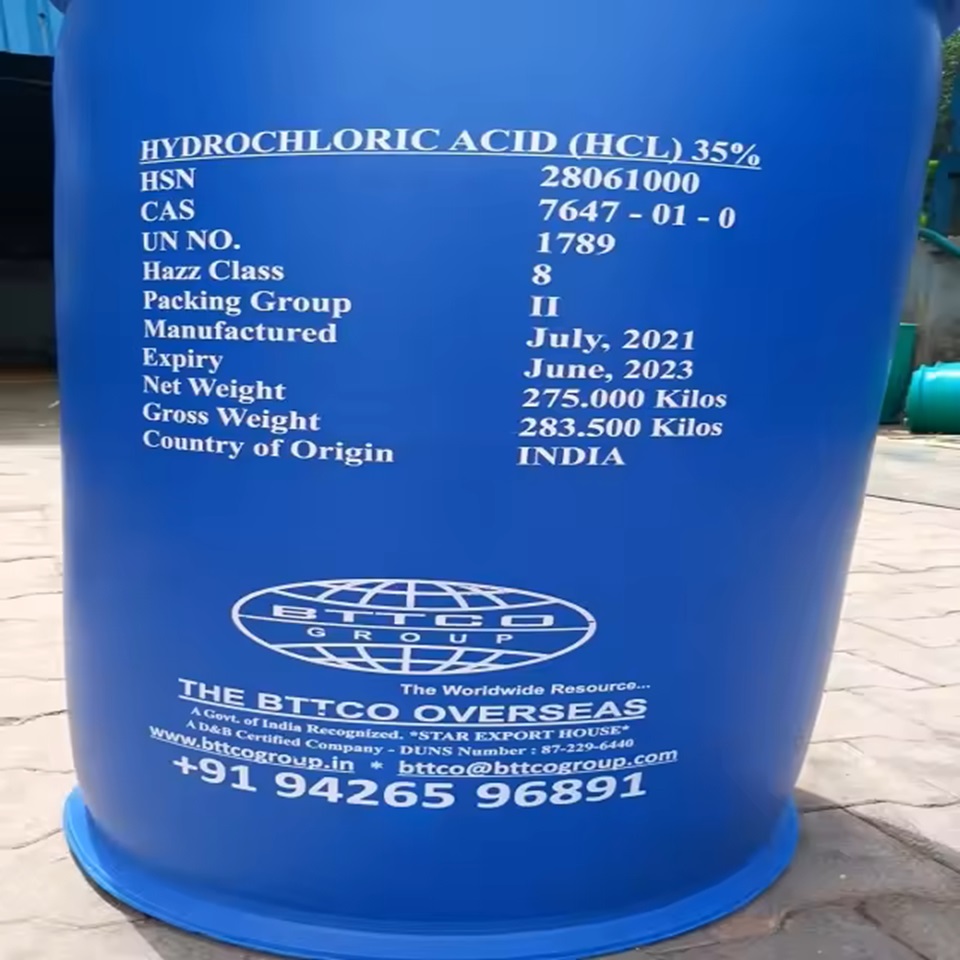
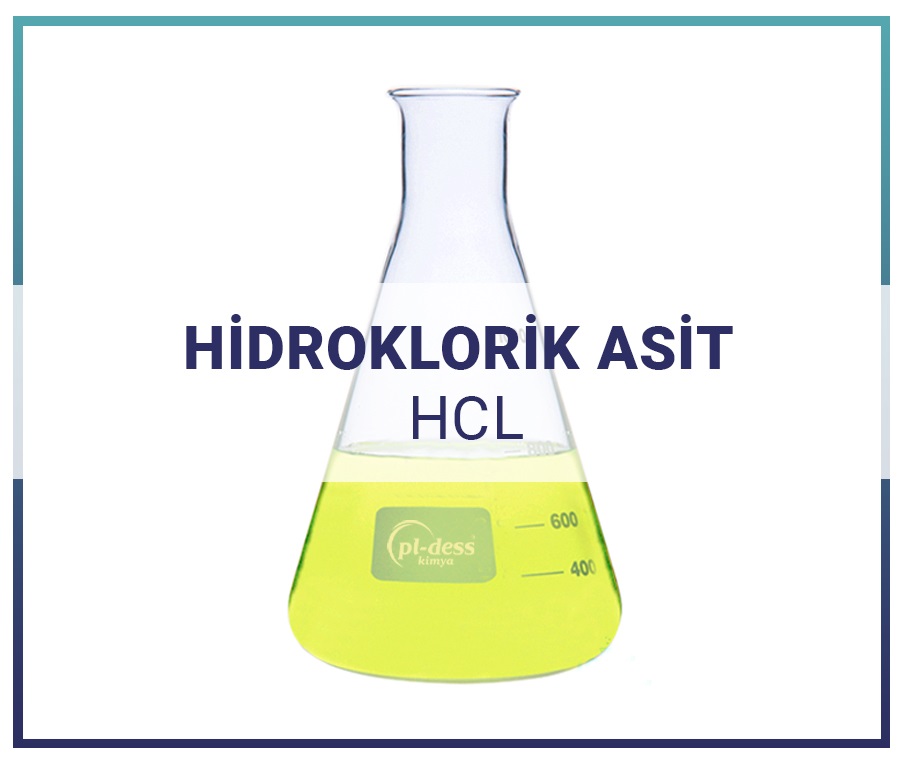
| Appearance | Colorless to slightly yellow clear liquid |
| Odor | Sharp, pungent, irritating |
Note: Hydrochloric acid is the aqueous solution of hydrogen chloride gas (HCl) dissolved in water.
2. PHYSICAL PROPERTIES
| Property | Value |
|---|---|
| Physical State (20°C) | Liquid |
| Appearance | Colorless to pale yellow clear liquid |
| Odor | Sharp, pungent, irritating |
| Chemical Formula | HCl |
| Molecular Weight | 36.46 g/mol |
| Density (25°C, 36-38% solution) | 1.18 - 1.20 g/cm³ |
| Melting Point (Pure HCl) | -114.9°C |
| Boiling Point (20% solution) | ~108°C |
| Boiling Point (36-38% solution) | ~81.5 - 110°C (azeotropic) |
| Boiling Point (10% solution) | ~103°C |
| Vapor Pressure (20°C, 36% solution) | ~190 mmHg |
| pH (0.1 M solution) | ~1.1 |
| pKa | -7 (very strong acid) |
| Solubility in Water | Completely miscible |
| Solubility in Alcohol | Soluble |
| Solubility in Ether | Soluble |
| Solubility in Benzene | Soluble |
| Refractive Index (n20/D, 36% solution) | 1.412 |
| Viscosity (20°C, 36% solution) | ~1.9 mPa·s |
3. CHEMICAL PROPERTIES
| Property | Information |
|---|---|
| Chemical Formula | HCl |
| Molecular Weight | 36.46 g/mol |
| Chemical Class | Mineral acid (strong acid) |
| Acidity (pKa) | -7 (completely dissociates in water) |
| Stability | Stable under normal conditions |
| Dissociation in Water | HCl → H⁺ + Cl⁻ (complete dissociation) |
| Reaction with Bases | Neutralization (forms chloride salts + water) |
| Reaction with Metals | Produces hydrogen gas (H₂) and metal chloride |
| Reaction with Carbonates | Produces carbon dioxide (CO₂), salt, and water |
| Reaction with Oxidizing Agents | May produce chlorine gas (Cl₂) |
| Incompatible Materials | Strong bases, oxidizing agents (permanganates, dichromates, chlorates, peroxides), metals (aluminum, magnesium, zinc), alkali metals, metal oxides, acetylides, carbides, silicides |
HCl + H₂O → H₃O⁺ + Cl⁻ (complete dissociation)
Neutralization Reaction (with Base):
HCl + NaOH → NaCl + H₂O
Reaction with Metal (Zinc):
2 HCl + Zn → ZnCl₂ + H₂↑
Reaction with Carbonate (Calcium Carbonate):
2 HCl + CaCO₃ → CaCl₂ + CO₂↑ + H₂O
4. PRODUCTION PROCESS
| Method | Description |
|---|---|
| Chlor-Alkali Process (Chlorine-Hydrogen Combustion) | H₂ + Cl₂ → 2 HCl (combustion in flame), then absorbed in water |
| Salt and Sulfuric Acid (Traditional) | 2 NaCl + H₂SO₄ → Na₂SO₄ + 2 HCl (heated) |
| Organic By-product Recovery | Recovery from chlorination reactions (e.g., production of vinyl chloride, isocyanates) |
| Commercial Concentrations | 10%, 20%, 30%, 32%, 36-38% (azeotropic), 37% (fuming) |
Reaction Equation (Chlorine-Hydrogen Combustion - Most Common):
H₂ + Cl₂  —[combustion]—> 2 HCl (gas)
HCl (gas) + H₂O → HCl (aqueous solution)
Reaction Equation (Salt and Sulfuric Acid - Traditional):
2 NaCl + H₂SO₄ + Heat → Na₂SO₄ + 2 HCl↑
Typical Commercial Grades:
| Grade | Concentration | Purity | Applications |
|---|---|---|---|
| Technical Grade | 30-36% | ~98-99% | Industrial cleaning, pickling, ore processing |
| Purified Grade | 32-37% | ~99.5% | General industrial use |
| ACS Grade | 36.5-38.0% | ≥99.999% | Laboratory, analytical chemistry |
| Semiconductor Grade | 30-37% | 99.999999% (8N) | Electronics, semiconductor manufacturing |
| Standardized Solutions | 0.1N - 6.0N | Exact concentration | Volumetric analysis, titrations |
5. AVAILABLE FORMS AND SPECIFICATIONS
| Form | Concentration | Purity | Description | Applications |
|---|---|---|---|---|
| Technical Grade | 30-36% | 98-99% | Colorless to pale yellow liquid | Metal pickling, ore processing, cleaning |
| Purified Grade | 32-37% | ≥99.5% | Clear colorless liquid | General industrial, chemical synthesis |
| ACS Grade | 36.5-38.0% | ≥99.999% | Clear colorless liquid | Laboratory, analytical chemistry |
| Semiconductor Grade | 30-37% | 99.999999% | Ultra-pure | Electronics, wafer cleaning |
| Standardized Solutions | 0.1N, 1.0N, 6.0N | Exact concentration | Clear liquid | Volumetric titration |
Typical Specifications (ACS Grade, 36.5-38.0%):
| Parameter | Specification | Test Method |
|---|---|---|
| Assay (HCl) | 36.5 - 38.0% | Titration |
| Appearance | Clear, colorless liquid | Visual |
| Color (APHA) | ≤10 | Colorimetric |
| Residue after Ignition | ≤0.0001% (1 ppm) | Gravimetric |
| Heavy Metals (as Pb) | ≤0.02 ppm | ICP |
| Iron (Fe) | ≤0.03 ppm | ICP |
| Arsenic (As) | ≤0.000002% (0.02 ppb) | ICP |
| Sulfate (SO₄) | ≤0.00001% (0.1 ppb) | ICP |
| Chlorine (Cl₂) | ≤0.00001% (0.1 ppb) | Colorimetric |
| Bromine (Br) | ≤0.00001% (0.1 ppb) | ICP |
Typical Specifications (Semiconductor Grade, 30-37%):
| Parameter | Specification |
|---|---|
| Assay (HCl) | 30-37% |
| Metals (each) | ≤0.1 - 1 ppb |
| Particles (>0.5 µm) | ≤10 particles/mL |
| Anions (Cl⁻, SO₄²⁻, NO₃⁻) | ≤10 ppb each |
6. APPLICATIONS
6.1. Steel and Metal Industry – Largest Use (~50%)
| Application | Function |
|---|---|
| Steel Pickling | Removal of rust and scale from steel surfaces before processing |
| Metal Cleaning | Cleaning of metal surfaces (iron, steel, copper, brass) |
| Ore Reduction | Processing of ores (e.g., production of titanium dioxide from ilmenite) |
| Galvanizing Preparation | Surface preparation before galvanizing |
| Electroplating | Metal plating baths |
Reaction (Rust Removal - Pickling):
Fe₂O₃ (rust) + 6 HCl → 2 FeCl₃ + 3 H₂O
Fe₃O₄ (scale) + 8 HCl → FeCl₂ + 2 FeCl₃ + 4 H₂O
6.2. Chemical Synthesis – Second Largest Use (~25%)
| Application | Function |
|---|---|
| Vinyl Chloride Monomer (VCM) | Production of PVC precursor (oxychlorination of ethylene) |
| Chlorinated Compounds | Production of chlorinated solvents, chloromethanes |
| Organic Chlorides | Synthesis of alkyl chlorides, acyl chlorides |
| Inorganic Chlorides | Production of metal chlorides (AlCl₃, FeCl₃, ZnCl₂) |
| Isocyanates | Production of TDI, MDI (polyurethane precursors) |
6.3. Oil and Gas Industry
| Application | Function |
|---|---|
| Acidizing (Well Stimulation) | Dissolving limestone and dolomite formations to increase oil/gas flow |
| Scale Removal | Removal of carbonate scales in pipelines and equipment |
| Drilling Fluids | pH adjustment |
Reaction (Acidizing - Limestone Dissolution):
CaCO₃ + 2 HCl → CaCl₂ + CO₂↑ + H₂O
6.4. Food Processing Industry
| Application | Function |
|---|---|
| Corn Syrup Production | Hydrolysis of corn starch to produce high-fructose corn syrup |
| Food Additive | Acidity regulator (E507) |
| Gelatin Production | Hydrolysis of collagen |
| Canned Goods | pH adjustment |
| Cheese Production | Rennet activation and pH control |
6.5. Water Treatment
| Application | Function |
|---|---|
| pH Adjustment | Neutralization of alkaline water and wastewater |
| Demineralization | Regeneration of cation exchange resins (water softeners) |
| Desalination | pH control in reverse osmosis systems |
| Swimming Pools | pH reduction |
6.6. Pharmaceutical Industry
| Application | Function |
|---|---|
| pH Regulator | Adjustment of pH in pharmaceutical formulations |
| API Synthesis | Intermediate in active pharmaceutical ingredient production |
| Hydrochloride Salt Formation | Conversion of basic drugs to hydrochloride salts (improved solubility/stability) |
6.7. Leather Tanning
| Application | Function |
|---|---|
| Leather Processing | Deliming and bating of hides |
| pH Control | Acidification in tanning processes |
6.8. Textile Industry
| Application | Function |
|---|---|
| Fabric Processing | pH adjustment in dyeing and finishing |
| Cotton Processing | Cleaning and treatment of cotton seeds and fibers |
6.9. Semiconductor and Electronics Industry
| Application | Function |
|---|---|
| Wafer Cleaning | Removal of metallic contaminants (RCA cleaning process) |
| Silicon Purification | Etching and purification of silicon wafers |
| Semiconductor Etching | Etching of semiconductor crystals |
6.10. Laboratory and Analytical Applications
| Application | Function |
|---|---|
| pH Adjustment | Buffer preparation, pH control |
| Acid Digestions | Sample preparation for elemental analysis (ICP, AAS) |
| Standard Solutions | Volumetric titrations (acid-base, alkalinity) |
| Cleaning | Glassware cleaning (removal of metal residues) |
| Synthesis | Laboratory chemical synthesis |
6.11. Other Applications
| Application | Function |
|---|---|
| Rubber Manufacturing | Latex coagulation, production of chlorinated rubber |
| Pigment Production | Production of titanium dioxide, iron oxides |
| Fertilizer Production | Production of potassium chloride, ammonium chloride |
| Dye Production | Intermediate in dye synthesis |
| Building Construction | Concrete etching, masonry cleaning |
| Battery Production | Component in some battery types |
| Household Cleaners | Toilet bowl cleaners, descaling agents |
| Catalyst Regeneration | Regeneration of catalysts in petroleum refining |
7. CONCENTRATION GUIDELINES BY APPLICATION
| Application | Typical Concentration |
|---|---|
| Steel Pickling | 10-20% |
| Oil Well Acidizing | 15-28% |
| Ore Processing | 20-30% |
| Chemical Synthesis | 30-37% |
| Water Treatment (Regeneration) | 5-10% |
| pH Adjustment | 1-10% |
| Laboratory Reagent | 1-37% (varies) |
| Household Cleaner | 5-15% |
| Semiconductor (Wafer Clean) | 0.5-2% (dilute) |
| Demineralization Regeneration | 4-8% |
8. SAFETY AND HEALTH INFORMATION (GHS CLASSIFICATION)
| Hazard Class | Category |
|---|---|
| Acute Toxicity (Oral) | Category 3-4 (H301 - H302) |
| Acute Toxicity (Inhalation: Gas) | Category 3 (H331) |
| Acute Toxicity (Inhalation: Mist) | Category 2 (H330) |
| Skin Corrosion | Category 1A-1C (H314) |
| Serious Eye Damage | Category 1 (H318) |
| Respiratory Sensitization | Category 1 (H334) |
| Specific Target Organ Toxicity (Single exposure) | Category 3 (H335) |
| Corrosive to Metals | Category 1 (H290) |
| Gases under Pressure (Anhydrous) | Liquefied gas (H280) |
9. HAZARD STATEMENTS (H-CODES)
| Code | Statement |
|---|---|
| H290 | May be corrosive to metals |
| H301 | Toxic if swallowed (depending on concentration) |
| H302 | Harmful if swallowed |
| H314 | Causes severe skin burns and eye damage |
| H318 | Causes serious eye damage |
| H330 | Fatal if inhaled (mist) |
| H331 | Toxic if inhaled |
| H334 | May cause allergy or asthma symptoms or breathing difficulties if inhaled |
| H335 | May cause respiratory irritation |
10. SAFETY STATEMENTS (P-CODES)
| Code | Statement |
|---|---|
| P260 | Do not breathe mist/vapors/spray |
| P261 | Avoid breathing dust/fume/gas/mist/vapors/spray |
| P280 | Wear protective gloves, protective clothing, eye protection, face protection |
| P284 | Wear respiratory protection |
| P301+P330+P331 | IF SWALLOWED: Rinse mouth. Do NOT induce vomiting |
| P303+P361+P353 | IF ON SKIN (or hair): Remove immediately all contaminated clothing. Rinse skin with water/shower |
| P304+P340 | IF INHALED: Remove person to fresh air and keep comfortable for breathing |
| P305+P351+P338 | IF IN EYES: Rinse cautiously with water for several minutes. Remove contact lenses if present and easy to do. Continue rinsing |
| P310 | Immediately call a POISON CENTER or doctor |
| P342+P311 | If experiencing respiratory symptoms: Call a POISON CENTER or doctor |
11. TOXICOLOGICAL INFORMATION
| Parameter | Value |
|---|---|
| Oral LD50 (rat, 36% solution) | 238 - 277 mg/kg |
| Oral LD50 (rat, dilute) | ~700 mg/kg |
| Dermal LD50 (rabbit) | >5,010 mg/kg |
| Inhalation LC50 (rat, gas) | ~1,411 ppm (4 hours) |
| Inhalation LC50 (rat, mist) | 0.42 mg/L (4 hours) |
| Skin Corrosion | Causes severe burns (pH <2) |
| Eye Damage | Causes serious eye damage |
| Respiratory Sensitization | May cause occupational asthma |
| Carcinogenicity | IARC Group 3 (Not classifiable as carcinogenic to humans) |
Health Effects:
| Exposure | Effect |
|---|---|
| Acute (Inhalation) | Respiratory tract irritation, coughing, choking, nosebleeds, pulmonary edema, laryngeal spasm |
| Acute (Skin Contact) | Severe burns, blistering, ulceration (depends on concentration and duration) |
| Acute (Eye Contact) | Severe burns, corneal damage, potential blindness |
| Acute (Ingestion) | Severe gastrointestinal burns, nausea, vomiting, throat swelling, potential perforation |
| Chronic | Bronchitis, laryngitis, dental erosion, asthma (sensitization) |
Occupational Exposure Limits:
| Agency | Limit |
|---|---|
| ACGIH TLV (Ceiling) | 2 ppm (3 mg/m³) |
| NIOSH REL (Ceiling) | 5 ppm (7 mg/m³) |
| OSHA PEL | 5 ppm (7 mg/m³) |
12. FIRST AID MEASURES
| Exposure Route | Action |
|---|---|
| Inhalation | Remove to fresh air. Administer oxygen if breathing difficulty. If breathing has stopped, give artificial respiration. Seek immediate medical attention. |
| Skin Contact | Remove contaminated clothing. Wash with soap and plenty of water for at least 15 minutes. Do not neutralize with bases. Seek immediate medical attention. |
| Eye Contact | Rinse immediately with plenty of water for at least 15-20 minutes. Remove contact lenses. Keep eyelids open. Seek immediate medical attention. |
| Ingestion | Do NOT induce vomiting. Rinse mouth. Do not give anything by mouth. Seek immediate medical attention. Never give anything by mouth to an unconscious person. |
13. FIRE FIGHTING MEASURES
| Parameter | Information |
|---|---|
| Fire Hazard | Non-flammable. Does not burn. |
| Explosion Hazard | Containers may rupture when heated. Hydrogen gas produced from metal reaction is flammable. |
| Extinguishing Media | Use extinguishing media appropriate for surrounding fire (water spray, CO₂, dry chemical, foam). |
| Special Hazards | Reacts violently with water (dilution only - not dangerous). Contact with metals produces flammable hydrogen gas. Thermal decomposition produces toxic and corrosive fumes (HCl gas). |
| Protective Equipment | Self-contained breathing apparatus (SCBA), full protective clothing, acid-resistant gloves and boots. |
14. ENVIRONMENTAL INFORMATION
| Parameter | Information |
|---|---|
| Aquatic Toxicity | Toxic to aquatic organisms due to pH decrease |
| Biodegradability | Not applicable (inorganic) |
| Bioaccumulation | Not applicable |
| Mobility in Water | High (completely miscible) |
| pH Effect | Lowers pH of water bodies (toxic to aquatic life below pH 5) |
| Neutralization Required | Before disposal, must be neutralized to pH 6-9 |
| Waste Disposal | Neutralize with alkali (NaOH, Ca(OH)₂, NaHCO₃) to pH 6-9, then dispose according to local regulations. Controlled neutralization followed by wastewater treatment. |
15. STORAGE AND HANDLING
| Parameter | Information |
|---|---|
| Storage Conditions | Cool (15-30°C), dry, well-ventilated area |
| Container Requirements | Tightly closed, corrosion-resistant containers (glass, HDPE, PTFE, PVC, CPVC, FRP, rubber-lined steel) |
| Protect from | Strong bases, oxidizing agents, metals (aluminum, magnesium, zinc), sunlight, heat |
| Container Materials | Compatible: Glass, HDPE, PTFE, PVC, CPVC, FRP, rubber-lined steel, tantalum, titanium |
| Incompatible Materials | Strong bases, oxidizing agents (permanganates, dichromates, chlorates, peroxides), alkali metals, metal oxides, acetylides, carbides, silicides |
| Shelving | Store in dedicated acid cabinet (inorganic #9). Use secondary containment. |
| Special Storage Tip | Store away from formaldehyde. Reaction produces chloromethoxychloromethane (carcinogen). |
| Shelf Life | 12-36 months (unopened, proper storage) |
| Ventilation | Store in well-ventilated area; HCl fumes are corrosive to metal storage cabinets |
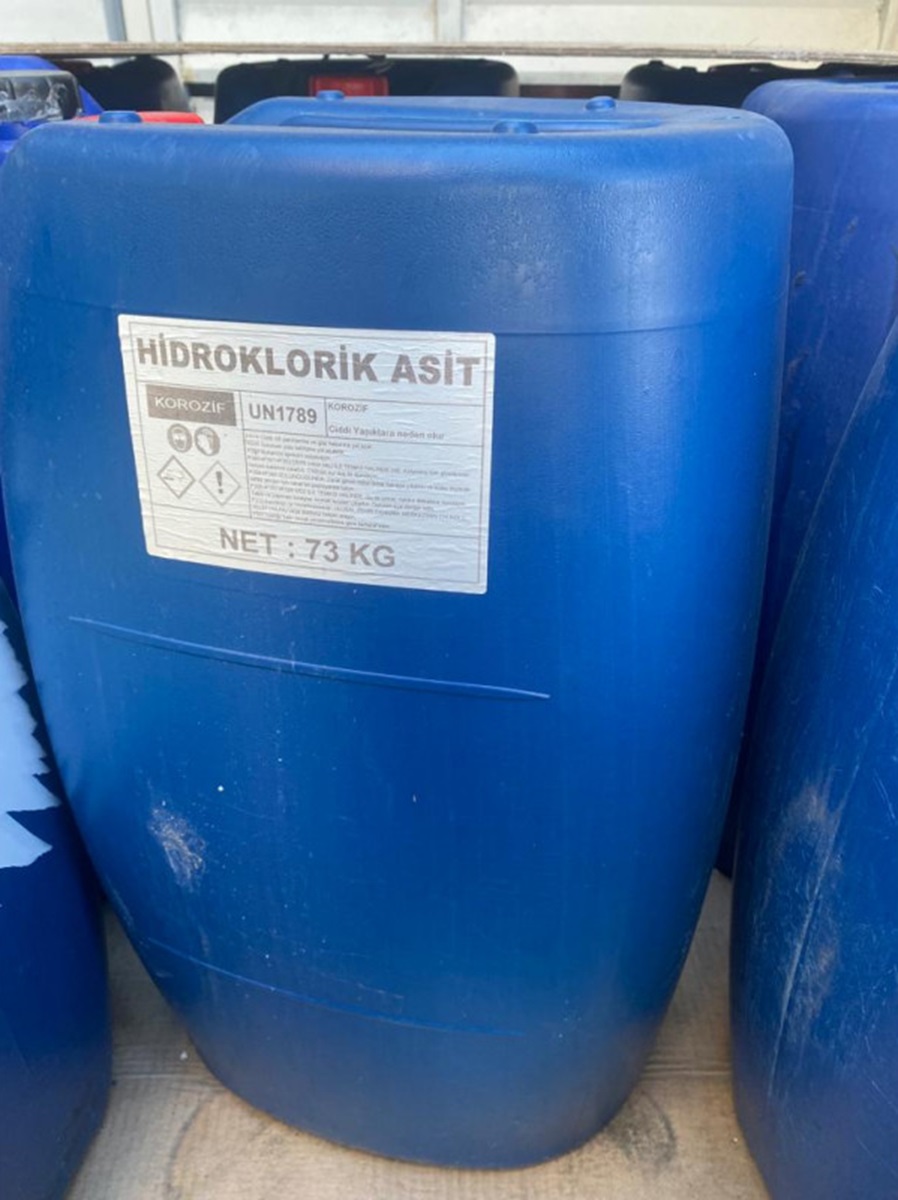
| Packaging Options | 0.5 L, 1 L, 2.5 L bottles; 5 L, 10 L, 20 L, 25 L, 30 L carboys; 200 L drums; 1,000 L IBC; bulk tankers |
Handling Notes:
-
Always add acid to water, NEVER add water to acid (prevents violent splattering)
-
Use only in well-ventilated areas or under fume hood
-
Use chemical goggles, face shield, acid-resistant gloves (neoprene, butyl rubber, nitrile), and acid-resistant apron
-
Store bottles in a sealed plastic bag to prevent corrosion of storage area labels and metal surfaces
-
Label spray (Krylon) on bottle labels helps preserve them from fume damage
-
Use secondary containment (tray) for storage
-
Have emergency eyewash stations and safety showers nearby
-
Do not store near formaldehyde (forms chloromethyl methyl ether - carcinogen)
16. TRANSPORT INFORMATION
| Parameter | Information |
|---|---|
| UN Number | 1789 |
| Hazard Class | 8 (Corrosive substance) |
| Packing Group | II (30-40% solutions), III (10-30% solutions) |
| Proper Shipping Name | HYDROCHLORIC ACID |
| Marine Pollutant | No |
| ADR/RID Label | 8 |
| EMS | F-A, S-B |
Hydrogen Chloride (Anhydrous Gas):
| Parameter | Information |
|---|---|
| UN Number | 1050 |
| Hazard Class | 2.3 (Toxic gas), Subsidiary risk 8 (Corrosive) |
| Packing Group | Not applicable |
17. REGULATORY INFORMATION
| Region | Status |
|---|---|
| EU | REACH registered; approved for industrial use; CLP Regulation compliant |
| Türkiye (KKDİK) | Mandatory compliance; registration required |
| USA (TSCA) | Listed |
| Canada (DSL) | Listed |
| Australia (AICS) | Listed |
| Japan (ENCS) | Listed |
| Korea (KECL) | Listed |
| China (IECSC) | Listed |
Food Additive Status: E507 (EU) – acidity regulator, permitted in food processing
FDA Status: GRAS for certain food applications
EPA Registration: Registered as antimicrobial pesticide
18. OTHER NAMES AND SYNONYMS
| Name |
|---|
| Hydrochloric Acid |
| Muriatic Acid |
| Chlorohydric Acid |
| Spirit of Salt |
| Tuz Ruhu (Turkish) |
| Kloran (Turkish) |
| Hydrogen Chloride Aqueous Solution |
| HCl |
| Marine Acid |
| Salfuman |
| Acidum Salis |
Database Identifiers:
| Database | Identifier |
|---|---|
| CAS | 7647-01-0 |
| EC | 231-595-7 |
| MDL | MFCD00011324 / MFCD00792839 |
| PubChem CID | 313 |
| RTECS | MW4025000 |
| UN | 1789 (solution), 1050 (anhydrous gas) |
| ChEBI | CHEBI:17883 |
| InChI Key | VEXZGXHMUGYJMC-UHFFFAOYSA-N |
19. COMMONLY ASKED QUESTIONS (FAQ)
Q1. What is the difference between hydrochloric acid and hydrogen chloride?
Hydrogen chloride (HCl) is a colorless gas at room temperature. Hydrochloric acid is the aqueous solution of hydrogen chloride gas dissolved in water. The gas is classified as a toxic gas (UN 1050), while the solution is classified as a corrosive liquid (UN 1789).
Q2. What is the maximum concentration of hydrochloric acid available?
The azeotropic concentration of hydrochloric acid is approximately 20.2% at 108°C. However, commercially available concentrated HCl is 36.5-38% (ACS grade) and 30-37% (technical grade). Higher concentrations are not practical because HCl gas escapes from solution. Fuming hydrochloric acid (37%) releases HCl gas when exposed to air, forming dense white fumes.
Q3. Why does hydrochloric acid fume?
Concentrated hydrochloric acid (above 30%) releases hydrogen chloride gas from the surface when exposed to air. The HCl gas reacts with atmospheric moisture to form a visible mist of hydrochloric acid droplets, creating the characteristic white fumes. This is why it is called "fuming" hydrochloric acid.
Q4. How should hydrochloric acid be stored safely?
Store in a cool, dry, well-ventilated area in tightly closed, corrosion-resistant containers (glass, HDPE, PVC, rubber-lined steel). Keep away from strong bases, oxidizing agents, and metals. Store in a dedicated acid cabinet. To prevent corrosion of labels and metal cabinets, place bottles in a sealed plastic bag. Never store near formaldehyde.
Q5. Why should I add acid to water, not water to acid?
Adding acid to water is always safer because:
-
The heat of dilution is dissipated by the large volume of water
-
If splashing occurs, it is primarily water with a small amount of acid
-
Adding water to concentrated acid causes localized boiling and violent splattering of concentrated acid
Q6. What materials are compatible with hydrochloric acid?
Compatible: Glass, HDPE, PTFE, PVC, CPVC, FRP, rubber-lined steel, tantalum, titanium, silicon rubber, Viton.
Incompatible: Carbon steel, stainless steel (some grades), aluminum, magnesium, zinc, copper alloys (especially at high temperatures).
Q7. How should hydrochloric acid spills be handled?
-
Evacuate area and ensure adequate ventilation
-
Wear appropriate PPE (acid-resistant suit, gloves, goggles, SCBA)
-
Contain spill with inert absorbent (vermiculite, sand, diatomaceous earth)
-
Neutralize with sodium bicarbonate (baking soda), sodium carbonate, or calcium carbonate
-
After neutralization, collect and dispose as hazardous waste
-
For small spills, dilute with large quantities of water (if local regulations permit)
Q8. What are the signs of hydrochloric acid exposure?
-
Inhalation: Coughing, choking, nosebleeds, shortness of breath, chest tightness, pulmonary edema
-
Skin: Burning pain, redness, blistering, ulceration (depends on concentration)
-
Eyes: Severe pain, tearing, redness, blurred vision, potential blindness
-
Ingestion: Burning mouth/throat, nausea, vomiting, abdominal pain, throat swelling
Q9. What is "spent acid" and how is it handled?
Spent acid is used hydrochloric acid that has been contaminated during metal pickling or other industrial processes. It contains dissolved metal ions (FeCl₂, FeCl₃, ZnCl₂, etc.). Spent acid must be:
-
Regenerated (thermal or membrane processes to recover HCl)
-
Neutralized and precipitated as metal hydroxides for disposal
-
Treated in wastewater treatment facilities
Q10. Is hydrochloric acid regulated as a hazardous air pollutant?
Yes. Hydrogen chloride gas (including emissions from hydrochloric acid) is listed as a Hazardous Air Pollutant (HAP) under the Clean Air Act in the US and similar regulations internationally. Facilities must control and monitor emissions. The threshold for reporting is 10 tons per year for hydrogen chloride (anhydrous).
20. SUMMARY AND IMPORTANT WARNINGS
SUMMARY:
Hydrochloric acid (HCl, CAS 7647-01-0) is a strong mineral acid consisting of hydrogen chloride gas dissolved in water. It is a clear, colorless to pale yellow liquid with a sharp, pungent odor. It is completely miscible with water and fully dissociates into H⁺ and Cl⁻ ions, making it a very strong acid with pKa = -7. The most common commercial concentrations are 30-38% by weight. As one of the most widely produced industrial chemicals, hydrochloric acid has numerous applications, with the largest use being steel pickling (removal of rust and scale), followed by chemical synthesis (production of vinyl chloride for PVC, metal chlorides, and organic chlorides). Other major applications include oil well acidizing (dissolving limestone formations), food processing (corn syrup production, food additive E507), water treatment (pH adjustment, demineralization regeneration), pharmaceutical synthesis (pH regulation, hydrochloride salt formation), leather tanning, textile processing, semiconductor manufacturing (wafer cleaning), and laboratory analytical work.
Key Properties:
| Property | Value |
|---|---|
| Appearance | Colorless to pale yellow clear liquid |
| Chemical Formula | HCl |
| Molecular Weight | 36.46 g/mol |
| Density (36-38% solution) | 1.18 - 1.20 g/cm³ |
| Boiling Point (20%) | ~108°C |
| Boiling Point (36-38%) | ~81.5 - 110°C |
| pKa | -7 (very strong) |
| pH (0.1M solution) | ~1.1 |
| Water Solubility | Completely miscible |
| Primary Use | Steel pickling, chemical synthesis, oil well acidizing |
Main Application Areas:
| Industry | Applications | Concentration |
|---|---|---|
| Steel/Metal | Pickling, metal cleaning, ore reduction | 10-30% |
| Chemical | VCM production, inorganic/organic chlorides | 30-37% |
| Oil and Gas | Well acidizing, scale removal | 15-28% |
| Food Processing | Corn syrup, acidity regulator (E507) | 5-32% |
| Water Treatment | pH adjustment, resin regeneration | 1-10% |
| Pharmaceuticals | API synthesis, hydrochloride salts | 30-37% |
| Electronics | Wafer cleaning, silicon purification | 0.5-37% |
| Laboratory | Titrations, digestions, pH adjustment | 0.1-37% |
Key Safety Points:
-
CORROSIVE: Causes severe skin burns and eye damage (H314, H318)
-
TOXIC: Toxic if swallowed or inhaled (H301, H302, H330, H331)
-
RESPIRATORY SENSITIZER: May cause allergy or asthma symptoms (H334)
-
METAL CORROSIVE: May be corrosive to metals (H290)
-
NON-FLAMMABLE: But reacts with metals to produce flammable hydrogen gas
-
FUMING: Concentrated solutions release corrosive HCl gas (use ventilation)
-
ALWAYS ADD ACID TO WATER: Never add water to acid
-
USE VENTILATION: Work in fume hood or well-ventilated area
-
USE PPE: Chemical goggles, face shield, acid-resistant gloves (neoprene, butyl, nitrile), acid-resistant apron, rubber boots
-
STORAGE: Dedicated acid cabinet, secondary containment, away from bases and oxidizing agents
IMPORTANT WARNINGS:
Concentration Hazards: The hazards of hydrochloric acid are concentration-dependent. Concentrations above 10% are classified as corrosive, while lower concentrations (2-10%) are classified as irritants. Concentrated HCl (36-38%) also poses a significant inhalation hazard due to fuming (release of HCl gas). Always check Safety Data Sheet for specific concentration.
Fuming Hazard: Concentrated hydrochloric acid (above 30%) releases hydrogen chloride gas when exposed to air. The gas reacts with atmospheric moisture to form a visible mist of hydrochloric acid droplets. This mist is corrosive to the respiratory tract, metal surfaces, and equipment. Always handle under a fume hood or with adequate ventilation.
Always Add Acid to Water (Never Water to Acid): When diluting hydrochloric acid, ALWAYS add acid to water slowly with stirring. NEVER add water to concentrated acid. Adding water to acid causes localized boiling and violent splattering due to the heat of dilution (exothermic). Adding acid to water allows the large volume of water to absorb the heat safely.
Storage Compatibility: Store hydrochloric acid in dedicated acid storage cabinets. To prevent corrosion of metal cabinets and labels, store bottles in tightly sealed plastic bags. NEVER store near formaldehyde (formaldehyde + HCl reacts to produce bis(chloromethyl) ether, a potent carcinogen). Never store near strong bases, oxidizing agents, or metals (hydrogen gas production).
Metal Reaction: Hydrochloric acid reacts with many metals (aluminum, magnesium, zinc, iron, carbon steel) to produce flammable and potentially explosive hydrogen gas (H₂). Do not store or use hydrochloric acid in metal containers (except certain corrosion-resistant alloys like tantalum, titanium, and Hastelloy). Use plastic (HDPE, PVC, CPVC) or glass containers.
Medical Emergency: Hydrochloric acid causes severe chemical burns. In case of skin contact, remove contaminated clothing immediately and flush with water for at least 15 minutes. Do not attempt to neutralize with bases (this can generate heat and worsen burns). For eye contact, flush immediately with water for 15-20 minutes. For ingestion, do NOT induce vomiting (vomiting causes additional esophageal damage). For inhalation, move to fresh air immediately. Seek immediate medical attention for all significant exposures.
Ventilation Requirements: Due to the release of corrosive HCl gas (fuming) from concentrated solutions, hydrochloric acid must be handled under adequate local exhaust ventilation (fume hood) or in a well-ventilated area. Long-term exposure to low concentrations of HCl vapor can cause dental erosion, chronic bronchitis, and respiratory sensitization (occupational asthma).
Spill Response: In case of spill:
-
Evacuate area and ensure adequate ventilation
-
Wear full PPE (acid-resistant suit, boots, gloves, SCBA)
-
Contain spill with inert absorbent (sand, vermiculite, diatomaceous earth)
-
Neutralize with sodium bicarbonate (baking soda) or sodium carbonate (soda ash) – this will produce CO₂ gas (effervescence)
-
After neutralization (pH 6-9), dispose as hazardous waste
-
For large spills, contact emergency response and environmental authorities
Corrosive to Metals: Hydrochloric acid is corrosive to many metals, including carbon steel, stainless steel (some grades), aluminum, copper, brass, and zinc. Even acid vapor (fumes) causes rapid corrosion of metal storage cabinets, shelving, electrical equipment, and structural components. Use plastic, glass, or corrosion-resistant alloys for storage and handling.
Inhalation Hazard - Sensitization: Repeated inhalation exposure to HCl mist or vapor can cause respiratory sensitization (occupational asthma). Some individuals may develop allergic-type reactions (bronchospasm, wheezing, shortness of breath) upon subsequent exposures, even at very low concentrations. Use respiratory protection if ventilation is inadequate (NIOSH-approved acid gas cartridge respirator for concentrations up to 50 ppm, SCBA for higher concentrations).
Incompatibility - Formaldehyde: A serious safety hazard: hydrochloric acid reacts with formaldehyde (or formaldehyde-containing products) to form bis(chloromethyl) ether (BCME) and chloromethyl methyl ether (CMME), both of which are potent carcinogens (IARC Group 1). NEVER store hydrochloric acid near formaldehyde, formalin, or any formaldehyde-releasing preservatives.
Incompatibility - Oxidizers: Hydrochloric acid reacts with strong oxidizing agents (sodium hypochlorite - bleach, potassium permanganate, potassium dichromate, chlorates, perchlorates, peroxides, etc.) to produce toxic and hazardous chlorine gas (Cl₂). NEVER mix hydrochloric acid with bleach or other oxidizing agents.
Important Disclaimer: This Technical Data Sheet (TDS) is for informational purposes only. For complete safety, handling, storage, and regulatory compliance information, always refer to the official Safety Data Sheet (SDS) provided by the manufacturer/supplier. Hydrochloric acid is a hazardous corrosive material. Always wear appropriate personal protective equipment (PPE). Always add acid to water, never water to acid. Ensure adequate ventilation. Protect from incompatibles. In case of emergency, seek immediate medical attention.