We unleash your business potential by maximize the business innovation.
Send EmailOxalic Acid, Ethanedioic Acid Dihydrate, Oxalic Acid Dihydrate, 144-62-7, 6153-56-6
OXALIC ACID (CAS 144-62-7)
1. Chemical Identity and Structure
-
IUPAC Name: Ethanedioic acid dihydrate
-
CA Index Name: Oxalic acid dihydrate
-
CAS Numbers: 144-62-7 (anhydrous), 6153-56-6 (dihydrate – common commercial form)
-
EC Number: 205-634-3
-
RTECS Number: RO2450000
-
Molecular Formula: C₂H₂O₄ · 2H₂O
-
SMILES: C(=O)(C(=O)O)O
-
Crystal System: Monoclinic (dihydrate), space group P21/c
2. Physicochemical Parameters (Dihydrate Form)
| Parameter | Value |
|---|---|
| Molecular weight | 126.07 g/mol |
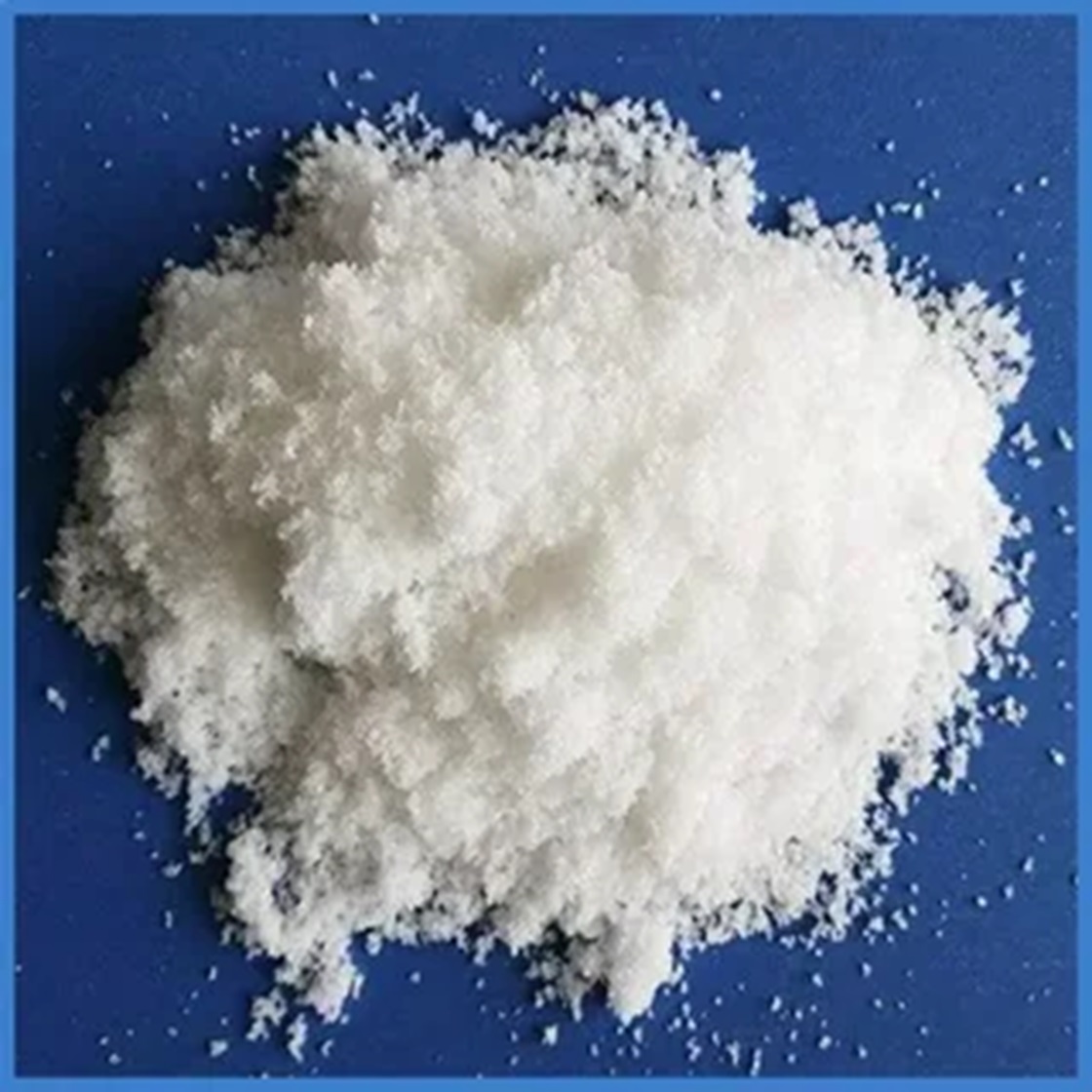
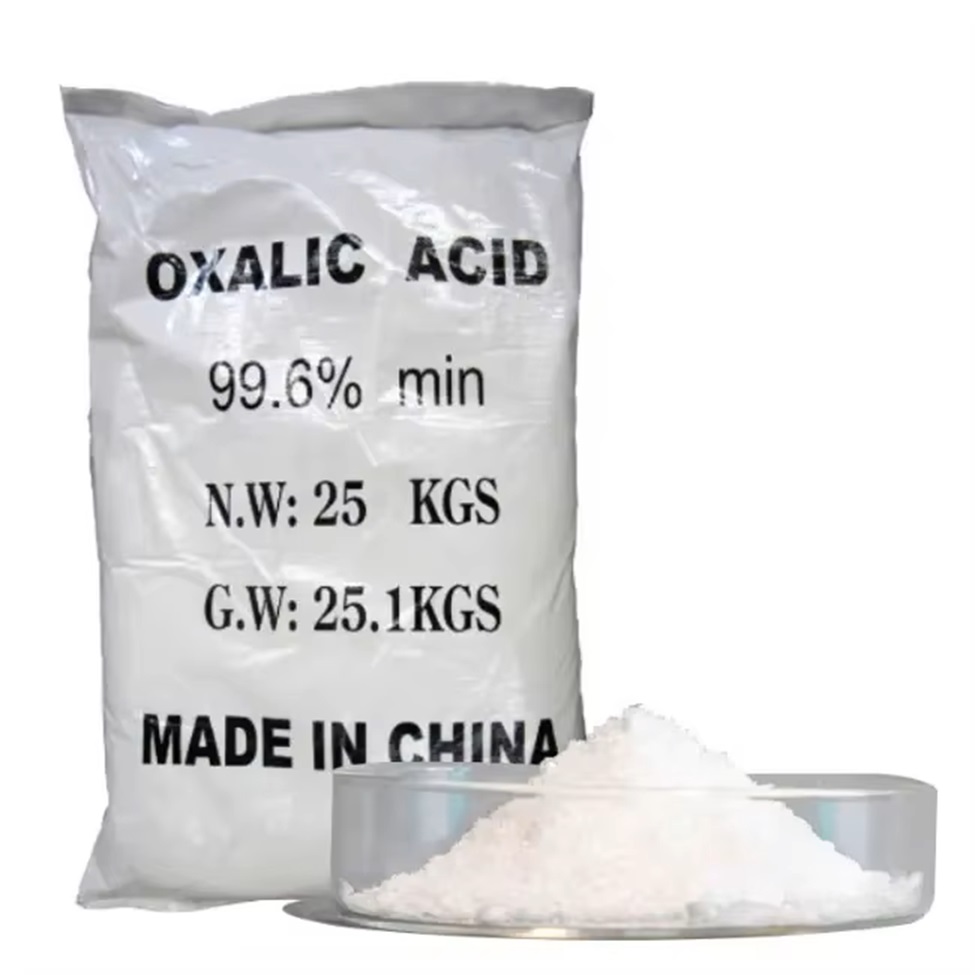
| Appearance | White, hygroscopic crystalline powder |
| Density | 1.653 g/cm³ (20°C) |
| Melting point | 101–105°C (decomposition onset) |
| Boiling point | Sublimes (decomposes above 150°C) |
| pH (0.1 M solution) | 1.0–1.3 |
| Solubility in water | 143 g/L (20°C), 245 g/L (50°C), 420 g/L (80°C) |
| Vapor pressure | <0.01 mmHg (20°C) |
| Log P (octanol/water) | -0.50 |
| pKa1 / pKa2 | 1.25 / 4.14 (25°C) |
| Flash point | Not applicable (non-flammable) |
| Autoignition temperature (dust cloud) | >200°C |
3. Spectroscopic Identifiers
-
FTIR (KBr, cm⁻¹): 3417 (O–H), 1715 (C=O dimeric), 1250 (C–O), 782 (deformation)
-
Raman (cm⁻¹): 1740 (C=O), 890 (C–C)
-
¹H NMR (D₂O): Singlet ~3.4 ppm (exchangeable OH)
-
ESI-MS (negative mode): m/z 89 → [M–H]⁻ (anhydrous form)
4. Industrial Production Methods – Detailed Processes
4.1 Classical Nitric Acid Oxidation (Dutch Process)
-
Feedstock: Sucrose or glucose (35–40% w/w)
-
Oxidant: 60% HNO₃ + V₂O₅ catalyst
-
Temperature: 60–70°C
-
Reaction: C₆H₁₂O₆ + 6HNO₃ → 3(COOH)₂ + 6NO + 6H₂O
-
Yield: 85–90%
-
By-products: CO₂, trace HCN
4.2 Oxidative Carbonylation (Monsanto/UBE Process)
-
Reaction: 2ROH + 2CO + 0.5O₂ → (COOR)₂ + H₂O
-
Catalyst: Pd(II)/Cu(II) or nitrite-based systems
-
Reactor: Gas-liquid reactor with distillation column
-
Hydrolysis: Diester + H₂O → H₂C₂O₄ + 2ROH (alcohol recycled)
-
Yield: >96%
4.3 Sodium Formate Dehydrogenation (Laboratory Scale)
-
Reaction: 2HCOONa → Na₂C₂O₄ + H₂ (≥360°C)
-
Acidification: Na₂C₂O₄ + H₂SO₄ → H₂C₂O₄ + Na₂SO₄
5. Thermal Decomposition and Phase Behavior
-
TGA/DTA Profile:
-
80–120°C → Loss of crystal water (2 H₂O, endothermic)
-
160–220°C → CO + CO₂ + H₂O evolution (competes with sublimation)
-
250°C → Complete decomposition, carbon residue + CO
-
-
Reaction: H₂C₂O₄ → CO + CO₂ + H₂O + C
-
Sublimation flux: ~50 mg/h (150°C, 1 atm)
6. Reactivity and Incompatible Chemicals
-
Strong oxidizers (KMnO₄, HNO₃, chromates) → vigorous exothermic reaction
-
Oxidizing salts (chlorates, bromates) → explosion risk
-
Metals (Ag, Cu, Fe) → metal oxalate formation, accelerated corrosion
-
Urea, thiourea → explosive compounds above 60°C
-
Alkalis → neutralization to oxalate salts (safe when cold)
7. Solubility Behavior and Phase Equilibrium
| Solvent | Solubility (g/100g, 20°C) |
|---|---|
| Water | 14.3 |
| Absolute ethanol | 24.0 |
| Diethyl ether | 0.7 |
| Acetone | 8.2 |
| Ethyl acetate | 3.0 |
| DMF | 35.0 |
-
Solution viscosity (25°C): 1.2 cP at 10% w/w
-
Freezing point depression constant (Kf): 3.88 K·kg/mol (in water)
8. Toxicokinetics and Metabolism
-
Absorption: Rapid via oral and inhalation routes (Tmax ~0.5–1 h)
-
Distribution: Chelates calcium ions → calcium oxalate crystals
-
Metabolism: No enzymatic metabolism in humans; excreted unchanged renally
-
Excretion: Renal (~85–90% within 24–48 hours)
-
Biological half-life (plasma): 2–3 hours
-
Biomarker: Spot urine oxalate/creatinine ratio (>0.1 indicates abnormal)
9. Acute Toxicity Values (OECD Tests)
| Species | Route | LD₅₀ / LC₅₀ |
|---|---|---|
| Rat | Oral | 375 mg/kg (female), 450 mg/kg (male) |
| Mouse | Oral | 700 mg/kg |
| Rat | Dermal | >2000 mg/kg |
| Rat | Inhalation (dust) | 0.21 mg/L (4 h) |
| Rabbit | Skin irritation | Corrosive (OECD 404) |
| Rabbit | Eye irritation | Severe damage (OECD 405) |
10. Chronic Toxicity and Carcinogenicity
-
NOAEL (oral, rat, 90-day): 50 mg/kg/day
-
LOAEL (renal effect): 200 mg/kg/day
-
Carcinogenicity classification: IARC Group 3 (not classifiable for humans)
-
Teratogenicity: Dose-dependent calcification defects in animal studies (≥100 mg/kg)
-
Reproductive toxicity: Testicular effects at high doses (rat)
11. Industrial Hygiene and Exposure Limits
| Authority | Limit Type | Value |
|---|---|---|
| ACGIH TLV | TWA | 1 mg/m³ (soluble oxalates) |
| OSHA PEL | TWA | 1 mg/m³ |
| NIOSH REL | TWA | 1 mg/m³ / STEL 2 mg/m³ |
| DFG MAK | TWA | 1 mg/m³ (skin notation) |
| Biological limit | Urinary oxalate | <50 mg/g creatinine (end of shift) |
12. Fire and Explosion Data
-
Dust explosion class: St1 (Kst ~ 60 bar·m/s)
-
Minimum ignition energy (MIE): 40 mJ
-
Maximum explosion pressure (Pmax): 6.5 bar
-
Extinguishing media: Dry chemical, CO₂, water fog (alcohol-resistant foam)
-
Dust cloud ignition temperature: 480°C
-
Decomposition gases: CO, CO₂, formic acid vapor
13. Reaction Thermodynamics and Chelate Chemistry
-
Metal chelate stability constants (log β, 25°C, ionic strength 0.1):
-
Fe³⁺: log β₁ = 9.4
-
Ca²⁺: log β₁ = 3.0, log β₂ = 4.5
-
Cu²⁺: log β₁ = 6.2
-
-
Complex formation enthalpy (Ca²⁺): ΔH = -18 kJ/mol
-
Solubility product (Ksp) of calcium oxalate: 2.32 × 10⁻⁹ (38°C, urine matrix)
14. Industrial Applications – In-Depth Validation
14.1 Rust Removal Formulations
-
Optimum concentration: 5–10% w/w oxalic acid + 1% surfactant
-
Reaction rate (Fe₂O₃ dissolution): 1.2 mg/cm²/min (25°C)
-
Iron complexation capacity: 1 mol H₂C₂O₄ → 0.5 mol Fe³⁺ (pH 2–3)
14.2 Varroa Treatment – Sublimation Protocol
-
Suitable device: Electric or gas-powered sublimator (Varrox type)
-
Dosage: 1.5–2.0 g per hive (10–15 frames)
-
Temperature requirement: 160–180°C (for adequate sublimation)
-
Application frequency: 3 times with 4-day intervals during broodless period
-
Efficacy: >95% Varroa mortality, bee mortality <1%
14.3 Calcium Determination – Gravimetric Method
-
Reagent: 4% ammonium oxalate solution
-
pH range: 4–5 (ammonium acetate buffer)
-
Digestion time: 4 hours (hot)
-
Washing solution: 0.1% ammonium oxalate + 0.1% ammonia
-
Muffle furnace: 500°C → weigh as CaO
15. Analytical Methods and Calibration
-
HPLC-UV:
-
Column: Aminex HPX-87H (300×7.8 mm)
-
Mobile phase: 5 mM H₂SO₄
-
Flow rate: 0.6 mL/min, detection 210 nm
-
Retention time: 11.2 min
-
-
Ion Chromatography (IC):
-
Column: AS11-HC
-
Eluent: 1–30 mM KOH gradient
-
Sensitivity: 0.1 mg/L
-
-
Titrimetry (permanganate):
-
1 mol H₂C₂O₄ ≡ 2 mol KMnO₄
-
Endpoint: Pale pink (50°C, H₂SO₄ medium)
-
-
FTIR quantitation: 1715 cm⁻¹ band (KBr pellet method)
16. Shelf Life and Stability Data
| Condition | Shelf Life |
|---|---|
| 25°C, 60% RH, sealed packaging | 36 months |
| 40°C, 75% RH (open container) | Caking within 7 days |
| UV light exposure | ~3% degradation over 12 months |
| Metal contact (steel, 25°C) | Discoloration, ~2% degradation over 6 months |
-
Recommended storage: 15–30°C, <70% RH, original packaging
-
Incompatibility indicator: Yellow/brown coloration (iron oxalate formation)
17. Transport and Regulatory Classification
| Regulation | Classification |
|---|---|
| ADR/RID | Class 8, Packing group III |
| IMDG Code | UN 3261 (Corrosive solid, acidic, organic) |
| IATA | Class 8, PG III |
| GHS Pictograms | GHS05 (Corrosive), GHS07 (Harmful) |
| H-statements | H302 (Harmful if swallowed), H312 (Harmful in contact with skin), H318 (Causes serious eye damage) |
| P-statements | P280, P301+P312, P305+P351+P338, P310, P501 |
18. Disposal and Environmental Fate
-
Biodegradation (water): Rapid (~90% in 2 days, OECD 301D)
-
Biochemical oxygen demand (BOD₅): 0.25 g O₂/g (pure)
-
Chemical oxygen demand (COD): 0.18 g O₂/g
-
Soil adsorption (Koc): 10–20 L/kg (high mobility)
-
Fish toxicity (LC₅₀, 96 h):
-
Rainbow trout: 120 mg/L
-
Zebrafish: 160 mg/L
-
-
Disposal method: Neutralization (lime milk) → calcium oxalate sludge → sanitary landfill
19. Quality Specifications (Industrial Grade)
| Parameter | Limit |
|---|---|
| Purity (w/w) | ≥99.0% |
| Sulfate (SO₄) | ≤0.05% |
| Chloride (Cl) | ≤0.01% |
| Heavy metals (as Pb) | ≤5 ppm |
| Iron (Fe) | ≤10 ppm |
| Calcium (Ca) | ≤20 ppm |
| Loss on drying (105°C) | 28.0–30.0% (dihydrate) |
| Residue on ignition (800°C) | ≤0.05% |
20. Synonyms, Storage Codes, and Reference Standards
-
Synonyms: Ethanedioic acid, Aktisal, Aquisal, DeerClean, NSC 132055, NSC 151956
-
PubChem CID: 971
-
ChemSpider: 946
-
MeSH ID: D019815
-
Storage codes:
-
D001 (Hazardous waste – corrosive)
-
F003 (Non-flammable)
-
-
Reference standard: NIST SRM 914a (Oxalic acid dihydrate, titrimetric standard)
-
Pharmacopeia compliance: USP, Ph.Eur. (no monograph – reagent grade only)