We unleash your business potential by maximize the business innovation.
Send EmailMaleic Anhydride, Toxilic Anhydride, Furandione, MA, 108-31-6
MALEIC ANHYDRIDE (MA)
Maleic Acid Anhydride / Toxilic Anhydride / 2,5-Furandione
CAS Number: 108-31-6
EC Number: 203-571-6
1. IDENTIFICATION
| Property | Information |
|---|---|
| Chemical Name | Maleic Anhydride |
| Synonyms | Maleic acid anhydride, Toxilic anhydride, 2,5-Furandione, cis-Butenedioic anhydride, MA |
| Chemical Formula | C₄H₂O₃ |
| Molecular Weight | 98.06 g/mol |
| CAS Number | 108-31-6 |
| EC Number (EINECS) | 203-571-6 |
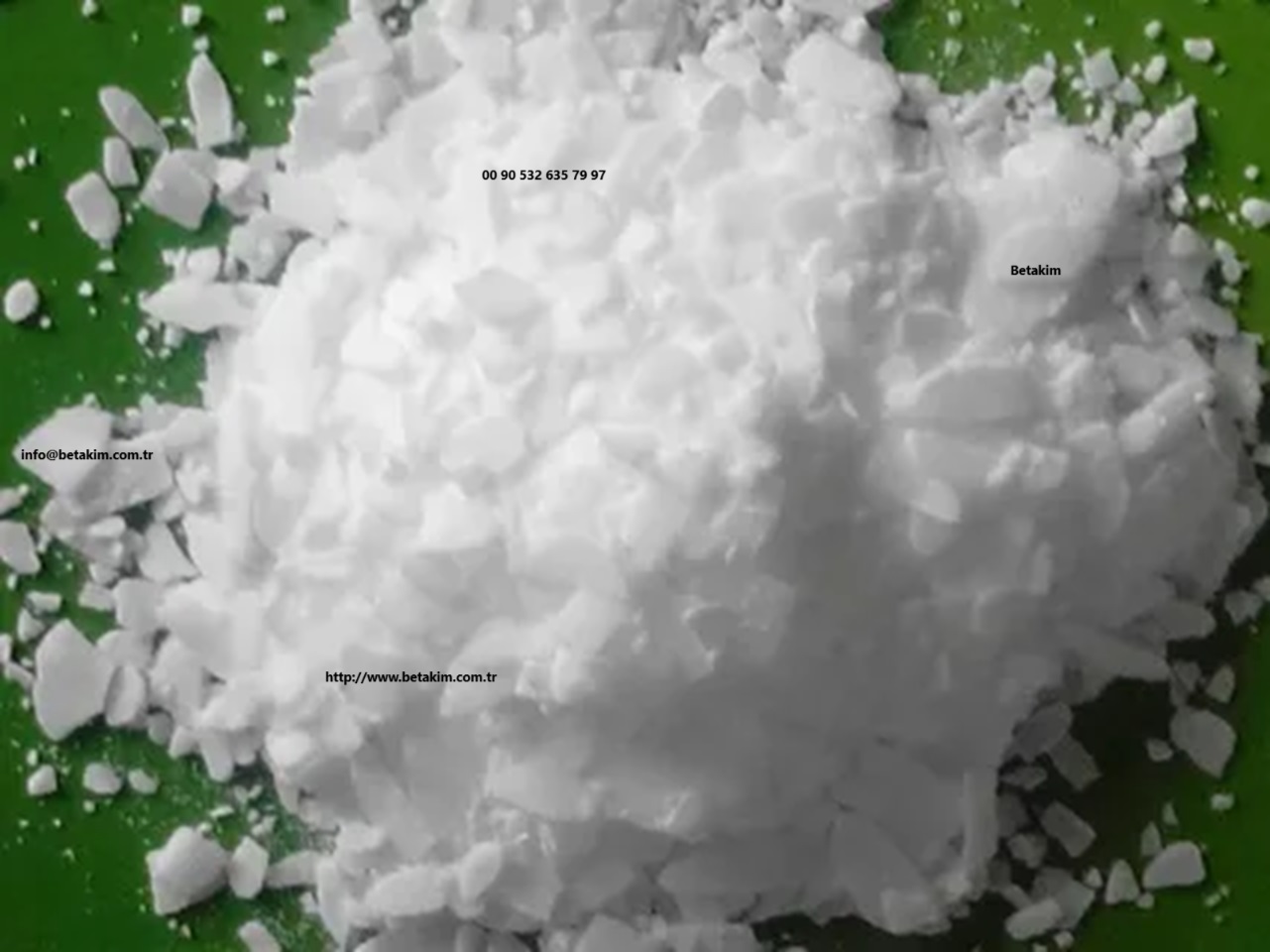
| Appearance | White crystalline solid (needles, flakes, pastilles, briquettes) |
| Odor | Irritating, suffocating, acrid odor |
| Physical Forms | Flakes, pastilles, briquettes, molten liquid |
2. PHYSICAL PROPERTIES
| Property | Value |
|---|---|
| Physical State (20°C) | Solid (crystalline) |
| Appearance | White to colorless needles, flakes, or pastilles |
| Odor | Irritating, suffocating, acrid odor |
| Molecular Weight | 98.06 g/mol |
| Density (20°C) | 1.48 g/cm³ |
| Bulk Density (Flakes) | 0.8 – 1.0 g/cm³ |
| Melting Point | 52.8 °C (127 °F) |
| Boiling Point | 202 °C (396 °F) |
| Flash Point | 102 °C (216 °F) (closed cup) |
| Auto-ignition Temperature | 477 °C (891 °F) |
| Vapor Pressure (20°C) | 0.16 mmHg |
| Vapor Density (air=1) | 3.38 |
| Solubility in Water (25°C) | 79 g/100 mL (reacts to form maleic acid) |
| Solubility in Organic Solvents | Soluble in acetone, chloroform, ethyl acetate, benzene, toluene, o-xylene, carbon tetrachloride, dioxane |
| pH (aqueous solution) | 1.0 – 2.0 (strongly acidic, as maleic acid) |
| Viscosity (Molten, 70°C) | ~3 mPa·s |
3. CHEMICAL PROPERTIES
| Property | Information |
|---|---|
| Chemical Formula | C₄H₂O₃ |
| Molecular Weight | 98.06 g/mol |
| Chemical Class | Dicarboxylic acid anhydride (cyclic) |
| Functional Group | Acid anhydride |
| Stability | Stable under normal conditions |
| Reaction with Water | C₄H₂O₃ + H₂O → C₄H₄O₄ (maleic acid) – exothermic |
| Reaction with Alcohols | Forms monoesters or diesters |
| Reaction with Amines | Forms maleamic acids or maleimides |
| Reaction with Dienes | Diels-Alder reactions (e.g., with cyclopentadiene) |
| Incompatible Materials | Water (violent reaction), strong bases, strong oxidizing agents, amines |
Hydrolysis Reaction:
C₄H₂O₃ + H₂O → C₄H₄O₄ (Maleic acid)
Diels-Alder Reaction (with Cyclopentadiene):
C₄H₂O₃ + C₅H₆ → Endo adduct (nadic anhydride)
4. PRODUCTION PROCESS
| Method | Description |
|---|---|
| Benzene Oxidation (Traditional) | C₆H₆ + 4.5 O₂ → C₄H₂O₃ + 2 CO₂ + 2 H₂O (V₂O₅ catalyst, 400°C) |
| n-Butane Oxidation (Modern) | C₄H₁₀ + 3.5 O₂ → C₄H₂O₃ + 4 H₂O (V₂O₅/P₂O₅ catalyst) |
| Maleic Acid Dehydration | C₄H₄O₄ + Heat → C₄H₂O₃ + H₂O |
Reaction Equation (n-Butane Oxidation – Most Common):
C₄H₁₀ + 3.5 O₂ → C₄H₂O₃ + 4 H₂O + Heat
5. AVAILABLE FORMS
| Form | Description | Advantages | Applications |
|---|---|---|---|
| Flakes | Thin, solid flakes | Easy to handle, slow dissolution | General industrial use, UPR production |
| Pastilles | Small, round pellets | Low dust, free-flowing | Automated dosing, powder handling |
| Briquettes | Compressed blocks | Compact storage, less dust | Large-scale industrial use |
| Molten Liquid | Heated liquid (60-70°C) | Easy pumping, continuous processes | Large-scale chemical plants |
6. APPLICATIONS
6.1. Unsaturated Polyester Resins (UPR) – Largest Use (~60%)
| Application | Function |
|---|---|
| UPR Production | Reacts with diols (propylene glycol, ethylene glycol) to form unsaturated polyester |
| Fiberglass Reinforced Plastics | Boat hulls, automotive parts, pipes, tanks |
| Wind Turbine Blades | Lightweight, high-strength composites |
| Building Materials | Panels, roofing, bathtubs, shower stalls |
| Corrosion-Resistant Equipment | Chemical storage tanks, pipes, ducting |
Reaction with Diols:
HO-R-OH + C₄H₂O₃ → Unsaturated polyester + H₂O
6.2. Copolymers & Polymer Modification
| Application | Function |
|---|---|
| Styrene-Maleic Anhydride (SMA) Copolymers | Emulsion stabilizers, dispersants, paper coatings |
| Maleic Anhydride-Grafted Polymers | MA-g-PP, MA-g-PE – coupling agents, compatibilizers |
| Polyvinyl Alcohol (PVA) Modification | Crosslinking agent |
| ABS Modification | Hardener, impact modifier |
6.3. Adhesives & Coatings
| Application | Function |
|---|---|
| Epoxy Curing Agents | Crosslinking agent for epoxy resins |
| Alkyd Resins | Component in paint and coating resins |
| Pressure-Sensitive Adhesives | Tackifier and crosslinker |
| Hot Melt Adhesives | Improves adhesion and cohesion |
6.4. Lubricant Additives
| Application | Function |
|---|---|
| PAMA Additives | Pour point depressants, viscosity index improvers |
| Engine Oil Additives | Extends oil change intervals, improves engine efficiency |
| Lubricant Dispersants | Keeps contaminants suspended |
6.5. Water Treatment Chemicals
| Application | Function |
|---|---|
| Scale Inhibitors | Prevents scale formation in cooling water systems |
| Corrosion Inhibitors | Protects metal surfaces |
| Polymeric Dispersants | MA copolymers for scale control |
| Boiler Water Treatment | Oxygen scavenger precursors |
6.6. Agricultural Chemicals
| Application | Function |
|---|---|
| Pesticide Intermediates | Raw material for certain insecticides, fungicides |
| Herbicide Production | Intermediate for selective herbicides |
| Plant Growth Regulators | Component in some formulations |
6.7. Paper Industry
| Application | Function |
|---|---|
| Paper Sizing Agents | Alkenyl succinic anhydride (ASA) precursors |
| Surface Sizing | Improves water resistance and printability |
| Pulp Additives | Strength enhancer |
6.8. Textile Industry
| Application | Function |
|---|---|
| Enzyme Cleaning Agents | Copolymers with surfactants for aqueous systems |
| Stain Resistance Treatment | Carpets and upholstery (with aromatic compounds) |
| Fabric Finishing | Crosslinking agents for wrinkle resistance |
| Dye Fixatives | Improves dye fastness |
6.9. Pharmaceutical Industry
| Application | Function |
|---|---|
| Drug Intermediates | Synthesis of pharmaceutical compounds |
| Fumaric Acid Production | Isomerization of maleic acid to fumaric acid |
| Tartaric Acid Production (Synthetic) | Raw material for synthetic tartaric acid |
| Maleimide Synthesis | For drug conjugates and bioconjugates |
6.10. Other Applications
| Application | Function |
|---|---|
| Oil Field Drilling Fluids | Low molecular weight water-soluble dispersants |
| Grinding Wheel Production | Curing agent for resin bonds |
| Inks & Toners | Resin component for water-based inks |
| Plasticizers | Raw material for specialty plasticizers |
| Flame Retardants | Reactive flame retardant intermediates |
| Plywood Adhesives | Flame retardant resin formulations |
| Fumaric Acid Production | Isomerization of maleic acid |
| Succinic Acid Production | Hydrogenation of maleic acid |
| Malic Acid Production | Hydration of maleic acid |
| Aspartic Acid Production | Reaction with ammonia |
7. UNSATURATED POLYESTER RESIN (UPR) PRODUCTION
| Component | Function |
|---|---|
| Maleic Anhydride | Provides unsaturation for crosslinking |
| Phthalic Anhydride | Provides rigidity and reduces cost |
| Propylene Glycol / Ethylene Glycol | Diol component for polyester chain |
| Styrene Monomer | Crosslinking agent and reactive diluent |
Typical UPR Formulation:
-
30-40% Maleic anhydride
-
20-30% Phthalic anhydride
-
30-40% Glycols
-
30-40% Styrene (final resin)
8. QUALITY SPECIFICATIONS
| Parameter | Specification |
|---|---|
| Purity (C₄H₂O₃) | ≥ 99.5% |
| Appearance | White to off-white flakes/pastilles |
| Melting Point | 52.5 – 53.5 °C |
| Color (APHA, molten) | ≤ 10 |
| Ash Content | ≤ 0.05% |
| Iron (Fe) | ≤ 0.0005% |
| Maleic Acid | ≤ 0.5% |
| Water Content | ≤ 0.05% |
| Stabilizer | May contain ≤ 100 ppm hydroquinone or similar |
9. STORAGE & HANDLING
| Parameter | Information |
|---|---|
| Storage Conditions | Cool, dry, well-ventilated area; 25-35°C recommended |
| Container Requirements | Moisture-proof containers (HDPE, lined drums, fiber drums with liner) |
| Protect From | Moisture (reacts violently), heat (melts), strong bases, strong oxidizing agents |
| Shelf Life | 12-24 months (when stored properly in unopened, dry containers) |
| Molten Storage | Store at 60-70°C in stainless steel tanks with nitrogen blanket |
| Hygroscopicity | Highly reactive with moisture – keep sealed |
| Incompatible Materials | Water (violent reaction), strong bases, strong oxidizing agents, amines |
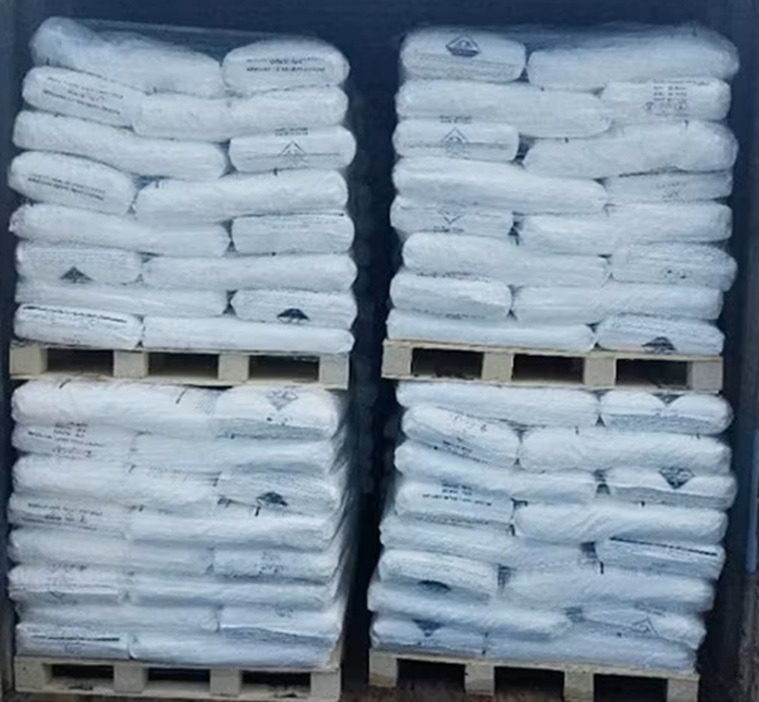
| Packaging Options | 25 kg bags (moisture-proof), 500 kg/1000 kg FIBC (big bags), molten tankers |
Handling Notes:
-
Solid form: Handle below 50°C to prevent melting
-
Molten form: Handle at 60-70°C; use heated lines and tanks
-
Keep away from moisture – hydrolyzes to maleic acid (corrosive)
-
Solidification may occur below 52°C
10. SAFETY & HEALTH INFORMATION (GHS CLASSIFICATION)
| Hazard Class | Category |
|---|---|
| Skin Corrosion/Irritation | Category 1B (H314) |
| Serious Eye Damage | Category 1 (H318) |
| Respiratory Sensitization | Category 1 (H334) |
| Skin Sensitization | Category 1 (H317) |
| Acute Aquatic Toxicity | Category 3 (H402) |
| Chronic Aquatic Toxicity | Category 3 (H412) |
11. HAZARD STATEMENTS (H-CODES)
| Code | Statement |
|---|---|
| H314 | Causes severe skin burns and eye damage |
| H317 | May cause an allergic skin reaction |
| H318 | Causes serious eye damage |
| H334 | May cause allergy or asthma symptoms if inhaled |
| H402 | Harmful to aquatic life |
| H412 | Harmful to aquatic life with long-lasting effects |
12. PRECAUTIONARY STATEMENTS (P-CODES)
| Code | Statement |
|---|---|
| P260 | Do not breathe dust/fumes |
| P280 | Wear protective gloves, protective clothing, eye protection, face protection |
| P284 | Wear respiratory protection |
| P301+P330+P331 | IF SWALLOWED: Rinse mouth. Do NOT induce vomiting. |
| P302+P352 | IF ON SKIN: Wash with plenty of water |
| P304+P340 | IF INHALED: Remove person to fresh air |
| P305+P351+P338 | IF IN EYES: Rinse cautiously with water for several minutes |
| P310 | Immediately call a POISON CENTER or doctor |
| P342+P311 | IF experiencing respiratory symptoms: Call a POISON CENTER |
13. TOXICOLOGICAL INFORMATION
| Parameter | Value |
|---|---|
| Oral LD50 (rat) | 400 – 1,000 mg/kg (moderate toxicity) |
| Dermal LD50 (rabbit) | > 2,000 mg/kg |
| Inhalation LC50 (rat) | 1.8 mg/L (4 hours) |
| Skin Irritation | Corrosive – causes severe burns |
| Eye Irritation | Corrosive – causes serious damage |
| Skin Sensitization | May cause allergic skin reactions |
| Respiratory Sensitization | May cause asthma-like symptoms |
| Carcinogenicity | Not classified as carcinogenic (IARC Group 3) |
Health Effects:
-
Acute (Inhalation): Respiratory tract irritation, coughing, wheezing, asthma-like symptoms
-
Acute (Skin Contact): Severe burns, blistering, sensitization
-
Acute (Eye Contact): Severe burns, potential blindness
-
Acute (Ingestion): Severe gastrointestinal burns, nausea, vomiting
-
Sensitization: Repeated exposure may cause allergic respiratory reactions (asthma) and skin allergies
14. FIRST AID MEASURES
| Exposure Route | Action |
|---|---|
| Inhalation | Remove to fresh air. Administer oxygen if breathing difficulty. Seek immediate medical attention. |
| Skin Contact | Remove contaminated clothing. Wash with plenty of water for at least 15 minutes. Seek medical attention. |
| Eye Contact | Rinse immediately with plenty of water for at least 15 minutes. Seek immediate medical attention. |
| Ingestion | Do NOT induce vomiting. Rinse mouth. Drink water. Seek immediate medical attention. |
15. FIRE FIGHTING MEASURES
| Parameter | Information |
|---|---|
| Fire Hazard | Combustible (flash point 102°C) |
| Extinguishing Media | Water spray, CO₂, dry chemical, foam |
| Special Hazards | Decomposes when heated, releasing toxic gases (CO, CO₂, acrid smoke) |
| Protective Equipment | Self-contained breathing apparatus (SCBA), full protective clothing |
16. ENVIRONMENTAL INFORMATION
| Parameter | Information |
|---|---|
| Aquatic Toxicity | Harmful to aquatic life with long-lasting effects (H412) |
| Biodegradability | Readily biodegradable |
| Bioaccumulation | Low potential |
| Mobility in Soil | High (hydrolyzes to maleic acid) |
| Waste Disposal | Dispose according to local regulations. Neutralize before disposal if necessary. |
17. TRANSPORT INFORMATION
| Parameter | Information |
|---|---|
| UN Number | 2215 |
| Hazard Class | 8 (Corrosive substance) |
| Packing Group | III |
| Proper Shipping Name | MALEIC ANHYDRIDE |
| Marine Pollutant | No |
| ADR/RID Label | 8 |
| EMS | F-A, S-B |
18. REGULATORY INFORMATION
| Region | Status |
|---|---|
| EU | REACH registered; approved for industrial use |
| Turkey (KKDIK) | Mandatory compliance; requires registration |
| USA (TSCA) | Listed |
| Canada (DSL) | Listed |
| Australia (AICS) | Listed |
| Japan (ENCS) | Listed |
| Korea (KECL) | Listed |
| China (IECSC) | Listed |
19. SYNONYMS & OTHER NAMES
| Turkish Name | English Name |
|---|---|
| Maleik Anhidrit | Maleic Anhydride |
| Maleik Asit Anhidrit | Maleic Acid Anhydride |
| Toksik Anhidrit | Toxilic Anhydride |
| 2,5-Furandion | 2,5-Furandione |
| MA | MA |
| cis-Büten Diok Asit Anhidriti | cis-Butenedioic Anhydride |
Database Identifiers:
-
CAS: 108-31-6
-
EC: 203-571-6
-
MDL: MFCD00005518
-
PubChem CID: 7923
-
RTECS: ON3675000
-
UN: 2215
20. SUMMARY & IMPORTANT NOTES
SUMMARY:
Maleic Anhydride (MA, C₄H₂O₃, CAS 108-31-6) is a white crystalline solid with an irritating, suffocating odor. It is a versatile chemical intermediate that reacts readily with water, alcohols, and amines. Its largest use is in the production of unsaturated polyester resins (UPR) for fiberglass-reinforced plastics, boat hulls, automotive parts, and wind turbine blades.
Key Features:
| Feature | Value |
|---|---|
| Appearance | White crystalline flakes/pastilles |
| Molecular Weight | 98.06 g/mol |
| Melting Point | 52.8°C |
| Boiling Point | 202°C |
| Flash Point | 102°C |
| Water Solubility | 79 g/100 mL (hydrolyzes to maleic acid) |
Main Application Areas:
| Sector | Applications |
|---|---|
| Unsaturated Polyester Resins (UPR) | Boat hulls, automotive parts, wind turbine blades, pipes, tanks |
| Copolymers & Polymer Modification | SMA copolymers, MA-grafted PP/PE, ABS modification |
| Adhesives & Coatings | Epoxy curing agents, alkyd resins, pressure-sensitive adhesives |
| Lubricant Additives | PAMA additives, viscosity improvers, dispersants |
| Water Treatment | Scale inhibitors, corrosion inhibitors, polymeric dispersants |
| Textile | Enzyme cleaning agents, stain resistance treatment |
| Agricultural Chemicals | Pesticide intermediates, herbicide production |
| Paper Industry | Paper sizing agents (ASA precursors) |
Key Safety Points:
-
CORROSIVE – Causes severe skin burns and eye damage
-
SENSITIZER – May cause allergic skin and respiratory reactions
-
REACTS WITH WATER – Violent exothermic reaction to maleic acid
-
HANDLE WITH PPE – Use gloves, goggles, face shield, respiratory protection
-
STORE DRY – Keep away from moisture
IMPORTANT NOTES:
-
Reaction with Water: Maleic anhydride reacts violently with water, producing maleic acid and releasing heat. Never add water to maleic anhydride. Store in dry, airtight containers.
-
Molten State Handling: Above 52.8°C, maleic anhydride melts. For industrial use, it is often handled as a molten liquid at 60-70°C. Use heated tanks and lines; avoid contact with moisture.
-
Sensitization Hazard: Repeated exposure can cause respiratory sensitization (asthma) and skin sensitization. Workers should be monitored for symptoms.
-
Unsaturated Polyester Resins (UPR): UPR is the largest market for maleic anhydride (approximately 60%). The resin is used with styrene monomer to produce crosslinked thermoset composites.
-
Diels-Alder Reactions: Maleic anhydride is a classic dienophile in Diels-Alder reactions, used to produce nadic anhydride and other cyclic anhydrides.
-
Water Treatment Polymers: Maleic anhydride copolymers are effective scale inhibitors and dispersants in cooling water and boiler water treatment.
-
Lubricant Additives: PAMA (Polyalkyl Methacrylate) additives containing maleic anhydride derivatives improve viscosity index and pour point of engine oils.
-
Bio-based Alternatives: Research is ongoing to produce bio-based maleic anhydride from renewable feedstocks (e.g., furfural, 5-HMF).
-
Solidification: Below 52.8°C, molten maleic anhydride solidifies. If solidification occurs in pipes or tanks, heat carefully (steam or hot water) – never use open flame.
-
Spill Cleanup: For solid spills, collect mechanically. For molten spills, allow to solidify before cleanup. Neutralize residues with sodium bicarbonate or lime.
Important Disclaimer: This Technical Data Sheet (TDS) is for informational purposes only. For complete safety, handling, storage, and regulatory compliance information, always refer to the official Safety Data Sheet (SDS) provided by the manufacturer/supplier.