We unleash your business potential by maximize the business innovation.
Send EmailPhthalic Anhydride, Isobenzofurandione, Benzene Dicarboxylic Anhydride Phthalic Acid, Acide Phtalique, 88-99-3
PHTHALIC ANHYDRIDE (PA)
Phthalic Anhydride / 1,3-Isobenzofurandione / Benzene-1,2-dicarboxylic Anhydride
CAS Number: 85-44-9
EC Number: 201-607-5
SECTION 1: PRODUCT IDENTIFICATION AND CHEMICAL IDENTITY
| Parameter | Information |
|---|---|
| Product Name | Phthalic Anhydride |
| Chemical Name (IUPAC) | 1,3-Isobenzofurandione |
| Other Names | Phthalic Anhydride, Benzene-1,2-dicarboxylic Anhydride, PA |
| CAS Number | 85-44-9 |
| EC Number (EINECS) | 201-607-5 |
| Molecular Formula | C₈H₄O₃ |
| Molecular Weight | 148.06 g/mol |
| Chemical Class | Aromatic dicarboxylic acid anhydride |
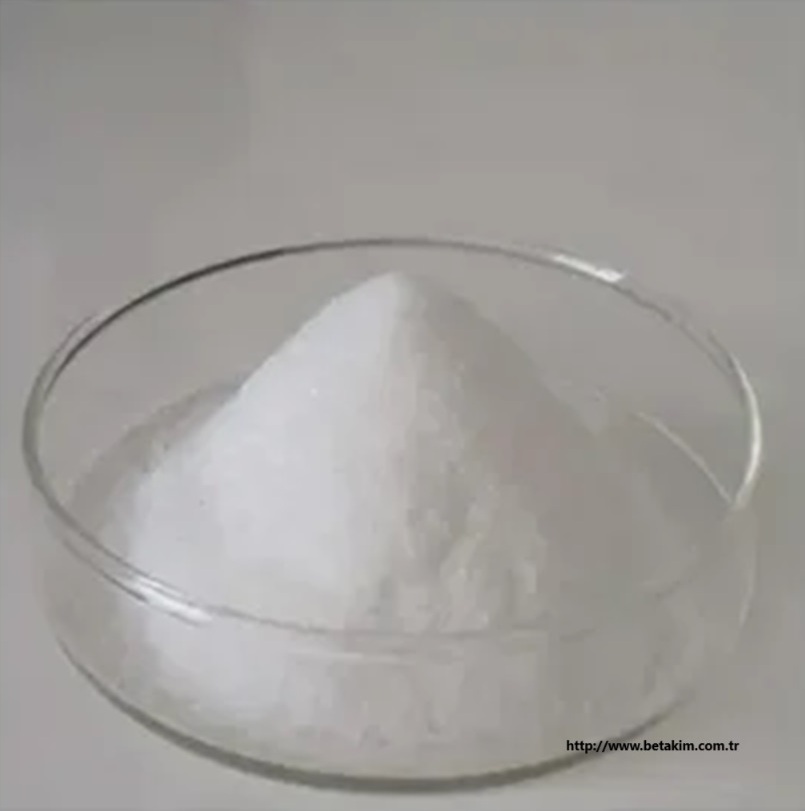
| Appearance | Colorless to white shiny needles, flakes, or crystals |
| Odor | Slight characteristic, pungent odor |
| Physical State (20°C) | Solid (crystalline) |
| Available Forms | Flakes, crystalline powder, molten liquid |
Phthalic anhydride is an aromatic dicarboxylic acid anhydride formed by the dehydration of phthalic acid. It is the most commercially important anhydride and serves as a key intermediate in the production of plasticizers (phthalates), unsaturated polyester resins (UPR), alkyd resins, and various other industrial chemicals. It is produced primarily by the catalytic oxidation of o-xylene or naphthalene.
SECTION 2: RELATIONSHIP BETWEEN PHTHALIC ANHYDRIDE AND PHTHALIC ACID
| Parameter | Phthalic Anhydride | Phthalic Acid |
|---|---|---|
| Chemical Name | Phthalic Anhydride | Phthalic Acid |
| CAS Number | 85-44-9 | 88-99-3 |
| EC Number | 201-607-5 | 201-873-2 |
| Molecular Formula | C₈H₄O₃ | C₈H₆O₄ |
| Molecular Weight | 148.06 g/mol | 166.13 g/mol |
| Appearance | Colorless to white flakes/crystals | White crystalline powder |
| Melting Point | 131.6°C | 210°C (decomposes) |
| Relationship | Anhydride form (dehydrated) | Acid form (hydrated) |
| Water Solubility | 0.62 g/100 mL (hydrolyzes) | Low solubility |
| Primary Use | Industrial intermediate | Intermediate for dyes, perfumes, saccharin, phthalates |
Conversion Reaction:
Phthalic Anhydride + H₂O → Phthalic Acid (exothermic hydrolysis)
SECTION 3: SYNONYMS AND OTHER NAMES
| Type | Name |
|---|---|
| Common Names | Phthalic Anhydride, PA |
| Chemical Names | 1,3-Isobenzofurandione, Benzene-1,2-dicarboxylic Anhydride, Isobenzofuran-1,3-dione |
| CAS Number | 85-44-9 |
| EC Number | 201-607-5 |
| HS Code | 2917.35 |
| UN Number | 2214 |
| MDL Number | MFCD00005918 |
| PubChem CID | 6811 |
| RTECS | TI3150000 |
SECTION 4: CHEMICAL STRUCTURE
4.1. Molecular Structure
Phthalic anhydride consists of a benzene ring fused with an anhydride group (-CO-O-CO-) at adjacent positions (1,2). The anhydride group forms a five-membered ring with the benzene ring.
Structural Formula:
        O
        ||
        C
       / \
      /   \
     /     \
    C       C
    |       |
    C - O - C
    |       |
    C       C
     \     /
      \   /
       \ /
        C
         \
          C=O
Simplified Representation:
    O
    ||
    C
   / \
  /   \
 C     C
 |     |
 C - O - C
 |     |
 C     C
  \   /
   \ /
    C
     \
      C=O
4.2. Molecular Formula
C₈H₄O₃
4.3. Molecular Weight
148.06 g/mol
4.4. Key Structural Features
| Feature | Description |
|---|---|
| Core Structure | Benzene ring (C₆H₄) |
| Functional Group | Anhydride (-CO-O-CO-) |
| Ring System | Fused anhydride ring (five-membered) |
| Substituents | Two carbonyl groups connected by an oxygen atom |
SECTION 5: PHYSICAL AND CHEMICAL PROPERTIES
| Property | Value |
|---|---|
| Appearance | Colorless to white shiny needles, flakes, or crystals |
| Odor | Slight characteristic, pungent |
| Molecular Formula | C₈H₄O₃ |
| Molecular Weight | 148.06 g/mol |
| Density (20°C) | 1.53 g/cm³ |
| Bulk Density (Flakes) | 0.6 – 0.8 g/cm³ |
| Melting Point | 131.6 °C |
| Boiling Point | 295 °C (sublimes) |
| Flash Point | 152 °C (closed cup) |
| Autoignition Temperature | 570 °C |
| Sublimation Temperature | Above ~130°C |
| Vapor Pressure (20°C) | <0.01 mmHg |
| Vapor Density (Air=1) | 5.1 |
| Water Solubility (20°C) | 0.62 g/100 mL (hydrolyzes) |
| Solubility in Ethanol | Soluble |
| Solubility in Acetone | Soluble |
| Solubility in Benzene | Soluble |
| Solubility in Toluene | Soluble |
| Solubility in Chloroform | Soluble |
| pH (Aqueous Solution) | ~2 (as phthalic acid, acidic) |
| Viscosity (Molten, 150°C) | ~3 mPa·s |
SECTION 6: CHEMICAL PROPERTIES AND REACTIVITY
| Property | Description |
|---|---|
| Chemical Character | Acid anhydride (reactive) |
| Hydrolysis with Water | C₈H₄O₃ + H₂O → C₈H₆O₄ (Phthalic Acid) – Exothermic |
| Reaction with Alcohols | Forms monoesters or diesters (phthalates) |
| Reaction with Amines | Forms phthalimide derivatives |
| Reaction with Phenols | Forms phthalein dyes |
| Stability | Stable under normal conditions |
| Incompatible Materials | Water (violent reaction), strong bases, strong oxidizers, amines, moisture |
SECTION 7: REACTION EQUATIONS
7.1. Hydrolysis with Water (Exothermic)
C₈H₄O₃ + H₂O → C₈H₆O₄ (Phthalic Acid) + Heat
7.2. Esterification with Alcohols (Phthalate Production)
C₈H₄O₃ + 2 R-OH → C₈H₄(COOR)₂ + H₂O
7.3. Phthalimide Formation with Amines
C₈H₄O₃ + R-NH₂ → C₈H₄(CO)₂NR + H₂O
7.4. Production from o-Xylene (Main Industrial Process)
C₈H₁₀ (o-Xylene) + 3 O₂ → C₈H₄O₃ + 3 H₂O (with V₂O₅/TiO₂ catalyst, 350-400°C)
7.5. Production from Naphthalene (Traditional Process)
C₁₀H₈ (Naphthalene) + 4.5 O₂ → C₈H₄O₃ + 2 CO₂ + 2 H₂O (with V₂O₅ catalyst)
SECTION 8: PRODUCTION METHODS
| Method | Description |
|---|---|
| o-Xylene Oxidation (Most Common) | o-Xylene + O₂ → Phthalic anhydride + H₂O (V₂O₅/TiO₂ catalyst, 350-400°C) |
| Naphthalene Oxidation (Traditional) | Naphthalene + 4.5 O₂ → Phthalic anhydride + 2 CO₂ + 2 H₂O (V₂O₅ catalyst) |
| Purification | Distillation, sublimation, crystallization |
| Commercial Forms | Flake, crystalline powder, molten liquid |
SECTION 9: AVAILABLE FORMS AND SPECIFICATIONS
| Form | Description | Advantages | Applications |
|---|---|---|---|
| Flake | White to colorless flakes | Easy handling, good storage stability | Most common; resins, plasticizers |
| Crystalline Powder | Fine white crystals | Rapid dissolution | Synthesis, laboratory |
| Molten Liquid | Heated liquid (140-150°C) | Easy pumping, continuous processes | Large-scale chemical plants |
Typical Specifications (Technical Grade):
| Parameter | Specification | Test Method |
|---|---|---|
| Assay (C₈H₄O₃) | ≥ 99.5% | Titration |
| Appearance | White to colorless flakes/crystals | Visual |
| Melting Point | 130.5 – 131.6°C | DSC |
| Color (Molten, APHA) | ≤ 10 | Colorimetric |
| Ash Content | ≤ 0.05% | Gravimetric |
| Free Acid (as Phthalic Acid) | ≤ 0.5% | Titration |
| Iron (Fe) | ≤ 3 ppm | ICP |
| Heavy Metals (as Pb) | ≤ 10 ppm | ICP |
| Water Content | ≤ 0.1% | Karl Fischer |
SECTION 10: APPLICATIONS AND INDUSTRIAL USES
10.1. Plasticizers (Phthalates) – Largest Use (~55%)
| Application | Function |
|---|---|
| Di-2-Ethylhexyl Phthalate (DEHP/DOP) | PVC plasticizer (cables, pipes, flooring) |
| Diisononyl Phthalate (DINP) | High-performance plasticizer |
| Diisodecyl Phthalate (DIDP) | Low-temperature flexibility |
| Butyl Benzyl Phthalate (BBP) | Flexibility and durability |
| Diisobutyl Phthalate (DIBP) | General-purpose plasticizer |
Phthalate Applications:
-
PVC products (cables, pipes, flooring, wallcoverings)
-
Automotive parts (dashboards, interior trim)
-
Medical devices (blood bags, tubing)
-
Toys
-
Cosmetic products (shampoo, conditioner, lotion, nail polish, deodorant, perfume)
-
Construction materials
-
Food packaging
10.2. Unsaturated Polyester Resins (UPR) – Second Largest Use (~25%)
| Application | Function |
|---|---|
| UPR Production | Phthalic anhydride + Maleic anhydride + Glycols → Polyester resin |
| Fiber-Reinforced Plastics | Boat hulls, automotive parts, pipes, tanks |
| Construction Materials | Panels, roofing, shower cabins |
| Marine Applications | Boat and yacht hulls |
| Automotive | Vehicle bodies, bumpers |
10.3. Alkyd Resins
| Application | Function |
|---|---|
| Paints and Coatings | Alkyd resin production (oil paints, varnishes) |
| Industrial Coatings | Corrosion protection, metal coatings |
| Automotive Paints | Topcoats |
| Emulsion Paints | Water-based paints |
10.4. Polyester Polyols
| Application | Function |
|---|---|
| Polyurethane Foams | Flexible and rigid foams |
| Coatings | High-performance coatings |
| Adhesives | Industrial adhesives |
| Elastomers | Polyurethane elastomers |
10.5. Dye and Pigment Industry
| Application | Function |
|---|---|
| Dye Intermediate | Phthalocyanine dyes (blue and green) |
| Varnishes | Alkyd resin-based varnishes |
| Emulsions | Water-based coatings |
10.6. Pharmaceutical Industry
| Application | Function |
|---|---|
| Pharmaceutical Intermediates | Synthesis of various pharmaceutical compounds |
| Saccharin Production | Artificial sweetener (saccharin) synthesis |
| Antibiotic Synthesis | Production of some antibiotics |
| Vitamin Synthesis | Vitamin derivatives |
10.7. Agricultural Industry
| Application | Function |
|---|---|
| Pesticide Intermediates | Insecticides, herbicides, fungicides |
| Agrochemicals | Plant protection products |
10.8. Other Applications
| Application | Function |
|---|---|
| Perfume and Fragrance | Fixative and fragrance component |
| Paper Industry | Paper sizing |
| Textile | Finishing agents |
| Corrosion Inhibitors | Metal protection |
SECTION 11: PHTHALATES (PLASTICIZERS) – DETAILED APPLICATIONS
| Phthalate Type | Abbreviation | Applications |
|---|---|---|
| Di-2-Ethylhexyl Phthalate | DEHP / DOP | Cables, pipes, flooring, blood bags |
| Diisononyl Phthalate | DINP | Automotive interior trim, high-temperature applications |
| Diisodecyl Phthalate | DIDP | Low-temperature flexibility, industrial applications |
| Butyl Benzyl Phthalate | BBP | Tile flooring, adhesives |
| Diisobutyl Phthalate | DIBP | General-purpose plasticizer |
| Diethyl Phthalate | DEP | Cosmetics, perfume, pharmaceutical coatings |
| Dimethyl Phthalate | DMP | Insect repellents, resins |
Regulatory Note: Some phthalates (especially DEHP, DBP, BBP) are restricted in the European Union and other regions due to carcinogenic and endocrine-disrupting effects. DINP, DIDP, and DEP are considered safer alternatives.
SECTION 12: TOXICOLOGICAL INFORMATION
| Parameter | Value |
|---|---|
| Acute Oral Toxicity (LD50, Rat) | ~4,500 mg/kg |
| Acute Dermal Toxicity (LD50, Rabbit) | >2,500 mg/kg |
| Acute Inhalation Toxicity (LC50, Rat) | >0.5 mg/L (4 hours) |
| Skin Irritation | Irritant |
| Eye Irritation | Irritant |
| Skin Sensitization | Yes – allergic reactions |
| Respiratory Sensitization | Yes – asthma-like symptoms |
| Mutagenicity | Negative |
| Carcinogenicity | IARC: Not classified (Group 3) |
SECTION 13: GHS CLASSIFICATION
| Hazard Class | Category | H-Statement |
|---|---|---|
| Acute Toxicity (Inhalation) | Category 4 | H332 |
| Acute Toxicity (Oral) | Category 4 | H302 |
| Skin Irritation | Category 2 | H315 |
| Eye Irritation | Category 2 | H319 |
| Respiratory Sensitization | Category 1 | H334 |
| Skin Sensitization | Category 1 | H317 |
| STOT - SE | Category 3 | H335 |
| Aquatic Toxicity | Category 3 | H402 |
Signal Word: DANGER
Hazard Pictograms: GHS07 (Exclamation Mark), GHS08 (Health)
Hazard Statements (H-Codes):
| Code | Statement |
|---|---|
| H302 | Harmful if swallowed. |
| H315 | Causes skin irritation. |
| H317 | May cause an allergic skin reaction. |
| H319 | Causes serious eye irritation. |
| H332 | Harmful if inhaled. |
| H334 | May cause allergy or asthma symptoms or breathing difficulties if inhaled. |
| H335 | May cause respiratory irritation. |
| H402 | Harmful to aquatic life. |
SECTION 14: PRECAUTIONARY STATEMENTS (P-CODES)
| Code | Statement |
|---|---|
| P261 | Avoid breathing dust/fume/gas/mist/vapors/spray. |
| P280 | Wear protective gloves/protective clothing/eye protection/face protection. |
| P284 | Wear respiratory protection. |
| P301+P312 | IF SWALLOWED: Call a POISON CENTER/doctor if you feel unwell. |
| P302+P352 | IF ON SKIN: Wash with plenty of water. |
| P304+P340 | IF INHALED: Remove person to fresh air and keep comfortable for breathing. |
| P305+P351+P338 | IF IN EYES: Rinse cautiously with water for several minutes. Remove contact lenses if present. |
| P312 | Call a POISON CENTER/doctor if you feel unwell. |
| P342+P311 | If experiencing respiratory symptoms: Call a POISON CENTER/doctor. |
| P501 | Dispose of contents/container in accordance with local regulations. |
SECTION 15: FIRST AID MEASURES
| Route of Exposure | Action to Be Taken |
|---|---|
| Inhalation | Move to fresh air. If breathing difficulty occurs, administer oxygen. Seek immediate medical attention. |
| Skin Contact | Remove contaminated clothing. Wash with plenty of soap and water for at least 15 minutes. Seek medical attention. |
| Eye Contact | Rinse thoroughly with plenty of water for at least 15 minutes. Remove contact lenses if present. Seek immediate medical attention. |
| Ingestion | Do not induce vomiting. Rinse mouth. Drink water. Seek immediate medical attention. |
SECTION 16: FIRE-FIGHTING MEASURES
| Parameter | Information |
|---|---|
| Fire Hazard | Combustible (flash point 152°C) |
| Suitable Extinguishing Media | Water spray, CO₂, dry chemical powder, foam |
| Special Hazards | When heated, decomposes releasing toxic gases (CO, CO₂) |
| Protective Equipment | Self-contained breathing apparatus (SCBA), full protective clothing |
SECTION 17: ACCIDENTAL RELEASE MEASURES
| Parameter | Information |
|---|---|
| Personal Protection | Protective goggles, dust mask, gloves, coverall |
| Ventilation | Increase ventilation; use local exhaust in confined spaces |
| Containment | Cover spilled area to prevent dust dispersion |
| Cleaning Methods | Collect dry using vacuum or careful sweeping. Avoid contact with water. |
| Environmental Precautions | Prevent entry into drains, sewers, and water bodies |
| Waste Disposal | Dispose of in accordance with local regulations |
SECTION 18: STORAGE AND SHELF LIFE
| Parameter | Information |
|---|---|
| Storage Conditions | Cool (25-35°C), dry, well-ventilated area |
| Container Requirements | Moisture-proof containers (lined bags, FIBC, drums) |
| Materials to Protect From | Moisture (hydrolysis), heat (melting), strong bases, strong oxidizers |
| Shelf Life | 12-24 months (unopened, in dry containers under proper storage) |
| Hygroscopicity | Hygroscopic (hydrolyzes with water) |
| Molten Storage | At 140-150°C in stainless steel tanks under nitrogen gas |
| Incompatible Materials | Water (violent reaction), strong bases, strong oxidizers, amines |
| Packaging Options | 25 kg bags (lined), 500 kg/1000 kg FIBC, molten tanker |
SECTION 19: PACKAGING OPTIONS
| Packaging Type | Quantity | Material |
|---|---|---|
| Lined Kraft Bag | 25 kg | Paper / Polyethylene |
| Plastic Drum | 25 kg | HDPE |
| Fiber Drum | 25 kg | Cardboard / Plastic |
| Big-Bag (FIBC) | 500 – 1000 kg | Polypropylene |
| Molten Tanker | 20 – 30 tons | Stainless steel (heated) |
SECTION 20: TRANSPORT INFORMATION
| Parameter | Information |
|---|---|
| UN Number | 2214 |
| Hazard Class | 8 (Corrosive Substance) |
| Packing Group | III |
| Proper Shipping Name | PHTHALIC ANHYDRIDE |
| Marine Pollutant | No |
| ADR/RID Label | 8 |
| EMS | F-A, S-B |
SECTION 21: ENVIRONMENTAL INFORMATION
| Parameter | Information |
|---|---|
| Aquatic Toxicity | Harmful to aquatic life (H402) |
| Biodegradability | Readily biodegradable |
| Bioaccumulation | Low potential |
| Mobility in Soil | Medium |
| Waste Disposal | Dispose of according to local regulations. Controlled incineration is recommended. |
SECTION 22: REGULATORY INFORMATION
| Region / Authority | Status |
|---|---|
| European Union (REACH) | Registered; classified as corrosive and sensitizer. |
| USA (TSCA) | Listed. |
| Turkey (KKDIK) | Registered under chemical registration regulations. |
| IARC | Group 3 (not classifiable as to carcinogenicity to humans). |
SECTION 23: OTHER NAMES AND DATABASE IDENTIFIERS
| Name | Identifier |
|---|---|
| Phthalic Anhydride | Common name |
| 1,3-Isobenzofurandione | IUPAC name |
| Benzene-1,2-dicarboxylic Anhydride | Chemical name |
| PA | Abbreviation |
| CAS | 85-44-9 |
| EC | 201-607-5 |
| MDL | MFCD00005918 |
| PubChem CID | 6811 |
| RTECS | TI3150000 |
| UN | 2214 |
Phthalic Acid (Related Compound) – CAS 88-99-3
| Parameter | Information |
|---|---|
| Chemical Name | Phthalic Acid |
| CAS Number | 88-99-3 |
| EC Number | 201-873-2 |
| Molecular Formula | C₈H₆O₄ |
| Molecular Weight | 166.13 g/mol |
| Appearance | White crystalline powder |
| Melting Point | 210°C (decomposes) |
| Use | Intermediate in dyes, perfumes, saccharin, phthalate production |
SECTION 24: QUICK REFERENCE TABLE
| Property | Value |
|---|---|
| CAS Number | 85-44-9 |
| EC Number | 201-607-5 |
| Molecular Formula | C₈H₄O₃ |
| Molecular Weight | 148.06 g/mol |
| Appearance | Colorless to white flakes/crystals |
| Odor | Slight pungent |
| Density | 1.53 g/cm³ |
| Melting Point | 131.6°C |
| Boiling Point | 295°C (sublimes) |
| Flash Point | 152°C |
| Water Solubility | 0.62 g/100 mL (hydrolyzes) |
| Primary Uses | Plasticizers (phthalates), UPR, alkyd resins, dyes, pharmaceuticals |
| UN Number | 2214 |
| Hazard Class | 8 (Corrosive) |
SECTION 25: CRITICAL NOTICES AND BEST PRACTICES
CRITICAL NOTICES:
-
Reaction with Water: Phthalic anhydride reacts violently with water in an exothermic reaction to form phthalic acid. Never add water to phthalic anhydride. Store in dry, airtight containers.
-
Sublimation: Phthalic anhydride sublimes above 130°C (solid to gas). When using molten form, closed systems and ventilation are required.
-
Sensitization Hazard: Repeated exposure may cause respiratory sensitization (asthma) and skin sensitization. Workers should be monitored for symptoms. Use respiratory protection.
-
Solidification: Below 131.6°C, molten phthalic anhydride solidifies. If solidification occurs in pipes or tanks, heat carefully (steam or hot water) – never use open flame.
-
Phthalates (Plasticizers): Phthalic anhydride is the primary raw material for phthalate plasticizers (DEHP, DINP, DIDP, BBP, DIBP), which are used to increase PVC flexibility. Some phthalates (DEHP, DBP, BBP) are restricted in many countries due to health concerns.
-
Phthalic Acid vs. Phthalic Anhydride: Phthalic acid (CAS 88-99-3) is formed by the hydrolysis of phthalic anhydride and is used as an intermediate in dyes, perfumes, saccharin, and phthalate production.
-
Saccharin Production: Phthalic anhydride is used in the production of the artificial sweetener saccharin.
-
Phthalocyanine Dyes: Phthalic anhydride is used in the production of bright blue and green phthalocyanine dyes.
BEST PRACTICE RECOMMENDATIONS:
-
Storage: Store in a cool, dry, and well-ventilated area. Keep containers tightly closed. Protect from moisture.
-
Handling: Use appropriate respiratory protection (dust mask or respirator). Use protective gloves, goggles, and face shield. Avoid dust formation.
-
Molten Handling: Keep at 140-150°C. Use heated lines and tanks. Maintain under nitrogen atmosphere to prevent oxidation.
-
Spill Management: Collect dry. Avoid contact with water. Neutralize residues with dilute base.
-
Waste Management: Dispose of waste in accordance with local regulations. Controlled incineration is recommended.
LEGAL DISCLAIMER:
This Technical Data Sheet (TDS) is for informational purposes only and is prepared based on available technical data. The user is solely responsible for determining the suitability of the product for their specific application and for complying with all local, national, and international regulations. For complete safety, storage, handling, transport, waste, and regulatory compliance information, the official Safety Data Sheet (SDS/MSDS) provided by the manufacturer/supplier must be consulted. Phthalic anhydride is a corrosive and sensitizing substance and should be handled with extreme caution.