We unleash your business potential by maximize the business innovation.
Send EmailBasic Chromium Sulfate, Basic Chromic Sulfate, Chromium Hydroxide Sulfate, Chromium Sulphate Basic, 39380-78-4, 12336-95-7
BASIC CHROMIUM SULFATE (TANKROM AB & TANKROM FS)
Basic Chromic Sulfate / Chromium Hydroxide Sulfate / Chromium Sulphate Basic
CAS Number (Commercial Product): 39380-78-4
CAS Number (Pure Chemical / Monomer): 12336-95-7
EC Number: 235-595-8
1. CHEMICAL IDENTITY AND DEFINITION
| Parameter | Information |
|---|---|
| Chemical Name (IUPAC) | Basic Chromium Sulfate |
| Systematic Name | Chromium(III) Hydroxide Sulfate |
| Synonyms (Turkish) | Bazik Krom Sülfat, Krom Şapı, Krom Tabaklama Tuzu |
| Synonyms (English) | Basic Chromic Sulfate, Chromium(III) Sulfate Basic, Chrometan |
| Trade Names | Tankrom AB, Tankrom FS, Chrometan B, Baychrom, Chromosal B |
| CAS Number (Commercial Product) | 39380-78-4 |
| CAS Number (Pure Chemical) | 12336-95-7 |
| EC Number (EINECS) | 235-595-8 |
| Molecular Formula (Simple) | Cr(OH)(SO₄) |
| Molecular Formula (Molecular) | CrH₃O₁₂S₃ (polymeric form) |
| Molecular Weight (Simple) | 165.06 g/mol |
| Molecular Weight (Polymeric) | 343.208 g/mol |
| Chemical Class | Chromium(III) compound, inorganic salt |
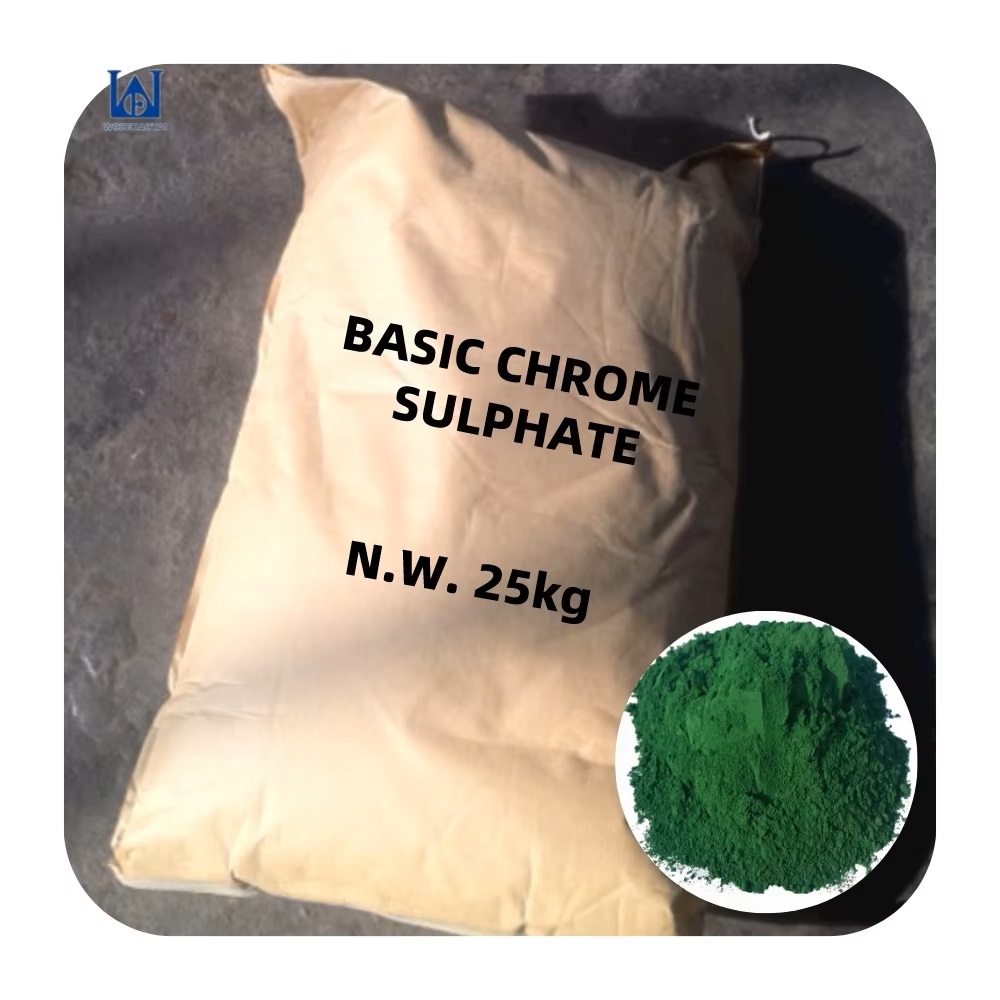
| Physical State (20°C) | Solid (dark green crystalline powder) |
| Odor | Odorless |
| Taste | Metallic, astringent (toxic) |
2. CAS NUMBERS EXPLANATION
| CAS Number | Correct Chemical Definition | Approximate Molecular Formula | Explanation |
|---|---|---|---|
| 39380-78-4 | Basic Chromium Sulfate (Polymeric / Commercial Form) | Cr₄(SO₄)₅(OH)₂ | This number refers to the polymeric structure with higher molecular weight, commonly used in commercial products (Tankrom AB, FS). |
| 12336-95-7 | Chromium(III) Hydroxide Sulfate (Monomeric / Simple Form) | Cr(OH)(SO₄) | This number refers to the simple formula (Cr(OH)SO₄) and lower molecular weight. This structure represents the basic chemical unit. |
Important Note: The primary CAS number for commercial products (Tankrom AB and FS) is 39380-78-4. The chemically correct and basic formula Cr(OH)SO₄ corresponds to CAS number 12336-95-7. Both CAS numbers represent different forms (polymeric and monomeric) of the same substance.
3. CHEMICAL FORMULA AND STRUCTURE
3.1. Molecular Formula (Polymeric Commercial Form)
CrH₃O₁₂S₃
3.2. Simple Formula (Monomeric Form)
Cr(OH)(SO₄)
3.3. Molecular Structure (Simplified Representation)
         OH⁻
          |
    Cr³⁺ ─ SO₄²⁻
          |
         SO₄²⁻
3.4. Structural Representations
| Representation Type | Formula |
|---|---|
| Molecular Formula (Polymeric) | CrH₃O₁₂S₃ |
| Simple Formula (Monomeric) | Cr(OH)(SO₄) |
| Ionic Form | Cr³⁺(OH⁻)(SO₄²⁻) |
| CAS Number (Commercial) | 39380-78-4 |
| CAS Number (Pure) | 12336-95-7 |
| EC Number | 235-595-8 |
3.5. Complex Structure Properties
| Parameter | Value |
|---|---|
| Central Ion | Cr³⁺ (Chromium(III)) |
| Ligands | OH⁻ (hydroxyl), SO₄²⁻ (sulfate) |
| Coordination Number | 6 (octahedral) |
| Basicity Ratio (Tankrom AB) | 33% |
| Basicity Ratio (Tankrom FS) | 42% |
| Oxidation State | +3 (Cr(III)) |
4. PHYSICAL AND CHEMICAL PROPERTIES
| Property | Value | Test Method |
|---|---|---|
| Appearance | Dark green crystalline powder | Visual |
| Odor | Odorless | Olfactometric |
| Molecular Weight (Simple) | 165.06 g/mol | Calculated |
| Molecular Weight (Polymeric) | 343.208 g/mol | Calculated |
| Density | 1.25 – 1.57 g/cm³ | ASTM D792 |
| Melting Point | 90°C (decomposes) | DSC |
| Water Solubility (Cold) | Soluble | General Method |
| Water Solubility (Hot) | Very high solubility | General Method |
| pH Range (5% solution) | 1.5 – 2.5 | ISO 4045 |
| Basicity Ratio (Tankrom AB) | 33% | Titrimetric |
| Basicity Ratio (Tankrom FS) | 42% | Titrimetric |
| Cr₂O₃ Content | 23.19% | Gravimetric / Titrimetric |
| Cr(III) Ratio | ≥ 99% | Spectrophotometric |
| Cr(VI) Content | ≤ 0.1% | Spectrophotometric (DPC) |
| Hygroscopicity | Moderately hygroscopic | Visual |
| Stability | Stable under normal conditions; decomposes at high temperature | - |
5. SOLUBILITY PROFILE
| Solvent | Solubility | Conditions |
|---|---|---|
| Water | Soluble | 20°C |
| Water | Very high solubility | 50°C |
| Acids (HCl, H₂SO₄) | Soluble | 25°C |
| Alcohols (Ethanol, Methanol) | Slightly soluble | 25°C |
| Acetone | Insoluble | 25°C |
| Ether | Insoluble | 25°C |
| Benzene | Insoluble | 25°C |
| Toluene | Insoluble | 25°C |
6. CHEMICAL PROPERTIES AND REACTIVITY
| Parameter | Information |
|---|---|
| Chemical Character | Acidic salt; basic in character |
| Oxidation State | Cr(III) (stable) |
| Dissolution in Water | Hydrolysis: Cr(OH)(SO₄) + H₂O ⇌ Cr³⁺ + OH⁻ + SO₄²⁻ |
| pH Behavior | Acidic solution in water (pH 1.5-2.5) |
| Thermal Decomposition | Above 90°C, releases Cr₂O₃ and SO₂/SO₃ |
| Oxidizing Property | None (Cr(III) is the reduced form) |
| Reduction | Cr(III) does not oxidize to Cr(VI) (stable) |
| Incompatible Materials | Strong oxidizers, alkaline substances |
| Hazardous Polymerization | Does not occur |
7. REACTION EQUATIONS
7.1. Production (Reduction)
Na₂Cr₂O₇ + 3SO₂ + H₂O → 2Cr(OH)(SO₄) + Na₂SO₄
7.2. Dissolution in Water (Hydrolysis)
Cr(OH)(SO₄) + H₂O ⇌ Cr³⁺ + OH⁻ + SO₄²⁻ + H⁺
7.3. Thermal Decomposition
2Cr(OH)(SO₄) → Cr₂O₃ + 2SO₂ + O₂ + H₂O
7.4. Neutralization with Base
Cr(OH)(SO₄) + NaOH → Cr(OH)₃↓ + Na₂SO₄
8. PRODUCTION METHOD
| Stage | Process | Description |
|---|---|---|
| 1 | Solution Preparation | Sodium Dichromate (Na₂Cr₂O₇) is dissolved in water. |
| 2 | Reduction | SO₂ gas is passed through the solution: Na₂Cr₂O₇ + 3SO₂ + H₂O → 2Cr(OH)(SO₄) + Na₂SO₄ |
| 3 | pH Control | Maintained at pH ≈ 4; SO₂ absorption efficiency 70-80% |
| 4 | Crystallization | Cr(OH)(SO₄) is precipitated. |
| 5 | Purification | Remaining Cr(VI) is reduced with ferrous sulfate or sodium sulfide. |
| 6 | Drying | Crystals are dried and ground. |
| 7 | Packaging | Packed in moisture-protected containers. |
9. TANKROM AB AND TANKROM FS COMPARISON TABLE
| Property | Tankrom AB (33% Basicity) | Tankrom FS (42% Basicity) |
|---|---|---|
| Basicity Ratio | 33% | 42% |
| Cr₂O₃ Content | 23.19% | 23.19% |
| pH Range | 1.5 – 2.5 | 1.5 – 2.5 |
| Chromium Binding Capacity | Standard | High |
| Chromium Waste | Normal | Less |
| Application Area | Standard leather tanning | Tanning requiring high chromium binding |
| Advantages | Balanced performance, low toxicity, widespread use | High chromium binding capacity, less chromium waste, environmentally friendly production, homogeneous color and compact leather structure |
| Disadvantages | More chromium waste | Higher cost, special process control |
| Suitable Leather Types | All standard leathers | High-quality leathers requiring intensive chromium binding |
10. FUNCTIONAL PROPERTIES AND MECHANISM OF ACTION
| Property | Description |
|---|---|
| Tanning Mechanism | Cr³⁺ ions form complexes with carboxyl groups of collagen in leather; provide cross-linking. |
| Basicity Effect | Higher basicity = more OH⁻ = higher chromium binding capacity. |
| pH Effect | Solubility increases at low pH; precipitation begins at high pH. |
| Temperature Effect | Reaction rate and binding increase at higher temperatures. |
| Chromium Binding | Coordination bonds between Cr³⁺ and leather collagen. |
| Environmentally Friendly Feature | Higher basicity (FS) → less chromium waste → lower environmental load. |
| Homogeneity | Higher basicity → more homogeneous chromium distribution → compact leather structure. |
11. MAIN APPLICATION AREAS
| Sector / Application | Use | Typical Concentration / Dosage |
|---|---|---|
| Leather Tanning - Tankrom AB | Standard chrome tanning | 6-8% of leather weight |
| Leather Tanning - Tankrom FS | Tanning requiring high chromium binding | 5-7% of leather weight |
| Leather Retanning | Post-leather processes and retanning | 2-4% of leather weight |
| Textile Dyeing | Khaki fabric dyeing | Variable (process specific) |
| Paint Industry | Chromium-based dyestuff production | Variable |
| Ink Production | Green ink and varnishes | Variable |
| Ceramic Industry | Ceramic glazes | Variable |
| Pigment Production | Organic pigment production | Variable |
12. CHEMICAL COMPATIBILITY TABLE
| Substance / Environment | Compatibility | Description |
|---|---|---|
| Water (H₂O) | COMPATIBLE | Easily soluble; forms acidic solution. |
| Acids (HCl, H₂SO₄) | COMPATIBLE | Solubility increases; stable. |
| Alkalis (NaOH, KOH) | LIMITED | Cr(OH)₃ precipitation; careful use required. |
| Oxidizers | INCOMPATIBLE | Cr(III) → Cr(VI) oxidation possible. |
| Reducing Agents | COMPATIBLE | Cr(III) in stable form. |
| Organic Solvents | LIMITED | Insoluble; forms precipitate. |
| Air / Moisture | COMPATIBLE | Stable under normal conditions. |
| Stainless Steel | COMPATIBLE | Suitable for storage and transport. |
| Carbon Steel | LIMITED | Corrosion risk. |
| Plastic (HDPE, PP) | COMPATIBLE | Packaging and container material. |
13. QUALITY SPECIFICATIONS (TANKROM AB & FS)
| Parameter | Tankrom AB | Tankrom FS | Test Method |
|---|---|---|---|
| Appearance | Dark green crystalline powder | Dark green crystalline powder | Visual |
| Basicity Ratio | 33% ± 1 | 42% ± 1 | Titrimetric |
| Cr₂O₃ Content | 23.19% ± 0.5 | 23.19% ± 0.5 | Gravimetric / Titrimetric |
| Cr(III) Ratio | ≥ 99% | ≥ 99% | Spectrophotometric |
| Cr(VI) Content | ≤ 0.1% | ≤ 0.1% | Spectrophotometric (DPC) |
| pH (5% solution) | 1.5 – 2.5 | 1.5 – 2.5 | ISO 4045 |
| Water Solubility | Completely soluble | Completely soluble | General Method |
| Moisture Content | ≤ 5% | ≤ 5% | Gravimetric (105°C) |
| Fe Content | ≤ 0.01% | ≤ 0.01% | ICP-OES |
| Heavy Metals | ≤ limit | ≤ limit | ICP-OES |
14. TOXICOLOGICAL PROFILE
| Parameter | Value |
|---|---|
| Acute Oral Toxicity (LD50, Rat) | 3000 mg/kg (low toxicity) |
| Skin Irritation | Mild irritant |
| Eye Irritation | Irritant |
| Inhalation | Dust may irritate respiratory tract. |
| Carcinogenicity | Not classified for Cr(III); Cr(VI) is carcinogenic. |
| Mutagenicity | Negative |
| Environmental Hazard | Cr(III) is not toxic in aquatic environments; Cr(VI) is toxic. |
| Bioaccumulation | Low (Cr(III)) |
| Skin Sensitization | Cr(III) may cause allergic reaction (chromium allergy). |
15. GHS CLASSIFICATION AND LABELING
GHS Classification (in accordance with 1272/2008/EC):
| Hazard Class | Category | H-Statement |
|---|---|---|
| Skin Sensitizer | Category 1 | H317 |
| Eye Irritation | Category 2 | H319 |
| Acute Toxicity (Oral) | Category 4 | H302 |
| STOT - SE | Category 3 | H335 |
| Aquatic Toxicity | Category 3 | H412 |
Signal Word: WARNING
Hazard Pictograms: GHS07 (Exclamation Mark)
Hazard Statements (H-Codes):
| Code | Statement |
|---|---|
| H302 | Harmful if swallowed. |
| H317 | May cause an allergic skin reaction. |
| H319 | Causes serious eye irritation. |
| H335 | May cause respiratory irritation. |
| H412 | Harmful to aquatic life with long lasting effects. |
16. PRECAUTIONARY STATEMENTS (P-CODES)
| Code | Statement |
|---|---|
| P261 | Avoid breathing dust/fume/gas/mist/vapors/spray. |
| P280 | Wear protective gloves/protective clothing/eye protection/face protection. |
| P302+P352 | IF ON SKIN: Wash with plenty of soap and water. |
| P305+P351+P338 | IF IN EYES: Rinse cautiously with water for several minutes. Remove contact lenses if present. |
| P333+P313 | If skin irritation or rash occurs: Get medical advice/attention. |
| P501 | Dispose of contents/container in accordance with local regulations. |
17. FIRST AID MEASURES
| Route of Exposure | Action to Be Taken |
|---|---|
| Inhalation | Move to fresh air. If respiratory irritation persists, seek medical attention. |
| Skin Contact | Remove contaminated clothing. Wash with plenty of soap and water. If skin reaction occurs, seek medical attention. |
| Eye Contact | Rinse thoroughly with plenty of water for at least 15 minutes. Remove contact lenses. Seek medical attention. |
| Ingestion | Rinse mouth with water. Do not induce vomiting. Seek immediate medical attention. |
18. FIRE-FIGHTING MEASURES
| Parameter | Information |
|---|---|
| Fire Hazard | Not flammable; but may form toxic fumes in fire. |
| Hazards During Fire | Cr₂O₃, SO₂, SO₃, toxic chromium fumes. |
| Suitable Extinguishing Media | Water spray, dry chemical powder, CO₂, alcohol-resistant foam. |
| Special Protective Equipment | Self-contained breathing apparatus (SCBA), full chemical protective clothing. |
| Special Precautions | Prevent fire-fighting water from entering the environment. |
19. ACCIDENTAL RELEASE MEASURES
| Parameter | Information |
|---|---|
| Personal Protection | Dust mask, protective goggles, gloves, coverall. |
| Ventilation | Increase ventilation; use local exhaust in confined spaces. |
| Containment | Cover spilled area to prevent dust dispersion. |
| Cleaning Methods | Collect dry using vacuum or careful sweeping. Avoid washing with water. |
| Environmental Precautions | Prevent entry into drains, sewers, and water bodies. |
| Waste Disposal | Dispose of as hazardous waste in accordance with local regulations. |
20. STORAGE AND SHELF LIFE
| Parameter | Information |
|---|---|
| Storage Conditions | Cool (15-25°C), dry, well-ventilated area; protect from moisture. |
| Container Requirements | Tightly closed, HDPE or polypropylene containers. |
| Materials to Protect From | Moisture, excessive heat, oxidizers. |
| Shelf Life | 24 months (under proper storage conditions). |
| Stability Note | May cake upon exposure to moisture; homogenize before use. |
21. PACKAGING OPTIONS
| Packaging Type | Quantity | Material |
|---|---|---|
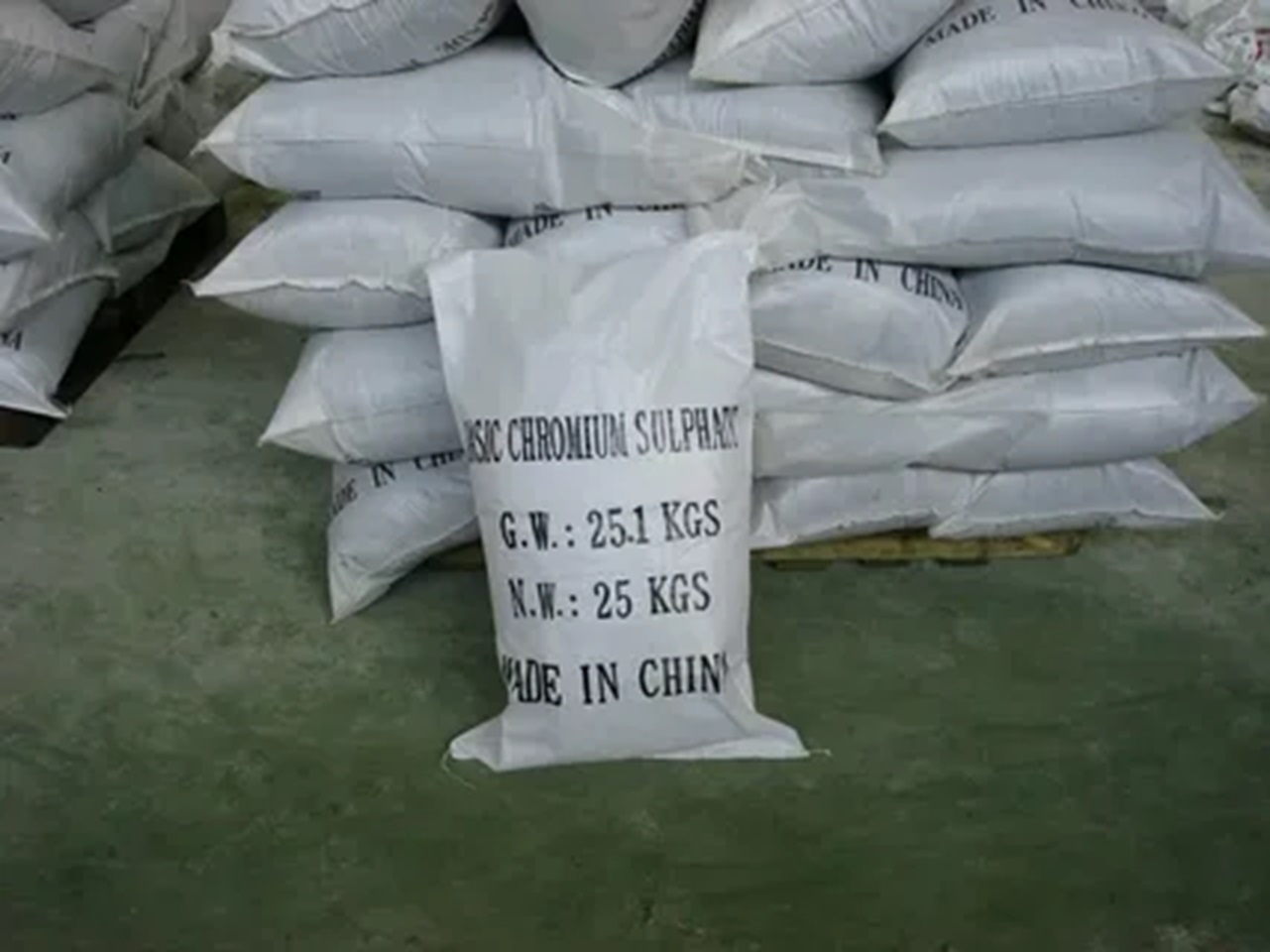
| Kraft bag + PE inner bag | 25 kg | Paper / Polyethylene |
| HDPE drum | 50 kg | HDPE |
| Big-Bag | 500-1000 kg | Polypropylene |
22. TRANSPORT INFORMATION
| Parameter | Information |
|---|---|
| UN Number | UN 3077 (Environmentally Hazardous Substance, Solid) |
| Hazard Class | 9 (Environmental Hazard) |
| Packing Group | III |
| ADR/RID | UN 3077, 9, PG III |
| IMDG Code | UN 3077, Environmentally Hazardous Substance, 9, PG III |
| IATA (Air) | UN 3077, Environmentally Hazardous Substance, 9, PG III |
| Marine Pollutant | Yes (Marine Pollutant) |
| Transport Temperature | Ambient temperature; protect from moisture. |
23. REGULATORY STATUS
| Region / Authority | Status |
|---|---|
| European Union | REACH registered; industrial chemical. |
| USA (EPA/TSCA) | Listed; industrial chemical. |
| Turkey | Industrial chemical; subject to chemical registration regulations. |
| Leather Industry | Permitted for chrome tanning; waste management mandatory. |
| Food / Cosmetics | NOT PERMITTED - due to toxic properties. |
24. SECTORAL SUITABILITY TABLE
| Sector | Suitability | Description |
|---|---|---|
| Leather Tanning | ESSENTIAL | Most widely used chrome tanning salt. |
| Textile Dyeing | COMPATIBLE | For khaki and dark green colors. |
| Paint / Ink | COMPATIBLE | Chrome pigments and green inks. |
| Ceramics | COMPATIBLE | Glaze and pigment production. |
| Food / Cosmetics | NOT PERMITTED | Prohibited due to toxic properties. |
25. OTHER NAMES AND SYNONYMS
| Type | Name |
|---|---|
| Turkish Names | Bazik Krom Sülfat, Krom Şapı, Krom Tabaklama Tuzu |
| English Names | Basic Chromic Sulfate, Chromium(III) Sulfate Basic, Chrometan |
| Trade Names | Tankrom AB, Tankrom FS, Chrometan B, Baychrom, Chromosal B |
| Abbreviations | BCS |
| CAS Number (Commercial) | 39380-78-4 |
| CAS Number (Pure) | 12336-95-7 |
| EC Number | 235-595-8 |
26. SUMMARY TABLE
| Parameter | Tankrom AB | Tankrom FS |
|---|---|---|
| Product | Basic Chromium Sulfate | Basic Chromium Sulfate |
| CAS Number (Commercial) | 39380-78-4 | 39380-78-4 |
| CAS Number (Pure) | 12336-95-7 | 12336-95-7 |
| Molecular Formula (Simple) | Cr(OH)(SO₄) | Cr(OH)(SO₄) |
| Molecular Weight (Simple) | 165.06 g/mol | 165.06 g/mol |
| Basicity Ratio | 33% | 42% |
| Cr₂O₃ Content | 23.19% | 23.19% |
| Appearance | Dark green crystalline powder | Dark green crystalline powder |
| pH Range | 1.5 – 2.5 | 1.5 – 2.5 |
| Primary Use | Standard leather tanning | High chromium binding tanning |
| Shelf Life | 24 months | 24 months |
| GHS Signal Word | Warning | Warning |
| UN Number | UN 3077 | UN 3077 |
27. CRITICAL NOTICES AND BEST PRACTICES
CRITICAL NOTICES:
-
CAS Numbers: The primary CAS number for commercial products (Tankrom AB and FS) is 39380-78-4. The chemically correct and basic formula Cr(OH)SO₄ corresponds to CAS number 12336-95-7. Both CAS numbers represent different forms (polymeric and monomeric) of the same substance.
-
Chromium Allergy: May cause skin sensitivity; avoid prolonged contact.
-
Environmental Impact: Harmful to aquatic organisms; do not discharge untreated wastewater.
-
Dust Control: Avoid inhaling dust; ensure adequate ventilation.
-
Cr(VI) Formation: High temperature or contact with oxidizers may lead to Cr(VI) formation.
-
pH Control: pH control is critical in the tanning process.
-
High Basicity Advantage: Tankrom FS with high basicity provides less chromium waste; prefer for environmentally friendly production.
BEST PRACTICE RECOMMENDATIONS:
-
Storage: Store in dry and cool place, in original packaging.
-
Tanning: Tankrom FS with high basicity provides less chromium waste; prefer for environmentally friendly production.
-
Solution Preparation: Dissolve in cold water; homogenize by stirring.
-
Waste Management: Dispose of chromium-containing waste at licensed facilities.
-
Safety: Use protective gloves, goggles, and dust mask.
LEGAL DISCLAIMER:
The information provided in this document is based on our current knowledge and experience and is presented in good faith; however, as all conditions of use are beyond our control, it does not constitute a binding specification or warranty. This Technical Data Sheet is for informational purposes only. Users are obligated to test the suitability of the product for their own applications. For complete safety, storage, handling, transport, waste, and regulatory compliance information, the official Safety Data Sheet (SDS/MSDS) provided by the manufacturer/supplier must be consulted.