We unleash your business potential by maximize the business innovation.
Send EmailSodium Molybdate, Disodium Molybdate, Sodium Molybdenum Oxide, Disodium Tetraoxomolybdate, 7631-95-0, 10102-40-6
SODIUM MOLYBDATE (Na₂MoO₄)
1. Chemical Identity and Material Classification
-
Chemical Name: Sodium Molybdate, Disodium Molybdate, Molybdic Acid Disodium Salt
-
Synonyms: Sodium Molybdenum Oxide, Disodium Tetraoxomolybdate, Sodium Molybdenate, NSC 77389, HS 458
-
CAS Numbers:
-
Anhydrous: 7631-95-0
-
Dihydrate: 10102-40-6
-
-
Molecular Formula: Na₂MoO₄ (anhydrous); Na₂MoO₄·2H₂O (dihydrate)
-
Molecular Weight: 205.92 g/mol (anhydrous); 241.95 g/mol (dihydrate)
-
EC Number: 231-551-7
-
MDL Number: MFCD00003483
2. Chemical Structure and Molecular Characteristics
-
Anion structure: Tetrahedral molybdate ion (MoO₄²⁻)
-
Oxidation state of molybdenum: +6 (highest stable oxidation state)
-
Mo–O bond length: ~1.76–1.79 Å (in solid state)
-
Crystal system (anhydrous): Orthorhombic (β-form)
-
Crystal system (dihydrate): Monoclinic
-
Coordination geometry: Tetrahedral around Mo center
-
Isopolyanion formation: No significant condensation at neutral/alkaline pH; at pH <4, heptamolybdate (Mo₇O₂₄⁶⁻) forms
3. Physical Properties
3.1 General Physical Properties
| Property | Anhydrous | Dihydrate |
|---|---|---|
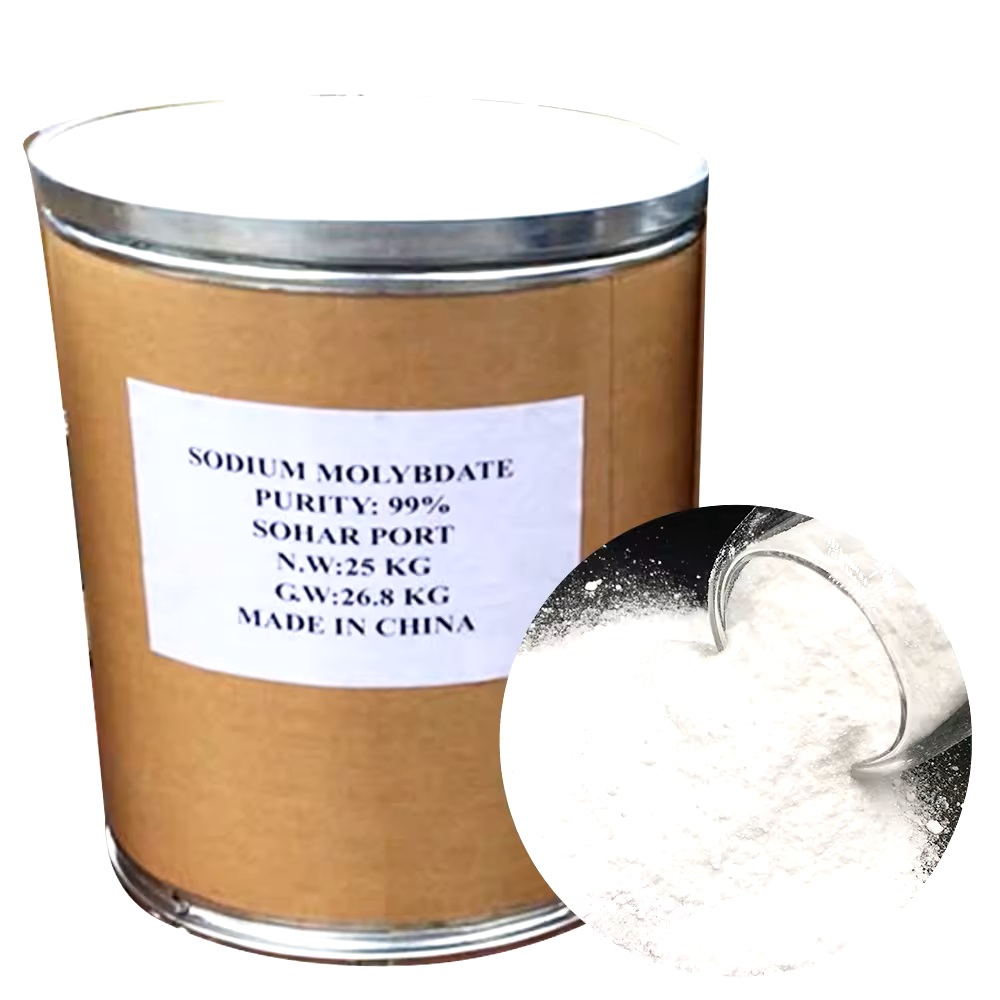
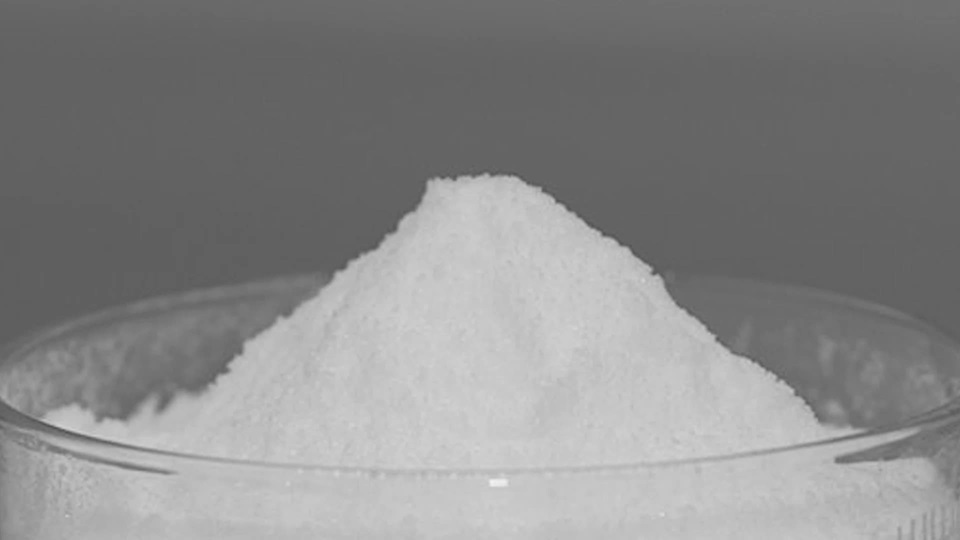
| Appearance | White to off-white crystalline powder | White crystalline powder |
| Density (20°C) | 3.78 g/cm³ | 3.28 g/cm³ |
| Melting point | 687°C (decomposes) | 100°C (loses water) |
| Boiling point | 1580°C (decomposes) | Decomposes before boiling |
| Bulk density (tapped) | 1.2–1.5 g/cm³ | 1.0–1.3 g/cm³ |
| Particle size (typical) | 10–200 μm | 10–200 μm |
| Specific surface area (BET) | 0.5–2.0 m²/g | 0.5–1.5 m²/g |
3.2 Thermal Properties
| Parameter | Value |
|---|---|
| Enthalpy of fusion (anhydrous) | ~45 kJ/mol |
| Dehydration temperature (dihydrate → anhydrous) | 100–120°C |
| Thermal decomposition onset (anhydrous) | >600°C (sublimation of MoO₃ begins) |
| TGA weight loss (dihydrate to 200°C) | 14.9% (theoretical H₂O loss: 2 × 18.02/241.95 = 14.9%) |
| Specific heat capacity (C_p, 25°C) | 0.85 J/(g·K) (anhydrous) |
4. Solubility Behavior (g/100 g solvent)
| Solvent | Temperature | Anhydrous | Dihydrate |
|---|---|---|---|
| Water | 0°C | 44.5 | 56.0 |
| Water | 20°C | 56.0 | 70.0 |
| Water | 40°C | 65.0 | 82.0 |
| Water | 60°C | 73.0 | 91.0 |
| Water | 80°C | 80.0 | 100.0 |
| Water | 100°C | 84.0 | 105.0 |
| Methanol | 20°C | 0.5 | 0.3 |
| Ethanol | 20°C | 0.1 | 0.1 |
| Acetone | 20°C | Insoluble | Insoluble |
| Dimethylformamide (DMF) | 20°C | 1.0 | 0.8 |
5. Aqueous Solution Chemistry
| Parameter | Value |
|---|---|
| pH of 1% solution (10 g/L, 20°C) | 9.0–10.5 (alkaline) |
| pH of 5% solution (50 g/L, 20°C) | 9.5–11.0 |
| Hydrolysis behavior | No significant hydrolysis at pH >7 |
| Polymerization onset | pH <4 → heptamolybdate (Mo₇O₂₄⁶⁻) |
| Further acidification (pH <2) | MoO₃·xH₂O precipitation |
| Buffering capacity (pH 8–10) | Low (requires phosphate or borate for buffering) |
6. Production Methods
6.1 Roasting Method (Industrial Standard)
-
Reaction: Molybdenum concentrate (MoS₂) → roasting → MoO₃ → reaction with NaOH → Na₂MoO₄
-
Steps:
-
2MoS₂ + 7O₂ → 2MoO₃ + 4SO₂ (roasting at 600–700°C)
-
MoO₃ + 2NaOH → Na₂MoO₄ + H₂O (leaching at 80–100°C)
-
Filtration → crystallization → drying
-
-
Yield: 85–90% (from concentrate)
-
By-products: SO₂ (captured as H₂SO₄), insoluble gangue
6.2 Recrystallization Method (High Purity)
-
Process: Crude Na₂MoO₄ → dissolution in water → acidification with HNO₃ → MoO₃·xH₂O precipitation → calcination → re-dissolution in NaOH → recrystallization
-
Purity achieved: ≥99.5%
-
Typical application: Reagent grade, pharmaceutical, analytical standards
6.3 From Molybdenum Trioxide
-
Reaction: MoO₃ + 2NaOH → Na₂MoO₄ + H₂O
-
Advantage: Direct, high purity (using high-purity MoO₃)
-
Typical scale: Small to medium production
7. Corrosion Inhibition Mechanism (for Steel and Other Metals)
-
Mechanism type: Anodic inhibitor (passivation)
-
Target metals: Carbon steel, galvanized steel, aluminum, copper
-
Mechanism:
-
Adsorption of molybdate ions (MoO₄²⁻) on metal surface
-
Oxidation of Fe²⁺ to Fe³⁺ (catalytic effect)
-
Formation of Fe₂O₃/Fe₃O₄ passive film
-
Incorporation of Mo into the oxide layer → enhanced stability
-
-
Synergistic effect with other inhibitors: Works well with zinc, phosphonates, and organic inhibitors
-
Inhibition efficiency (carbon steel, neutral water): 85–95% (optimal conditions)
8. Electrochemical Parameters (Corrosion Inhibition – Steel)
| Parameter | Value |
|---|---|
| Optimal concentration | 50–500 mg/L (as MoO₄²⁻) |
| Optimal pH range | 7.5–10.0 |
| Optimal temperature | 20–80°C |
| Critical pitting potential shift | +200 to +400 mV (vs. SCE) |
| Polarization resistance (R_p) increase | 5–20 fold |
| Corrosion rate reduction (carbon steel) | 0.5–2 mm/year → <0.1 mm/year |
| Film formation time | 24–72 hours |
| Comparison with chromate (CrO₄²⁻) | ~60–80% efficiency of chromate (but non-toxic) |
9. Application Areas – Corrosion Inhibitor
9.1 Closed Loop Cooling Water Systems (HVAC, Industrial)
| Parameter | Value |
|---|---|
| Typical dosage | 50–200 mg/L (as Na₂MoO₄) |
| System type | Closed loops, engine cooling, HVAC |
| Synergists | Zinc (as ZnSO₄), phosphonates (HEDP, ATMP), tolyltriazole (TTA) |
| pH control | Maintain 8.0–9.5 (with NaOH or Na₂CO₃) |
| Standard compliance | ASTM D1384, D3306, D4985 |
9.2 Automotive Antifreeze and Engine Coolants
| Parameter | Value |
|---|---|
| Typical concentration | 100–500 mg/L (as Na₂MoO₄) |
| Function | Aluminum and steel corrosion protection |
| Compatibility | Works with ethylene glycol, propylene glycol |
| OEM specifications | Many global OEM coolant formulations include molybdate |
9.3 Geothermal Power Plants
| Parameter | Value |
|---|---|
| Application | Corrosion protection of carbon steel piping |
| Typical dosage | 100–300 mg/L |
| Temperature range | 50–150°C |
| Advantages | Non-toxic alternative to chromate; stable at high temperature |
9.4 Municipal and Industrial Water Treatment
| Parameter | Value |
|---|---|
| Application | Potable water corrosion inhibition (lead and copper) |
| Typical dosage | 1–5 mg/L (as Mo) |
| Regulatory status | NSF/ANSI 60 certified (drinking water additive) |
| Advantage | Meets lead and copper rule compliance |
10. Application Areas – Other Industries
10.1 Agriculture (Micronutrient Fertilizer)
| Parameter | Value |
|---|---|
| Function | Essential micronutrient (Mo) for nitrogen fixation |
| Target crops | Legumes (soybean, alfalfa, clover), cauliflower, broccoli |
| Deficiency symptoms | Whiptail disease (cauliflower), nitrogen deficiency |
| Typical application rate | 50–200 g/ha (as Mo) |
| Foliar spray concentration | 0.01–0.05% Na₂MoO₄ solution |
| Soil application | 0.5–2 kg/ha (as Na₂MoO₄) |
10.2 Metal Processing and Electroplating
| Parameter | Value |
|---|---|
| Application | Corrosion protection additive in plating baths |
| Typical concentration | 1–10 g/L |
| Function | Improves corrosion resistance of plated surfaces |
| Plating types | Zinc, zinc-nickel, tin-zinc |
10.3 Chemical Industry (Reagent and Catalyst)
| Parameter | Value |
|---|---|
| Application | Reagent in organic and inorganic synthesis |
| Catalyst uses | Oxidation reactions, epoxidation |
| Derivatization | Production of ammonium molybdate, heteropoly acids |
| Analytical chemistry | Reagent for phosphate determination (phosphomolybdate complex) |
10.4 Pigments, Catalysts, and Flame Retardants
| Parameter | Value |
|---|---|
| Pigments | Molybdate orange, molybdate red (with lead chromate) |
| Catalyst support | Hydrodesulfurization (HDS) catalysts (as MoS₂ precursor) |
| Flame retardants | Smoke suppressant in PVC and other polymers (1–5% loading) |
11. Comparison with Alternative Inhibitors
| Property | Sodium Molybdate | Sodium Chromate | Sodium Nitrite | Sodium Phosphate |
|---|---|---|---|---|
| Toxicity | Low (moisturizing) | High (carcinogenic) | Moderate (nitrosamine risk) | Low |
| Environmental impact | Eco-friendly | Severe | Moderate | Eutrophication risk |
| Inhibition efficiency (steel) | 85–95% | 95–99% | 90–95% | 70–85% |
| Effective pH range | 7.5–10.0 | 7.0–11.0 | 8.0–10.0 | 6.5–8.5 |
| Temperature stability | Excellent (≤200°C) | Excellent | Good (≤80°C) | Good (≤90°C) |
| Cost | Moderate | Low | Low | Low |
| NSF/ANSI 60 certified | Yes | No | No | Yes |
12. Product Forms and Specifications
12.1 Available Grades
| Grade | Purity | Typical Use |
|---|---|---|
| Technical | ≥98.0% | Industrial water treatment, metal processing |
| Reagent | ≥99.0% | Laboratory, analytical chemistry |
| Analytical standard | ≥99.9% | ICP standards, calibration |
| Agricultural | ≥98.0% | Fertilizer micronutrient |
12.2 Quality Specifications (Industrial Grade, Anhydrous)
| Parameter | Limit |
|---|---|
| Purity (Na₂MoO₄, w/w) | ≥98.0% |
| Molybdenum (Mo) content | ≥45.0% |
| Sodium (Na) content | ≥21.0% |
| Moisture (H₂O, K. Fischer) | ≤1.0% |
| Insoluble matter | ≤0.1% |
| Chloride (Cl) | ≤0.05% |
| Sulfate (SO₄) | ≤0.10% |
| Phosphate (PO₄) | ≤0.05% |
| Heavy metals (as Pb) | ≤50 ppm |
| Iron (Fe) | ≤50 ppm |
| pH (1% solution, 20°C) | 9.0–10.5 |
12.3 Quality Specifications (Reagent Grade, Dihydrate)
| Parameter | Limit |
|---|---|
| Purity (Na₂MoO₄·2H₂O, w/w) | ≥99.0% |
| Molybdenum (Mo) content | ≥39.0% |
| Insoluble matter | ≤0.01% |
| Chloride (Cl) | ≤0.01% |
| Sulfate (SO₄) | ≤0.01% |
| Nitrate (NO₃) | ≤0.02% |
| Phosphate (PO₄) | ≤0.01% |
| Heavy metals (as Pb) | ≤10 ppm |
| Iron (Fe) | ≤10 ppm |
| pH (5% solution, 20°C) | 8.5–10.0 |
13. Analytical Methods
13.1 Molybdenum Determination (Gravimetric)
-
Method: Precipitation as lead molybdate (PbMoO₄)
-
Reagent: Lead nitrate (Pb(NO₃)₂) in acetic acid medium
-
Filtration: Gooch crucible or sintered glass
-
Drying: 105°C to constant weight
-
Calculation: 1 g PbMoO₄ = 0.2613 g Mo = 0.4615 g Na₂MoO₄
13.2 Molybdenum Determination (ICP-OES)
| Parameter | Value |
|---|---|
| Wavelength(s) | 202.030 nm, 203.844 nm, 204.598 nm |
| Detection limit | 0.01 mg/L |
| Linear range | 0.1–100 mg/L |
13.3 Molybdenum Determination (Colorimetric – Thiocyanate Method)
| Parameter | Value |
|---|---|
| Principle | Reduction of Mo⁶⁺ to Mo⁵⁺ (SnCl₂) → complex with SCN⁻ → orange-red |
| λmax | 470 nm |
| Detection limit | 0.5 mg/L |
| Interferences | Iron (mask with fluoride), tungsten |
14. Safety and Toxicology
| Parameter | Value |
|---|---|
| Oral LD₅₀ (rat) | 4,000–5,000 mg/kg (low toxicity) |
| Dermal LD₅₀ (rabbit) | >2,000 mg/kg |
| Inhalation LC₅₀ (rat, dust) | >5 mg/L (4 hours) |
| Skin irritation | Non-irritant (OECD 404) |
| Eye irritation | Mild irritant (OECD 405) |
| Skin sensitization | Non-sensitizer (OECD 406) |
| Mutagenicity (Ames test) | Negative |
| Carcinogenicity (IARC) | Not classified (Group 3 – inadequate evidence) |
| Reproductive toxicity | NOAEL = 120 mg/kg/day (rat) |
| NOAEL (oral, rat, 90-day) | 100 mg/kg/day |
| Occupational exposure limit (US OSHA) | 5 mg/m³ (as Mo, respirable) |
| ACGIH TLV | 10 mg/m³ (as Mo, inhalable) |
15. Safety Precautions and Personal Protective Equipment (PPE)
-
Hazards: Low acute toxicity; dust may cause respiratory irritation
-
Fire risk: Non-flammable (inorganic)
-
Reactivity:
-
Incompatible with strong reducing agents (hydrazine, hydrides)
-
Avoid strong acids (forms molybdic acid or heptamolybdate)
-
Stable under normal handling conditions
-
-
PPE (recommended):
-
Nitrile gloves (EN 374)
-
Safety glasses with side shields (EN 166)
-
Dust mask (FFP1 or FFP2) – during powder handling
-
Protective work clothing
-
-
Engineering controls:
-
Local exhaust ventilation (LEV) for powder handling
-
Dust collection systems
-
Eyewash stations
-
-
First aid:
-
Inhalation: Remove to fresh air
-
Skin contact: Wash with soap and water
-
Eye contact: Rinse with water for 15 minutes
-
Ingestion: Rinse mouth; seek medical attention if large amount
-
16. Environmental Fate and Disposal
| Parameter | Value |
|---|---|
| Biodegradation | Not applicable (inorganic) |
| Ecotoxicity (fish, LC₅₀, 96 hours) | >100 mg/L (low toxicity) |
| Daphnia magna (EC₅₀, 48 hours) | >50 mg/L |
| Algal toxicity (EC₅₀, 72 hours) | 50–100 mg/L |
| Mobility in soil | High (molybdate anion is mobile) |
| Bioaccumulation potential (BCF) | Low (<10) |
| Drinking water guideline (WHO) | 0.07 mg/L (as Mo) – provisional |
| US EPA drinking water guideline | 0.05 mg/L (as Mo) |
| Disposal method | Neutralization → precipitation as CaMoO₄ → landfill (if no Mo recovery) |
| Recycling | Molybdenum can be recovered from spent solutions (ion exchange) |
| Waste code (EU) | 16 06 03* (hazardous – if contains other metals) |
17. Storage and Shelf Life
-
Storage conditions:
-
Cool, dry, well-ventilated area (10–30°C)
-
Keep tightly closed in original packaging (hygroscopic – anhydrous form)
-
Protect from moisture (anhydrous form readily absorbs water → converts to dihydrate)
-
Store away from strong reducing agents and strong acids
-
-
Shelf life:
-
Anhydrous (sealed): 36 months
-
Dihydrate (sealed): 36 months
-
In solution: 6–12 months (depending on container and light exposure)
-
-
Degradation indicator:
-
Anhydrous: Clumping/caking (moisture absorption)
-
Dihydrate: Efflorescence (loss of water) in very dry conditions
-
18. Transport Information
| Regulation | Classification |
|---|---|
| ADR/RID | Not classified as dangerous goods |
| IMDG | Not regulated |
| IATA | Not regulated |
| Proper shipping name | Sodium molybdate (not hazardous) |
| Packing group | Not applicable |
| Environmental hazard | No (not marine pollutant) |
19. Synonyms, Standards Compliance, and Why Choose Sodium Molybdate?
Synonyms
-
English: Disodium molybdate, Molybdic acid disodium salt, Sodium molybdenum oxide, Disodium tetraoxomolybdate, Sodium molybdenate, HS 458, NSC 77389
-
Other languages:
-
Turkish: Sodyum molibdat, Disodyum molibdat
-
German: Natriummolybdat
-
French: Molybdate de sodium
-
Spanish: Molibdato de sodio
-
Standards Compliance
| Standard | Compliance |
|---|---|
| ASTM D1384 | Corrosion test for cooling systems |
| ASTM D3306 | Automotive antifreeze |
| ASTM D4985 | Low-silicate antifreeze |
| NSF/ANSI 60 | Drinking water treatment additive |
| REACH (EC 1907/2006) | Registered |
| RoHS (2011/65/EU) | Compliant |
| TSCA (US) | Listed |
| FDA 21 CFR 184.1800 | Indirect food additive (some applications) |
Why Choose Sodium Molybdate? (Technical Summary)
-
Environmentally friendly alternative to chromate: Non-toxic, non-carcinogenic, and biodegradable (inorganic – stable but non-toxic)
-
Effective corrosion inhibitor for multiple metals: Carbon steel, galvanized steel, aluminum, copper (85–95% efficiency)
-
Excellent thermal stability: Works up to 200°C (geothermal, engine coolants)
-
NSF/ANSI 60 certified: Approved for potable water applications (lead and copper corrosion control)
-
Dual functionality: Corrosion inhibitor + micronutrient (fertilizer)
-
Synergistic compatibility: Works with zinc, phosphonates, azoles, and silicates
-
Wide pH range: Effective from pH 7.5 to 10.0
-
Low cost per performance: Cost-effective for closed loop systems
-
Available in multiple grades: Technical, reagent, agricultural, and high-purity
-
Limitation note: Less effective than chromate in high-chloride environments (>500 ppm Cl⁻); for such conditions, higher concentration or combination with zinc/phosphonate is recommended
20. Sectoral Suitability Summary Table
| Sector | Application | Typical Concentration | Alternative |
|---|---|---|---|
| Water Treatment | Corrosion inhibitor, heavy metal removal | 50–200 mg/L | Ammonium molybdate (catalyst use) |
| Metal Processing | Plating additive, corrosion prevention | 1–10 g/L | Calcium molybdate (ceramics, glass) |
| Agriculture | Micronutrient fertilizer, prevents whiptail disease | 50–200 g/ha Mo | Potassium molybdate (more soluble) |
| Energy (Geothermal) | Steel corrosion protection | 100–300 mg/L | Sodium chromate (obsolete, toxic) |
| Chemical Industry | Reagent, catalyst precursor, synthesis | Variable | Tetrathiomolybdate (research) |
| Automotive | Antifreeze coolant additive | 100–500 mg/L | Borates, nitrites, phosphates |
| Pigments/Catalysts | Molybdate pigments, HDS catalysts | 1–30% loading | Ammonium molybdate |
| Flame Retardants | Smoke suppressant in polymers | 1–5% loading | Zinc borate, aluminum trihydrate |
This TDS is prepared in compliance with ISO 11014-1 format and is intended for corrosion engineers, water treatment specialists, cooling system formulators, agricultural scientists, metal finishing professionals, and procurement specialists. Certificates of Analysis (CoA), Safety Data Sheets (SDS), corrosion test reports (ASTM D1384, D3306), and sample validation reports are available upon request.