We unleash your business potential by maximize the business innovation.
Send EmailSodium Formate, Sodium Methanoate, Sodium Formate Hydrate, E237, 141-53-7, 84050-15-7, 84050-16-8, 84050-17-9
SODIUM FORMATE (SODIUM FORMIATE)
Sodium Formate / Sodium Salt of Formic Acid / Formic Acid Sodium Salt
CAS Numbers: 141-53-7 (primary); 84050-15-7; 84050-16-8; 84050-17-9
EC Number: 205-488-0
1. PRODUCT IDENTIFICATION AND CHEMICAL IDENTITY
| Parameter | Detail |
|---|---|
| Product Name | Sodium Formate |
| Primary CAS Number | 141-53-7 |
| Other CAS Numbers | 84050-15-7; 84050-16-8; 84050-17-9 (different hydrate/grade forms) |
| EC Number (EINECS) | 205-488-0 |
| Molecular Formula | CHNaO₂ (HCOONa) |
| Molecular Weight | 68.01 g/mol |
| MDL Number | MFCD00013101 |
| HS Code | 29309090 |
| WGK Germany | 3 |
| Hazard Class | 6.1 (Toxic substance for certain forms) |
| Packing Group | II |
| UN Number | 2810 |
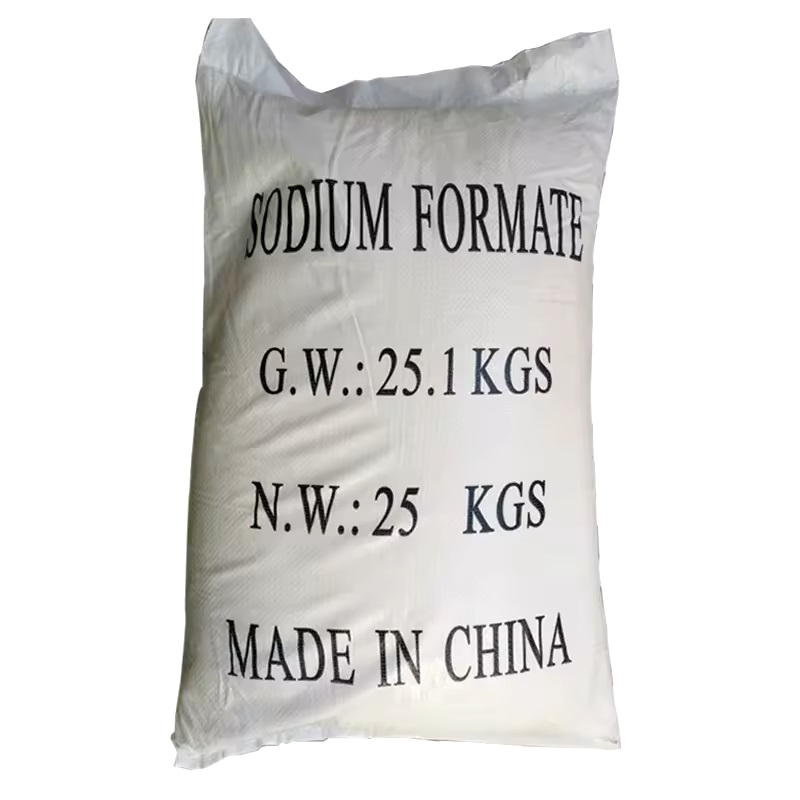
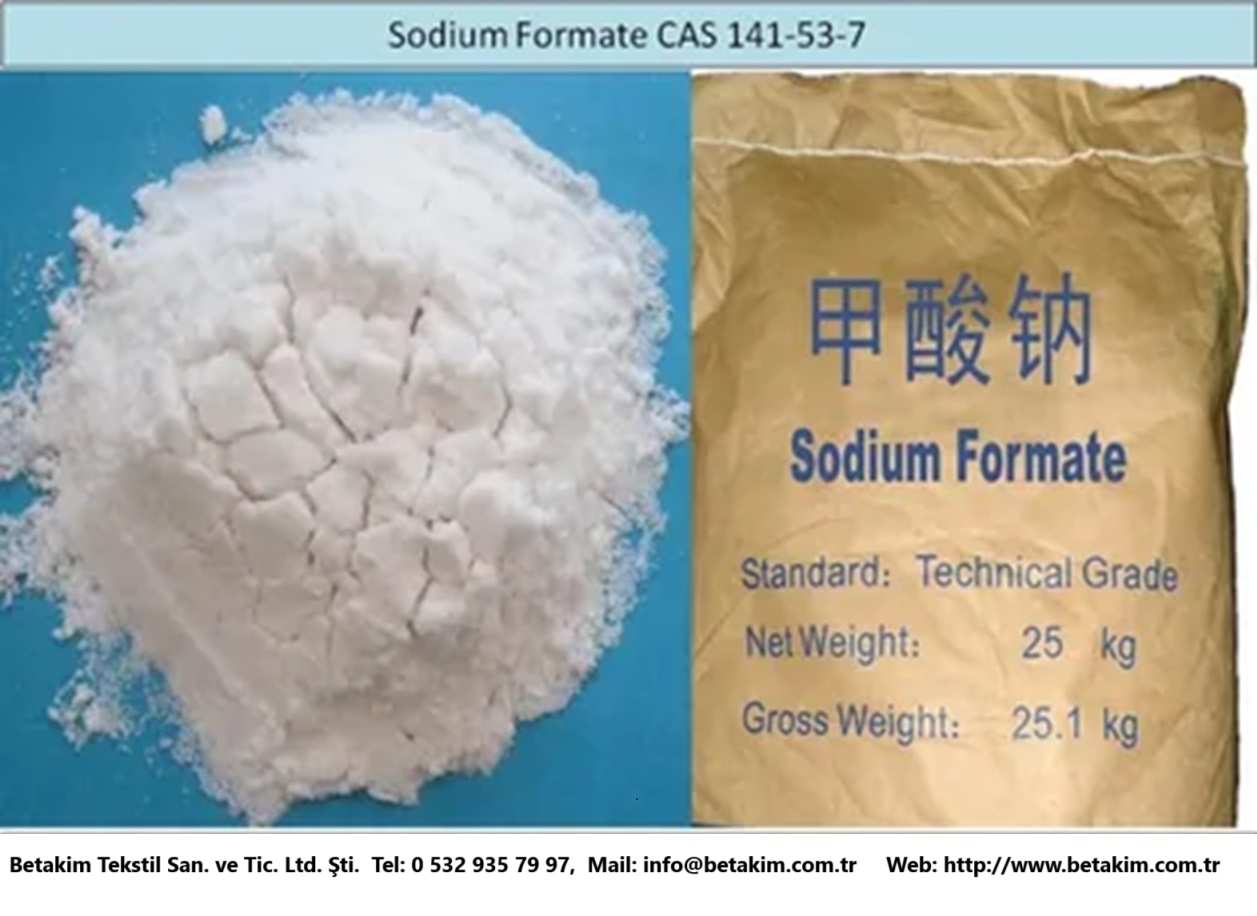
| Appearance | White crystalline powder / White solid |
| Odor | Slight formic acid-like odor |
2. SYNONYMS AND OTHER NAMES
| Type | Name |
|---|---|
| Common Names | Sodium formate, Formic acid sodium salt, Formic acid, Na salt |
| Chemical Names | Sodium methanoate, Formic acid, sodium salt (1:1) |
| Technical Names | Sodium formate hydrate (moist forms), Mravencan sodny (Czech), Salachlor, Sodium formate sigmaultra (high purity) |
| Database Identifiers | HSDB 744, CCRIS 1037, EINECS 205-488-0 |
| E Number | E237 (food preservative in some regions) |
3. CHEMICAL STRUCTURE
3.1. Molecular Structure
Sodium formate is the sodium salt of formic acid. The structure consists of a formate anion (HCOO-) and a sodium cation (Na+). The formate ion has a planar structure with resonance stabilization.
Simplified Structural Formula:
        O
        ||
   H - C - O⁻  Na⁺
More Detailed Representation:
        O
        ||
   H - C - O - Na
3.2. Molecular Formula
CHNaO₂ (HCOONa)
3.3. Molecular Weight
68.01 g/mol
3.4. Key Structural Features
| Feature | Description |
|---|---|
| Anion | Formate ion (HCOO⁻) |
| Cation | Sodium (Na⁺) |
| Bond Type | Ionic bond between Na⁺ and HCOO⁻ |
| Molecular Geometry | Planar (formate ion) |
| Resonance | The negative charge is delocalized between the two oxygen atoms |
4. PHYSICOCHEMICAL PROPERTIES
| Property | Value |
|---|---|
| Appearance | White crystalline powder / White solid |
| Odor | Slight formic acid-like odor |
| Molecular Weight | 68.01 g/mol |
| Melting Point | 253 °C; 258-261 °C (decomposes) |
| Boiling Point | 100.6 °C (at 760 mmHg, decomposes) |
| Flash Point | 29.9 °C |
| Density | 1.919 g/cm³ |
| Vapor Pressure | 36.5 mmHg (at 25°C) |
| pH (aqueous solution) | Approximately 7 (neutral) |
| Water Solubility | Highly soluble (approximately 97 g/100 mL at 20°C) |
| Solubility in Other Solvents | Soluble in glycerol; slightly soluble in ethanol; insoluble in ether |
| Hygroscopicity | Readily absorbs moisture from air (deliquescent) |
| Stability | Stable under normal conditions; decomposes at high temperatures |
| Storage Condition | Room temperature, dry environment |
5. SOLUBILITY PROFILE
| Solvent | Solubility | Conditions |
|---|---|---|
| Water | ~97 g/100 mL | 20°C |
| Water | Very high solubility | 50°C |
| Glycerol | Soluble | 25°C |
| Ethanol | Slightly soluble | 25°C |
| Methanol | Slightly soluble | 25°C |
| Ether | Insoluble | 25°C |
| Acetone | Insoluble | 25°C |
| Benzene | Insoluble | 25°C |
6. CHEMICAL PROPERTIES AND BEHAVIOR
| Property | Description |
|---|---|
| Deliquescent | Sodium formate readily absorbs moisture from the air. |
| Thermal Decomposition | At high temperatures, sodium formate decomposes to sodium oxalate and hydrogen, and eventually to sodium carbonate. |
| Aqueous Solution | Aqueous solution is neutral (pH ~7). |
| Complex Formation | Can form complex ions with trivalent metals in solution. |
| Reactivity | Incompatible with strong acids (releases formic acid) and strong oxidizers. |
7. REACTION EQUATIONS
7.1. Thermal Decomposition
2 HCOONa → Na₂C₂O₄ + H₂
Na₂C₂O₄ → Na₂CO₃ + CO
7.2. Neutralization of Formic Acid with Sodium Hydroxide
HCOOH + NaOH → HCOONa + H₂O
7.3. Neutralization with Sodium Bicarbonate
HCOOH + NaHCO₃ → HCOONa + CO₂ + H₂O
7.4. Reaction with Strong Acid
HCOONa + H₂SO₄ → HCOOH + NaHSO₄
7.5. Production from Carbon Monoxide
CO + NaOH → HCOONa
8. PRODUCTION METHODS
Sodium formate can be produced by various industrial processes:
8.1. Carbon Monoxide Synthesis (Primary Industrial Method)
Reaction Principle:
Carbon monoxide reacts with sodium hydroxide solution at high temperature and pressure:
CO + NaOH → HCOONa
Process Flow:
| Stage | Process | Description |
|---|---|---|
| 1 | Gas Production | Coke is burned with insufficient air in a gasifier to produce a mixed gas containing carbon monoxide (CO), carbon dioxide (CO₂), and nitrogen (N₂). C + O₂ → CO₂ + Q; CO₂ + C → 2CO – Q; 2C + O₂ → 2CO + Q |
| 2 | Purification | Cyclone Dust Collector: Removes solid particles. Gas Washing Tower: Removes additional solid particles with water. Alkali Washing Tower: Sodium hydroxide solution removes CO₂: CO₂ + 2NaOH → Na₂CO₃ + H₂O; CO₂ + NaOH → NaHCO₃. Electrostatic Precipitator: Removes remaining solid particles. |
| 3 | Compression | The purified mixed gas is compressed to 2.0-2.2 MPa pressure. |
| 4 | Synthesis | The compressed gas is heated to 140-150°C and enters a synthesis reactor where CO reacts with NaOH to form sodium formate solution. |
| 5 | Separation | The product mixture undergoes gas-liquid separation using a hydrocyclone. Sodium formate solution is collected in storage tanks. |
| 6 | Evaporation | The solution is evaporated to 70-80% concentration using heat transfer oil. |
| 7 | Centrifugation and Drying | The concentrated solution is centrifuged and then dried with hot air to obtain the final product (approximately 5% moisture). |
| 8 | Packaging | The dried product is packaged as finished sodium formate. |
8.2. Neopentyl Glycol Production By-Product
Formed as a by-product during the disproportionation process in neopentyl glycol production.
Two types:
-
Conventional process: Low price, black color (typically used for formic acid production).
-
Improved methanol process: White color, high content, no caking, suitable for export.
8.3. Pentaerythritol Production By-Product
Formed as a by-product in pentaerythritol production.
Two types:
-
Conventional process: Light yellow color, low price.
-
Purified process: White color, high content, suitable for export.
8.4. Trimethylolpropane Production By-Product
Formed during trimethylolpropane synthesis when excess formaldehyde is oxidized to formic acid and then neutralized with sodium hydroxide.
8.5. Direct Neutralization
Formic acid is reacted with sodium hydroxide or sodium bicarbonate:
HCOOH + NaOH → HCOONa + H₂O
HCOOH + NaHCO₃ → HCOONa + CO₂ + H₂O
9. QUALITY SPECIFICATIONS AND GRADES
| Parameter | Premium Grade | First Grade | Quality Product |
|---|---|---|---|
| Content (HCOONa) | ≥ 97.0% | ≥ 95.0% | ≥ 93.0% |
| NaOH | ≤ 0.50% | ≤ 0.50% | ≤ 1.00% |
| Na₂CO₃ | ≤ 1.30% | ≤ 1.50% | ≤ 2.00% |
| NaCl | ≤ 0.50% | ≤ 1.50% | ≤ 3.00% |
| Na₂S | ≤ 0.06% | ≤ 0.08% | ≤ 0.10% |
| Moisture | ≤ 0.50% | ≤ 1.00% | ≤ 1.50% |
10. APPLICATIONS AND INDUSTRIAL USES
Sodium formate is a versatile chemical with numerous industrial applications:
10.1. De-icing Agent
Used for de-icing airport runways and roads. Effective at low temperatures and less corrosive than traditional chloride-based de-icers.
10.2. Leather Tanning Industry
Used in the leather tanning process to stabilize the pH of tanning solutions. Acts as a buffering agent and mordant (color fixative).
10.3. Chemical Synthesis and Industry
| Application | Description |
|---|---|
| Intermediate | Key intermediate for production of: Formic acid (via acidification with sulfuric acid); Oxalic acid (via heating with sodium hydroxide); Dimethylformamide (DMF) and other formamide derivatives. |
| Reagent | Used as a reagent in various organic synthesis reactions. |
| Precipitant | Used as a precipitant for heavy metals; can form complex ions with trivalent metals. |
10.4. Analytical Chemistry
| Application | Description |
|---|---|
| Reagent | Used for determination of phosphorus and arsenic. |
| Buffer | Has buffering capacity and can adjust the pH of strong mineral acids to higher values. |
| Complexing Agent | Forms complex ions with trivalent metals in solution. |
10.5. Preservative and Antimicrobial
Acts as a preservative in some food products (approved in EEC countries excluding the UK). Has disinfectant and astringent properties. Used as a silage additive to preserve animal feed.
10.6. Pharmaceutical Industry
Used as an intermediate in pharmaceutical production. Has diuretic effects (historical use).
10.7. Printing and Dye Industry
Used as an auxiliary agent in textile processing.
10.8. Polymer and Resin Industry
Used in alkyd resin coatings. Additive in adhesives. Used in plasticizer production.
10.9. Other Industrial Applications
| Application | Description |
|---|---|
| High Explosives | Component in explosive formulations. |
| Acid-Resistant Materials | In production of acid-resistant materials. |
| Aviation Lubricants | Additive in specialty lubricants. |
| Precious Metal Precipitation | Used to precipitate valuable metals from solutions. |
11. CHEMICAL COMPATIBILITY TABLE
| Substance / Environment | Compatibility | Description |
|---|---|---|
| Water | COMPATIBLE | Highly soluble; neutral solution. |
| Acids (HCl, H₂SO₄) | INCOMPATIBLE | Releases formic acid. |
| Oxidizers (Strong) | INCOMPATIBLE | May cause fire or explosion. |
| Reducing Agents | COMPATIBLE | Generally compatible. |
| Alcohols | COMPATIBLE | Slightly soluble. |
| Ether | COMPATIBLE | Insoluble; no reaction. |
| Air / Moisture | LIMITED | Hygroscopic; absorbs moisture. |
| Stainless Steel | COMPATIBLE | Suitable for storage and transport. |
| Carbon Steel | COMPATIBLE | Generally compatible. |
| Plastic (HDPE, PP) | COMPATIBLE | Packaging material. |
12. PRECURSORS AND RAW MATERIALS (UPSTREAM)
| Raw Material | Description |
|---|---|
| Carbon Monoxide (CO) | Primary raw material for synthesis. |
| Sodium Hydroxide (NaOH) | Reacts with CO to form sodium formate. |
| Formic Acid (HCOOH) | Used in direct neutralization method. |
| Coke | Used for CO production in gasification. |
| By-product Sources | Pentaerythritol production; Neopentyl glycol production; Trimethylolpropane production. |
13. DERIVATIVES AND DOWNSTREAM PRODUCTS
| Derivative | Application |
|---|---|
| Formic Acid | Obtained by acidification with sulfuric acid. |
| Oxalic Acid | Obtained by heating with sodium hydroxide. |
| Sodium Hydrosulfite | Produced using sodium formate as a precursor. |
| Dimethylformamide (DMF) | Produced from formamide derivatives. |
| Sodium Sulfate | By-product in some processes. |
| 4,4'-Oxydianiline | Produced via sodium formate chemistry. |
| Asulam | Herbicide production. |
14. TOXICOLOGICAL PROFILE
| Parameter | Value |
|---|---|
| Acute Oral Toxicity (LD50, Rat) | 1,000 – 2,000 mg/kg (moderate toxicity) |
| Acute Dermal Toxicity (LD50, Rabbit) | > 2,000 mg/kg |
| Acute Inhalation Toxicity | May cause respiratory irritation. |
| Skin Irritation | Irritating to skin (R38). |
| Eye Irritation | Irritating to eyes (R36). |
| Respiratory Irritation | Irritating to respiratory system (R37). |
| Skin Sensitization | Not classified as a sensitizer. |
| Mutagenicity | Negative. |
| Carcinogenicity | Not classified as a carcinogen. |
| Reproductive Toxicity | Not classified as a reproductive toxin. |
| Target Organs | Eyes, respiratory system, skin. |
15. GHS CLASSIFICATION AND LABELING
GHS Classification:
| Hazard Class | Category | H-Statement |
|---|---|---|
| Eye Irritation | Category 2 | H319 |
| Skin Irritation | Category 2 | H315 |
| Specific Target Organ Toxicity - SE | Category 3 | H335 |
Signal Word: WARNING
Hazard Pictograms: GHS07 (Exclamation Mark)
Hazard Statements (H-Codes):
| Code | Statement |
|---|---|
| H315 | Causes skin irritation. |
| H319 | Causes serious eye irritation. |
| H335 | May cause respiratory irritation. |
Risk Phrases (R-Codes) - Historical:
| Code | Statement |
|---|---|
| R36/37/38 | Irritating to eyes, respiratory system, and skin. |
| R20/21/22 | Harmful by inhalation, in contact with skin, and if swallowed. |
16. PRECAUTIONARY STATEMENTS (P-CODES)
| Code | Statement |
|---|---|
| P261 | Avoid breathing dust/fume/gas/mist/vapors/spray. |
| P264 | Wash hands thoroughly after handling. |
| P280 | Wear protective gloves/protective clothing/eye protection/face protection. |
| P302+P352 | IF ON SKIN: Wash with plenty of soap and water. |
| P305+P351+P338 | IF IN EYES: Rinse cautiously with water for several minutes. Remove contact lenses if present. |
| P337+P313 | If eye irritation persists: Get medical advice/attention. |
| P501 | Dispose of contents/container in accordance with local regulations. |
17. FIRST AID MEASURES
| Route of Exposure | Action to Be Taken |
|---|---|
| Inhalation | Move to fresh air. If respiratory irritation persists, seek medical attention. |
| Skin Contact | Remove contaminated clothing. Wash with plenty of soap and water. If skin irritation occurs, seek medical attention. |
| Eye Contact | Rinse thoroughly with plenty of water for at least 15 minutes. Remove contact lenses. Seek medical attention. |
| Ingestion | Rinse mouth with water. Do not induce vomiting. Seek immediate medical attention. |
| General Note | If symptoms persist, always consult a healthcare facility. |
18. FIRE-FIGHTING MEASURES
| Parameter | Information |
|---|---|
| Fire Hazard | Not flammable, but may decompose at high temperatures. |
| Hazards During Fire | Thermal decomposition produces toxic fumes including carbon monoxide, carbon dioxide, and sodium oxides. |
| Suitable Extinguishing Media | Water spray, CO₂, dry chemical powder, alcohol-resistant foam. |
| Special Protective Equipment | Self-contained breathing apparatus (SCBA), full protective clothing. |
| Special Precautions | Prevent fire-fighting water from entering the environment. |
19. ACCIDENTAL RELEASE MEASURES
| Parameter | Information |
|---|---|
| Personal Protection | Dust mask, protective goggles, gloves, coverall. |
| Ventilation | Increase ventilation; use local exhaust in confined spaces. |
| Containment | Cover spilled area to prevent dust dispersion. |
| Cleaning Methods | Collect dry using vacuum or careful sweeping. Avoid washing with water (product is highly soluble and may spread). |
| Environmental Precautions | Prevent entry into drains, sewers, and water bodies. |
| Waste Disposal | Dispose of in accordance with local regulations. |
20. STORAGE AND HANDLING
| Parameter | Information |
|---|---|
| Storage Conditions | Store in a cool, dry, and well-ventilated area at room temperature (15-25°C). |
| Container Requirements | Keep tightly closed in original packaging. |
| Materials to Avoid | Strong acids, strong oxidizers, moisture/humidity. |
| Shelf Life | 24 months (under proper storage conditions). |
| Hygroscopicity | Deliquescent; absorbs moisture from air. Protect from moisture to prevent caking and lump formation. |
| Packaging Options | Multi-layer kraft paper bags, plastic-lined drums, big-bags. |
| Handling Notes | Avoid dust formation; use local exhaust ventilation; use protective gloves, goggles, and dust masks. Wash hands thoroughly after handling. |
Handling Notes:
-
Use closed systems to prevent dust formation.
-
Avoid contact with skin, eyes, and respiratory tract.
-
Protect from moisture by resealing packaging tightly after use.
-
In de-icing applications, follow recommended dosage guidelines.
21. PACKAGING OPTIONS
| Packaging Type | Quantity | Material |
|---|---|---|
| Kraft bag + PE inner liner | 25 kg | Paper / Polyethylene |
| Plastic drum | 25 – 50 kg | HDPE / Polypropylene |
| Fiber drum | 50 kg | Cardboard / Metal / Plastic |
| Big-Bag | 500 – 1000 kg | Polypropylene |
22. TRANSPORT INFORMATION
| Parameter | Information |
|---|---|
| UN Number | UN 2810 (Toxic Liquid, Organic, N.O.S. or Toxic Solid, Organic, N.O.S.) |
| Hazard Class | 6.1 (Toxic Substance) |
| Packing Group | II |
| ADR/RID | UN 2810, 6.1, PG II |
| IMDG Code | UN 2810, Toxic Substance, 6.1, PG II |
| IATA (Air) | UN 2810, Toxic Substance, 6.1, PG II |
| Marine Pollutant | No |
| Transport Temperature | Ambient temperature; protect from moisture. |
23. REGULATORY STATUS
| Region / Authority | Status |
|---|---|
| European Union | REACH registered; industrial chemical. |
| USA (EPA/TSCA) | Listed; industrial chemical. |
| Turkey | Industrial chemical; subject to chemical registration regulations. |
| Food Industry | E237 approved as a food preservative in some regions (excluding UK). Used as a silage additive. |
| Pharmaceutical | Used as an intermediate; historical use as a diuretic. |
24. SECTORAL SUITABILITY TABLE
| Sector | Suitability | Description |
|---|---|---|
| De-icing | HIGH | Effective at low temperatures; less corrosive than chlorides. |
| Leather Tanning | HIGH | pH stabilizer and buffering agent. |
| Chemical Synthesis | HIGH | Key intermediate for formic acid, oxalic acid, DMF production. |
| Analytical Chemistry | HIGH | Reagent for phosphorus and arsenic determination. |
| Food / Feed | MODERATE | Preservative (E237) and silage additive. |
| Pharmaceuticals | MODERATE | Intermediate and historical diuretic. |
| Textile / Printing | MODERATE | Auxiliary agent in textile processing. |
| Polymers / Resins | MODERATE | Additive in coatings and adhesives. |
| Explosives | LOW | Component in explosive formulations. |
25. COMPARISON OF PRODUCTION SOURCES
| Source | Appearance | Quality | Application |
|---|---|---|---|
| CO Synthesis | White crystalline powder | High purity | All industrial applications |
| Neopentyl Glycol By-product (Conventional) | Black | Low quality | Formic acid production |
| Neopentyl Glycol By-product (Improved) | White | High content | Export, high-grade applications |
| Pentaerythritol By-product (Conventional) | Light yellow | Low quality | Industrial uses |
| Pentaerythritol By-product (Purified) | White | High content | Export, high-grade applications |
26. QUICK REFERENCE TABLE
| Property | Value |
|---|---|
| CAS Number (Primary) | 141-53-7 |
| Molecular Formula | CHNaO₂ (HCOONa) |
| Molecular Weight | 68.01 g/mol |
| Appearance | White crystalline powder |
| Odor | Slight formic acid-like |
| Density | 1.919 g/cm³ |
| Melting Point | 253 °C; 258-261 °C (decomposes) |
| pH (Aqueous Solution) | ~7 (neutral) |
| Water Solubility (20°C) | ~97 g/100 mL |
| Shelf Life | 24 months |
| Main Uses | De-icing, leather tanning, chemical intermediate, preservative |
| Hazard Warning | Irritant (H315, H319, H335) |
| UN Number | UN 2810 |
| Hazard Class | 6.1 (Toxic Substance) |
27. CRITICAL NOTICES AND BEST PRACTICES
CRITICAL NOTICES:
-
Hygroscopic Nature: Sodium formate is deliquescent and readily absorbs moisture from the air. Proper packaging and storage conditions must be maintained to prevent moisture absorption, caking, and lump formation.
-
Acid Incompatibility: Contact with strong acids releases toxic and corrosive formic acid fumes. Avoid mixing with acids.
-
Oxidizer Incompatibility: Strong oxidizers may cause fire or explosion. Store away from oxidizing agents.
-
De-icing Application: Effective at low temperatures and less corrosive than traditional chloride-based de-icers. However, environmental considerations should be evaluated for large-scale use.
-
Food Application: E237 is approved as a preservative only in some regions. Check local regulations before use in food products.
-
Different Grades: Available in multiple purity grades (Premium, First, Quality) for different applications. Select the appropriate grade based on the intended use.
-
By-product Variability: Sodium formate from different production sources (CO synthesis, neopentyl glycol, pentaerythritol) may have different quality profiles and colors.
BEST PRACTICE RECOMMENDATIONS:
-
Storage: Store in a cool, dry place at room temperature. Keep containers tightly closed. Protect from moisture and humidity.
-
Personnel Protection: Use protective gloves, goggles, and dust mask. Ensure adequate ventilation.
-
Dosage Control: Determine the correct dosage according to the intended application. Overdosing may cause undesired effects.
-
Solution Preparation: Dissolve in water as needed. The solution is neutral (pH ~7) and suitable for many applications.
-
Waste Management: Dispose of waste in accordance with local regulations. Do not pour down drains without treatment.
-
Quality Selection: Select the appropriate grade (Premium, First, Quality) based on the specific application requirements.
LEGAL DISCLAIMER:
The information provided in this document is based on our current knowledge and experience and is presented in good faith; however, as all conditions of use are beyond our control, it does not constitute a binding specification or warranty. This Technical Data Sheet is for informational purposes only. Users are obligated to test the suitability of the product for their own applications. For complete safety, storage, handling, transport, waste, and regulatory compliance information, the official Safety Data Sheet (SDS/MSDS) provided by the manufacturer/supplier must be consulted.