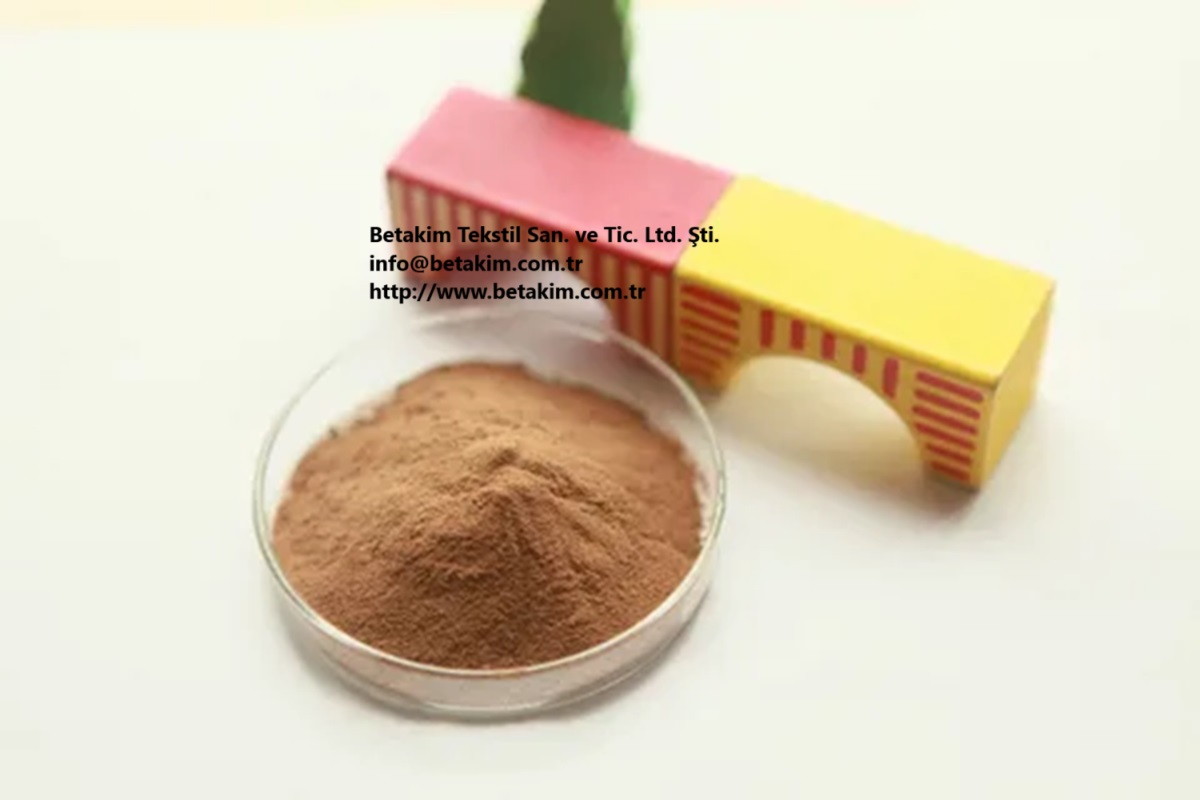
Calcium Ligno Sulfonate, Calcium Lignine Sulfonate, 8061-52-7
CALCIUM LIGNOSULFONATE
Calcium Lignosulfonate / Calcium Lignine Sulfonate / Lignosulfonic Acid Calcium Salt
CAS Number: 8061-52-7
EINECS Number: 617-125-7
1. PRODUCT IDENTIFICATION
| Parameter |
Detail |
| Product Name |
Calcium Lignosulfonate |
| Chemical Name (IUPAC) |
Lignosulfonic acid, calcium salt |
| CAS Number |
8061-52-7 |
| EINECS Number |
617-125-7 |
| Molecular Formula |
C20H24CaO10S2 (representative monomer unit) |
| Molecular Weight |
528.61 g/mol (representative monomer unit) |
| MDL Number |
MFCD00163202 |
| HS Code |
3913908000 |
| WGK Germany |
1 |
2. SYNONYMS AND IDENTIFIERS
| Language |
Names |
| Turkish |
Kalsiyum Lignosülfonat, Lignosülfonik asit kalsiyum tuzu |
| English |
Calcium Lignosulfonate, Ligninesulfonate Calcium, Lignosulfonic acid calcium salt |
| Chemical Name |
calcium 3-(2-hydroxy-3-methoxyphenyl)-2-[2-methoxy-4-(3-sulfonatopropyl)phenoxy]propane-1-sulfonate |
| Common Names |
Wood calcium, Lignin sulfonate calcium salt, Sulfite lignin calcium salt, Calcium lignosulphonate |
3. CHEMICAL STRUCTURE
3.1. General Structural Representation
Calcium lignosulfonate is a multicomponent polymeric anionic surfactant derived from lignin. It does not have a single fixed molecular structure but consists of a complex, cross-linked network of phenylpropane units. The representative monomer structure is shown below:
                    CH2OH
                      |
                     CH
                    /   \
                   /     \
          HO-CH   /       \   CH-SO3Ca
                 /         \
                /           \
               C             C
              / \           / \
             /   \         /   \
            /     \       /     \
           /       \     /       \
          O         C   C         O
          |        / \ / \        |
          |       /   X   \       |
          |      /         \      |
          |     C           C     |
          |    / \         / \    |
          |   /   \       /   \   |
          |  CH3O  OH    OCH3  H  |
          |                 |
          |                 |
          |                 C
          |                / \
          |               /   \
          |              /     \
          |             /       \
          |            /         \
          |           C           C
          |          / \         / \
          |         /   \       /   \
          |        /     \     /     \
          |       OH      H   H      SO3Ca
          |
          +--- Calcium (Ca2+) bridging between sulfonate groups
3.2. Simplified Structural Formula
Monomer Unit Formula: C20H24CaO10S2
Monomer Molecular Weight: 528.61 g/mol
3.3. Key Structural Features
| Feature |
Description |
| Polymer Type |
Polyphenolic macromolecule |
| Backbone |
Phenylpropane units (C6-C3) linked by C-O and C-C bonds |
| Functional Groups |
Phenolic hydroxyl (-OH), methoxy (-OCH3), benzyl hydroxyl, carbonyl (C=O), carboxyl (-COOH), vinyl (-CH=CH2), and sulfonate (-SO3H) groups |
| Metal Ion |
Calcium (Ca2+) serves as the counterion for sulfonate groups |
| Molecular Weight Range |
800 – 10,000 Daltons (average approximately 20,000) |
| Surface Activity |
Anionic surfactant with strong dispersing, binding, and chelating properties |
| Supramolecular Properties |
High specific surface area due to irregular, branched, and porous structure |
4. PHYSICAL AND CHEMICAL PROPERTIES
| Property |
Value |
| Appearance |
Brownish-yellow powder or granules |
| Odor |
Slightly pungent, aromatic odor |
| Density |
0.5 g/cm3 |
| Bulk Density |
0.35 – 0.50 g/cm3 |
| pH Value (3% by weight solution) |
4.0 – 5.0 |
| pH Value (10% solution) |
3.5 – 4.5 |
| Solubility in Water |
Soluble (up to 80% by weight) |
| Solubility in Organic Solvents |
Insoluble in most organic solvents |
| Stability |
Stable under normal conditions |
| Thermal Stability |
Decomposes above 200°C |
| Hygroscopicity |
Moderately hygroscopic |
| Flash Point |
Not applicable (non-flammable) |
| Viscosity (50% solution) |
50 – 150 cP (at 20°C) |
5. SOLUBILITY PROFILE
| Solvent |
Solubility |
Conditions |
| Water |
Soluble (up to 80%) |
20°C |
| Water |
Highly soluble |
50°C |
| Methanol |
Slightly soluble |
25°C |
| Ethanol |
Slightly soluble |
25°C |
| Acetone |
Insoluble |
25°C |
| Ether |
Insoluble |
25°C |
| Benzene |
Insoluble |
25°C |
| Toluene |
Insoluble |
25°C |
| Mineral Oil |
Insoluble |
25°C |
6. FUNCTIONAL GROUP ANALYSIS
| Functional Group |
Presence |
Significance |
| Phenolic Hydroxyl (-OH) |
High |
Provides antioxidant activity and metal chelation |
| Methoxy (-OCH3) |
Moderate |
Contributes to hydrophobic character |
| Benzyl Hydroxyl (-OH) |
Moderate |
Provides reactivity for chemical modification |
| Carbonyl (C=O) |
Low |
Provides polar character and reactivity |
| Carboxyl (-COOH) |
Low |
Provides anionic charge and water solubility |
| Vinyl (-CH=CH2) |
Low |
Provides cross-linking potential |
| Sulfonate (-SO3H / -SO3Ca) |
High |
Primary source of anionic charge and water solubility |
7. PRODUCTION AND MANUFACTURING PROCESS
Calcium lignosulfonate is produced from the waste liquor generated during the sulfite pulping process.
7.1. Raw Materials
| Raw Material |
Description |
| Sulfite Wood Pulp Waste Liquor |
Primary raw material (black liquor) |
| Calcium Hydroxide (Milk of Lime) |
Neutralization agent |
| Anhydrous Trisodium Phosphate |
Processing aid |
| Sodium Hydroxide |
pH adjustment |
| Ammonium Nitrate |
Fermentation nutrient (for desugaring) |
7.2. Production Stages
| Stage |
Description |
| Neutralization |
The waste liquor is neutralized with milk of lime (calcium hydroxide suspension) to precipitate lignin as calcium lignosulfonate. |
| Desugaring (Optional) |
Biological fermentation using microorganisms to remove fermentable sugars from the mixture. |
| Filtration |
Removal of insoluble impurities and precipitated materials. |
| Concentration |
The solution is concentrated by evaporation under vacuum until a solids content of approximately 50% is reached. |
| Drying |
The concentrated liquid is subjected to spray drying to obtain the final brownish-yellow powder. |
| Milling and Screening |
The dried product is milled and screened to achieve the desired particle size distribution. |
7.3. Alternative Production Methods
| Method |
Description |
| Sulfite Pulping Process |
Wood chips are treated with hot acidic calcium sulfite solution. Lignin is sulfonated and hydrolyzed, allowing lignosulfonate molecules to dissolve in the slurry. |
| Kraft (Sulfate) Process |
Wood chips are treated with a hot strong alkaline solution (pH 13-14). Lignin is dissolved and subsequently modified to obtain products with different properties. |
8. MECHANISM OF ACTION (DISPERSANT AND WATER REDUCER)
| Parameter |
Description |
| Adsorption |
Hydrophobic (aromatic) groups of the lignosulfonate molecule adsorb onto the surface of cement or mineral particles. |
| Charge Impartation |
Sulfonate groups provide a negative charge to the particle surface. |
| Electrostatic Repulsion |
Particles with the same negative charge repel each other, breaking up flocculated (agglomerated) structures. |
| Water Release |
Trapped water is released from flocculated structures, increasing the amount of free water available for workability. |
| Dispersion |
Individual particles become uniformly dispersed throughout the mixture. |
| Surface Tension Reduction |
Lignosulfonate reduces the surface tension of the mixing water, improving wetting and penetration. |
9. APPLICATIONS AND INDUSTRIAL USES
Calcium lignosulfonate is used as a highly versatile product in many industries due to its dispersing, binding, and chelating properties.
9.1. Construction and Concrete Industry (Water Reducer)
| Application |
Description |
| Function |
Used as a water-reducing admixture and set retarder in concrete. |
| Dosage |
Typically 0.15 – 0.30% by weight of cement. |
| Water Reduction |
Reduces water consumption by 8-12% at typical dosages. |
| Benefits |
Improves concrete workability and flowability. Provides 8-10% cement savings while maintaining or improving strength. Has micro-air entraining properties that increase freeze-thaw resistance. Non-corrosive to reinforcing steel. Extends setting time in hot weather conditions. |
| Applications |
Suitable for large-volume concrete, high-fluidity concrete, pump concrete, ready-mix concrete, summer concrete, mass concrete, and projects requiring special set-retarding properties. |
9.2. Agriculture and Pesticides
| Application |
Description |
| Pesticide Suspending Agent |
Used as a filler and dispersant in pesticide water suspensions and suspo-emulsions. |
| Adjuvant |
Helps formulate stable pesticide suspensions with uniform particle distribution. |
| Wettable Powder Additive |
Improves the wetting and dispersing properties of wettable powder formulations. |
9.3. Ceramic Industry
| Application |
Description |
| Green Strength Enhancer |
Increases the mechanical strength of ceramic bodies before firing. |
| Plasticizer |
Improves the plasticity and workability of ceramic clays. |
| Binder |
Used as a ceramic auxiliary agent and binder for ceramic bodies. |
| Deflocculant |
Reduces the viscosity of ceramic slips and slurries. |
9.4. Refractory Materials
| Application |
Description |
| Binder |
Acts as a binder and plasticizer in refractory materials and shapes. |
| Dispersant |
Improves the dispersion of refractory particles in mixes. |
| Green Strength Enhancer |
Increases the strength of unfired refractory bricks and shapes. |
9.5. Coal Industry
| Application |
Description |
| Coal-Water Slurry Dispersant |
Helps disperse coal particles in water-based slurries for transport and combustion. |
| Additive |
Improves the flowability, stability, and viscosity of coal-water mixtures. |
| Dust Suppressant |
Used in coal dust control applications. |
9.6. Leather Industry
| Application |
Description |
| Tanning Agent |
Used as a retanning agent in leather tanning processes. |
| Dispersant for Dyestuffs |
Improves the dispersion of dyes in leather finishing. |
| Fatliquoring Auxiliary |
Assists in the penetration of fatliquoring agents. |
9.7. Carbon Black Industry
| Application |
Description |
| Granulation Agent |
Used as a binder in the granulation of carbon black powder to produce dust-free pellets. |
| Dispersant |
Improves the dispersion of carbon black in rubber and plastic compounds. |
9.8. Mining and Ore Processing
| Application |
Description |
| Ore Binder |
Used as a binder for mineral powders and ore fines in pelletizing and briquetting operations. |
| Dispersant |
Functions as a dispersant in ore flotation and beneficiation processes. |
| Grinding Aid |
Improves the efficiency of ore grinding by reducing viscosity and preventing agglomeration. |
9.9. Foundry Industry
| Application |
Description |
| Binder for Molds and Cores |
Used as a binder in foundry sand molds and cores. |
| Green Sand Additive |
Improves the strength and collapsibility of green sand molds. |
9.10. Other Applications
| Application |
Description |
| Textile Industry |
Used as a printing and dyeing aid, dispersant for dyes, and leveling agent. |
| Fertilizer Industry |
Used as a granulation binder and anti-caking agent in compound fertilizers. |
| Animal Feed Industry |
Used as a pellet binder and feed additive. |
| Asphalt Emulsifier |
Used in asphalt emulsions for road construction and pavement preservation. |
| Oil Well Industry |
Used in oil well cementing and as a viscosifier in drilling fluids. |
| Water Treatment |
Used as a scale inhibitor and dispersant in cooling water systems. |
| Dust Suppression |
Used as a dust control agent for unpaved roads and stockpiles. |
10. PRECURSORS AND RAW MATERIALS (UPSTREAM)
| Raw Material |
Description |
| Sulfite Wood Pulp Waste Liquor |
Primary raw material; contains lignin sulfonates, sugars, and inorganic compounds. |
| Calcium Hydroxide (Milk of Lime) |
Used for neutralization of the acidic waste liquor. |
| Calcium Sulfite |
Used in the sulfite pulping process. |
| Wood Chips |
Source of lignin; typically softwood (spruce, pine) or hardwood. |
| Sulfur Dioxide |
Used in the preparation of sulfite cooking liquor. |
| Water |
Used in pulping and processing operations. |
11. DERIVATIVES AND DOWNSTREAM PRODUCTS
| Derivative |
Application |
| Sodium Lignosulfonate |
Dispersant, binder, and water reducer (sodium salt version). |
| Vanillin |
Synthetic flavoring agent and fragrance. |
| 3-Hydroxy-4-methoxybenzaldehyde |
Chemical intermediate. |
| Ferric Chromium Lignin Sulfonate |
Drilling fluid additive and viscosifier. |
| Sulfoligno-Sulfomethylated Phenolic Resin Copolymer |
Specialty polymer for high-performance applications. |
| Lignin-Based Polyurethanes |
Biobased polymers for coatings and foams. |
| Lignin-Based Carbon Fibers |
Precursor for carbon fiber production. |
| Lignin-Based Phenolic Resins |
Replacement for petroleum-derived phenol in resins. |
| Lignosulfonate-Based Chelating Agents |
Metal chelation and sequestration applications. |
12. ENVIRONMENTAL AND ECOLOGICAL INFORMATION
| Parameter |
Detail |
| Toxicity |
Non-toxic to aquatic and terrestrial organisms. |
| Biodegradability |
Biodegradable under aerobic conditions. |
| Bioaccumulation |
Unlikely due to high water solubility and molecular size. |
| Renewable Resource |
Derived from lignin, the second most abundant natural polymer on Earth. |
| Environmental Impact |
Low environmental impact; used as a sustainable alternative to petrochemical-based dispersants and binders. |
| WGK Germany |
1 (Low hazard to water). |
| Fate in Environment |
Degrades naturally in soil and water; does not persist in the environment. |
| Ozone Depletion Potential |
None. |
| Global Warming Potential |
Low (biobased product). |
13. SAFETY AND TOXICOLOGICAL INFORMATION
| Parameter |
Detail |
| Acute Oral Toxicity (LD50, Rat) |
> 5000 mg/kg (practically non-toxic). |
| Acute Dermal Toxicity (LD50, Rabbit) |
> 2000 mg/kg. |
| Acute Inhalation Toxicity |
May cause respiratory tract irritation if dust is inhaled. |
| Skin Irritation |
Not irritating to skin. |
| Eye Irritation |
May cause mild to moderate eye irritation. |
| Skin Sensitization |
Not a skin sensitizer. |
| Mutagenicity |
Not mutagenic. |
| Carcinogenicity |
Not classified as a carcinogen. |
| Reproductive Toxicity |
Not classified as a reproductive toxin. |
| Target Organs |
No specific target organs identified. |
| GHS Classification |
Not classified as hazardous (no pictogram required). |
14. FIRST AID MEASURES
| Route of Exposure |
Action to Be Taken |
| Inhalation |
Move person to fresh air. If breathing difficulty occurs, administer oxygen and seek medical attention. |
| Skin Contact |
Wash with plenty of soap and water. Remove contaminated clothing. If irritation persists, consult a physician. |
| Eye Contact |
Rinse thoroughly with plenty of water for at least 15 minutes. Keep eyelids open. Remove contact lenses if present. Consult a physician. |
| Ingestion |
Rinse mouth. Drink plenty of water. Do not induce vomiting. If unconscious, do not administer anything orally. Seek immediate medical attention. |
| General Note |
If symptoms persist, always consult a healthcare facility. |
15. FIRE-FIGHTING MEASURES
| Parameter |
Information |
| Fire Hazard |
Not flammable under normal conditions. Decomposes at high temperatures (> 200°C). |
| Extinguishing Media |
Water spray, CO2, dry chemical powder, alcohol-resistant foam. |
| Special Hazards |
Thermal decomposition produces carbon monoxide, carbon dioxide, and sulfur oxides. |
| Protective Equipment |
Self-contained breathing apparatus (SCBA), full protective clothing. |
| Explosion Risk |
Not explosive; does not form explosive mixtures with air. |
16. ACCIDENTAL RELEASE MEASURES
| Parameter |
Information |
| Personal Protection |
Dust mask, protective goggles, gloves, coverall. |
| Ventilation |
Increase ventilation; use local exhaust in confined spaces. |
| Containment |
Cover spilled area to prevent dust dispersion. |
| Cleaning Methods |
Collect dry using vacuum or careful sweeping. Avoid washing with water (may create slippery surfaces and dissolve product). |
| Environmental Precautions |
Prevent entry into drains, sewers, and water bodies. |
| Waste Disposal |
Dispose of as chemical waste in accordance with local regulations. |
17. STORAGE AND HANDLING
| Parameter |
Information |
| Storage Conditions |
Store in a cool, dry, and well-ventilated area at room temperature (15-25°C). |
| Container Requirements |
Keep in tightly closed original packaging. |
| Materials to Avoid |
Strong oxidizers, strong acids, and strong bases. |
| Shelf Life |
24 months (under proper storage conditions). |
| Hygroscopicity |
Moderately hygroscopic; protect from moisture to prevent caking and lump formation. |
| Packaging Options |
25 kg bags, 500 kg big-bags, 1000 kg palletized shipment. |
| Handling Notes |
Avoid dust formation; use local exhaust ventilation; use protective gloves, goggles, and dust masks. Wash hands thoroughly after handling. |
Handling Notes:
-
Use closed systems to prevent dust formation.
-
Avoid contact with skin, eyes, and respiratory tract.
-
Protect from moisture by resealing packaging tightly after use.
-
In concrete applications, dosage is typically 0.15-0.30% by weight of cement.
18. TRANSPORT INFORMATION
| Parameter |
Information |
| UN Number |
Not applicable (not classified as dangerous goods). |
| Hazard Class |
Not classified as hazardous for transport. |
| Packing Group |
Not applicable. |
| Proper Shipping Name |
Calcium lignosulfonate. |
| Marine Pollutant |
No. |
| ADR/RID Label |
Not applicable. |
| Transport Category |
Category 0 (no restrictions). |
| Air Transport (IATA) |
No restrictions. |
| Sea Transport (IMDG) |
No restrictions. |
Calcium lignosulfonate is not classified as a dangerous good for international transport and can be safely shipped by road, sea, and air.
19. REGULATORY INFORMATION
| Region |
Status |
| EU (REACH) |
Registered and commercialized for various applications. |
| Turkey (KKDIK) |
Mandatory compliance; registration process ongoing. |
| USA (TSCA) |
Listed and approved for use. |
| FDA Compliance |
Approved for use as a feed additive (21 CFR). |
| EFSA (European Food Safety Authority) |
Approved as a feed additive. |
| Turkish Food Codex |
Permitted for use as a feed additive. |
| Canada (DSL) |
Listed. |
| Japan (ENCS) |
Listed. |
| Australia (AICS) |
Listed. |
| China (IECSC) |
Listed. |
20. KEY ADVANTAGES AND BENEFITS
| Advantage |
Description |
| Renewable Resource |
Derived from lignin, the second most abundant natural polymer on Earth, ensuring long-term supply and sustainability. |
| Multifunctionality |
Combines dispersing, binding, and chelating properties in a single product, reducing the need for multiple additives. |
| Versatility |
Applicable across a very wide range of industries, from construction to agriculture to mining. |
| Cost Effectiveness |
As a by-product of the paper industry, it offers an economical solution compared to synthetic alternatives. |
| Environmentally Friendly |
Non-toxic, biodegradable, and derived from natural sources with low environmental impact. |
| Non-Corrosive |
Safe for use in reinforced concrete structures as it does not cause corrosion of steel reinforcement. |
| Water Reduction |
Significantly reduces water demand in concrete formulations, improving strength and durability. |
| Processing Aid |
Improves handling, granulation, and processing of various materials in industrial operations. |
21. SUMMARY
Calcium Lignosulfonate (CAS: 8061-52-7) is a brownish-yellow powder form, anionic polymeric surfactant derived from lignin, a natural and renewable resource. It is produced from sulfite wood pulp waste liquor through neutralization, concentration, and spray drying. The molecular formula of the representative monomer unit is C20H24CaO10S2 with a molecular weight of 528.61 g/mol. The polymer structure consists of phenylpropane units linked by C-O and C-C bonds, containing functional groups including phenolic hydroxyl, methoxy, benzyl hydroxyl, carbonyl, carboxyl, vinyl, and sulfonate groups.
Due to its unique properties including high dispersing ability, binding capacity, and chelating capability, it serves as a critical additive in many industries. Its main applications include use as a concrete water-reducing admixture in construction, a suspending agent in pesticides, a binder in ceramics and refractories, and a dispersant in coal-water slurries and ore processing. It also finds applications in leather tanning, carbon black granulation, foundry molds, textiles, fertilizers, asphalt emulsions, oil well drilling, and water treatment.
As a non-toxic, renewable, biodegradable, and versatile product, calcium lignosulfonate represents an important bio-based chemical in the transition toward more sustainable and environmentally responsible industrial practices. It provides a cost-effective alternative to petroleum-based dispersants, binders, and water reducers while offering comparable or superior performance in most applications.
22. KEY PROPERTIES (SUMMARY TABLE)
| Property |
Value |
| Appearance |
Brownish-yellow powder or granules |
| Chemical Formula (Monomer) |
C20H24CaO10S2 |
| Molecular Weight (Monomer) |
528.61 g/mol |
| CAS Number |
8061-52-7 |
| EINECS Number |
617-125-7 |
| Bulk Density |
0.35 – 0.50 g/cm3 |
| pH (3% solution) |
4.0 – 5.0 |
| Solubility |
Soluble in water; insoluble in organic solvents |
| Molecular Weight Range |
800 – 10,000 Daltons |
| Primary Use |
Water reducer, dispersant, binder, chelating agent |
| Toxicity |
Non-toxic (LD50 > 5000 mg/kg) |
| Biodegradability |
Biodegradable |
| WGK Germany |
1 (Low hazard to water) |
23. MAIN APPLICATION AREAS
| Sector |
Applications |
| Construction |
Concrete water-reducing admixture, set retarder, air-entraining agent. |
| Agriculture |
Pesticide suspending agent, adjuvant, wettable powder additive. |
| Ceramics |
Green strength enhancer, plasticizer, binder, deflocculant. |
| Refractories |
Binder, plasticizer, green strength enhancer. |
| Mining |
Ore binder, dispersant, grinding aid. |
| Coal |
Coal-water slurry dispersant, dust suppressant. |
| Leather |
Retanning agent, dye dispersant, fatliquoring auxiliary. |
| Carbon Black |
Granulation agent, dispersant. |
| Foundry |
Binder for molds and cores, green sand additive. |
| Textiles |
Printing and dyeing aid, dispersant for dyes, leveling agent. |
| Fertilizers |
Granulation binder, anti-caking agent. |
| Animal Feed |
Pellet binder, feed additive. |
| Asphalt |
Emulsifier for asphalt emulsions. |
| Oil & Gas |
Cementing additive, drilling fluid viscosifier. |
| Water Treatment |
Scale inhibitor, dispersant. |
24. CRITICAL NOTICES
-
Bio-Based and Renewable: Calcium lignosulfonate is produced from lignin, a natural polymer obtained as a by-product of the wood pulping industry. It represents a sustainable alternative to petroleum-based dispersants and binders.
-
Water Reduction in Concrete: At typical dosages of 0.15-0.30% by weight of cement, it reduces water demand by 8-12% while maintaining workability, leading to higher strength and durability concrete.
-
Non-Corrosive Property: Unlike many other concrete admixtures containing chlorides, calcium lignosulfonate is non-corrosive to steel reinforcement, making it suitable for reinforced concrete structures.
-
Multifunctional Additive: Its combined dispersing, binding, and chelating properties make it valuable across diverse industries, offering a single solution for multiple functions.
-
Dosage Sensitivity: In concrete applications, overdosing may lead to excessive air entrainment or set retardation. Proper dosage optimization through trial mixes is recommended.
-
Color and Aesthetics: The brownish-yellow color of calcium lignosulfonate may affect the final appearance of light-colored concrete or products where color is critical.
-
Hygroscopic Nature: The product is moderately hygroscopic. Proper packaging and storage conditions must be maintained to prevent moisture absorption, caking, and lump formation.
-
Regulatory Compliance: Users must ensure compliance with all applicable local, national, and international regulations for their specific applications, including feed, food contact, and construction material regulations.
Important Disclaimer: This Technical Data Sheet (TDS) is for informational purposes only. The information provided is based on available data and is believed to be accurate. However, the user is solely responsible for determining the suitability of the product for their specific applications and for complying with all applicable regulations and safety requirements. For complete safety, handling, storage, and regulatory compliance information, always refer to the official Safety Data Sheet (SDS/MSDS) provided by the manufacturer/supplier. Users are obligated to test the product in their own processes and applications. All local, national, and international occupational health and safety regulations must be followed when working with calcium lignosulfonate.