We unleash your business potential by maximize the business innovation.
Send EmailDiammonium Phosphate,Ammonium Phosphate Dibasic, Ammonium Monohydrogen Phosphate, Diammonium Hydrogen Phosphate, DAP, 7783-28-0
DIAMMONIUM PHOSPHATE (DAP)
Diammonium Hydrogen Phosphate / Ammonium Monohydrogen Phosphate / Dibasic Ammonium Phosphate
CAS Number: 7783-28-0
EC Number: 231-987-8
1. IDENTIFICATION
| Property | Information |
|---|---|
| Chemical Name | Diammonium Phosphate |
| Synonyms | Diammonium hydrogen phosphate, Ammonium monohydrogen phosphate, Ammonium phosphate dibasic, DAP, Di-ammonium phosphate |
| Chemical Formula | (NH₄)₂HPO₄ |
| Molecular Weight | 132.06 g/mol |
| CAS Number | 7783-28-0 |
| EC Number (EINECS) | 231-987-8 |
| Appearance | White crystalline powder or granules |
| Odor | Odorless or slight ammonia odor |
| Taste | Saline, cooling taste |
2. PHYSICAL PROPERTIES
| Property | Value |
|---|---|
| Physical State (20°C) | Solid (crystalline powder/granules) |
| Appearance | White, odorless crystalline powder |
| Molecular Weight | 132.06 g/mol |
| Density (20°C) | 1.619 g/cm³ |
| Melting Point | 155 °C (decomposes) |
| Decomposition Temperature | ~70 °C (loses ammonia) |
| Solubility in Water (25°C) | 69.5 g/100 g water (high solubility) |
| Solubility in Ethanol | Insoluble |
| Solubility in Acetone | Insoluble |
| pH (1% solution) | ~8 (slightly alkaline) |
| Nitrogen (N) Content | ~18% |
| Phosphorus (P₂O₅) Content | ~46% |
| Phosphorus (P) Content | ~20% |
| Bulk Density | 0.7 – 0.9 g/cm³ (granular) |
3. CHEMICAL PROPERTIES
| Property | Information |
|---|---|
| Chemical Formula | (NH₄)₂HPO₄ |
| Molecular Weight | 132.06 g/mol |
| Chemical Class | Ammonium phosphate (dibasic) |
| pH (1% solution) | ~8 (slightly alkaline) |
| Stability | Unstable; loses ammonia (NH₃) upon exposure to air (up to 8% loss over time) |
| Hygroscopicity | Slightly hygroscopic |
| Reaction with Water | Dissolves exothermically (releases heat) |
| Thermal Decomposition | (NH₄)₂HPO₄ + Heat → NH₃↑ + NH₄H₂PO₄ (monoammonium phosphate) |
| Further Decomposition (Above 155°C) | NH₄H₂PO₄ + Heat → NH₃↑ + H₃PO₄↑ |
| Incompatible Materials | Strong bases (releases NH₃), strong oxidizing agents |
Decomposition Reactions:
(NH₄)₂HPO₄ + Heat → NH₃↑ + NH₄H₂PO₄ (at ~70°C)
NH₄H₂PO₄ + Heat → NH₃↑ + H₃PO₄↑ (above 155°C)
4. PRODUCTION PROCESS
| Stage | Description |
|---|---|
| 1. Raw Materials | Phosphoric acid (H₃PO₄) and ammonia (NH₃) |
| 2. Neutralization | Phosphoric acid is neutralized with ammonia in a reactor |
| 3. Reaction | H₃PO₄ + 2 NH₃ → (NH₄)₂HPO₄ + Heat |
| 4. Concentration | The solution is concentrated by evaporation |
| 5. Crystallization | DAP crystallizes from the solution |
| 6. Granulation | For fertilizer grade, the crystals are granulated to improve handling |
| 7. Drying | Product is dried |
| 8. Coating (Optional) | Anti-caking agents may be applied |
| 9. Screening & Packaging | Product is screened for uniform particle size and packaged |
Reaction Equation:
H₃PO₄ + 2 NH₃ → (NH₄)₂HPO₄
5. APPLICATIONS
5.1. Agriculture (Fertilizer) – Primary Use (~80%)
| Application | Function |
|---|---|
| High Concentration NPK Fertilizer | Provides nitrogen (N – 18%) and phosphorus (P₂O₅ – 46%) |
| Root Development | Phosphorus promotes strong root growth |
| Crop Yield | Increases crop yield and quality |
| Soil Application | Granular DAP is applied directly to soil |
| Blended Fertilizers | Component of NPK blends with potassium (KCl or K₂SO₄) |
| Liquid Fertilizers | Water-soluble form for fertigation |
Fertilizer Value:
-
Nitrogen (N): 18%
-
Phosphorus (P₂O₅): 46%
-
Total plant nutrients: 64%
Comparison with MAP (Monoammonium Phosphate):
| Property | DAP (Diammonium Phosphate) | MAP (Monoammonium Phosphate) |
|---|---|---|
| Formula | (NH₄)₂HPO₄ | NH₄H₂PO₄ |
| N Content | ~18% | ~11% |
| P₂O₅ Content | ~46% | ~52% |
| pH (1% solution) | ~8 (alkaline) | ~4.5 (acidic) |
| Soil pH Effect | Increases pH (alkaline) | Decreases pH (acidic) |
| Best For | Neutral to acidic soils | Alkaline soils |
5.2. Fire Retardant
| Application | Function |
|---|---|
| Wood Treatment | Impregnation to reduce flammability |
| Textile Treatment | Flame retardant for fabrics |
| Paper Products | Fire-resistant paper and cardboard |
| Plastics | Intumescent flame retardant additive |
| Rocket Motor Insulation | Thermal insulation in rocket motors (defense industry) |
Mechanism: DAP decomposes at high temperatures, releasing ammonia and forming a char layer that insulates the material from heat and oxygen.
5.3. Wine & Beer Production
| Application | Function |
|---|---|
| Yeast Nutrient | Provides nitrogen for yeast during fermentation |
| Yeast Vitality | Keeps yeast active and healthy |
| Hydrogen Sulfide Prevention | Prevents formation of H₂S (rotten egg odor) during fermentation |
| Fermentation Efficiency | Improves fermentation yield |
Application in Winemaking:
-
First addition: At the beginning of fermentation
-
Second addition: At mid-fermentation (estimated)
-
Typical dosage: 0.1 – 0.5 g/L of must
5.4. Water & Wastewater Treatment
| Application | Function |
|---|---|
| Biological Treatment | Nutrient source for microorganisms in activated sludge process |
| Nutrient Adjustment | Provides nitrogen and phosphorus for biological nutrient removal (BNR) |
| Chemical Treatment | Used after chemical treatment processes |
5.5. Chemical Industry
| Application | Function |
|---|---|
| Buffer Solution | Component of phosphate buffers (pH ~7-8) |
| Flame Retardant Raw Material | Intermediate for other flame retardants |
| Analytical Reagent | Reagent in analytical chemistry |
| Fermentation Nutrient | Nutrient source for industrial fermentation |
5.6. Textile & Furniture Industry
| Application | Function |
|---|---|
| Fabric Impregnation | Improves fabric durability and flame resistance |
| Wood Treatment | Increases wood durability (impregnation method) |
| Upholstery | Flame retardant treatment for furniture fabrics |
5.7. Pharmaceutical & Medical
| Application | Function |
|---|---|
| High Purity DAP | Used in medical applications |
| Pharmaceutical Intermediate | Raw material for certain pharmaceuticals |
| Buffering Agent | In pharmaceutical formulations |
5.8. Defense Industry
| Application | Function |
|---|---|
| Rocket Motor Insulation | Thermal insulation material for rocket motors |
| Flame Retardant | Prevents motor combustion at high temperatures |
5.9. Animal Feed (Ruminant)
| Application | Function |
|---|---|
| Feed Additive | Provides phosphorus and nitrogen for ruminant nutrition |
| Mineral Supplement | Source of available phosphorus |
6. QUALITY SPECIFICATIONS
| Parameter | Fertilizer Grade | Food/Pharma Grade | Technical Grade |
|---|---|---|---|
| Purity ((NH₄)₂HPO₄) | ≥ 96.0% | ≥ 98.0% | ≥ 99.0% |
| Nitrogen (N) Content | ≥ 18.0% | ≥ 18.0% | ≥ 18.0% |
| Phosphorus (P₂O₅) Content | ≥ 46.0% | ≥ 46.0% | ≥ 46.0% |
| Water Soluble Phosphorus | ≥ 95% | ≥ 98% | ≥ 99% |
| Moisture | ≤ 2.0% | ≤ 0.5% | ≤ 0.5% |
| pH (1% solution) | 7.5 – 8.5 | 7.5 – 8.5 | 7.5 – 8.5 |
| Chlorides (Cl) | ≤ 0.2% | ≤ 0.01% | ≤ 0.01% |
| Sulfates (SO₄) | ≤ 0.5% | ≤ 0.05% | ≤ 0.05% |
| Iron (Fe) | ≤ 0.05% | ≤ 0.005% | ≤ 0.005% |
| Arsenic (As) | – | ≤ 0.0005% | ≤ 0.0005% |
| Heavy Metals (as Pb) | – | ≤ 0.001% | ≤ 0.001% |
| Particle Size (Granular) | 1 – 4 mm | – | – |
7. COMPARISON: DAP vs MAP (Monoammonium Phosphate)
| Property | DAP (Diammonium Phosphate) | MAP (Monoammonium Phosphate) |
|---|---|---|
| Chemical Formula | (NH₄)₂HPO₄ | NH₄H₂PO₄ |
| CAS Number | 7783-28-0 | 7722-76-1 |
| Molecular Weight | 132.06 g/mol | 115.03 g/mol |
| Nitrogen (N) Content | ~18% | ~11% |
| Phosphorus (P₂O₅) Content | ~46% | ~52% |
| pH (1% solution) | ~8 (alkaline) | ~4.5 (acidic) |
| Soil pH Effect | Increases pH | Decreases pH |
| Best For | Neutral to acidic soils | Alkaline soils |
| Storage Stability | May lose NH₃ over time | More stable |
8. STORAGE & HANDLING
| Parameter | Information |
|---|---|
| Storage Conditions | Cool, dry, well-ventilated area |
| Container Requirements | Tightly closed, moisture-proof containers (HDPE, lined bags, drums) |
| Protect From | Moisture (causes caking), heat (releases ammonia), strong bases |
| Shelf Life | 12-24 months (when stored properly; may lose ammonia over time) |
| Stability Note | Unstable; loses up to 8% of ammonia upon prolonged air exposure |
| Incompatible Materials | Strong bases (releases NH₃), strong oxidizing agents |
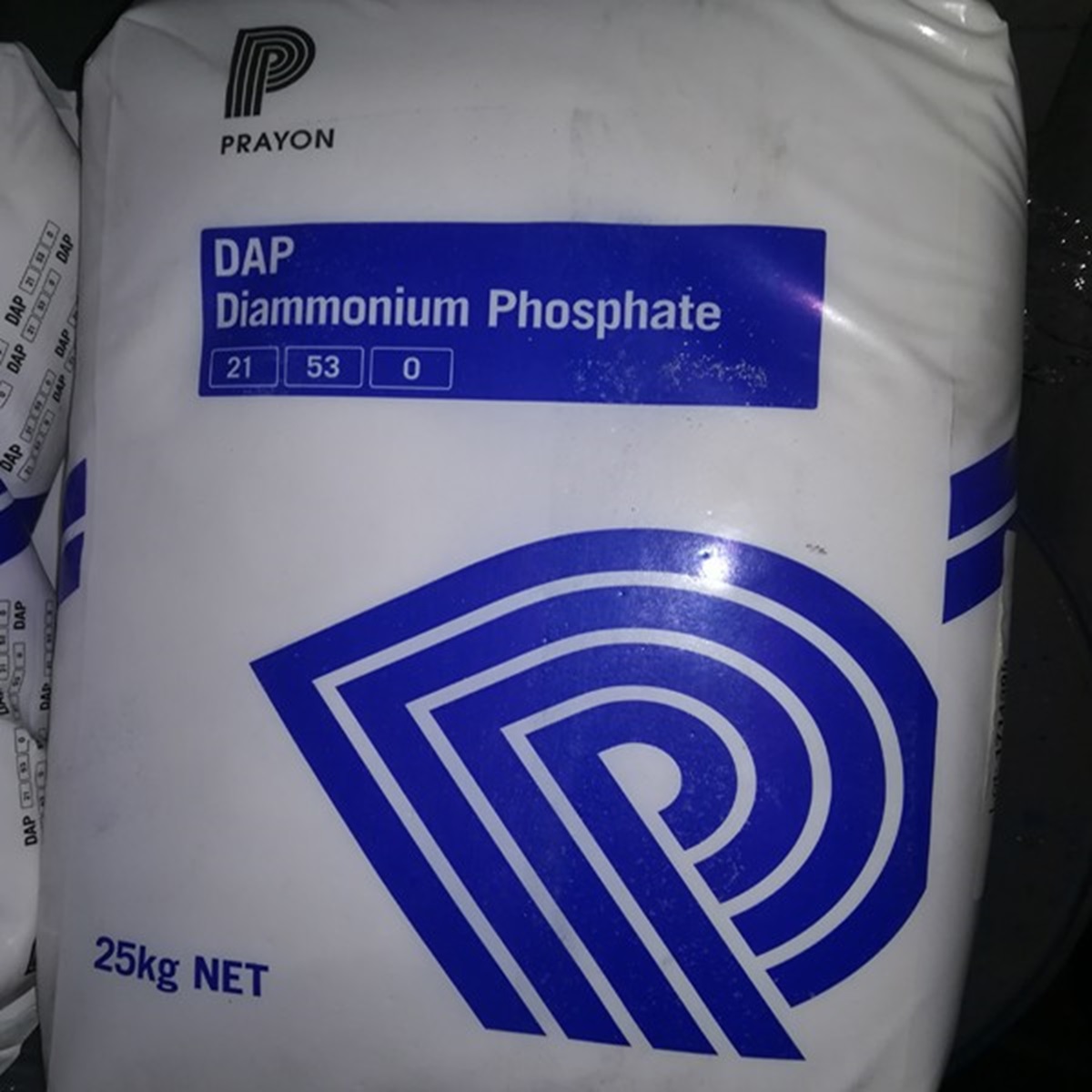
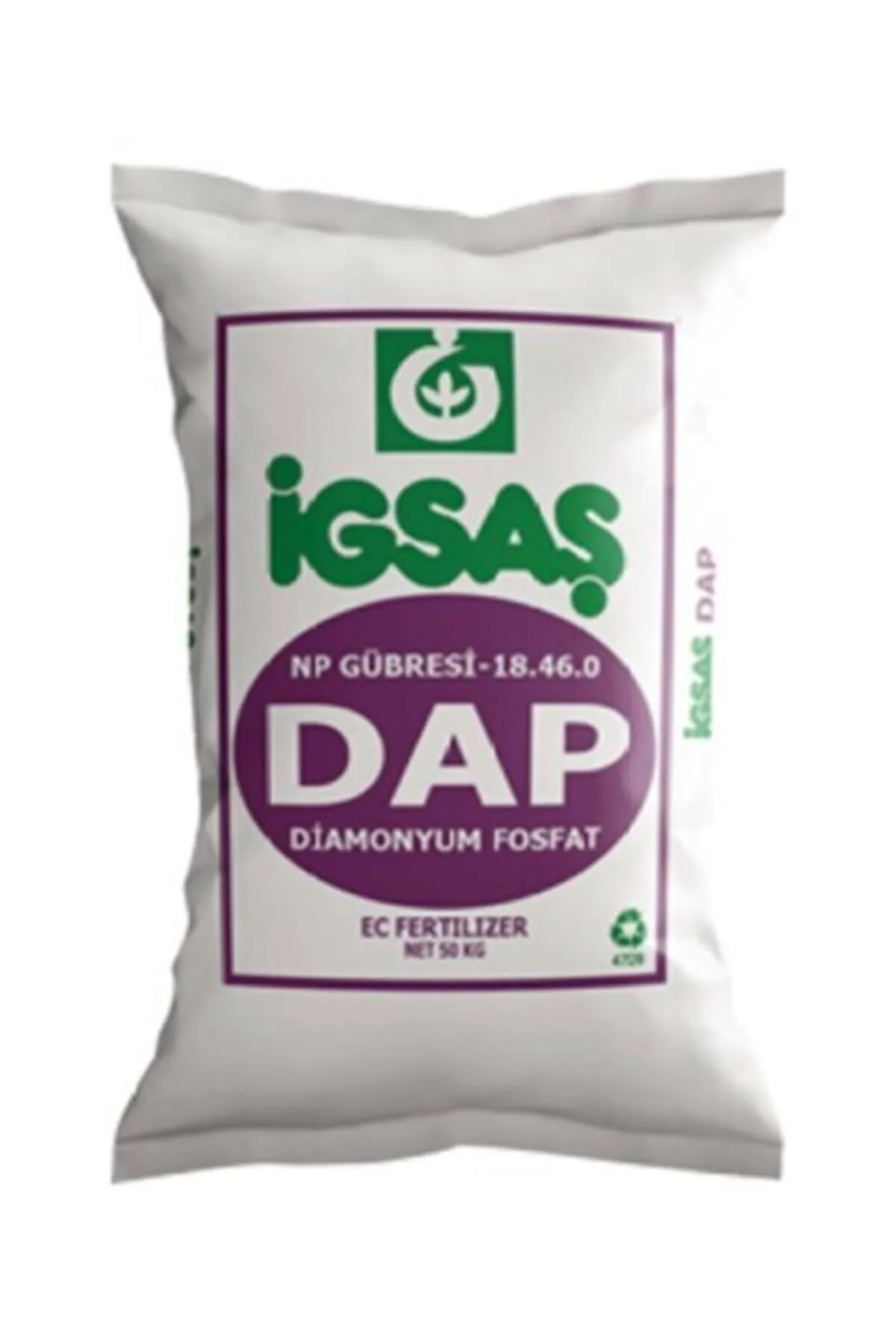
| Packaging Options | 25 kg bags (multi-layer paper/plastic), 50 kg drums, 1000 kg FIBC (big bags), bulk |
9. SAFETY & HEALTH INFORMATION
GHS Classification
| Hazard Class | Category |
|---|---|
| Skin Irritation | Category 2 (H315) |
| Serious Eye Damage | Category 1 (H318) |
| Specific Target Organ Toxicity (Inhalation) | Category 3 (H335) |
Hazard Statements (H-Codes)
| Code | Statement |
|---|---|
| H315 | Causes skin irritation |
| H318 | Causes serious eye damage |
| H335 | May cause respiratory irritation |
Precautionary Statements (P-Codes)
| Code | Statement |
|---|---|
| P261 | Avoid breathing dust |
| P264 | Wash thoroughly after handling |
| P280 | Wear protective gloves, eye protection, face protection |
| P302+P352 | IF ON SKIN: Wash with plenty of water |
| P305+P351+P338 | IF IN EYES: Rinse cautiously with water for several minutes |
| P310 | Immediately call a POISON CENTER or doctor |
Toxicological Information
| Parameter | Value |
|---|---|
| Oral LD50 (rat) | > 2,000 mg/kg (low toxicity) |
| Dermal LD50 (rabbit) | > 2,000 mg/kg |
| Skin Irritation | Mild to moderate irritant |
| Eye Irritation | Severe irritant (causes serious damage) |
| Inhalation | May cause respiratory tract irritation |
First Aid Measures
| Exposure Route | Action |
|---|---|
| Inhalation | Remove to fresh air. Seek medical attention if respiratory irritation occurs. |
| Skin Contact | Wash with plenty of water and soap for at least 15 minutes. Remove contaminated clothing. |
| Eye Contact | Rinse immediately with plenty of water for at least 15 minutes. Seek immediate medical attention. |
| Ingestion | Rinse mouth. Do NOT induce vomiting. Drink water. Seek medical attention if large amount ingested. |
Personal Protective Equipment (PPE)
| Equipment | Recommendation |
|---|---|
| Respiratory Protection | Dust mask (N95) when handling powder |
| Hand Protection | Chemical-resistant gloves (nitrile) |
| Eye Protection | Safety goggles + face shield |
| Body Protection | Lab coat or protective clothing |
10. ENVIRONMENTAL INFORMATION
| Parameter | Information |
|---|---|
| Aquatic Toxicity | Moderate; high concentrations may cause eutrophication |
| Biodegradability | Not applicable (inorganic) |
| Bioaccumulation | Not expected |
| Persistence | Inorganic – contributes to phosphorus in water bodies |
| Eutrophication Risk | Phosphorus runoff from fertilizer use can cause algal blooms |
| Waste Disposal | Dispose according to local regulations. Avoid discharge to water bodies. |
11. TRANSPORT INFORMATION
| Parameter | Information |
|---|---|
| UN Number | Not regulated (non-hazardous for transport) |
| Hazard Class | None |
| Packing Group | Not applicable |
| Marine Pollutant | No |
12. REGULATORY INFORMATION
| Region | Status |
|---|---|
| EU | REACH registered; approved as fertilizer |
| Turkey (KKDIK) | Mandatory compliance; requires registration |
| USA (TSCA) | Listed |
| Canada (DSL) | Listed |
| Australia (AICS) | Listed |
| Fertilizer Regulations | Approved as fertilizer in most countries |
| Food Additive | Not typically used as direct food additive |
13. SYNONYMS & OTHER NAMES
| Turkish Name | English Name |
|---|---|
| Diamonyum Fosfat | Diammonium Phosphate |
| Diamonyum Hidrojen Fosfat | Diammonium Hydrogen Phosphate |
| Amonyum Monohidrojen Fosfat | Ammonium Monohydrogen Phosphate |
| Amonyum Ortofosfat Dibazik | Ammonium Orthophosphate Dibasic |
| DAP | DAP |
| Fosforik Asit Diamonyum Tuzu | Phosphoric Acid Diammonium Salt |
| Dibazik Amonyum Fosfat | Dibasic Ammonium Phosphate |
Database Identifiers:
-
CAS: 7783-28-0
-
EC: 231-987-8
-
MDL: MFCD00010891
-
PubChem CID: 24540
-
RTECS: TC8570000
14. SUMMARY
Diammonium Phosphate (DAP, (NH₄)₂HPO₄, CAS 7783-28-0) is a white crystalline powder or granular fertilizer with high solubility in water. It contains 18% nitrogen (N) and 46% phosphorus (P₂O₅), making it one of the most concentrated NPK fertilizers available.
Key Features:
| Feature | Value |
|---|---|
| Appearance | White crystalline powder/granules |
| Molecular Weight | 132.06 g/mol |
| N Content | ~18% |
| P₂O₅ Content | ~46% |
| pH (1% solution) | ~8 (slightly alkaline) |
| Solubility | 69.5 g/100 g water (25°C) |
Main Application Areas:
| Sector | Applications |
|---|---|
| Agriculture | High-concentration NPK fertilizer (N 18%, P₂O₅ 46%) |
| Fire Retardant | Wood, textile, paper, plastic, rocket motor insulation |
| Wine & Beer Production | Yeast nutrient, H₂S prevention |
| Water Treatment | Nutrient for biological treatment processes |
| Textile & Furniture | Fabric and wood impregnation for durability and flame resistance |
| Chemical Industry | Buffer solutions, analytical reagent |
| Defense | Rocket motor thermal insulation |
| Animal Feed | Phosphorus and nitrogen supplement for ruminants |
Key Safety Points:
-
EYE DAMAGE – Causes serious eye damage
-
SKIN IRRITANT – Causes skin irritation
-
AMMONIA LOSS – Unstable; loses ammonia upon air exposure
-
SLIGHTLY ALKALINE – pH ~8
-
HANDLE WITH PPE – Use gloves, goggles, dust mask
15. IMPORTANT NOTES
-
High Nutrient Concentration: DAP is one of the most concentrated NPK fertilizers, containing 64% total plant nutrients (18% N + 46% P₂O₅). This reduces shipping and handling costs compared to lower-concentration fertilizers.
-
DAP vs MAP Selection: DAP (pH ~8) is recommended for neutral to acidic soils. MAP (pH ~4.5) is recommended for alkaline soils. Using DAP in alkaline soils may cause ammonia loss through volatilization.
-
Ammonia Volatilization: When applied to alkaline soils (pH > 7.5) or when mixed with lime, DAP can lose nitrogen through ammonia volatilization (NH₃ gas). Incorporate into soil immediately after application to minimize losses.
-
Wine Making Application: In winemaking, DAP is added during fermentation to provide yeast with assimilable nitrogen. Typical addition rates: 0.1-0.5 g/L of must. It prevents H₂S formation and improves fermentation efficiency.
-
Fire Retardant Mechanism: DAP acts as an intumescent flame retardant. Upon heating, it decomposes to release ammonia and form a char layer that insulates the material from heat and oxygen.
-
Instability: DAP is not fully stable. Upon exposure to air, it slowly loses ammonia (up to 8% over time), converting to monoammonium phosphate (MAP). Store in tightly sealed containers.
-
Solubility: DAP has high water solubility (69.5 g/100 g water at 25°C), making it suitable for liquid fertilizers and fertigation systems. However, this also means it is susceptible to leaching in sandy soils.
-
Eutrophication Risk: Phosphorus runoff from DAP application can contribute to eutrophication of water bodies (algal blooms). Use according to recommended rates and avoid application before heavy rain.
-
Compatibility: DAP is compatible with most fertilizers except those that are strongly alkaline (lime, calcium cyanamide). Do not mix with urea in open piles (ammonia loss).
-
Storage Temperature: Store below 30°C in dry conditions. At elevated temperatures, DAP loses ammonia more rapidly. Avoid storage near acids or strong bases.
Important Disclaimer: This Technical Data Sheet (TDS) is for informational purposes only. For complete safety, handling, storage, and regulatory compliance information, always refer to the official Safety Data Sheet (SDS) provided by the manufacturer/supplier.