We unleash your business potential by maximize the business innovation.
Send EmailBoric Acid, Orthoboric Acid, Boron Acid, Boron Hydroxide, Boron Trihydroxide, Homberg Salt, 10043-35-3, 11113-50-1
BORIC ACID (Orthoboric Acid)
1. PRODUCT DEFINITION AND CHEMICAL IDENTITY
| Parameter | Description |
|---|---|
| Chemical Name (IUPAC) | Trihydroxyborane |
| Common Name | Boric Acid, Orthoboric acid |
| Other Names | Boracic acid, Boron trihydroxide, Borofax, Homberg's salt, Hydrogen orthoborate |
| CAS Number | 10043-35-3 |
| EC Number | 233-139-2 |
| Molecular Formula | H₃BO₃ (B(OH)₃) |
| Molecular Weight | 61.83 g/mol |
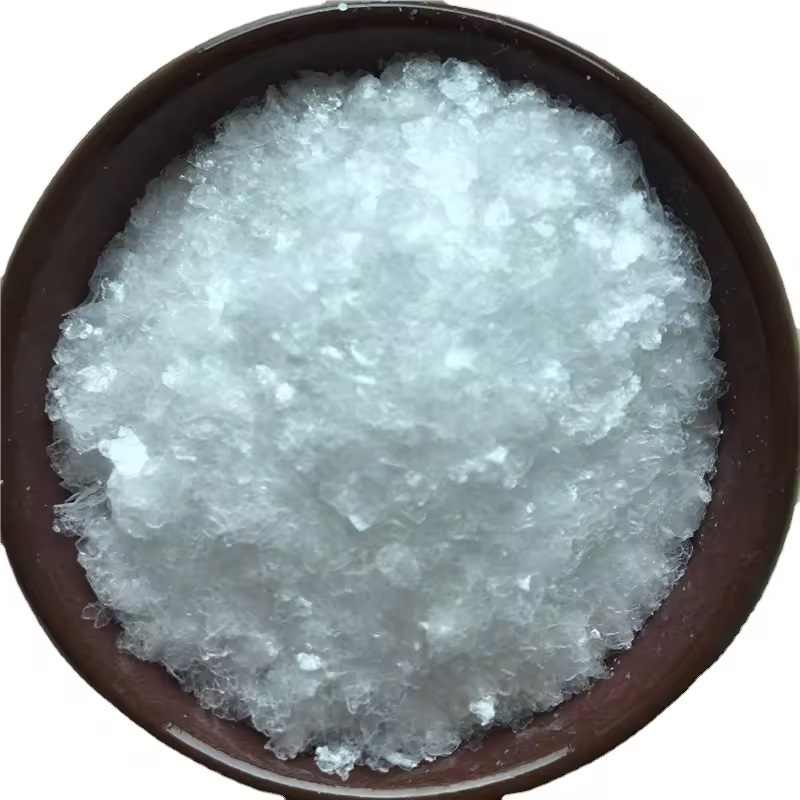
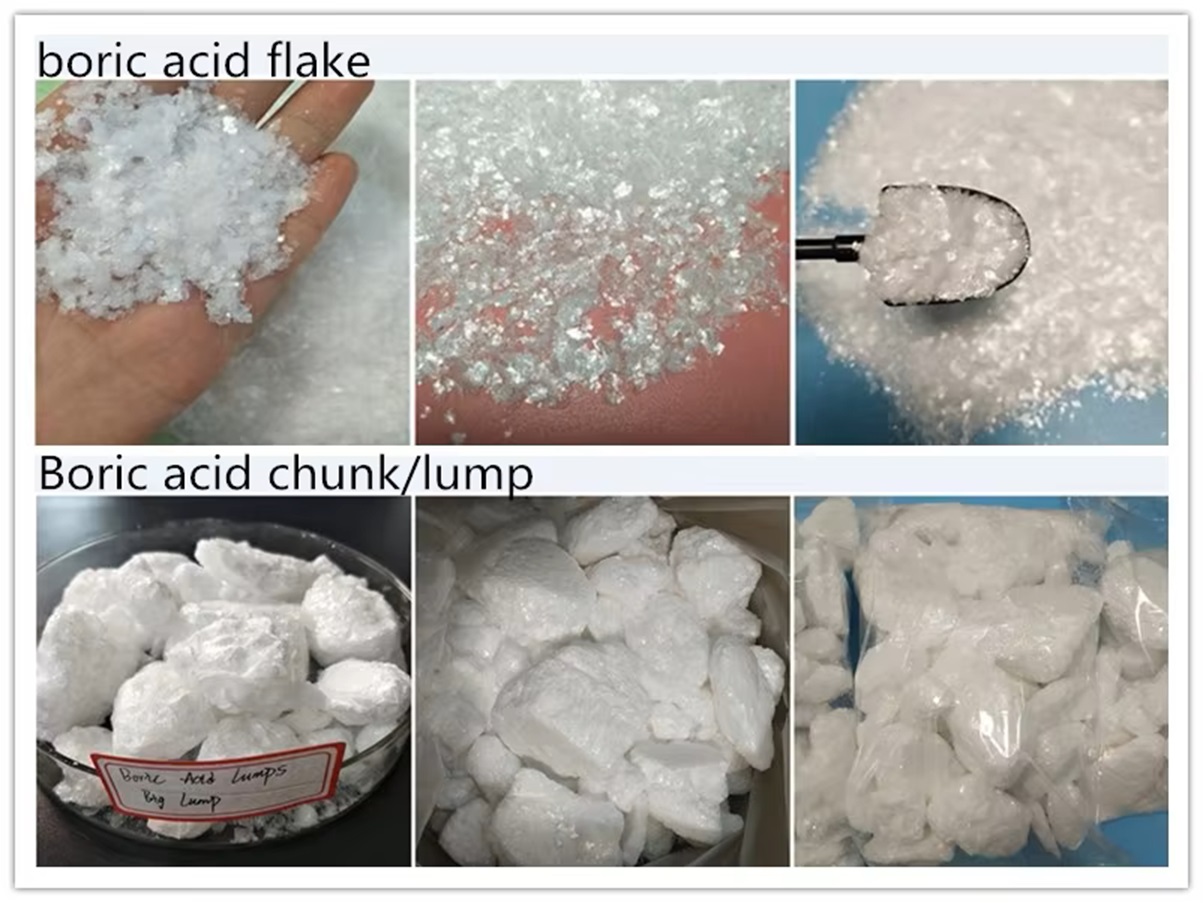
| Appearance | White crystalline powder or granules |
| Odour | Odourless |
| Taste | Slightly bitter |
Note: Boric acid is a naturally occurring boron compound. Turkey holds approximately 72% of the world's boron reserves. It is obtained from boron minerals, primarily colemanite, by reaction with sulfuric acid. It is a weak acid with mild antiseptic, antifungal, and antiviral properties.
2. PHYSICAL AND CHEMICAL PROPERTIES
| Property | Value |
|---|---|
| Physical state | White crystalline powder or granules |
| Density | 1.435 g/cm³ |
| Melting point | 171 °C |
| Boiling point | 360 °C (with decomposition) |
| Solubility in water (25 °C) | 5.74 g/100 g water |
| Solubility in hot water | Higher; solubility increases significantly with temperature |
| Solubility in methanol (25 °C) | 173.9 g/L |
| Solubility in ethanol | Soluble |
| Solubility in glycerol | Soluble |
| Vapour pressure (20 °C) | Negligible |
| pH (1% aqueous solution, 25 °C) | ~5.1 (weakly acidic) |
| pKa (25 °C) | 9.24 (acts as a Lewis acid) |
| Partition coefficient (log P) | Low (hydrophilic character) |
| NFPA 704 | Health: 1, Flammability: 0, Reactivity: 0 |
3. THERMAL BEHAVIOUR
| Temperature | Behaviour |
|---|---|
| Up to 100 °C | Stable in air |
| Above 100 °C | Begins to decompose, losing water |
| Continued heating | Forms metaboric acid (HBO₂), then boric anhydride (B₂O₃) and water |
4. FUNCTIONAL PROPERTIES
-
Weak acid / Buffering agent: Forms borate ions in aqueous solution; together with borax, creates buffer systems across a wide pH range.
-
Antimicrobial / Antiseptic: Effective against bacteria (Staphylococcus aureus, Listeria monocytogenes), fungi, and viruses.
-
Pesticide: Corrosive and dehydrating effect on insect exoskeletons; also acts as a stomach poison when ingested.
-
Fire retardant: Releases water when heated and promotes cellulose dehydration, preventing flame spread.
-
Flux: Dissolves metal oxides, facilitating soldering and welding processes.
-
Micronutrient source: Essential boron source for plants; component of boron-molybdenum fertilisers.
-
Glass and ceramic additive: Increases thermal resistance; regulates viscosity and reduces crystallisation.
5. ALTERNATIVE NAMES AND SYNONYMS (Comprehensive List)
-
Boric acid (fundamental English name)
-
Boracic acid (common English)
-
Orthoboric acid (IUPAC)
-
Trihydroxyborane / Boron trihydroxide (chemical description)
-
Hydrogen orthoborate
-
Homberg's salt (historical name)
-
Trade names: Borofax, Optibor, Optibor TP, BorActin, Basilit B, Niban, Entimaden, CB BORiD, PS 1002
-
Pesticide trade names: Roach Prufe, Flea Prufe, Niban-FG, Niban Granular Bait, Roach Away, Bushwhacker, Super Flea Eliminator, Dia Flea-Mate
-
NSC 81726 (National Chemical Substance code)
6. PRODUCTION PROCESS
Boric acid is obtained primarily from boron minerals, chiefly colemanite (Ca₂B₆O₁₁·5H₂O).
Main Reaction:
2Ca₂B₆O₁₁·5H₂O + 4H₂SO₄ + 17H₂O → 4CaSO₄·2H₂O (gypsum) + 6H₃BO₃ (boric acid)
Production Stages:
-
Crushing and grinding of the ore
-
Controlled reaction with sulfuric acid
-
pH and temperature adjustment
-
Filtration to separate gypsum
-
Crystallisation and purification
-
Drying and packaging
7. SECTORAL APPLICATIONS, USAGE RATES, AND EXAMPLE FORMULATIONS
| Sector | Purpose | Typical Usage Rate / Notes |
|---|---|---|
| Cleaning & Detergents | Natural cleaner; detergent additive; stain remover | 2–10% solution; 5–15% addition in powder detergents |
| Pesticide / Pest Control | Controls ants, cockroaches, termites, fleas, silverfish | Dust as thin layer; bait with sugar (5–10%); 1–2% aqueous solution |
| Glass & Ceramics | Heat-resistant glass (Pyrex type), fibreglass, ceramic glazes, enamel | 2–10% of batch weight; fibreglass 5–8% B₂O₃ addition |
| Metal Processing | Soldering paste, welding flux, steel hardening, electrolysis baths | Jeweller's flux: 30–50%; steel hardening: 5–10% |
| Wood Preservation | Fungal prevention, fire retardant, insect repellent | 10% solution in water; apply 2–3 coats by brush |
| Pharmaceutical & Medical | Antiseptic, eye wash (1–2%), vaginal infection treatment, haemorrhoid sitz bath | Eye wash: 1–2%; vaginal suppository: 600 mg; sitz bath: 1–2 tbsp/L |
| Cosmetics & Personal Care | Preservative, deodorant, slime activator | 0.1–1% (subject to cosmetic regulations); traces as activator for slime |
| Chemistry Laboratory | Buffer solution; pH indicator; primary standard in titrimetry | 1–5% buffer stock solution |
| Agriculture | Boron-molybdenum fertilisers; micronutrient; fungal infection prevention | Soil: 5–15 kg/ha; foliar: 0.1–0.3% solution |
| Industrial | Fibreglass binder; oil/gas hydraulic fracturing fluid; nuclear coolant additive; grease production | Fibreglass: 3–8%; fracturing fluid crosslinker: 0.1–0.5% |
| Nanotechnology | Additive in nanomaterial synthesis; surface modification; nanocrystal stabilisation | Application-specific; trace to percentage levels |
Example Formulations:
-
Simple Eye Wash Solution (2%):
-
Boric acid: 2 g
-
Sterile purified water: 100 mL
Dissolve boric acid in hot water, cool, and filter into a sterile bottle. For external use only.
-
-
Cockroach Control Bait:
-
Boric acid: 10%
-
Powdered sugar: 45%
-
Flour: 45%
Place in small shallow trays in dry areas. Keep away from children and pets.
-
-
Wood Preservation Impregnation Solution:
-
Boric acid: 100 g
-
Borax (decahydrate): 100 g
-
Water: 1 L
Dissolve thoroughly; apply to wood by brush or dipping. Apply a second coat after drying.
-
-
Metal Soldering Flux (Jeweller's Type):
-
Boric acid: 50 g
-
Borax: 30 g
-
Water: 30 mL (to form a paste)
Apply a thin layer to the metal surface during soldering.
-
8. ALTERNATIVES AND COMPARISON
| Alternative | Type | Advantage / Disadvantage |
|---|---|---|
| Borax (Sodium tetraborate) | Alkaline boron salt | Higher pH (~9.2); more common in detergents and cleaning; boric acid is more acidic |
| Sodium percarbonate | Oxygen-based bleach | Suitable for coloured laundry; more expensive than boric acid |
| Sodium bicarbonate | Mild alkali | Food compatible, safer; weaker antimicrobial effect than boric acid |
| White vinegar | Acidic cleaner | Effective on limescale and rust; no pesticidal properties |
| Citric acid | Organic acid | Environmentally friendly, food compatible; ineffective in pest control |
| Diatomaceous earth | Physical pesticide | Mechanical insect control; no chemical toxicity, but ineffective when wet |
9. REGULATORY STATUS, SAFETY, AND ENVIRONMENT
-
GHS Classification (CLP Regulation):
-
Signal word: Danger
-
Hazard statements:
-
H360FD: May damage fertility. May damage the unborn child.
-
-
Precautionary statements: P201, P202, P280, P308+P313, P405, P501.
-
-
NFPA 704: Health: 1, Flammability: 0, Reactivity: 0.
-
Food additive (E284): Historically used, but now banned as a food additive in most countries. Ingestion can cause toxic effects.
-
Cosmetic use: The EU Cosmetics Regulation restricts boron compounds. Only permitted in specific product categories and within limit values.
-
Pharmaceutical use: Permitted in prescription and OTC products for specific indications; overdose must be avoided.
-
Environmental impact: Naturally occurring in the earth's crust; however, toxic to aquatic life and plant growth at high concentrations. Do not discharge into drains or watercourses.
-
Storage: Keep in a cool, dry, well-ventilated area in tightly sealed containers. Keep out of reach of children and pets. Store separately from food and feedstuffs.
-
Personal protection: Avoid breathing dust; wear protective gloves and goggles. In case of skin contact, wash with plenty of water.
10. TOXICOLOGICAL PROFILE (Summary)
| Parameter | Value / Description |
|---|---|
| Acute oral toxicity (LD50, rat) | ~2,660 – 5,140 mg/kg |
| Acute dermal toxicity (LD50, rabbit) | > 2,000 mg/kg |
| Skin irritation | Mild irritant |
| Eye irritation | Moderate irritant |
| Inhalation | Dust may cause respiratory irritation |
| Chronic effects (high dose) | Adverse effects on nervous system, kidneys, and liver; may damage fertility |
| Symptoms (overexposure) | Nausea, vomiting, diarrhoea, skin rash, headache, shock |
| Aquatic toxicity | Toxic to fish and aquatic organisms |
11. FREQUENTLY ASKED QUESTIONS
Q1. Are boric acid and borax the same?
No. Boric acid (H₃BO₃) is a weak acid; borax (Na₂B₄O₇·10H₂O) is the sodium tetraborate salt. Boric acid has a more acidic character (pH ~5), while borax is alkaline (pH ~9). Their chemical and physical properties and application areas differ.
Q2. Is boric acid safe for the eyes?
Yes, at low concentration (1–2%) as a sterile solution, it is used in eye washes and contact lens solutions. However, higher concentrations are irritant. Always use pharmacy-quality, sterile product.
Q3. How does boric acid kill insects?
It acts in two ways: (1) It has a corrosive effect on the insect exoskeleton, causing them to lose water (dehydration). (2) When ingested, it acts as a stomach poison, affecting the nervous system.
Q4. Is boric acid carcinogenic?
According to available data, boric acid is not classified as carcinogenic. Some in vitro studies have even shown anti-proliferative effects (inhibiting cancer cell growth); however, further research is needed.
Q5. Can boric acid be used during pregnancy?
No. Boric acid is classified as H360FD (May damage fertility. May damage the unborn child). The use of products containing boric acid is not recommended during pregnancy and breastfeeding.
Q6. How should boric acid be stored?
Store in a cool, dry, well-ventilated area in the original tightly sealed container. Protect from moisture. Keep away from foodstuffs and out of reach of children.
Q7. Which metals are incompatible with boric acid?
Boric acid can react slowly with base metals (zinc, aluminium, iron), especially in moist environments. Stainless steel, plastic (PE, PP), or glass containers are recommended for storage.
12. QUICK REFERENCE TABLE
| Property | Value |
|---|---|
| CAS | 10043-35-3 |
| Formula | H₃BO₃ |
| Molecular weight | 61.83 g/mol |
| Appearance | White crystalline powder |
| Melting point | 171 °C |
| Boiling point | 360 °C |
| pH (1% aq.) | ~5.1 (weakly acidic) |
| Water solubility | 5.74 g/100 mL (25 °C) |
| Main uses | Pesticide, glass, buffer, antiseptic, fire retardant |
| Hazard warning | May damage fertility and the unborn child (H360FD) |