We unleash your business potential by maximize the business innovation.
Send EmailSodium Carbonate, Disodium Carbonate, Heavy Soda, Sodium Carbonate Anhydrous, Soda Crystal, Soda Ash, E500, 497-19-8, 7542-12-3
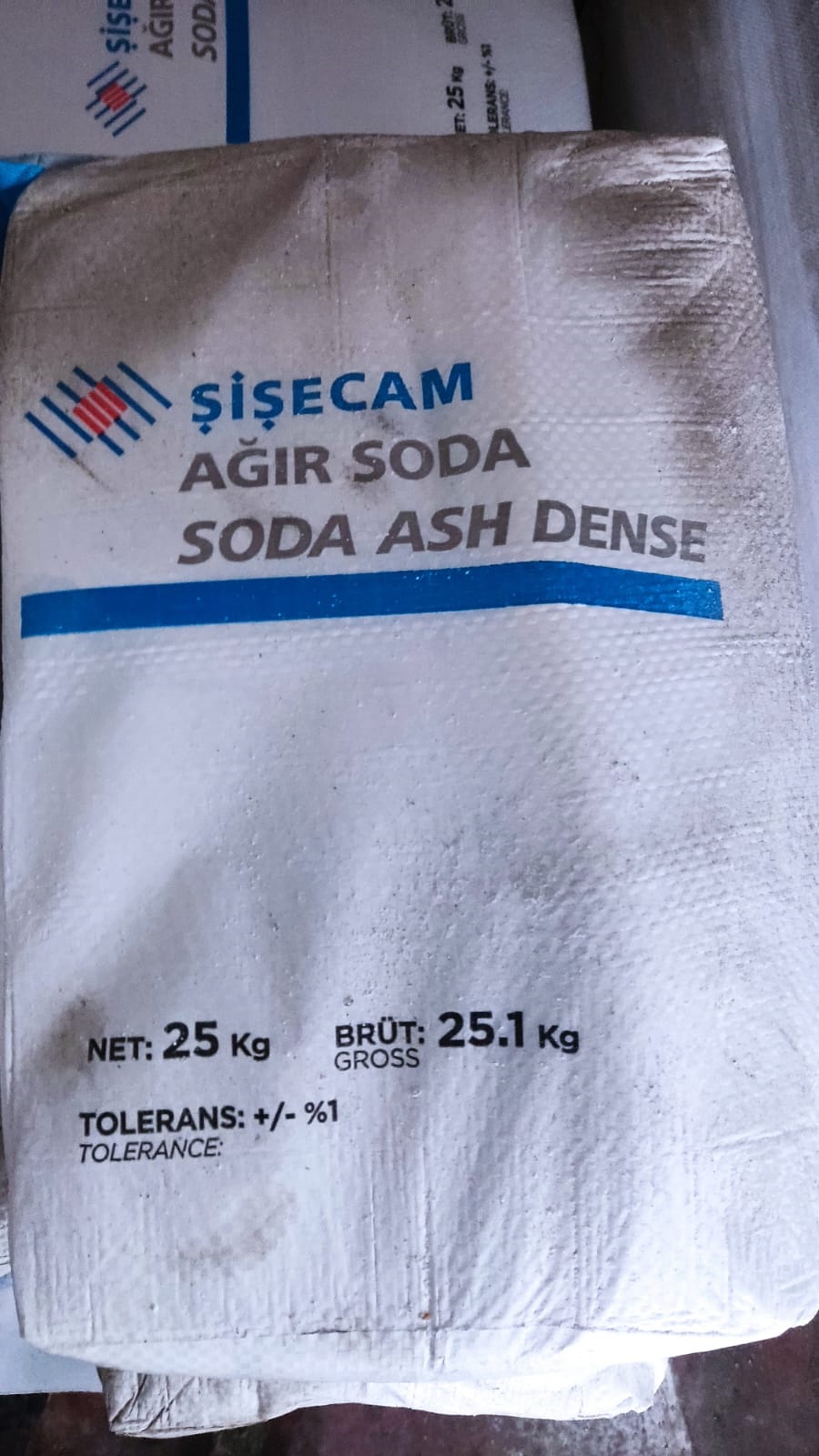
SODIUM CARBONATE (DENSE SODA ASH)
Soda Ash / Sodium Carbonate / Disodium Carbonate / E500
CAS Number: 497-19-8
EC Number: 207-838-8
1. IDENTIFICATION
| Property | Information |
|---|---|
| Chemical Name | Sodium Carbonate |
| Synonyms | Soda ash, Dense soda ash, Disodium carbonate, Calcined soda, E500 |
| Chemical Formula | Na₂CO₃ |
| Molecular Weight | 105.99 g/mol |
| CAS Number | 497-19-8 |
| EC Number (EINECS) | 207-838-8 |
| E Number | E500 (Food additive – acidity regulator) |
| Appearance | White granular powder |
| Odor | Odorless |
2. PHYSICAL PROPERTIES
| Property | Dense Soda Ash | Light Soda Ash |
|---|---|---|
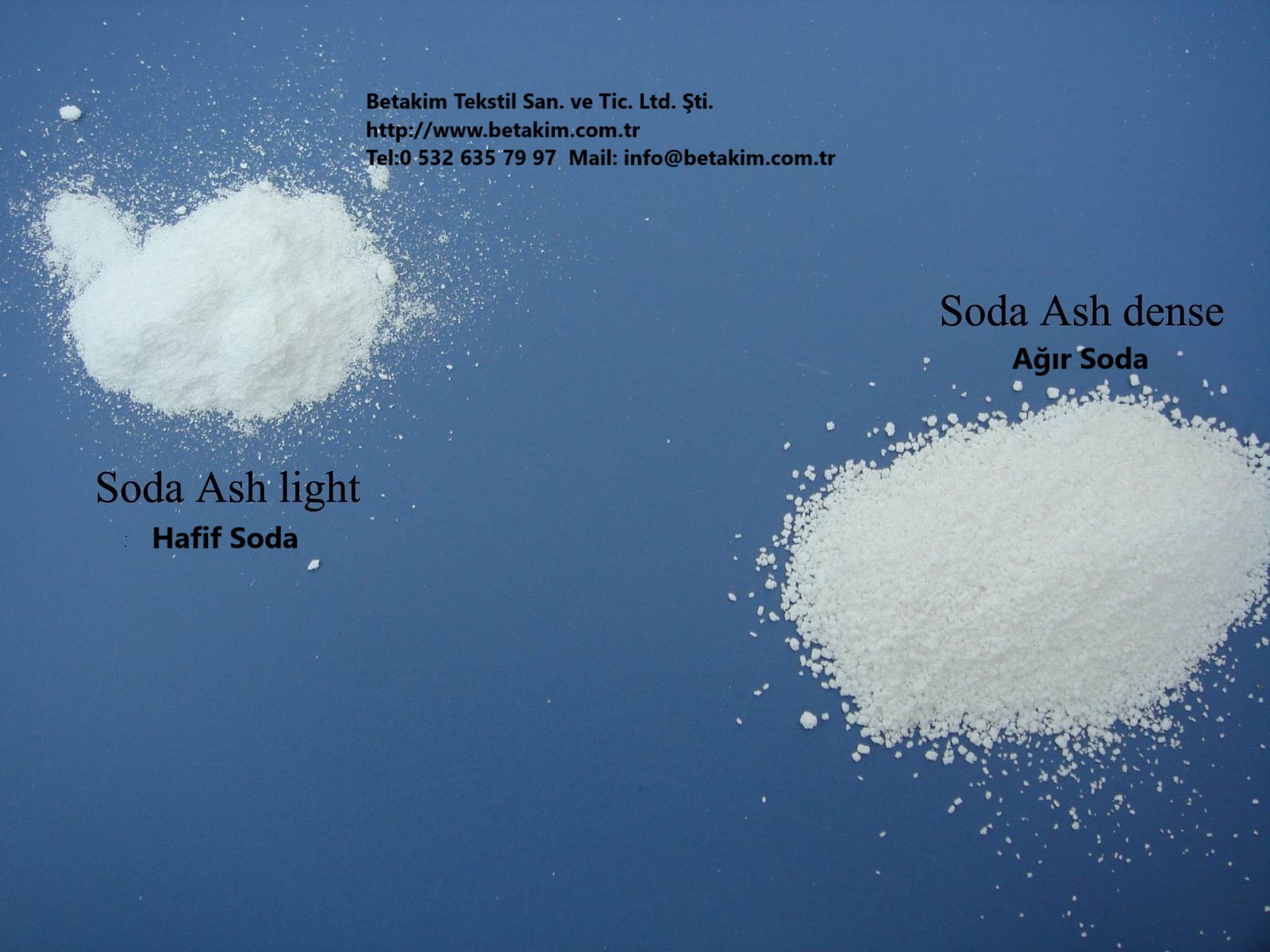
| Physical State (20°C) | Solid (granular) | Solid (powder) |
| Appearance | White granules | White powder |
| Bulk Density | ~1.0 g/cm³ | ~0.5 g/cm³ |
| Particle Size | 0.2 – 1.5 mm | < 0.2 mm |
| Molecular Weight | 105.99 g/mol | 105.99 g/mol |
| Melting Point | 851 °C (1,564 °F) | 851 °C (1,564 °F) |
| Decomposition Temperature | 1,600 °C (2,912 °F) | 1,600 °C (2,912 °F) |
| Density (20°C) | 2.54 g/cm³ | 2.54 g/cm³ |
| Solubility in Water (20°C) | ~22 g/100 mL | ~22 g/100 mL |
| Solubility in Water (100°C) | ~45 g/100 mL | ~45 g/100 mL |
| pH (1% solution) | 11.2 – 11.6 (strongly alkaline) | 11.2 – 11.6 (strongly alkaline) |
| Hygroscopicity | Hygroscopic (absorbs moisture) | Very hygroscopic |
| Angle of Repose | ~35-40° | ~45-50° |
3. CHEMICAL PROPERTIES
| Property | Information |
|---|---|
| Chemical Formula | Na₂CO₃ |
| Molecular Weight | 105.99 g/mol |
| Sodium Oxide (Na₂O) Content | ~58.5% |
| Carbon Dioxide (CO₂) Content | ~41.5% |
| pH (1% solution) | 11.2 – 11.6 (strongly alkaline) |
| Stability | Stable under normal conditions |
| Hygroscopicity | Hygroscopic – absorbs moisture from air, may form lumps |
| Reaction with Water | Exothermic (releases heat) |
| Reaction with Acids | Neutralizes acids, releases CO₂ gas |
| Incompatible Materials | Strong acids (releases CO₂), aluminum (corrosive), fluorine |
Reaction with Water (Exothermic):
Na₂CO₃ + H₂O → 2 Na⁺ + CO₃²⁻ + Heat
Reaction with Acids:
Na₂CO₃ + 2 HCl → 2 NaCl + H₂O + CO₂↑
Thermal Decomposition:
Na₂CO₃ → Na₂O + CO₂↑ (above 1,600°C)
4. COMPARISON: DENSE SODA ASH vs LIGHT SODA ASH
| Property | Dense Soda Ash | Light Soda Ash |
|---|---|---|
| Bulk Density | ~1.0 g/cm³ | ~0.5 g/cm³ |
| Particle Size | 0.2 – 1.5 mm | < 0.2 mm (fines) |
| Flowability | Good (free-flowing) | Poor (dusty) |
| Dust Generation | Low | High |
| Angle of Repose | 35-40° | 45-50° |
| Preferred Applications | Glass manufacturing, detergents | Chemicals, food, laboratory |
| Storage | Easier (less caking) | Tends to cake |
| Handling | Pneumatic conveying suitable | Dust control required |
5. PRODUCTION PROCESS (Solvay Process)
| Stage | Description |
|---|---|
| 1. Brine Purification | Sodium chloride (NaCl) brine is purified to remove calcium and magnesium |
| 2. Ammoniation | Purified brine is saturated with ammonia (NH₃) |
| 3. Carbonation | Ammoniated brine is reacted with carbon dioxide (CO₂) to precipitate sodium bicarbonate (NaHCO₃) |
| 4. Filtration | Sodium bicarbonate crystals are separated |
| 5. Calcination | Sodium bicarbonate is heated to produce sodium carbonate: 2 NaHCO₃ + Heat → Na₂CO₃ + H₂O + CO₂↑ |
| 6. Dense Granulation | For dense soda ash, the product is further processed to increase bulk density (~1.0 g/cm³) |
| 7. Packaging | Product is packaged |
Alternative Natural Source (Trona Ore):
-
Trona ore (Na₂CO₃·NaHCO₃·2H₂O) is mined and processed
-
Turkey (Eti Soda) is a major producer using trona ore
-
USA (Wyoming) is also a major producer
6. APPLICATIONS
6.1. Glass Manufacturing (Largest Use – ~50%)
| Application | Function |
|---|---|
| Flat Glass (Window Glass) | Lowers melting temperature, provides sodium ions for silicate formation |
| Container Glass (Bottles, Jars) | Fluxing agent, reduces energy consumption |
| Fiberglass | Raw material for glass fibers |
| Specialty Glass | Component in glass formulations |
Glass Batch Composition:
-
60-70% Silica sand (SiO₂)
-
12-18% Soda ash (Na₂CO₃)
-
10-15% Limestone (CaCO₃)
-
Other additives
Function in Glass: Reduces melting temperature from 1,700°C to 1,100-1,200°C
6.2. Detergent & Soap Industry (Second Largest – ~25%)
| Application | Function |
|---|---|
| Laundry Detergents | Builder (water softener), alkalinity source, stain removal |
| Automatic Dishwashing Detergents | Water softener, pH buffer, cleaning agent |
| Soap Manufacturing | Saponification agent, hardness control |
| Industrial Cleaners | Alkaline cleaning agent |
Function as Builder:
-
Removes calcium (Ca²⁺) and magnesium (Mg²⁺) ions from hard water
-
Prevents soap scum formation
-
Improves detergency
6.3. Chemical Industry
| Application | Function |
|---|---|
| Sodium Silicate Production | Na₂CO₃ + SiO₂ → Na₂SiO₃ + CO₂ |
| Sodium Bicarbonate Production | Na₂CO₃ + CO₂ + H₂O → 2 NaHCO₃ |
| Sodium Phosphate Production | Raw material for phosphates |
| Sodium Chromate Production | Raw material for chromates |
| Other Sodium Compounds | Precursor for various sodium salts |
6.4. Water Treatment
| Application | Function |
|---|---|
| pH Adjustment | Raises pH of acidic water |
| Water Softening | Removes calcium and magnesium hardness |
| Flue Gas Desulfurization | Neutralizes SO₂ in power plant emissions |
| Wastewater Treatment | Neutralization of acidic effluents |
| Swimming Pools | pH increaser |
6.5. Textile Industry
| Application | Function |
|---|---|
| Dyeing | pH adjustment, dye fixation |
| Mercerization | Treatment of cotton with caustic soda (soda ash as source) |
| Scouring | Removal of natural impurities from fibers |
| Bleaching | pH control |
6.6. Pulp & Paper Industry
| Application | Function |
|---|---|
| Kraft Pulping | Chemical recovery (as sodium source) |
| Paper Coating | pH adjustment |
| De-inking | In recycling processes |
6.7. Food Industry (E500)
| Application | Function |
|---|---|
| Acidity Regulator (E500) | Adjusts pH in food products |
| Leavening Agent | Component of baking powder (with acid) |
| Cocoa Processing | Alkalization of cocoa powder |
| Noodle Production | Improves texture |
| Cheese Production | pH adjustment |
6.8. Other Applications
| Application | Function |
|---|---|
| Metallurgy | Flux in smelting, ore flotation |
| Foundry | Binder in casting sands |
| Drilling Fluids | pH control in oil/gas drilling |
| Rubber Industry | Anti-caking agent |
| Leather Tanning | pH adjustment, deliming |
| Pool Chemicals | pH increaser |
| Photography | Component in developing solutions |
7. QUALITY SPECIFICATIONS (DENSE SODA ASH – TYPICAL)
| Parameter | Value |
|---|---|
| Purity (Na₂CO₃) | ≥ 99.2% |
| Sodium Chloride (NaCl) | ≤ 0.2% |
| Sodium Sulfate (Na₂SO₄) | ≤ 0.05% |
| Iron (Fe) | ≤ 0.002% |
| Water Insolubles | ≤ 0.02% |
| Moisture | ≤ 0.5% |
| Bulk Density | 0.95 – 1.10 g/cm³ |
| Particle Size (min 95% passing) | 0.2 – 1.5 mm |
| Whiteness | ≥ 85% |
| pH (1% solution) | 11.2 – 11.6 |
8. STORAGE & HANDLING
| Parameter | Information |
|---|---|
| Storage Conditions | Cool, dry, well-ventilated area |
| Container Requirements | Tightly closed, moisture-proof containers (HDPE, lined drums, silos) |
| Protect From | Moisture (causes caking), strong acids (CO₂ release), aluminum (corrosion) |
| Shelf Life | 12-24 months (when stored properly in unopened packaging) |
| Hygroscopicity | Hygroscopic – absorbs moisture from air, leading to caking |
| Incompatible Materials | Strong acids, aluminum, fluorine, magnesium |
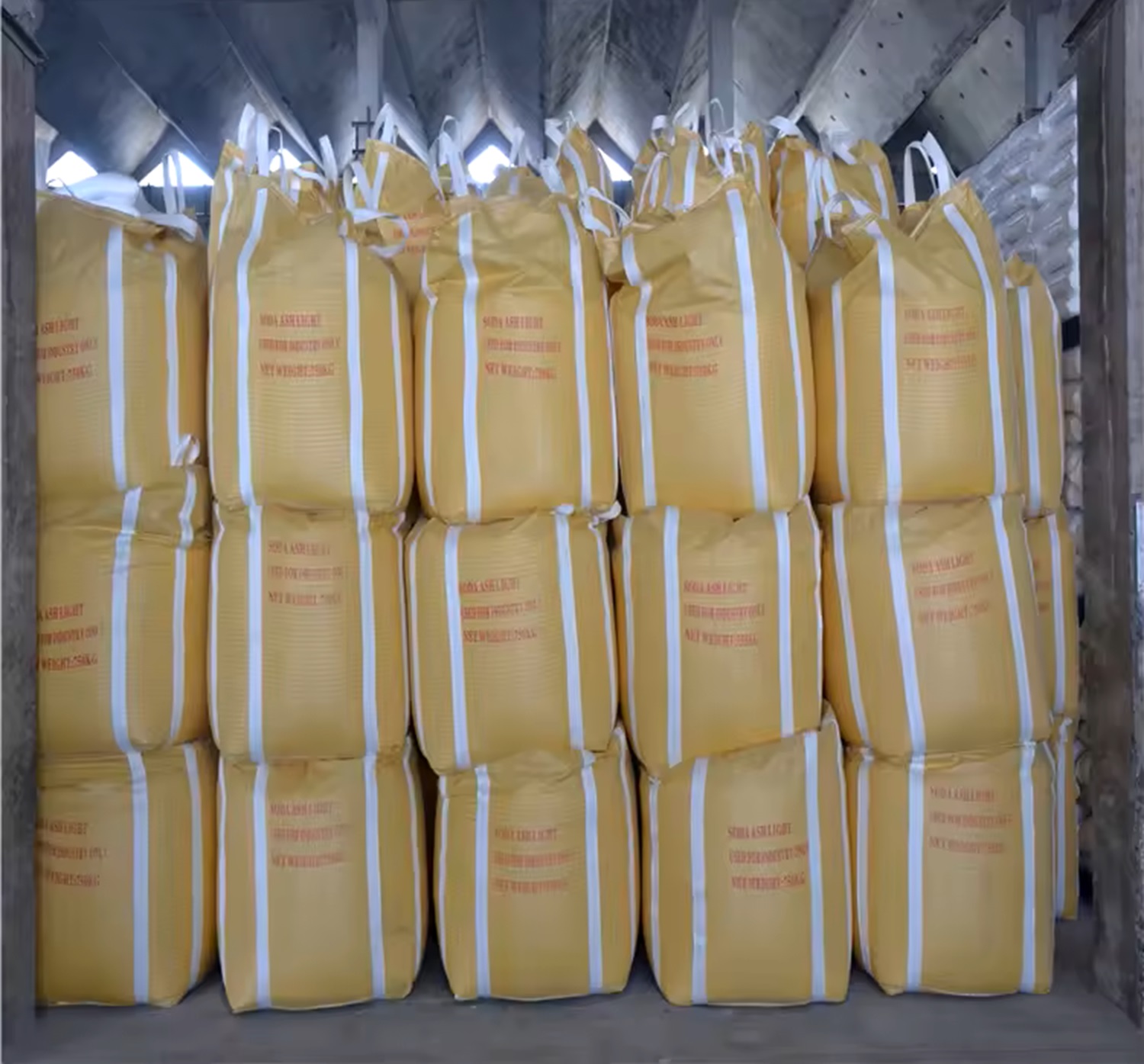
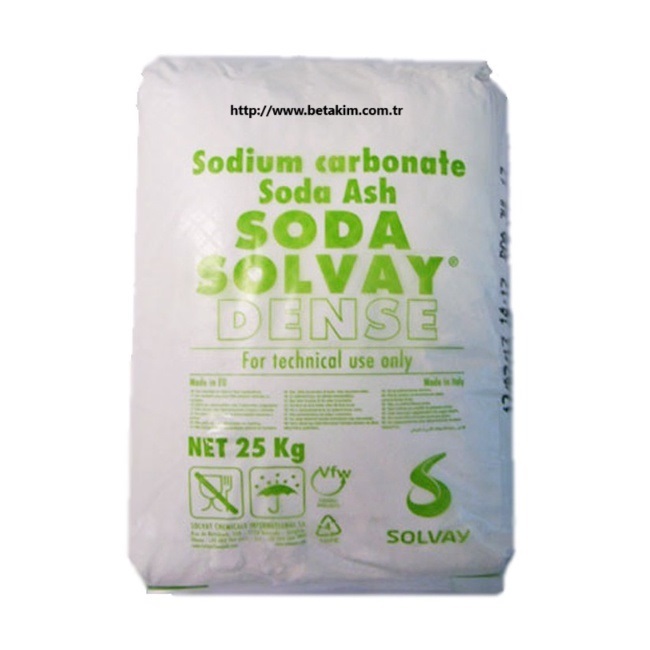
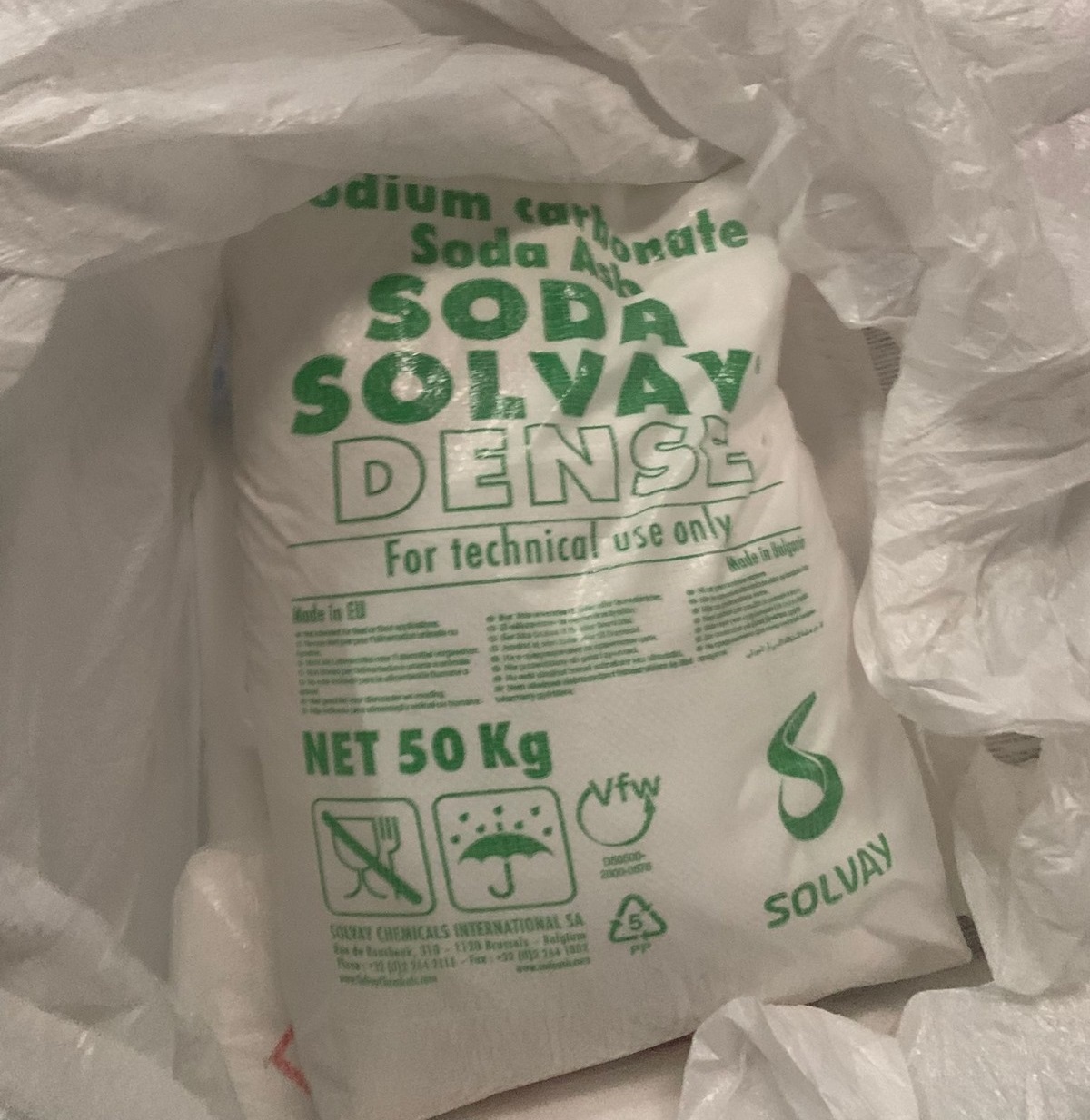
| Packaging Options (Dense) | 25 kg bags, 50 kg bags, 1000 kg FIBC (big bags), bulk tankers, silos |
| Packaging Options (Light) | 25 kg bags, 50 kg bags, FIBC |
9. SAFETY & HEALTH INFORMATION
GHS Classification
| Hazard Class | Category |
|---|---|
| Serious Eye Damage | Category 1 (H318) |
| Skin Irritation | Category 2 (H315) |
Hazard Statements (H-Codes)
| Code | Statement |
|---|---|
| H315 | Causes skin irritation |
| H318 | Causes serious eye damage |
Precautionary Statements (P-Codes)
| Code | Statement |
|---|---|
| P261 | Avoid breathing dust |
| P264 | Wash thoroughly after handling |
| P280 | Wear protective gloves, eye protection, face protection |
| P302+P352 | IF ON SKIN: Wash with plenty of water |
| P305+P351+P338 | IF IN EYES: Rinse cautiously with water for several minutes |
| P310 | Immediately call a POISON CENTER or doctor |
Toxicological Information
| Parameter | Value |
|---|---|
| Oral LD50 (rat) | ~4,000 mg/kg (low toxicity) |
| Dermal LD50 (rabbit) | > 2,000 mg/kg |
| Skin Irritation | Mild to moderate irritant |
| Eye Irritation | Severe irritant (causes serious damage) |
First Aid Measures
| Exposure Route | Action |
|---|---|
| Inhalation | Remove to fresh air. Seek medical attention if respiratory irritation occurs. |
| Skin Contact | Wash with plenty of water for at least 15 minutes. Remove contaminated clothing. |
| Eye Contact | Rinse immediately with plenty of water for at least 15 minutes. Seek immediate medical attention. |
| Ingestion | Rinse mouth. Do NOT induce vomiting. Drink water. Seek medical attention if large amount ingested. |
Personal Protective Equipment (PPE)
| Equipment | Recommendation |
|---|---|
| Respiratory Protection | Dust mask (N95) when handling powder |
| Hand Protection | Chemical-resistant gloves (nitrile) |
| Eye Protection | Safety goggles + face shield |
| Body Protection | Lab coat or protective clothing |
10. ENVIRONMENTAL INFORMATION
| Parameter | Information |
|---|---|
| Aquatic Toxicity | Low to moderate; high pH may harm aquatic life |
| Biodegradability | Not applicable (inorganic) |
| Bioaccumulation | Not expected |
| Persistence | Inorganic – does not degrade; neutralizes in natural waters |
| Waste Disposal | Dispose according to local regulations. Neutralize acids before discharge. |
11. TRANSPORT INFORMATION
| Parameter | Information |
|---|---|
| UN Number | Not regulated (non-hazardous for transport) |
| Hazard Class | None |
| Packing Group | Not applicable |
| Marine Pollutant | No |
12. REGULATORY INFORMATION
| Region | Status |
|---|---|
| EU | REACH registered; E500 approved as food additive |
| Turkey (KKDIK) | Mandatory compliance; requires registration |
| USA (TSCA) | Listed |
| Canada (DSL) | Listed |
| Australia (AICS) | Listed |
| FDA | GRAS (Generally Recognized as Safe) – 21 CFR 184.1742 |
| Food Additive | E500 approved worldwide |
13. DENSE vs LIGHT SODA ASH – SELECTION GUIDE
| Application | Recommended Grade | Reason |
|---|---|---|
| Glass Manufacturing | Dense | Good flowability, low dust, suitable for batch mixing |
| Detergent Powders | Dense | Good bulk density, flowability |
| Chemical Synthesis | Light | Higher surface area, faster dissolution |
| Food Industry (E500) | Light | Fine particle size, fast dissolution |
| Water Treatment | Light | Fast dissolution |
| Pneumatic Conveying | Dense | Less dust, better flow |
| Bulk Storage (Silos) | Dense | Less caking, better flow |
14. SYNONYMS & OTHER NAMES
| Turkish Name | English Name |
|---|---|
| Ağır Soda | Dense Soda Ash |
| Hafif Soda | Light Soda Ash |
| Soda Külü | Soda Ash |
| Soda Kristali | Soda Crystal |
| Disodyum Karbonat | Disodium Carbonate |
| E500 | E500 |
| Kalsine Soda | Calcined Soda |
Database Identifiers:
-
CAS: 497-19-8
-
EC: 207-838-8
-
E Number: E500
-
MDL: MFCD00003494
-
PubChem CID: 10340
-
RTECS: VZ4050000
15. SUMMARY
Sodium Carbonate (Dense Soda Ash, Na₂CO₃, CAS 497-19-8, E500) is a white granular powder, highly soluble in water, and strongly alkaline. Dense soda ash has a bulk density of ~1.0 g/cm³, making it suitable for applications requiring good flowability and low dust.
Key Features:
| Feature | Dense Soda Ash | Light Soda Ash |
|---|---|---|
| Bulk Density | ~1.0 g/cm³ | ~0.5 g/cm³ |
| Particle Size | 0.2 – 1.5 mm | < 0.2 mm |
| Flowability | Good | Poor |
| Dust | Low | High |
Main Application Areas:
| Sector | Applications |
|---|---|
| Glass Manufacturing | Flat glass, container glass, fiberglass |
| Detergent Industry | Laundry detergents, dishwashing detergents, soaps |
| Chemical Industry | Sodium silicate, sodium bicarbonate, sodium phosphates |
| Water Treatment | pH adjustment, water softening, flue gas desulfurization |
| Food Industry | E500 (acidity regulator, leavening agent) |
| Textile | Dyeing, mercerization, scouring |
| Pulp & Paper | Kraft pulping, paper coating |
Key Safety Points:
-
EYE DAMAGE – Causes serious eye damage
-
SKIN IRRITANT – Causes skin irritation
-
ALCALINE – Strongly alkaline (pH 11.2-11.6 in 1% solution)
-
HYGROSCOPIC – Absorbs moisture; store in sealed containers
-
HANDLE WITH PPE – Use gloves, goggles, dust mask
16. IMPORTANT NOTES
-
Dense vs Light Soda Ash: The main difference between dense and light soda ash is bulk density and particle size. Dense soda ash (~1.0 g/cm³) has larger particles and better flowability, making it suitable for glass manufacturing and detergent powders. Light soda ash (~0.5 g/cm³) has fine particles and dissolves faster, suitable for chemical synthesis and food applications.
-
Glass Manufacturing Importance: Soda ash is the second most important raw material in glass manufacturing after silica sand. It reduces the melting temperature from 1,700°C to 1,100-1,200°C, significantly reducing energy consumption.
-
Solvay Process: Most synthetic soda ash is produced via the Solvay process (ammonia-soda process). The process uses salt (NaCl), limestone (CaCO₃), and ammonia (NH₃). Turkey (Eti Soda) also produces soda ash from natural trona ore.
-
Hygroscopic Nature: Soda ash absorbs moisture from the air, forming lumps and reducing flowability. Dense soda ash is less hygroscopic than light soda ash, but still requires moisture-proof storage.
-
pH Adjustment: A 1% solution of soda ash has a pH of 11.2-11.6, making it strongly alkaline. It is effective for neutralizing acids and raising pH in water treatment.
-
Water Softening (Builder): In detergents, soda ash removes calcium and magnesium ions from hard water by precipitation, preventing soap scum and improving cleaning efficiency.
-
Food Additive E500: Soda ash is approved as food additive E500 (acidity regulator). In baking powder, it reacts with acid to release CO₂, causing dough to rise. It is also used for cocoa alkalization (Dutch-process cocoa).
-
Storage Recommendations: Store in a cool, dry place. Protect from moisture to prevent caking. Avoid storage near acids (releases CO₂). Dense soda ash is preferred for bulk storage in silos due to better flowability.
-
Incompatibility with Aluminum: Soda ash is corrosive to aluminum. Do not store or handle in aluminum containers. Use carbon steel, stainless steel, or HDPE for equipment and containers.
-
Environmental Impact: Soda ash is not classified as hazardous to the environment at normal use levels. However, high pH releases can harm aquatic life. Neutralize acidic waste before discharge.
Important Disclaimer: This Technical Data Sheet (TDS) is for informational purposes only. For complete safety, handling, storage, and regulatory compliance information, always refer to the official Safety Data Sheet (SDS) provided by the manufacturer/supplier.